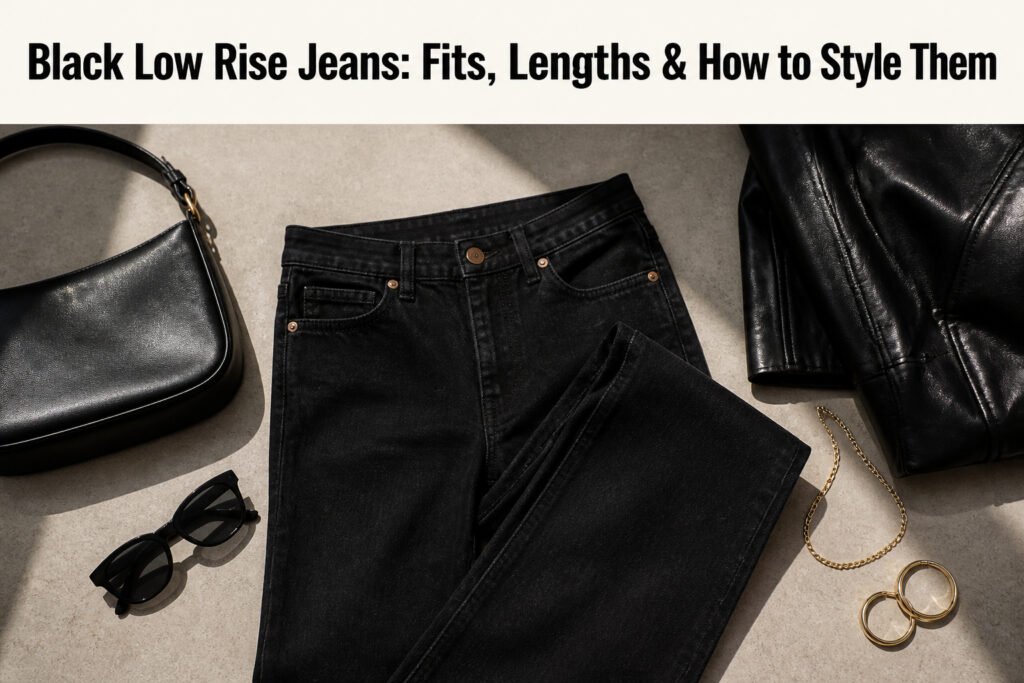
Black low-rise jeans sit two to three inches below your navel, right on top of the hip bones, with a flat waistband that draws a deliberate horizontal line across your hips. The catch is that this line reads as casual by default and can widen your silhouette or shorten your legs depending on proportions, especially in black wash where no fading breaks the eye. A 2% elastane minimum matters for skinny fits, since black pigment stiffens cotton and limits stretch recovery.
What Low-Rise Actually Means on Your Body
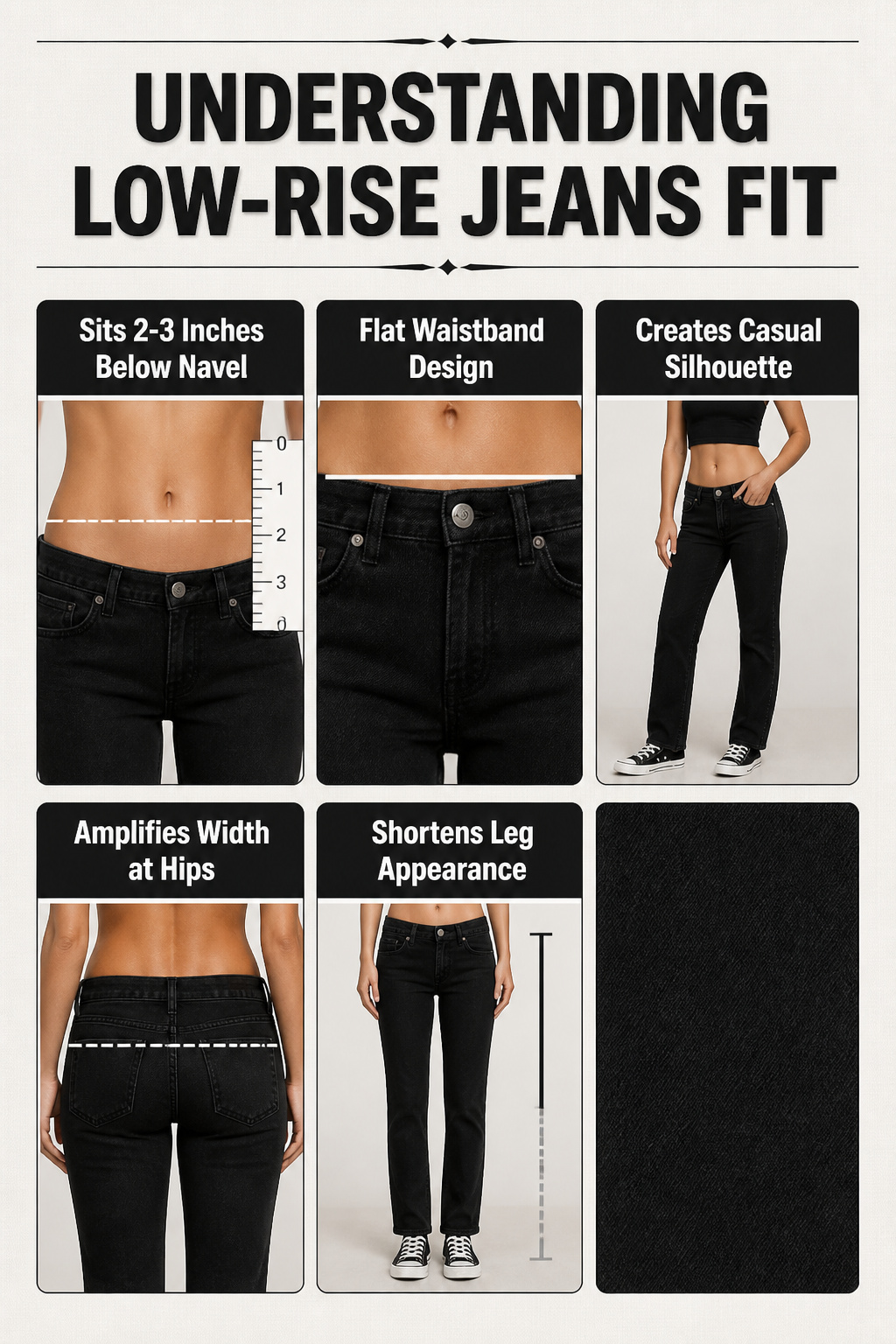
Low-rise jeans sit about two to three inches below your navel, right on top of the hip bones rather than cinching the natural waist. That placement changes everything about the silhouette. Where high-rise jeans lengthen the torso and mid-rise splits the difference, low-rise draws a relaxed horizontal line straight across the hips.
That line is the defining feature, and it reads as casual by default. The waistband does not taper or angle upward; it stays flat, which can make hips look wider and legs look shorter depending on your proportions. Black wash amplifies this effect because the dark dye creates a single uninterrupted band against skin or whatever top you choose. There is no fading to break the eye, no whiskering to soften the edge. The horizontal line sits there, visible and deliberate, which is why the fit around the hips matters more than it does with a higher rise that hides that zone under fabric.
Baggy Fit
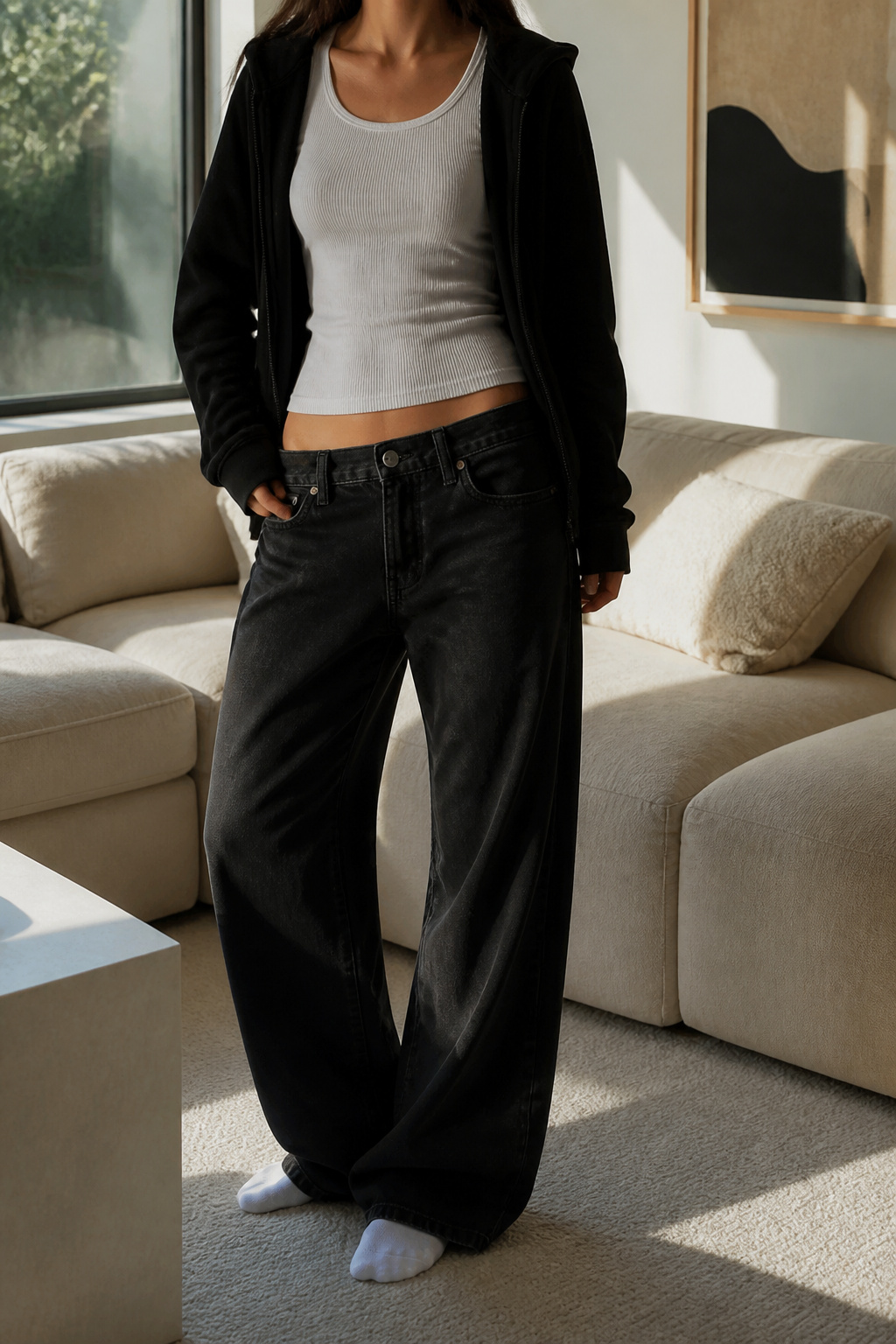
The baggy fit in black low rise jeans creates volume through the hips and legs without swallowing your frame, because the low waistband anchors all that extra fabric to a specific point instead of letting it billow from higher up. Black denim absorbs the visual bulk better than blue washes; the color flattens the silhouette so the looseness reads as intentional rather than overwhelming. This shape flatters broader shoulders or a longer torso by balancing proportions, and the relaxed cut through the thigh keeps the look from feeling costume-y. Pairing these with fitted tanks or cropped tees keeps the outfit grounded, while an oversized sweatshirt leans fully into the slouch. The trick is letting the waistband sit where it naturally wants to rather than yanking it up; fighting the rise turns the jeans into a shapeless tube, but worn low they hold a deliberate line.
Straight-Leg Fit

Straight-leg black low-rise jeans fall straight through the leg without tapering or flaring, which creates a balanced silhouette that keeps the lower waistline from looking like a throwback. The clean vertical line draws the eye down rather than cutting the body horizontally at the hip, so the low rise reads as intentional rather than dated.
Proportion matters most at the hem. A full-length straight leg should hit at the top of your foot or break slightly over the shoe, which lengthens the leg line that the low rise shortens. Too long and the fabric puddles; too short and the ankle gap visually chops you in half. With sneakers or flats, a clean hem that just grazes the laces works best. A small heel or boot with a slight shaft can handle a longer inseam that stacks once or twice at the ankle.
This fit sits in the middle ground between the volume of baggy jeans and the cling of slim styles, which makes it the safest everyday choice for someone testing whether low rise works for their routine. The structured leg keeps the relaxed waistband from feeling sloppy, and the shape pairs easily with fitted or oversized tops without the silhouette fight that wider legs create.
Flare Fit
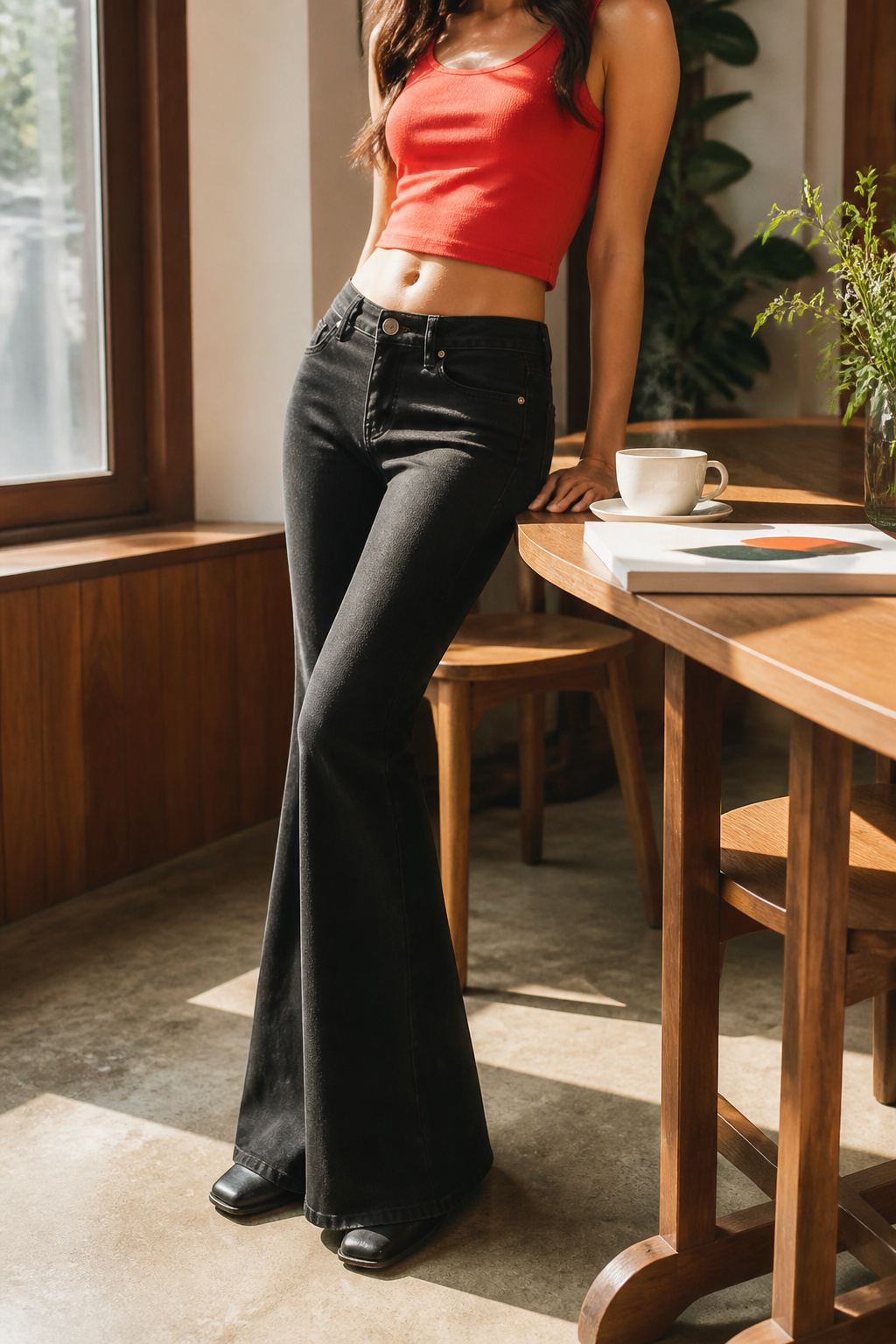
The flare fit sits fitted through the thigh and widens at the hem for added movement, a silhouette that pulls straight from 1970s wardrobes. Back then, the flare started higher on the hip, often at a natural or mid-rise that lengthened the whole leg line. A low rise shifts that starting point downward, which changes the proportions entirely. The leg looks shorter from waist to knee, then longer from knee to floor, so the overall effect is less leggy than the vintage version and more grounded.
That lower break point also means the hem hits closer to the ground. A heel of at least two inches keeps the fabric from pooling or dragging, and anything flatter risks fraying the denim within a few wears. I have watched friends try to cheat this with platform sneakers, but the math does not work; the hem still skims pavement on every step. A slim boot or a classic pump does the job cleanly.
Wide-Leg Fit
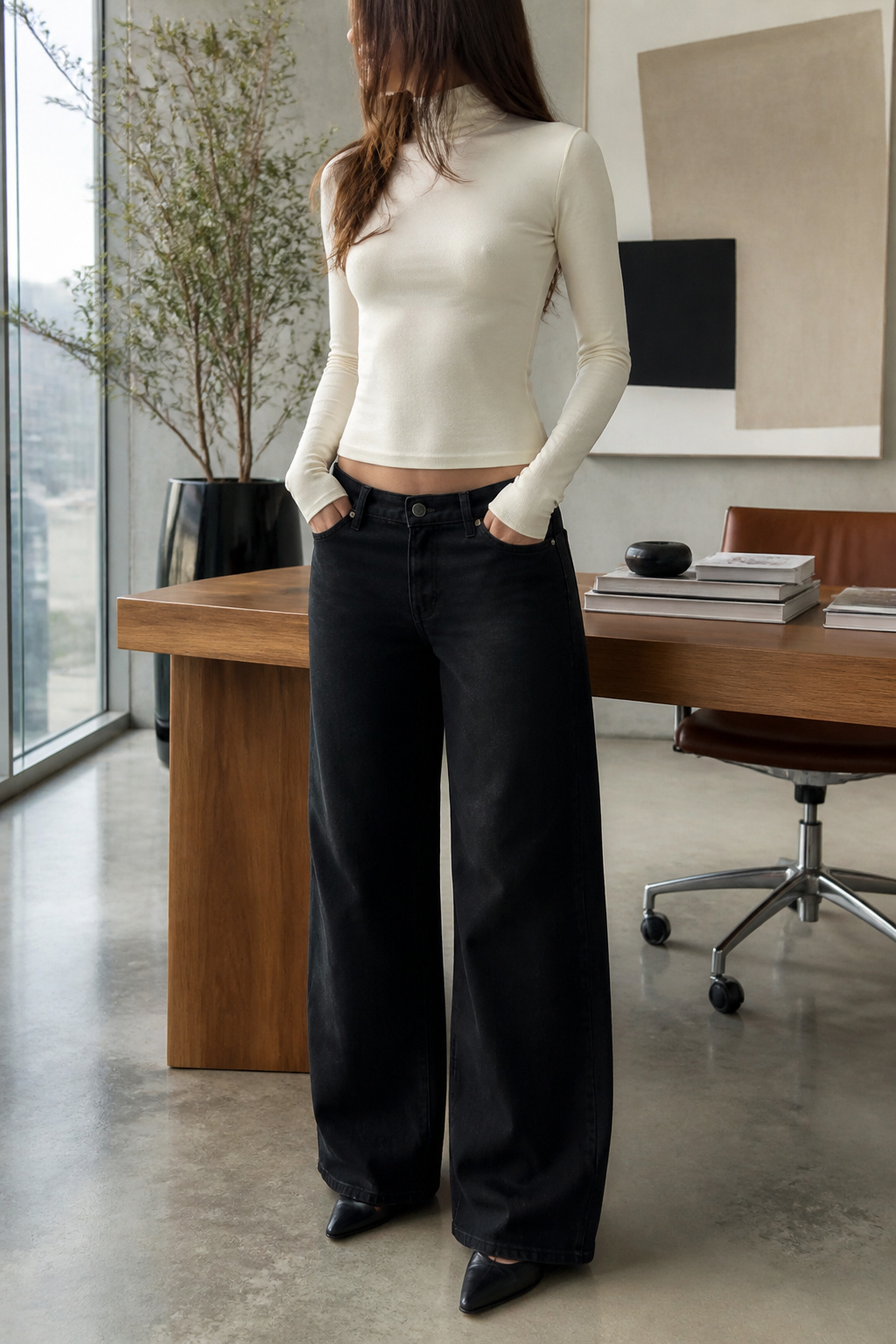
Wide-leg black low rise jeans carry volume through the leg from hip to hem, but the cut stays controlled. The fabric hangs away from the body in a deliberate line rather than pooling or sagging, which is the difference between this and a baggy fit. That structure matters at a lower rise because excess fabric below the waistband can read as accidental, like sizing up rather than choosing a shape.
The black wash does the heavy lifting here. A pale or medium wash in this cut risks looking like borrowed denim; black keeps the silhouette sharp and intentional, especially where the leg starts to flare. Pairing these with a fitted top keeps the proportions clean, since the volume below needs something anchored above to avoid swallowing your frame.
For length, these work best with a slight break at the shoe or a clean hem grazing the top of a low-profile sneaker. Anything shorter starts to look like a flood, and pooling fabric underfoot ruins the line that makes this cut worth wearing.
Slim Fit
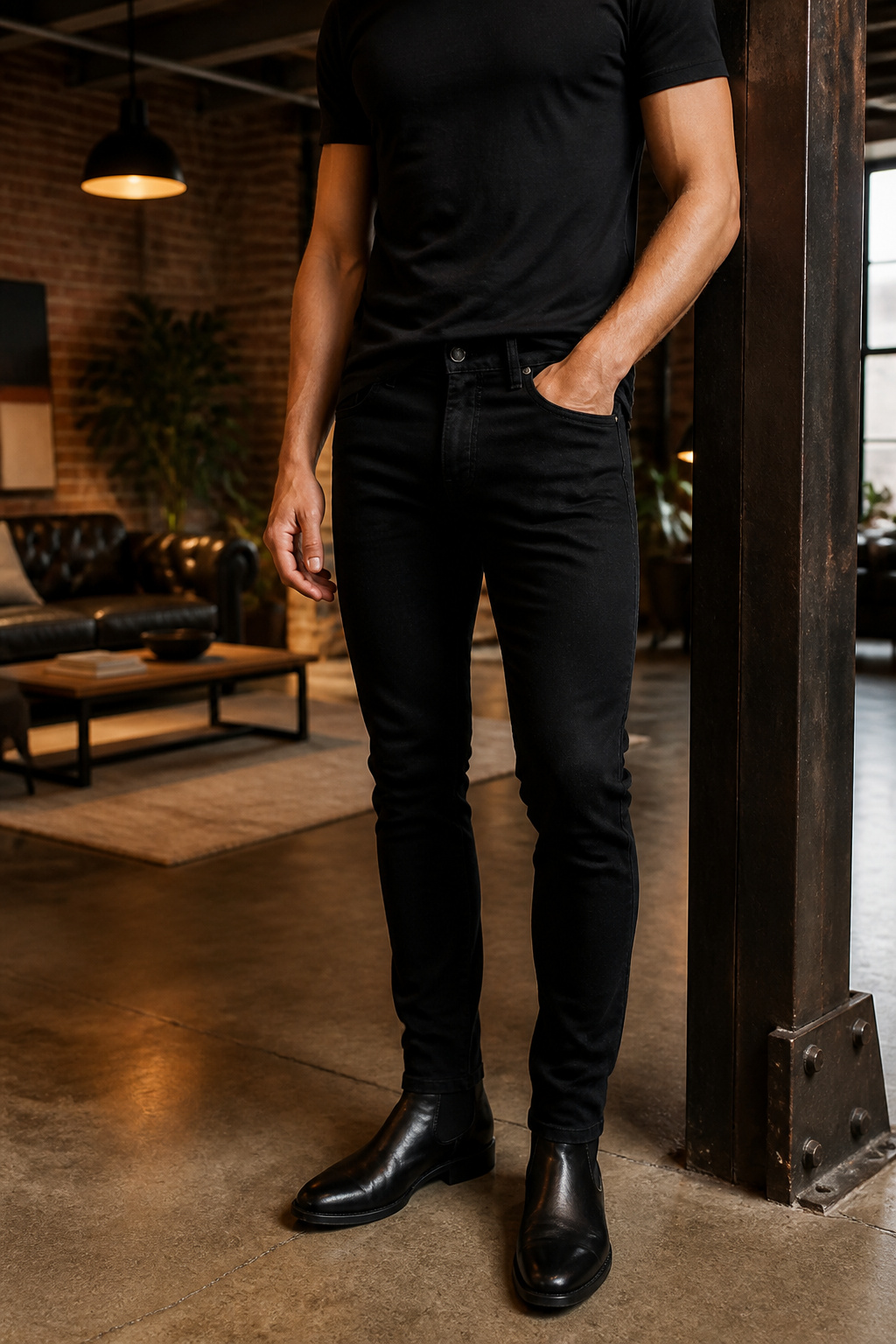
A slim cut in black low rise jeans sits closer through the thigh than relaxed fits but keeps the waistband easy rather than tight. The narrow leg opening, usually around 13–14 inches, stacks differently depending on your footwear. With sneakers, the hem breaks once or twice and pools slightly; with boots, it catches on the shaft and bunches upward, which can shorten the leg line in a way that reads awkward rather than intentional.
This is where the low rise shows its fit issues most clearly. Because the waistband sits at the hip, any gaping at the back or pulling across the front becomes visible the moment the leg starts to taper. The closer cut leaves nowhere for extra fabric to hide, so the seat and thigh need to be right or the whole pair looks off. I have found that sizing for the hip rather than the waist helps, even if it means a little more room through the top block than expected.
Skinny Fit
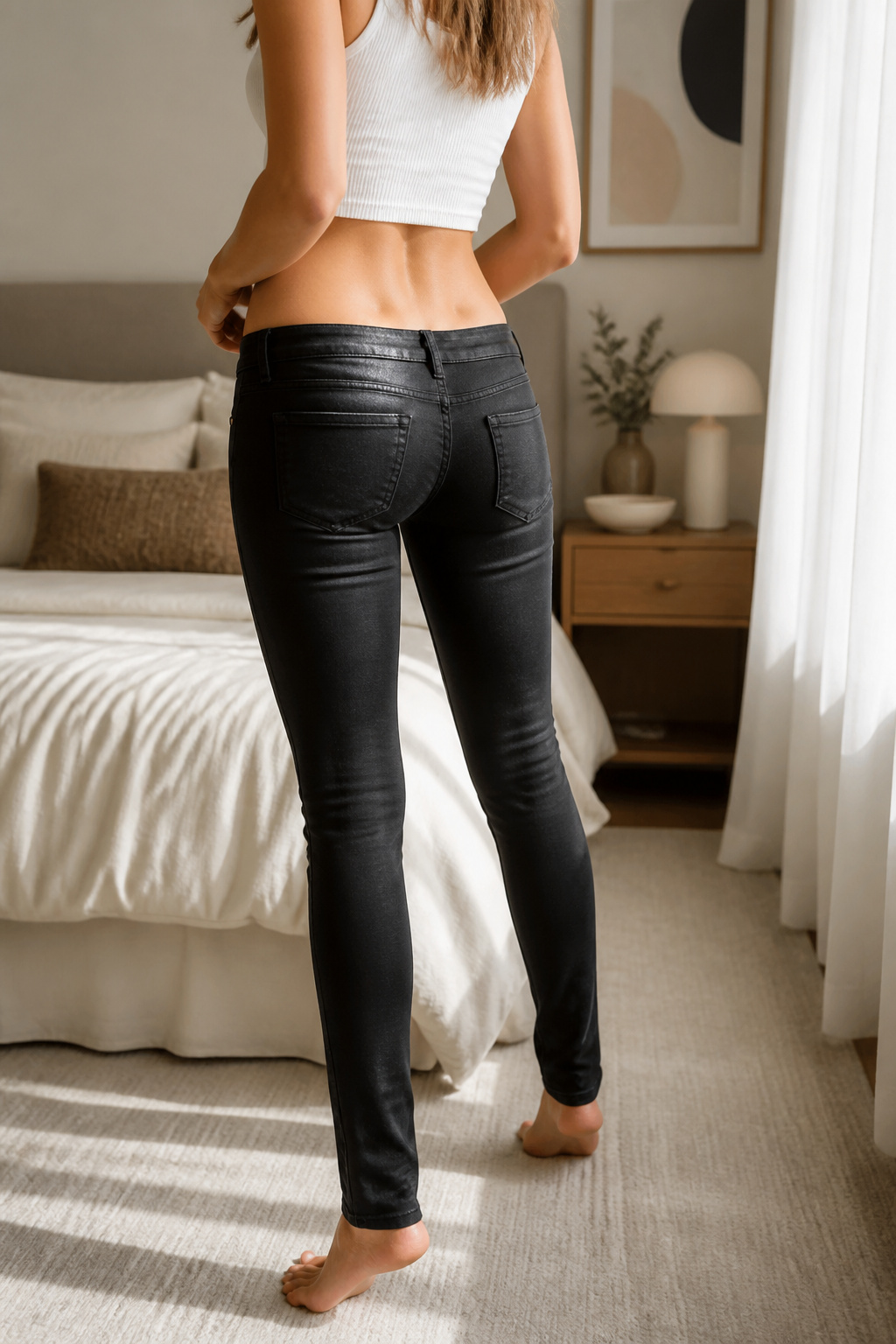
The skinny cut sits closest to the body of any black low rise jeans style, which means the waistband lands low while the leg hugs from hip to ankle. That combination exposes more midriff than any other fit here, so the rise measurement and your torso length need to match precisely. A quarter inch off, and the band either slides down or cuts in.
Black dye changes how the denim behaves. The same weight of raw indigo might ease through the day, but black pigment often stiffens the cotton and limits stretch recovery. What feels snug in the morning can stay snug, or it can sag at the knees by afternoon if the elastane content is low. I check the fabric content tag for at least 2% elastane, and I expect to size up if the denim is rigid and the color is saturated black. Otherwise the fit that looks right in the mirror turns into an adjustment session by lunch.
Cropped Length

A cropped hem on black low rise jeans lands two to four inches above the ankle bone, and that gap of exposed skin changes everything about how the rise reads. The shorter line breaks up the distance from waist to floor, so the low sit stops feeling like a long plunge and starts looking like a deliberate proportion.
The effect is lighter, more casual, less staged. Full-length low rise can drag the eye downward and emphasize how far the waistband sits below the natural waist; the crop interrupts that slide and gives the silhouette some air. Sandals, loafers, or a low-profile sneaker all sit cleanly under the hem without stacking or bunching, which keeps the whole look unfussy.
For women who remember low rise from the first time around, this length is the update that makes the style wearable again. It borrows the relaxed energy of the original without the exaggerated stretch. I reach for cropped black low rise most often in late spring and early fall, when I want coverage but do not want to look like I am trying to resurrect a 2004 outfit exactly as it was.
Full Length
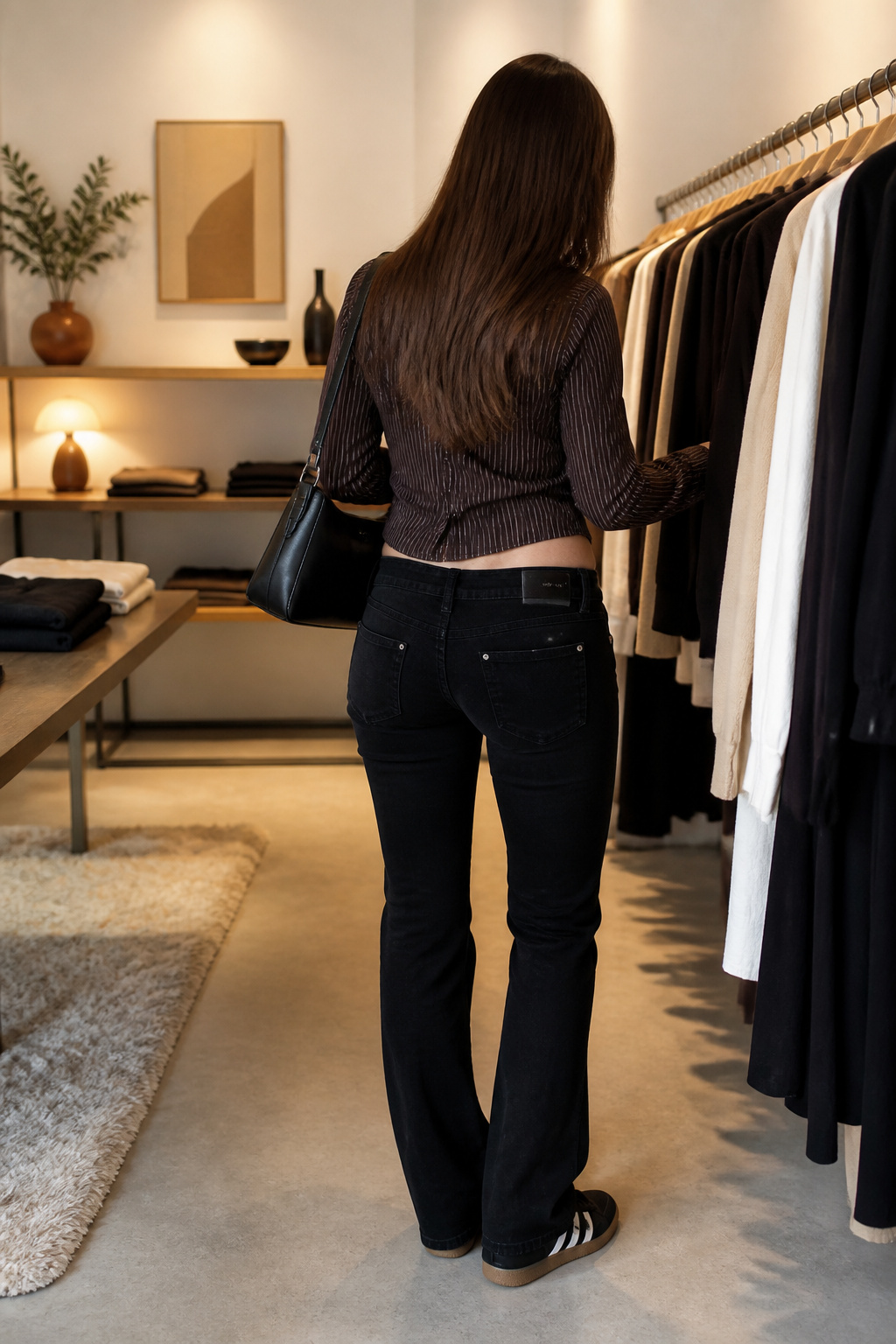
Full-length black low rise jeans carry the most visual weight when the hem breaks just at the top of the shoe and folds back on itself once, maybe twice. That slight stacking at the ankle reads as intentional rather than sloppy, and black denim hides the horizontal wrinkles of that stack far better than lighter washes, where every fold catches light and looks like a mistake in the making.
The shoe choice matters more here than with cropped lengths. Low-profile sneakers keep the line clean from knee to floor without competing for attention. Loafers work the same way, their slim silhouette letting the jeans pool just enough to look relaxed, not flooded. Slim boots, the kind that taper toward the ankle, finish the stack neatly instead of bulking it out. What you avoid is anything with a heavy sole or a wide shaft that pushes the denim up and breaks the line at the wrong height.
How I Style Them Without Looking Dated
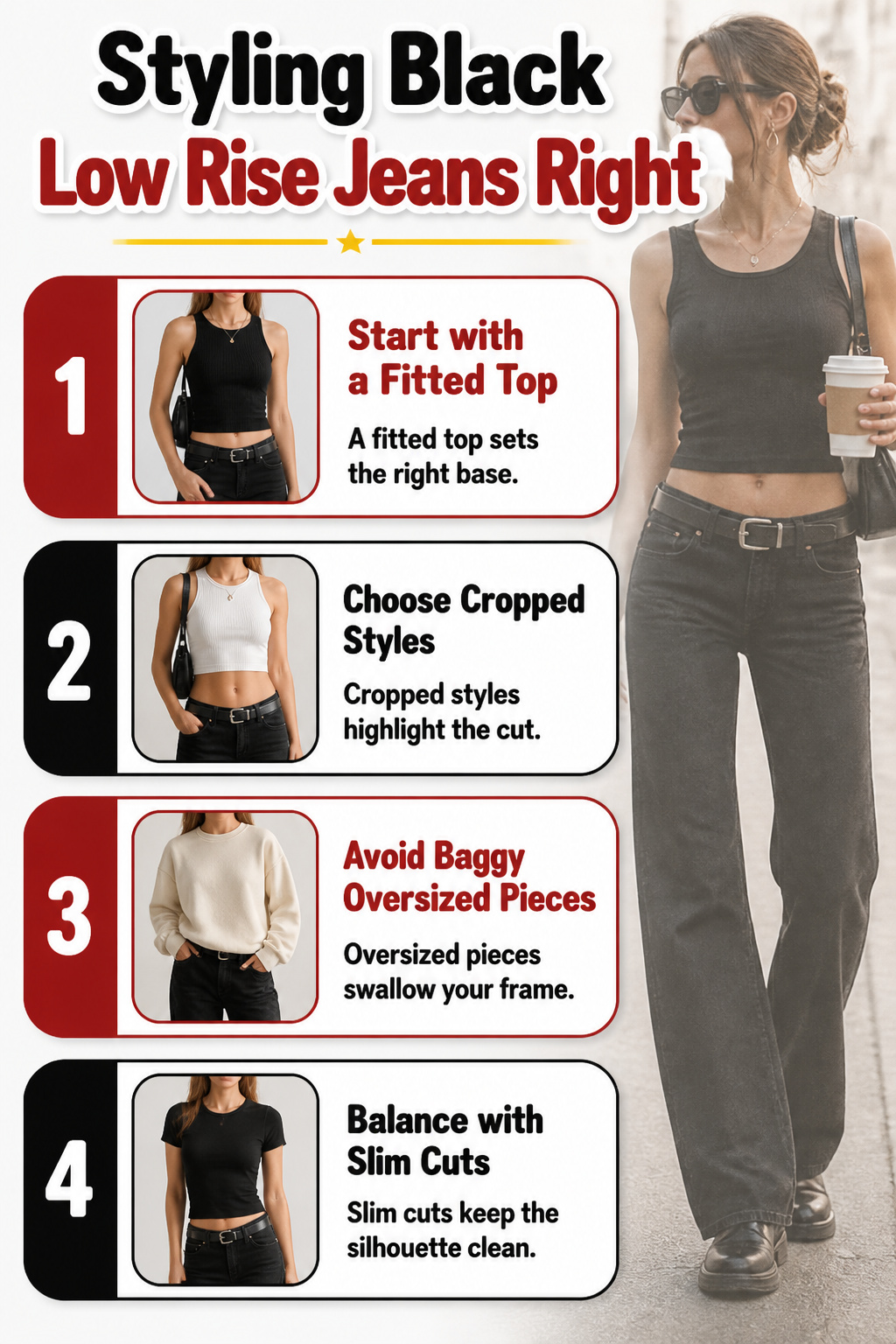
A fitted top keeps black low rise jeans from reading like a throwback. The waistband sits two to three inches below the navel, so a cropped tank or slim tee creates a clean line that shows the cut was intentional. Early last spring, the oversized sweatshirt trend tempted me into pairing a boxy cream crewneck with baggy black low rise jeans. The result swallowed my frame; the proportions needed one fitted element to anchor them.
Graphic tees work the same way. A slim-cut band tee tucked slightly at the front defines the waist without looking like you’re trying to recreate 2003. The proportions matter more than the decade: oversized layers only balance when the jean itself is slim or skinny, letting the silhouette narrow at the ankle. With a wider leg, the top needs to follow the body’s shape or the whole look collapses into shapelessness.
My reliable combination now is a fitted black ribbed tank with straight-leg black low rise jeans and a thin belt, or a cropped cardigan over a slim tee with skinnies. The one that failed was that cream sweatshirt with baggy jeans; adding a fitted turtleneck underneath saved the outfit later, but the lesson stuck.
When I Wear Them Through the Year

Black low-rise jeans carry through every season because the color itself does the adjusting. In summer, a lighter-weight denim in the same black wash pairs with cropped tanks and slides without the heaviness of winter rigid denim. The fabric matters here: a 10–12 oz cotton reads as outerwear in July, while something closer to 8 oz sits right for warm evenings.
Come fall, the same cut switches over with zero friction. A black low-rise jean in a heavier 12–14 oz denim, or a black rinse with slight stretch, layers under knits and structured jackets without the bulk that higher waists add at the hip line. The darkness keeps the silhouette lean even with oversized tops.
Winter is where the weight variation pays off most. Rigid black denim in a deeper, unwashed black works with turtlenecks and long coats; the low rise keeps the proportion from going top-heavy. Spring calls the lighter weight back, and the same black pair that looked severe in February softens with a lighter top layer.
The trick is owning two weights in the same wash, not two colors. Black doesn’t shift seasonally the way blue denim does, so the fabric weight becomes your only real variable.
Frequently Asked Questions
What are the different fits of black low rise jeans?
The main fits are baggy, straight-leg, flare, wide-leg, slim, and skinny. Each one handles the low waistband differently: baggy and wide-leg add volume through the legs, straight-leg keeps a clean vertical line, flare widens below the knee, and slim or skinny sit closest to the body. The fit you choose changes how the low rise looks on your frame, since the waistband sits two to three inches below your navel on every style.
How do you style black low rise jeans without looking dated?
Wear them with fitted tops so the silhouette stays intentional, not like a throwback. A slim tee, cropped tank, or fitted turtleneck anchors the low waistband; pair baggy or wide-leg fits with something closer to the body up top. The one combination that fails is oversized on oversized, like a boxy sweatshirt with baggy jeans, which swallows your frame entirely.
What colors do low rise jeans come in?
Low rise jeans come in black, gray, off-white, and traditional blue denim washes. Black is the most versatile for this rise because the dark dye creates an uninterrupted line at the waistband and absorbs visual bulk that lighter washes would highlight. The article focuses on black specifically since it keeps the silhouette sharp and works across all seasons without reading as costume.