
The right brown hair summer idea depends on how much of your routine you are willing to give to maintenance. A golden hour ombré grows out invisibly because the root never changes, while butterscotch ribbons will show a line at the root within weeks. Celebrity colorist Min Kim places butterscotch at the bolder end of the warm spectrum for brunettes, but that brighter payoff costs you more salon time than a caramel balayage or raffia gloss.
1. Golden Hour Ombré

A gradual fade from one tone into another reads as the most lived-in color you can ask for in summer. The darker base stays near your face, where it flatters most, and the shift into lighter ends happens slowly enough that no line shows where one tone ends and the next begins. That slow transition is what separates ombré from dip-dye’s harsher jump or balayage’s scattered highlight effect.
For brunettes, the real win is how summer light hits those ends. The lighter pieces pick up the gold in late-day sun without reading as blonde, and the warmth complements the underlying pigments already in brown hair rather than fighting them. The grow-out is essentially invisible because the root area never changes; there is no blonde creeping toward your scalp to maintain, no band of demarcation to chase down every six weeks. The color simply lives where it lives, and your natural shade does the rest of the work.
Celebrity colorists have flagged this as a major trend for the year, and the low upkeep explains why. If your priority is hydration and you do not want color appointments eating into your routine, this gradient keeps your ends looking intentional even as they fade.
2. Toffee Balayage

Hand-painted sections create a softer line than foil highlights because the color is swept freehand onto the surface, not pressed against the scalp in folded packets. The result grows out without a visible root stripe, which matters in summer when salon schedules fill with travel and weekends away.
Toffee sits in the sweet spot between caramel and plain brown: warm enough to catch light, but not so bright it competes with a chocolate base. Against darker brunette, it reads as dimension rather than contrast, ribbons that move when layered hair moves. The warmth flatters most without reading as highlights that tried too hard.
Maintenance stays medium-low, and the color works for offices, events, or nothing special at all. Ask for melted toffee balayage over your existing base rather than lifting the whole head. The technique enhances what is already there instead of fighting it.
3. Iced Brunette

An iced brunette reads cooler than it sounds: the tone sits closer to ash brown or a chilled chocolate, not the warm toffee most summer palettes chase. What makes it "iced" is the absence of red and gold reflect. In bright sun, those warm pigments catch light and look brassy fast; a cool base stays flat and deliberate, almost shadowed.
The risk is washing out. Cool brown against cool skin can flatten everything into one note, so this shade lands best on complexions that warm up in summer, whether from sun or natural olive. If your undertone runs pink or true cool, the color still works, but you’ll want the subtle dimension that lowlights provide rather than a single flat hue. Soft waves or a sleek straight finish both carry it well, and the gloss level matters more than the cut. Darker brunettes hold shine better than highlighted hair, which means less maintenance through beach weekends and chlorine afternoons. A semi-permanent gloss, either in salon or at home, will fade gradually rather than grow out in a harsh line. That gradual fade is what keeps it looking intentional, not grown-out, by late August.
4. Raffia Brunette

Warm neutrals sit in the sweet spot where golden tips toward brassy and ashy drifts flat, and raffia brunette claims that middle ground without apology. The tone reads like dried straw held against oak: enough yellow to catch summer light, enough coolness to keep the color from shouting. For women who want the season to show in their hair without booking a full highlight appointment, this is the quiet shift that still gets noticed.
What sold me on the concept, reading through color after color, is how the maintenance drops compared to anything with deliberate contrast. Your roots grow in without a visible line of demarcation because the warmth and coolness are already balanced against your natural pigment. The grow-out is the point, not the problem. A single process gloss refreshes it, or you can let it fade toward your base through August and no one clocks the difference.
The risk is flatness in indoor light. Without the right depth at the crown, raffia can read as all-over beige, which is the summer hair equivalent of a room with the lamps unplugged. Ask your colorist to keep the nape and crown a half-level deeper; the warmth lives where the sun would actually hit. That variation is what separates expensive-looking neutral from box-dye boredom.
5. Cinnamon Gloss

A cinnamon gloss adds soft red-brown warmth to brunette hair without the commitment of lifting your base color. The service deposits tone and shine rather than stripping pigment, which makes it one of the gentler ways to shift your look for summer.
The warmth becomes more visible in natural light, so the payoff shows up exactly when you’re outside most. On porous ends, though, that same openness that makes hair feel dry will drink up the gloss faster. Expect the tone to fade sooner on damaged sections than on healthier mid-lengths, often washing out to a softer version of itself rather than going brassy.
If your hair pulls orange easily, ask for soft cinnamon brunette specifically, not copper. The difference matters: copper reads bright and bold, while cinnamon stays in the spice family, deeper and more subdued. It works best on warm and olive skin tones, and on medium to dark brown starting shades where the red-brown has enough depth to settle into.
6. Caramel Balayage

Caramel balayage dominates summer requests for a simple reason: it adds warmth without pushing brown hair toward blonde. The technique paints soft golden-brown pieces through the mid-lengths and ends, leaving a natural root shadow that reads as grown-in sunshine rather than salon work.
Medium to dark brown bases carry it best, and the placement flatters loose waves or long layers because the color itself creates movement. Colorist Ruby Devine’s approach is to paint the dark strands lightly so the caramel blends rather than stripes. For curly hair, heavier dimension works better than fine highlights, which disappear into the curl pattern; stronger caramel stripes accentuate the shape instead.
Ask for soft caramel balayage with a natural root shadow, and specify warm caramel tone if you want the brighter pieces to stay in the golden family rather than drifting ash. Maintenance sits at medium-low, which for a summer color means fewer salon visits and less time fading in pool chlorine or salt water.
7. Cherry Mocha
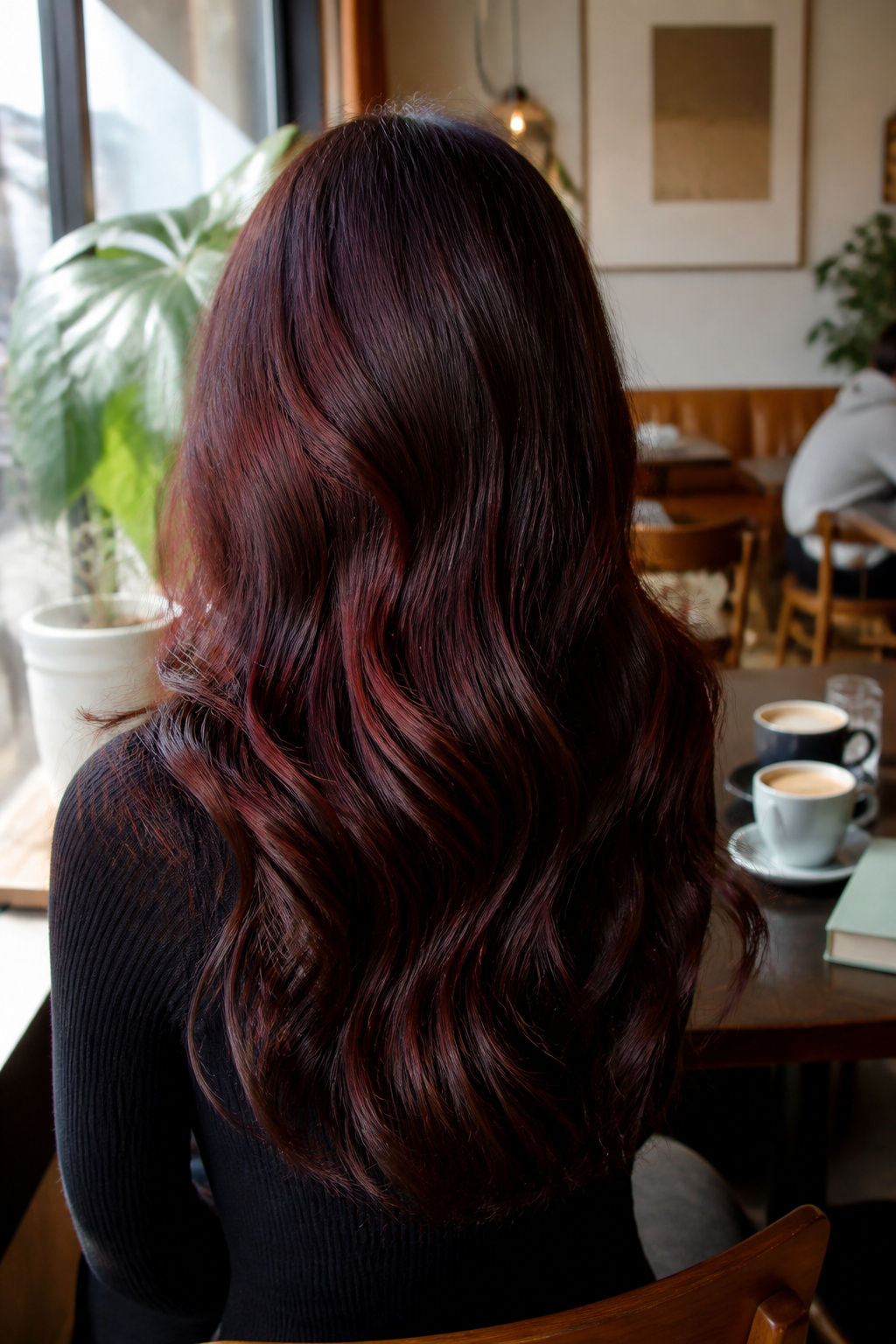
A cherry mocha base keeps you firmly in brunette territory while the red-wine undertone does the actual summer work. Indoors it reads as dark brown with a quiet warmth, nothing that competes with office lighting or a dinner table candle. Step outside and the tone shifts: sunlight pulls that buried cherry forward into something visibly red-brown, a controlled glow rather than a color change.
The maintenance reality is what separates this from other brown hair summer ideas. Red pigment fades faster than brown, period. Your shampoo choice matters more here than with caramel or toffee tones, and cool water rinses slow the washout more than hot ones. Budget for a gloss refresh every six to eight weeks if you want that outdoor glow to survive past August.
Jason Lee, the colorist behind hair care line Mela & Kera, put the appeal plainly for anyone hesitating at the edge of red:
"For those of us who aren’t ready to take the full plunge into red, chocolate cherry seems to be a great way to update your look and make it modern but still live in the brunette world."
— Glamour
That "still live in the brunette world" part is the point. You get the summer photo payoff without the identity shift of going full auburn. Ask for a cherry mocha gloss or a subtle burgundy-brown toner rather than permanent color; the commitment stays low while the result reads deliberate.
8. Chocolate Brown Gloss
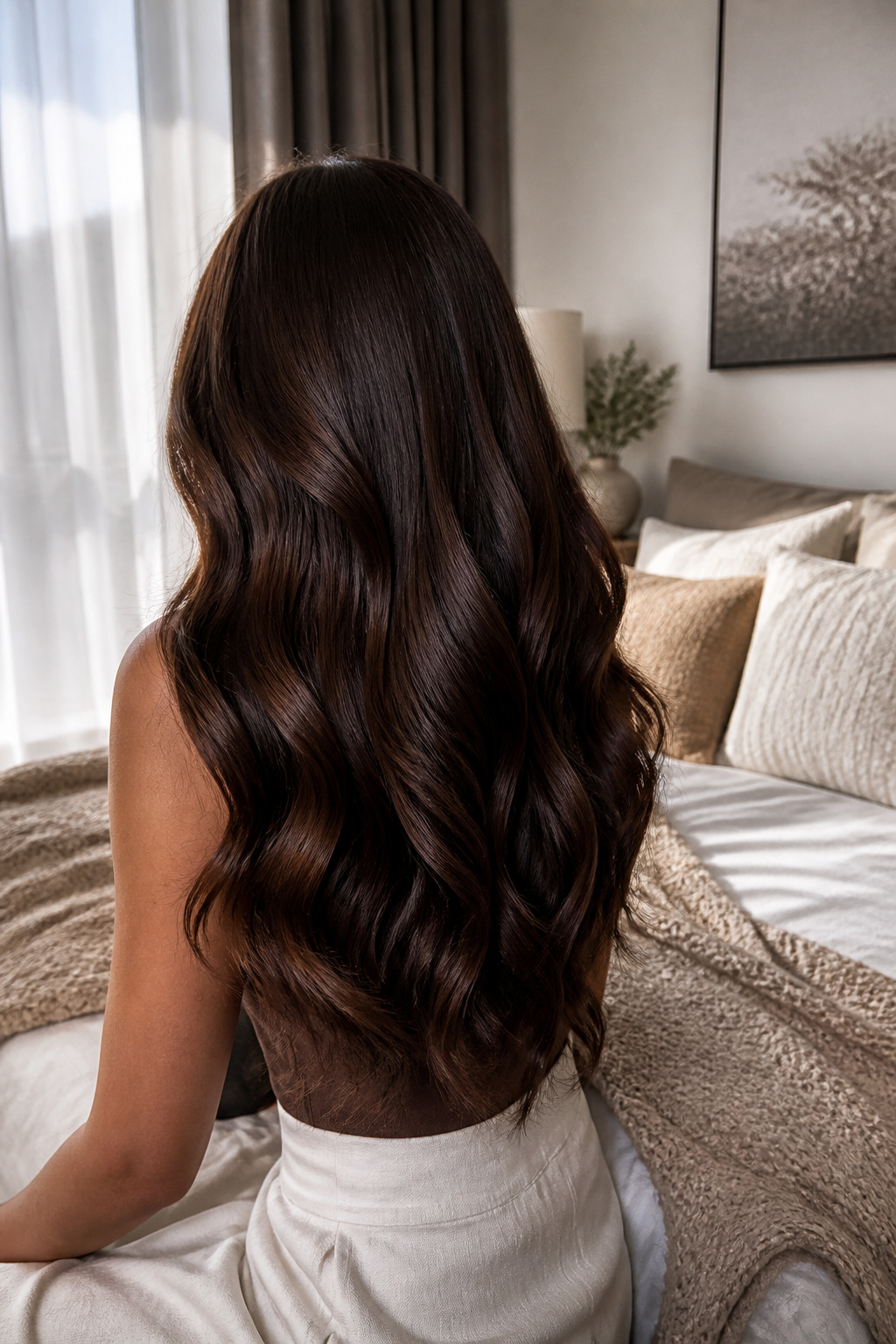
A chocolate brown gloss sits right where summer damage meets the need for change. Permanent color opens the cuticle, lifts pigment, and leaves hair more porous than it started. A gloss, by contrast, deposits tone and seals the strand instead of stripping it. For hair already fried by July sun and pool chlorine, that difference matters.
The finish reads as healthy rather than obviously dyed. Your stylist can shift the tone warmer, cooler, deeper, or softer depending on what flatters your skin. The color fades gradually, so roots stay forgiving and upkeep stays low.
Ask for a chocolate brown gloss specifically if your brunette has gone flat or uneven but you do not want the maintenance cycle of full color. It is the choice for when you want people to notice your hair looks better, not that you colored it.
9. Espresso Gloss
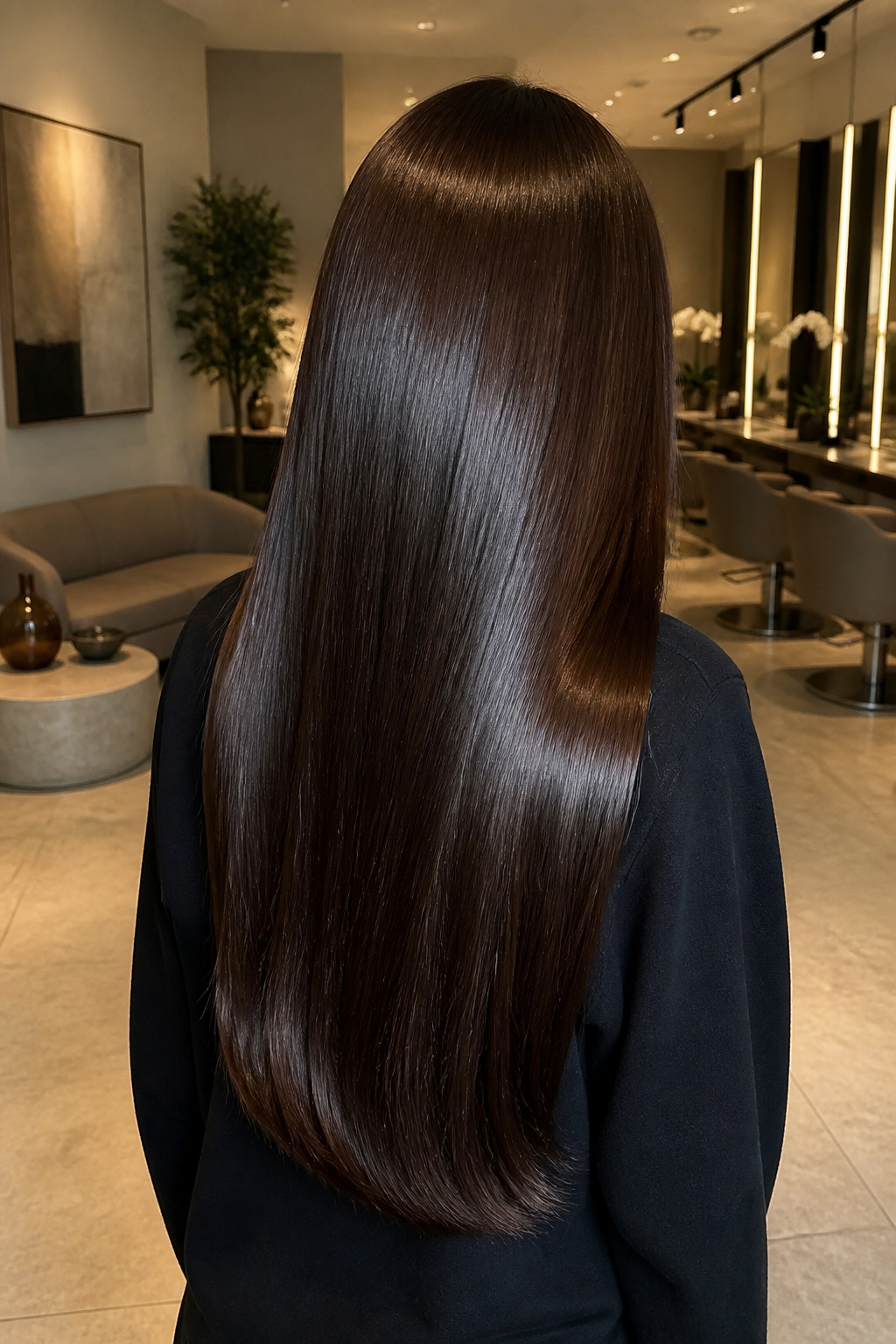
Deep brown does not have to read heavy in July. An espresso gloss sits right at the boundary between black and dark chocolate, and the finish is what sells it: a mirror-like surface that catches light the way a still pond does, even on hair that has never seen a highlight.
The gloss works by coating the cuticle rather than lifting pigment, which is why damaged or over-processed brunettes come back to it. It deepens the existing tone and adds that reflective quality without stripping moisture. Neutral or warm undertones keep it from going flat; cool espresso can shift toward ink, which reads severe in bright sun.
Maintenance stays low. A color-depositing mask every two weeks, something in the cool espresso range, keeps the tone from drifting brassy. Blue-toned drops mixed into conditioner counter the red and orange that warm weather and hard water pull out of dark color. Between appointments, that routine is usually enough to hold the depth.
Keke Palmer went back to glossy dark brunette recently, and the coverage landed in Marie Claire as proof that rich, deep tones still hold their own against the summer bleach trend. On hair without highlights, the gloss creates its own dimension through shine alone. That is the expensive-looking part: not complexity, but the health it implies.
10. Sun-Kissed Balayage

Standard balayage scatters lightness wherever the hand lands, but the summer version has a logic to it. Colorists paint the lightener exactly where a July afternoon would find your hair on its own: the strands that fall forward around the face, the lengths that slip out of a topknot, the ends that catch light when you tuck hair behind your ear. The result mimics that post-beach brightness you see after undoing a bun, not a full head of highlights grown three months out.
The placement matters more than the shade itself. Around the face, slightly bolder strokes act as a frame without the heavy maintenance of true money pieces. Through the midlengths, the highlights stay fine and spaced so they read as dimension rather than stripes. On the ends, the lightener lifts a shade or two higher than the rest, creating the worn-in fade of hair that has actually seen sun.
What separates this from a standard balayage is restraint at the crown. The roots stay quiet, which means the grow-out is forgiving and the beachy effect looks accidental rather than manufactured. Ask for strokes tailored to how you part and pull your hair back, since the placement only works if it follows your actual habits.
11. Mocha Caramel

Mocha caramel reads as one warm brown from across the room, then separates into ribbons of darker mocha and lighter caramel when someone is close enough to hand you a drink. That shift comes from color melting, a technique that paints the two shades close enough together that they merge at a distance without muddying into a single flat tone.
The melt works especially well if you part your hair different ways, because the ribbons are placed to catch light from multiple angles. A center part one day and a side part the next will pull different caramel pieces forward, so the color keeps changing without any actual change. The base stays a deep mocha brown, which means the overall look stays firmly brunette. The caramel functions like the month of sun exposure that never quite happened, the gloss that comes from actual time outdoors rather than a deliberate lightening.
Maintenance sits at medium-low. A gloss refresh every four to eight weeks keeps the pigments from fading into something murky, and the low contrast between the two shades means grow-out stays forgiving longer than sharper highlights would allow. For women who want a summer shift without the obvious "you went lighter" comment, this is the move that passes for natural.
12. Mushroom Brown
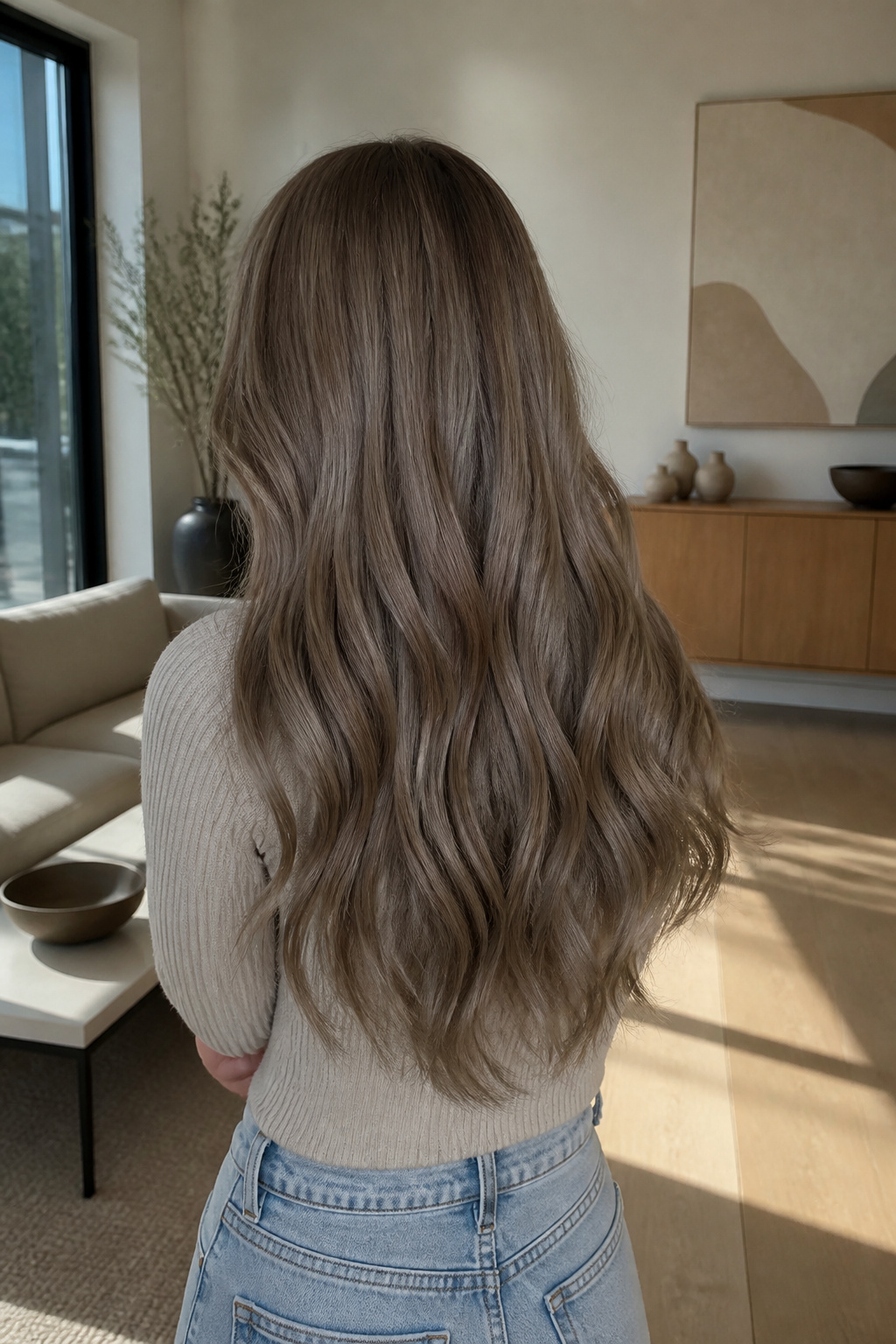
Mushroom brown sits in that narrow space between ash and beige where most brunette shades refuse to go. The color reads as modern because it borrows the gray and silver tones that dominated the last few years, then softens them into something that still looks like hair growing from a human head. Joel Warren, the colorist behind Salon Project, describes the mushroom palette as hard to pin down: beige, gray, taupe, all shifting depending on the light. That mutability is what makes it feel current rather than trendy.
The base colors that reach this shade without pre-lightening are already cool to neutral: a natural level 4 or 5 ash brown, or any brunette that pulls more mousy than golden. If your hair naturally carries warmth, the toner becomes the critical step, and you should expect to refresh it regularly. The maintenance sits at medium, which in summer translates to more frequent salon visits than a caramel balayage would demand, but less structural damage than lifting several levels. Ask specifically for cool mushroom brown with beige-ash babylights; without that dimensional contrast, the color flattens into something that reads as simply "brown" rather than deliberately understated.
13. Butterscotch Ribbons

Warm blonde pieces running through brown in clean, ribbon-like strokes read brighter than balayage and register immediately as a summer change. The definition is the point: each ribbon catches light on its own instead of melting into the base color. Celebrity colorist Min Kim groups gold among the warmer tones that lift brunette hair without the damage extreme lightening brings, and butterscotch sits at the bolder end of that range.
The brighter payoff carries a steeper maintenance trade. Because the ribbons sit visibly apart from your root color, regrowth shows as a line rather than a soft shadow. Ask for blended placement and a soft brunette root to keep the grow-out from reading stripey; thick, chunky ribbons turn cartoon fast. This is a medium-high commitment color, best reserved for brunettes who want the change noticed, not whispered.
14. Face-Framing Caramel Highlights

Caramel pieces placed only around the face, sometimes called money pieces, brighten brown hair for summer while the rest stays untouched. A full head of highlights can run well over two hundred dollars and keep you in the salon for hours; this partial placement costs less and wraps up faster because your stylist is working on just a few sections. The visual lift is immediate. Light catches the strands nearest your cheeks and eyes, which is where people look first, so the brightness reads as a whole-head effect without the commitment or the grow-out line. Ask for a soft blend or root melt so the color fades naturally into your base. Two ways to wear it: keep the pieces fine and blended for something subtle, or go slightly bolder with an exaggerated pop piece and a few babylights mixed in. The bolder route works if you want that lightness around your face but do not want to maintain blonde all over. Either version grows out gracefully, which means fewer touch-up appointments through the season.
15. Hazelnut Brown

Hazelnut brown sits at a level 5 to 6 on the depth scale, right in that middle ground where it reads as brunette without veering into dark territory. The warmth comes through as nutty rather than red, which keeps it from looking brassy when the summer sun hits it.
What makes this shade genuinely forgiving is how it handles previous color. Because it lives between golden brown and light chocolate, it has enough pigment to blend old highlights or grown-out balayage without requiring a full bleach-and-start-over situation. A stylist can work with what is already on your head, building the hazelnut tone over existing lowlights or using it as a gloss to knock out unwanted coolness.
The finish options matter here. An all-over gloss gives the most uniform, expensive-looking result if your base is already fairly even. Soft balayage or subtle highlights work better when you want that naturally sun-warmed effect without a single flat tone. It is softer than caramel, less dramatic than bronde, which means the grow-out will not stage a rebellion against your calendar.
Maintenance stays in the low-to-medium range. The golden-brown dimension does the work of looking intentional even as it fades, so you are not married to six-week appointments. For warm-neutral skin tones especially, this is the shade that looks like you were born with better hair decisions than you actually made.
16. Milky Brunette

A milky brunette reads as expensive because it refuses to commit to warm or cool. The tone sits in that hazy middle, a soft beige with diffused dimension that catches light without flashing obvious highlights. Colorists build it through micro-babylights, then lock in the creamy finish with a beige toner or a brunette gloss.
Hair that has been lightened before takes this especially well. Previous lifting strips out underlying pigment, which means the base is already porous enough to grab that muted, ashy-beige tone evenly. On virgin dark hair, the same shade can turn muddy or flat because the underlying red and orange pigments fight the coolness. The pre-lightened canvas lets the colorist work with less resistance, depositing that soft, hazy quality without the brass that usually haunts brunette toning.
Maintenance stays medium-low, though the cool drift means warm tones creep back in over weeks. A color-depositing mask in cool espresso once every two weeks, or a few blue-toned drops mixed into conditioner, keeps the milkiness from sliding into plain brown. The gloss fades before the underlying lightened structure does, so the grow-out stays forgiving through summer.
17. Copper Brown Balayage
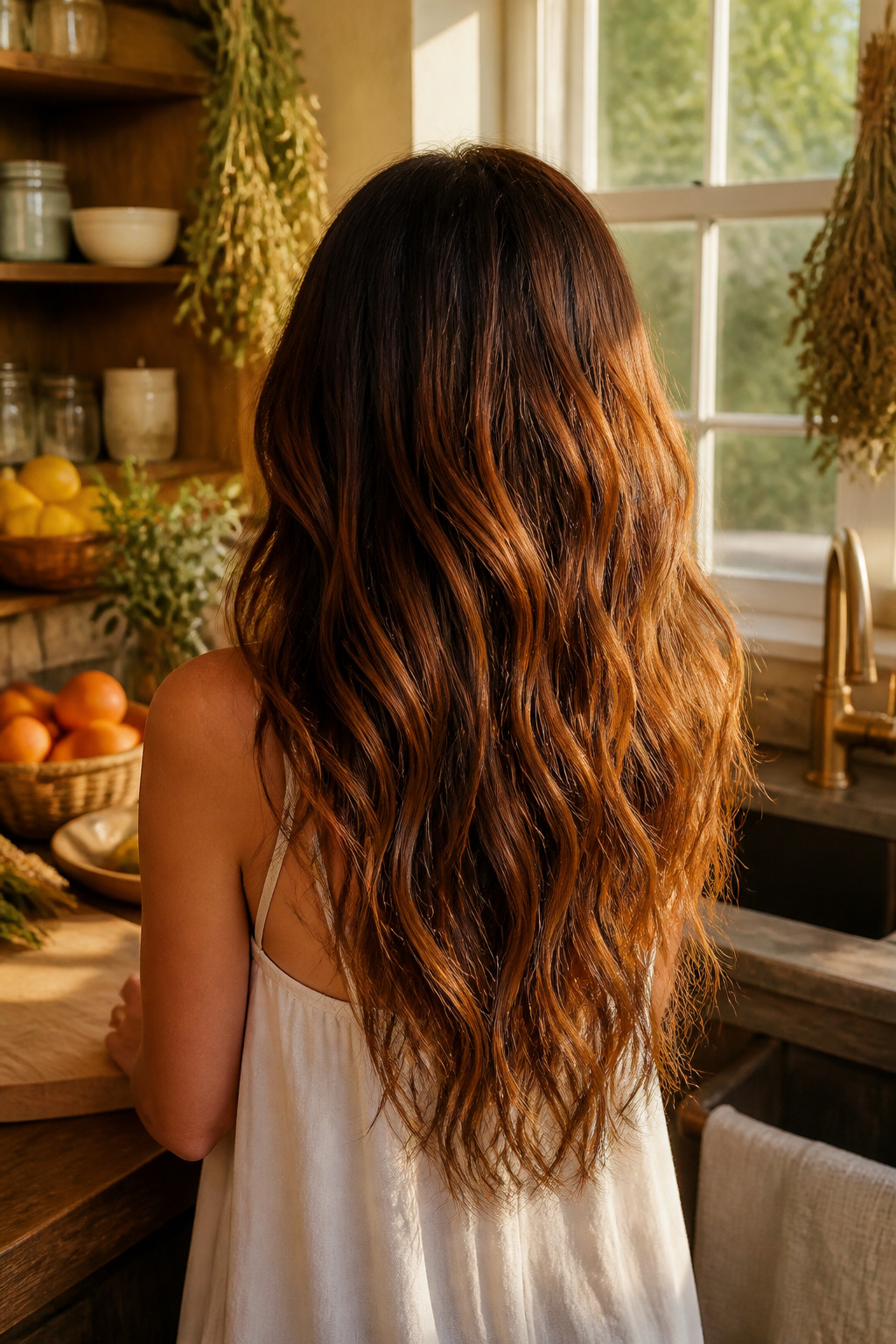
Copper brown balayage sits warmer than auburn on the brown spectrum, hand-painted so the color moves through your hair like something that happened in the sun rather than at the salon. The stylist paints copper through a brunette base instead of lifting to blonde, which keeps you inside the brown family while the warm pieces catch light on curls, waves, or textured layers.
The fade is where this color earns its reputation for medium-high maintenance. Copper washes out faster than neutral brunette shades, but the shift is gradual enough to wear. It moves first to a softer peach tone that still reads intentional, not brassy, before you need a refresh. Color-safe shampoo and less hot-tool heat stretch that window. I would skip this if your routine already runs heavy on styling tools; the color demands the care, not just the appointment.
18. Sun-Kissed Babylights

The difference between babylights and the highlights most of us grew up with comes down to width and placement. Babylights are woven in ultra-fine sections, sometimes just a few strands at a time, and concentrated where childhood sun would have hit first: the hairline, the crown, the ends that peeked out from under a hat. Standard highlights use thicker weaves spaced farther apart, which reads as stripes against brown hair no matter how skilled the colorist.
That fineness is why the appointment takes longer. My stylist sections the hair into a pattern closer to what you’d see for a full foil, then backcombs each one to tease out only the surface strands. The processing time itself is shorter because the bleach is applied so thinly, but the weaving adds an hour or more to the chair time.
For fine hair especially, the payoff is movement. The subtle lift catches light differently from every angle without obvious ribbons, so hair looks thicker than it is. The maintenance sits at medium: not the every-six-weeks panic of blonde roots, but not the grow-out-and-forget of balayage either. Ask for fine babylights around the hairline and crown, woven rather than sliced, and keep the tone within a shade or two of your base for that naturally sun-kissed effect.
19. Rooted Light Brown

A rooted light brown keeps your natural brunette shade at the scalp while the mids and ends shift lighter, which means the grow-out line stays soft instead of screaming for a touch-up. The contrast has to be calibrated. Too sharp a jump between root and lightened length, and you get a stripey effect that reads as grown-out rather than intentional. The right version melts the two tones together so the eye reads brightness, not a harsh border.
This color works especially well on medium to long hair where the gradient has enough length to develop. It is a smart stepping-stone if you are considering bronde later but do not want to rush the process. The maintenance level sits at medium: you will still need salon visits, just not every few weeks. Ask your stylist for a rooted light brown melt with natural brunette roots, and specify that you want the transition feathered, not blocked.
20. Sandy Brown Balayage

Sandy brown balayage sits in that narrow space between beige brunette and honey, lighter than the first but cooler than the second. The effect reads as actual beach hair on medium or light brown bases, though very dark hair needs careful lifting to avoid the brass that ruins the whole mood.
The toner is where this lives or dies. Ask for a soft beige toner at the bowl; without it, the lifted sections warm up fast in summer sun and hard water. Your at-home maintenance is a purple or blue shampoo, something like Redken’s Blondage High Bright line, used often enough to keep the tone neutral but not so often the hair dries out. Once a week is the usual starting point, adjusted up or down based on how your water behaves.
A color-depositing mask every two weeks helps bridge salon visits. Wella’s Cool Espresso mask or a gloss with icy tones keeps the depth without letting orange creep in. Pair the color with waves or layers; the dimension only shows when the light catches different levels, and straight flat hair hides the work entirely.
Color Techniques Compared

Balayage paints color freehand onto the surface, so the grow-out stays soft and the appointment runs about two to three hours. Ombré keeps the root solid and fades the ends lighter, which costs less to maintain since you stretch touch-ups to six months or longer. Highlights weave in foils from root to tip, giving the brightest lift but demanding the most upkeep, usually every eight to ten weeks. A gloss adds no permanent pigment; it sits on top for shine and tone correction, washes out in four to six weeks, and takes under an hour at the bowl.
| Technique | What it does | Time in chair | Typical upkeep | Ideas from the list that use it |
|---|---|---|---|---|
| Balayage | Hand-painted lightening for soft, natural dimension | 2–3 hours | 3–4 months | Toffee, Caramel, Sun-Kissed, Copper Brown, Sandy Brown |
| Ombré | Dark root fading to lighter ends | 2–3 hours | 6+ months | Golden Hour, Rooted Light Brown |
| Highlights | Foil-woven lightness from root to tip | 2–4 hours | 8–10 weeks | Butterscotch Ribbons, Face-Framing Caramel, Sun-Kissed Babylights |
| Gloss | Transparent shine and tone refresh | Under 1 hour | 4–6 weeks | Cinnamon, Chocolate Brown, Espresso |
Gloss is the cheapest entry point if you just want your brown to catch summer light without committing to bleach. Babylights and face-framing pieces give the most dramatic before-and-after for brunettes who want to look like they spent June at the beach, but the foil maintenance adds up fast. For anyone who’d rather spend vacation money on vacation, balayage or ombré keeps the salon calendar lighter.
Skin Tone Matching

Warm brunette shades like caramel, honey, and cinnamon pull out the gold in skin that carries yellow, peachy, or golden undertones. Cool undertones, the pink or blue ones, read cleaner against ash brown, taupe, or beige brunette instead. The vein test still works: check your wrist in natural light. Green-tinted veins point warm; purple or blue veins point cool.
From the twenty ideas ahead, warm undertones get the most options. Caramel balayage, honey brown highlights, golden chestnut brown, cinnamon brunette, copper brown balayage, butterscotch ribbons, and mocha caramel all sit in that camp. Cool undertones narrow to mushroom brown, beige brunette, espresso gloss, cool mocha, and soft ash-brown babylights. Olive skin lands in its own category, where controlled warmth like toffee chocolate balayage or golden brown outperforms anything too ashy, since flat ash can dull the complexion rather than brighten it.
Neutral undertones carry the most flexibility. Rich chestnut brown, dark cherry brown, hazelnut brown, chocolate brown gloss, and bronde brunette all balance warm and cool enough to work without clashing.
Summer Maintenance

Brunette color with any processing, highlights, or gloss does not behave like untouched hair once summer hits. Sun lifts warmth, chlorine strips moisture, and pool water leaves hair dry and flat. The American Academy of Dermatology recommends wetting and conditioning hair before swimming and rinsing afterward. That step costs nothing and keeps the cuticle from drinking chlorinated water.
A color-safe shampoo is the baseline, not the upgrade. Sulfate-free formulas with keratin or color-protecting agents extend vibrancy longer. Washing every other day instead of daily prevents the dryness that makes color look dull faster. Lukewarm water matters more than people think; hot water opens the cuticle and releases pigment.
Weekly deep conditioning is where the repair happens. A mask once a week replaces what sun and heat styling remove. For tone correction, blue shampoo neutralizes orange in light brown or brunette hair, while purple shampoo addresses yellow tones. These are fixes, not daily routines; overuse turns hair ashy.
Gloss refresh timing depends on how warm or light the shade runs. Espresso or chocolate gloss holds 6–10 weeks. Copper or cherry tones need attention every 4–8 weeks. Mushroom or beige brunette sits in that same 6–10 week window. The lighter or redder the brunette, the faster it fades.
UV-protective hair products or a hat during long exposure completes the defense. Without it, even the right shampoo and mask fight a losing battle against color shift.
Frequently Asked Questions
What are the best summer hair colors for brunettes?
The best brown hair summer ideas include caramel balayage, cherry mocha, cinnamon gloss, toffee balayage, and golden hour ombré. Warmer tones like these complement the underlying pigments in brunette hair and add brightness without the damage of extreme lightening. Many of these shades also require less upkeep, so you can spend more time enjoying summer and less time in the salon chair.
How do I maintain my brunette hair color?
Use color-safe, sulfate-free shampoos and limit washing to every other day to keep your brunette shade vibrant. A deep-conditioning mask once a week helps prevent dryness, and a color-depositing shampoo or conditioner can refresh the tone between appointments. For cooler shades like iced brunette or milky brunette, add blue-toned drops to your conditioner to counter brassiness.
What hair color looks best with warm undertones?
Warm undertones pair best with golden, caramel, honey, and cinnamon-based brunette shades. Options like caramel balayage, butterscotch ribbons, and mocha caramel add glow and brightness without clashing with yellow, peachy, or golden skin tones. Cooler shades like ash brown or mushroom brown can wash out warm complexions, so steer toward the warmer end of the brown spectrum.