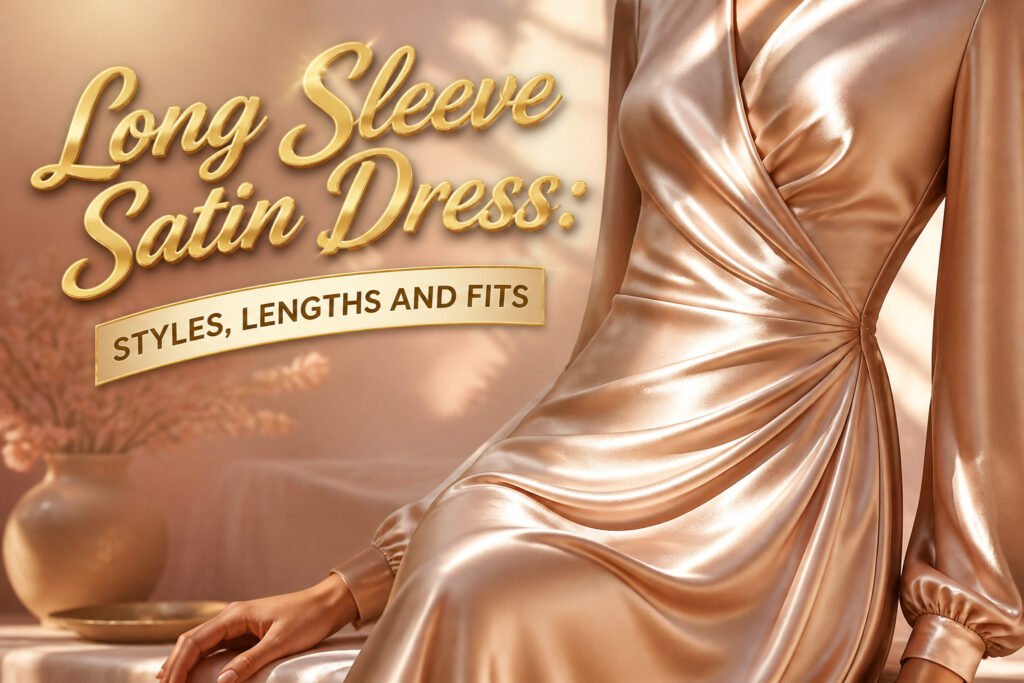
A long sleeve satin dress is any dress cut from glossy, smooth fabric with sleeves that reach the wrist. The catch is that satin has no stretch, so the fit must be exact from the start; a half-inch too tight and the fabric pulls across the body, a half-inch too loose and the silhouette collapses. Prices run from about $10 at fast-fashion retailers to well past $100 for heavier weaves with finished seams, and the difference shows up after a few washes, not in the shape itself.
Slip Dress

A long sleeve satin slip dress skims the body with almost no built-in structure, usually cut on the bias so the fabric falls in soft folds when you move. That bias cut is what keeps it from looking like a nightgown; the satin catches light differently at every angle, and the sleeves add enough coverage to wear it straight to an evening event without layering.
For a dinner or a gallery opening, the dress holds its own with simple heels. When the temperature drops, it slides cleanly under a tailored coat; the thin satin layer does not bunch at the shoulders the way a bulkier dress would.
The price range runs wide. Fast-fashion retailers start around $10 on sale, while designer versions with finished seams and heavier satin weight can push past $100. The difference shows up in how the bias cut hangs after a few washes, not in the silhouette itself.
Fit & Flare Dress
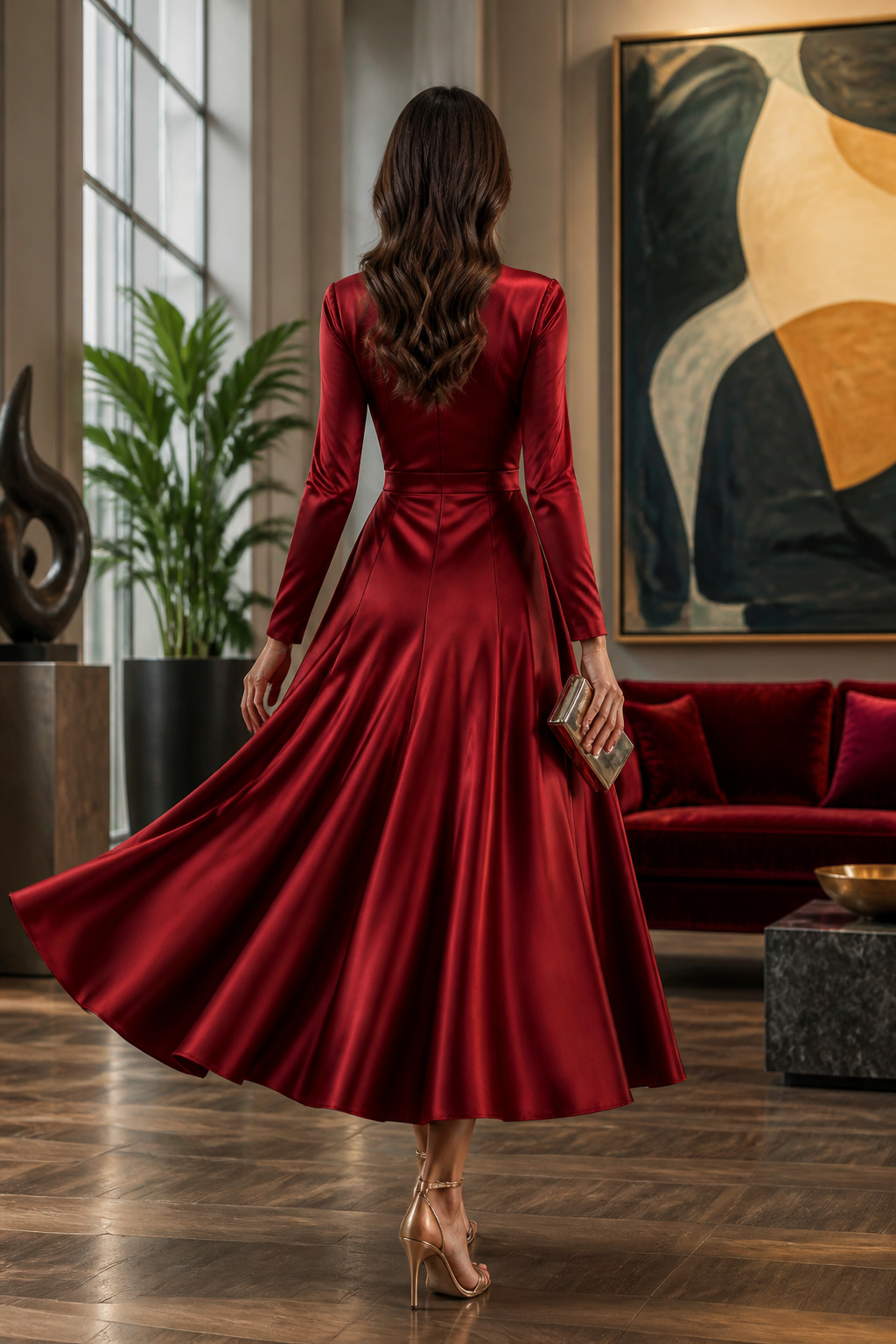
A fit-and-flare long sleeve satin dress pulls in at the natural waist and releases into a skirt that moves without clinging. That shape does the defining work for you: the bodice holds structure through the torso, and the flare starts right where the waist is smallest, so the silhouette reads as intentional even if the satin itself is unforgiving.
Sizing runs 2–24, with petite and tall lengths alongside standard and plus cuts. The proportions shift between those lines; a petite flare hits higher on the leg, while tall versions keep the skirt’s sweep balanced against the longer bodice. For anyone between sizes, the waist is the point that matters most, since the skirt has room built in.
The same dress works for a cocktail party or a wedding guest slot, though the satin weight and sleeve finish change the formality. A heavier drape with a simple cuff leans evening; lighter satin with a slight bell at the wrist reads softer for daytime ceremonies. I look at the neckline and sleeve detail first when deciding which event a particular version can handle, since the skirt shape stays constant.
Column Dress
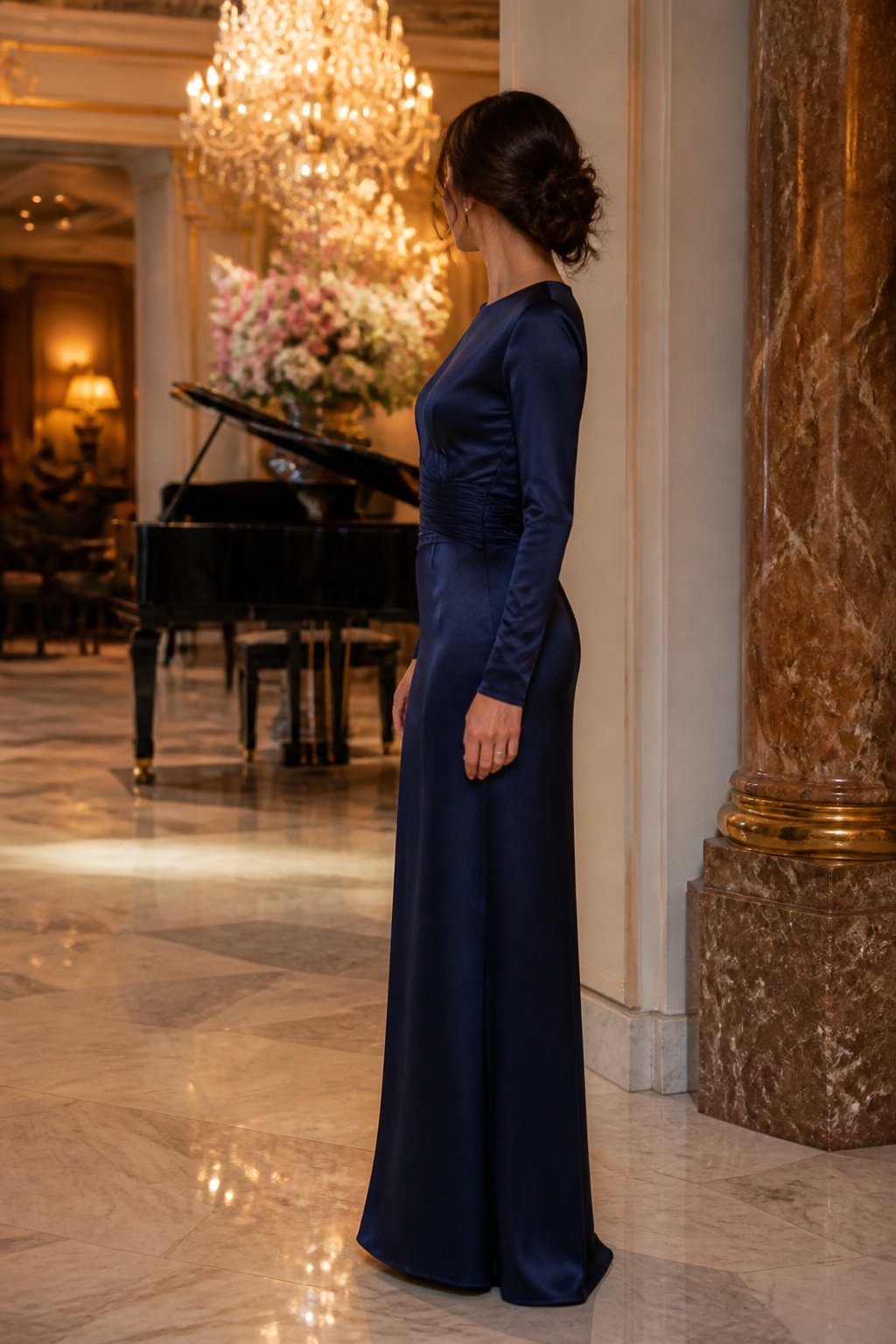
A long sleeve satin dress cut in a column silhouette runs straight from shoulder to hem without waist definition, and that uninterrupted vertical line does more of the visual work than any detail added later. The fabric’s own sheen catches light along that narrow shape, so the dress reads formal even in a simple cut. Long sleeves balance the expanse of satin and keep the look from feeling too bare for evening events.
Black and white are the colors that sell out first for this style, though red, deeper blues, and soft pastels turn up regularly for spring weddings and holiday parties. The narrow cut means movement is limited; sitting, stairs, and dancing all feel different than they would in a flared skirt. Satin has no stretch to speak of, so the fit through hips and thighs has to be right from the start. A half-inch too tight and the dress pulls across the seat; a half-inch too loose and the column effect collapses into a sack.
Shirt Dress

A long sleeve satin dress cut like a shirt dress carries the same bones as a borrowed-from-him Oxford: collar, button placket, cuffs with real buttons or working tabs. The tailoring tames satin’s tendency to read as bedroom-only, so the same fabric that slides at a dinner party passes at a client lunch or a Saturday gallery opening. Structure lives in those details; without the collar and placket, the piece drifts toward a nightgown silhouette that most offices and many restaurants would side-eye.
The button front also solves a fit problem satin often hides poorly. Unlike a pullover, you control the break point at bust and hip, which matters when the fabric has no stretch and shows every pull. I’ve watched friends size up in woven satins to accommodate one measurement, then swim everywhere else; the shirt dress lets you buy closer to your actual frame and leave the bottom two buttons open if the skirt needs more room.
Price spreads are wide and meaningful here. Budget versions usually run polyester satin with plastic buttons and a fused collar that softens after a few washes. The shape still works, but the placket gaps where the fabric lacks body. Spend more and you hit silk or a heavier acetate blend, mother-of-pearl or metal buttons, and a collar with interlining that keeps its edge. For occasional wear, the cheaper construction holds up fine; for weekly rotation, the heavier fabric and better hardware repay the difference in how the dress hangs at hour four versus hour one.
Skater Dress

The skater cut gives a long sleeve satin dress its most playful energy. A fitted bodice and sharply flared skirt leave the legs exposed while the arms stay fully covered, a contrast that reads deliberate rather than accidental. Most nights out, that balance lands exactly right: enough fabric to feel dressed up, enough movement to feel approachable.
Sizing runs 2–24 in most lines, and the cut forgives more than a bodycon or slip style because the flare starts at the natural waist. The waistband placement matters more than the skirt length here; too high and the flare begins under the bust, too low and the hips look wider than the cut intends. On my frame, sitting right at the narrowest point keeps the proportions honest.
The satin catches light differently on a moving skirt than on a static column, so the fabric reads more casual than it would in a floor-length gown. That makes the skater shape the easiest long sleeve satin dress to wear to a bar or a birthday dinner without looking like you missed the dress code.
Wrap Dress

A satin wrap dress ties at the waist with a self-closing belt that lets you set the fit yourself. The long sleeves balance the deep V-neck this cut creates, so the overall silhouette stays covered rather than revealing. Colors run from black and champagne through emerald and rust, which means the same dress shape works for a dinner out or a daytime event depending on the shade you choose. The closure can loosen over an evening, so a quick check after sitting or eating saves you from realizing the gap shifted later. For casual settings, a softer drape and shorter hem read relaxed; firmer satin that skims the knee shifts the same cut toward semi-formal without changing the fundamental piece.
Bodycon Dress

A long sleeve satin dress in a bodycon cut leaves almost nowhere to hide, which is exactly why the fabric choice matters so much. Satin’s natural sheen catches light across every curve, so the silhouette reads more dramatic than the same shape in matte jersey. What starts as simple can shift quickly into costume territory if the fit is even half an inch off.
Some versions add ruching along the sides or a subtle cutout at the waist to break up the continuous line. Those details help, but they also create new fit points. Ruching that pools instead of lying flat usually means the dress is sized too large; a cutout that gaps when you move suggests the opposite. The sleeves compound this because satin has no stretch to speak of, so the arm length and bicep measurement need to be right from the start. I have learned to check whether the sleeve is cut on the bias, which gives just enough give for reaching forward without distorting the shoulder line.
For an event where you will be seated for long stretches, the bodycon shape in satin can feel constricting in a way that a knit bodycon does not. The fabric does not breathe much and it does not forgive. That trade is worth making for a short evening, less so for a dinner that runs past midnight.
Shift Dress

A long sleeve satin shift dress hangs straight from the shoulders with no waist seam at all. That clean line is what makes it work for so many ages and settings; there is nothing to fight against your shape, nothing to date the silhouette. The satin gives the simple cut its presence, catching light along that uninterrupted vertical drop.
Solid colors dominate this style for good reason. A single tone keeps the focus on the fabric’s drape and the line of the sleeve, and it leaves room for whatever accessories you already own. Minimal styling suits it best: one pendant, a slim watch, done. The dress does the work without layers or belts competing for attention.
I have seen this cut read as too plain when the satin is heavy or stiff, which kills the movement that makes a shift interesting. Lightweight satin that skims rather than boxes is the difference between looking finished and looking like you forgot to tailor it.
Blazer Dress

A blazer dress in long sleeve satin carries the sharp lines of tailoring into evening territory without looking like you forgot your pants. The lapels, the button stance, the slight structure through the shoulders: all of it signals intention rather than improvisation. Satin softens the office reference just enough, catching light where wool would absorb it.
Events where a suit would feel right are where this piece lands best. Cocktail hours with a professional crowd, gallery openings, dinners where someone might ask what you do before they ask where you found your dress. The long sleeves keep the sheen from reading as too bare or too casual.
Fit matters more here than with looser satin styles. The bodice needs to sit close enough that the lapel line stays crisp; gaping at the bust breaks the jacket illusion entirely. If you are between sizes, the smaller one usually wins, since satin has little stretch to forgive a too-generous cut. Hem length changes the tone significantly: mid-thigh reads confident, knee-length reads considered, and past the knee starts to compete with the tailoring for attention.
Smock Dress

A smock dress in satin sounds like a contradiction at first. Satin usually clings or drapes close to the body, and smocking does the opposite, gathering fabric into loose volume that moves away from the frame. The result is a dress that reads relaxed rather than formal, almost like wearing a very polished nightgown out to dinner.
The cut works best when the gathering sits high, at the neckline or just beneath, so the volume starts from the shoulders and falls in a column rather than adding width at the hips. Some versions keep the silhouette plain, but lace trims at the collar or tiered ruffles at the hem push the look toward romantic rather than minimalist. Those details add visual interest to a shape that can otherwise look like a tent on smaller frames.
Because the fabric is satin, the dress still catches light even with all that extra fabric. The sheen moves across the gathers in a way matte cotton never would, which keeps the piece from looking too casual. For someone who wants the comfort of a loose dress without giving up the occasion-appropriate feel of satin, this is the compromise that actually works.
Tailored Dress

A long sleeve satin dress with proper tailoring sits differently on the body than the slip styles that rely on gravity alone. Darts at the bust and waist, set-in sleeves with structured shoulders, and a defined seam at the natural waist all work together to create shape rather than simply hang from it. The construction reads more intentional, more finished.
This middle ground between an unstructured shift and a rigid column dress makes the tailored option versatile enough for offices that allow satin, dinner reservations, or events where you want polish without full formality. The precision costs more. Quality construction in satin, with linings that prevent cling and seams that lie flat, pushes the price toward the higher end of the range. Cheaper versions often skip the lining or place darts asymmetrically, and the fabric reveals every shortcut.
Fit matters more here than in looser silhouettes. A half inch at the waist or a sleeve that grazes the wrist rather than the knuckle changes the whole effect. Alterations are worth budgeting for, especially at the shoulders, where ready-to-wear rarely lands right.
Maxi Dress

Floor-length cuts give a long sleeve satin dress the most room to show off what satin actually does best: that liquid drop from shoulder to hem. The fabric needs length to pool and move the way it promises on the hanger, and a maxi is where that happens.
Coverage changes the message fast. A high neck and fitted sleeve reads formal, almost gala territory, while a looser cut with a lower neckline shifts straight into resort or vacation wear. The same fabric, two different occasions, decided almost entirely by how much skin stays covered.
Sizing runs the full range, tall fits included, which matters more here than in shorter styles because an inch off the hemline at floor length is an inch you step on. Brands that offer tall and standard lengths separately tend to get the proportion right where one-size attempts pool into a tripping hazard.
Mini Dress

Short hemlines paired with long sleeves in satin create deliberate proportion play. The covered arms keep the look from reading too casual, while the abbreviated length gives it energy. I noticed this balance most when I was sorting through options for dinner out versus a daytime event; the same dress shifts between the two depending on shoes and whether you add a layer.
These styles turn up most often in going-out contexts, though a more relaxed cut works for casual occasions too. Fabric weight matters here. Thicker satin holds structure on a short skirt and won’t flip around in a breeze; thinner versions can look limp after a few hours of sitting.
Budget-friendly options start around $10, which makes this an easy entry point if you are testing whether the silhouette flatters your frame. At that price, construction details like lined sleeves and finished seams tend to be the first corners cut. A slightly higher spend usually buys you better drape and a hem that hangs level rather than creeping up in back.
Midaxi Dress
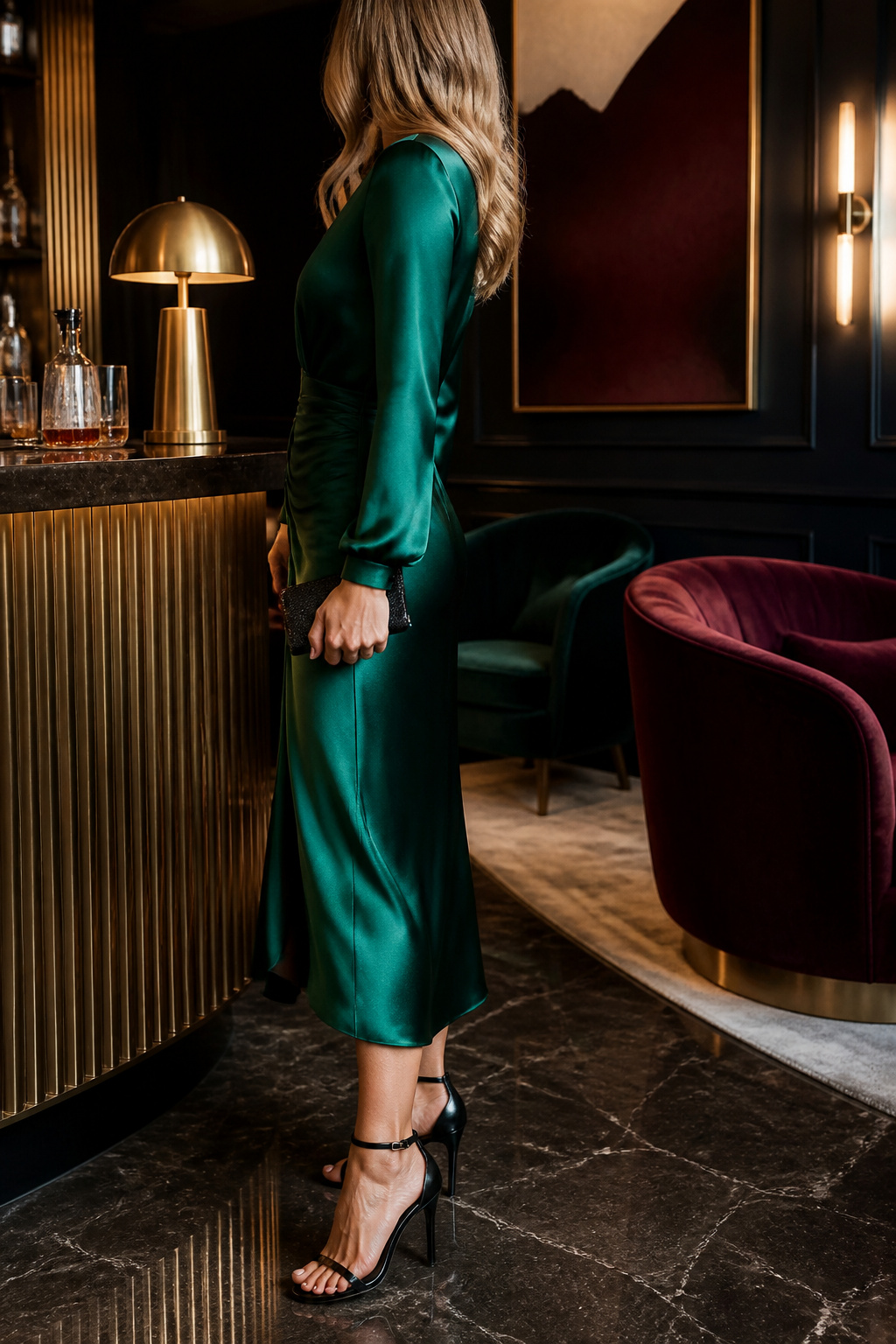
Hemlines that fall between midi and maxi on a long sleeve satin dress give you coverage without committing to floor length. This midaxi length sits somewhere around the lower calf to just above the ankle, a newer category that retailers have settled on in the last few years as women started asking for something between the two standards.
The length works especially well for events where you are moving between indoors and out, or day into evening. You get the formality of a longer line without the tripping hazard on stairs or the need to lift your skirt in a crowded room. Satin adds enough polish that the cut can stay simple, and the long sleeves balance the extra fabric at the hem so the silhouette does not feel bottom-heavy.
Color options run the same range as shorter or longer styles: deep jewel tones, black, champagne, and the occasional soft blush or sage. The midaxi cut does not limit your choices there. What does change is footwear. A heel helps the length avoid looking accidental, but a pointed flat in a matching tone can work if you would rather not wear height.
For transitional occasions, this is the length I would check first.
Occasion Dresses

A long sleeve satin dress built for an occasion reads differently than one grabbed for a dinner out. The fabric is the same, but the intent changes everything: a bridal party version usually runs in a specific color called out months ahead, while a wedding guest piece avoids white entirely and often picks up lace trim at the cuff or neckline to signal its purpose.
Evening formal brings the deepest shift. Jewel tones, emerald and sapphire especially, carry the weight that black used to monopolize, and the sleeve itself becomes part of the gesture, a full length that pools slightly at the wrist rather than cutting clean. The satin here is rarely the high-shine liquid kind; a subtler luster photographs better under reception lighting and forgives the creases that sitting through speeches will press into it.
What convinced me, looking through how these are actually worn, is that the same dress moves between events only when the detail is restrained. A lace panel that reads bridesmaid at one wedding becomes merely formal at a charity dinner if the color shifts from blush to burgundy. The versatility lives in what you leave off, not what you add.
What to Wear It For
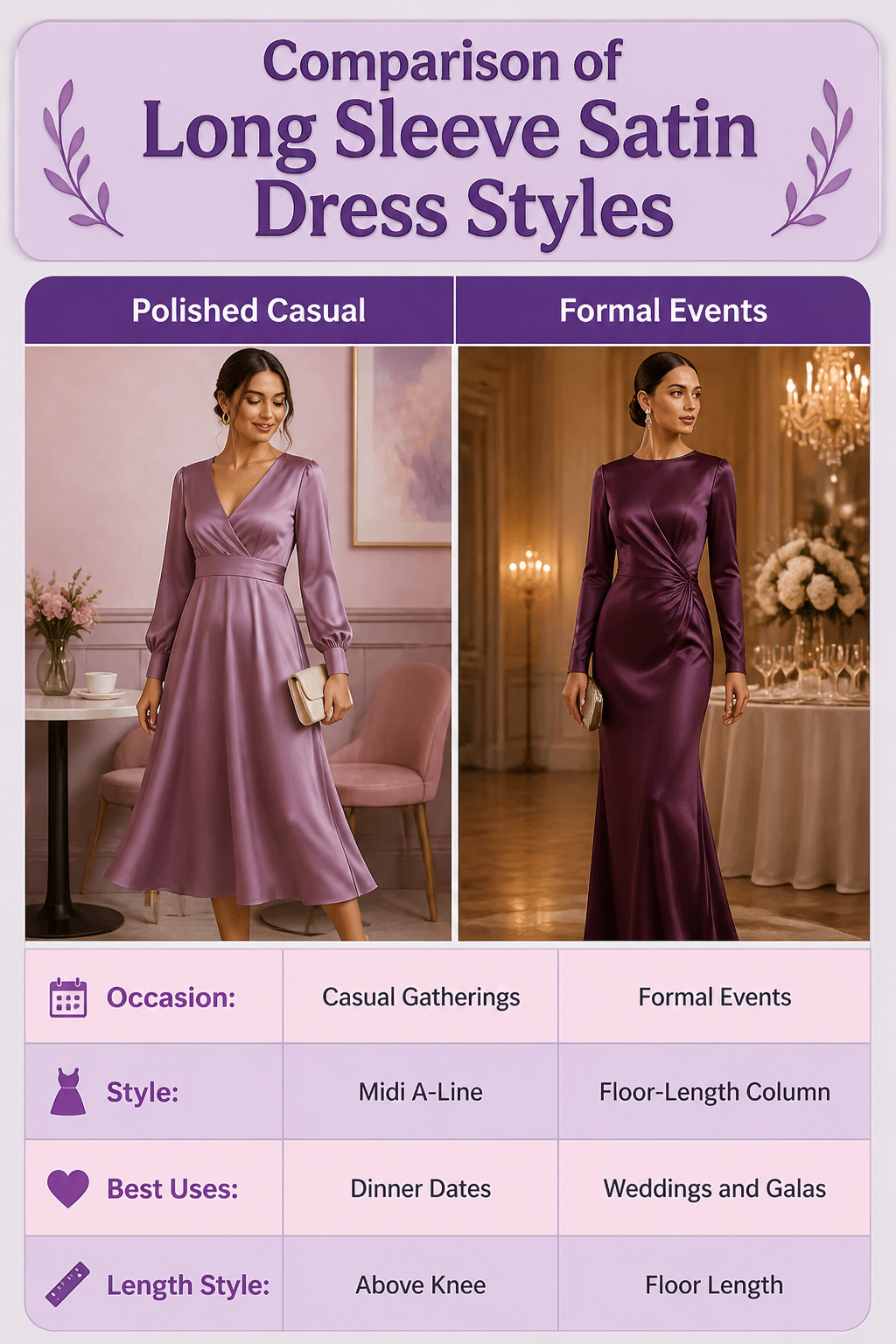
A long sleeve satin dress in a midi length with a gentle A-line reads as polished without trying too hard for dinner dates or evening events where you want to feel dressed up, not costumed. The fabric does the work; the cut keeps it wearable.
Floor-length column styles in heavier satin drape lean formal, and that is where they belong. Weddings, galas, or any invitation with a dress code printed on it: this is the shape that satisfies the requirement without looking like you borrowed it. The long sleeve keeps a full-length gown from feeling like too much skin for a winter ceremony or a church setting.
Shorter hemlines change the story entirely. A long sleeve satin dress that hits above the knee, especially with a looser shift or smock cut, works for casual gatherings where you still want texture. Brunch, a friend’s birthday, a gallery opening: the sleeve keeps the satin from reading as nightlife-only, and the shorter length keeps it from reading as bridal.
The mistake I see most often is choosing a dress that fights its own fabric. Satin wants to move and catch light; a stiff, heavily structured long sleeve satin dress at a casual backyard party looks like you are wearing the wrong event’s clothes. Match the ease of the cut to the ease of the occasion, and let the material do what it does best.
Finding Your Size

Satin has almost no give, which means a long sleeve satin dress that is half a size off will tug at the shoulders or bunch at the waist rather than forgiving you. Most brands stock these dresses from 2 to 24, with plus, petite, and tall fits alongside standard sizing, but the cut matters more than the number on the tag.
A relaxed shift or smock silhouette leaves room through the midsection and hips, so you can often size down if you are between sizes. A fitted column or bodycon style, on the other hand, demands exact bust, waist, and hip measurements because the fabric will not ease over a mismatch. Sleeve length is another place where precision pays off: satin sleeves that are too long will slide past your knuckles and look borrowed, while too-short sleeves break the line of the arm and read as an afterthought.
Petite and tall lines adjust the torso and sleeve proportions, not just the hem, which is worth seeking out if you are under five-foot-three or over five-foot-nine. In my experience reading size charts across retailers, the brands that list garment measurements rather than body measurements save the most returns, since satin’s structure means the dress will fit exactly where those inches fall.
Color and Fabric Notes

Satin’s sheen shifts color more dramatically than matte fabrics, which is why a long sleeve satin dress that looked perfect under store spotlights can read completely different at a candlelit table. The same emerald turns almost black in dim light; champagne becomes dull khaki under fluorescents. Black and white stay the safest bets because they depend least on that reflective quality, though even they gain or lose depth as the light changes.
Red, navy, and softer pastels give you more range, but the payoff is higher risk. A blush pink that feels romantic at noon can wash out entirely after sunset, while a deep sapphire might look almost purple where you expected classic blue. The fabric itself is always labeled satin for the lustrous surface, yet the weight behind that label varies enormously. Heavier satins with a tighter weave drape like liquid and cost more; lighter versions move differently and tend to wrinkle faster. Price usually sorts them honestly, so the hand-feel in the fitting room is worth trusting.
What Changes the Price

A long sleeve satin dress can run anywhere from $10 to well past $100, and the gap comes down to what you are actually paying for. Fabric weight is the first thing to check: heavier satin with a denser weave hangs better and resists snagging, while the cheapest versions feel almost like costume material and start to pill after a few wears. Construction complexity matters next. A simple shift with straight sleeves takes less labor than a fitted bodice with princess seams, gathered cuffs, or a lined skirt that keeps the satin from clinging.
Design details push the price up fast. Lace insets, cutout panels, or hand-finished hems add hours to production, and that cost lands on the tag. Brand positioning does the rest. A label selling event wear will price higher than a fast-fashion retailer even when the raw materials look similar, because you are also buying the fit consistency and the return policy.
Below $30, expect synthetic satin, minimal lining, and seams that may pull at stress points. The $40–$80 range is where fabric weight and clean finishing usually show up. Above that, you are often paying for couture construction, deadstock fabric, or a brand name. For most occasions, the middle tier is where the value sits: the dress looks expensive without the markup that buys you nothing extra you can see.
Frequently Asked Questions
What styles of long sleeve satin dresses are available?
You will find slip, fit-and-flare, column, shirt, skater, wrap, bodycon, shift, blazer, smock, tailored, maxi, mini, and midaxi styles. Each cut changes how the satin behaves: a slip skims the body on the bias, a blazer dress borrows tailoring from menswear, and a smock gathers volume at the neckline for a looser shape.
What occasions are long sleeve satin dresses suitable for?
These dresses work for going out, bridal events, casual gatherings, and formal evenings. A midi A-line suits dinner dates, a floor-length column handles weddings and galas, and a short shift or smock fits brunch or a friend’s birthday. The sleeve keeps satin from reading as nightlife-only, while the cut tells the room how dressed up you intended to be.
What sizes do long sleeve satin dresses come in?
Most brands stock them from 2 to 24, with plus, petite, and tall fits alongside standard sizing. A relaxed shift or smock lets you size down if you are between sizes; a fitted column or bodycon needs exact bust, waist, and hip measurements because satin will not stretch to forgive a mismatch.