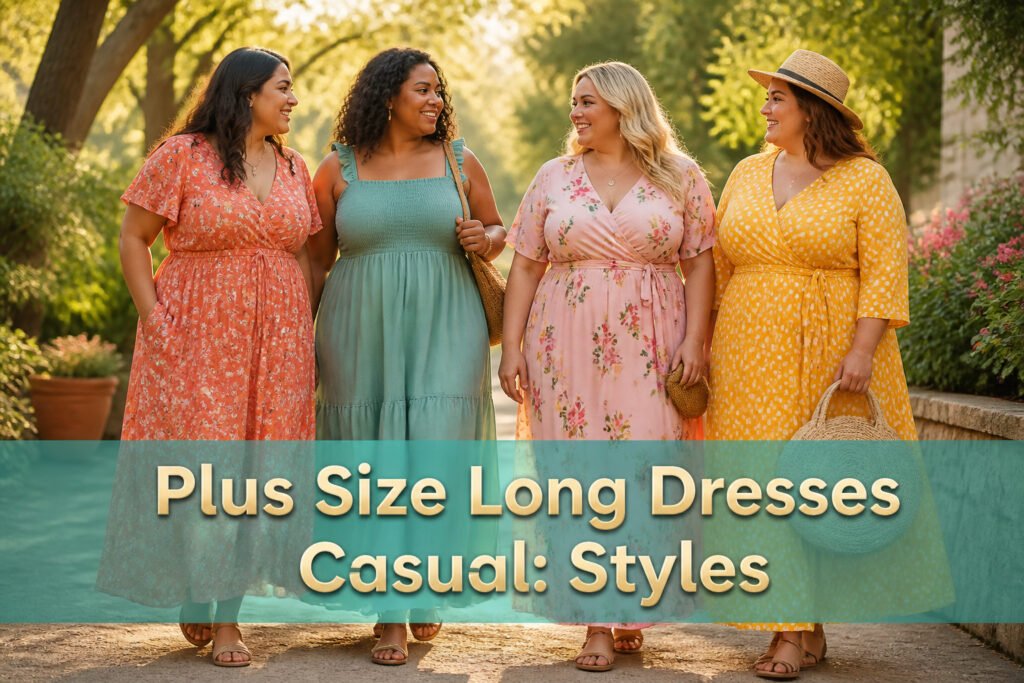
A casual plus size maxi dress hits the ankle at 57–60 inches from shoulder to hem, but the fabric weight decides whether it belongs at a grocery run or a gala. Lightweight cotton or jersey drapes like everyday clothes; satin or crepe catches light like occasion wear. The boatneck plisse cap-sleeve cut balances fuller hips with a horizontal collarbone line, while its crinkled texture hides cling without the rigidity of formal lining.
What Makes a Maxi Dress Casual

A true maxi dress hits the ankle, not the floor. For plus sizing, that usually means 57–60 inches from shoulder to hem, enough to clear the ankle cleanly without the hem dragging through parking lots or puddles. Anything shorter reads as midi; anything longer starts demanding heels and a clutch.
Fabric weight is what separates the casual from the dressed-up. Lightweight cotton, soft jersey, or a breathable linen blend drapes loosely and moves like everyday clothes. Heavy satin, structured crepe, or anything with a sheen catches light the way occasion wear does, and it does not forgive a quick grocery run.
The same cut shifts categories based on neckline and sleeve. A deep V or wide scoop with short flutter sleeves looks right for errands or a patio lunch. Swap in a high halter, a fitted long sleeve, or a structured bateau neckline and the dress starts asking for an invitation and a reservation. I look for necklines that sit comfortably without a special bra and sleeves that do not fight a cardigan.
Boatneck and Cap-Sleeve Cuts
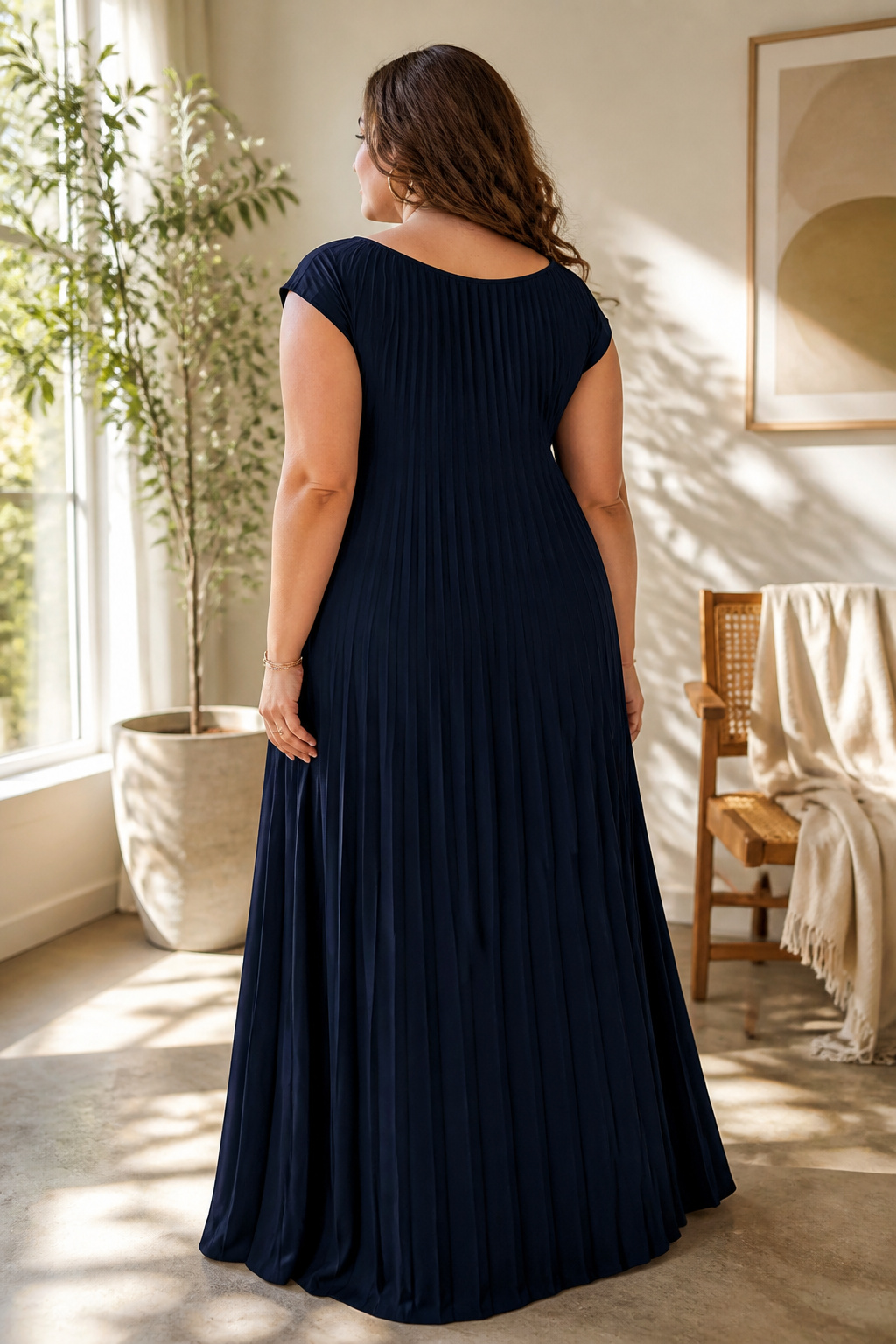
A boatneck plisse cap-sleeve maxi dress solves two fit problems at once. The neckline draws a horizontal line across the collarbone, which widens the shoulder visually and balances fuller hips below. Plisse, that permanently crinkled texture pressed into the fabric, gives the skirt body without the rigidity of a lined formal piece; it moves like a casual dress should, but the ridges hide the cling that thinner jersey shows after lunch.
Cap sleeves end right at the shoulder cap, covering where a bra strap sits without extending into the upper arm. That shorter sleeve head matters if you layer, because a cardigan or denim jacket slips on without the bunching you get from gathered elbow-length sleeves. The dress stays the outfit; the cardigan becomes the variable you add or remove.
Tiered and Shirred Bodice Styles
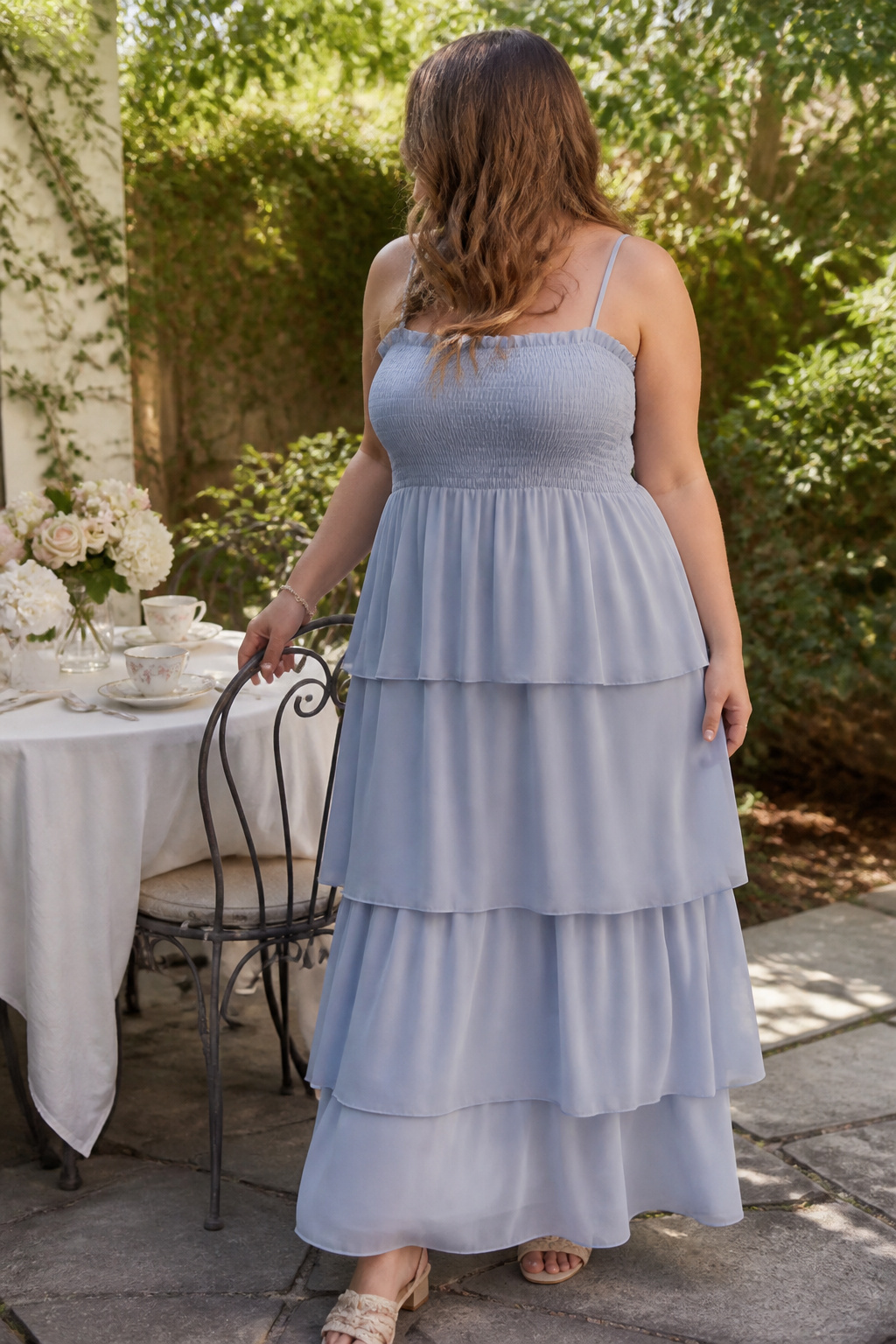
Tiered skirts move like water when you walk, and the best part is they never cling at the hip. Each gathered layer floats past the body instead of tracing it, which makes the Tiered Chiffon Maxi Dress forgiving on days when fitted anything sounds like punishment. The catch with chiffon tiers is sunlight; the fabric turns sheer in bright light without a full lining, so a separate slip or built-in layer is non-negotiable if you plan to wear it outdoors past noon.
Shirring at the bodice works on a different problem. The Sherry Shirred Bodice Maxi Dress uses elasticized gathering across the bust, which stretches over a range rather than locking into one cup size. That matters more in plus sizing than standard, since ribcage-to-bust ratios vary wider and a fixed measurement often gapes or pulls. The shirred panel also lies flat under a cardigan without the bulk of darts or seams, which keeps the silhouette casual rather than cocktail-ready.
Placement Prints and Scarf Patterns
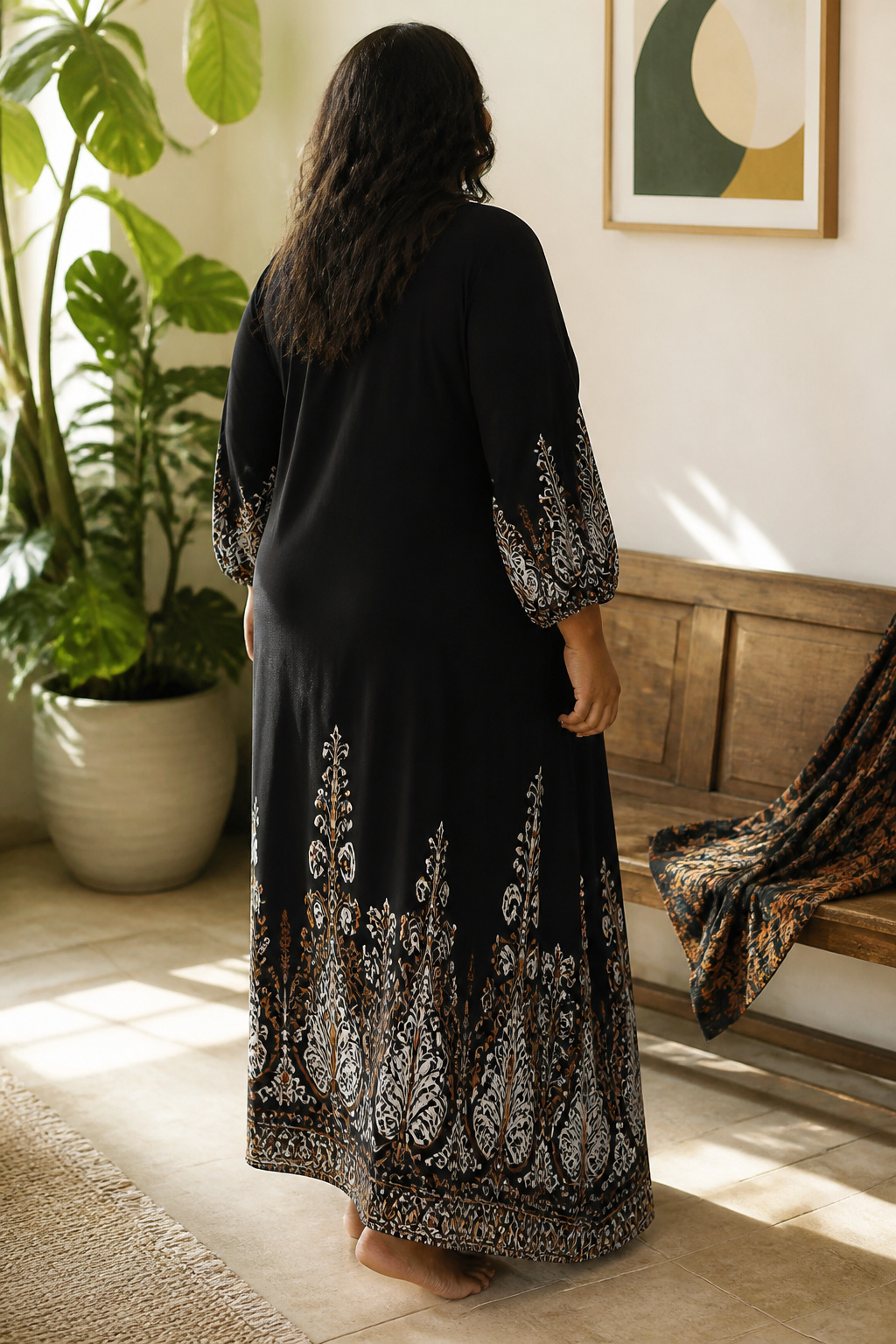
Placement printing changes how a pattern behaves on a longer frame. Instead of repeating the same motif all over, the design lands at specific points: the shoulder, the hem, the side seam. That restraint creates a vertical line the eye follows straight down, which is exactly what a casual maxi dress needs to avoid looking like a tent.
The Serene Placement Sleeved Maxi Dress puts its print low, near the ankle, and again at the cuff. Your gaze travels from one to the other without stopping at the midsection. The Eliana Scarf Placement Print Dress works the same trick with a different geometry; the print sits where a scarf would fall, drawing the eye downward along the body. Scarf prints elongate the silhouette by keeping the movement vertical, not circular.
I noticed this only after trying a repeating floral that seemed to add width at the hip. The placement version of a similar color story read as five pounds lighter because the print was doing directional work instead of decorative work. For casual plus size long dresses, that distinction matters more than the print itself.
Mesh and High-Neck Details

Mesh insets on a maxi dress solve a problem shorter cuts don’t really have: how to add coverage without turning July into a sweatbox. The Mere Mesh High Neck Dress builds the neckline and sometimes the upper sleeve from sheer paneling, which keeps the fabric off your collarbone while still reading as "dressed" rather than "beach cover-up." On a knee-length dress, that same high neck can look severe or office-bound. At ankle length, the proportions shift; the eye travels up the vertical line and the mesh breaks it just enough to keep things interesting.
Air actually moves through mesh at the sleeve or neckline, which matters if you run warm but don’t want to bare your shoulders in a casual setting. I’ve found that panel placement makes or breaks whether the dress stays in rotation. Mesh across the upper back and a slice at each sleeve works better for me than a sheer yoke that shows bra straps no matter what I try. The covered look some of us prefer for errands or family gatherings doesn’t have to mean a solid wall of fabric from chin to toe.
Shirtdress and Structured Waist Options
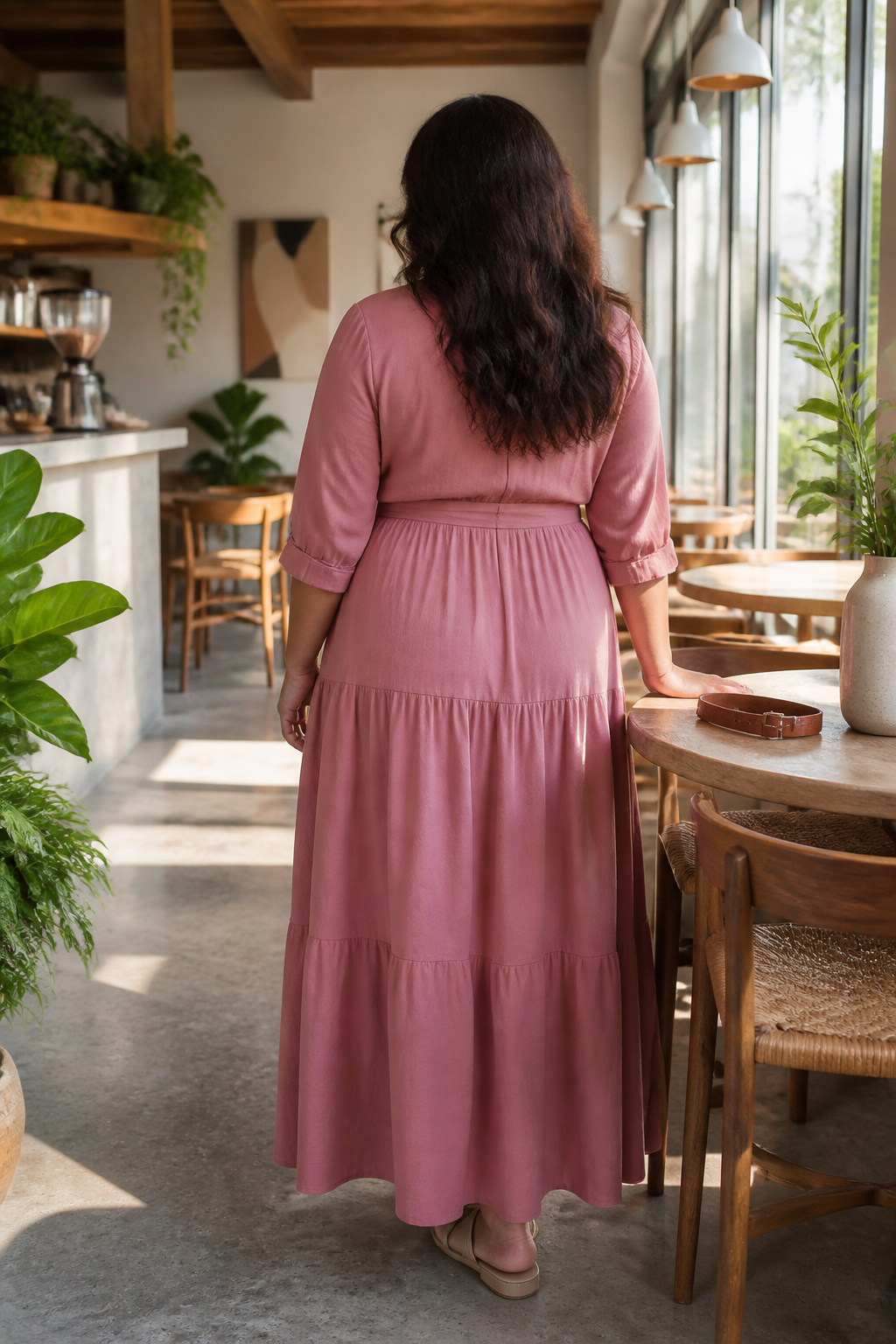
A shirtdress closure gives you room to adjust through the bust and waist without the all-or-nothing fit of a side zip. The Marianne Tiered Shirtdress uses that button front to let you decide how fitted you want the bodice, and the tiered skirt breaks up the vertical line so the dress doesn’t read like a long blouse that got away from you. The tiers add volume where a straight skirt would cling, which matters on a longer length where fabric has more room to pool or pull.
Belt loops are there if you want to cinch the waist, but the seaming is structured enough that the dress holds its shape without one. That matters for actual casual wear, not just styled-for-Instagram casual. I’ve worn mine with flat sandals for errands and switched to a heeled sandal for dinner; the hem length stays the same, but the shoe changes what the dress is doing. The collar and cuffs keep it from looking underdressed at night, and the tiered skirt moves enough that you don’t feel like you’re wearing office clothes to a restaurant.
The Solid Black Basic

A black maxi dress fills the same slot in a casual wardrobe that black trousers once did: the reliable base that lets you change everything else and still look pulled together. The Braelynn Maxi Dress in black works this way because the color recedes, letting jewelry, shoes, or a jacket do the shifting. Sleeve length is what actually moves it through the calendar. A tank or cap sleeve reads June through August; three-quarter sleeves handle September office chills without looking like you grabbed the wrong season.
True black, not the charcoal that passes for black after a few washes, keeps the vertical line intact. Faded black breaks the silhouette at the hem and waist and turns the lengthening effect into a shrug. On jersey fabric, which most casual maxis use for stretch, pilling shows within a season of regular wear, and it shows worse on solid black than on prints because there is no pattern to distract the eye. A fabric shaver helps, but the dress that starts as a staple will look tired faster than a printed equivalent worn the same way.
Strapless and Off-Shoulder Builds

A strapless maxi dress in plus sizing lives or dies by its bodice engineering, and the cheap ones always choose wrong. Elastic alone will ride down within an hour; the weight of a long skirt pulls the whole garment south until you’re yanking it up every few minutes. What actually works is a combination of grip tape along the upper edge, light boning at the side seams, and a structured lining that distributes pressure across the ribcage rather than concentrating it at the bust. The Ruffled Metallic Strapless Maxi Dress gets this right when the interior is built like a foundation garment, not an afterthought.
Off-the-shoulder styles solve the gravity problem differently but introduce their own. The neckline band must be snug enough to stay put through arm movement, reaching, and the natural rotation of shoulders during a normal day. Too loose and the whole bodice slides up like a window shade; too tight and the restriction shows in your posture. A secure neckline band with silicone strip backing beats any amount of elastic ruching for keeping the Off-the-Shoulder Maxi Dress in place while you actually move. The ruffle or drape on top hides the engineering underneath, which is the whole point: the structure should do its job without announcing itself.
Faux Wrap and Bodycon Fits
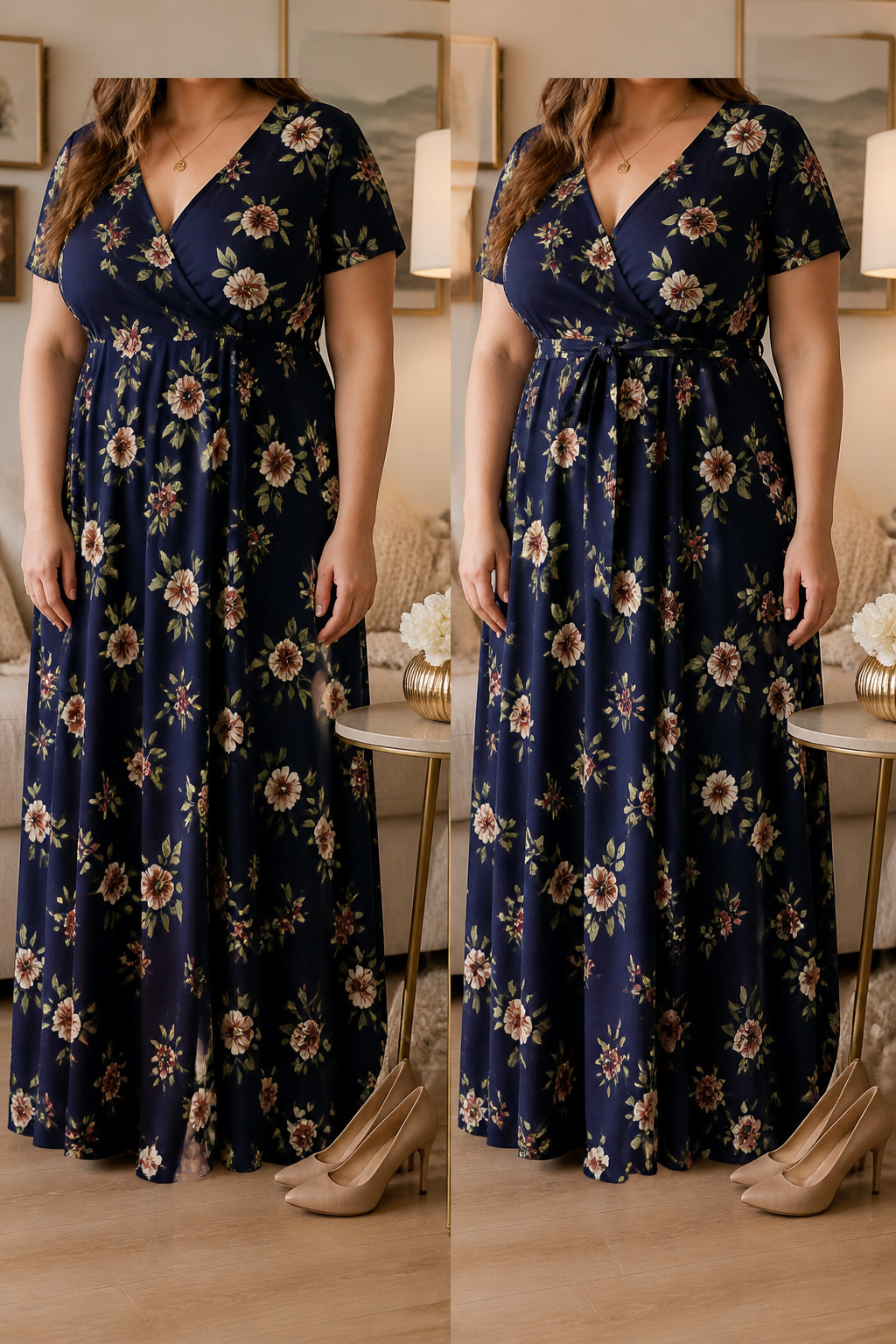
A faux wrap maxi solves the problem that stops a lot of women from buying actual wrap dresses: the bust gap that opens up when you sit, reach, or walk fast. The closure is fixed, so the V-neck stays put without a camisole underneath. The skirt still drapes and moves like a wrap, which keeps the casual feel intact.
Bodycon maxi dresses are a different commitment. The fabric has to recover, or by 3 p.m. the seat and knees bag out and the whole silhouette drops. I look for a high elastane content, usually around 8–12%, and I test the recovery by bunching the fabric in my fist for ten seconds. If the crease stays, the dress won’t hold its shape through a full day of wear.
The hem width on a bodycon maxi is the detail that either works or traps you. Too narrow below the knee, and your walking stride shrinks to a shuffle. I check that the skirt measures at least 22–24 inches across the bottom opening in my size; anything less, and I am counting steps on grocery runs. The faux wrap avoids this entirely, since the flare gives natural movement without a formula.
Floral and Boho Prints
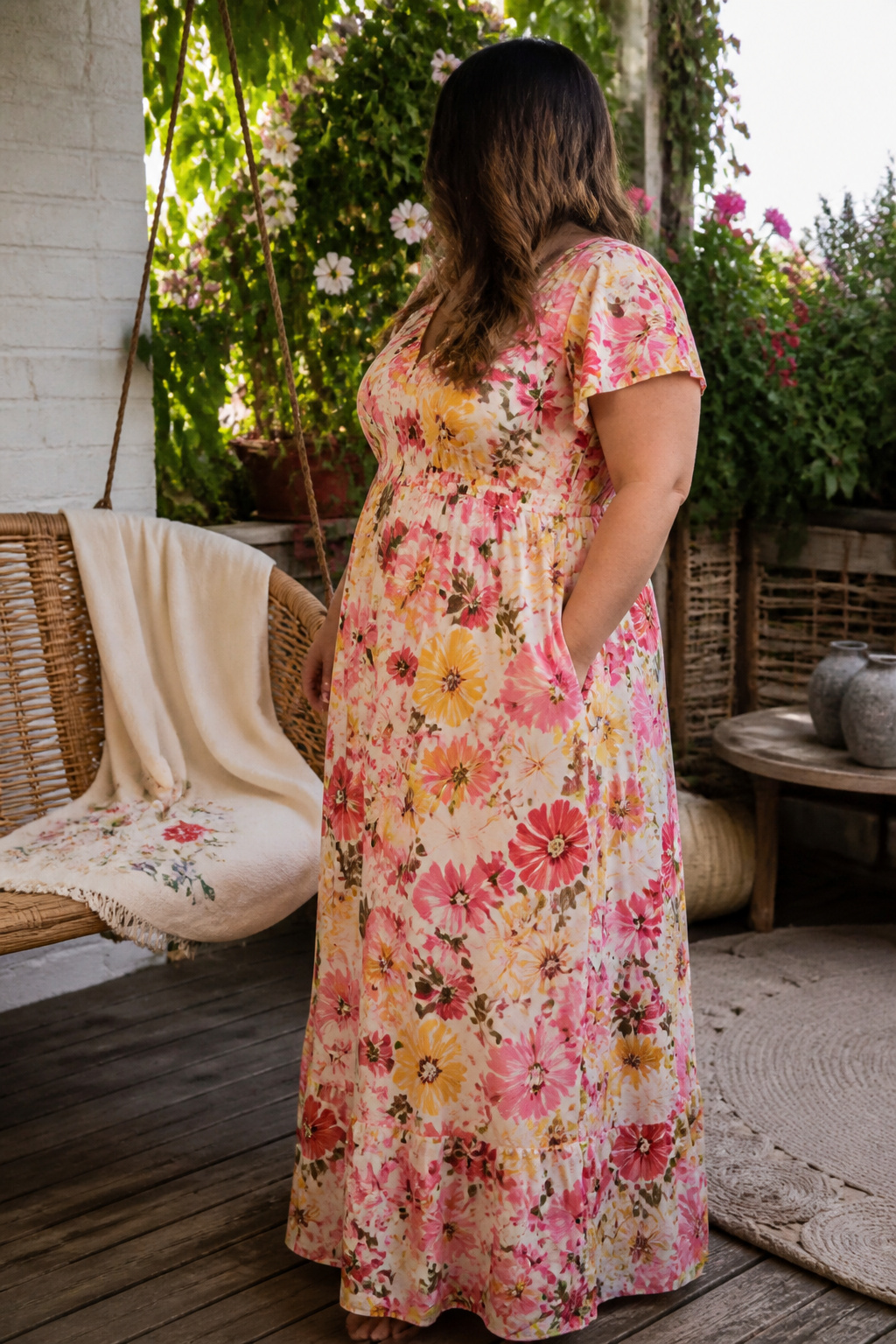
The floral print maxi dress and boho maxi dress together account for the bulk of casual search traffic, and the reason is simple: both read as relaxed without trying hard. Smaller florals recede visually; larger ones advance, which matters more on a long dress where the pattern has room to run. A tiny repeat can disappear into the fabric and flatten the silhouette, while an oversized bloom gives the eye something to land on and creates shape where the cut is straight.
Boho styling pushes into weekend territory through its trim. Embroidery, tassel fringe, or crocheted insets signal vacation or Saturday morning coffee, not a desk. That distinction is useful if you are dressing for an office with a loose code but still a code. The same maxi length in a solid or subtle stripe crosses over; add tassels and you have committed to leisure.
Scale of print relative to body size is not about hiding or minimizing. A very large print on a very petite frame can wear the person rather than the other way around, and the reverse holds: a delicate scatter can look accidental on a taller or broader build. What worked for me, sorting through racks of both, was choosing the scale that felt intentional. Medium-sized florals with some breathing room between repeats hit the balance most often.
High Slit and Leg Exposure

A high slit maxi dress solves the main problem with narrow maxi skirts: the stride. Without a slit, the hem traps your ankles and forces a shuffle. A slit, usually landing mid-thigh to just above the knee, lets your legs move normally while the fabric still pools at the floor.
Where the slit sits changes how the dress walks. A centered front slit opens straight ahead with each step, showing more leg forward and working best with flats or low sandals that keep the line clean. A side slit flashes the leg laterally, which pairs better with a heel or wedge because the angle draws the eye down to the shoe.
The lining matters more than people think. A dress with a full skirt liner sewn only to the waistband will ride up when you sit, exposing the thigh above the slit. What works better is a liner attached at the side seams or one that stops short of the slit opening, so the outer skirt falls back into place naturally when you stand. I learned to check this in a dressing room chair, not just the mirror.
Chiffon and Formal-Adjacent Fabrics
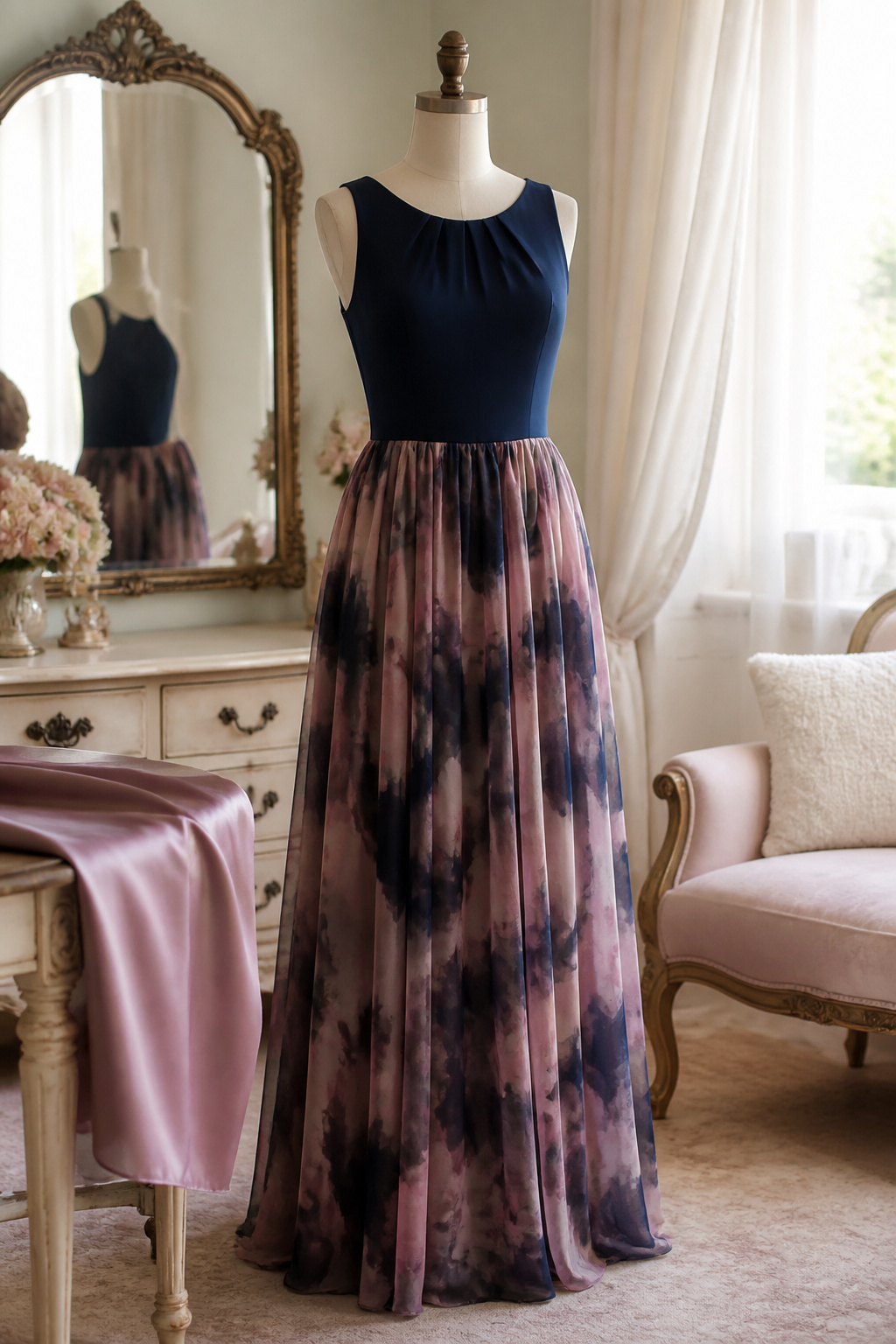
Chiffon lands in a tricky spot for casual wear. The same fabric that reads as cocktail-ready at 30 gsm softens into garden-party territory closer to 20 gsm, and that weight difference is the first thing to check on a label. A lined bodice in heavier chiffon with an unlined skirt at the lighter weight gives you the structure without the full occasion-dress feel.
Lining weight matters as much as the outer layer for all-day comfort. A heavy polyester lining under lightweight chiffon traps heat against the body, so the dress that looks airy ends up feeling like a tent in July. Cotton or viscose linings breathe better, and in a maxi length that fabric choice adds up over hours of wear.
The snag risk is real and specific. Rough-edged jewelry, seat belt hardware, and even textured purse straps catch chiffon’s loose weave. A pulled thread on a solid color shows more than on a print, which is worth weighing if this is a dress you plan to throw on for errands rather than baby carefully.
Long Sleeve and Transitional Season Wear
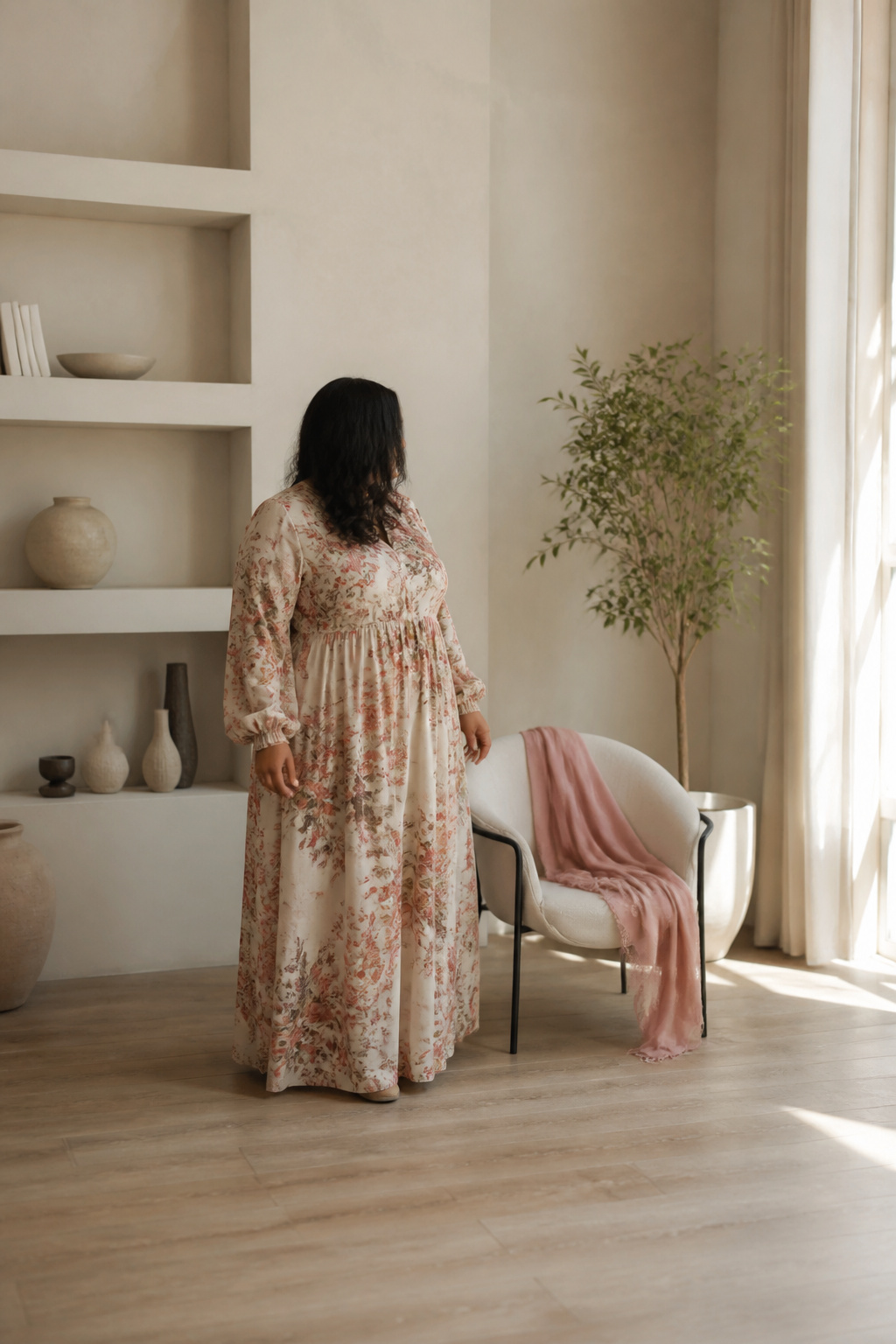
A long-sleeve maxi in lightweight fabric solves the summer office air-conditioning problem without requiring a separate layer. The sleeve length matters more than most shoppers notice. Bracelet-length sleeves, hitting just above the wrist bone, stay clear of keyboards and coffee cups while still covering enough skin for a chilly cubicle. Full-length sleeves run warmer and bunch at the forearm when pushed up, which is what you’ll do by 10 a.m. Bishop sleeves with their gathered volume look romantic in photos but the extra fabric dips into sinks and catches on drawer pulls; one practical compromise is a bishop cut in a slimmer sleeve volume that tapers before the wrist.
The fabric weight decides whether the dress works across three seasons or sits unused. A rayon or thin jersey long-sleeve maxi moves from September through May in most climates, while the same cut in heavier cotton knits becomes a single-season piece. For transitional wear, the sweet spot is a sleeve you can scrunch to the elbow without stretching the cuff, paired with a hem that brushes the top of the foot so you’re not tripping on wet pavement in October.
Pockets and Functional Details

Plus size maxi dresses with pockets sit in two camps: side-seam pockets that hide in the vertical seam, or patch pockets stitched flat onto the hip. Side-seam pockets keep the silhouette cleaner, but the pocket bag still adds weight inside the skirt. Patch pockets read more casual, yet anything wider than a hand span starts to gape or bow outward on a curved hip.
The real problem shows up in lightweight jersey. A phone or keys in a jersey pocket pulls the whole skirt off grain, creating a diagonal drag you can see from across the room. The pocket mouth stretches, the skirt hem tilts, and the dress starts to feel like it is sliding backward. A phone-sized pocket needs either interfacing at the opening to keep it from gaping, or a fabric with enough body that the pocket weight does not own the drape. Cotton-modal blends around 180 gsm hold their shape; thinner rayon jerseys do not, no matter how well the dress fits everywhere else.
Special Occasion Versatility
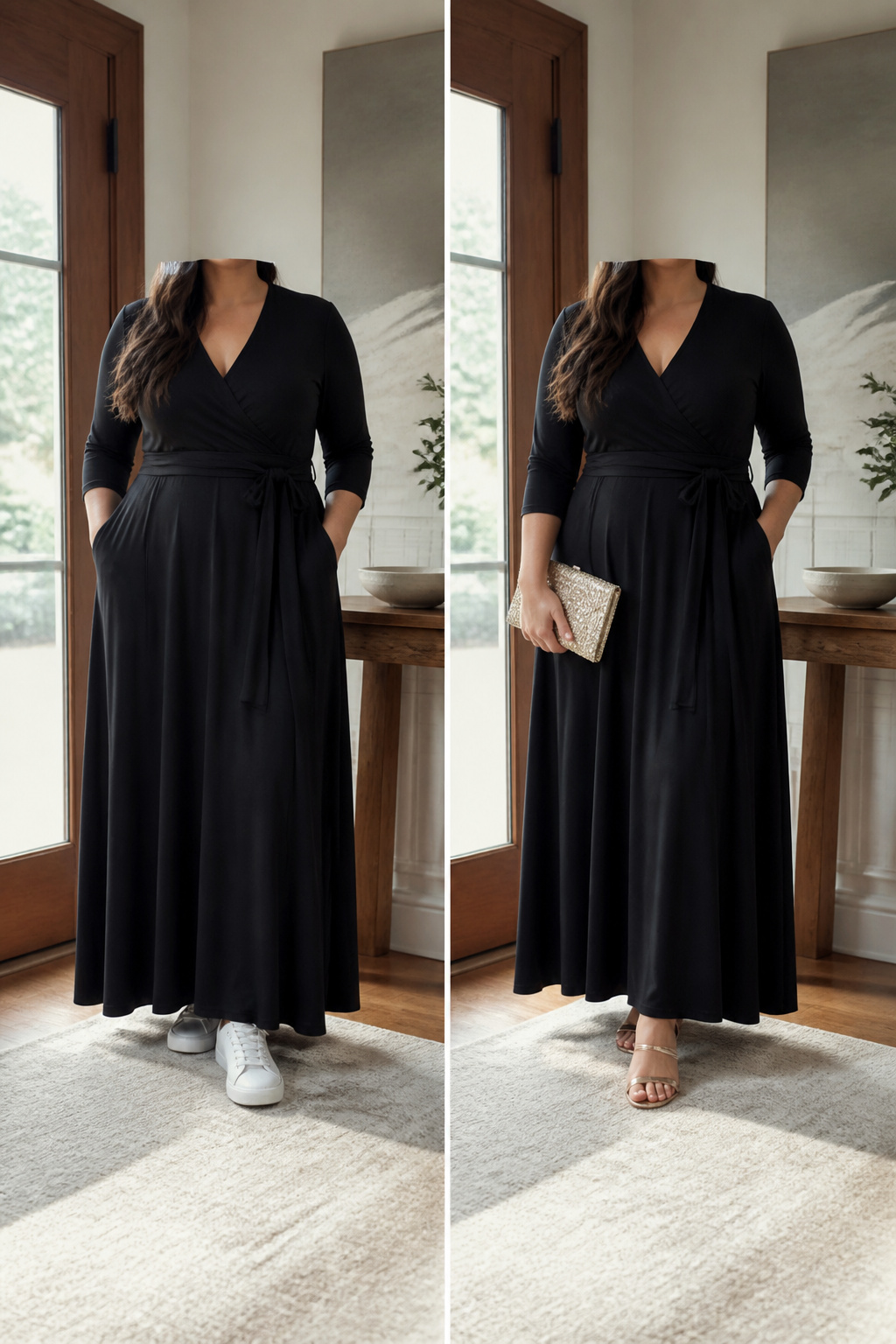
The same maxi dress cut in matte jersey reads brunch; swap it for satin-backed crepe and it reads wedding guest. That shift is almost entirely fabric behavior, not silhouette. Jersey drapes soft and swallows light; crepe catches it, and the satin backing gives the skirt weight that moves like a bell rather than a column. I learned to check this by flipping the hem in store: if the reverse side gleams, the dress will carry jewelry and heels without looking overdressed.
Construction details finish the job. A bodice with bead weight, even minimal, pulls the eye upward and signals occasion the way a plain gathered neckline does not. Lace or chiffon overlays work the same trick; they add visual texture that reads as effort. For a farmhouse wedding, the boho move is lighter: floral patterns, wedge sandals, and the dress itself unembellished. The invite’s wording matters here. "Black tie" means lace, satin, or silk maxis with structured construction; "casual" means you can wear the jersey version and add a denim jacket.
Pockets change the calculus entirely. On a casual maxi they are practical; on a formal one they can bulk the hip line where the fabric needs to fall clean. I skip them for evening events and look for them only in daytime cotton or rayon versions.
Footwear Pairings by Dress Weight

A heavy tiered chiffon maxi will swallow your frame if you let the hemline pool at the floor. A low block heel or wedge lifts the skirt just enough to show ankle and keep the tiers moving instead of dragging. I learned this after wearing a dusty rose chiffon number to a backyard brunch with flat metallic sandals; the dress read formal, the sandals read lost, and the whole thing felt like a costume I hadn’t committed to.
Jersey bodycon is the opposite problem. That fabric clings and skims in equal measure, so a flat sandal with a thin strap keeps the line clean from shoulder to toe. The casualness comes from the ease of it, not from fighting the dress with height.
White sneakers with a dark floral maxi had a real moment in 2023 and 2024, and the combination still works if the sneaker is genuinely beat-up, not box-fresh. A too-clean white shoe turns the dress into a statement piece you’re trying to dress down, which is different from actually dressing down. Canvas slips on easier than leather here; the texture mismatch matters less than the scuff.
Layering Through Four Seasons
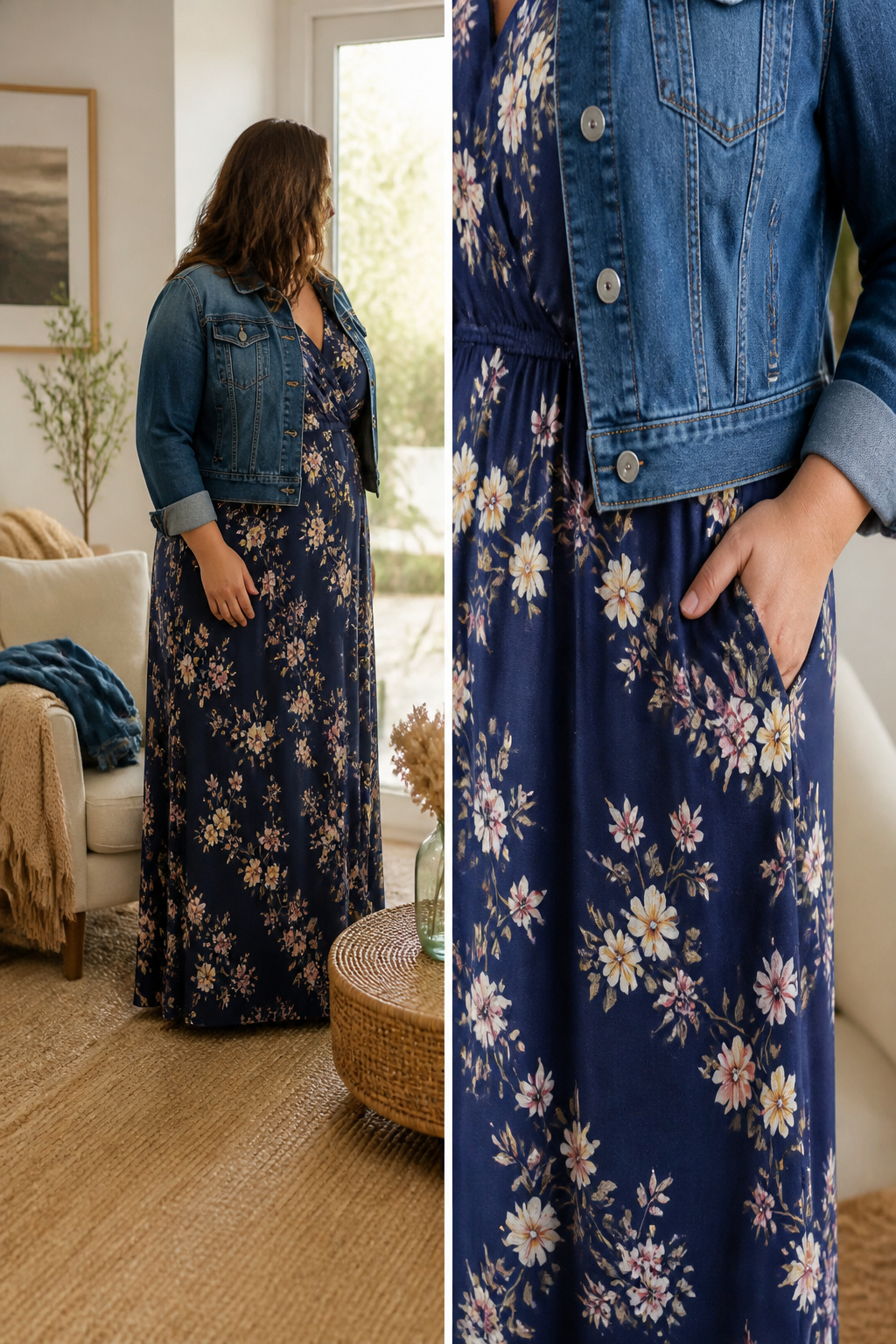
A waist-length jacket hits right at the middle of a maxi dress and cuts the body in half visually. That horizontal break at the widest point of most figures is why a cropped jacket or a long duster past the hip preserves the vertical line instead. Cardigans work the same way: hip-length or longer keeps the eye moving up and down, while anything shorter stalls it at the waist.
Cropped jackets, ending near the natural waist, leave the full length of the skirt uninterrupted. Long dusters do the opposite job, creating one continuous column of color or texture from shoulder to hem. Both solve the problem the waist-length piece creates.
For winter, a fitted turtleneck layered under a sleeveless maxi turns a warm-weather dress into a cold-weather outfit without adding bulk at the middle. The smooth line of the turtleneck keeps the look clean, and the sleeveless cut of the dress prevents the arm area from getting tight.
Tights matter under lighter fabrics. Sheer tights, around 20–30 denier, still show the dress fabric through and read as leg rather than layer. Opaque tights, 60 denier and up, shift the whole look toward heavier seasons and can make a summer-weight dress feel grounded in winter rather than misplaced.
Accessories That Work Without Competing

A belt placed at the empire line, just beneath the bust, draws the eye upward and keeps the longest vertical sweep of fabric uninterrupted from ribcage to ankle. Shift that same belt to the natural waist and the dress breaks into two nearly equal halves, which reads shorter on the body even when the hem skims the floor. I learned this the hard way with a jersey maxi that looked elegant on the hanger and stumpy on me until I moved the belt up two inches.
Neckline shape decides what necklace length actually shows up. A deep V leaves room for a pendant that falls to the sternum, but a high neckline swallows anything short; a long pendant there creates a single vertical line that echoes the dress length instead of fighting it. A crossbody bag that hits at the hip chops the silhouette in half, which is why a strap long enough to wear diagonally but short enough to sit at the natural waist, or a handheld clutch, keeps the eye moving up and down rather than side to side. The bag strap should clear the hem by at least a hand’s width so the fabric pools cleanly without bunching against leather or hardware.
Frequently Asked Questions
What styles of plus size long dresses casual are available?
Styles include boatneck plisse cap-sleeve, tiered chiffon, shirred bodice, placement print, mesh high-neck, shirtdress, strapless, off-the-shoulder, faux wrap, bodycon, floral boho, and solid black basics. Each solves a different fit or styling problem: boatnecks balance hips visually, tiered skirts avoid clinging at the hip, and shirred bodices accommodate varied ribcage-to-bust ratios without gaping.
How do I style a plus size casual maxi dress?
Footwear should match fabric weight: block heels or wedges lift heavy tiered chiffon so tiers move instead of drag, while flat thin-strap sandals keep jersey bodycon lines clean. Layer with cropped jackets or long dusters past the hip to preserve the vertical line; waist-length jackets cut the body in half at the widest point. Belts work best at the empire line just beneath the bust, not the natural waist, to keep the longest fabric sweep uninterrupted.
What occasions are plus size long dresses casual suitable for?
Casual maxi dresses in cotton, jersey, or linen blend work for errands, patio lunches, and everyday wear; the same silhouette in satin-backed crepe or bead-weighted bodices shifts to wedding guest or formal event territory. The invite wording matters: "black tie" calls for lace, silk, or structured construction, while "casual" means jersey with a denim jacket works fine. Pockets belong in daytime versions and should be skipped for evening events where clean hip lines matter.