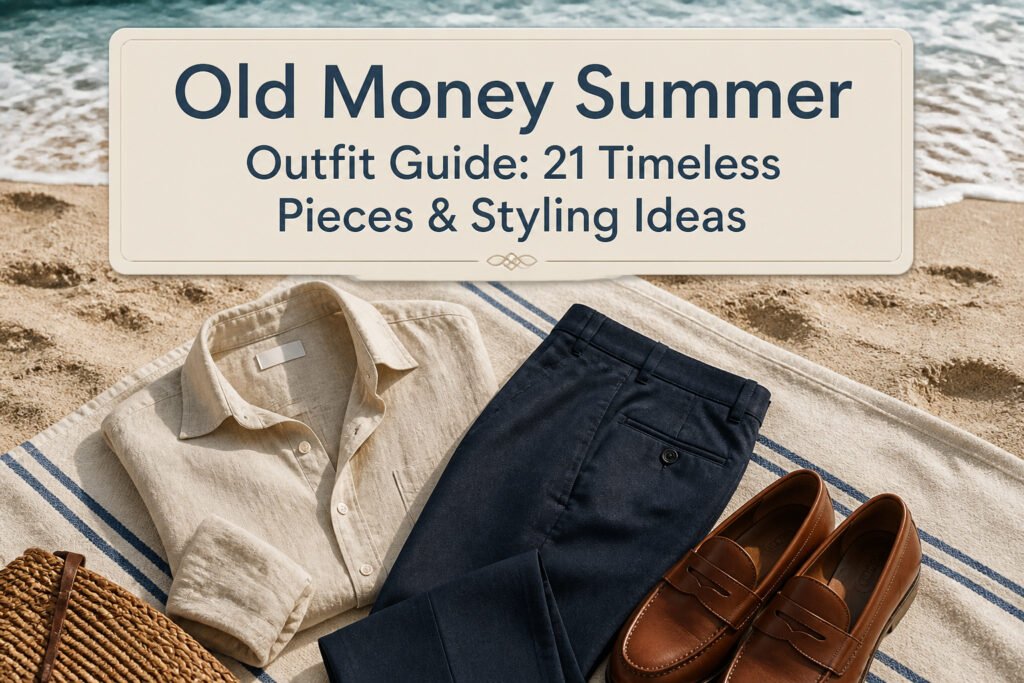
A summer old money outfit is built on the understanding that restraint reads richer than display. The catch is that each piece must be precise enough to carry the silence without looking accidental: a 4- to 6-inch inseam on tailored linen shorts, not the frayed pair you already own, and a Breton stripe width between pencil line and finger width, not the souvenir-shop red you will never wear. Oatmeal linen against navy trousers looks sharper than five beige pieces competing for attention.
Linen Button-Down Shirt
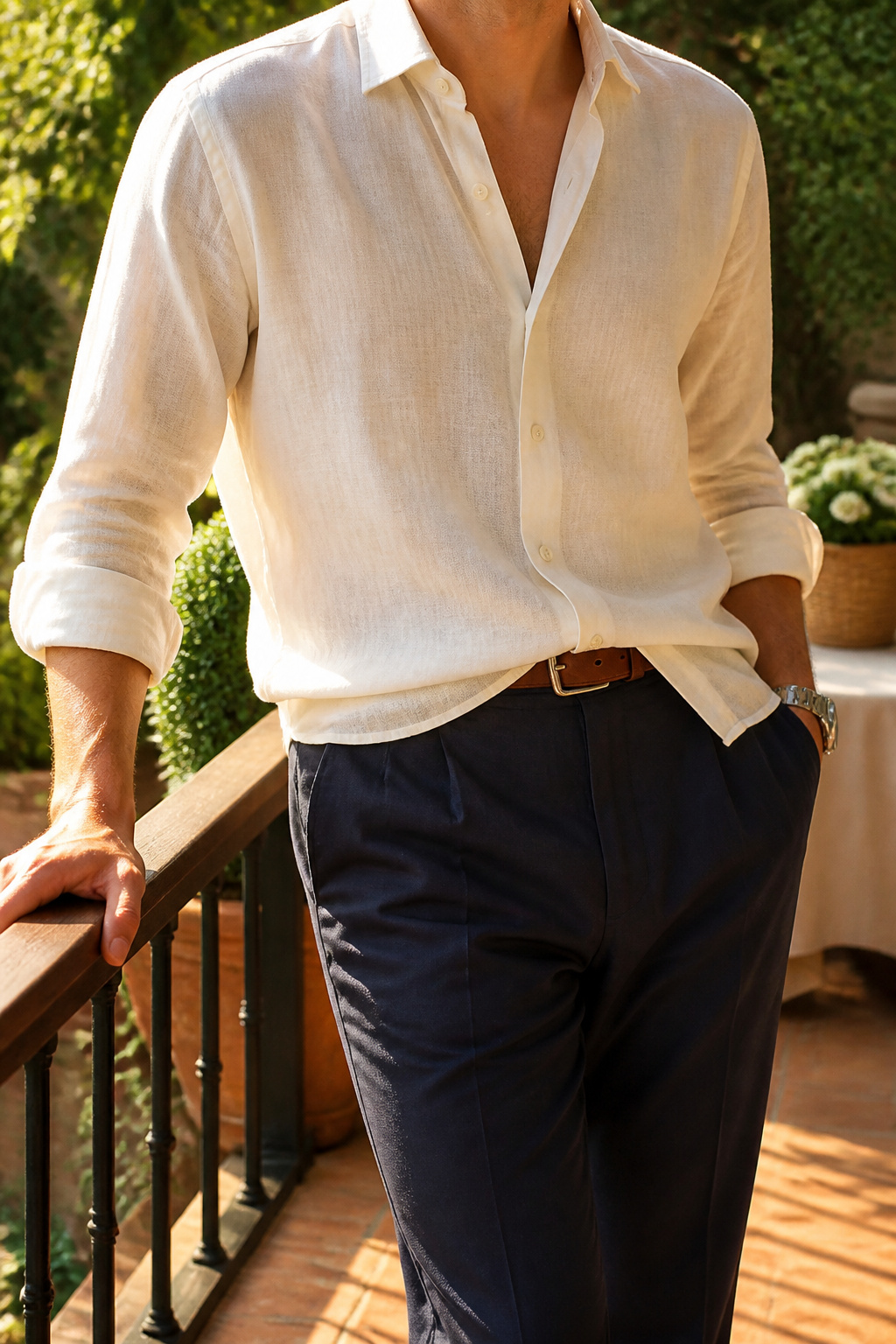
A linen button-down in ivory, cream, or oatmeal is the piece that carries almost every summer old money outfit I looked at. The fabric skims instead of clings, and in heat it does the one thing cotton struggles with: it lets air move between the cloth and your skin. White or ivory reflects sunlight rather than trapping it, which matters when you are walking between appointments at 2 p.m. in July.
Three ways to wear it, and each one changes the register. Buttoned to the collar and tucked into high-waisted trousers, it reads as pulled-together for a lunch where you need to look considered. Left open over a camisole with tailored shorts and flat leather sandals, it becomes the daytime uniform that gets you out the door in two minutes. Belted at the waist, it functions as a dress substitute on days when nothing else feels right. The shirt does the heavy lifting; the rest stays quiet. A brown leather belt warms the palette, delicate gold hoops add just enough, and classic sunglasses finish it without shouting.
The contrast rule holds here: oatmeal linen against navy trousers looks sharper than five beige pieces competing for attention. Brown leather accessories matter more than you would expect; they make the simple combination look richer than the sum of its parts.
Tailored Linen Shorts
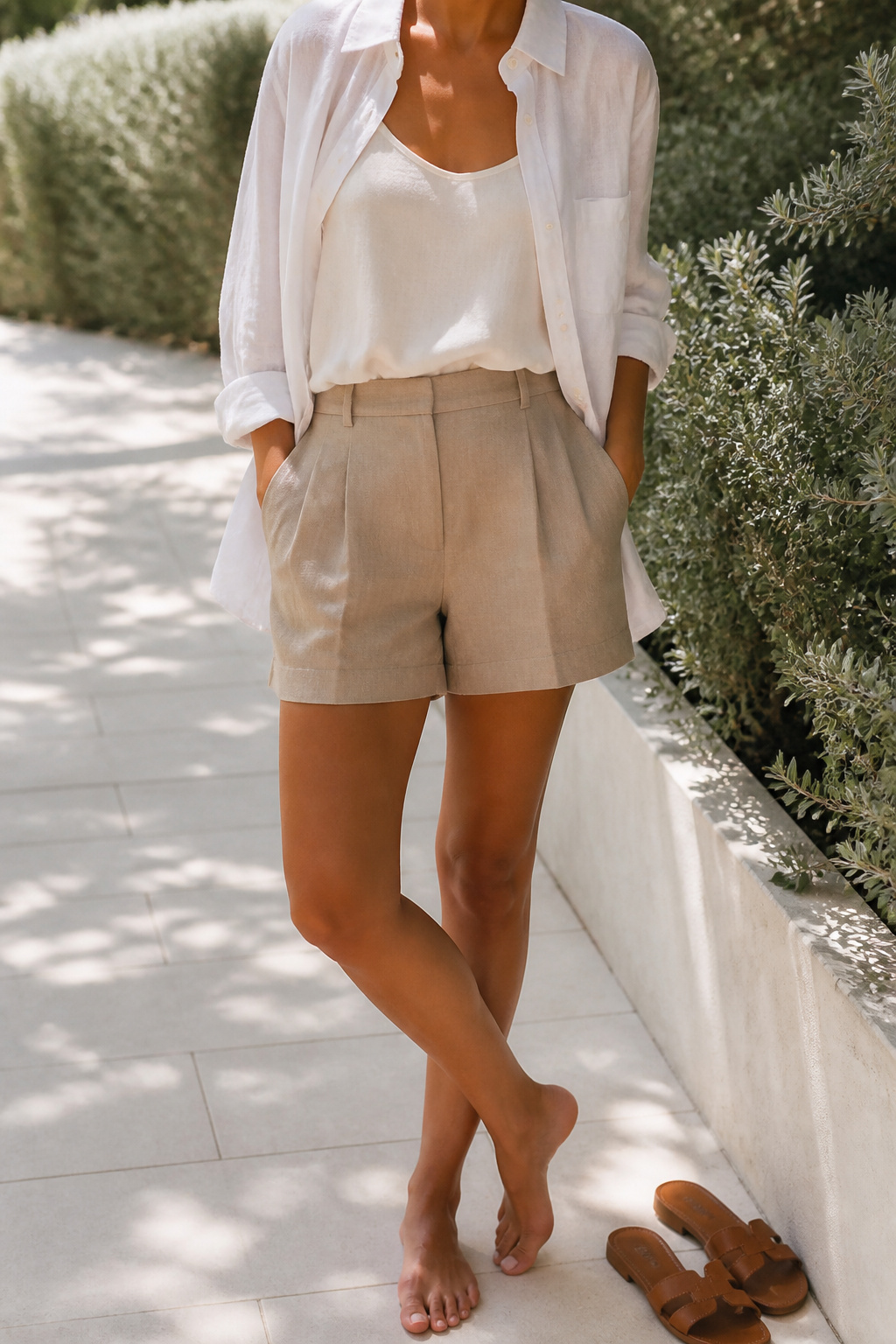
Tailored linen shorts sit at the exact point where summer old money style either holds together or falls apart. The sources agree on this much: they belong in the daytime uniform, paired with that crisp linen shirt and flat leather sandals. What separates the look from beachwear is the inseam length and the cut. A 4- to 6-inch inseam reads intentional, while anything shorter drifts into casual territory. Tailoring matters here more than fabric choice. A clean hem and proper waist construction let the shorts carry leather loafers without looking like you forgot your trousers.
Color restraint keeps the palette grounded in what the sources keep returning to: tan, navy, and cream. These three carry the outfit into lunch meetings and afternoon errands without demanding attention. The pairing logic runs shirt to shorts in matching weight, both in linen, both in that same quiet register. White or ivory on top, tan or navy below, a brown leather belt marking the waist. Sources differ slightly on footwear, with one set favoring flat leather sandals and another adding boat shoes or loafers into the mix. For the shorts specifically, loafers win if the inseam and tailoring are sharp enough to support them. Sandals keep it softer, more coastal. Either works, but the shorts must be the bridge, not the obstacle.
Silk Midi Skirt

Silk catches light differently than anything else in a summer wardrobe. The fabric shifts and pools when you move, and that motion reads expensive before anyone registers what you’re wearing. A midi length hits the sweet spot between mini and maxi: long enough for the old money preference for coverage, short enough to keep cool and walk without fuss.
The practical reality is humidity. Silk absorbs moisture, which means sweat shows and the skirt clings where you don’t want it to. I plan around this by wearing mine in air-conditioned spaces or on drier days, and I keep a travel steamer because creases are part of the deal.
The silhouette builds from a tucked knit top. A plain tank or a lightweight tee keeps the line clean and lets the skirt be the detail. Neutral on neutral is the most old money approach: ivory silk with a flax linen tank, or champagne with cream. Flat leather sandals and a small crossbody finish the day version; swap in heeled sandals and pearls for dinner without changing the skirt itself.
High-Waisted Trousers

Lightweight wool and linen blends are the fabric weights that make high-waisted trousers workable once the temperature climbs. Anything heavier pools heat against the legs; anything too sheer loses the structure that defines the piece. The rise itself sits at the natural waist, which rebalances the longer hemlines and looser cuts that dominate summer dressing.
A 10- to 12-inch rise is what separates these from mid-rise alternatives that read casual by default. That extra fabric at the waist anchors the eye and gives a tucked blouse or knit top a fixed point to land.
The pairings that hold up start with a crisp white blouse for the most classic route, or a cream blouse with subtle patterning for something less expected. Lightweight knits in neutral tones also sit well here; the texture adds interest without drifting into lounge territory. Footage matters: flats or heels finish the line, while sandals or sneakers let the outfit drift. The trousers do the work of keeping the look intentional, which is exactly what summer fabrics often fail to do on their own.
Breton Striped Tops

The Breton striped top carries two separate histories that both land on the same idea of ease. French sailors wore the original knit version as uniform in the 1850s, and later the look crossed to artists and vacationers on the Riviera. Those two lanes, workwear and leisure, are why the stripe still reads as money without trying: it was never meant to impress anyone.
The stripe width that looks expensive sits between a pencil line and a finger width. Anything narrower turns costume, anything wider turns circus. Navy and cream is the only palette that keeps this balance; red or bright blue stripes shift the reference to souvenir shops. I learned this the hard way with a tomato-red pair that stayed in my drawer unworn.
In a summer wardrobe built from solids, the Breton functions as the one permitted pattern. It breaks the eye without introducing chaos, which is the whole old-money trick: looking like you made a choice rather than followed a rule. Audrey Hepburn and Jane Birkin both treated it as a neutral, pairing it with white trousers or tucked into high-waisted shorts. The effect relies on the top being slightly imperfect, slightly loose, as if borrowed.
Classic Polo Dress

A polo dress earns its place in a summer old money outfit through details a t-shirt dress skips entirely. The collar and placket, even unbuttoned, give it the borrowed structure of a shirt left loose over shorts, and that small formality is what reads "put together" without trying.
Length matters more than most people expect. Hitting at or just above the knee keeps the silhouette clean whether you wear it straight or add a thin belt to define the waist. Anything shorter drifts toward sporty; longer, and the polo reference gets lost in tent territory.
Fabric weight is where this piece lives or dies in July heat. Piqué cotton, the same knit used in classic polos, holds its shape through humidity and repeated washing. A fine jersey or lightweight knit works too, though it relaxes faster and can look slept-in by afternoon. The sources split on this: piqué reads crisper and more intentional, while a soft knit leans more casual and forgiving.
Color keeps the old money signal intact. White, cream, and pale blue are the reliable choices; they reference tennis and sailing without needing the logo. Ralph Lauren builds its entire summer identity on this palette, and the absence of bright or novelty shades is exactly what makes the dress versatile enough for lunch, errands, and evening cardigan coverage alike.
White or Cream Jeans

The weight of summer denim matters more than the color. After one July afternoon in jeans that felt like upholstery, I learned to look for 10 to 12 ounce denim, light enough to breathe but substantial enough to keep its shape through a full day. Anything heavier belongs to September.
Stain anxiety kept me in navy for years. A coffee splash on cream denim still makes my stomach drop, but the reality is simpler than the fear: a straight-leg cut in white or cream reads as intentional, while skinny white jeans still carry the 2012 energy of trying too hard. The old money distinction sits in that silhouette. Straight or slightly wide legs, hemmed to brush the top of a loafer or sandal, give the clean lines and good drape that make the outfit look expensive rather than cheap.
Seasonal boundaries are firmer than fashion suggests. Memorial Day through Labor Day is the honest window; the occasional warm October afternoon does not override the rule. Worn with a cream top and matching cream loafers, or dressed up with heels and gold jewelry, these jeans work because they stay within those lines rather than pushing against them.
Knit Dresses

A knit dress only reads as part of a summer old money outfit when the gauge is fine enough and the fiber is right. Loose, bulky knits look like loungewear the moment you step out; a tighter gauge in lightweight cotton or a silk blend holds its shape and catches light the way synthetics never will. Natural fibers drape better and breathe in the heat, which is why they form the backbone of this look.
Sleeve length matters more than most people expect. Cap sleeves or a clean sleeveless cut keep the silhouette sharp for summer, while a three-quarter sleeve bridges the gap when temperatures drop after sunset. The real value of this piece is how it solves the variable-temperature problem: one garment that works for a warm afternoon and a cooler evening without looking like you planned around the weather. Neutral colors in a classic cut carry you from casual day outings to evening events with minimal adjustment, which is exactly the point of dressing this way.
A-Line Dress

The A-line dress earns its place in a summer old money outfit through proportion, not ornament. A defined waist and a skirt that moves without clinging flatters almost every frame, and the structure does the work so the styling barely has to. Cotton poplin holds that shape more crisply than linen, which reads just polished enough for a lunch or garden party where anything less would feel underdressed. White, cream, or pale blue keeps the palette in old money territory, and eyelet detail, if you find it, is the most classic finish of all.
Jackie Kennedy built her summer wardrobe on exactly this kind of discipline: clean lines, neutral colors, and silhouettes that skimmed rather than grabbed. Her shift dresses in particular carried that same unfussy confidence, and the A-line follows the same principle with slightly more waist definition. A midi length with a modest neckline carries the reference without costume, especially paired with ballet flats or leather sandals and a small structured bag. A cotton cardigan over the shoulders handles the evening drop in temperature, and pearl earrings finish what the dress already started.
Linen Dress

A linen dress carries the same breathable weight as the shirt but solves the outfit in one piece, which matters on mornings when layering feels like too much effort. The cuts that read old money rather than beach cover-up fall into three shapes: a shirt dress with a proper collar and belt, a sheath that skims without clinging, and a bias-cut slip that moves when you walk. Each keeps the line clean enough that accessories do the shifting.
Wrinkling is where most people hesitate. Linen creases the moment you sit down, and after a full day the fabric looks lived-in in a way that cotton rarely does. That rumpled quality is the point; it signals you did not arrive pressed by an assistant and pressed by an assistant is the opposite of this look. The trick is starting the day with the dress pressed and letting it soften from there, not fighting the creases that accumulate.
Scaling it up takes almost nothing. Garden party calls for flat leather sandals and a small raffia bag. Dinner means swapping in heeled sandals, adding a single gold chain, and carrying something structured in leather. The dress itself stays the same; the accessories do the code-switching.
Espadrilles

A jute rope sole wrapped with canvas or leather uppers is what separates an espadrille from any other summer slip-on, and that construction has barely changed since fishermen in the Pyrenees first braided these shoes centuries ago. The Mediterranean roots matter for the old money aesthetic: this is footwear with a specific geography and season, not a year-round utility player.
Flat soles or a low wedge no higher than about an inch and a half read as inherited taste. Platform espadrilles, even the ones that dominate resort shop windows, tilt toward trend rather than tradition. The proportions fall wrong against the longer hemlines and relaxed tailoring that define this style.
I reach for mine most often with wide-leg linen trousers that break just above the ankle, or with a cotton midi skirt where the shoe sits visible but quiet. They also work with tailored shorts, though the shorts need enough structure that the casual sole does not drag the whole outfit toward beachwear. White or cream uppers are the most versatile; tan leather ages better but limits the palette.
The rope sole is not built for rain, which reinforces the summer-only rule. Once the weather turns, these go back in their dust bag until Memorial Day rolls around again.
Leather Loafers
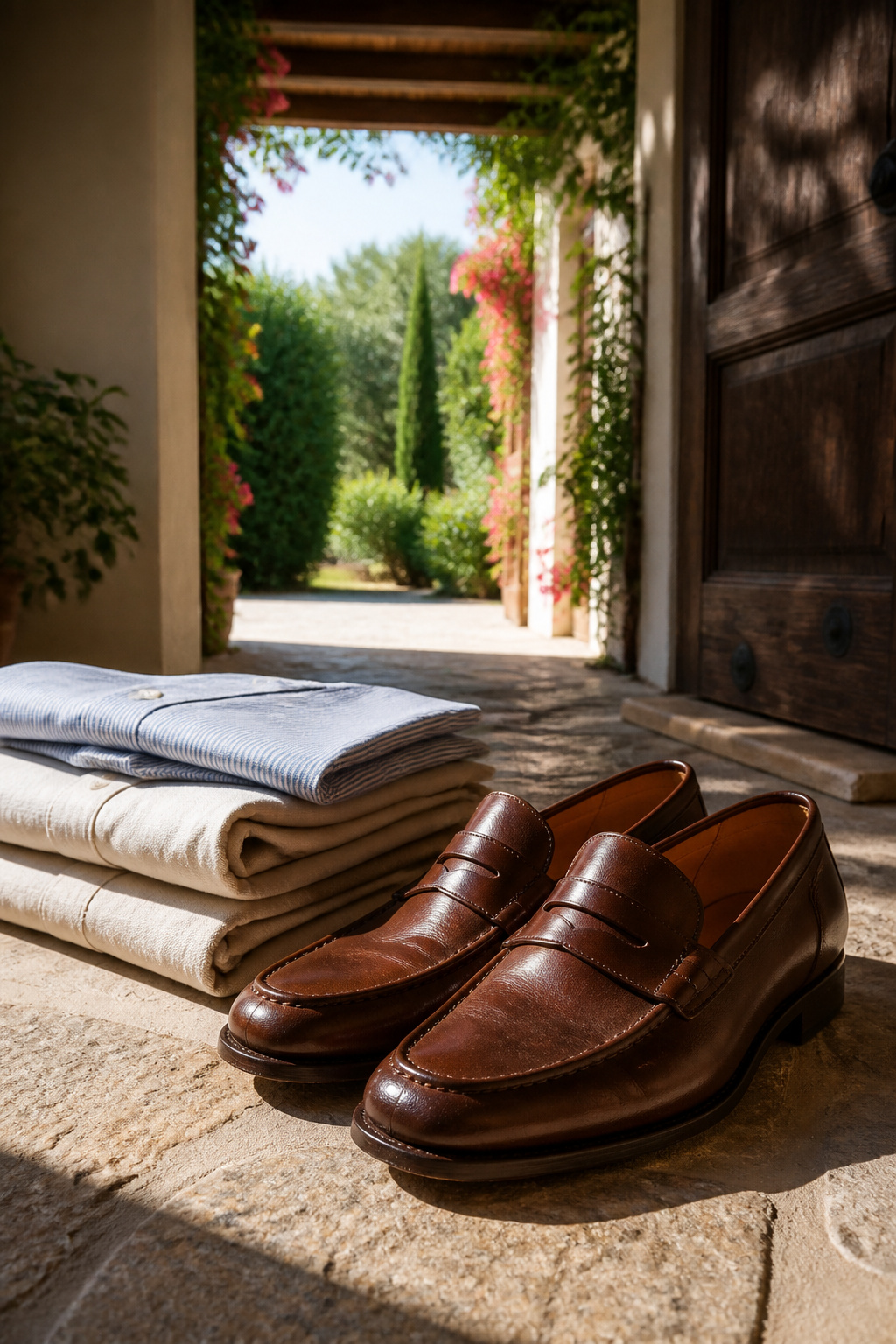
A summer old money outfit leans on loafers when sneakers would read too casual and heels would try too hard. Penny loafers, horsebit styles, and the softer Belgian slipper each carry that lineage without looking costumed. The penny strap reads collegiate and clean; the horsebit nods to decades of Italian and American tailoring; the Belgian, with its small bow, sits somewhere between house slipper and garden party.
For warm weather, soft grain leather breathes better and breaks in quickly, which matters when you are walking on hot pavement. Patent works after six, catching light without the formality of a pump. The finish changes where the shoe can go.
Sock protocol is simple: no-show liners in bone or the exact shade of your skin, or none at all if the loafer is unlined and the occasion allows. Visible athletic socks kill the effect entirely. I learned that watching a woman at a gallery opening in Southampton, her horsebits paired with thin ribbed socks that pooled at the ankle like a mistake she had not noticed.
Classic Sunglasses

The right pair of sunglasses pulls a summer old money outfit together without shouting for attention. Three shapes have held their ground long enough to earn that status: the Wayfarer, the aviator, and oversize acetate frames in a classic cut. Each reads differently on the face, so the choice matters more than whatever trend cycle is currently running.
Lens color signals expense more than most people realize. Brown, gray, and green tints carry that quiet polish; mirrored or overly dark lenses tend to look like a costume instead. Gray keeps colors true, brown softens harsh light, and green sits between the two with a slightly vintage feel that pairs well with linen and cream tones.
Face shape should drive the decision, not what a magazine declared this season. Angular frames balance rounder faces, while softer curves do the opposite for sharper jawlines. Oversize acetate works on most, but the bridge placement determines whether they slide or sit: try them on and look straight ahead; your eye should center vertically in the lens, not sit at the top rim.
A hard case every night extends their life by years. Tossing them in a tote scratches lenses and warps hinges faster than most expect.
Simple Gold Jewelry

Pearl earrings sit at the center of the old money jewelry story, but the scale matters more than the stone itself. The Lady Di Cabochon Studs referenced across these looks work because they read as inherited, not purchased for effect. Anything larger than a modest drop shifts from refined to statement, and statement is the wrong lane for this aesthetic.
The pieces that earn their place in a summer rotation are small hoops thin enough to thread easily, a chain fine enough to disappear against skin, a signet ring worn on the pinky or ring finger, and those pearl studs. Each one disappears individually so the collection reads as quiet punctuation rather than announcement.
Metal color consistency is the rule that separates the look from costume. Mixing yellow gold with rose or silver catches the eye in a way that breaks the illusion of long-term collecting. Pick one tone and let every piece belong to the same family.
The stopping point is personal, but the test is universal: before leaving the house, remove one piece. What remains is usually enough.
Raffia Bags

Raffia carries summer without shouting it. The straw-like weave breathes, and that texture alone signals warm months more reliably than any printed floral. What separates a summer old money outfit accessory from a beach tote is structure. A rigid basket shape with leather trim or a small crossbody with a firm base reads intentional; floppy, oversized silhouettes read vacation.
Color stays neutral in the pieces that work hardest. Natural tan, undyed ivory, or black raffia paired with tan leather handles keeps the bag compatible with navy, white, cream, or olive without competing. The seasonality comes from the material, not from brightening the palette.
The practical limit matters more than most buyers expect. Raffia has no stretch and little give. A structured basket starts to sag or warp once you load it past a light cardigan, a slim wallet, and maybe a paperback. The small crossbody versions hold even less: phone, keys, lipstick, and the bag is at capacity. For days that require a water bottle or a tablet, leather takes over and raffia stays home.
Clean White Sneakers

Clean white sneakers ground a summer old money outfit only if the leather stays clean and the branding stays quiet. White Italian leather sneakers win over canvas here; the material holds its shape through repeated cleaning and the surface sheen reads intentional rather than athletic. Canvas softens and stains too fast for the polished effect this look requires.
Three models sit in the sweet spot. Common Projects Achilles Low set the standard for minimal white leather with just a gold-stamped style number. Adidas Stan Smith works if you remove or ignore the green heel tab and keep the leather version only; the perforated three stripes pass as texture, not logo, from a few feet away. Veja V-10 in extra-white leather has become the entry point for many, though the V logo on the side walks closer to the line than the other two.
Maintenance is where most people slip. Leather sneakers need wiping after each wear, a monthly deep clean with saddle soap, and fresh white laces every season. Scuffed toes or grayed laces undo the effect faster than wearing running shoes would.
These pair with linen trousers, midi skirts, and tailored shorts. They fail with anything too formal, like silk evening pieces, or too casual, like denim cutoffs or athletic wear. The old money spell breaks when the outfit starts looking like you grabbed the nearest comfortable shoe rather than choosing a deliberate neutral.
Midi Skirts
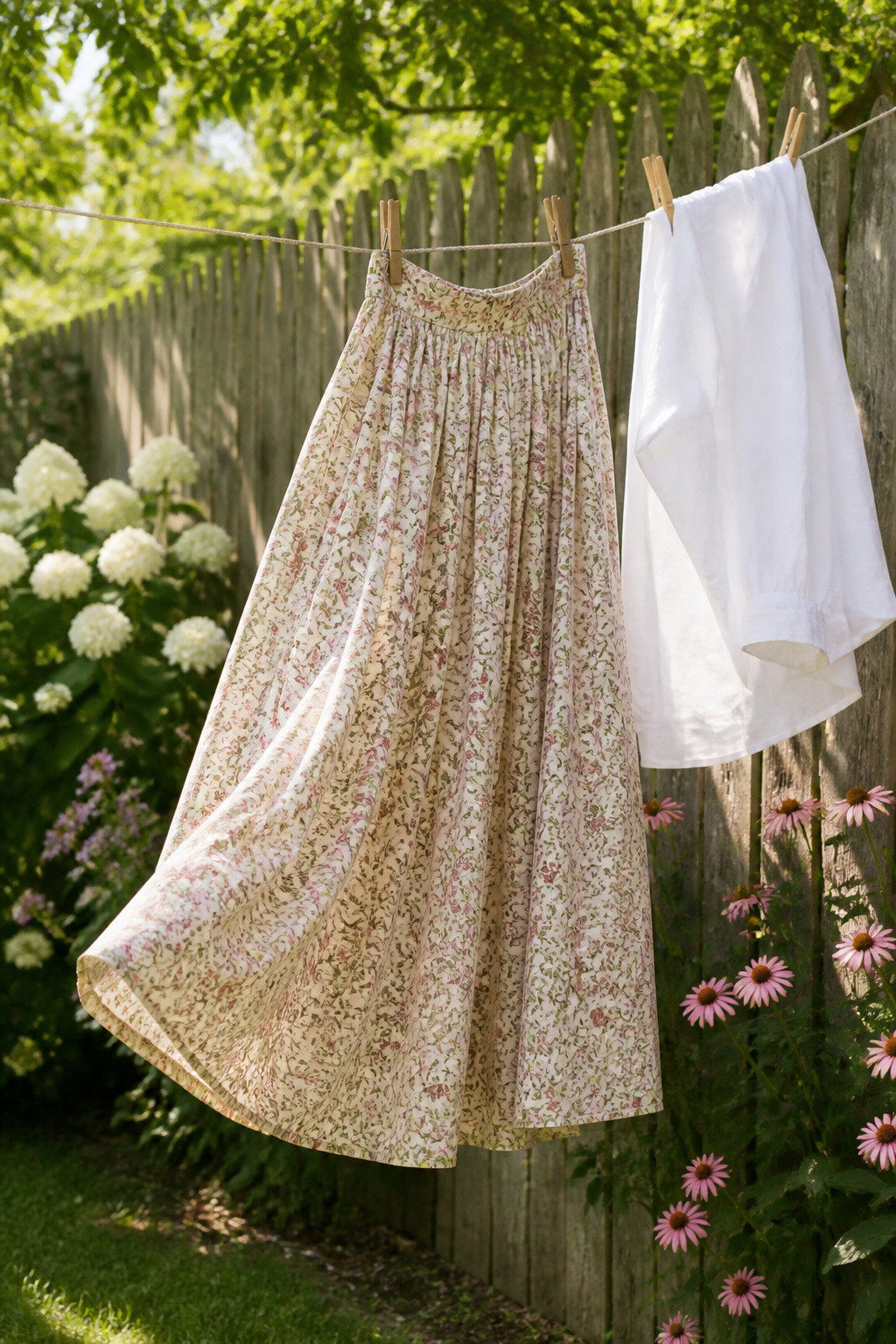
Cotton poplin holds its shape through a humid afternoon without clinging, which makes it the practical choice for a midi skirt you actually plan to move in. Lightweight denim works too, though the wash matters more than people admit; anything too faded reads casual in a way that undercuts the restraint this look depends on. Pleated technical fabrics surprised me when I first started looking into this, since "technical" usually signals athletic wear, but the structure keeps the pleats crisp without the maintenance silk demands.
A defined waist keeps the length from swallowing your frame, whether that means a narrow self-belt, side tabs, or simply a waistband cut to sit at your natural waist rather than sliding down toward the hip. The midi length solves the summer problem directly: you get coverage past the knee, so seated posture or a breeze doesn’t leave you exposed, but the fabric still moves and ventilates in a way full trousers or a maxi skirt never quite manage. I reach for mine on days when I want the polish of a dress with the option to change the top half separately.
Tweed Jackets

Tweed in July sounds wrong until you hold the right swatch. Silk tweed and open weaves exist for exactly this problem: they keep the texture that reads expensive while letting air move through. An unlined construction matters even more than the fiber. Without that lining, the jacket becomes a layer you can actually keep on past noon.
Color does the seasonal translation. The passages point to cream, pale gray, and soft pink as the shades that pull tweed out of autumn territory. A pastel tweed set in light pink with a matching skirt carries the Chanel association without the weight of the traditional fabric. White with black detailing works the same way on a dress, especially paired back to black and white loafers for a graphic, warm-weather look.
The occasions are narrower than a blazer. This layer suits an outdoor luncheon, a gallery opening with aggressive air conditioning, or any event where you will move between scorching sidewalks and over-cooled interiors. Skip it for true heat; no weave solves ninety degrees in direct sun.
Cable Knit Sweaters

Cotton and linen-cotton blends are what make cable knit sweaters workable for a summer old money outfit instead of a winter-only piece. The open weave lets air move through, and the natural fibers wick moisture rather than trapping it against your skin. I look for gauges that feel substantial enough to hold the cable pattern but not so heavy they pool heat.
The styling question is where most people misstep. Draped over shoulders with a linen shirt or a sleeveless dress, the sweater reads as intentional maritime layering. Actually worn, it belongs in air-conditioned spaces: restaurants, galleries, evening boat decks. Wearing one in direct sun because it "completes the look" misses the point entirely.
Cable scale matters more than people admit. Fine, rope-thin cables carry the sailing heritage without shouting. Oversized, popcorn-heavy patterns cross into costume fast, especially in bright colors. I stick to cream, navy, oatmeal, and the occasional faded red. Anything louder and the sweater becomes the outfit’s personality instead of its quiet backbone.
Lightweight Knit Tops

Fine-gauge knits fill the gap that cable knits leave behind once the temperature climbs past seventy degrees. The shells, tanks, and short-sleeve crews that read as expensive share one trait: the yarn is thin enough to skim the body without clinging, and the stitch is small enough to look finished from arm’s length.
Merino handles this best for pieces that travel. A cotton-silk blend gives the slight sheen that photographs well under midday light, though it wrinkles faster than you’d expect. Linen blends solve the wrinkle problem but sacrifice some of that smooth surface; the tradeoff works for weekends, not for the jacket-and-knit pairing you’d wear to a lunch meeting.
Neckline shape does more of the signaling than fiber does. A shallow crew, high enough to sit cleanly above a jacket’s lapel line, reads as intentional. A jewel neck that dips even an inch too low shifts the same top toward casual in a way that undercuts the look. The shell with a slightly raised back neck, the one that shows no gap when you turn, is the version worth the hanger space.
These pieces layer under the tweed jackets and linen blazers covered elsewhere, but they also stand alone with high-waisted trousers in the same palette. The mistake is treating them as afterthoughts; the gauge and the neckline are what separate a summer old money outfit from a warm-weather outfit that simply looks warm.
Classic Leather Sandals
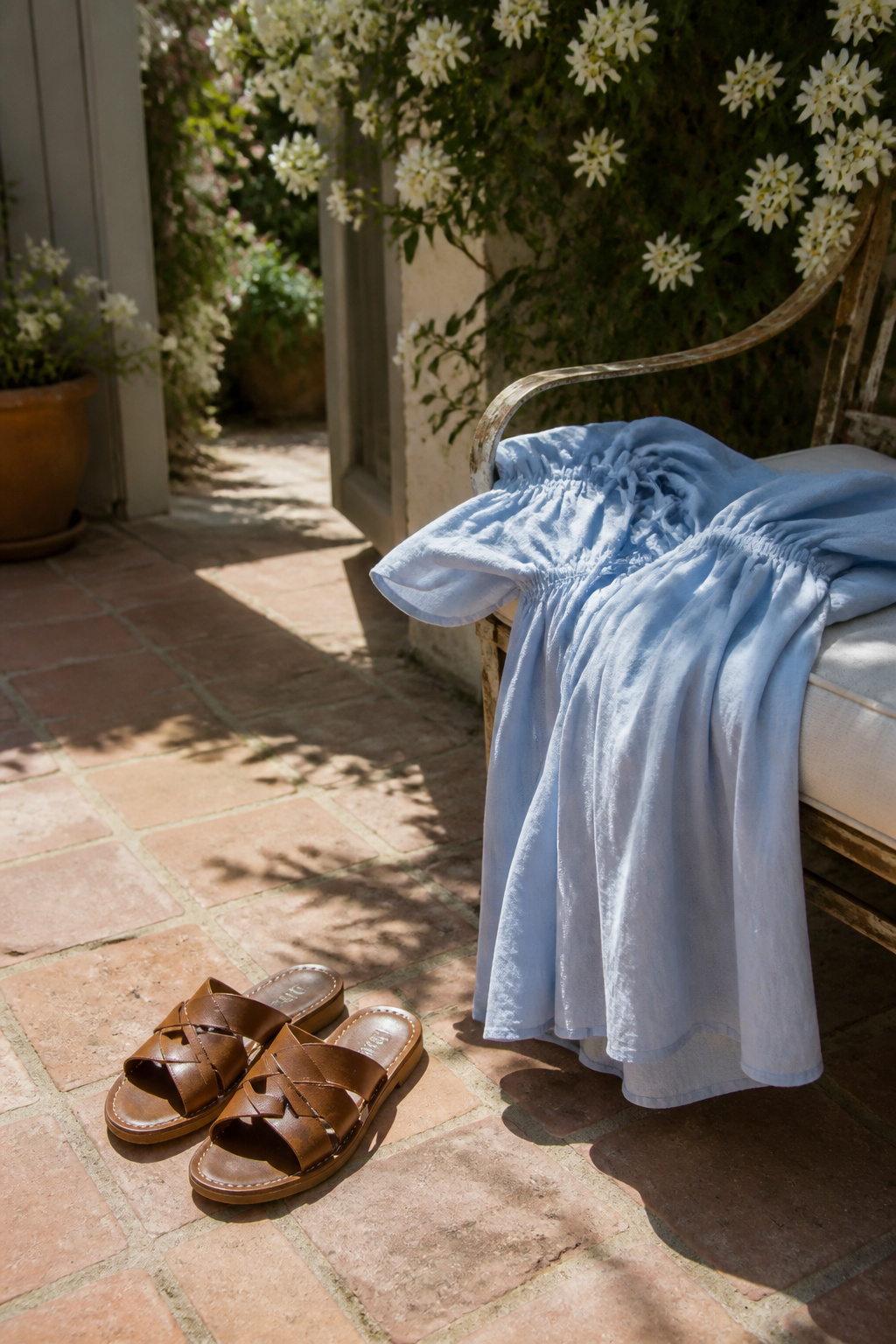
Three styles have settled in as the reliable choices: the strappy silhouette borrowed from Ancient Greek Sandals, the clean H-shaped cut of the Hermès Oran, and the plain unadorned slide. With so little material on the foot, the leather itself does almost all the talking. Full-grain vegetable-tanned leather ages to a softer sheen and holds its shape through humidity that turns cheaper pairs cardboard-stiff by August. A pedicure should read as maintenance, not decoration: neat cuticles, buffed nails, nothing that competes with the sandal’s lines.
Espadrilles win for walking long distances on uneven ground and for that particular French Riviera texture. Leather sandals pull ahead anywhere the dress code edges toward polished: evening drinks, a gallery opening, the restaurant where you know the host will notice shoes. They also survive a sudden rain shower without the jute sole warping. The loss is cushioning. A thin leather footbed offers nothing like the give of rope and canvas, so pavement-heavy days leave feet more tired. For city vacations where cobblestones meet dressier dinners, packing both solves it; for a single suitcase, leather gives more mileage.
Color Palette

Soft, sun washed neutrals are the whole game for a summer old money outfit. Ivory, cream, oatmeal, tan, camel, and pale blue form the base, with navy as your dressy anchor and a touch of sage or olive green to add life without breaking the calm. What convinced me, reading through the guidance on this, is how tonal dressing makes mixing effortless — pair a cream top with tan trousers, or go ivory on ivory, and the whole look reads intentional without trying.
Bright colors and busy prints work against the aesthetic. They signal effort rather than ease, and in summer daylight they feel harsher than the palette demands. Contrast still matters, though. A white linen shirt with navy trousers looks sharper than five beige pieces competing for attention, and brown leather warms the whole range up. Skip neon, heavy logos, and head-to-toe black for daytime. A little black at night is fine, but summer days are softer than that.
Natural Fabrics

Natural fibers carry the whole look because they do what synthetics cannot fake in July heat. Linen, silk, cotton, and real leather for shoes and bags drape with a softness that breathes and moves like skin rather than plastic. The difference shows most in how they handle moisture: cotton pulls sweat away and lets it evaporate, linen absorbs without clinging and actually gets crisper as it dries, and silk regulates temperature so well that a lightweight blouse feels cool at noon and warm past sunset. Leather ages into a patina that records where you have been; polyester records only where it has pilled.
The cost-per-wear math is what justifies the higher ticket. A $180 linen shirt worn twice weekly across three summers hits about $1.15 per wear, while a $45 cotton-poly blend that loses its collar shape in one season runs closer to $2.30. The linen looks better at year three than the blend did at month three. Quince has become where I buy most of mine; the prices stay reasonable and the quality holds up trip after trip. That is the old money logic in practice: buy the fiber, not the flash.
Understated Accessories

Accessories in a summer old money outfit should whisper instead of shout. The principle is simple: complement what you are already wearing without becoming the reason someone looks twice. A thin leather belt that matches your loafers, a simple watch on leather or metal, one ring or bracelet if it suits you. These pieces fill in the gaps rather than create new ones.
The rule of one focal point keeps the whole look from collapsing into noise. Choose the great bag, or the fine earrings, never both at full volume. I learned this the hard way after piling on a watch, layered necklaces, and statement sunglasses for a garden lunch. The effect was not polished; it was crowded. One piece gets to breathe. Everything else steps back.
Classic sunglasses and pearl earrings already do heavy lifting in this aesthetic. They signal taste rather than wealth because they carry no visible logo. A loud belt buckle or oversized chain does the opposite: it asks to be read as expensive, which is exactly the insecurity old money style avoids. Quiet beats loud every single time.
Outfit Formulas

Four outfit formulas cover most summer old money occasions without buying anything single-purpose.
- Weekend brunch: a linen shirt with pleated shorts and leather loafers. The shorts keep it below dressy, the loafers keep it above sloppy, and the linen handles the heat while still looking intentional. This pairing works for warm nights and vacation mornings too.
- Casual daytime: a knit polo with straight chinos and suede loafers. The texture swap from linen to knit reads relaxed, and suede against cotton chinos softens the whole thing for coffee or weekend plans without looking like you skipped getting dressed.
- Office or dinner: an Oxford shirt, navy blazer, and tailored trousers. The blazer is the move that makes this appropriate for events where shorts would signal you misread the room; keep the trousers in the same family as your chinos so the pieces interchange.
- Outdoor evening party: swap the Oxford for a lightweight knit top and keep the tailored trousers, adding classic leather sandals instead of loafers. The knit breathes after dark when linen can feel clammy, and sandals here work because the trousers carry the formality.
- Travel day: straight chinos, a Breton striped top, and clean white sneakers. Stripes hide wear, chinos resist wrinkling better than linen on a plane, and sneakers save your feet without breaking the understated rule.
The logic across all of them: each piece appears in at least two formulas, so a small wardrobe multiplies out.
Style Icons

Princess Diana’s summer tailoring still works because she treated blazers and crisp white shirts as tools, not costumes. The trick is borrowing her structure without the 1980s shoulder pads or the Sloane Ranger excess. A single-breasted blazer in breathable linen, worn with the sleeves pushed up and the collar open, gets you the same long-line silhouette she relied on for polo matches and school runs.
Jackie Kennedy’s discipline is harder to copy because her era’s details trap people first. The pillbox hat, the matching pastel sets, the precise bouffant: these read as period dress now. What survives is her silhouette and her color restraint. She built outfits around a narrow, elongated shape and a palette so controlled that a single red dress became front-page news. The move is to take that narrow line through high-waisted trousers or a simple A-line dress, and to keep the palette to two colors, three at most.
The era-specific details to leave behind are the ones that read as shorthand: Diana’s bike shorts with oversized sweatshirts, Kennedy’s matching hat-to-heel color blocks. Modern old money dressing borrows the bones and forgets the props.
Investment in Quality

The seam allowance tells you almost everything before the price tag does. On a summer old money outfit worth keeping, the inside edges are finished with French seams or at minimum a clean overlock, not a raw zigzag that frays after three washes. Natural fiber content reads on the label: linen, silk, cotton, wool. Blends above 20% synthetic lose the drape and breathability that make these pieces wearable in July heat.
Hardware weight is harder to judge online. In person, a zipper should pull with slight resistance, not slide like plastic. Buttons on a proper polo dress or trousers feel cool and dense, not hollow. Photographs help if the brand shows close-ups of the interior; otherwise, customer photos in reviews are the next best tool.
The slow-build approach means one piece per season, not a cart full. A single silk midi skirt rotated through three summers outlasts three fast-fashion replacements and costs less per wear by the second year. The wardrobe starts to work when every item talks to every other item, and that only happens when each addition is chosen for fabric and construction first, color second.
Frequently Asked Questions
What colors are old money summer?
Ivory, cream, oatmeal, tan, camel, navy, and pale blue are the backbone of the palette. White and off-white shades reflect sunlight and keep heat at bay, while navy and tan ground the outfit with contrast. The rule is to let one neutral carry the piece and use another for punctuation, not to pile similar tones until they blur together.
What fabrics look the most expensive in summer?
Natural fibers carry the look every time. Linen breathes and lets air move between cloth and skin; silk catches light and shifts when you walk; cotton poplin holds structure through humidity. Real leather for shoes and bags ages better and reads richer than synthetics. The weight matters as much as the fiber: 10 to 12 ounce denim, lightweight wool-linen blends, and fine-gauge knits all signal intention.
How do you dress old money in hot weather?
Choose breathable linen and loose, tailored cuts that skim rather than cling. A linen shirt dress, a tucked linen blouse with wide-leg trousers, or a sheath cut that moves with you keeps you cool without looking like you gave up. Light colors reflect heat, and natural fibers absorb moisture instead of trapping it against your skin.
What shoes go with old money summer outfits?
Clean, neutral leather in simple shapes: flat leather sandals, espadrilles with a low wedge or flat sole, penny loafers or horsebit styles, and white Italian leather sneakers with quiet branding. Skip logos, chunky soles, and anything that looks designed to be noticed from across the room. The shoe should finish the outfit, not compete with it.
Can you dress old money on a budget?
Yes, if you prioritize fit, fabric, and color over labels. A well-pressed linen shirt in oatmeal with tailored shorts and a brown leather belt reads old money faster than a wrinkled designer piece in the wrong shade. Tailoring an inexpensive natural-fiber garment to fit properly costs less than replacing it with a branded equivalent that hangs wrong.