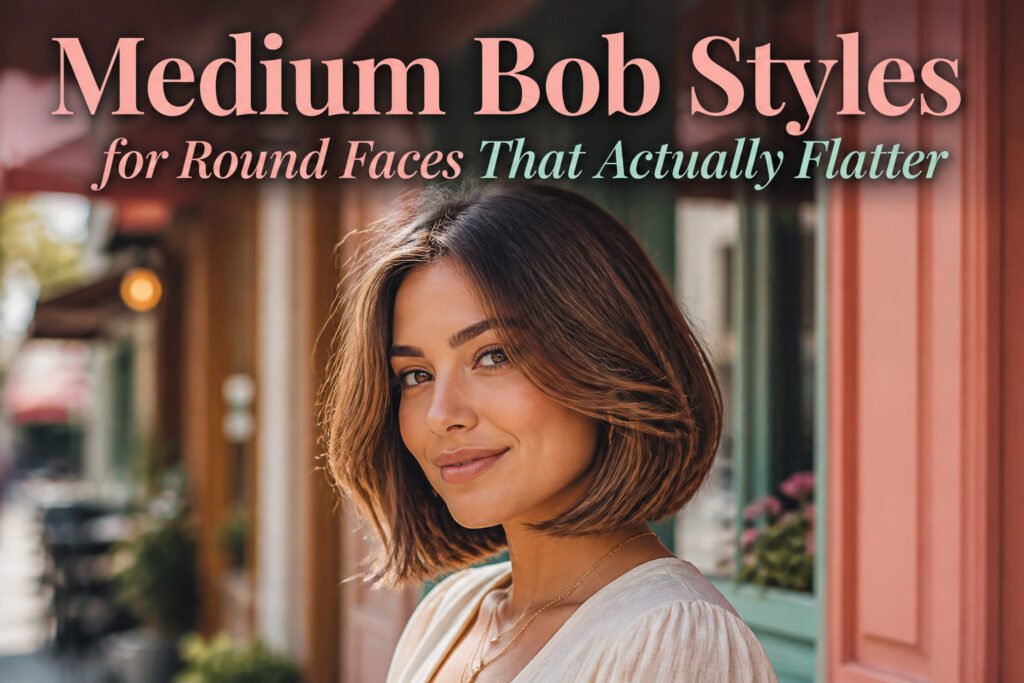
A medium bob for a round face lives or dies by where the weight sits. The difference between a style that elongates and one that widens can come down to whether the first layer starts above the cheekbone or below it, a distinction that still surprises most people in the chair. Eleven cuts made the cut here, from the asymmetrical bob that demands morning precision to the A-line that works on air-dried hair, and the one that fits you depends on how much daily effort you are actually willing to spend.
1. Side-Swept Bob
A deep side part sweeping across the forehead remains the most forgiving entry point for anyone nervous about going short. The asymmetry draws the eye diagonally, which visually stretches a circular face shape and breaks up roundness in a way that feels softer than a sharp geometric cut.
The dramatic swoop cuts the visible width of the face in half, creating a profile that reads sophisticated rather than severe. For straight hair, a sharp, triangular bob shape with that deep parting adds even more elongation. A shoulder-length cut keeps enough length to feel familiar while still opening up the neck.
Side parts are trending hard this year, so the style lands current without trying too hard. Before blow-drying, a bond-building styling cream protects against heat damage while adding the smoothness and hold that keeps the sweep from falling flat by noon. The product choice matters here: frizz or limpness ruins the diagonal line that does the flattering work.
2. Kitty Cut Bob
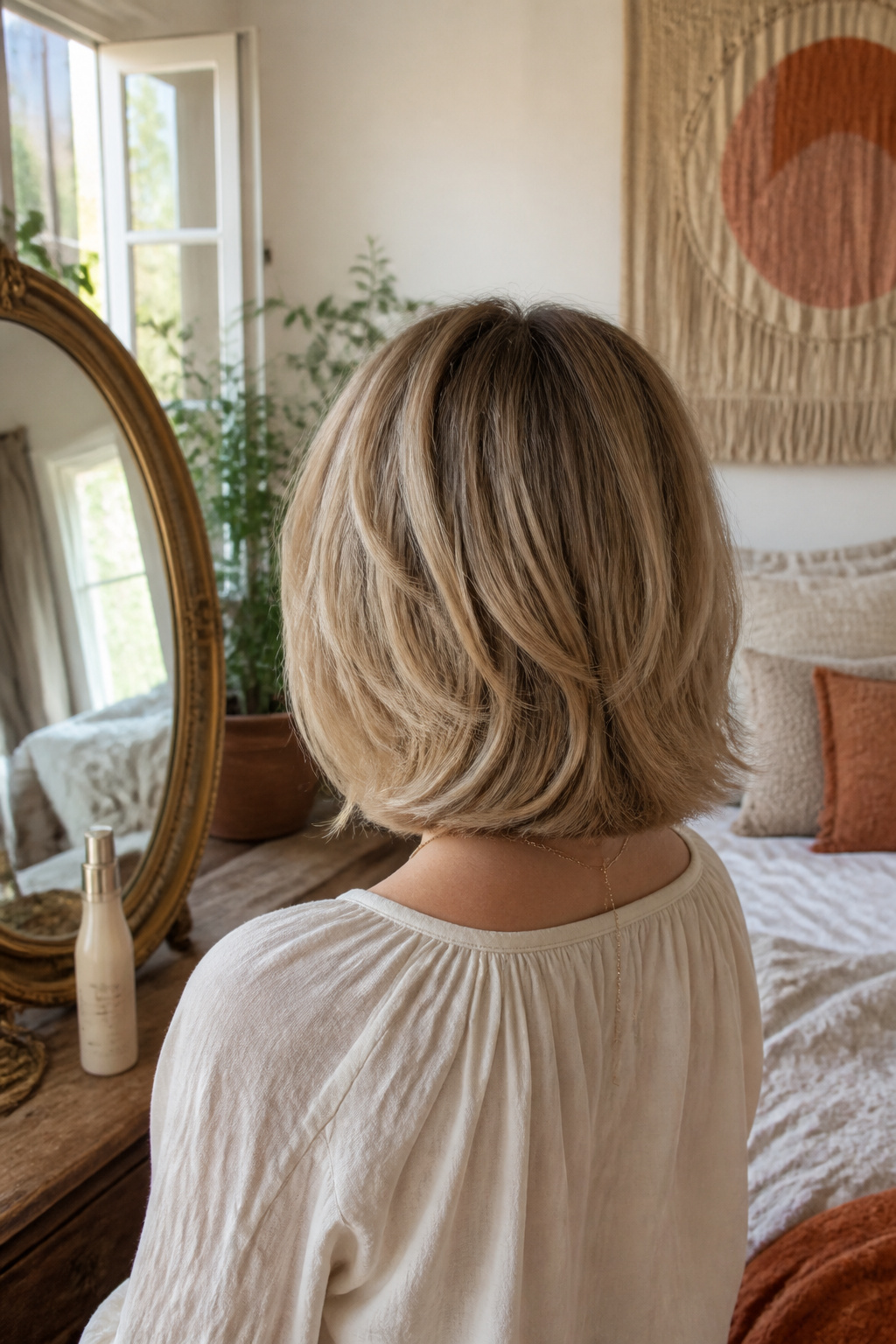
The kitty cut bob showed up on my radar in late 2023 as a softer, feathered spin on the classic shape, with rounded ends and subtle layering that frames rather than boxes in the face. For round faces, the layers need to sit below the cheekbones; anything higher and you add width exactly where the face is already widest, which defeats the whole point of choosing an elongating style.
The collar-bone length works in your favor here, creating a vertical line that draws the eye downward. A sweeping fringe that opens around the eyes completes the seventies feel that made this cut trend in the first place. For styling, prep with Aveda’s Texture Tonic and finish with Shampowder if you want that piecey, textured look rather than something too polished.
3. Asymmetrical Bob
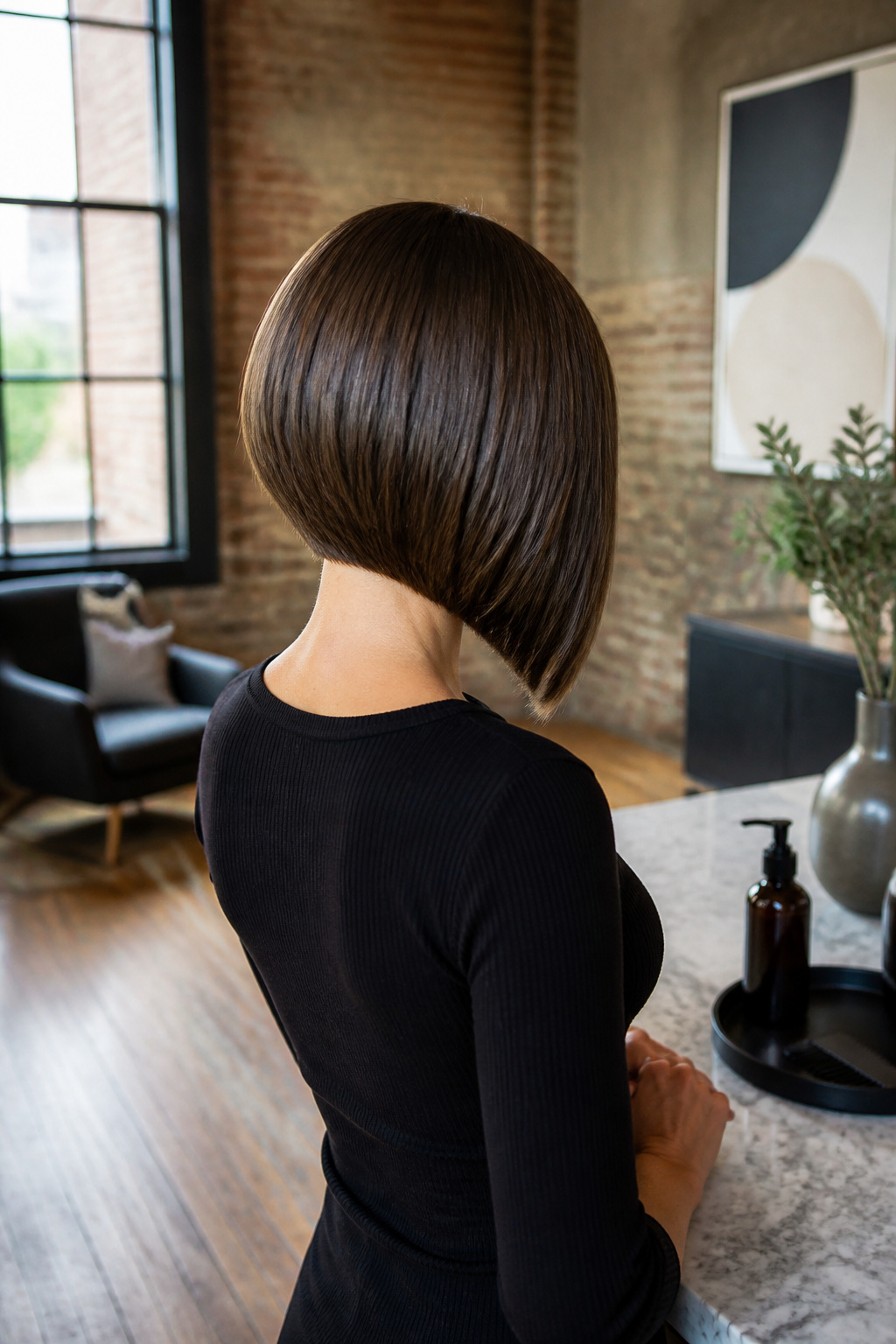
One side of an asymmetrical bob hangs noticeably longer than the other, and that diagonal line does the heavy lifting on a round face. The sharper the angle, the more it visually stretches everything out, counteracting the soft curves that make a face read as round. I like this cut for exactly that reason: it creates structure where there isn’t much, and the eye travels along the slope instead of tracing the width of the cheeks.
The catch is commitment. An asymmetrical cut has to look deliberate every single morning, not like a regular bob that grew out unevenly. That means styling time to keep the part crisp and the longer side falling clean. Naturally curly hair actually helps here, since the volume and curl definition make the asymmetry read as intentional shape rather than a mistake. Wavy hair works too, though you’ll want to define the wave pattern so the finish stays polished. If you’re someone who air-dries and goes, this probably asks more of you than a symmetrical cut would.
4. French Bob

A French bob cut right at the jawline with a fringe sitting at or just below the brow builds a frame of strong horizontal and vertical lines around a round face. The horizontal line of the fringe draws the eye across, while the vertical drop of the ends lengthens what reads as width. That combination can work, but only if the ends stay piecey. Blow them out into a rounded bubble and the jawline cut circles the face instead of breaking it, turning the very shape you’re trying to offset into the whole story.
The slight graduation at the perimeter keeps the line from going too blunt, and a natural curl or wave helps. If your hair runs straight, a curling tong with a bit of control paste on the ends will build the texture that stops the silhouette from going spherical. Regular salon visits matter here; the shape falls apart fast once the jawline line grows past its mark.
5. Box Bob

A box bob reads almost architectural on a round face because the blunt corners and minimal layering create structure where softness usually dominates. The cut sits at the jawline with edges that look nearly square, and that stark geometry draws the eye downward in a way that suggests a more defined jaw than genetics gave you.
The maintenance is where this style makes its real demand. Those sharp lines lose their effect the instant they grow past their mark, so trimming every 6 to 8 weeks is not optional if you want the cut to keep doing its job. Skip a session and the silhouette goes from deliberate to accidental.
Styling is straightforward: wear it straight for the full graphic impact, or add texture if you want the same shape with less severity. A clean middle part keeps the symmetry intact, though a side part works if you prefer a little asymmetry against the boxiness. Either way, the part should be deliberate; a messy or hidden part undermines the precision that makes this cut flattering on rounder face shapes.
6. A-Line Bob

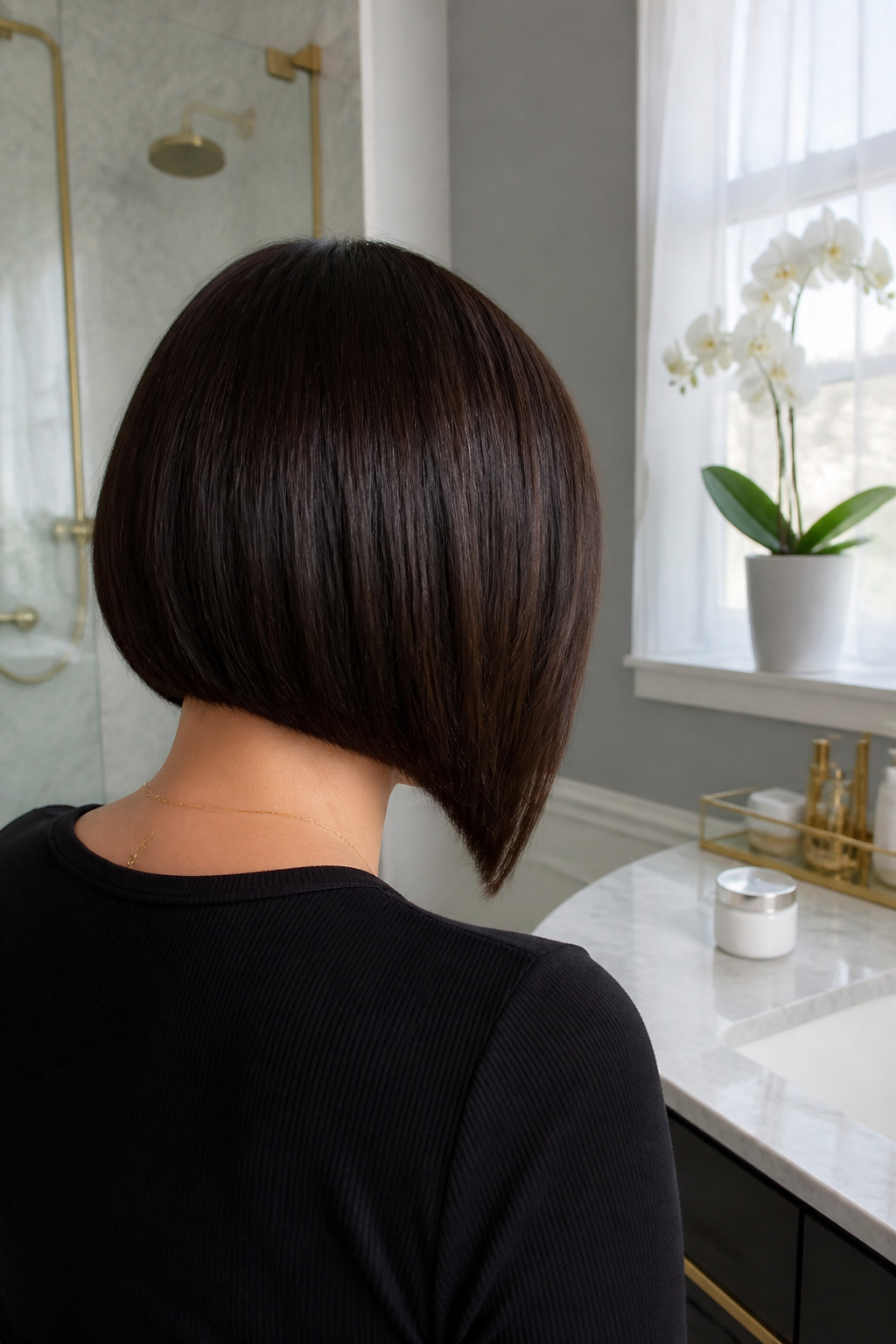
The A-line bob sits longer in front and shorter in back, so the eye travels downward along lengthening lines instead of tracing the width of the cheeks. That natural slimming effect is why this cut lands on nearly every list of medium bob hairstyles for round faces, and the structure it adds comes from the angle itself rather than from daily heat styling.
What separates this from the inverted bob is the back: an A-line keeps the line clean without stacked layers, so the volume stays moderate and the silhouette stays sleek. For anyone who wants the elongation but does not want to fuss with a round brush every morning, the A-line’s angle does the work for you. The front pieces can graze the collarbone or stop at the jaw, depending on how much length you want framing the face, but the key is that forward progression from short to long. It is one of the most commonly recommended cuts for round faces precisely because the payoff is visible even on air-dried hair.
7. Inverted Bob
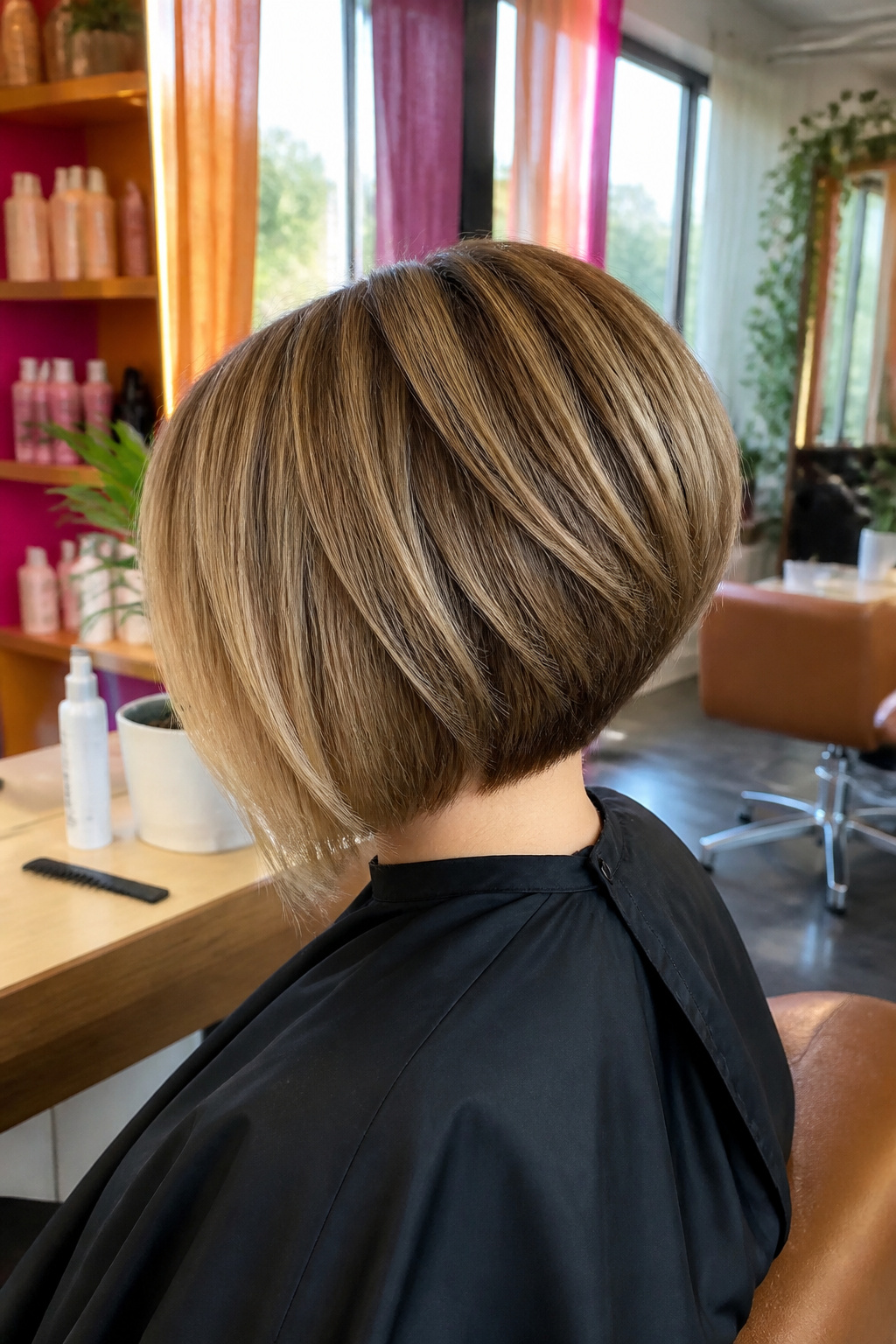
The inverted bob tapers from the back to the front, with stacked layers at the crown that build height and volume on top. That added bulk above the ears draws the eye upward, which offsets the horizontal width of a round face. The angular lines create a slimming effect on fuller facial shapes, and the cut transitions easily from a polished day look to something edgier at night.
The catch is maintenance. The stack collapses without blow-drying or round-brushing, so this style demands more morning effort than a wash-and-go cut. Regular trims are necessary to preserve those sharp angles, and if you add contrasting highlights to emphasize the dynamic lines, color touch-ups keep the look intentional rather than grown-out. For women who already style their hair daily, the inverted bob rewards the habit with structure and lift. For anyone hoping to skip the tools, the volume at the crown flattens fast and the whole point of the shape disappears.
8. Blunt Bob

A blunt bob is the cleanest cut you can choose: one length all the way around, no layers, no graduation, just a straight line that lets your eyes and cheekbones do the talking. On a round face, the placement of that line matters more than almost anything else. Sitting just below the chin creates a vertical anchor that pulls the eye downward, adding length where the face needs it most. Curl the ends under and you undo the effect; the rounded shape echoes the face instead of contrasting with it. Keep them flat, almost sharp, and the geometry works in your favor.
This face shape is better suited to a slightly longer, classic bob. This cut should be styled just below the chin line, with added volume to the top of the hair and base of the neck (not the sides).
Volume at the crown and nape keeps the silhouette from widening at the cheeks, which is exactly where a round face does not need more mass. Skip bangs if you want the full elongating effect; a clean forehead extends the vertical line the cut starts at the jaw.
9. Wavy Bob

A wavy bob only works for a round face if you control exactly where the volume lands. Waves that spring out at the cheekbones widen the silhouette; waves that start at the crown and taper through the ends draw the eye upward and lengthen what the round shape lacks.
I learned this distinction the hard way after watching a friend with similar bone structure get a cut that looked effortless on her stylist’s Instagram. On her, the natural curl pattern sat widest right at mid-face. The fix was moving the wave initiation higher, using a flat iron to bend the hair near the root while keeping the lower shaft straighter and heavier.
Volume belongs at the top and through the ends, never at the sides. The classic version sits just below the chin line, which creates the vertical line that offsets roundness. Beach waves work here, but only loose ones; tight curls or crimped texture push outward where you least want expansion. A middle part helps, since it splits the face into two longer halves rather than framing it in one continuous curve.
For fine hair, the wave does double duty by adding body that steals attention from fuller cheeks. Thick hair needs the opposite caution: too much wave and the style becomes a triangle. Regular trims keep the perimeter clean so the shape does the work, not the frizz.
10. Layered Bob

Internal layers remove bulk and create movement, but placement decides whether a round face looks balanced or wider. Layers that start above the jawline add horizontal volume right where the face is already fullest. Layers beginning at the collarbone or lower draw the eye downward, stretching the silhouette instead of expanding it.
The distinction matters enough to bring photos and point exactly where you want the first layer to land. Tell the stylist you want internal thinning to remove weight, not face-framing layers that kick out at chin level. Ask them to check the shape while your hair is still damp, before the final cut locks in.
11. Shaggy Bob
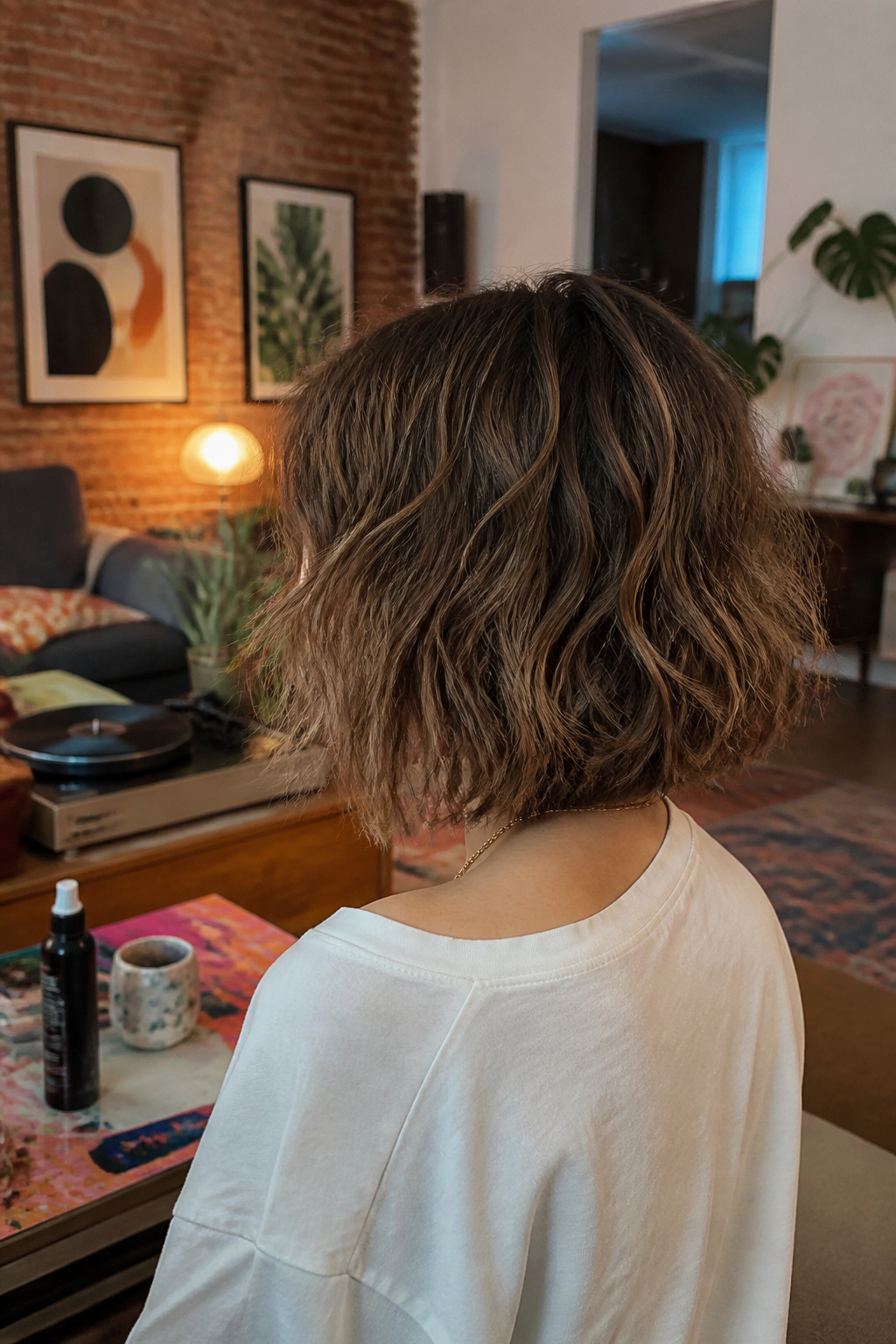
A shaggy bob piles on the texture: choppy ends, heavy layering, and usually curtain bangs that split in the middle and sweep the cheekbones. That disconnection is what breaks up facial roundness, creating angles where the face curves. Curtain bangs in particular do the balancing work, drawing a vertical line down the center that offsets width.
The catch is volume. A shag builds in lift by design, and on thick, straight hair that lift can puff outward instead of downward, adding width right where you want to subtract it. Some natural wave or curl softens the choppiness and keeps the silhouette from going too wide. Without it, the cut fights the texture rather than working with it. If your hair is straight and heavy, this style asks more of your morning routine than some of the others on this list.
Reading Your Face Shape
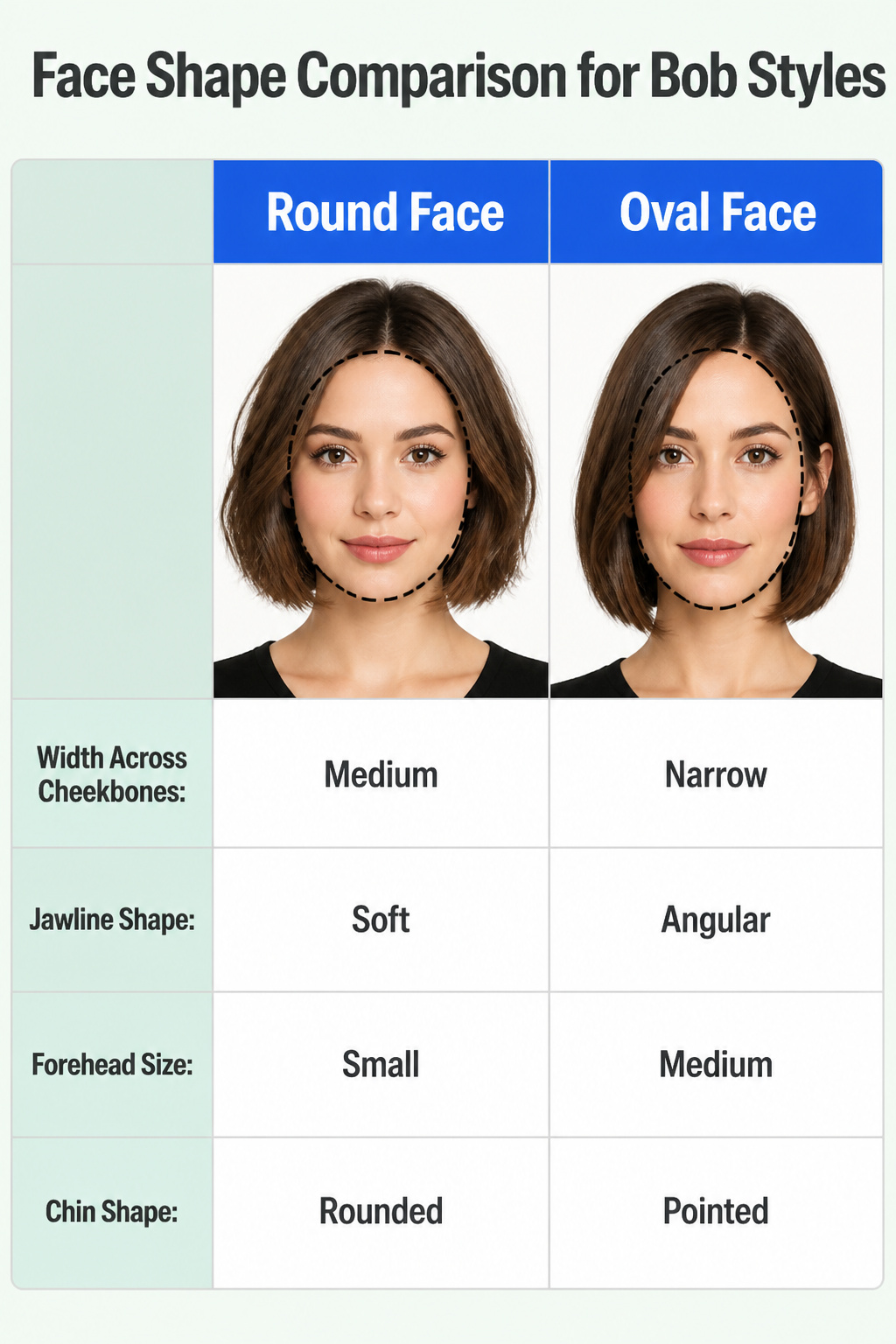
Round faces show about as much width across the cheekbones as they do from hairline to chin, with a softer jawline that curves rather than angles. The forehead tends to be small and the chin rounded, giving that circle-like outline. The goal with any medium bob is adding definition and angles that elongate rather than widen.
Many women misidentify their shape, so here is a quick check. Pull your hair back, stand in front of a mirror, and trace your outline with a lipstick or marker. If your face is longer than it is wide with balanced proportions and a slightly narrower jawline, you are oval, not round. If your forehead and jawline are broad with strong angles, you are square. A true round face has similar width and height with no sharp corners anywhere.
Getting this wrong sends you to the wrong cut. A style meant to soften a square jaw will do nothing for roundness. A cut built to add length to an already-oval face will look off. For round faces, the right medium bob creates the illusion of length through angles, height at the crown, or face-framing layers that draw the eye downward rather than across.
What Bangs Actually Do for Round Faces

Bangs can make or break a medium bob on a round face, and the difference comes down to where the line falls. Side-swept bangs soften fullness by breaking the symmetry and drawing the eye diagonally across the face rather than straight across the widest point. Curtain bangs work on a similar principle, parting in the middle and curving away to balance those curved edges.
Blunt, straight-across bangs usually do the opposite of what you want. They cut a hard horizontal line right across the forehead, which visually shortens the face and emphasizes roundness rather than adding structure. I learned this the hard way years ago, and the mirror made the problem obvious within a day.
Diagonal or curtain styles solve this by keeping the vertical lines open. The hair moves outward and away, creating the illusion of length that a round face needs. If your stylist suggests bangs with your bob, ask specifically for a soft, angled opening rather than a solid fringe.
Styling Products That Hold the Shape

The right product at the right moment keeps a medium bob from collapsing into a shapeless bowl. Three types do the heavy lifting, and timing matters more than brand names.
- Texturizing spray belongs on clean, dry hair when you want the tousled volume that keeps a round face from looking too full. A few spritzes at the roots, worked through with fingertips, creates the separation that lets light hit different angles.
- Smoothing serum is for the sleek, polished days, applied to damp hair before any heat touches it. Without this step, the blunt ends of a bob catch humidity and frizz outward, undoing the elongating line you cut the style for in the first place.
- Heat protectant spray sits between your hair and every tool: blow dryer, flat iron, curling wand. The sources put this step first for a reason. Skipping it costs more than split ends; repeated heat without a barrier flattens the cuticle so thoroughly that no amount of texturizing spray revives the body.
A round brush and blow dryer build the foundation, but the product layer locks in whether that foundation holds until lunch or until evening.
The 6-to-8-Week Trim Rule
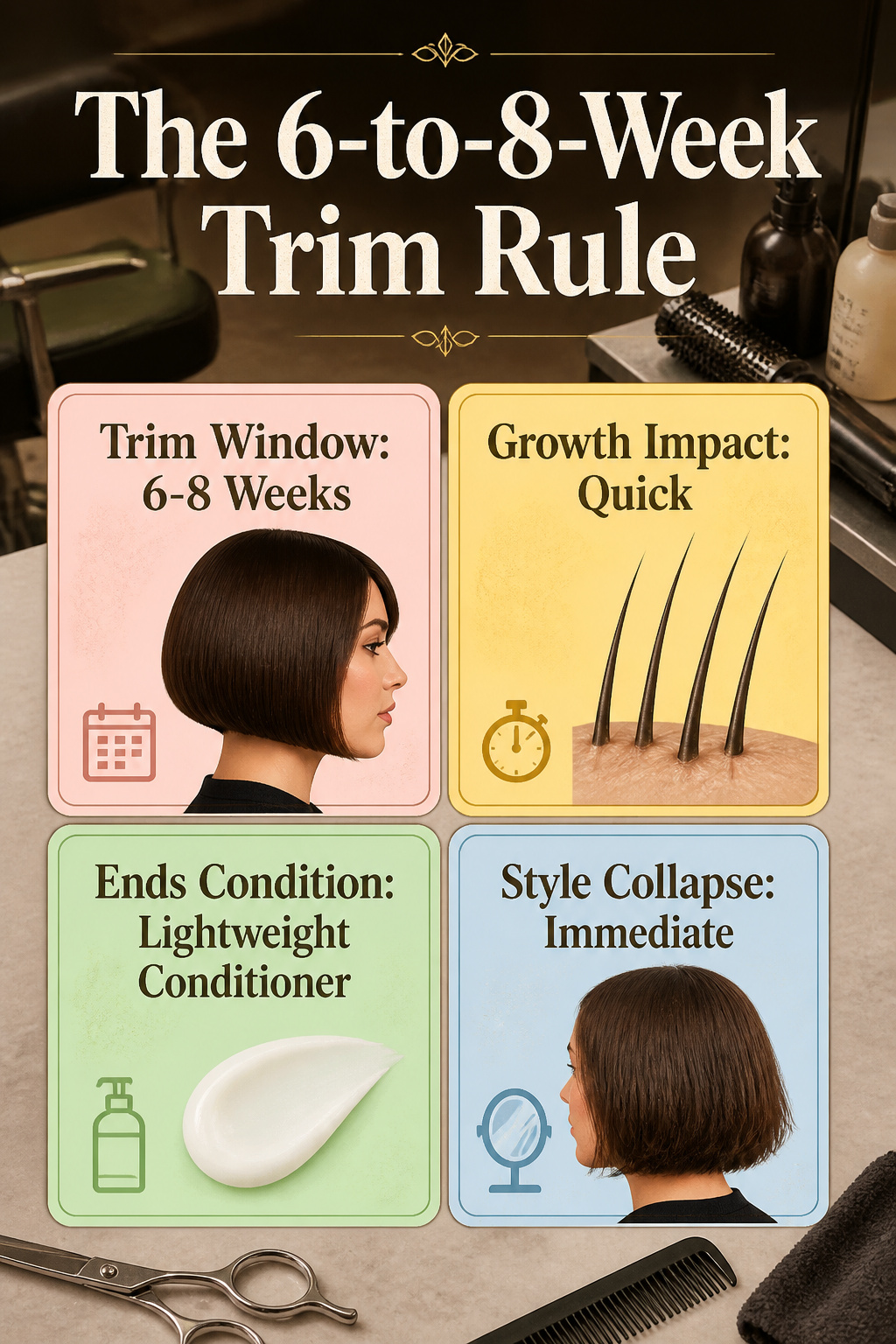
A bob lives or dies by its line, and that line starts softening the day you leave the salon. Six to eight weeks is the window before the angle that frames your jaw begins to wander downward, dragging the eye with it and rounding out what the cut was meant to lengthen. Longer styles forgive a month or two of growth; a bob just collapses.
Split ends travel faster on shorter hair because there is less length to absorb the wear. The face-framing pieces, cut precisely to hit at the cheekbone or just below, lose their architecture first. What was a vertical stroke becomes a horizontal blur, and a round face picks up the extra width immediately.
Between trims, a lightweight conditioner keeps the ends smooth without weighing the crown flat, and a volumizing mousse or texturizing spray restores the body that shampoo strips away. A weekly deep conditioning treatment helps, but product will not redraw a grown-out line. Only the scissors do that.
Frequently Asked Questions
What face shape looks best with a bob cut?
Bob cuts work for every face shape when the style is tailored to it. Round faces benefit from A-line or inverted bobs that add angles and length, while oval faces can wear almost any variation. Square faces look best with layered or wavy bobs that soften strong jawlines, and heart-shaped faces are flattered by chin-length or side-swept styles.
Are bob haircuts easy to maintain?
Bobs require regular trims every 6 to 8 weeks to keep their line sharp, but daily styling can be minimal depending on the cut. An A-line bob elongates a round face without demanding much morning effort, while an inverted bob needs blow-drying to maintain its stacked volume. The right products, like texturizing spray or smoothing serum, simplify the routine.
Can I get a bob if I have curly or wavy hair?
Curly and wavy hair works beautifully with bobs, especially for round faces. An asymmetrical bob on naturally curly hair reads as intentional shape rather than a mistake, and the volume and definition make the style look polished. Wavy hair also suits the cut, though you will want to define the wave pattern so the finish stays deliberate rather than messy.
How do I know what bob length is right for me?
For round faces, the sweet spot sits just below the chin, which creates a vertical anchor that pulls the eye downward and adds length. Your stylist should also weigh your neck length and hair texture; collarbone-length fronts work well on the kitty cut, while jawline cuts demand precise placement to avoid circling the face. Bring photos and point exactly where you want layers or the perimeter to land.
What is the difference between an A-line bob and an inverted bob?
An A-line bob is longer in front and shorter in back with a clean, unstacked line, keeping the silhouette sleek and moderate in volume. An inverted bob also shortens toward the back but adds stacked layers at the crown that build height and bulk on top, which demands more styling to preserve the shape. Both elongate a round face, though the A-line asks less of your morning routine.