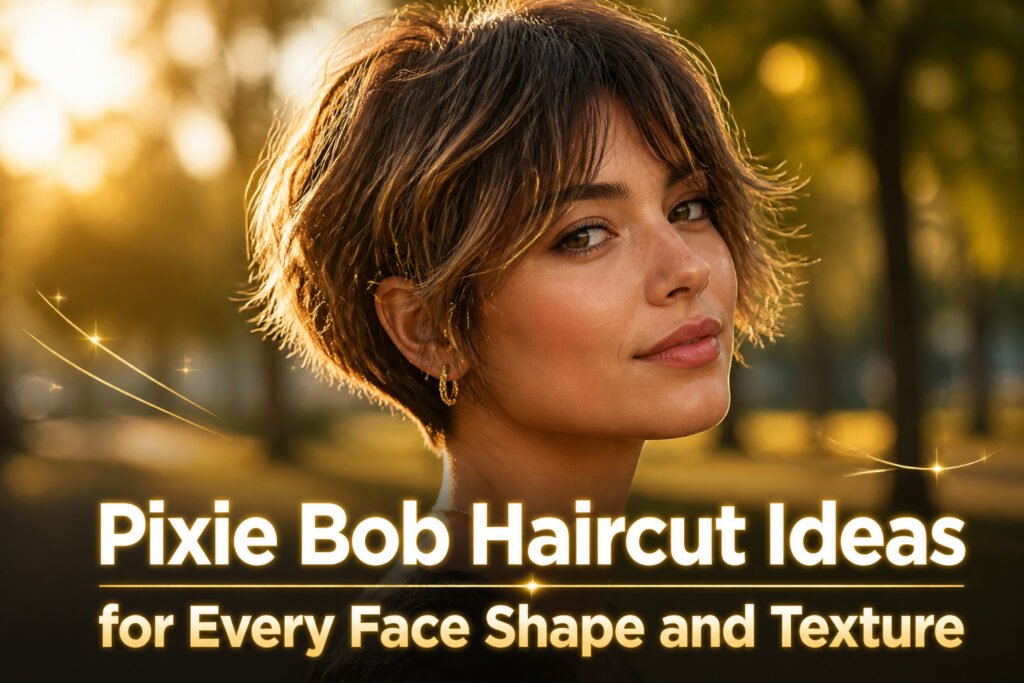
A pixie bob haircut lands somewhere between a cropped pixie and a full bob, and the exact inch where it stops determines whether it flatters your face or fights it. The wrong length for your texture turns the cut into daily styling work you did not sign up for. Dry cutting for curls, razor tapering for shaggy texture, and precise occipital-bone placement for stacked versions all change which version belongs to you.
1. Stacked Pixie Bob
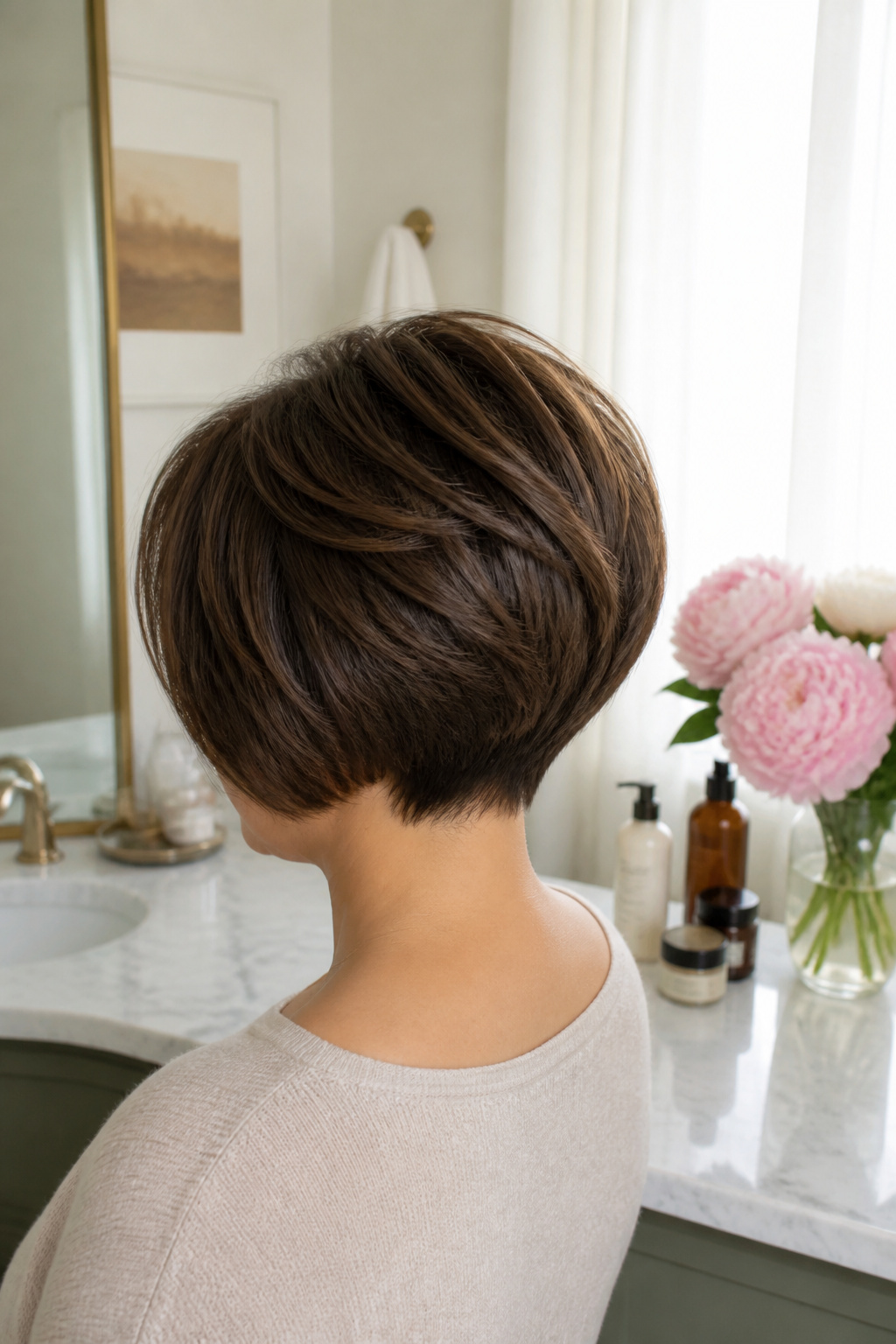
A stacked pixie bob builds its volume right where fine hair usually quits. The cut graduates shorter from the occipital bone down to the nape, pushing lift upward and outward instead of letting the back fall flat. Length typically hits at or below the ear, which keeps enough material to shape while the stacked layers do the heavy lifting underneath.
This is the most widely documented pixie bob variation for a reason. The stacking creates a rounded silhouette that reads as thickness even on hair that lacks it naturally. Medium-density hair carries it best, though fine textures benefit most from the built-in architecture. Ask your stylist to set the weight line precisely at the occipital bone, that placement separates a structured cut from a generic short style.
Maintenance stays reasonable. The tapered nape keeps the neckline clean as it grows, and the crown volume generally survives a wash-and-fluff routine without much tooling. Side-swept bangs pair well if you want to balance the height and draw attention upward, though the cut holds its own without them.
2. Defined Silver Crop
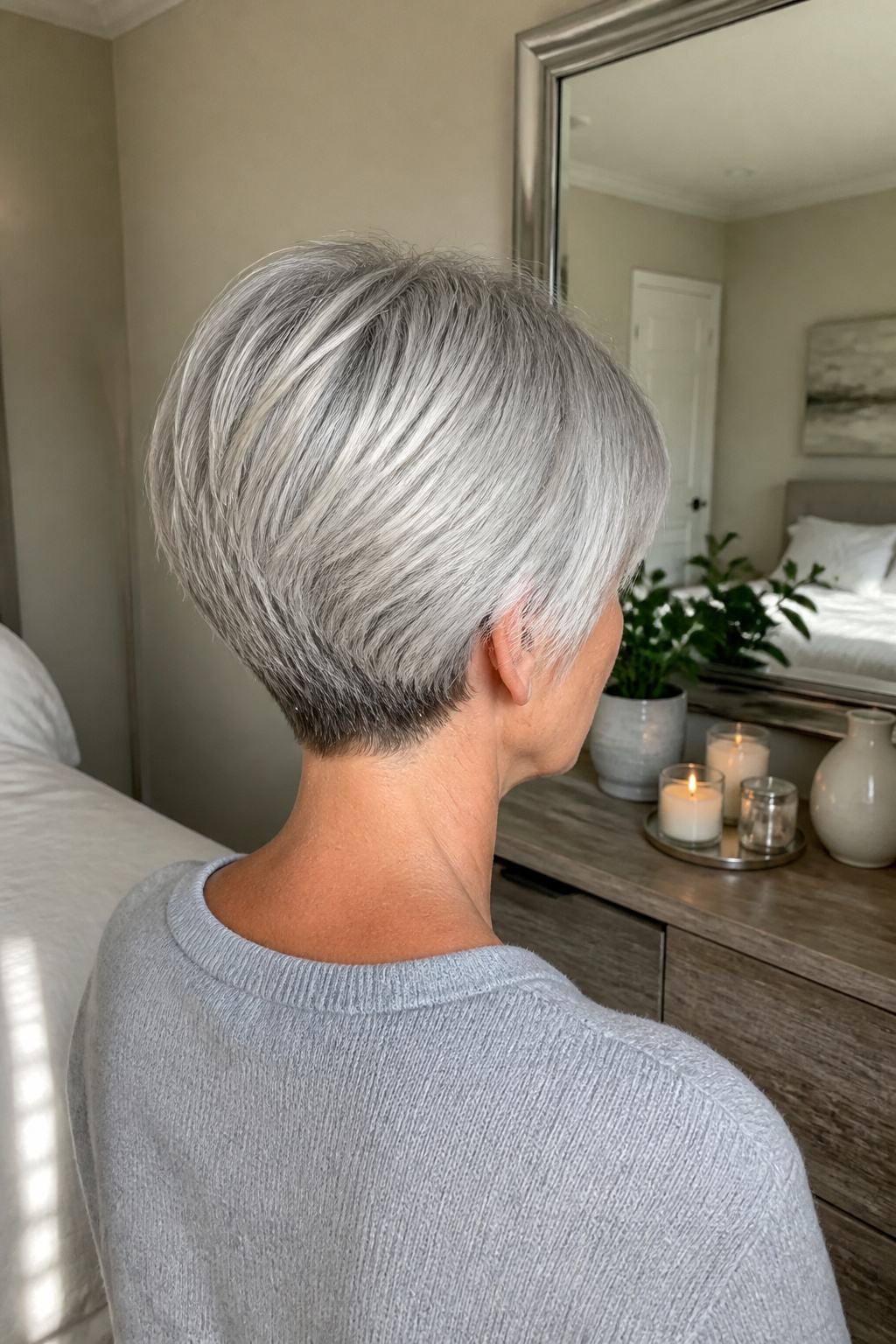
Silver and gray hair carries a coarser texture than pigmented strands, which means a sharply defined pixie bob holds its shape longer than most people expect. The density gray hair naturally carries works in your favor here, but only if your stylist keeps the internal layers minimal enough to preserve that weight while still smoothing the silhouette.
The color choice matters as much as the cut. A dimensional silver tone reads deliberate, especially when you prevent the yellowing that makes gray look neglected. Purple shampoo every third wash does the maintenance work; a lightweight shine spray replaces the luminosity gray strands tend to lose. Without that gloss, the precise lines of the crop can look harsh rather than polished.
Two ways to wear this: let the edges sit crisp against the jaw for a more architectural effect, or keep the nape tapered neat while allowing slightly longer, feathery layers at the crown to soften the overall impression. The first option suits oval and heart-shaped faces best; the second adds volume for finer hair without sacrificing the cut’s intentional structure. Root touch-ups become the main upkeep if you want those dimensional silver tones to stay consistent rather than drifting toward flat.
3. Long and Tousled Haircut
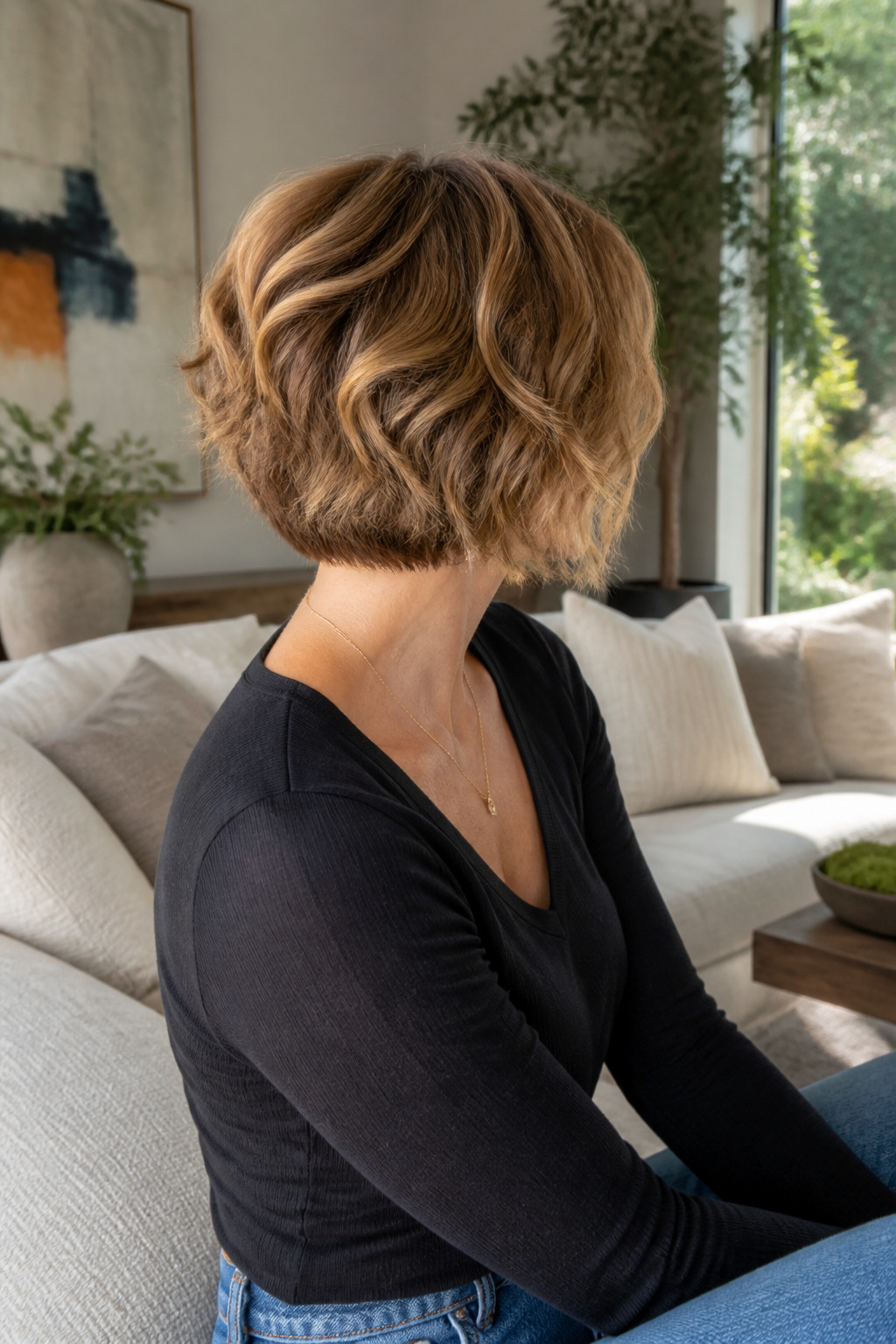
A longer pixie bob that brushes the jawline rather than hugging the ear gives you room to work with texture in a way shorter crops rarely allow. The extra length means the cut can hold deliberate messiness without falling flat, which is where the tousled effect becomes easier, not harder, to maintain than on a micro version.
What surprised me, reading through dozens of styling routines, is how this length shifts your morning time. Shorter pixie bobs often demand precise product placement to keep their shape; the jaw-grazing version lets you skip that precision. A quick scrunch with damp hands and the right texturizer does more of the work because the weight of the hair itself creates movement.
The tradeoff shows up in product choice. Shorter cuts lean on strong-hold pastes or clays to keep every piece in place. The longer tousled pixie bob needs lighter formulas, mousses or salt sprays that encourage separation without gluing strands together. Use the heavy stuff and the deliberate messiness turns into accidental helmet head.
Washing frequency changes too. The extra length means natural oils travel slower, so second or third day hair often styles better than freshly cleaned. That cuts prep time further, though dry shampoo at the roots becomes the non-negotiable step to keep the volume from collapsing toward the scalp.
4. Choppy Cut with Highlights

Textured, irregular ends do the heavy lifting in a choppy pixie bob, but the cut can still read as one solid block without something to fracture the weight. Highlights placed where the choppiness already breaks the line catch light at alternating angles, so the eye reads movement instead of mass. On my own hair, the difference between a single-tone chop and one with dimensional color was the difference between a helmet and a style that shifted when I turned my head.
Razor-cut ends create that chunky, separated texture, and the irregular surface gives highlight placement something to grip. Hand-painted color works better than foils here: the balayage follows the natural fall of the layers rather than stamping uniform stripes across them. Caramel or honey on a dark base adds warmth without the brassiness that full bleach tends to bring, and the tones sit most naturally where the texture is already doing its own irregular work.
Medium-density hair with some natural wave carries this combination best. The wave amplifies the choppy layers instead of fighting them, and the highlights catch on the outermost sections where the curl or bend already lifts away from the head. Rub a pea-sized amount of texturizing paste between your palms and twist through mid-lengths and ends for definition that does not go crunchy. The paste separates the pieces the highlights have already visually broken apart, so the movement reads from every angle.
5. Inverted Pixie Bob
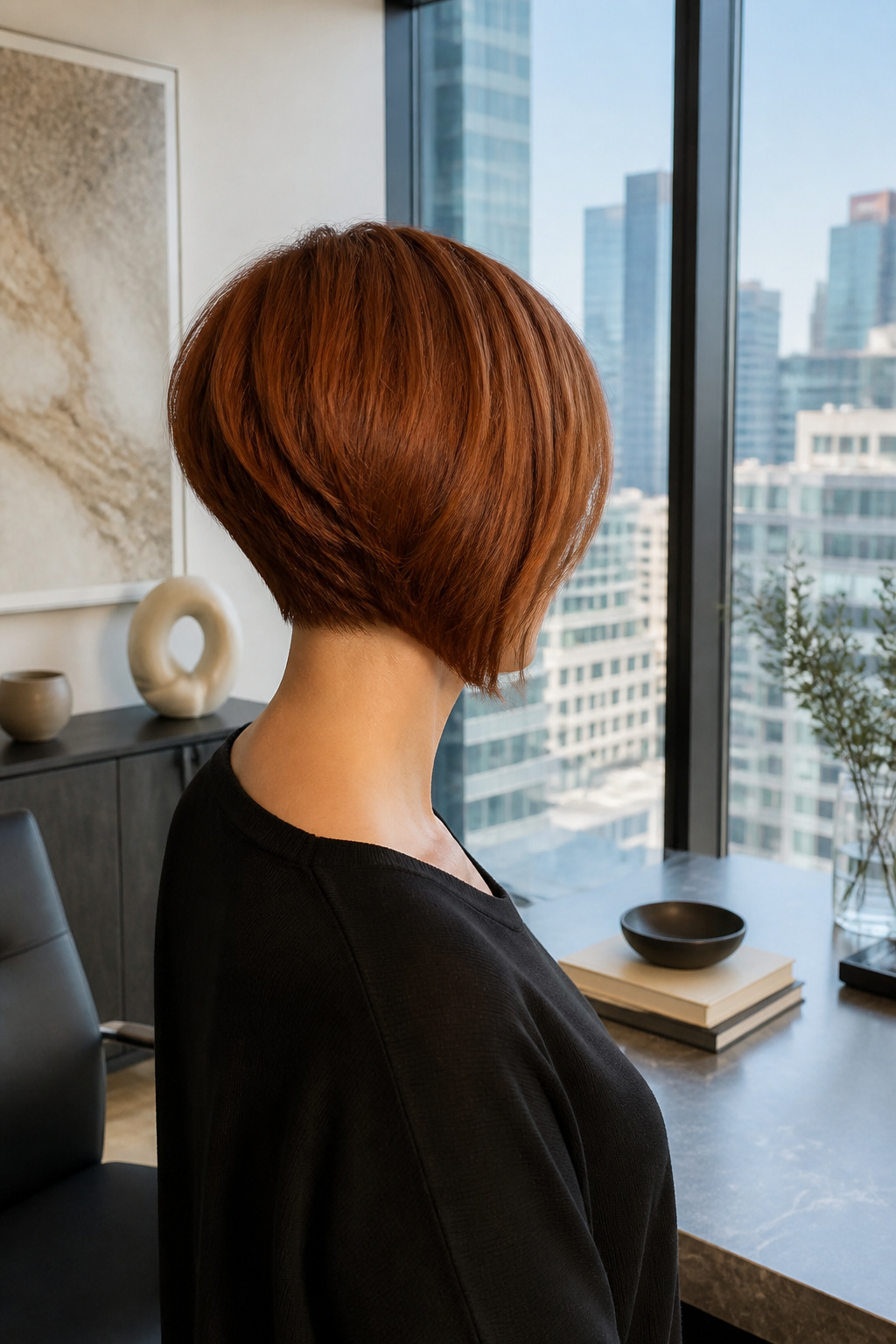
An inverted pixie bob flips the usual graduation: the back sits shortest while the front carries the length. That reverse angle builds a diagonal line from nape to jaw, which changes the silhouette from rounded to elongated. Where a stacked back pushes volume upward and outward, this cut keeps the weight low and forward, framing the face instead of lifting from the crown.
The angle works hardest on oval, heart, and square face shapes, since the longer front pieces draw the eye downward and soften strong bone structure. Fine to medium hair types see the most payoff here; the cut naturally adds volume where the strands fall flattest, but without the bulk at the nape that thicker hair can turn heavy. Ask your stylist to keep the weight line moving, not fixed, so the transition from short to long stays gradual rather than abrupt.
6. Razored Chin-Length Style
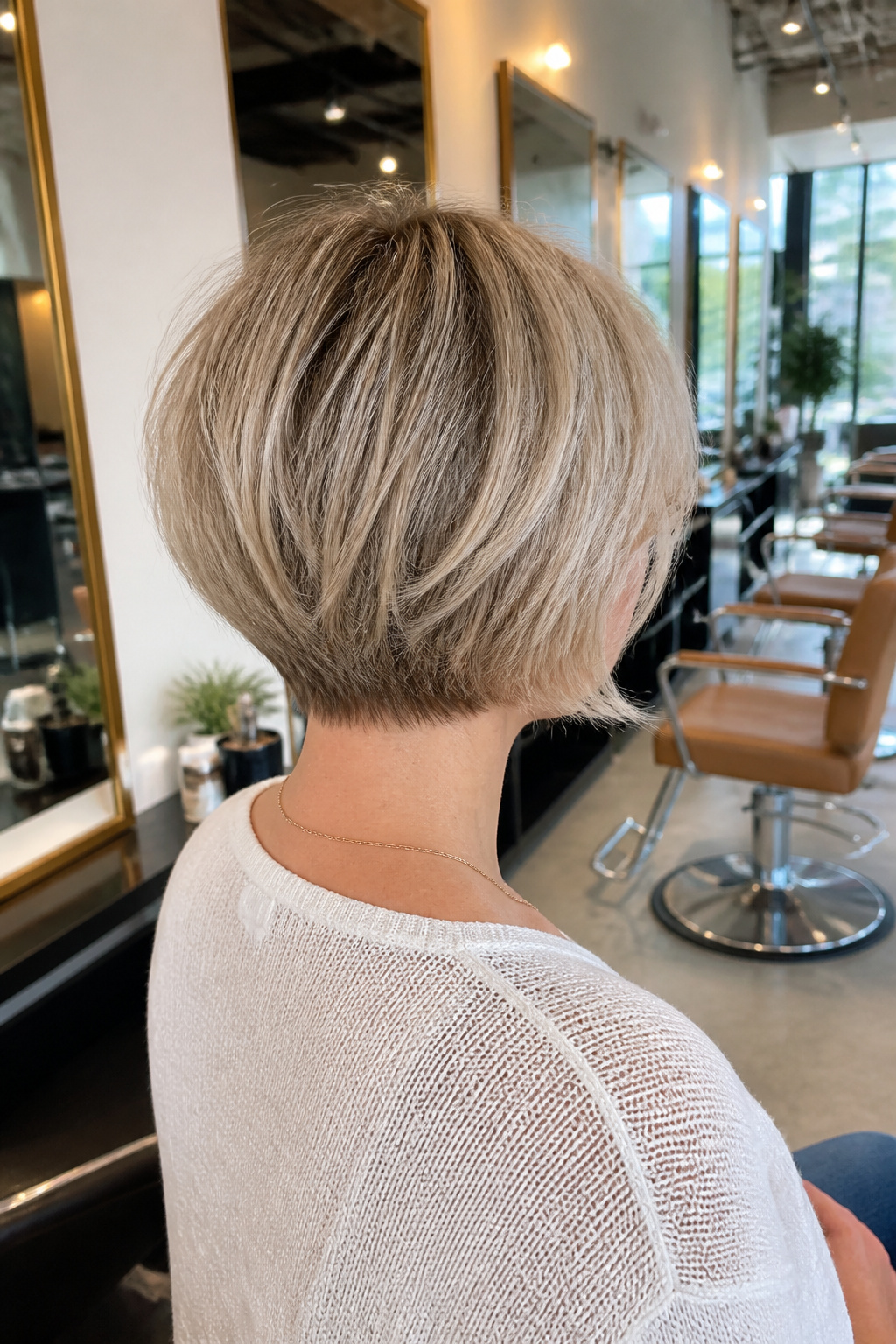
A razor-cut chin-length pixie bob carries a different kind of movement than the scissor-cut versions most salons default to. The blade tapers the ends softer and lighter, so the perimeter breaks up instead of holding a clean line. That feathered edge means the shape looks deliberate even while it is growing out, and it hides uneven growth patterns better than a blunt cut would.
The texture this creates sits somewhere between shag and bob. On hair with any natural wave, the razored ends amplify the separation rather than fighting it. Aaron Firmstone, who trains stylists for Bumble and bumble, reaches for a razor specifically to make the layers infuse together and read as one seamless piece rather than stacked steps.
Styling follows the same split. Air-dry with a curl cream if you have wave to work with; the product lets the choppy texture do its own arranging. For a smoother finish, a round brush and blow dryer pull the same shape into something more polished, though the ends stay piece-y either way. A small amount of texturizing paste, about pea-sized, twisted through the mid-lengths and ends keeps the definition from going crunchy.
7. Long Bixie with Highlights
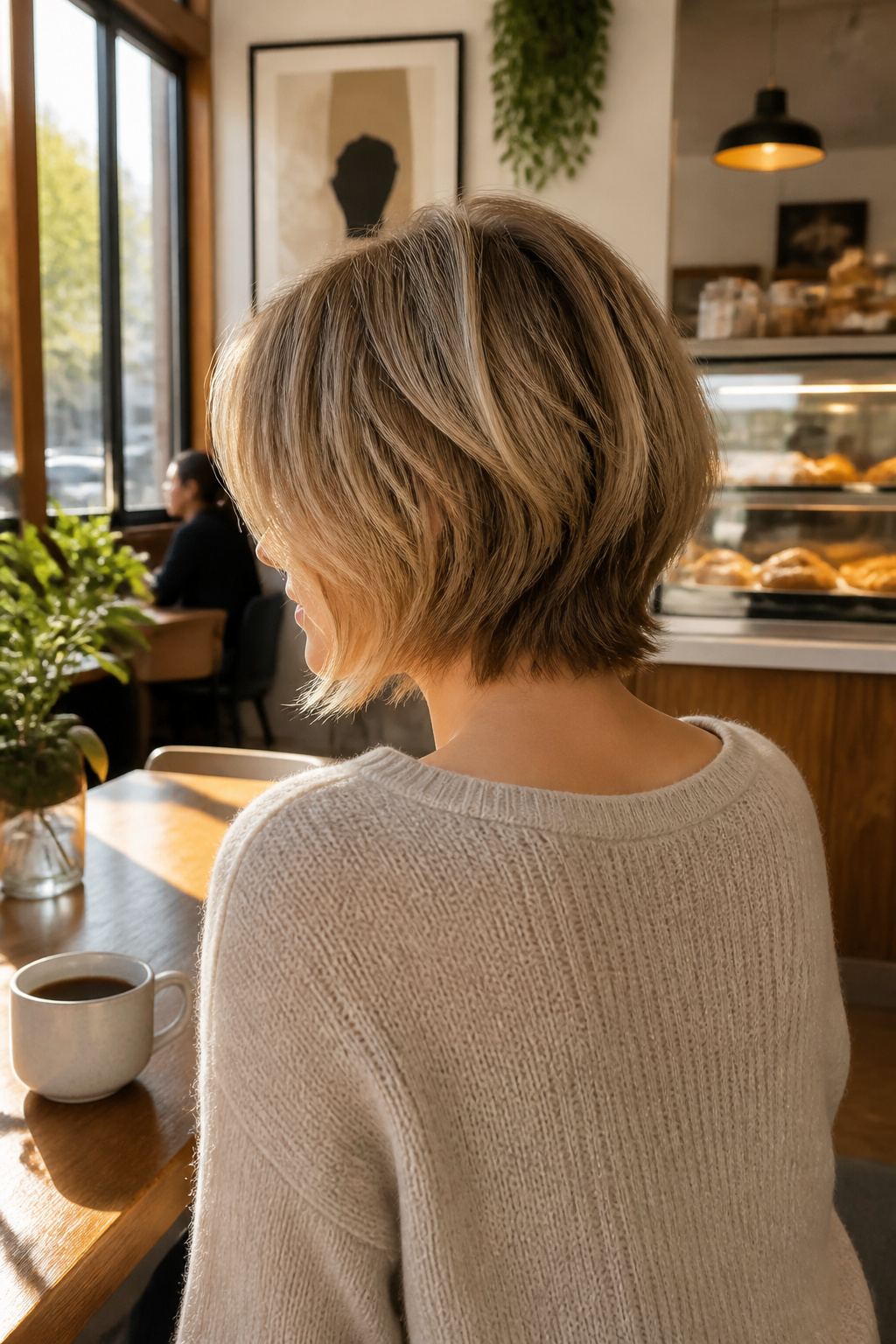
The bixie sits in that awkward middle ground where your hair is too long to behave like a true pixie and too short to fall into a bob’s rhythm. Adding highlights to the extra length gives the cut dimension it would otherwise lose, since the longer pieces can start to look heavy without some color variation breaking them up.
Celebrity stylist Dimitris Giannetos notes that keeping length in the front while going shorter in back creates a softer, more romantic feel than a classic pixie. The highlights should follow that same logic: lighter pieces concentrated around the face and toward the ends, where the longer layers live, rather than scattered evenly through the shorter crown. This draws the eye to the cheekbones, which is exactly where a bixie typically hits.
The maintenance is where this hybrid gets tricky. The graduated cut builds volume and height, but those highlights will need refreshing as the longer front grows out and starts to read more bob than pixie. Plan on the color appointment driving your salon schedule more than the cut itself.
8. Angled Asymmetrical Cut
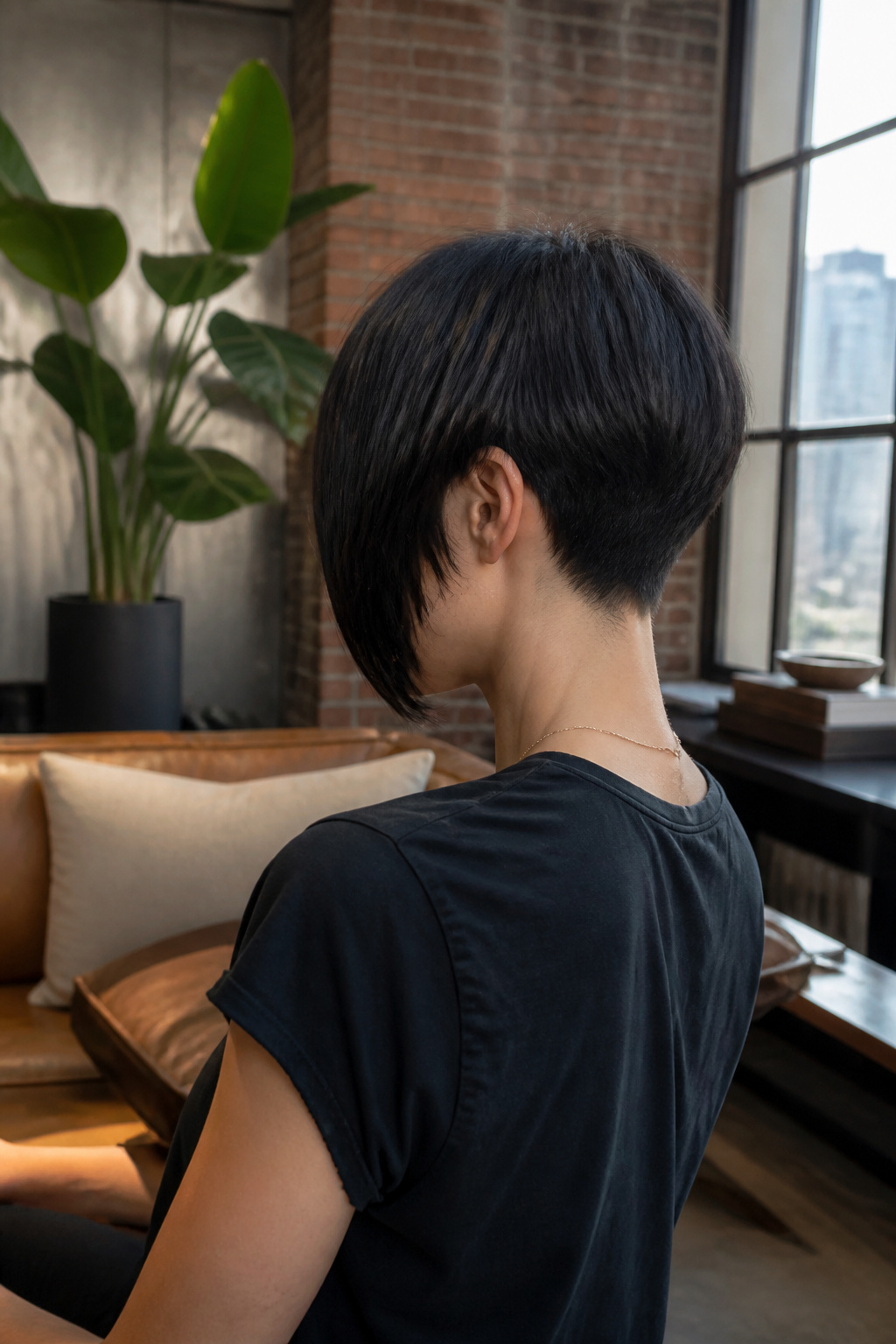
An asymmetrical pixie bob with one side grazing the jawline and the other tapering to the ear creates a dramatic silhouette that pulls the eye vertically. That vertical draw elongates round and wide face shapes, which is why the cut works so well when you want to add perceived length rather than width.
The contrast between the two sides needs a stylist who understands disconnection, because the lengths have to blend through the back without a visible step. Wear it swept toward the longer side for everyday polish, or tuck the short side behind the ear when you want the imbalance to read as deliberate. The stacked back adds volume at the crown, which helps if your hair is starting to thin, and the longer top layer flatters round or square faces by creating the illusion of length. Medium-density hair with natural body carries the shape best; fine hair can look wispy where the weight drops off too sharply.
9. Rose Gold Choppy Crop
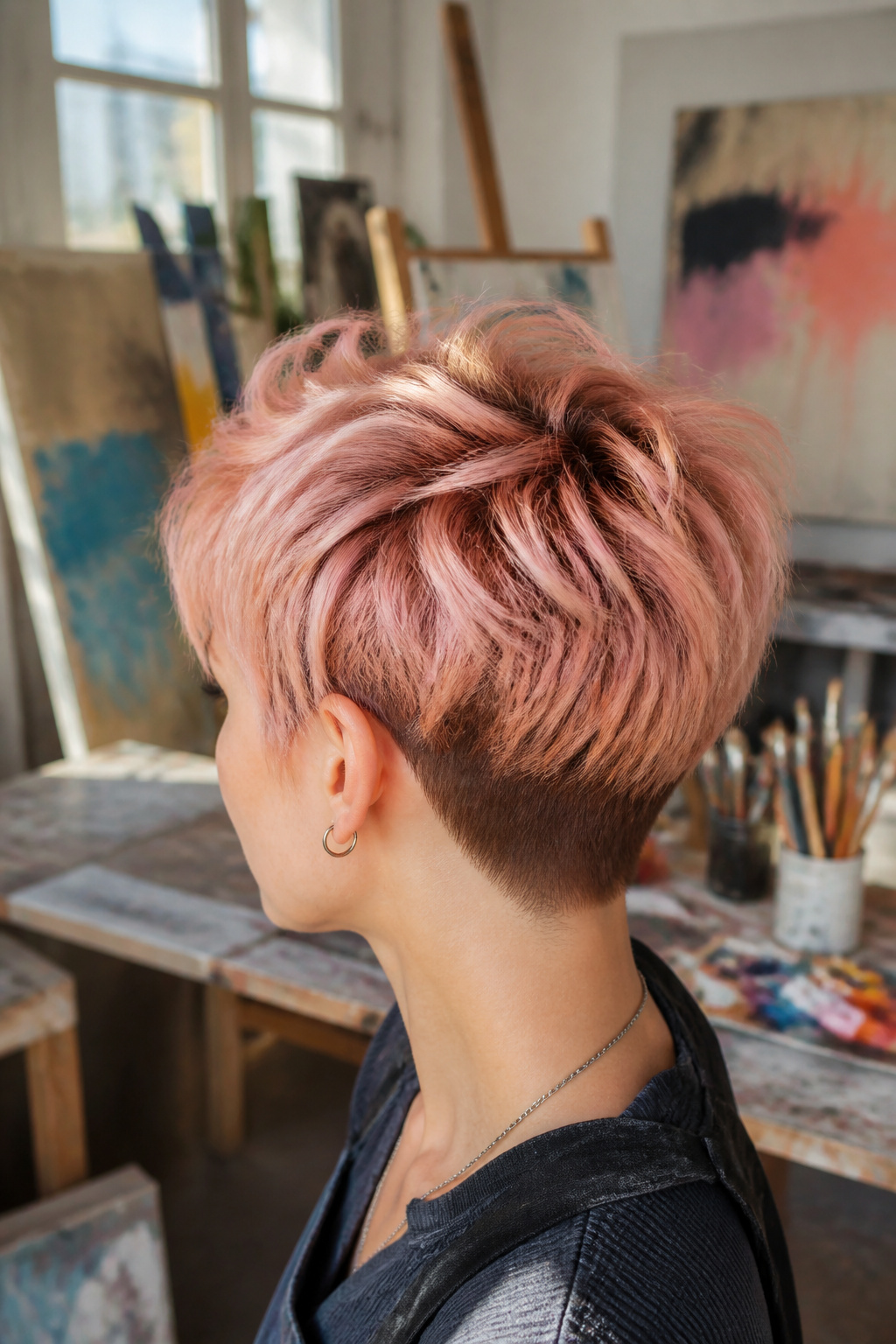
Warm pink-gold tones on short hair shift the maintenance calendar forward by a couple of weeks. The red pigment in rose gold fades faster than blonde or brown, so the color appointment moves from the usual eight-week mark closer to six. That red also means brass control becomes the deciding factor in product selection. Purple shampoo, the standard fix for yellowing blondes, will not cut it here. A blue-toned shampoo or a dedicated rose-gold color-depositing formula keeps the shade from drifting peach.
The choppy texture of this particular pixie bob haircut works with the color rather than against it. The uneven ends catch light differently, which hides the slight variation between fresh color and three-week growth. Your stylist can lean into that by placing the brightest rose gold pieces where the texture sits highest, usually around the crown and the front. Darker roots, left natural or shadowed in, stretch the touch-up window without the high-contrast grow-out line you would get with a solid platinum crop.
On my own reading through colorist accounts, the ones who keep rose gold looking intentional rather than accidental all mention the same thing: the client has to commit to cool water rinses and a heat protectant that lists UV filters. Sun fades the pink fastest of all.
10. Choppy Micro Bob
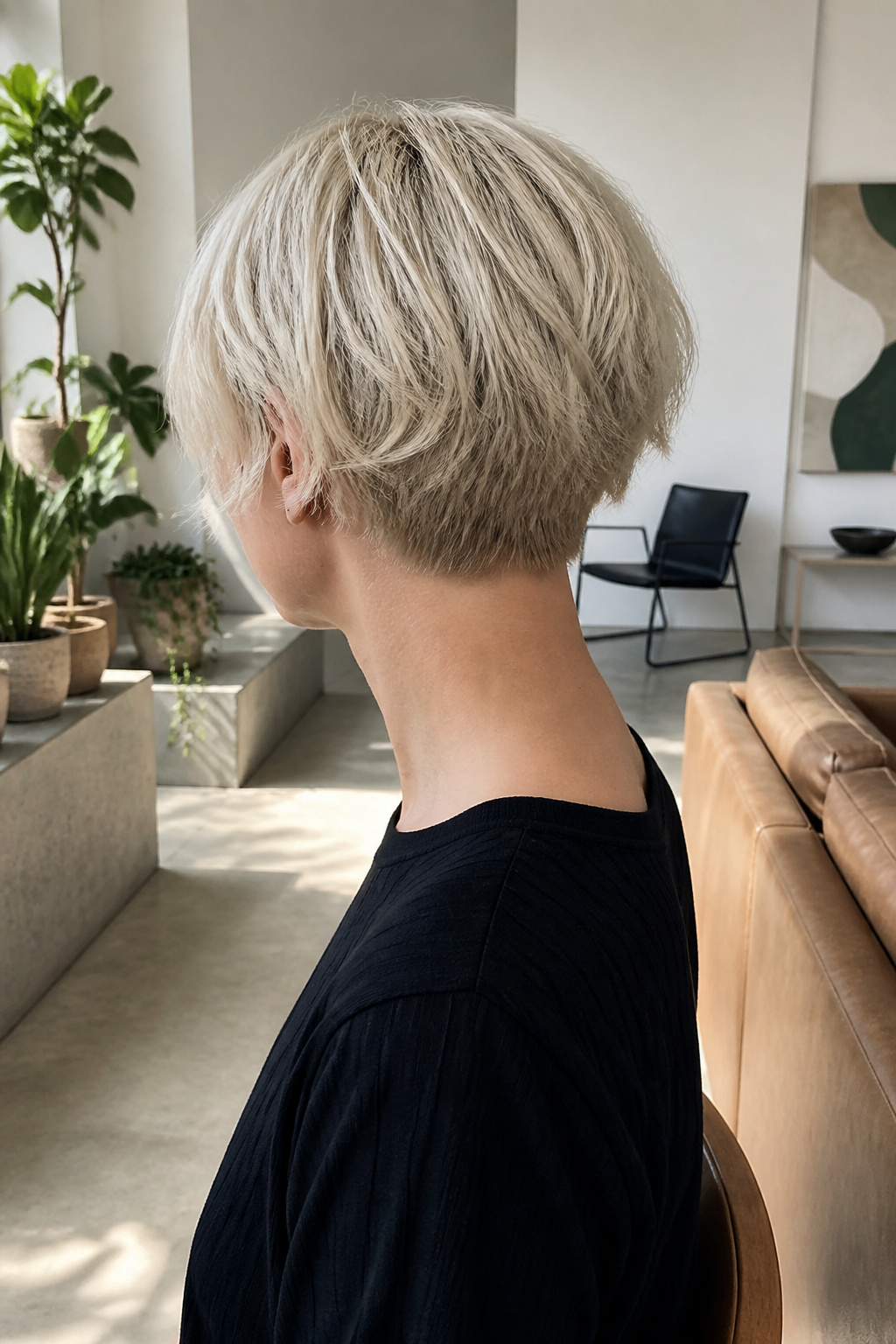
A choppy micro bob sits so close to the scalp that the line between pixie and bob almost disappears. The styling time drops to under two minutes on most mornings, since there is simply not enough length for a round brush or a full blowout. A dab of texturizing paste worked through dry ends usually does the full job.
The tradeoff is exposure. The nape of your neck stays bare, which feels light in July and requires attention in January. Ears sit fully out in the open, so the shape of your lobes and any piercings become part of the look whether you planned for that or not.
Grow-out behaves differently at this length than with a longer pixie bob. The cut crosses from short back to awkward bob in about five weeks, not the eight you might get away with on a chin-grazing style. The neckline loses its shape fast, and the choppy layers that looked intentional start to read as uneven. Planning trims closer together keeps the silhouette deliberate rather than accidental.
11. Bixie with Side Bangs
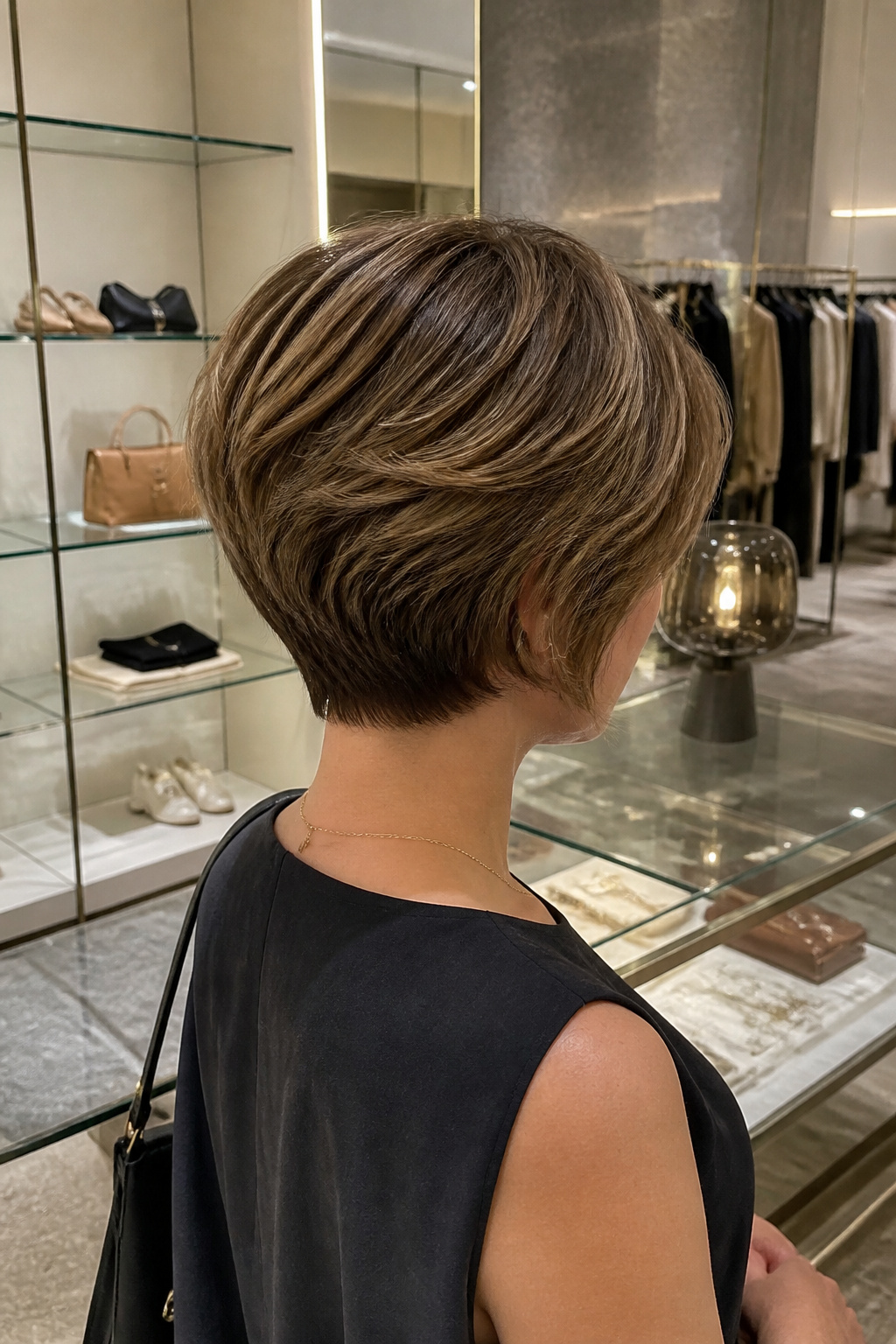
The bixie with side bangs lives or dies on where that fringe lands. Too short and the sweep fights the jawline; too long and it collapses into the eyes by noon. A steep, feathered angle through the crown keeps the shape lifted without thinning out the ends, which matters more than you’d think on fine, straight hair that goes flat by lunch.
Side bangs rewrite the face-shape math that applies to the rest of the cut. Where a center part might emphasize width, the diagonal sweep draws the eye down and narrows. The tradeoff is upkeep: the fringe grows faster than the back, so you’re looking at trims every three to four weeks to keep the angle sharp. Skip one and the whole silhouette softens into something closer to a grown-out bob.
The grow-out is forgiving, at least. Because the fringe blends into longer front pieces, you can let it slide into a side-swept layer instead of blunt bangs. A walnut-sized amount of volumizing mousse at the roots, blow-dried upside down, gives enough lift to carry the shape through the afternoon. Without that step, the crown falls and the bangs look like an afterthought rather than the point of the cut.
12. Shaggy Purple Hairstyle
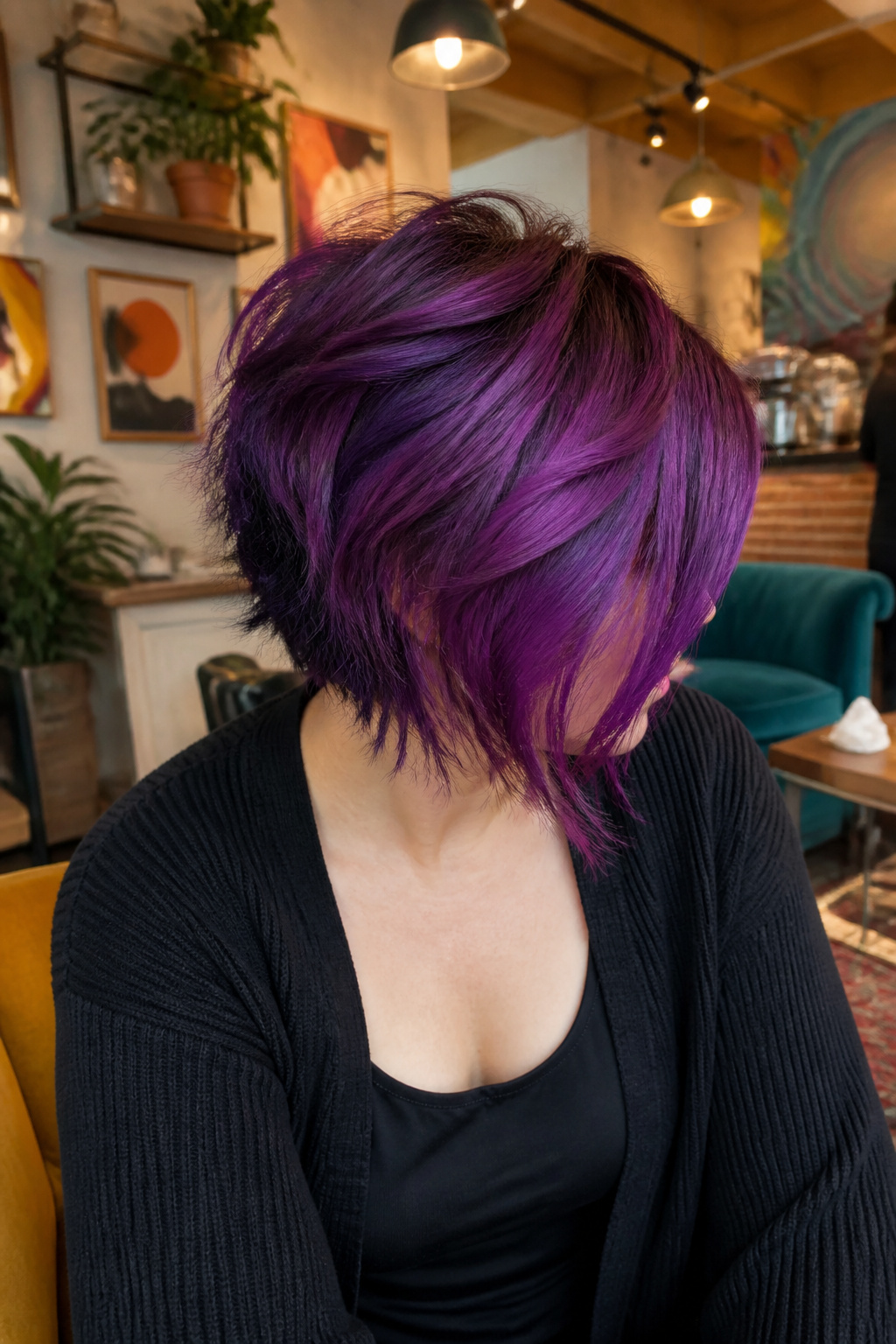
Vivid purple on a pixie bob lives or dies by how fast the color washes out, and the shaggy cut structure changes that math. The razor-tapered ends break up the perimeter line instead of sealing it, which means the color sits on finer, more porous tips where pigment escapes first. That broken edge also hides the warm band that appears as violet fades, so the grow-out looks intentional rather than neglected.
Fashion shades generally fade within four to six weeks depending on wash frequency. The shaggy layering helps here by giving you two styling paths that stretch that window. Air-drying with curl cream lets the uneven texture do the work; the color reads as multidimensional even when it has softened. Blow-drying smooth for a polished version exposes more surface area to water and heat, so that route costs you days of saturation.
Budget for color touch-ups more frequently than trims if you want the purple to stay electric. The cut itself improves over the first two weeks after cutting, so the shape keeps working even as the tone shifts.
13. Curly Pixie Bob
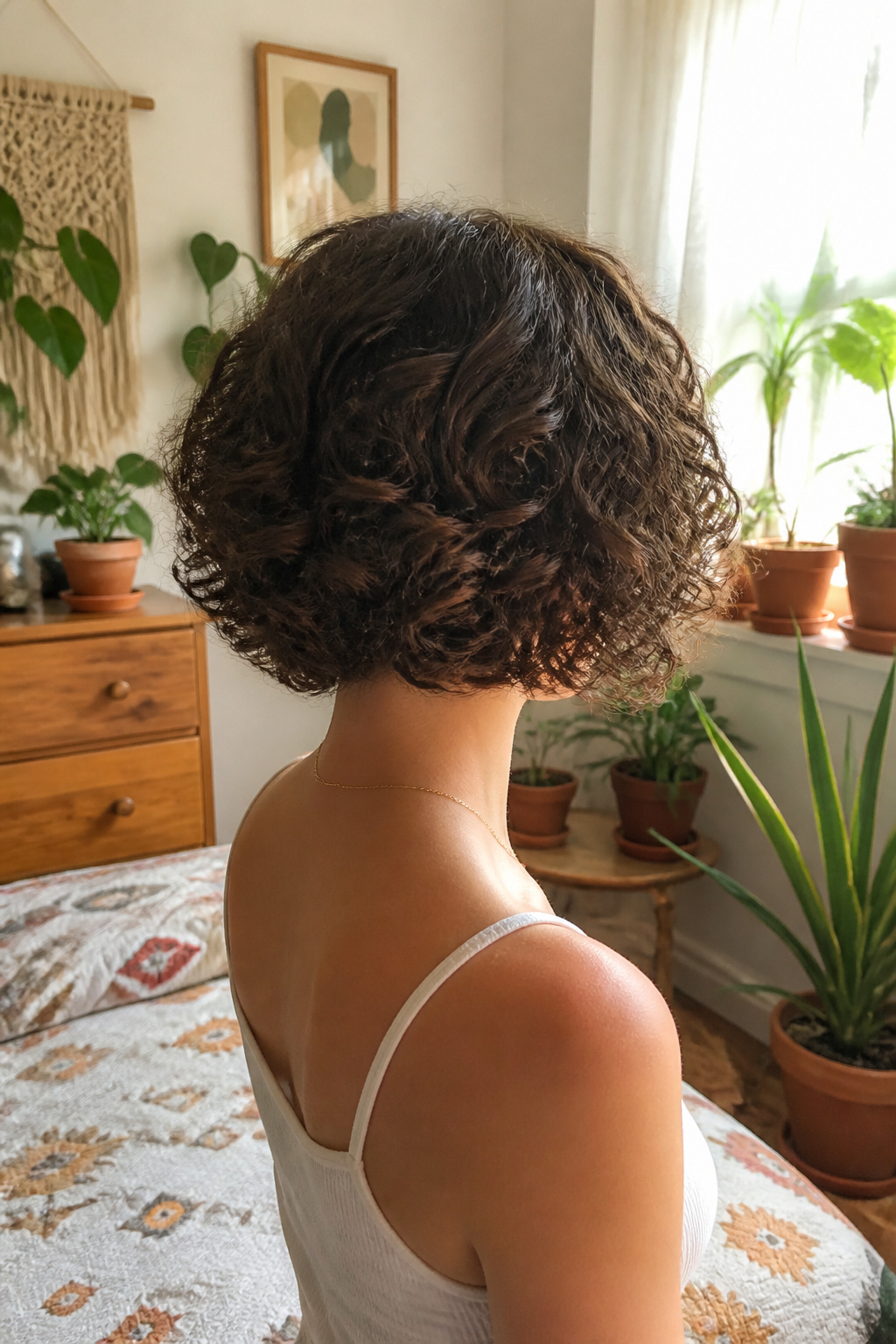
Curls behave differently at pixie bob length than they do on longer hair, mostly because of shrinkage. A curl that hangs four inches lower when wet can spring up two to four inches as it dries, which means the cut has to be planned around where the hair lands, not where it sits in the chair.
Dry cutting is the technique that accounts for this. Each curl gets trimmed in its natural resting position, not pulled straight, so the shape you leave with is the shape you actually wear. Wet cutting curly hair leads to uneven results once the contraction happens.
For styling, a lightweight curl cream scrunched into damp hair defines the coil without adding weight. Heavy gels or waxes collapse the pattern and leave the cut looking flat against the head, which works against the volume that makes this length interesting on curly texture.
The rounded silhouette that forms at ear-to-jaw length frames the face with natural volume rather than fighting it. A razor can help the layers infuse together and become seamless, though the cut should still be adapted to your specific curl pattern and density rather than copied exactly from any reference photo.
14. Graduated Cut with Fringe
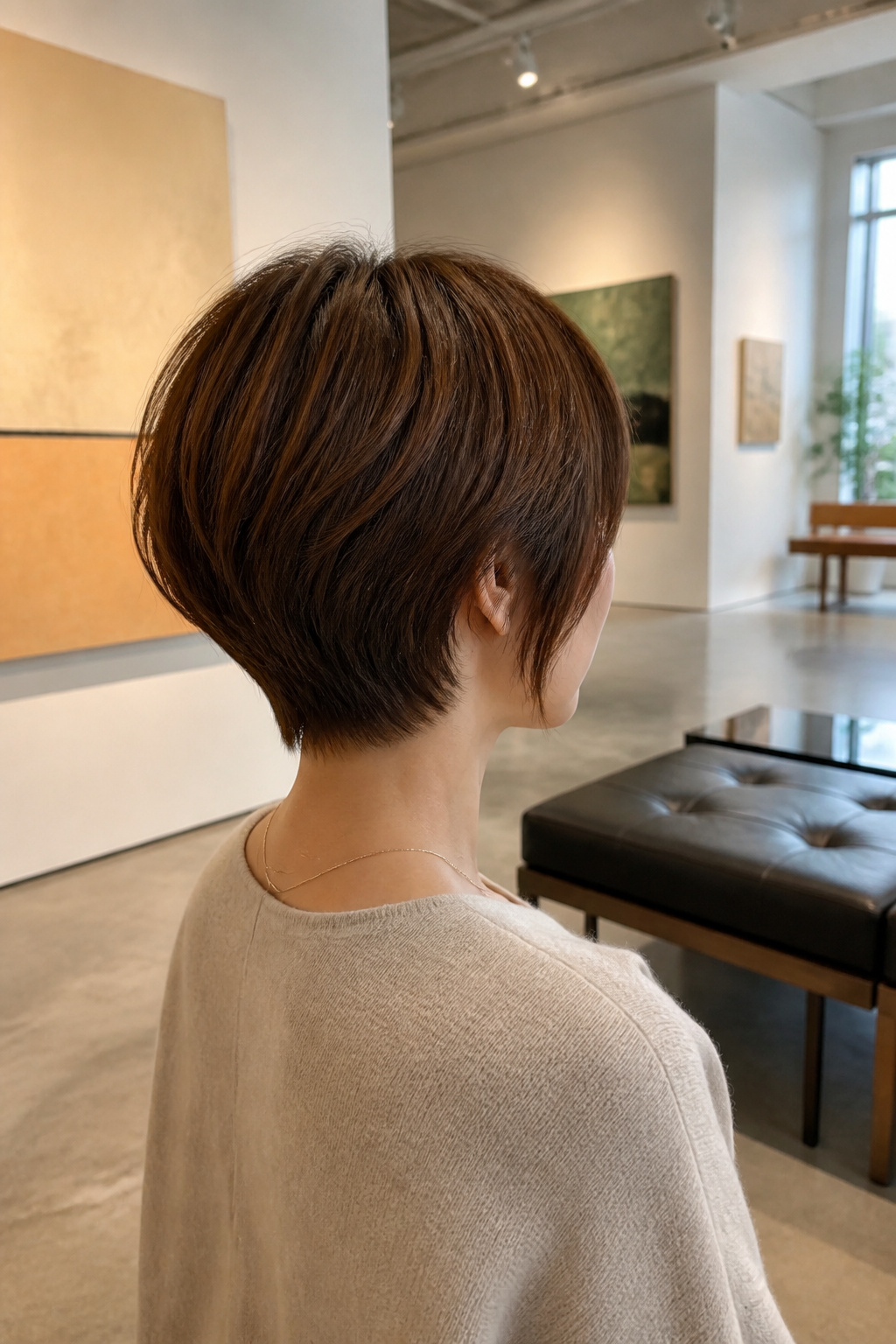
Stacked layering through the back builds weight where most heads flatten out, and the graduation pushes that volume upward so the silhouette reads round from the side. A full forehead fringe does the opposite work: it pulls visual weight forward and down, which keeps the crown from looking too puffed or too severe. The two elements need each other. Without the fringe, the graduated back can age the face by exposing the full forehead and drawing the eye to the widest point of the jaw. Without the stacking, the bangs sit heavy and helmet-like.
The balance shows up in the profile. The fringe should start dense at the root and taper to soft ends that skim the eyebrows, not a blunt shelf. That lightness lets the back do its job without competition. Your stylist can adjust the graduation angle to your head shape: a flatter occipital bone needs steeper stacking, while a rounder one stays lower. Ask to see the back in a hand mirror before you leave the chair; the front is easy to judge, but the back is where this cut lives or dies.
15. Short Crop with Long Bangs
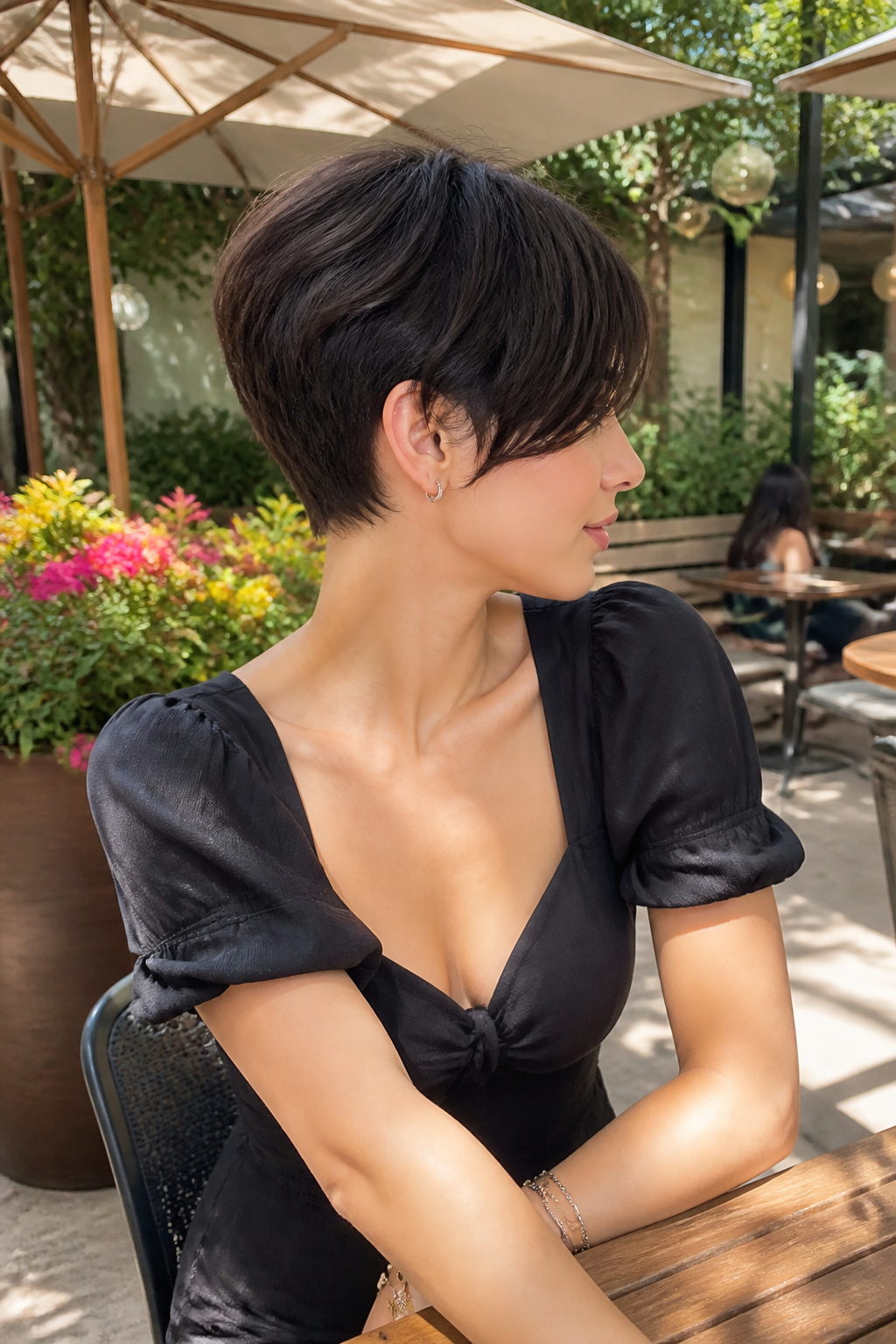
A short crop with long bangs lives or dies on the contrast between the two lengths. The back and sides stay clipped close, often tapered or stacked, while the front pieces extend toward the cheekbone or past it. That sharp difference is what draws the eye upward and, on oblong faces, the horizontal line of those longer bangs visually shortens a longer forehead.
Daily styling shifts completely because of that front section. With the back so short, air-drying takes minutes, but the bangs need deliberate work. On wavy hair, those longer pieces develop a natural S-curve that frames without looking overly styled, though straight hair demands a quick pass with a flat iron or round brush to keep them from falling flat against the face. The short back also means regular trims matter more here than on blended cuts; grow-out shows fast, but the longer front pieces disguise the awkward stage if you’re stretching between appointments.
Two ways to wear it: sweep the bangs to one side for softness, or part them in the middle for a curtain effect that works especially well if your hair has some wave. The side-swept version reads more feminine and dramatic; the middle part feels cleaner and more current. Either way, the neck and cheekbones stay exposed, so this cut rewards anyone who wants those features emphasized.
16. Long Asymmetric Style
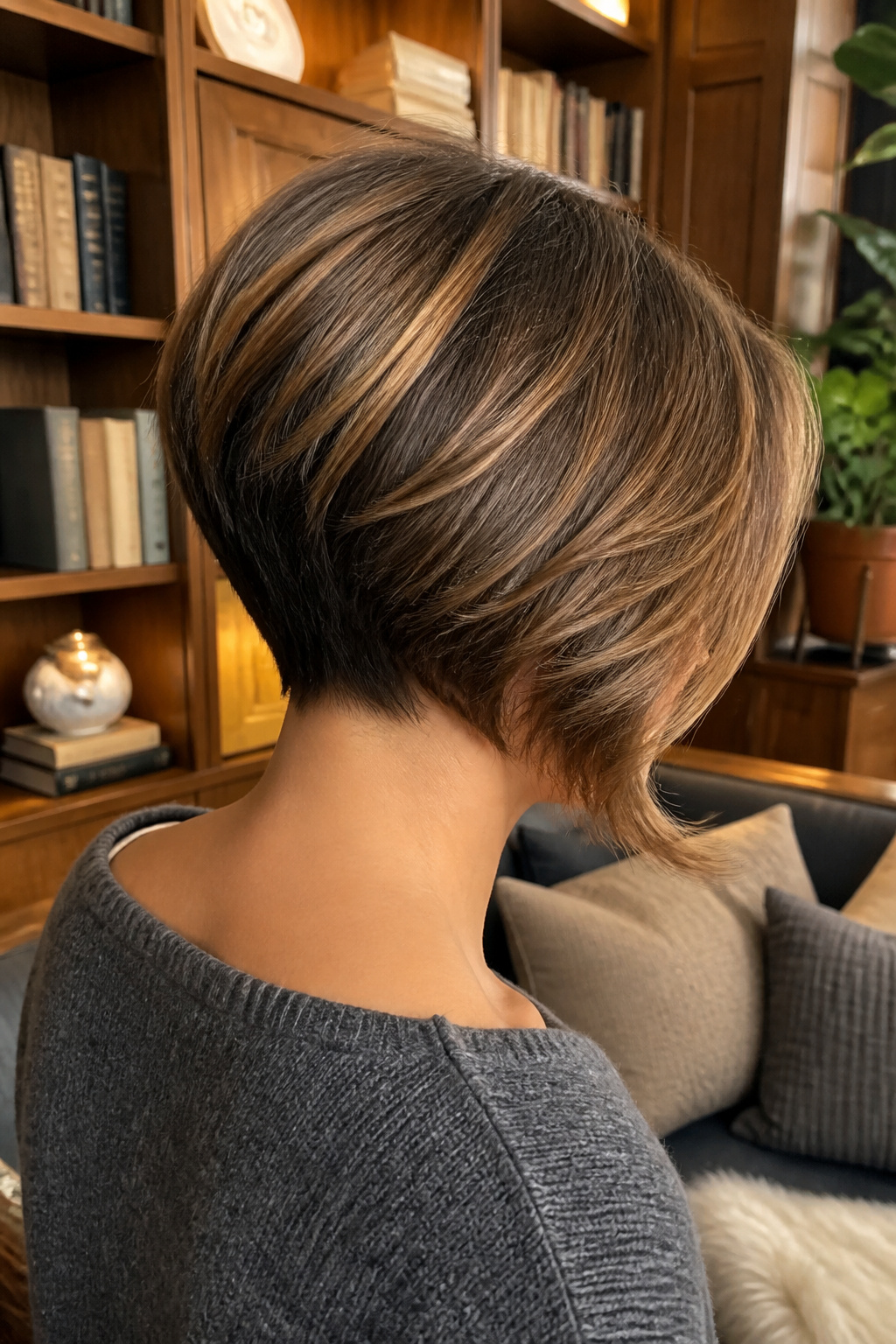
A long asymmetric pixie bob keeps enough length on one side to brush behind the ear or tuck, while the opposite side sits noticeably shorter. Those extra inches move the visual imbalance lower than in a sharply angled cut, so the drama reads across your jawline rather than at the cheekbone. The longer panel also gives you something to grip with a flat iron or round brush, which a shorter crop simply does not.
What surprised me, looking through dozens of these cuts, is how much the part placement changes the effect. A deep side part pushes almost all the weight to one side and the asymmetry turns bold. A center or slightly off-center part splits the difference and the style softens into something you could wear to an office without comment. The growout between trims behaves differently too: the long side keeps its shape for weeks, but the short side can start looking accidental rather than intentional if you stretch past six weeks.
Texture matters here. Fine hair lies flat against the scalp on the short side and can expose more than you intended. A bit of layering through the crown fixes that, though it adds minutes to morning styling. Coarser hair carries the contrast better but may need thinning on the longer panel to keep it from turning into a wedge.
17. Middle-Parted Hairdo
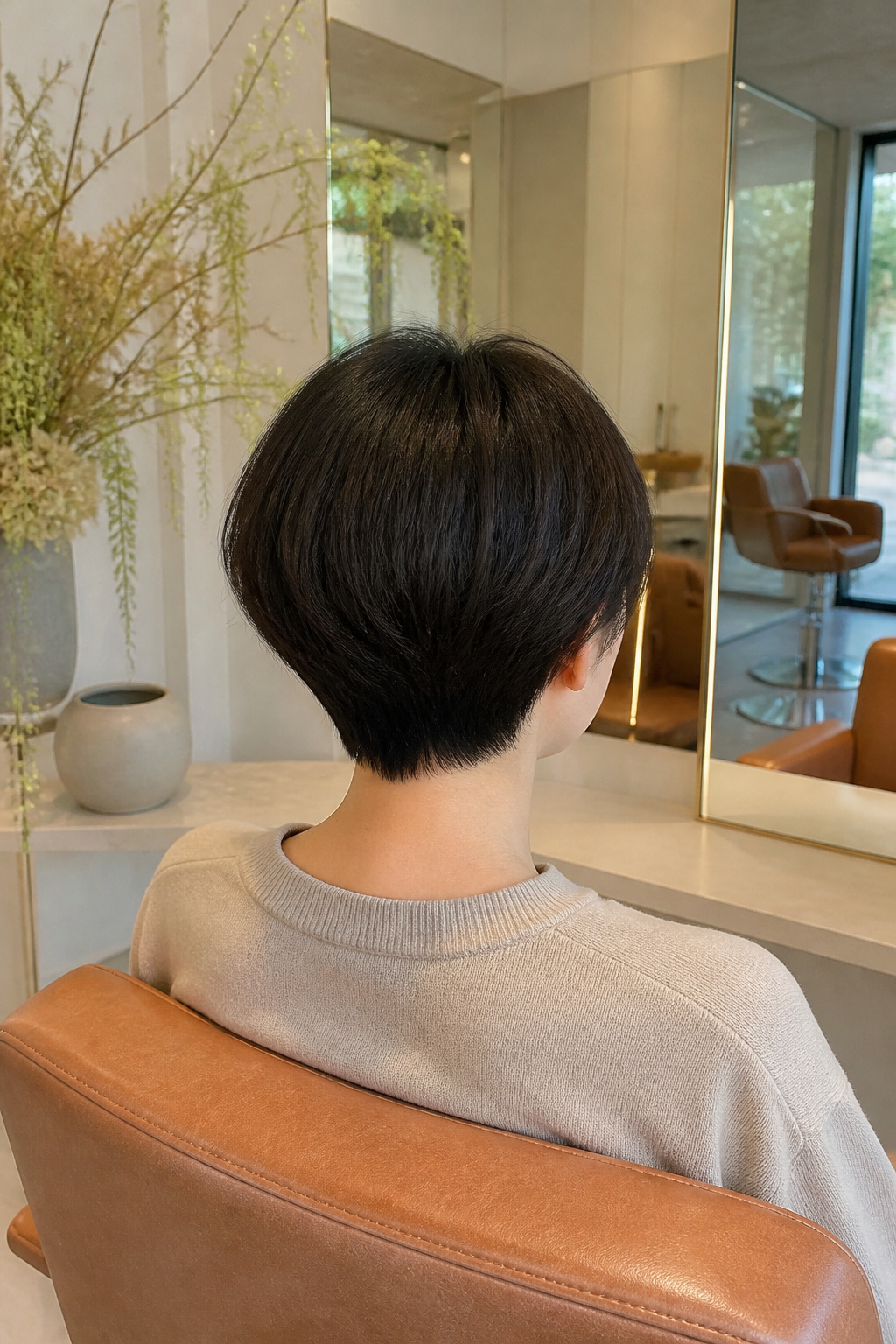
A middle part on a pixie bob does something entirely different from the deep side part most stylists push for round or square faces. The symmetry pulls focus straight to the center of the face, which can emphasize width rather than lengthen it. For oval or diamond shapes, though, that same even line keeps the natural balance intact.
The real issue is training the part to stay put. Hair that has been parted to one side for years fights a center placement, and the shorter lengths of a pixie bob leave less weight to hold it down. A strong-hold gel works against that memory: Fenty Beauty The Gelly Type Strong Hold Gel is the one that comes up for this specific cut, since it sets without the stiffness that ruins the soft texture at the ends.
Curtain fringe changes the equation slightly. Split at the center and swept to both sides, it creates the face-framing effect that softens strong features while still reading as a middle part. On straight hair, dimensional highlights through the fringe area emphasize the layering and add movement even when the style is freshly washed and flat. The part itself is the statement here, not the volume, so product choice matters more than with a tousled or side-swept version.
18. Tapered Lavender Bixie
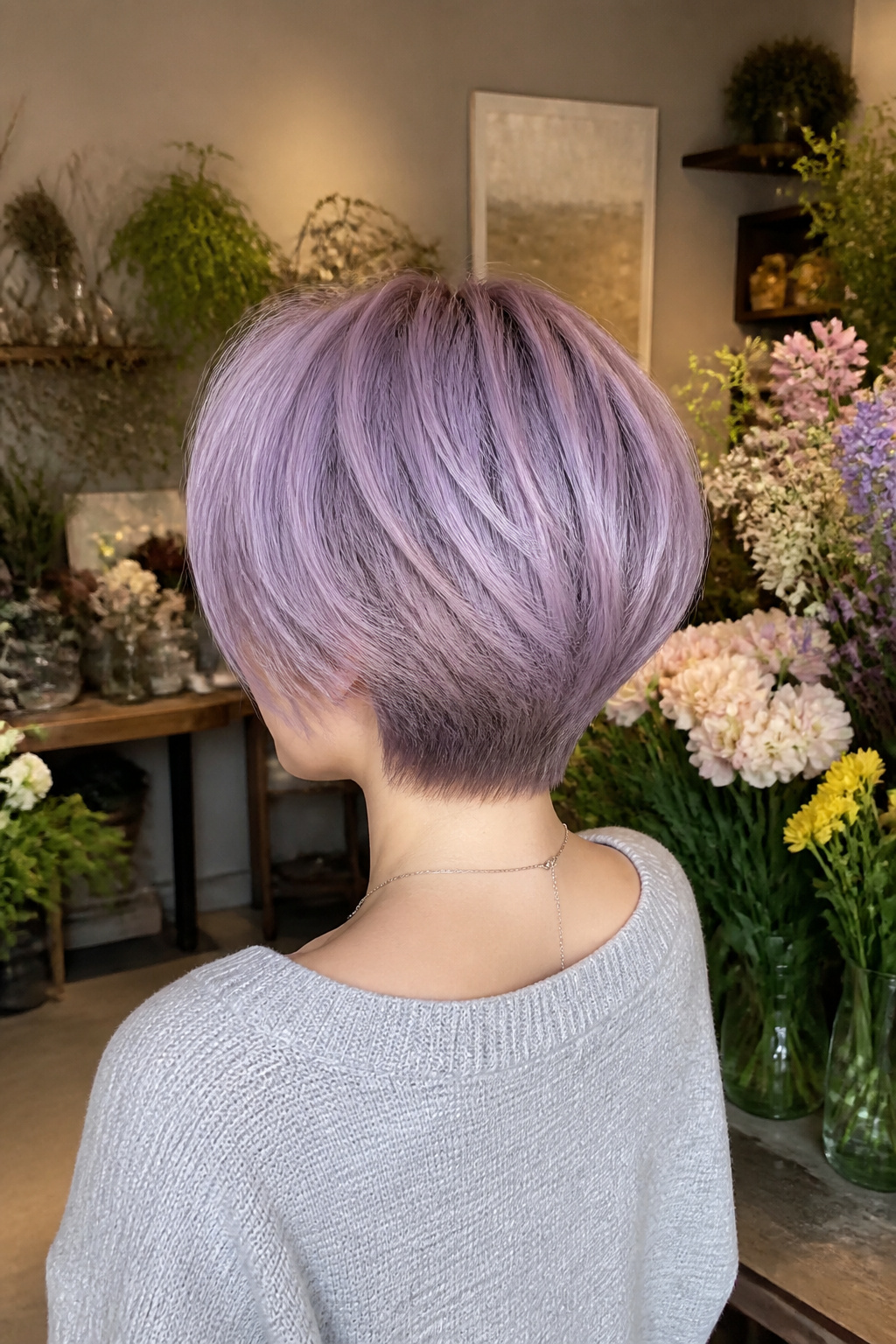
A bixie that narrows gradually toward the nape keeps the bulk in check without the heavy stacking of a true pixie. The taper does the structural work here: weight falls away cleanly at the back while the slightly longer front preserves enough length to feel like a bob.
Pale purple reads softer than violet or plum, but it is still a fashion shade, and fashion shades fade within four to six weeks depending on wash frequency. Budget for color touch-ups more often than trims. Metallic purple paired with silver highlights can add depth if the single tone falls flat, though on fair skin the muted lavender alone usually carries enough interest without extra dimension.
The shape works best when the nape is cut close enough to hug the neck; otherwise the taper loses its graphic line and the cut drifts into generic short-hair territory. Ask for the shortest point to sit just at the hairline, not above it, so the grow-out stays intentional rather than awkward.
19. Choppy Side-Parted Bixie

A choppy side-parted bixie lives or dies by where you draw the line. The 70/30 split shifts the visual weight to one side, which is the single easiest way to keep a round face from looking boxy. On my own morning, I part deeper than I think I should; the asymmetry does the lifting that layers alone cannot.
Texture throughout matters because a blunt perimeter with no visible layering reads dense, almost helmet-like. Choppy ends break that up. The side you load with the 70 percent gets the volume, so part on the side opposite your stronger cheekbone if you want balance, or toward it if you want to emphasize structure.
Blow-dry with a paddle brush while the hair is still damp, smoothing serum already worked through. This gets the sleek finish without pulling out a flat iron. The shorter crop sits close to the head, but the longer lengths at the nape or swept into the parting keep it from reading too pixie.
20. French Bob with Curtain Bangs

A French bob with curtain bangs lands right where the two traditions meet: the jawline or just below it, short enough to read as pixie but with enough length to carry the French bob’s signature blunt perimeter. The bangs split at the center and sweep to both sides, framing the face rather than covering it.
The bluntness of the French cut keeps the silhouette clean, while the curtain fringe softens strong features and works on virtually every face shape. What convinced me, reading through the variations, is how the two elements balance each other. The blunt line risks severity; the broken center line of the bangs prevents that. Conversely, the curtain fringe on a longer cut can feel unfocused, but the short, decisive length gives it structure.
Dimensional highlights through the fringe area help, emphasizing the layering and adding movement even on straight hair. The only challenge is keeping the bangs texturized without letting them go stringy. This pairing bridges cropped and grown-out looks, making it a practical transition cut if you are growing out a shorter pixie.
21. Angled Side-Swept Style
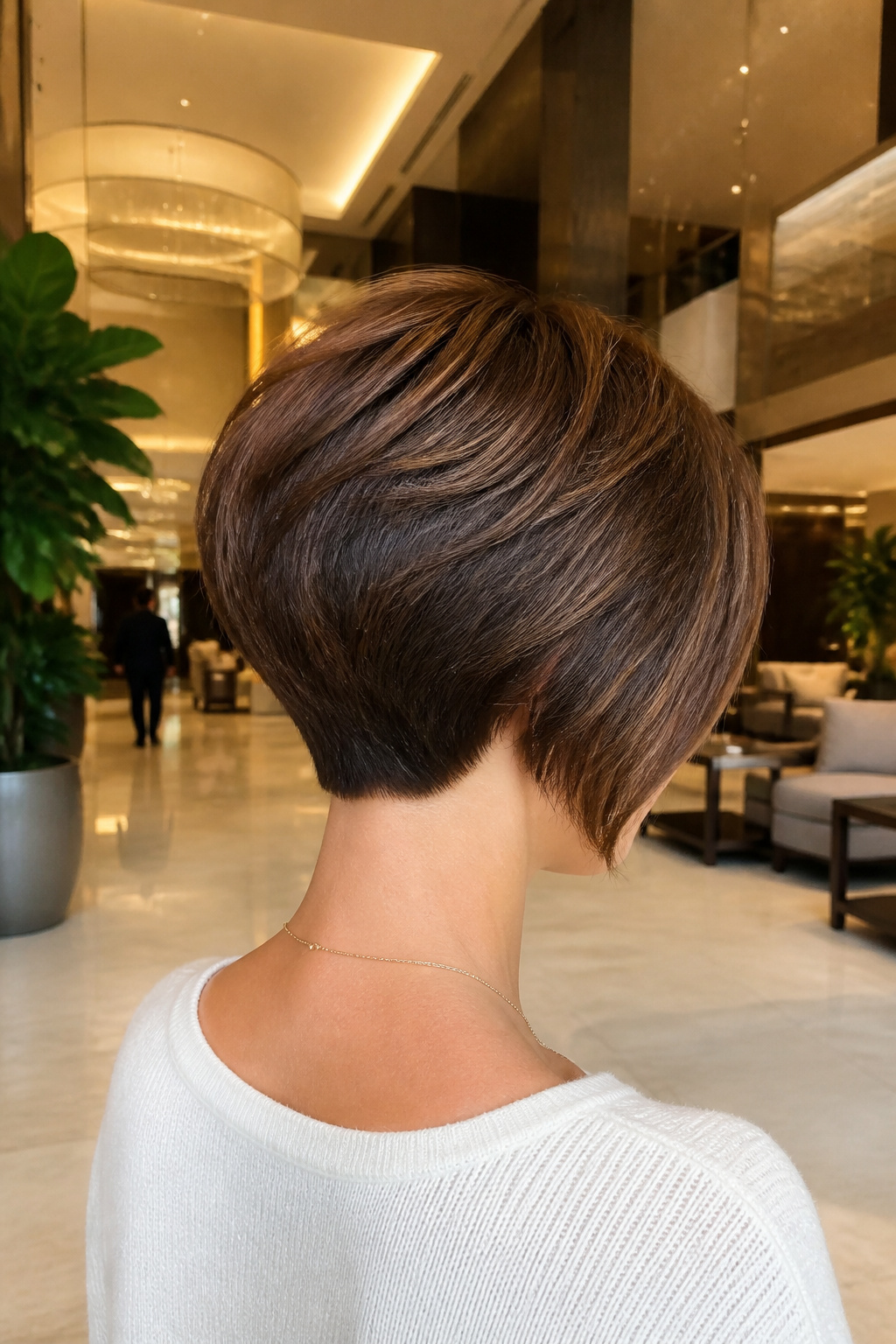
Graduated length at the back gives the angled side-swept style its structure, but the real shift happens once you start styling. A defined part would lock the cut into one position; instead, the movement is created by hand each morning, which means the same haircut reads polished or relaxed depending on how you blow it out.
I learned this distinction the hard way after assuming the angle alone would do the work. The cut builds lift through the crown with feathered layers, yet the sweep itself comes from directing everything to one side while the hair is still damp. A walnut-sized amount of volumizing mousse at the roots, blow-dried upside down, gives the foundation. From there, you choose the side and push the length across; no part line forms, so the eye keeps moving.
Fine, straight hair benefits most from the airy crown shape, since the perimeter stays dense enough to avoid going flat. Thick hair needs the same mousse approach but with lighter product through the ends so the sweep does not turn heavy. The fringe blends into longer front pieces, which removes the awkward grow-out phase if you later decide to skip bangs entirely.
Two ways to wear it: swept toward the longer side for everyday polish, or tucked behind the ear on the short side when you want the contrast visible. The daily choice is the point.
22. Flowy Blonde Pixie Bob
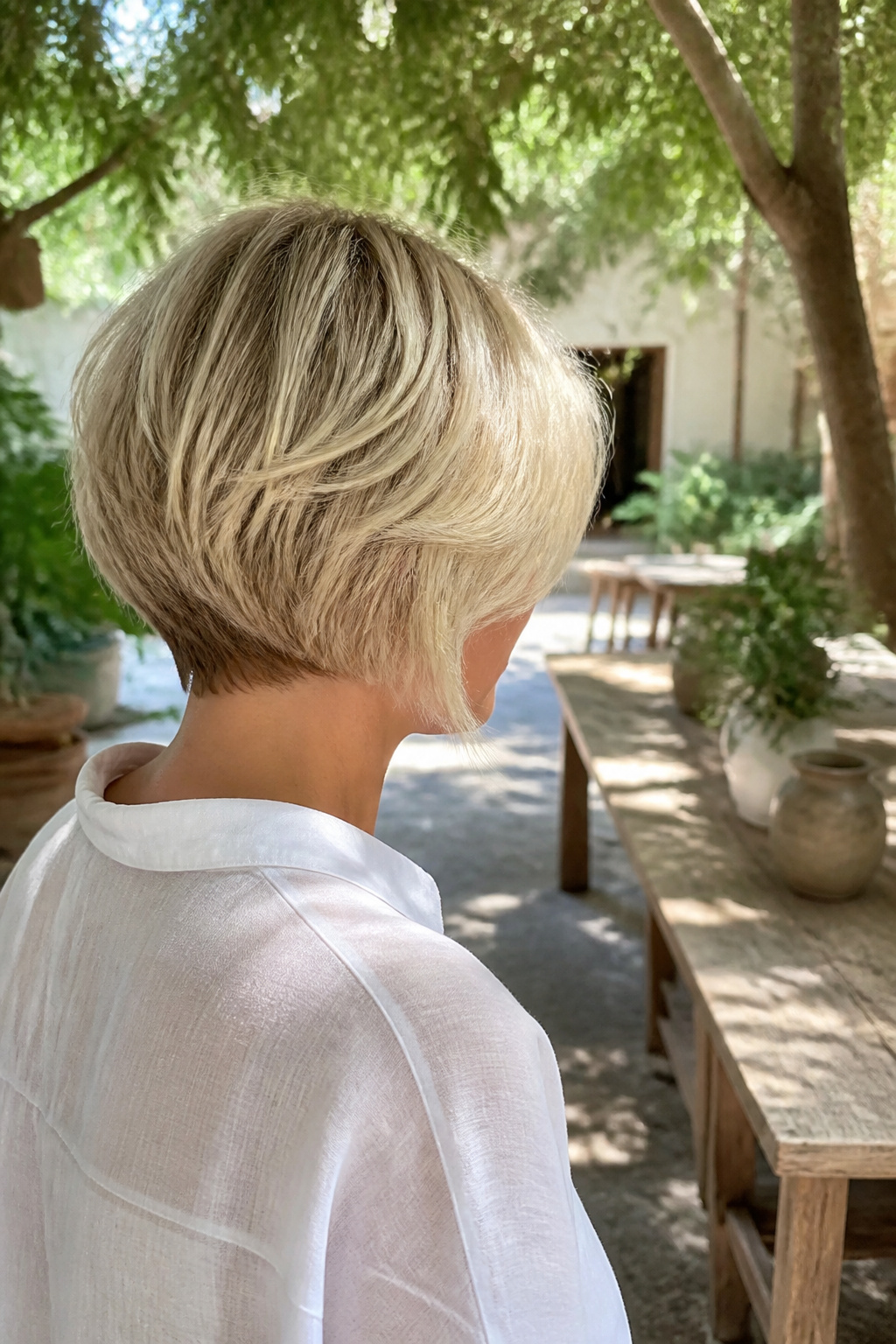
Blonde color alone won’t give a pixie bob the movement that makes this style worth the upkeep. The cut needs feathered layering placed higher around the crown, with the weight kept away from the baseline so the hair can sweep rather than sit. I learned that distinction reading through cuts that failed: too much density at the jawline and even the best blonde tone turns into a helmet.
Fine to medium hair with lower density carries this shape best. Thick hair builds bulk where you want air, and the whole point of the flowy version is that butterfly-like lift Maria Sotiriou describes when she places the weighted area up top. The front sides stay tapered and lighter, creating that soft motion away from the face.
The icy blonde tone flatters angular or longer face shapes because the long fringe breaks up length, but the real work is in the crown layering. Without it, the blonde reads flat no matter how good your toning routine is. Speaking of which: icy shades need regular toning to stay crisp, and that upkeep is non-negotiable if you want the color to keep doing its part.
Styling is minimal once the cut is right. A round brush at the crown is usually enough. The risk is letting the layers grow out; the shape goes flat fast once the feathering loses its edge.
23. Angled Short Stacked Bob
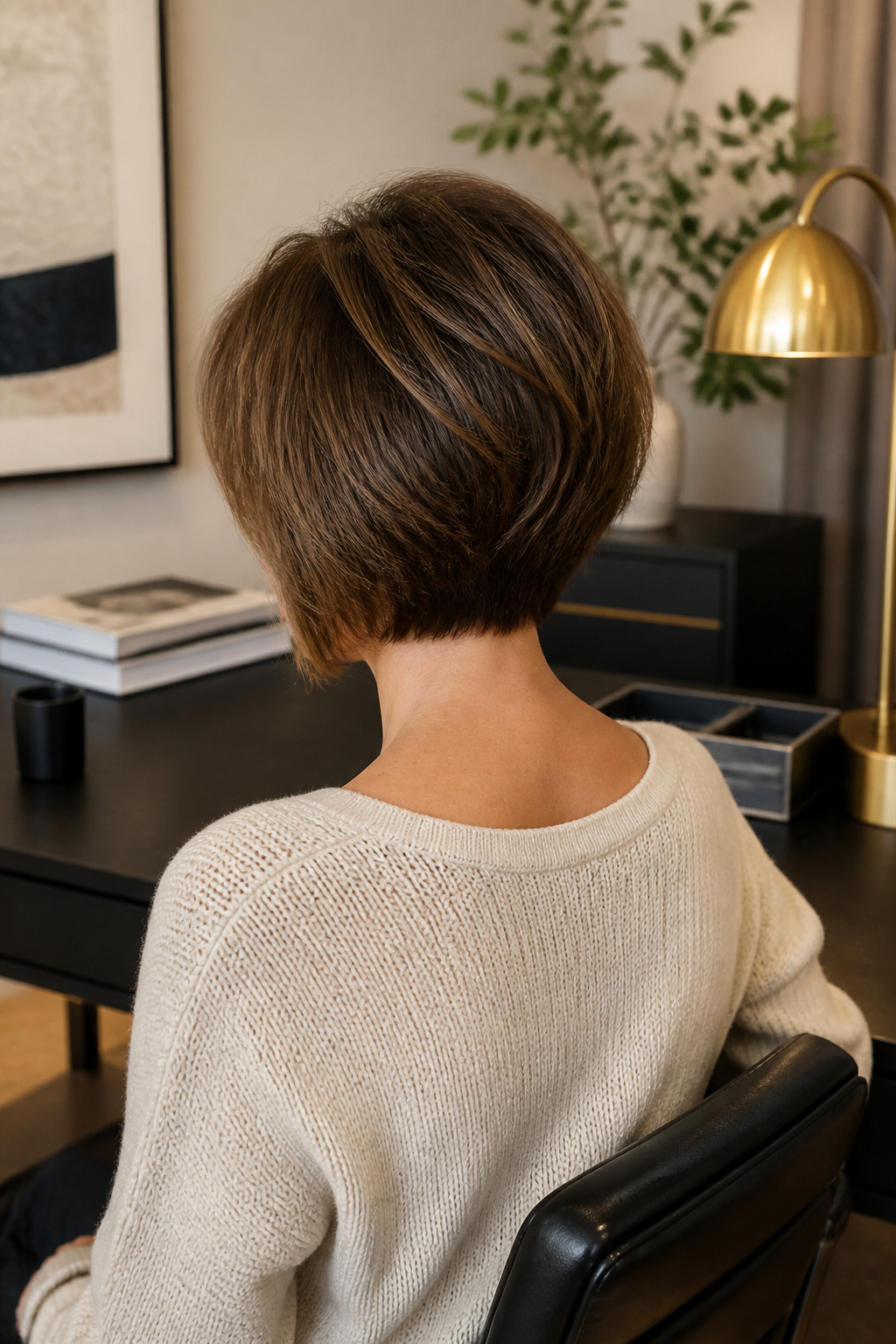
Stacking at the crown with a forward angle toward the face gives this cut its lift and its logic. The back is built from the occipital bone down to the nape in graduated layers, each one shorter than the last, pushing volume upward and outward where fine hair otherwise falls flat. From behind, that creates a rounded, almost architectural silhouette. From the side, the line slopes forward to meet the face rather than back toward the neck.
The difference from an inverted pixie bob sits in the interior. An inverted cut carries its weight in a solid, continuous line; this version breaks that weight up with internal layering, so the shape reads softer in profile even though the back view stays just as structured. Ask your stylist to place the weight line right at the occipital bone; that placement is what separates a deliberate pixie bob from a generic short cut.
A nape undercut pairs well here if your hair has medium density, not quite thick enough for a full undercut but heavy enough to drag the shape down. The stacking holds the crown up, the undercut removes what would weigh it below, and the whole thing appears to float. Budget for trims every three weeks at the nape if you go that route; the stacked section itself can stretch to five or six.
24. Undercut and Side Bangs
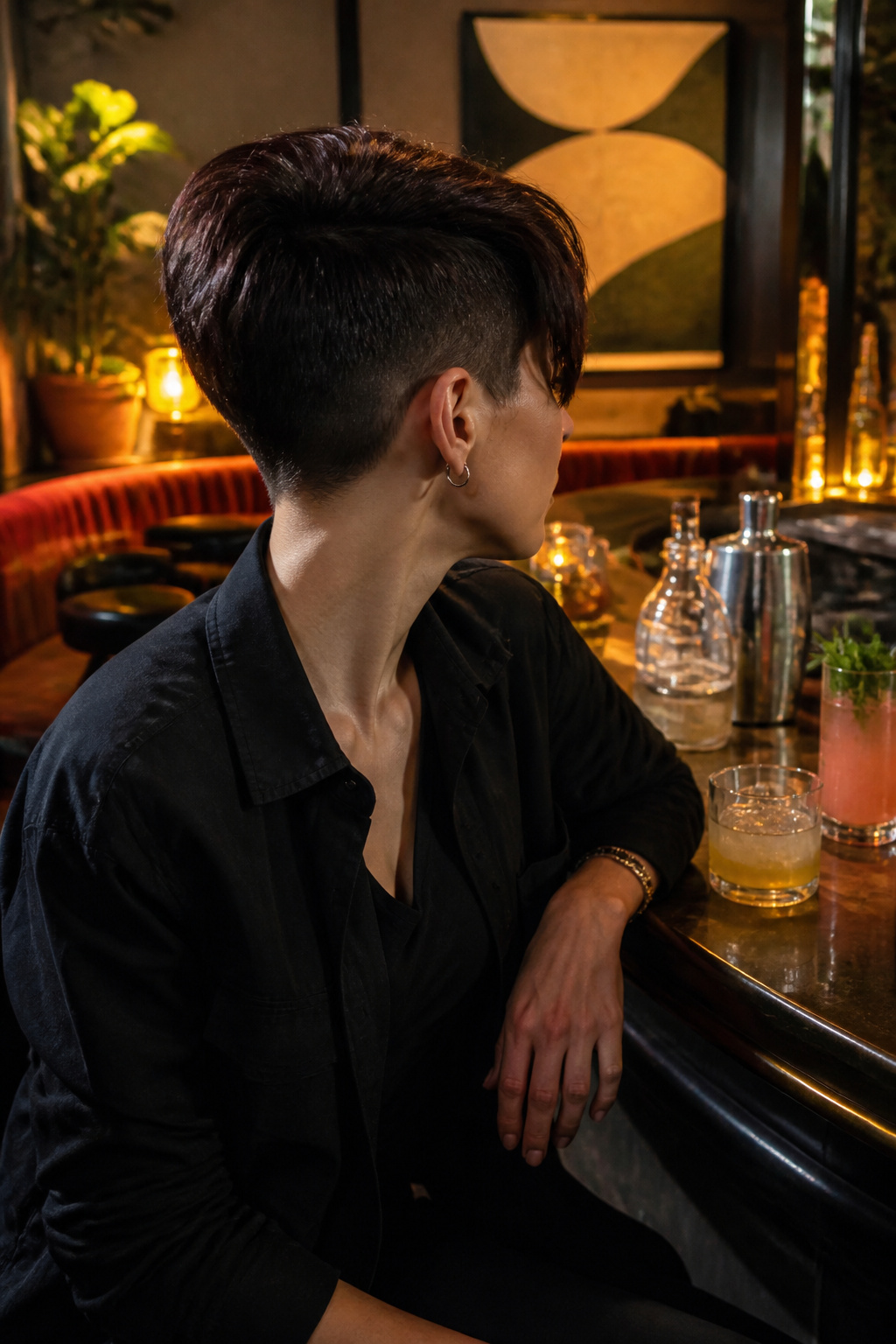
Shaving the nape and temple area removes the bulk that turns thick hair into a mushroom shape, letting the visual weight sit at the crown and front where you actually want it. The undercut changes everything about grow-out: let it go past two or three weeks and it shifts from intentional to sloppy fast, so clippers become part of your routine or you plan around the upkeep.
Side bangs add the asymmetry that keeps the cut from reading too severe. Long, layered fringe softens the stacked sections and the shaved nape into something that still registers as feminine, not just edgy. On rounder faces, that diagonal line helps elongate where a straight-accut fringe would widen.
Medium-density hair that isn’t thick enough for a full undercut still benefits from the two-technique approach: stacking at the upper back plus a lighter clippered nape creates lift without the back turning heavy. The stacked section stretches to five or six weeks between trims, but the undercut still wants attention every three. Two schedules to manage, not one, and that difference matters for whether this cut fits your tolerance for salon visits.
25. Bixie with Short Bangs
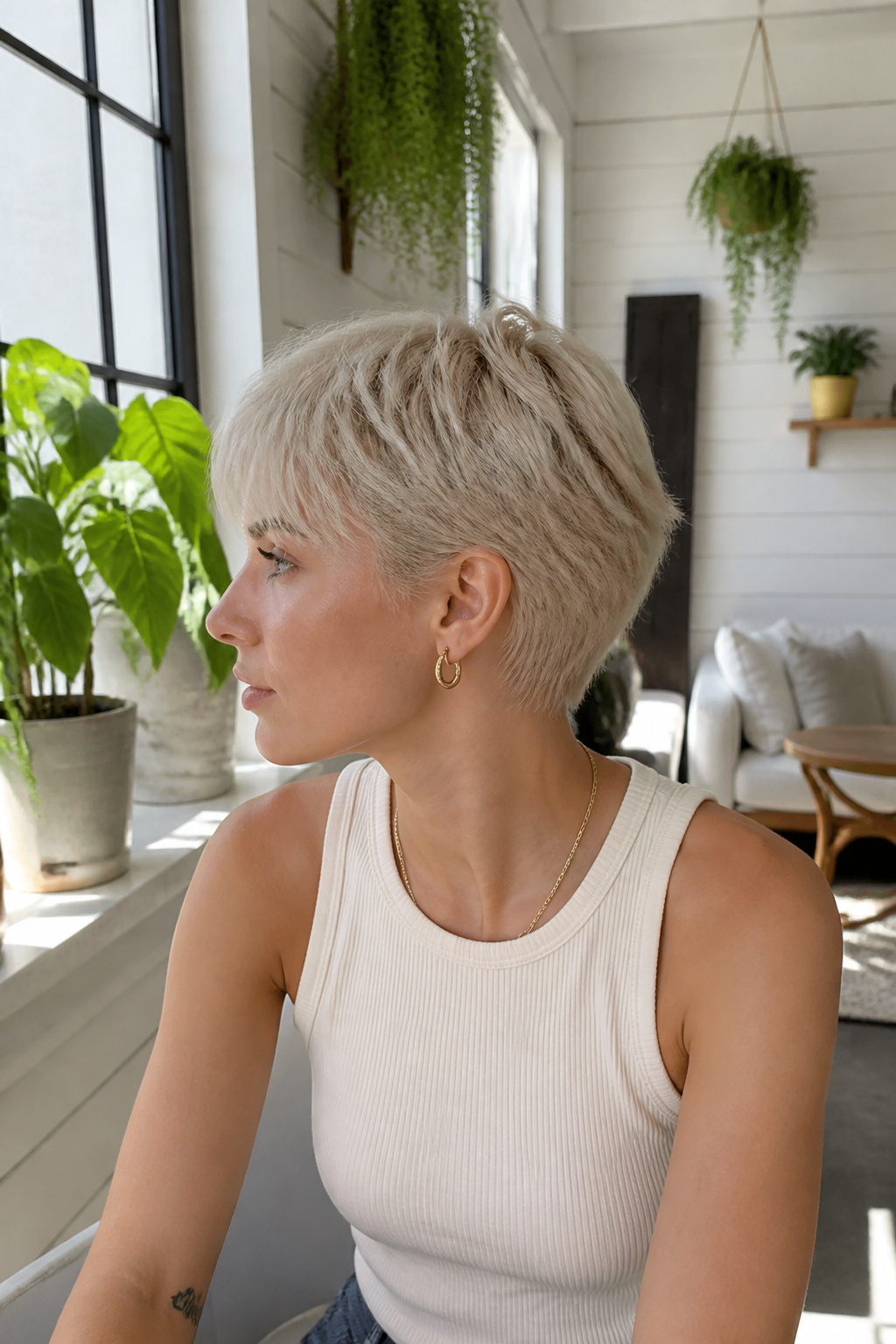
Short bangs on a bixie cut change the whole geometry of your face. The fringe sits high, usually straight across the brow or just above it, which lengthens the forehead and draws attention to the eyes. That proportion shift is the point, but it is also the risk: half an inch too low and the face looks boxed in, too high and the cut tilts from mod to accidental.
Placement matters more than length here. The bangs need to start far enough back from the hairline to leave a whisper of forehead showing, otherwise the silhouette goes heavy. I have watched enough reference photos to notice that the best versions keep the fringe slightly textured, never blunt and helmet-like. A little choppiness at the ends softens the line and stops the bangs from reading as a separate piece glued onto the cut.
Styling this fringe daily takes minimal effort if the cut is right. A tiny straightener, the kind with slim plates, gets close to the root where standard irons miss and can flick the ends under or out depending on the day. For texture, a matte pomade worked through dry bangs keeps them piecey without grease. The real maintenance is the trim: short bangs grow into the eyes fast, so plan on a cleanup every three to four weeks if you want to keep the proportion intact.
26. Mussed-Up Wavy Style
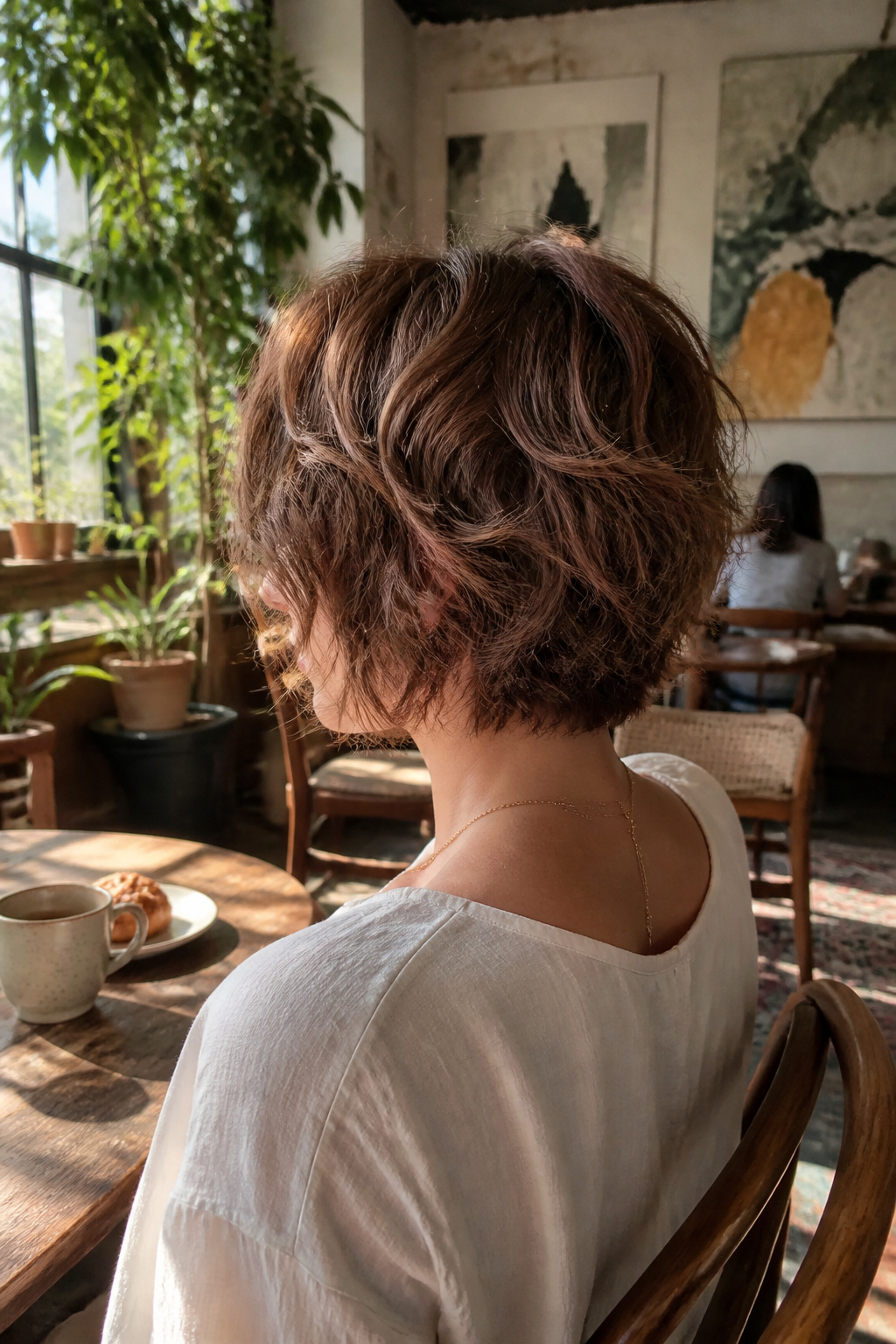
Wavy texture on a pixie bob reads best when the mess looks intentional, not like you slept on damp hair. The line between styled and sloppy sits in how you build the wave from the start.
A salt spray on towel-dried hair gives the right grit, but scrunch while the hair is still wet, not after it dries. Waiting means fighting frizz you created yourself. I learned that watching tutorials where the stylist worked fast, moving section to section before the product set.
For the controlled part of the disarray, alternate the direction of each wave. One piece toward your face, the next away. Uniform waves look like a set; mismatched ones look like you woke up with texture. A small flat iron, half-inch or three-quarter, bends the hair without curling it into a ringlet. Leave the last inch straight. That blunt end against the wave above it is what signals "styled" to the eye.
Finish with a lightweight paste rubbed between your palms first. Rake it through where you want separation, not all over. Too much product kills the movement you just built. The goal is touchable, not stiff.
27. Crop with Face-Framing Layers
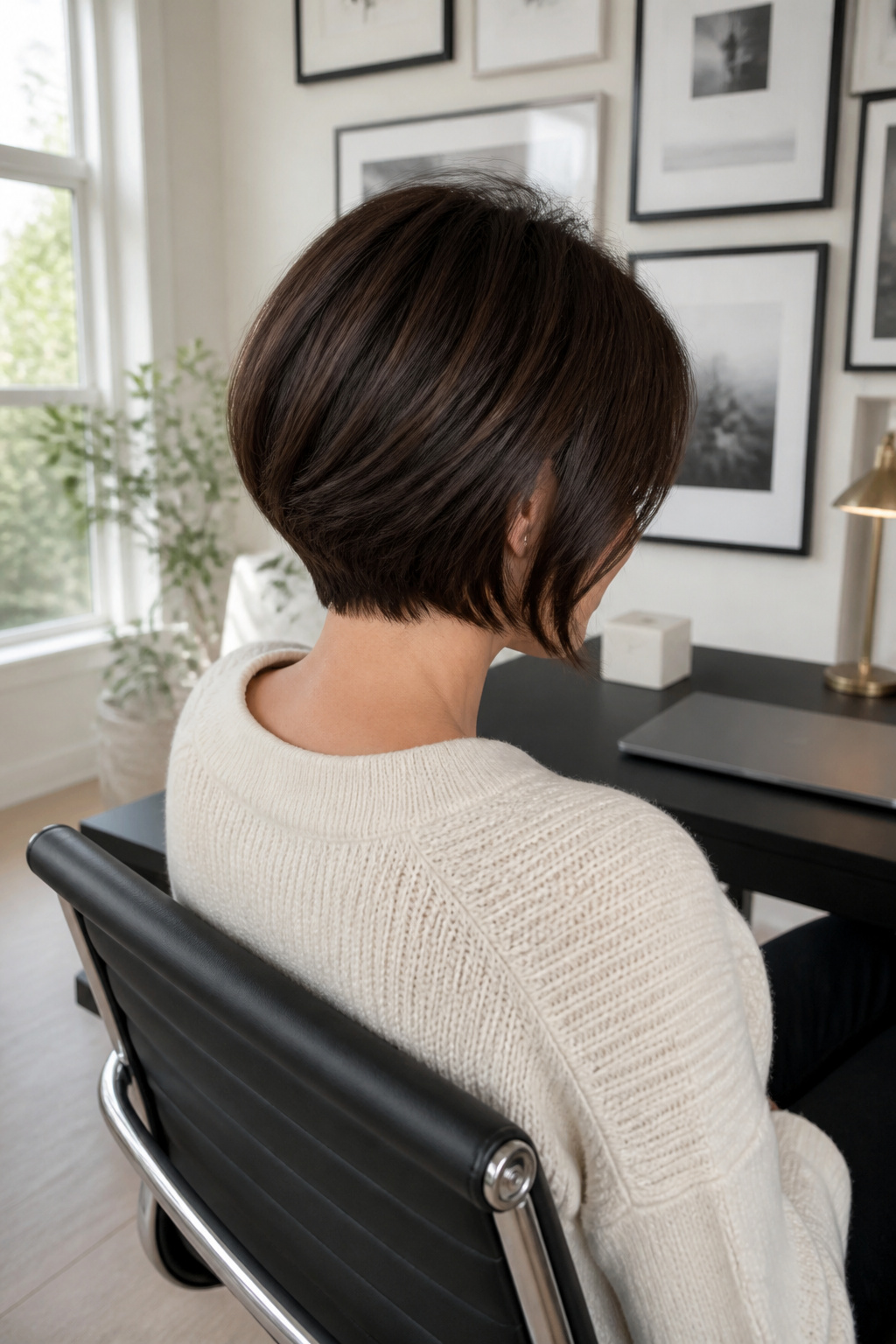
A pixie bob with face-framing layers builds its shape around two longer pieces cut separately from the rest of the hair, angled from cheekbone to jaw so they move on their own when you turn your head. That separation is the architecture. On heart-shaped faces, those layers graze the jawline and add visual width where the chin narrows, balancing the proportions. On oval and square shapes, the same pieces emphasize bone structure rather than soften it, which is why stylists call this one of the best fits for those faces.
The cut works with fine to medium-density hair because the layers create natural volume and lift without requiring daily heat styling. By week six, the grow-out has already blended into a short bob silhouette, which means less maintenance panic than stiffer crops demand. You can tuck the longer front behind an ear, sweep it across with a deep side part, or let it fall naturally, and each option changes the frame without a salon visit. For women who wear glasses, the tucked sides keep the lines clean around the frames. The style also reads as polished on natural gray because the layering gives definition around the cheekbones rather than washing them out.
28. Wispy Platinum Haircut
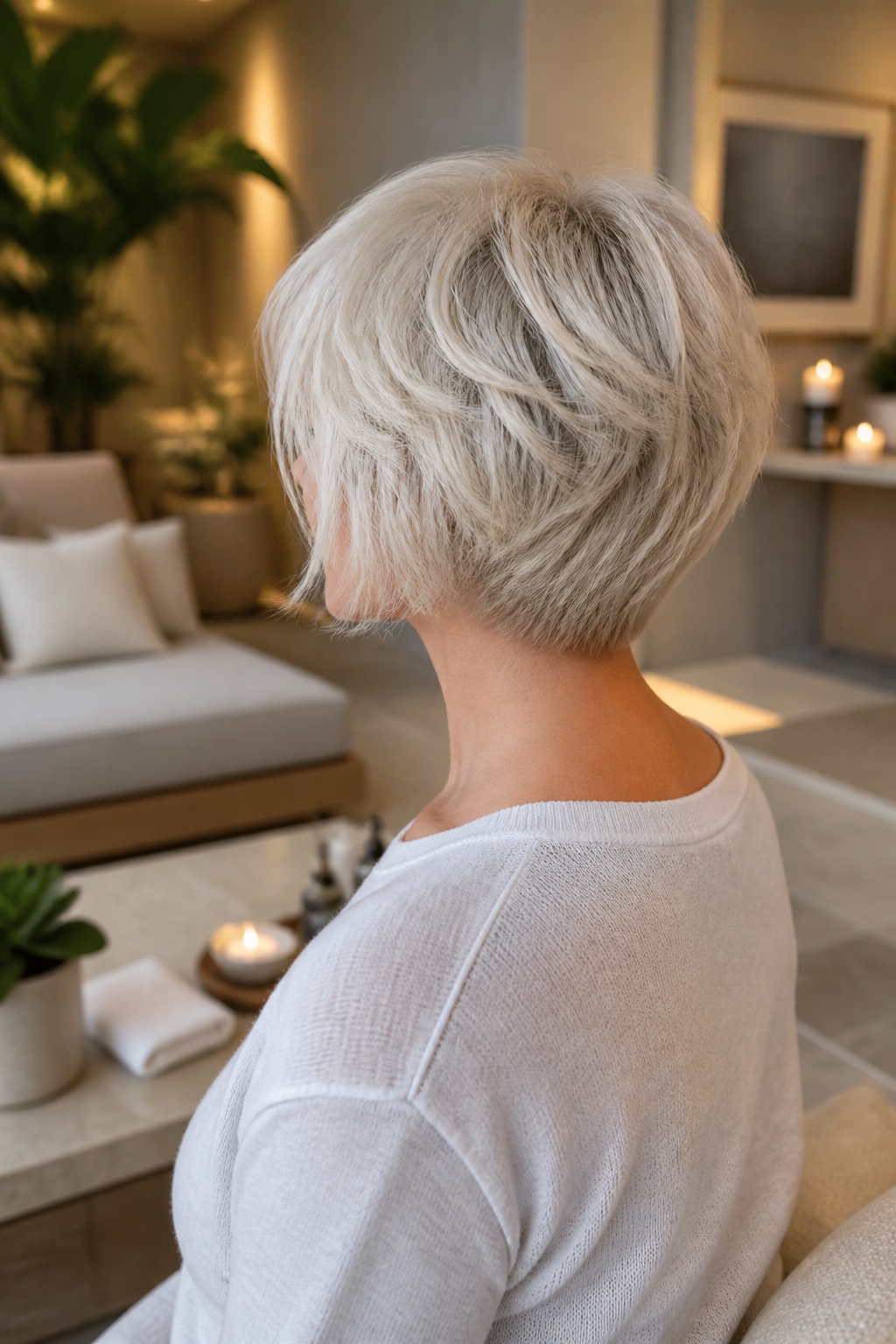
The wispy platinum pixie bob looks weightless, but that feathered texture and pale color both ask something of the hair. Double processing, double damage is the honest read: the cut relies on razor or shear work to thin the ends into wisps, and the platinum lift strips pigment down to the palest stage. Fine hair, which this style favors, has less cortex to spare for either insult.
Sources agree the cut suits oval and square faces best, and that fine to medium density carries it well because the short length removes weight that would otherwise flatten any movement. The catch is what happens after. Air-drying works, one account notes, but that assumes the hair still has integrity left to hold shape. Bleached fine hair often does not; the same feathered ends that move beautifully when healthy can read as frayed when compromised.
Minimal layers concentrated at the crown build volume without over-thinning, a point made for fine wavy hair that applies here too. Root-lift spray before blow-drying adds the height that makes the cut intentional rather than accidental. The real maintenance is the color: platinum on a pixie bob means frequent retouching at the roots, and every overlap onto already-lightened ends risks breakage right where the wispiness lives.
29. Fluffy Wavy Hairstyle
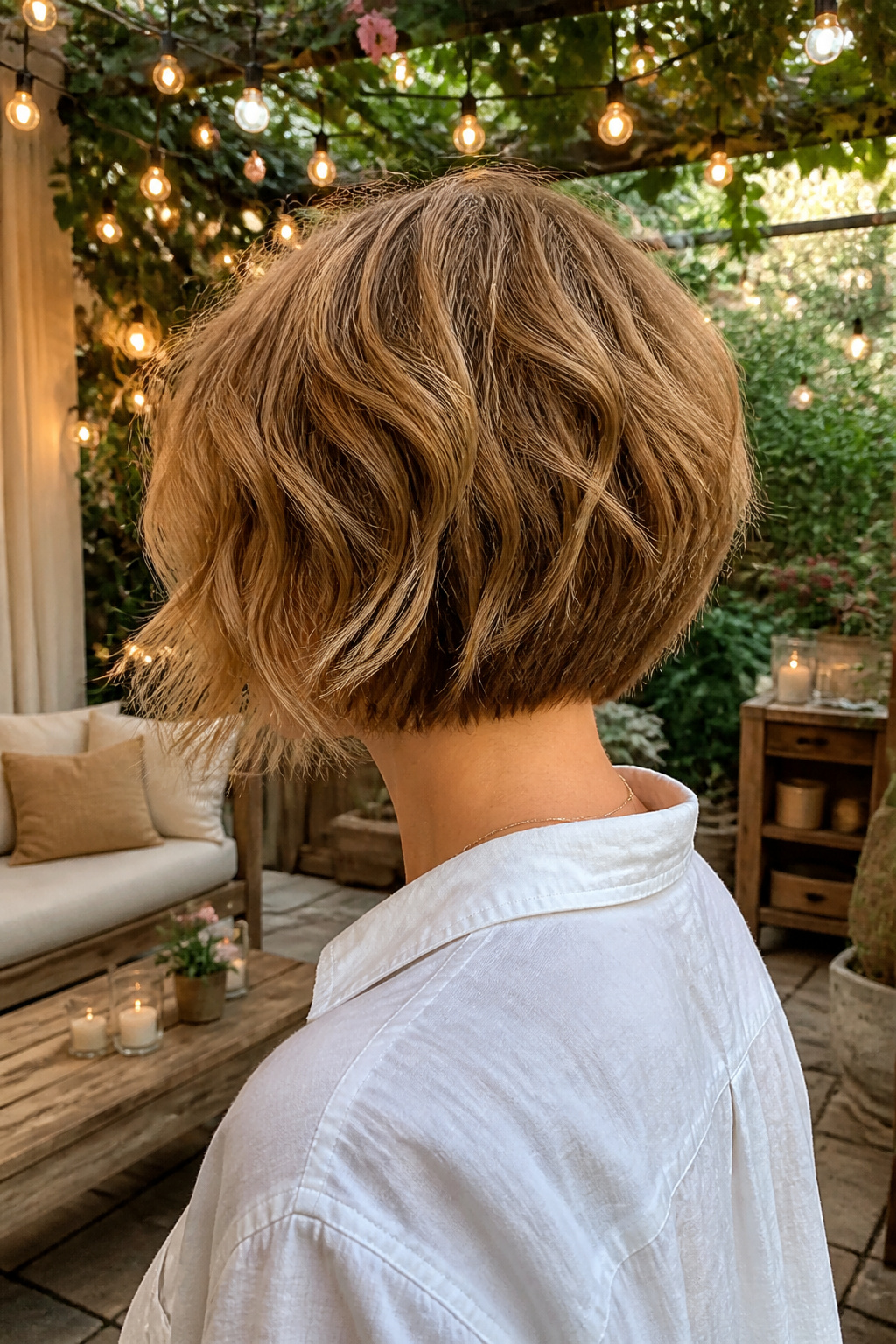
The fluff in a pixie bob haircut like this one is deliberate, built from two choices at the chair and one at the mirror. Layers follow the curve of the head rather than stacking up, which keeps the shape light without collapsing. Too many layers on fine wavy hair, though, and the ends thin out instead of lifting; the volume you want leaks away. Minimal layering concentrated at the crown is the safer bet for that hair type.
Drying matters as much as the cut. A root-lift spray before blow-drying adds the last bit of height that makes the style read as intentional, not like a grow-out phase. Air-drying can work, but the shape sets softer and the wave flattens closer to the scalp. For angular or square faces, the rounded, airy outline does the flattering work by softening harsh lines. Oval faces carry it easily too; the cut enhances bone structure rather than fighting it.
30. Bixie with Crown Volume
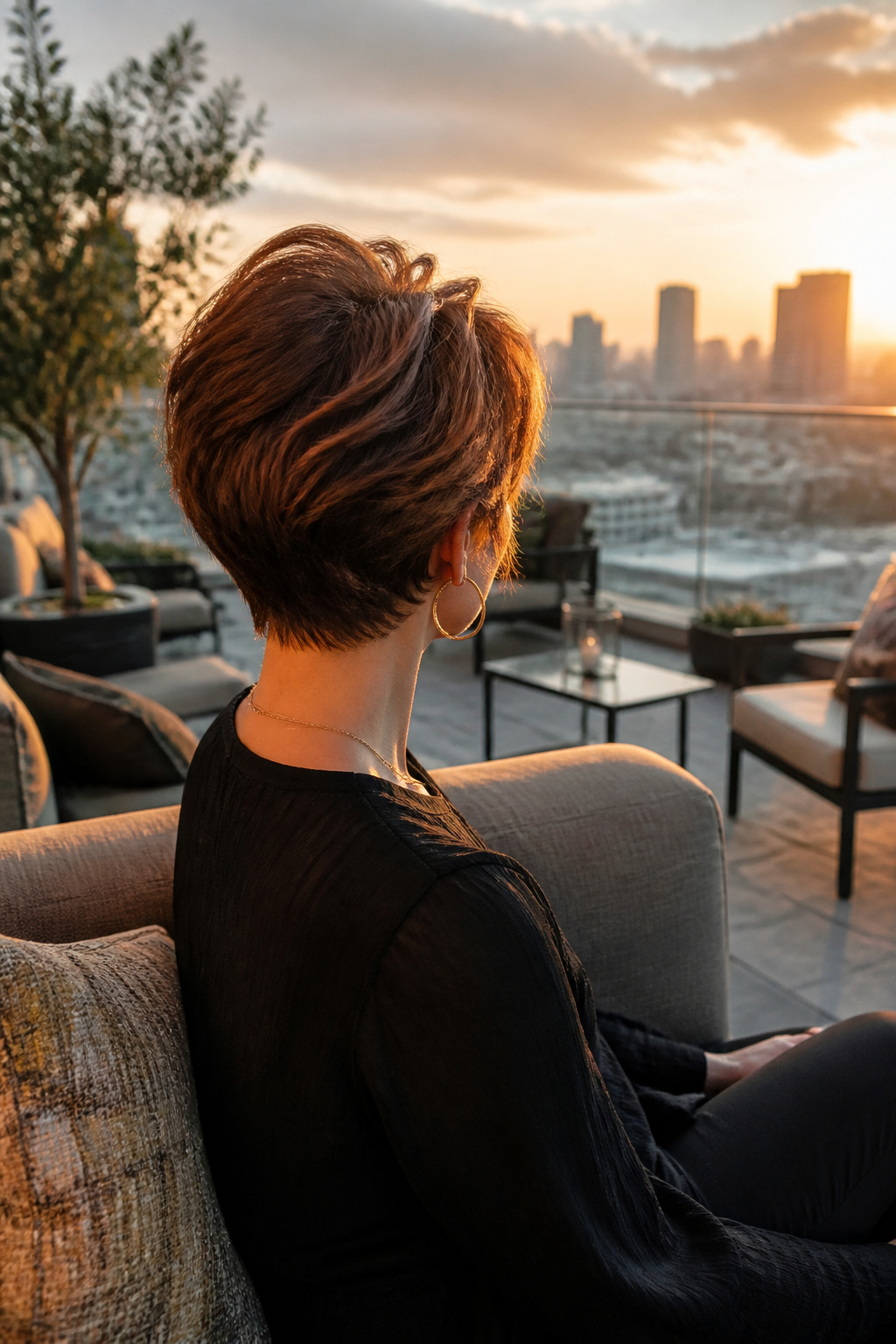
A bixie with crown volume lives or dies by where the layers sit. The cut keeps them minimal and concentrated at the top, because too many layers through the ends thin out fine hair instead of building the fullness you’re after. On thicker hair, an undercut at the nape and temples removes bulk from the densest areas so the visual weight shifts upward where you want it.
The styling is what preserves that elevation. A root-lift spray applied before blow-drying adds the last bit of height that makes the cut look intentional, not like a grow-out phase. Texture spray works for the tousled crown effect, though over-texturizing can tip into frizz, so the cutting itself needs a light hand. The undercut needs a touch-up every two to three weeks; let it grow even slightly and it starts looking accidental rather than designed.
What Face Shapes Work
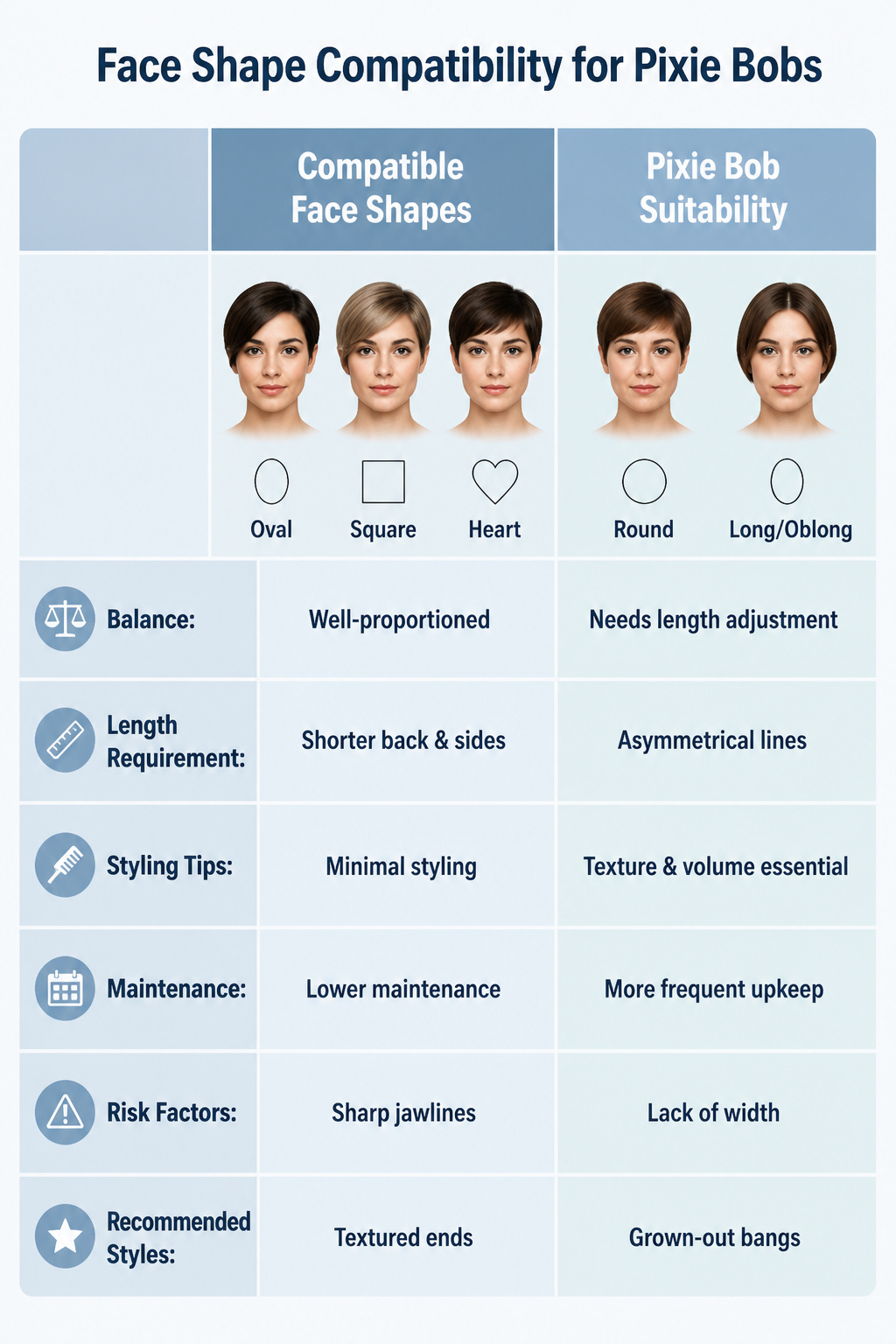
Oval, square, and heart-shaped faces carry a pixie bob haircut most naturally. The proportions these three shapes share, enough balance through the forehead and jaw, let the cut sit where it should without fighting the bone structure underneath.
Round faces need the length pulled forward. An asymmetrical line with pieces past the jaw, parted deep to one side, keeps the eye moving diagonally instead of tracing a circle. Ear-length and centered is the combination that backfires here; it mirrors the face shape too directly.
Long or oblong faces run the opposite risk. Grown-out bangs or a curtain fringe add the horizontal break the face is missing, while volume pushed to the sides builds width the profile lacks. Crown height with flat sides only stretches things further.
What convinced me, reading through the guidance stylists repeat, is how small the adjustments are and how much they matter. A few inches of length, the angle of the part, whether the ends are textured or blunt: these are the levers, not a different cut entirely. The pixie bob adapts, but it does not flatter everyone straight off the shelf. Someone with a narrow chin and a cropped top layer, for instance, can end up with the lower face looking sharper than they bargained for. The match is specific, and worth the conversation with whoever is holding the scissors.
Styling in 5 to 10 Minutes
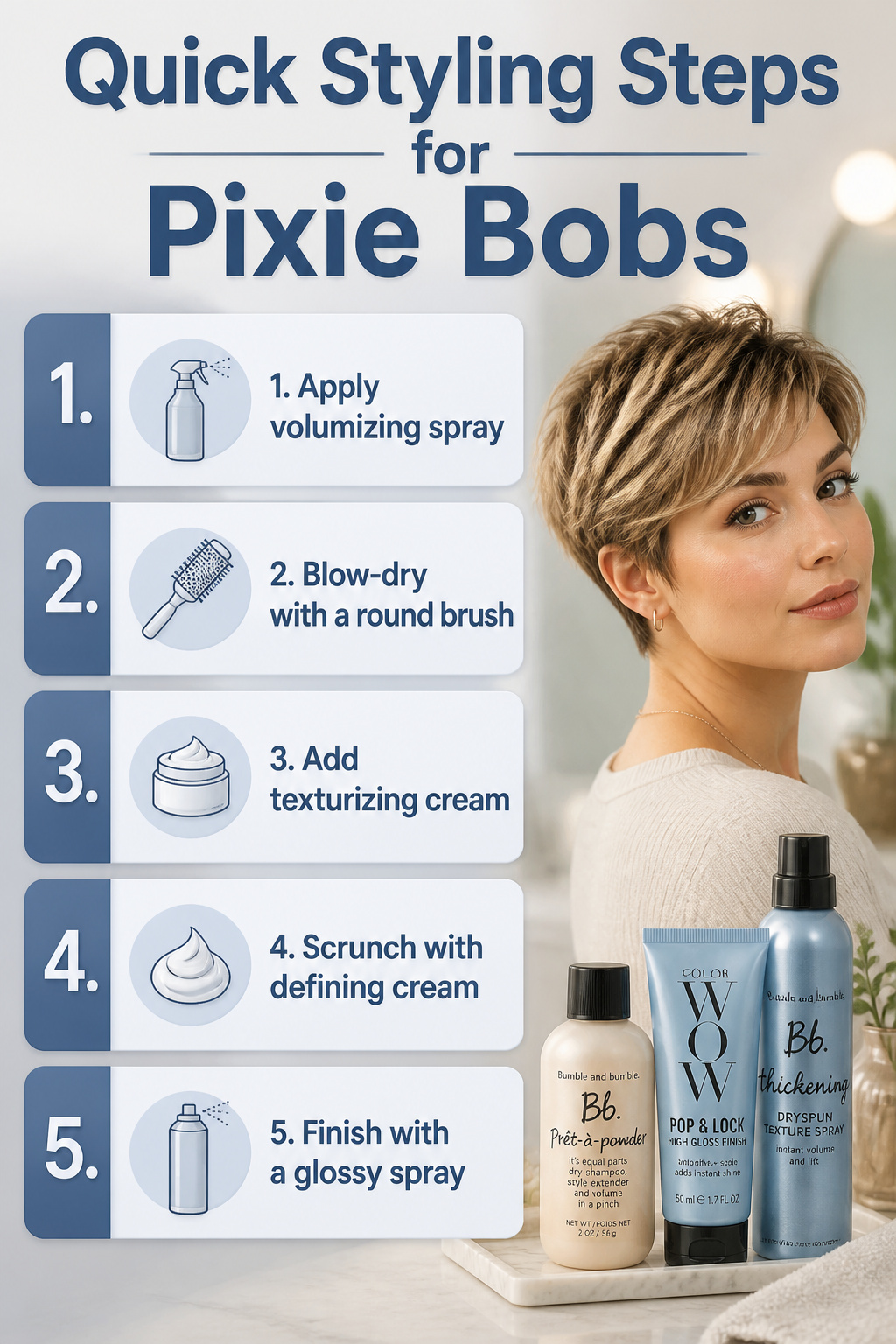
Most mornings with a pixie bob, the clock starts at five minutes and rarely runs past ten. The cut itself does the heavy lifting; styling is just waking up the shape your stylist already built.
For lift at the roots, a volumizing spray on damp hair sets the foundation. A round brush and blow-dryer pull the crown upward while the shorter back and sides fall into place almost on their own. Bumble and bumble Pret a Powder works well here for instant, airy volume if sprays feel too heavy on finer hair.
Texture comes next, and this is where the look shifts from slept-on to intentional. A texturizing paste or cream worked through the ends adds separation and hold without stiffness. For curls, scrunching with a defining cream while hair is still wet does the job; no-mark clips placed at the roots while drying either add or remove volume where you need it.
The finish matters more than the number of products. Color Wow Pop & Lock High Gloss Finish gives a smooth, healthy shine used sparingly, or a wet-look effect if you saturate with it. Bumble and bumble Thickening Dryspun Texture Spray keeps the body lifted so the style doesn’t sit flat against the head.
The real trick is keeping the arsenal minimal: root lift, mid-length texture, light-hold finishing spray. Three products, five to ten minutes, done.
Trim Every 4 to 6 Weeks
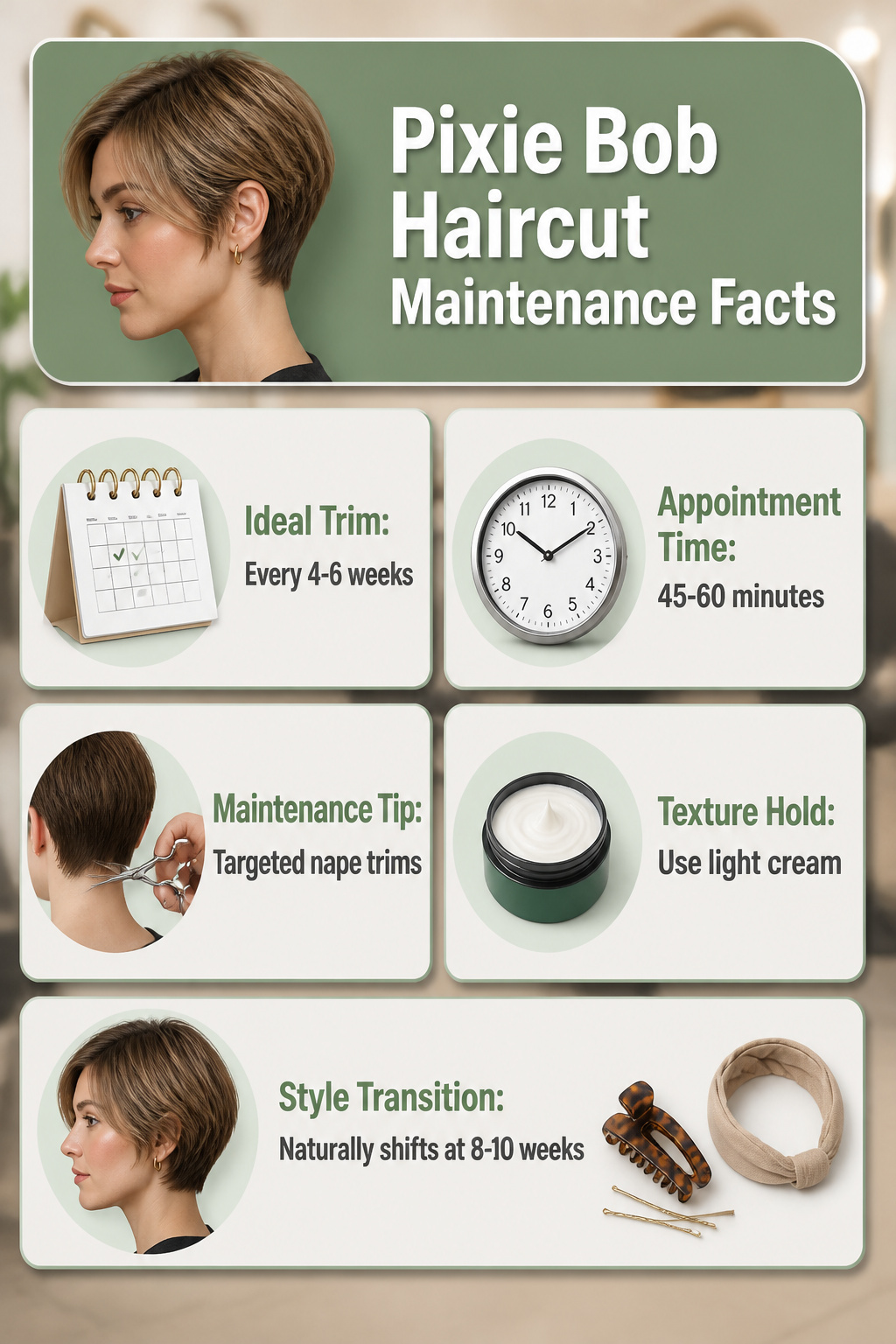
A pixie bob haircut holds its shape for about four to six weeks before the back starts to soften and the whole silhouette goes flat. My stylist blocks out 45 to 60 minutes for these appointments, enough time to clean up the nape, reconnect the layers, and check how the front is growing against the back. The shorter your back section, the faster that shape disappears, so stretching past six weeks usually means losing the cut’s architecture entirely.
If your calendar or budget pushes you toward longer gaps, ask for a maintenance trim that targets just the nape and crown. The front and sides grow out more forgivingly, so a quick back-focused cleanup buys you another two to three weeks without a full appointment. Between visits, a small amount of paste or cream worked through the ends helps the texture hold its intention, and a round brush with a blow-dryer keeps any sleek sections from looking grown-out and tired. At around weeks eight to ten, most pixie bobs naturally shift into a short bob anyway, which is less awkward than a true pixie grow-out because the front length is already there to work with. Headbands, clips, and tucking behind the ears carry you through that in-between stretch without a crisis cut.
Frequently Asked Questions
What is a pixie bob haircut?
A pixie bob haircut is a hybrid style that combines shorter graduated hair at the back with longer strands on top and around the front. It sits between a cropped pixie and a slightly longer bob, typically hitting around the cheekbones or just below the ears. The cut works for both fine and thick hair and can be tailored to suit any face shape.
How do you style a pixie bob haircut?
Styling depends on the specific variation and your hair texture. Shorter stacked versions generally survive a wash-and-fluff routine without much tooling, while longer tousled versions need lighter formulas like mousses or salt sprays rather than heavy pastes. Curly pixie bobs need a lightweight curl cream scrunched into damp hair, and defined crops hold their shape longer with a lightweight shine spray to replace lost luminosity.
What face shapes look best with a pixie bob?
The pixie bob can be customized to suit most face shapes, though specific variations flatter different structures. Inverted and angled asymmetrical cuts work hardest on oval, heart, and square faces, while the vertical draw of an asymmetrical cut elongates round and wide face shapes. Middle parts suit oval or diamond shapes best, and short crops with long bangs visually shorten oblong faces.