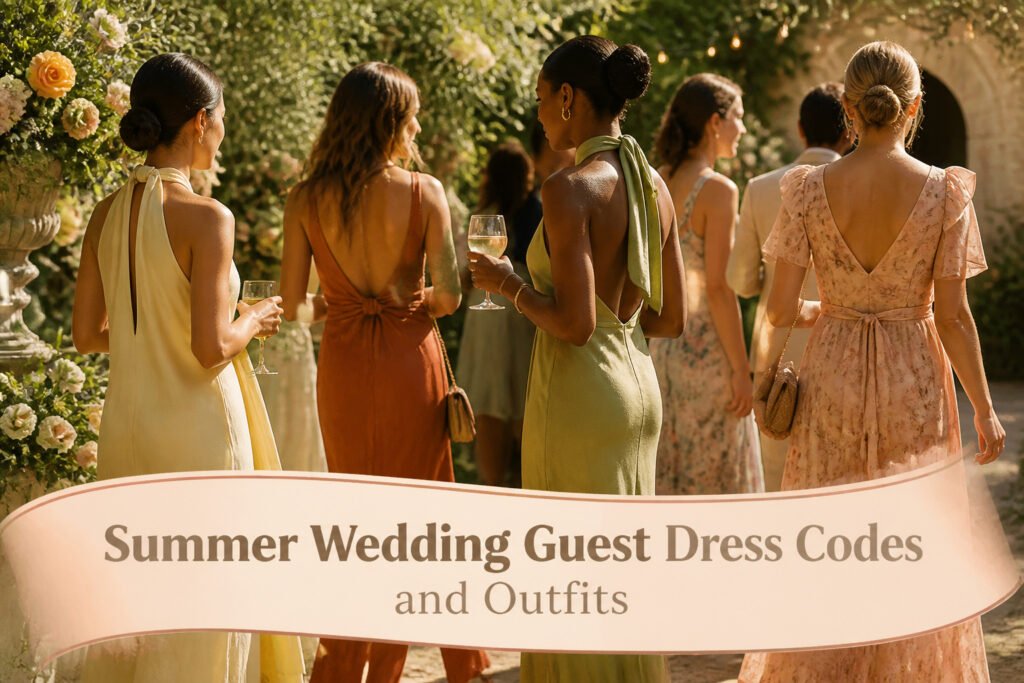
Chic summer wedding guest outfits are dress codes translated into fabric and length for heat. The trick is that "black tie" in July does not mean the same fabric as December, and a linen midi shifts the standard entirely. The Lindsay Shift Midi Dress in halterneck linen was built for this gap: formal enough for black tie, light enough for an 85°F tent before the first dance.
White and Black-Tie Summer Weddings

White tie still means full evening dress for guests, even when the thermometer climbs. Men wear tailcoats; women wear floor-length gowns. Black tie relaxes only slightly, allowing formal midi lengths and dressy separates. The Lindsay Shift Midi Dress in crisp linen handles this middle ground well, its halterneck cut reading formal enough for a black-tie summer wedding without the weight of satin or velvet.
Breathable fabrics matter here more than hosts sometimes admit. A July reception in a garden tent or a converted barn can hit 85°F before the first dance, and standing through cocktail hour in unlined polyester is a mistake you make once. Linen, cotton, and chiffon let air move even in structured silhouettes. For white tie, look for silk chiffon or lightweight crepe that drapes without clinging. For black tie, a crisp linen midi keeps the line clean while the fabric itself does the cooling work.
The real judgment call is how formal the venue actually is. A black-tie beach wedding in Malibu reads differently than the same code at a city club. When the invitation leaves room, linen wins over anything that traps heat.
Semi-Formal and Cocktail Dress Codes
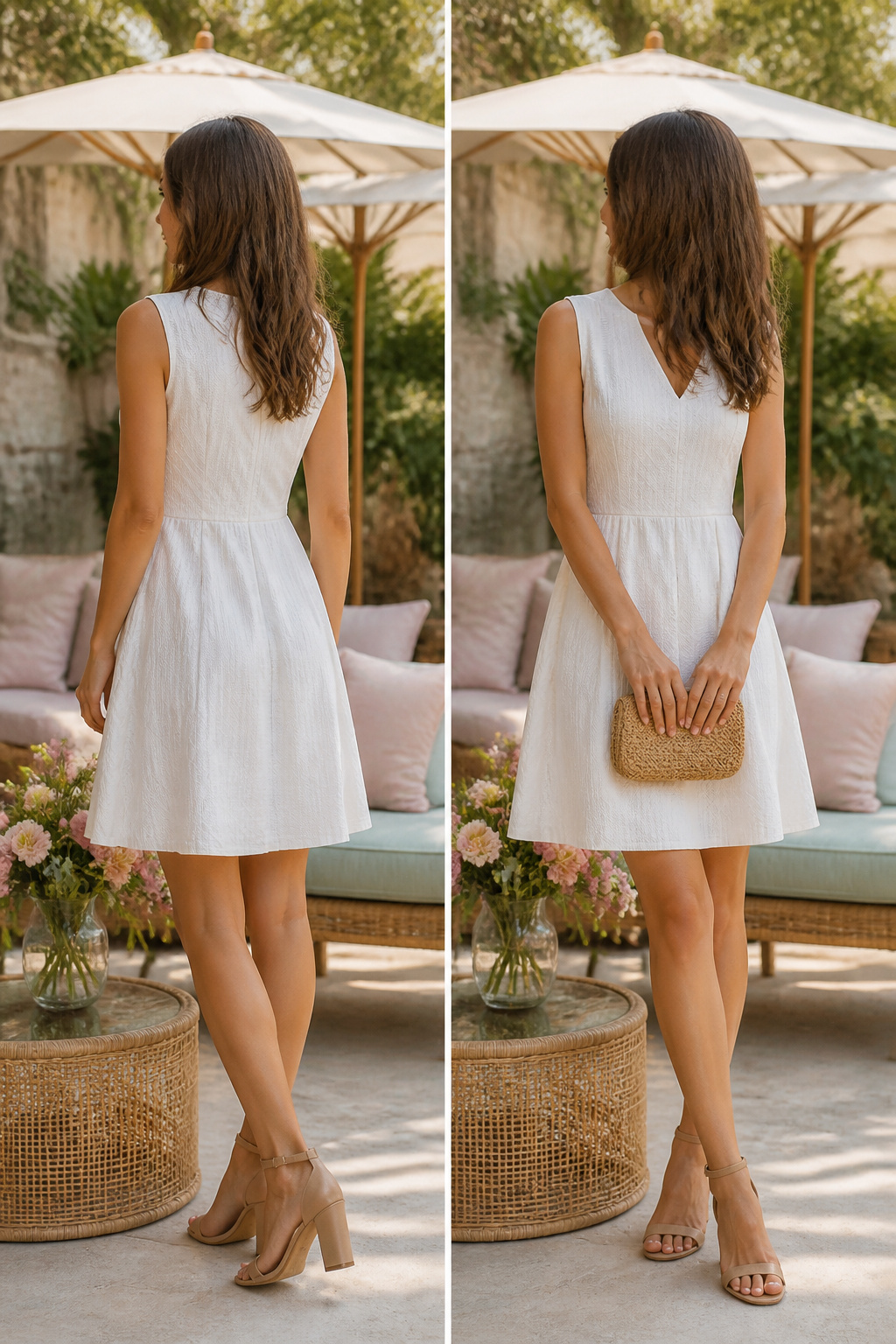
Semi-formal and cocktail dress codes for summer weddings sit close enough on the spectrum that the same guest often receives both and wonders which is which. The split matters less than hosts think and more than guests hope.
Semi-formal keeps the length flexible and the polish intact. The Harper Love Circle Dress in dobby stripe lands here: shorter than formal territory demands, still refined enough that you will not look underdressed beside someone in a midi. Dobby weave gives the fabric subtle texture without shouting for attention, which is the semi-formal balance in a single garment.
Cocktail tilts toward play. Floral prints, bubble hems, cutouts, sleek slits in the fabric: these are the signals that the code has shifted. Where semi-formal asks you to stay composed, cocktail gives permission to move, to choose color over neutrality, to let the dress carry the conversation.
The overlap lives in the middle. A cocktail dress cut modestly enough reads semi-formal; a semi-formal piece in a bolder print crosses into cocktail territory. The Harper Love Circle Dress in dobby stripe could edge toward cocktail with brighter accessories, just as a restrained floral could retreat to semi-formal with the right shoes. The real distinction is energy: semi-formal hosts want you polished, cocktail hosts want you present.
Tropical and Destination Wedding Dressing

Airy fabrics become non-negotiable once humidity climbs past what your usual semi-formal dress could handle. The Lindsay Shift Midi Dress in crisp linen works for both settings on paper, but a tropical ceremony demands you think harder about what happens after the first hour. Woven textures and breezy linen suits carry the same elevated tone as their indoor counterparts, yet they breathe through outdoor heat instead of trapping it against your skin.
Shoe choice shifts too. Heels that sink into lawn or sand derail the look entirely, so block soles or dressy flats earn their place here even when a cocktail code back home would call for something steeper. The difference is not formality; it is physics. A garden or beach venue turns a beautiful pump into a liability, while the same linen halter dress that reads polished indoors becomes practical when the ocean breeze hits.
Color and pattern follow the climate more than the code. Bright corals and turquoise fit the season’s spirit, but in tropical settings they also hide the sweat and salt that darker, heavier fabrics would show. The neutral base of something like an ottoman stripe lets you add that color through a scarf or belt without committing to a full tropical print you might regret in photos later.
Linen and woven textures beat standard semi-formal fabrics when the thermometer and the humidity both rise.
Casual Beach Weddings

Sand and salt air have a way of convincing guests that anything goes, but lightweight linen still needs structure to read as intentional. The Opal Midi Dress in linen works for casual or beach settings because it keeps the shape: a defined waist and a hem that hits at the calf, not the knee. Breathable fabric matters most here, and linen handles an ocean breeze without clinging.
The mistake I keep seeing is the assumption that "beach" equals "as casual as you want." A cotton sundress with flip-flops crosses into territory that can feel disrespectful to the couple. Linen gives you the relaxed vibe the venue asks for while still looking like you made an effort. Pair it with flat leather sandals or a low block heel that won’t sink, and skip anything that looks like it came from a resort gift shop. The Emmaline Shift Dress in ottoman stripe offers another angle if you prefer something more neutral, easy to dress up with a scarf or belt without fighting the setting.
Floral Prints and Bright Colors

Coral, turquoise, and soft pastels read as celebratory without stealing focus from the couple, which is exactly the balance a summer wedding demands. The warmth of coral flatters most skin tones in outdoor light, while turquoise carries enough saturation to hold up against greenery or seaside backdrops. Pastels soften the look for daytime ceremonies but can wash out under evening tent lighting, so the shift from afternoon to reception matters more than the color itself.
The Erin Short Sleeve Dress in clip jacquard lands in this territory with a lively pattern that feels intentional rather than accidental. Jacquard weaving gives the print texture and depth, so it photographs cleanly without relying on high-contrast colors that read as loud from a distance.
Judging whether a print is wedding-guest appropriate comes down to scale and negative space. A pattern with breathing room between motifs reads as polished; the same design shrunk and tiled densely starts to look like a vacation purchase you grabbed last minute. Ask yourself where your eye rests first. If it goes to the dress before your face, the print is doing too much work.
Something about a summer ceremony invites fun into a potentially formal dress code—your attire should be polished, yes, but can lean playful and bright.
— Vogue
That permission for playfulness has limits. A beaded sandal works because it catches light in motion; a fully sequined floral print does not, because it competes with the occasion itself.
Maxi Dresses for Summer Weddings

A maxi dress works for nearly every summer wedding on the calendar, from a garden ceremony to a semi-formal evening reception, because the length itself reads dressed-up without demanding stiff structure. The floor-skimming hemline gives you coverage in sun or breeze, and the right fabric weight keeps that coverage from turning into a sauna. Lightweight cotton, linen, or chiffon moves with air instead of trapping it against your legs.
The mistake that still catches guests is the hemline that actually reaches the floor. On grass or sand, that extra inch or two of fabric soaks up moisture, drags debris, and turns a graceful walk into a stumble. A maxi for outdoor weddings should clear the ground by about half an inch to an inch, enough to hover without tripping you on heels. Indoor venues with level floors forgive more length, but outdoor terrain never does.
Fit-and-flare and A-line cuts tend to suit the most body types while still allowing you to move through a cocktail hour or dance floor without adjusting constantly. A wrap style, like the Naomi Wrap Dress, adapts across figure variations and shifts easily from a daytime ceremony to an evening reception with a change of jewelry or shoes.
Maxi dresses are appropriate for summer weddings, but the conditions matter: the fabric must be light enough for heat, the hem must respect the ground beneath it, and the cut should let you sit, stand, and move without fuss.
Sleeveless and Shoulder-Baring Styles

Sleeveless dresses make sense for summer weddings the moment the invitation mentions a garden or vineyard, but the cut alone does not finish the outfit. A halterneck midi in linen, like the Lindsay Shift style, keeps the line elegant while leaving the shoulders open to any breeze. The problem arrives at the ceremony itself. Direct sun on bare skin for forty minutes turns a seated guest into someone shifting for shade, and a light shawl or cropped cardigan fixes that without looking like an afterthought. I have learned to treat the cover-up as part of the original plan, not a rescue: a sheer wrap in a tone that matches the dress reads intentional, while a bulky cardigan grabbed from the car reads mistake.
For semi-formal or cocktail dress codes, a sleeveless circle dress in a dobby stripe hits the right playful note, though the same bare-shoulder question applies once the reception moves indoors and air conditioning kicks in. The Emmaline Shift, with its neutral base, layers especially well; a colorful scarf or slim belt over a light cover-up gives the look two versions without a full change.
The only place I would hesitate is a ceremony held in a traditional chapel or cathedral with stricter expectations. Most summer weddings do not fall there, but the invitation’s venue note is the place to check. A light linen wrap or cropped jacket in the same fabric family as the dress solves both the climate problem and the coverage question in one move.
Fabrics That Actually Keep You Cool

Cotton breathes well and holds its shape through hours of sitting and standing, which makes it the safer choice for long formal dinners where linen would have you looking like you slept in your seat by the salad course. I learned that the hard way at a black-tie outdoor reception in Charleston; my linen shift was immaculate at four o’clock and a roadmap of creases by seven, every photograph catching the crumple across my lap.
Linen wins for casual daytime weddings where movement matters more than stillness. The same open weave that betrays you in candlelight keeps air moving against your skin at a garden ceremony, and the relaxed rumple reads intentional in that setting rather than sloppy.
Chiffon photographs beautifully with its soft drape and subtle sheen, catching light rather than absorbing it. A chiffon skirt on a windy beach will tangle, twist, and occasionally flash more than you intended, the fabric too light to stay where gravity puts it. For coastal ceremonies, cotton or a cotton-linen blend gives you the structure to walk from sand to reception without a wardrobe malfunction.
The camera sees fabric differently than the eye does. Matte cottons read true to color in harsh afternoon sun, while chiffon can wash pale or glare white. Linen in direct light shows every shadow of its texture, which flatters some complexions and adds ten years to others.
What Each Dress Code Means in Practice

A wedding invitation’s dress code line is the only clue most guests get, and the words rarely mean what they sound like. Formal does not mean floor-length mandatory; semi-formal and cocktail overlap more than they differ; tropical and casual beach sound interchangeable but pull in opposite directions on fabric weight and shoe choice. The safest move is matching the code to a specific silhouette and fabric weight before thinking about color or print.
| Dress Code | Length | Fabric | Formality Level |
|---|---|---|---|
| Formal | Long gowns or sophisticated midi dresses | Crisp linen | Highest |
| Semi-formal | Shorter dresses | n/a | Mid-high |
| Cocktail | Shorter dresses, playful styles like bubble hems or sleek cutouts | Cotton, linen for men’s suiting | Mid |
| Tropical | n/a | Lightweight, breathable | Low-mid |
| Casual beach | Relaxed midi or shift | Linen, breathable weaves | Lowest |
The Harper Love Circle Dress in dobby stripe works for semi-formal because its length and stripe read intentional, not underdressed. The Opal Midi Dress in linen fits casual beach weddings for the same reason the Emmaline Shift Dress in ottoman stripe does: the fabric does the code’s work for you. Cotton and linen are the right call for any summer code below formal, and men’s suiting opens to color and texture at cocktail level and below.
Accessories I Actually Wear

The accessories that actually leave the hotel room with me are fewer than the ones I pack. Three things make the cut.
- Statement earrings do the heavy lifting. A lightweight pair in resin or brushed metal draws the eye up without competing with the neckline. I stopped packing necklaces for summer weddings; sweat and sunscreen turn them into a hassle by cocktail hour.
- A small clutch that fits a phone, lip color, and the room key. Soft construction slides flat into a carry-on, and a wrist strap saves you from setting it down on wet grass or sticky bar tops.
- For outdoor ceremonies, a wide-brim clip or a silk scarf tied at the neck. Sun protection that reads intentional, not afterthought. The scarf doubles as a wrap if the reception runs cool, and the clip keeps hair controlled in wind without the helmet effect of full hats I have watched other guests abandon by the second photo.
Frequently Asked Questions
What should a guest wear to a summer wedding?
Light, breathable fabrics like cotton, linen, or chiffon keep you comfortable when temperatures climb. Linen and cotton work for any summer code below formal, while silk chiffon or lightweight crepe handle white-tie events. Breathable fabric matters more than hosts admit; standing through cocktail hour in unlined polyester is a mistake you make once.
Are maxi dresses appropriate for summer weddings?
Yes, a maxi dress works for nearly every summer wedding, from garden ceremonies to semi-formal evening receptions. The length reads dressed-up without stiff structure, and the right fabric weight keeps coverage from becoming stifling. For outdoor weddings, the hem should clear the ground by about half an inch to an inch so it does not soak up moisture or drag debris.
Can I wear a sleeveless dress to a summer wedding?
Sleeveless dresses make sense for garden and vineyard weddings, but the cut alone does not finish the outfit. A light shawl or cropped cardigan in a matching tone reads intentional, not afterthought, for sun protection during the ceremony and warmth once indoor air conditioning kicks in. In traditional chapels or cathedrals with stricter expectations, check the venue note on the invitation first.
What colors are best for summer wedding guest dresses?
Coral, turquoise, and soft pastels read celebratory without stealing focus from the couple. Coral flatters most skin tones in outdoor light, while turquoise holds up against greenery or seaside backdrops. Pastels work for daytime but can wash out under evening tent lighting, so the shift from afternoon to reception matters more than the color itself.