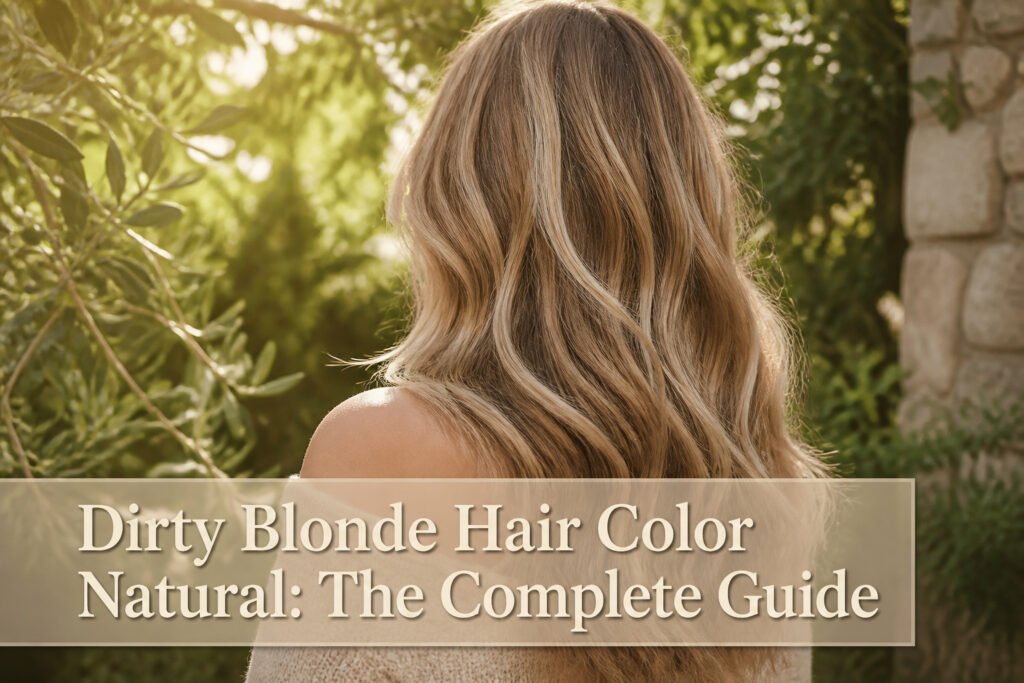
Dirty blonde hair color natural is a muted medium blonde that sits between blonde and brunette, built from wheat blonde, ash blonde, and light brown tones woven together. The catch is that only about 2% of the global population carries any natural blonde at all, which makes the naturally occurring dirty blonde shade even rarer than it looks. Most people wearing it are mixing their way there.
What Dirty Blonde Hair Actually Is

Dirty blonde hair is a darker shade of blonde that sits right between blonde and brunette, built from a blend of wheat blonde, ash blonde, and light brown tones woven throughout. The overall effect reads as muted rather than bright, which makes regrowth far less obvious than with platinum or icy blondes that sit at the extreme end of the spectrum.
The tone is neutral, sometimes with beige undertones, and it shifts with the light. Indoors it can look deeper and more shadowed; in sunlight you catch golden flecks or soft caramel notes depending on the base. On cooler skin it leans ashy and silvery, while warmer complexions pull out a deeper honey glow. That adaptability is why it flatters across so many people.
Only about 2% of the global population is naturally blonde at all, which puts the naturally occurring dirty blonde shade in even rarer territory. Most of us wearing it are mixing our way there.
Cool Dirty Blonde

Cool dirty blonde pushes further into ash and mushroom territory than the neutral base most people picture. The difference matters because ash undertones read as smoky rather than sandy, and that shifts who wears it well.
Skin with cool undertones, the kind where silver jewelry looks right and veins show blue, is where this version lands naturally. Warm undertones fight against it; the same ash that looks chic on cooler complexions can read flat or sallow elsewhere. Neutral undertones stay the exception, carrying most dirty blonde shades without much friction, though even there a heavy ash load risks washing out warmth that might otherwise show.
What separates cool dirty blonde from warm honey or golden versions is the base itself. Where warm dirty blonde builds from gold or caramel, cool stays rooted in light brown with bright strokes of lightener kept strictly in ashy, sandy, earthy tones. The contrast between that darker base and lighter pieces gives it dimension, but the dimension is muted, smoky, modern rather than sunlit.
The risk is going too far into ash and ending up with something that reads gray rather than blonde. Mushroom tones walk that line deliberately; they are the chic, modern finish when they work and a dull mistake when they do not. Someone with neutral undertones who wants to try the cool side should keep the ash partial, not let it dominate the whole head.
Warm Dirty Blonde

Warm dirty blonde carries honey or golden lowlights that catch light differently than cooler versions. The golden undertones create a multi-dimensional, sun-kissed finish, and this warmth flatters complexions with warm or neutral undertones best. Against cool dirty blonde, which leans ashy or beige, the effect is softer and more radiant rather than muted.
The shift in tone changes how the color reads in person. Where cool dirty blonde can look shadowy or flat in dim light, warm dirty blonde keeps some glow because the honeyed ribbons reflect more broadly. Stylists sometimes build this with a full head of lightening powder and layered color formulas that brighten gradually toward the tips, creating those brighter ribbons without a harsh line.
If your skin pulls pink or you tend to burn before tanning, cool or neutral dirty blonde will likely serve you better than this golden variation. The warmth can turn ruddy against cooler complexions. For olive or golden undertones, though, the honey version adds exactly the kind of soft summery brightness that reads as natural rather than highlighted.
Dirty Blonde With a Root Smudge

A root smudge takes your natural base color and blends it downward into lighter dirty blonde lengths, usually stopping somewhere around mid-ear. The colorist paints a demi-permanent shade along the regrowth area and feathers it out so there is no hard line where your natural color ends and the lighter tone begins. The result reads like hair that has grown in under summer sun, not like a deliberate color job growing out.
The maintenance difference is real. An all-over dirty blonde demands touch-ups every four to six weeks if you are starting from a darker base. A root smudge stretches that to ten or twelve weeks because the whole point is letting your natural root show. The darker root also creates soft dimension through the crown that flat, single-process color cannot replicate. Your hair looks thicker, and the eye reads movement even when you have not added actual highlights.
For natural blondes who want to dirty down their tone, this is the gentlest entry point. Ask for a toner or gloss in an ash, beige, or mushroom shade over your existing blonde, with the smudge concentrated where your natural root lives. Brunettes will need lightening first, usually through balayage or babylights, before the smudge can sit naturally against the darker base. Rushing that lift in one session risks damage and a brassy finish that no toner will fully calm.
Dirty Blonde Balayage

Balayage is a hand-painted highlighting technique that builds dirty blonde color by sweeping lightener through mid-lengths and ends rather than wrapping sections in foil. The result mimics how hair naturally lightens after months in the sun: brighter pieces scattered through a darker base, with no harsh line where color begins.
What convinced me this technique earns its reputation is how it solves the two problems that make blonde look artificial. First, the painter has control over exactly where each ribbon lands, so the dimension follows your hair’s natural movement rather than sitting in uniform stripes. Second, the roots stay untouched or barely lifted, which means the grow-out blends rather than screams for a touch-up. One stylist whose work I studied applies balayage straight from the roots for a more dramatic shift, but most placement keeps the top several inches darker for that sun-kissed, lived-in effect that defines dirty blonde at its best.
The technique works across starting points, from light brown to deeper bases, because the colorist can adjust how densely they paint and which tones they reach for: ashy, sandy, or earthy depending on what your natural pigment throws. Curls especially show off the multi-tonal finish, since each wave catches light differently.
Precision matters here. The freehand approach looks effortless in the final result, but the placement is deliberate. A heavy hand in the wrong zone creates brassy patches; too sparse and the dimension disappears. For that reason, this is one of the few color services where the professional route pays for itself in avoiding a corrective appointment.
Ashy Dirty Blonde

Ashy dirty blonde sits a step further from neutral than cool dirty blonde, carrying visible gray or silver tones that read almost like weathered wood rather than simply lacking warmth. The difference is a matter of degree: cool dirty blonde suppresses gold; ashy dirty blonde replaces it with something closer to slate. Getting there usually means lifting first, then depositing that muted tone over the top. Wella’s BlondorPlex lightener pushes up to nine levels of lift and carries an anti-yellow complex specifically to keep brass from interfering with the final ash result. Maintenance depends on keeping those warm undertones from creeping back in. Purple shampoo won’t lighten the hair further, but a five-minute application when strands start veering warm will neutralize the brass and preserve the gray-tinged finish. L’Oréal Paris Excellence Creme in Medium Ash Blonde is one at-home option that deposits the cool pigment directly, though the boxed route gives less control over how much silver shows through than a salon formulation would.
Dishwater Blonde

Dishwater blonde sits at the darker, muddier end of the dirty blonde spectrum, and the two terms get used interchangeably more often than they probably should. Where a classic dirty blonde catches light with subtle honey or wheat tones, dishwater reads closer to a flat, medium brown with a grayish or greenish cast that refuses to brighten. The dimension that makes dirty blonde look intentional and expensive tends to flatten out here, which is exactly why the color earned its unflattering name.
For years, "dishwater" functioned as an insult, the kind of thing a character in a 1990s teen movie would try to bleach away. That reputation stuck because the color often read as neglected rather than chosen, the grown-out result of someone giving up on lighter highlights. What changed was the shift toward intentionally muted, low-maintenance color that does not announce itself. The same flatness that once looked accidental now signals a deliberate rejection of high-contrast, high-effort blonde. Stylists started leaning into that murkiness with matte toners and shadow roots, reframing dishwater as editorial rather than apologetic.
Whether this particular shade flatters depends heavily on skin undertone. The muted quality can read sophisticated against cooler complexions, but on warmer skin it risks looking sallow without some strategic warmth woven through the midlengths. If you are considering it, ask whether you want the color to do the work or whether you are prepared to do the work with makeup and styling to keep it from looking washed out.
Dirty Bronde

Dirty bronde sits in the narrow space between brunette and dirty blonde, carrying more brown than the classic version. The ashy brown base stays dominant, with soft light brown highlights woven through for brightness rather than the stronger blonde lift you’d see in typical dirty blonde. That heavier brunette weight makes it the safer trial run for anyone unsure about crossing into blonde territory.
The tone tends cool or neutral, which is why it reads as understated rather than dramatic. Sources describe it as a "dip your toes in" shade, and that matches how it functions: enough blonde to register as lightened hair, enough brown to keep the maintenance modest and the grow-out forgiving. It flatters across skin tones because the balance sits neither too warm nor too cool.
Adding brighter blonde highlights on top pushes it toward sun-kissed territory without abandoning the bronde identity entirely. That two-step approach, brown base plus selective lift, is what separates dirty bronde from simple light brown. For a close at-home match, L’Oréal Paris Excellence Crème Universal Nudes in Dark Natural Blonde lands in this range.
Dark Dirty Blonde

Dark dirty blonde sits right at the edge before light brown takes over, with more brown than blonde actually visible in the final result. The sources describe it as verging on light brown while still holding enough radiance to read as blonde in certain light. That proportion matters, because it is what separates this shade from both standard dirty blonde and the popular dirty bronde.
Standard dirty blonde keeps a clearer balance, sometimes even tipping toward more blonde than brown. Dirty bronde pushes further into brown territory, often landing closer to a brunette with blonde highlights than a true midpoint. Dark dirty blonde keeps just enough blonde to stay on this side of the line, typically sitting at a level 5, 6, or 7 if your colorist is working with professional swatches. The distinction is subtle in description but visible on hair: under indoor lighting, dark dirty blonde still catches warmth and dimension, whereas dirty bronde tends to flatten into a single brown note.
For anyone naturally dark-haired wanting to shift without a drastic change, this depth works because it does not fight your roots. The brown base does the heavy lifting while the blonde tones add movement, not the other way around.
Dirty Blonde With Highlights

Foil highlights on a dirty blonde base create brightness in a more controlled, uniform way than hand-painted methods. The colorist weaves sections into foils and applies lightener from root to tip, which lifts the strand evenly rather than leaving the softer, more random brightness balayage produces. That uniformity matters if you want the beige-blonde pieces to read as deliberate ribbons rather than accidental sun exposure.
The maintenance gap between the two techniques is real. Because foil highlights typically start closer to the scalp, regrowth shows as a sharper line. Balayage’s feathered placement buys more time between appointments, sometimes months. Foils demand touch-ups every eight to twelve weeks if you want to keep the brightness consistent, though the dirty blonde base itself helps soften the grow-out compared to platinum levels of lift.
Bright, beige-blonde highlights on dirty blonde hair add noticeable lift without requiring much additional effort to maintain, since the base already lives in that neutral, between-blonde-and-brunette territory. A professional appointment is the safer route unless you are confident in your sectioning and saturation, because uneven foils read as stripes, not dimension.
Dirty Blonde Ombré

A dirty blonde ombré starts with dark roots that shift gradually into lighter dirty blonde ends, a two-tone gradient rather than an all-over color. The technique keeps your natural depth at the scalp while the lengths carry the brighter tone, which means you can stretch time between salon visits without a harsh grow-out line showing.
That two-tone structure is what separates ombré from balayage. Balayage blends darker roots with freehand-placed highlights swept through the hair for sun-kissed dimension that mimics natural lightening. Root smudge goes the opposite direction, softening the contrast between your base and lighter lengths to make regrowth disappear. Neither gives you the deliberate, visible shift from dark to light that defines ombré.
For anyone with a darker base who wants lighter ends without committing to frequent touch-ups, the gradient approach works because the root area stays untouched. The color incorporates the same hues you’d see in a solid dirty blonde, just arranged vertically instead of horizontally. The result reads as intentional contrast rather than grown-out bleach, which is why the style has stayed current while other highlighting techniques have cycled in and out of favor.
How to Get There From Darker or Lighter Hair

Coming in from platinum, the shift is mostly about toning down brightness rather than lifting color. A gloss or semi-permanent toner in ash, beige, or mushroom can dial back that icy edge within a single appointment. Lowlights or a root smudge add the subtle contrast that keeps the result from looking flat.
From brunette, the path runs longer. Multiple lightening sessions, spaced out, protect the hair’s integrity better than rushing toward the target shade in one marathon day. Highlights, balayage, or babylights lift the base gradually; toning follows to reach that neutral-sandy finish. A temporary gloss midway lets you test the tone before full commitment.
Ombré offers another route for darker bases: the gradient keeps natural depth at the root while the ends carry the dirty blonde, which stretches the time between touch-ups.
Keeping the Color Looking Natural

Sulfate-free shampoo makes the single biggest difference in how long dirty blonde stays convincing instead of turning obviously dyed. Regular shampoos strip color molecules faster than most people realize, and the fade reads as brass long before the tone actually shifts warm. I switched to formulas labeled for color-treated hair years ago and the extra weeks of true-to-bottle tone paid for the slightly higher price every time.
Purple shampoo sits right next to it on the shelf for a different job. The violet pigment neutralizes brassy yellow and orange undertones that creep in after lightening, and five minutes of contact time is enough for the pigment to do its work. Use it only when your color starts veering warm; on other wash days, a standard color-safe cleanser keeps hair glossy without the cool cast that overuse can leave behind.
Conditioning treatments complete the routine. Dirty blonde looks its most natural when strands stay soft and light-reflective, so a weekly deep conditioner or leave-in treatment keeps the dimensional quality that makes the color read as born-with rather than bottle-done. The grow-out helps too, roots coming in less harshly than with high-contrast blondes, but only if the midlengths and ends stay nourished enough to avoid that dried-out, catch-the-light-wrong look.
Frequently Asked Questions
What is dirty blonde hair?
Dirty blonde hair is a darker shade of blonde that sits between blonde and brunette, built from a blend of wheat blonde, ash blonde, and light brown tones. The overall effect reads as muted rather than bright, with neutral or beige undertones that shift with the light. Only about 2% of the global population is naturally blonde at all, which makes naturally occurring dirty blonde even rarer.
How do you get dirty blonde hair?
The approach depends on your starting point. From platinum, a gloss or semi-permanent toner in ash, beige, or mushroom tones down the brightness in one visit. From brunette, expect multiple lightening sessions using highlights, balayage, or babylights before toning to that neutral-sandy finish. A root smudge, ombré, or temporary gloss midway lets you test the tone before full commitment.
How do you maintain dirty blonde hair?
Sulfate-free shampoo is the single biggest factor in keeping the color convincing rather than brassy. Purple shampoo neutralizes warm undertones that creep in after lightening; use it only when color starts veering warm, not every wash. A weekly deep conditioner or leave-in treatment keeps strands soft and light-reflective so the dimensional quality reads as natural rather than dried-out and dyed.