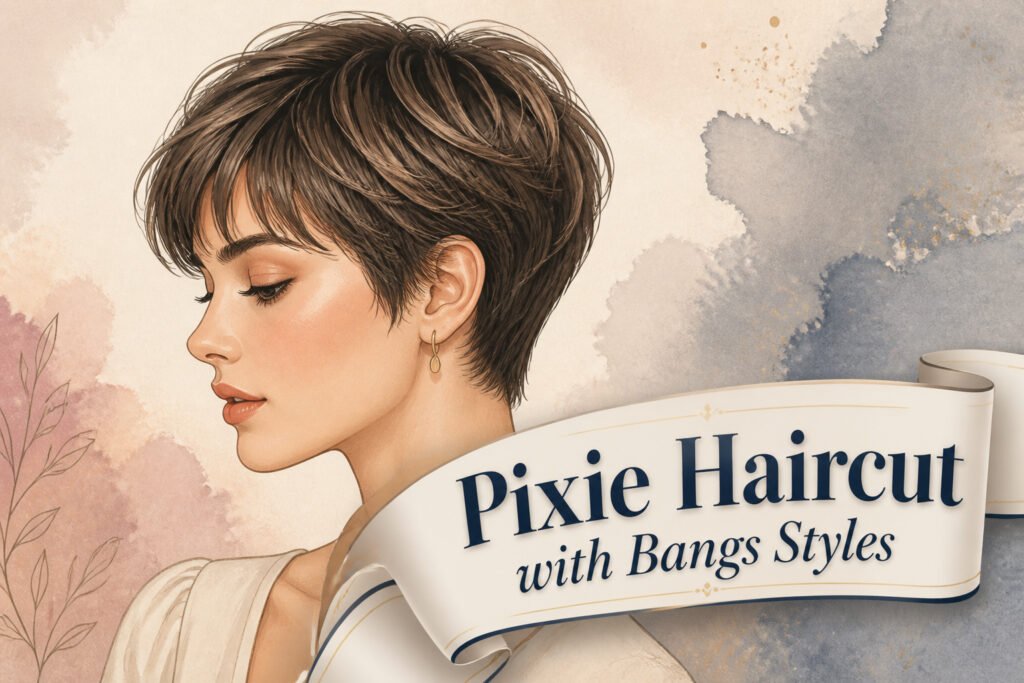
A pixie haircut with bangs can land anywhere from a barely-there fringe to a sweeping panel that grazes the cheekbone, and the deciding factor is your daily tolerance for styling. The shortest versions need reshaping every four weeks; shaggy, broken layers stretch that to eight. One detail that keeps coming up across these styles: dry cutting for curls, done on hair that has fully settled into its natural pattern, not while it is still damp and stretched.
1. Asymmetrical Pixie with Long Bangs
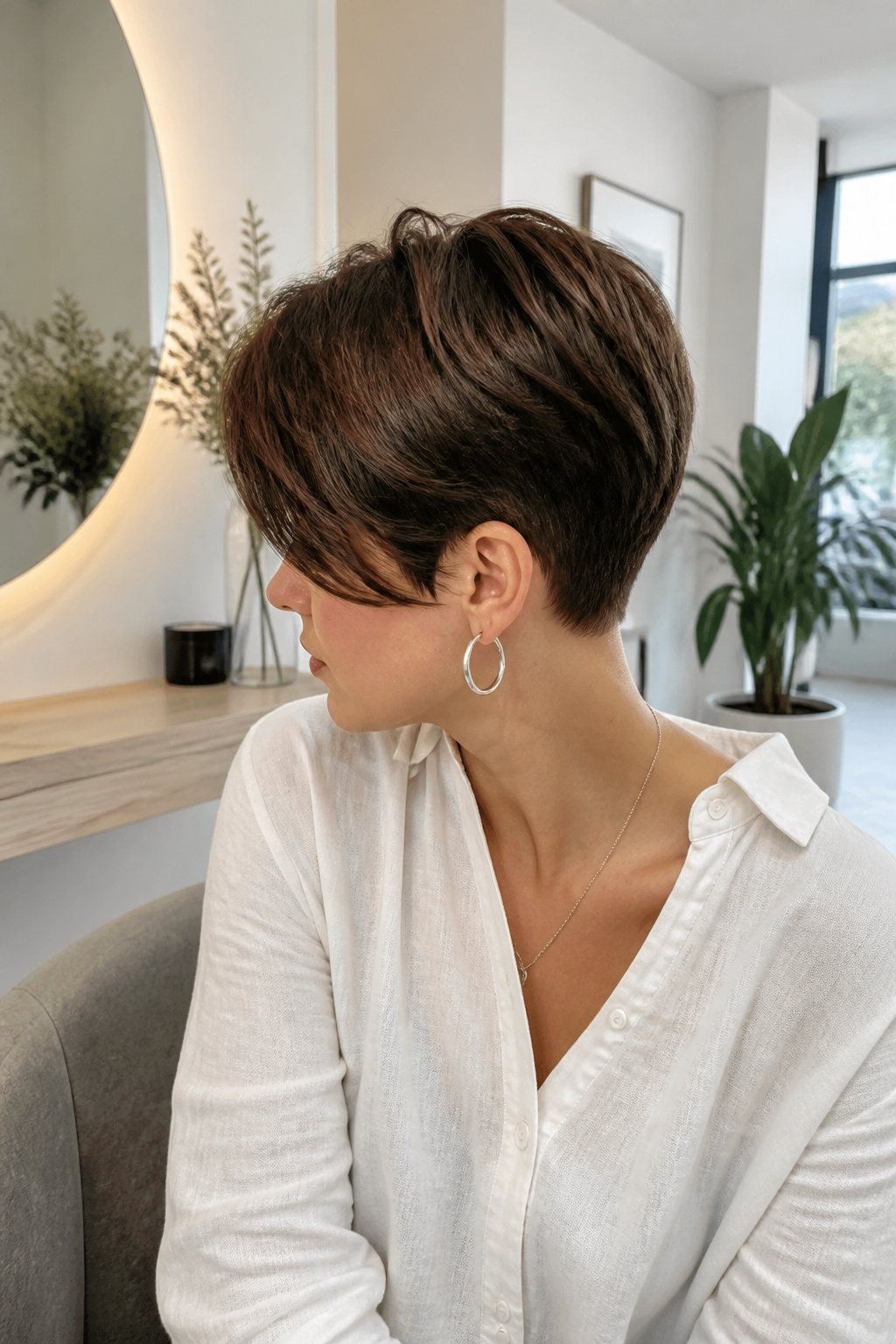
The uneven lengths of an asymmetrical pixie with long bangs create a diagonal line across the face that pulls the eye toward the cheekbones. One side stays shorter while the other front section carries the length, which means you can sweep the longer fringe to one side of your frames if you wear glasses instead of fighting them for space.
The shape reads bold from across a room, but the longer front section keeps the cut flexible day to day. A light smoothing cream on the longer piece is enough to keep it polished without adding weight. This version of the pixie works best if you want the short-hair commitment without looking like you picked the traditional route.
2. Choppy Pixie Haircut with Piecey Bangs
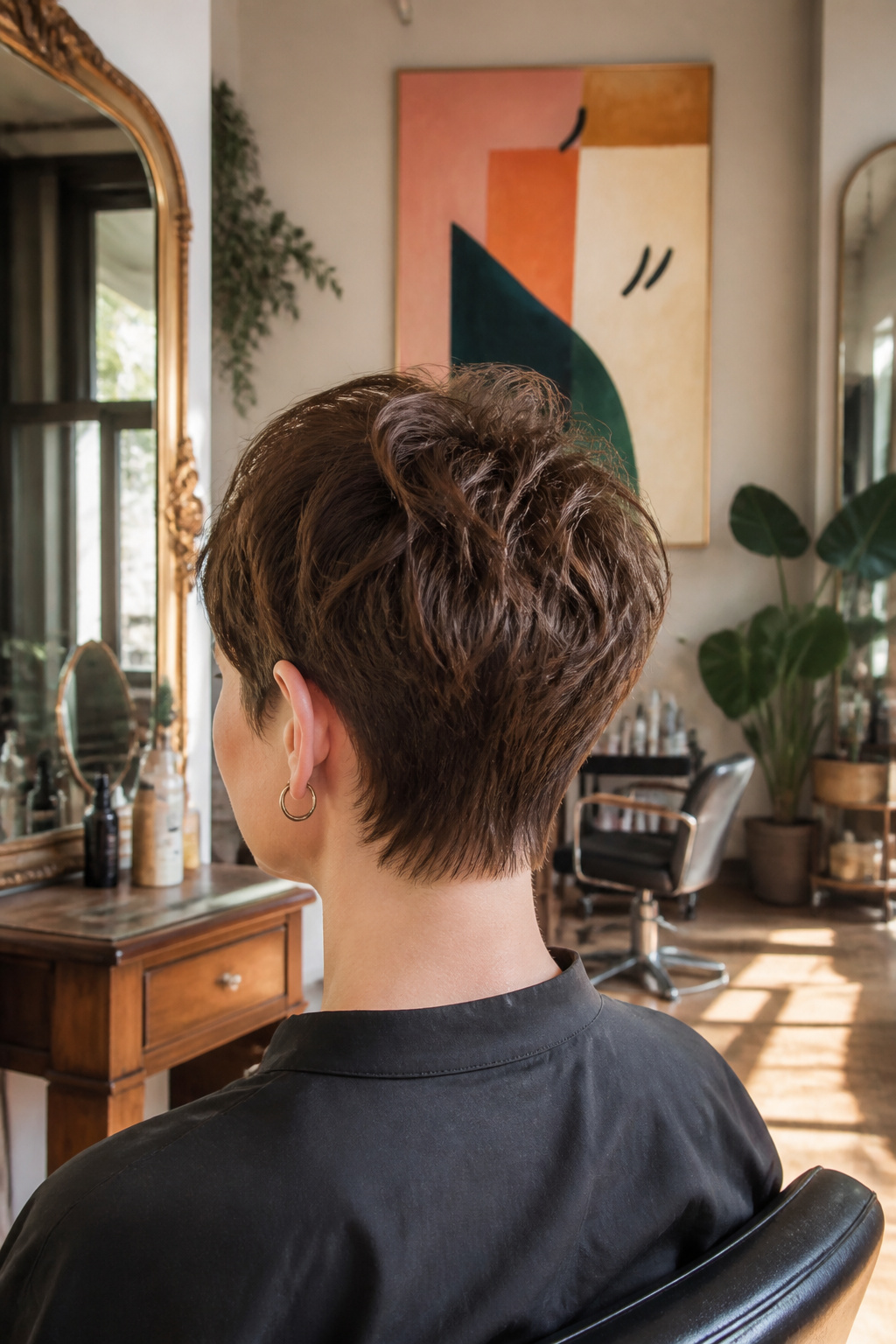
A choppy pixie with piecey bangs lives or dies on the cut itself. The layers need to land uneven on purpose, not like a trim gone wrong, and the bangs should break into small, separated pieces rather than one smooth sweep. The first time I saw this done well, the stylist was cutting dry hair and checking how each section fell against the forehead before committing.
Straight hair gets the most from this style. The uneven layers create movement that flat hair usually lacks, and the separated bangs keep the whole thing from looking too deliberate. Slightly wavy hair works too, though the pieces may need more coaxing into place.
Styling is minimal but specific. A light mousse or texture spray gives the separation you want without the crunch of heavier products. One source suggests pinching a tiny amount of texture paste into selected ends for definition; another recommends scrunching with texture spray. Both work, but the paste gives more control if your hair tends to fall flat by midday. Thick wax is the mistake here, it clumps the bangs together and kills the whole point of the piecey look.
The finish should read casual, not messy. Neat enough for an office, rough enough for weekends if you run your fingers through it.
3. Classic Pixie Cut with Soft Side Bangs
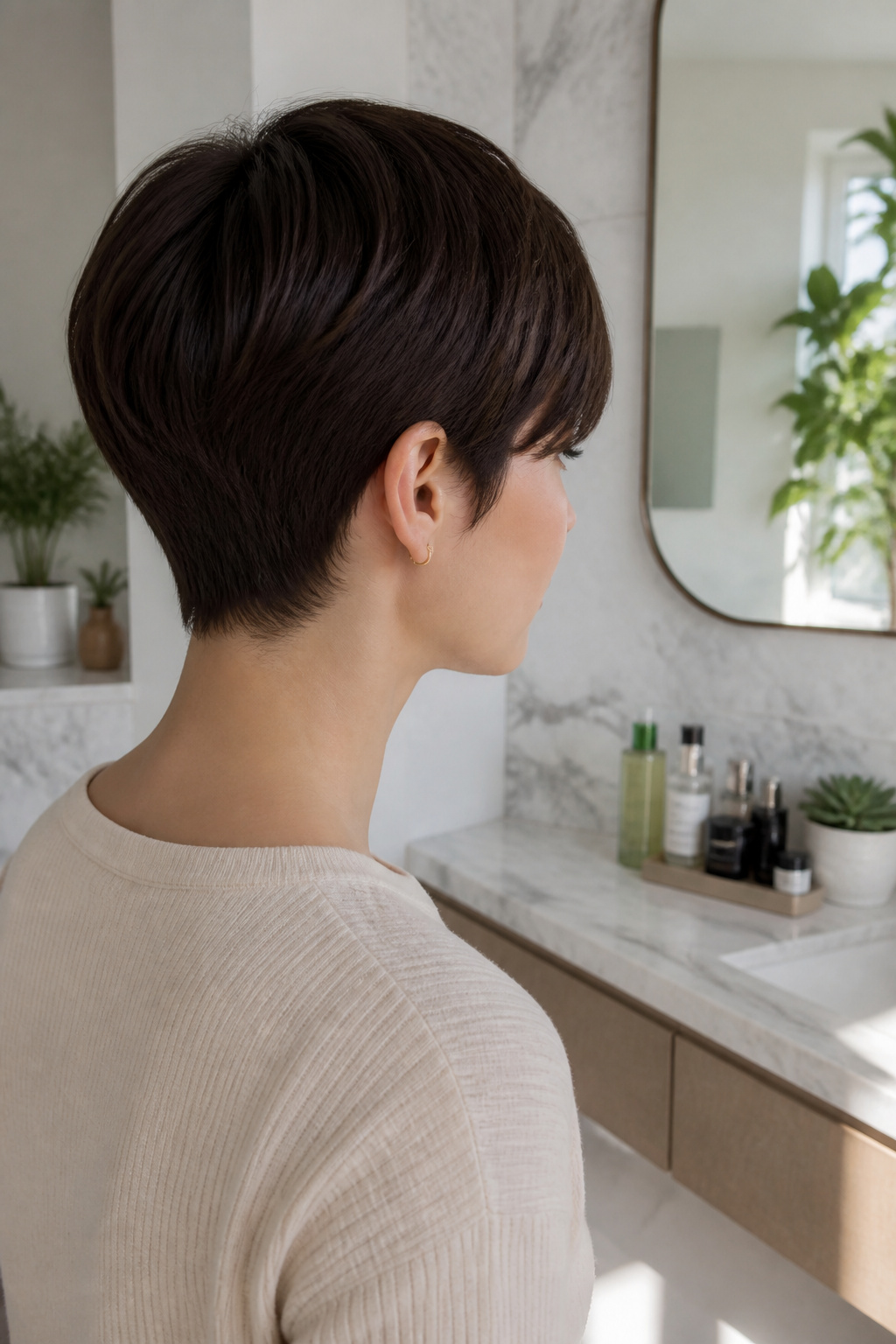
Soft side bangs on a classic pixie are the gentlest way to test short hair without committing to a severe crop. The fringe sweeps across the forehead and blends into the temples rather than sitting as a hard-edged panel, so the whole cut reads as one piece. That continuity matters when you are nervous about the jump from longer styles.
The extra length at the top gives you room to shift your part or tuck one side behind your ear, which means the style changes a little day to day without extra effort. It works best on straight hair or loose waves. If you are growing out a bob or just hesitant about going very short, this cut keeps enough flexibility that the transition does not feel abrupt.
Styling is minimal. A small amount of light styling cream smoothed through the bangs is usually enough to keep them lying right. Blow-drying the fringe from side to side before setting it in place helps the sweep hold its shape through the day.
4. Curly Pixie Cut with Short Bangs

Curl shrinkage is the detail that makes or breaks a curly pixie with short bangs. Hair that hangs at eyebrow length while wet can spring up to sit a full two inches above the brows by morning, which turns a planned fringe into something closer to a forehead exposure. The cut needs to happen on dry curls, checked after they have fully settled into their natural pattern, not while they are still damp and stretched.
A stylist who understands how curls dry is non-negotiable here. Someone used to working with straight hair will follow the wet length, hand you a cute style in the moment, and leave you with surprise micro-bangs after your first wash-and-go at home. Ask specifically whether they cut curls dry; if they look puzzled, keep looking.
For styling, a small amount of curl cream keeps the definition intact without weighing the short layers down. Brushing dry curls is the fast route to frizz that no amount of cream will recover, so finger-combing or a wide-tooth comb on wet hair is the safer path. A mist of sea salt spray can add piece-y texture if the curls need separating, though on very tight patterns this risks dryness rather than definition.
5. Layered Pixie Cut with Feathered Bangs
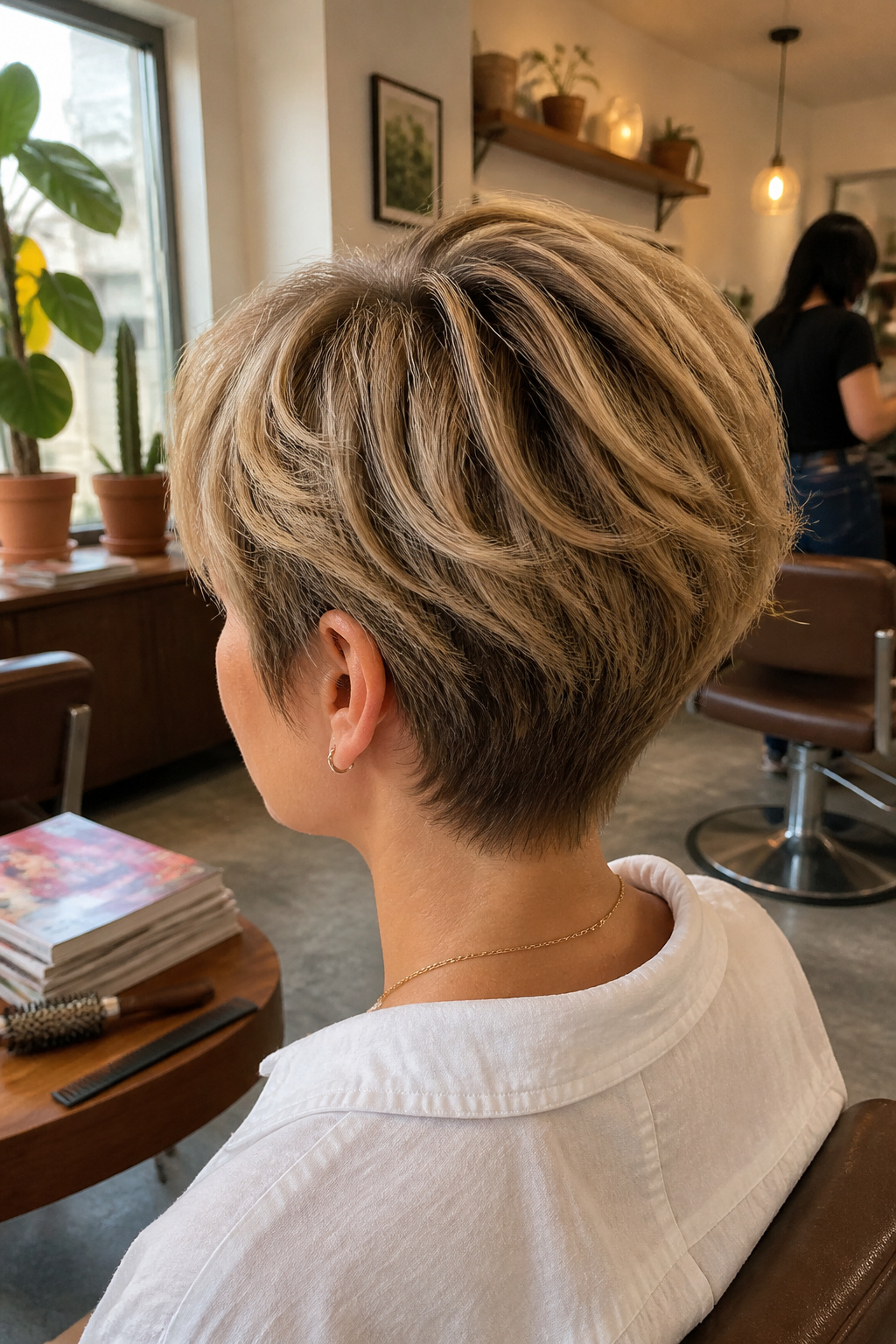
Soft layers through the crown add lift without turning the cut into a helmet, and feathered bangs that blend into the sides keep the forehead line gentle rather than drawing a hard border across it. The shape works especially well for fine hair that needs built-in volume, since the graduation builds apparent density where the hair is naturally thinnest.
The risk is over-layering. Too many short layers can leave thin ends looking wispy and weak, so the better move is to keep them light and let the length underneath carry the weight. A small round brush lifted at the roots while drying finishes the shape with movement that still reads polished, not messy.
6. Long Pixie Haircut with Side-Swept Bangs
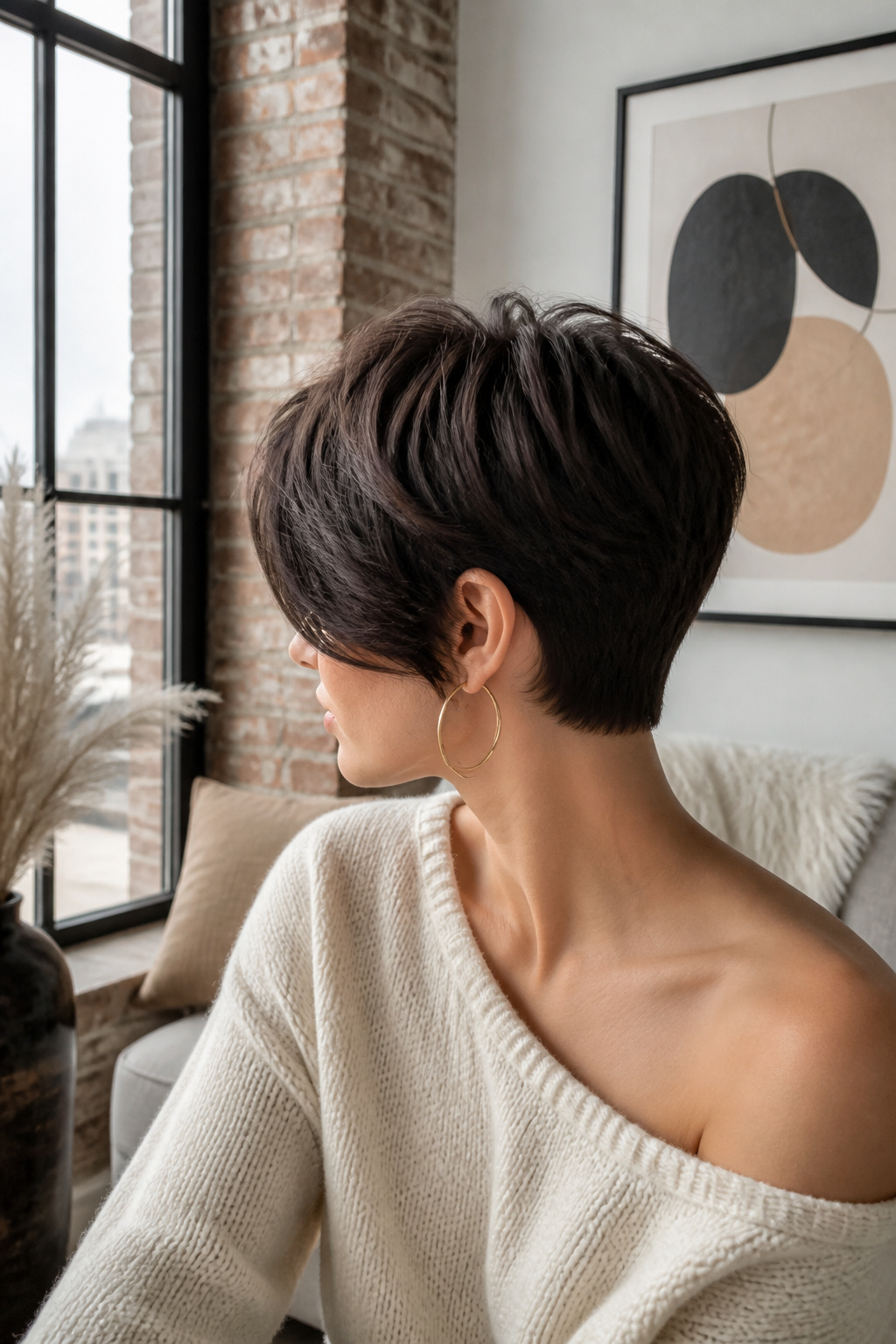
A long pixie with side-swept bangs keeps more length everywhere than a true pixie, which means the sides stay fairly short while the top and front remain longer. The fringe itself is long enough to tuck behind one ear or sweep across the forehead, and that extra length buys you more time between trims than a shorter cut would.
The side-swept fringe creates a soft line across the face, and you can shift it based on what the day requires. This is the cut that convinced me, reading through dozens of these styles, that "growing out" does not have to mean awkward stages. It works well if you are coming down from a bob or simply nervous about going very short.
Blow-dry the fringe from side to side before placing it; that movement keeps the sweep from falling too flat against your forehead. Straight hair and loose waves both cooperate with this shape, and the longer fringe gives you room to change your part or tuck one side back when you want your eyes clear.
7. Pixie Bob with Long Bangs
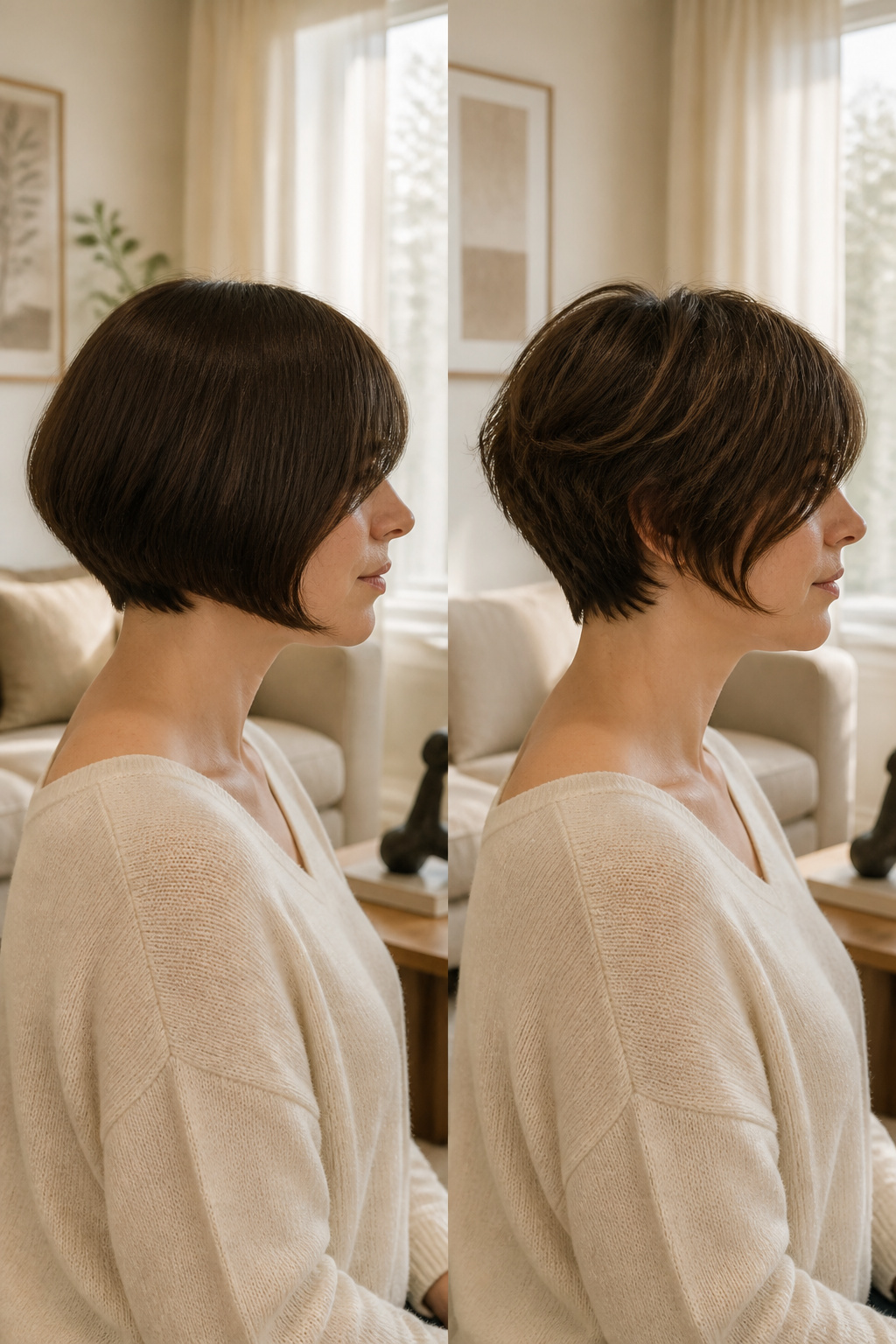
The pixie bob with long bangs sits right in that middle space where you still feel the freedom of short hair but keep enough length to actually style. The back and sides stay clipped close, sometimes with extra fullness around the ears and nape, while the front stretches toward bob territory with bangs that can graze the cheekbone or brush the brow.
What sold me on this cut, reading through the options, is how it handles the awkward phase everyone fears. Because the outer shape is already longer, growing it out demands far less patience than a traditional pixie. You can part it deep on one side, wear the fringe smooth and tucked, or sweep it back with a little lift at the crown. That lift matters: the sources keep pointing to light crown volume as the move that keeps the front from falling flat against your face.
The fringe itself is the real flexibility here. Long enough to tuck behind one ear when you need it gone, soft enough to leave down without the blunt weight of a full bob. If you are nervous about going short or growing out of something longer, this is the cut that lets you test the water without committing all the way.
8. Pixie Cut with Curtain Bangs
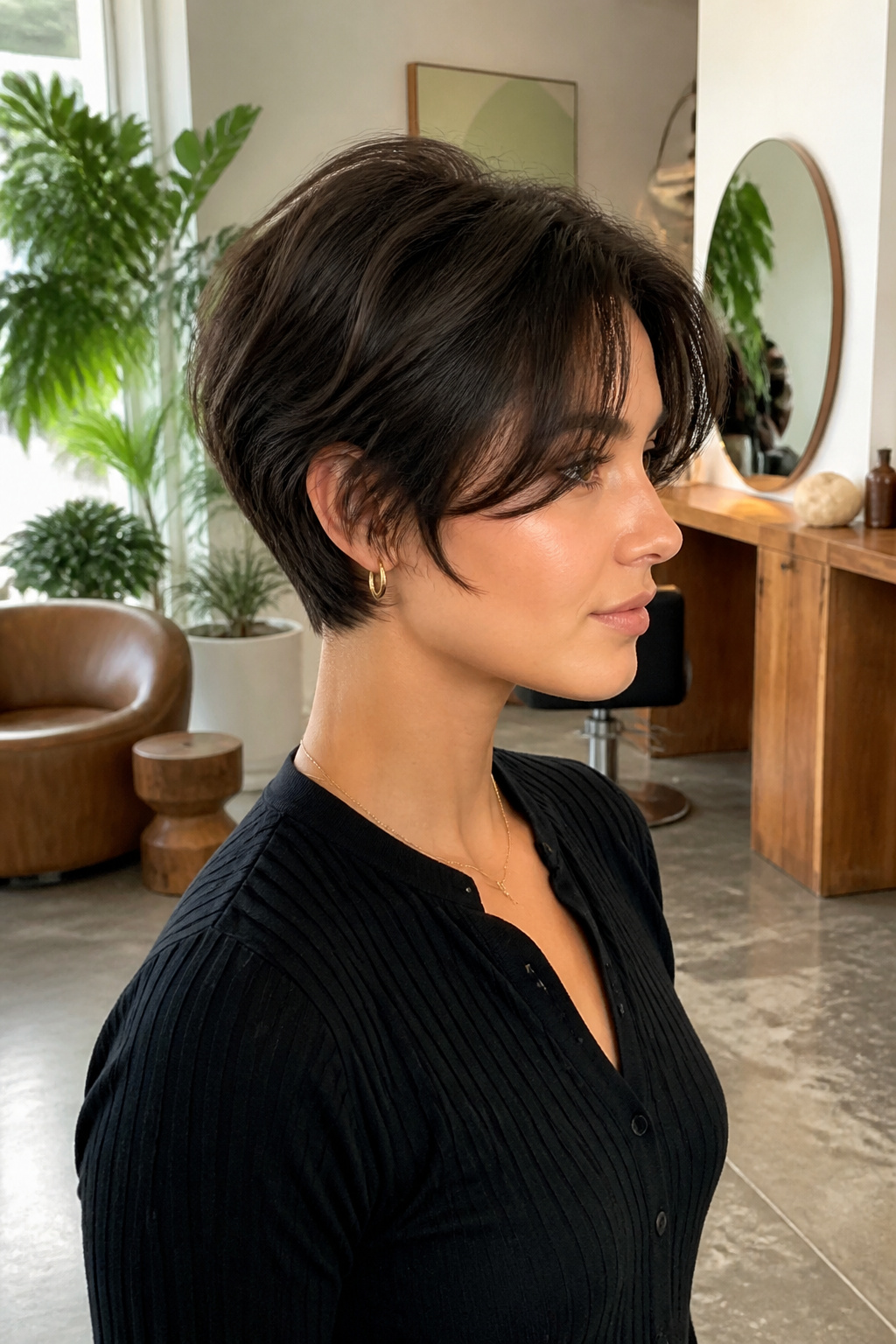
Curtain bangs on a pixie open near the center and sweep to both sides rather than falling straight across the forehead. The split creates two framing panels that leave the middle of the face open while drawing attention to the eyes and cheekbones. On the short sides of a pixie, these bangs need enough length to blend cleanly into the temple area so the transition does not read as two unrelated haircuts.
Your natural part matters here more than with most bang styles. The center split only stays put if your hair wants to part there; fighting the growth pattern means daily wrestling that most morning routines do not have time for. Blow-dry each side away from the face using a round brush or your fingers, directing the air down the shaft to smooth the cuticle without flattening the lift at the root.
Oval, heart-shaped, and longer faces carry this balance best. The open center adds width to a narrow face, while the side panels soften a stronger jaw. Rounder faces may find the horizontal emphasis less flattering than a diagonal fringe that elongates instead.
9. Shaggy Pixie Haircut with Messy Bangs
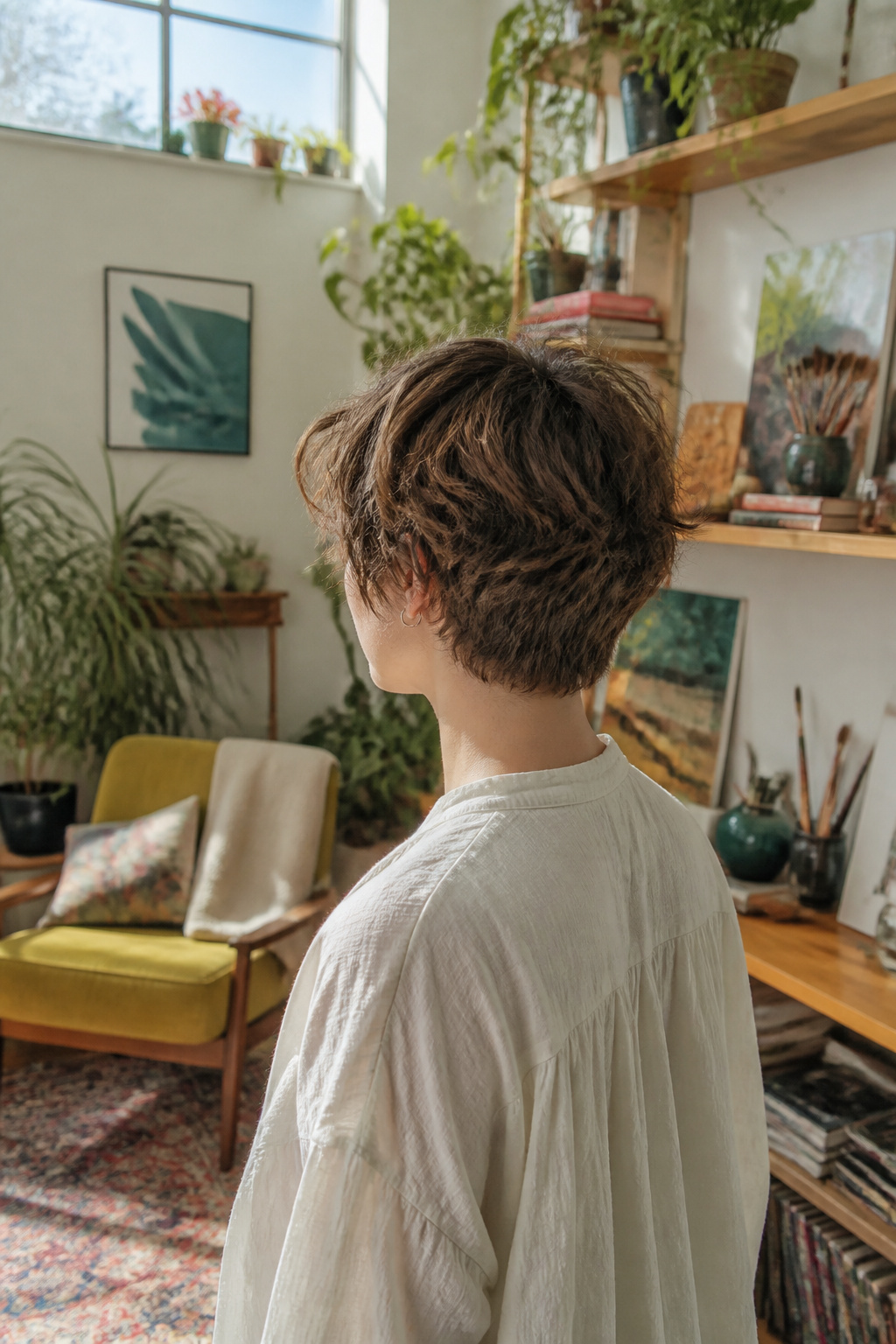
A shaggy pixie with messy bangs carries its disarray in the cut itself, not in whatever you do at 7 a.m. The layers are broken and uneven by design, and the bangs merge into the top rather than sitting as a separate, tidy panel. That lived-in silhouette reads as intentional even when you have done nothing.
The shape handles natural waves and bends without demanding uniformity. Strands fall where they want, and the overall look still holds together. Growth between cuts is less punishing here than with a sharp, closely cropped pixie; the looseness absorbs extra length rather than fighting it.
For styling, texture spray on dry hair and finger-shaping is enough. The cut does the work. Wavy hair and a relaxed routine suit this best, since precision is not the point. Straight hair can wear it too, though the movement will read quieter and may need more encouragement from product.
10. Short Pixie Haircut with Wispy Bangs
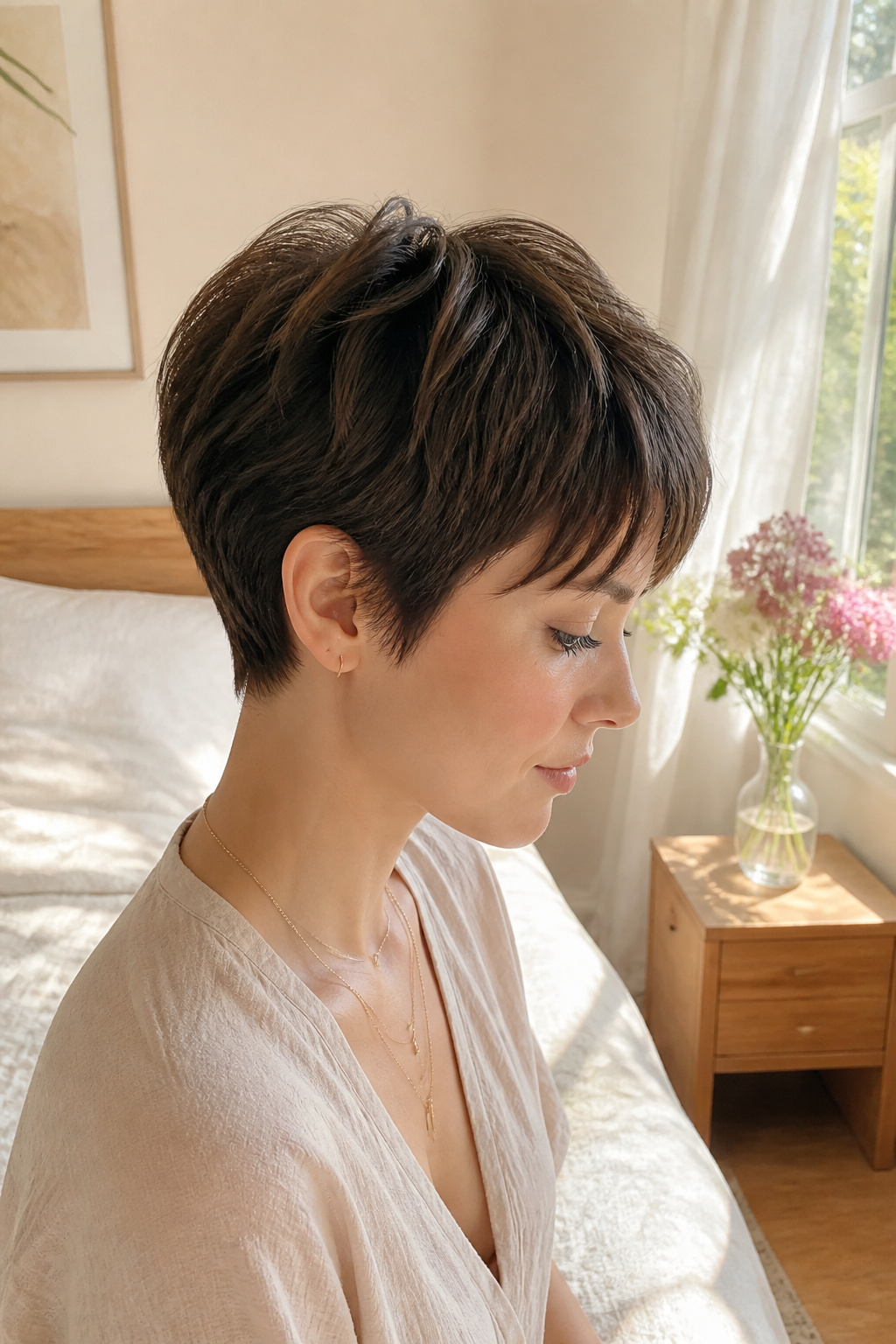
The shortest overall length paired with the lightest bangs lands in a specific spot: wispy means sparse and separated, not thin in the sense of needing more hair. Fine or straight hair carries this cut best, since the bangs are built from light, separated pieces across the forehead rather than one thick line.
Very short sides can read severe without something softening the edge, and these wispy pieces do exactly that. They also keep fine hair from looking heavy or flat around the face, which blunt bangs tend to do. The tradeoff is morning maintenance: the fringe usually needs light styling after sleep, though less effort than a full, blunt bang demands.
The real mistake to avoid is thick wax or heavy product. Clumped-together pieces defeat the whole purpose of the separation. A light touch keeps the wispy effect intact, and the shortest overall length does the rest of the work.
11. Sleek Pixie Cut with Blunt Bangs
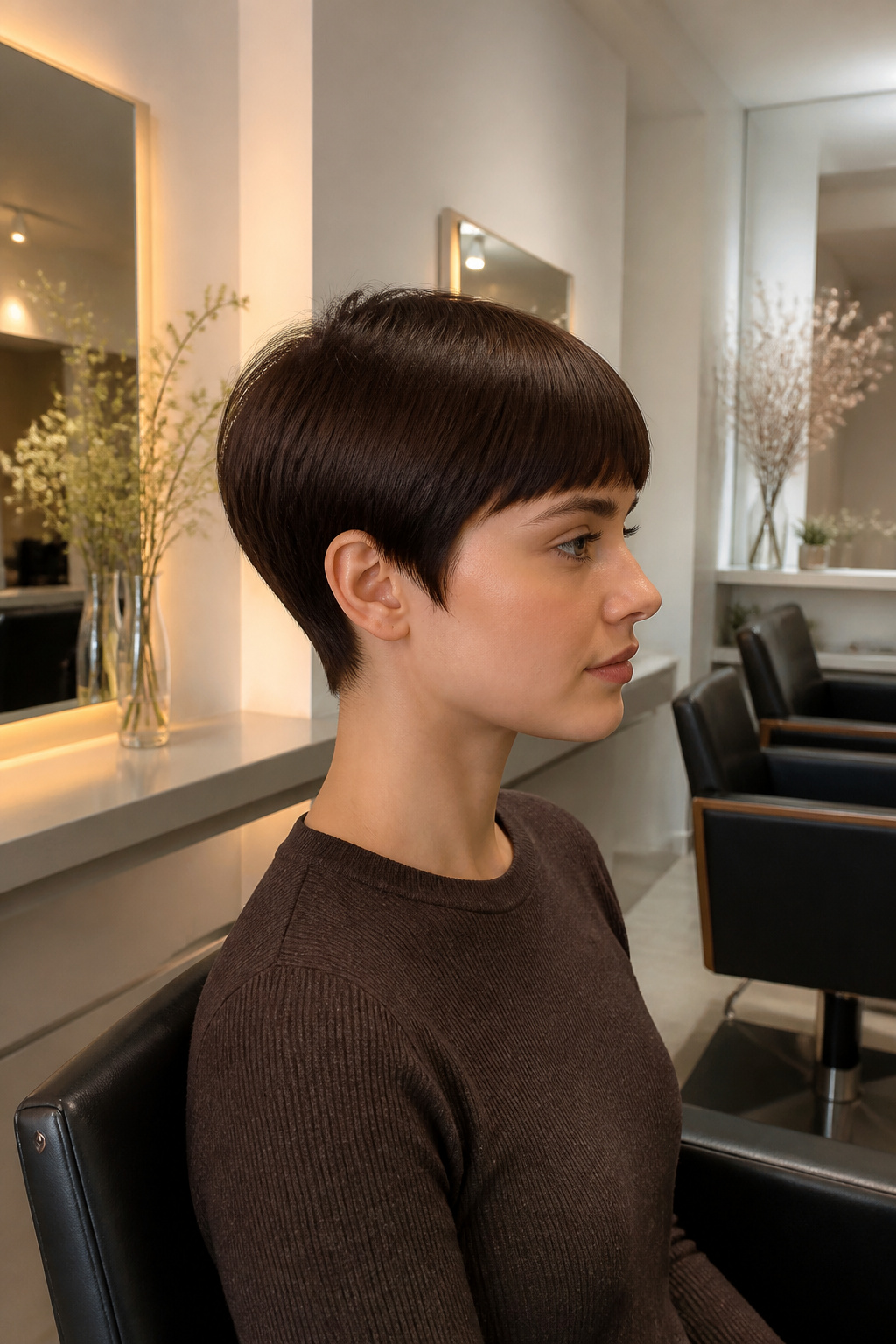
Straight-across bangs with a sharp edge turn the pixie haircut with bangs into a study in control. Every cut line stays visible, which means uneven growth shows up fast and the fringe needs steady upkeep to keep that clean forehead line.
This style works best on straight hair that naturally holds a neat shape. A strong cowlick near the hairline will fight the fringe, so have your stylist check your growth pattern before committing to anything this short. The rest of the cut needs the same precision: no soft layering to hide behind, just controlled geometry from crown to nape.
Heat protection matters here. Apply it before any flat iron passes, since the smooth finish this look depends on comes from direct, even heat. Skip the protection and the ends fry, the shine dulls, and the whole point of the style, that glassy, deliberate surface, disappears.
12. Textured Pixie Cut with Tousled Bangs
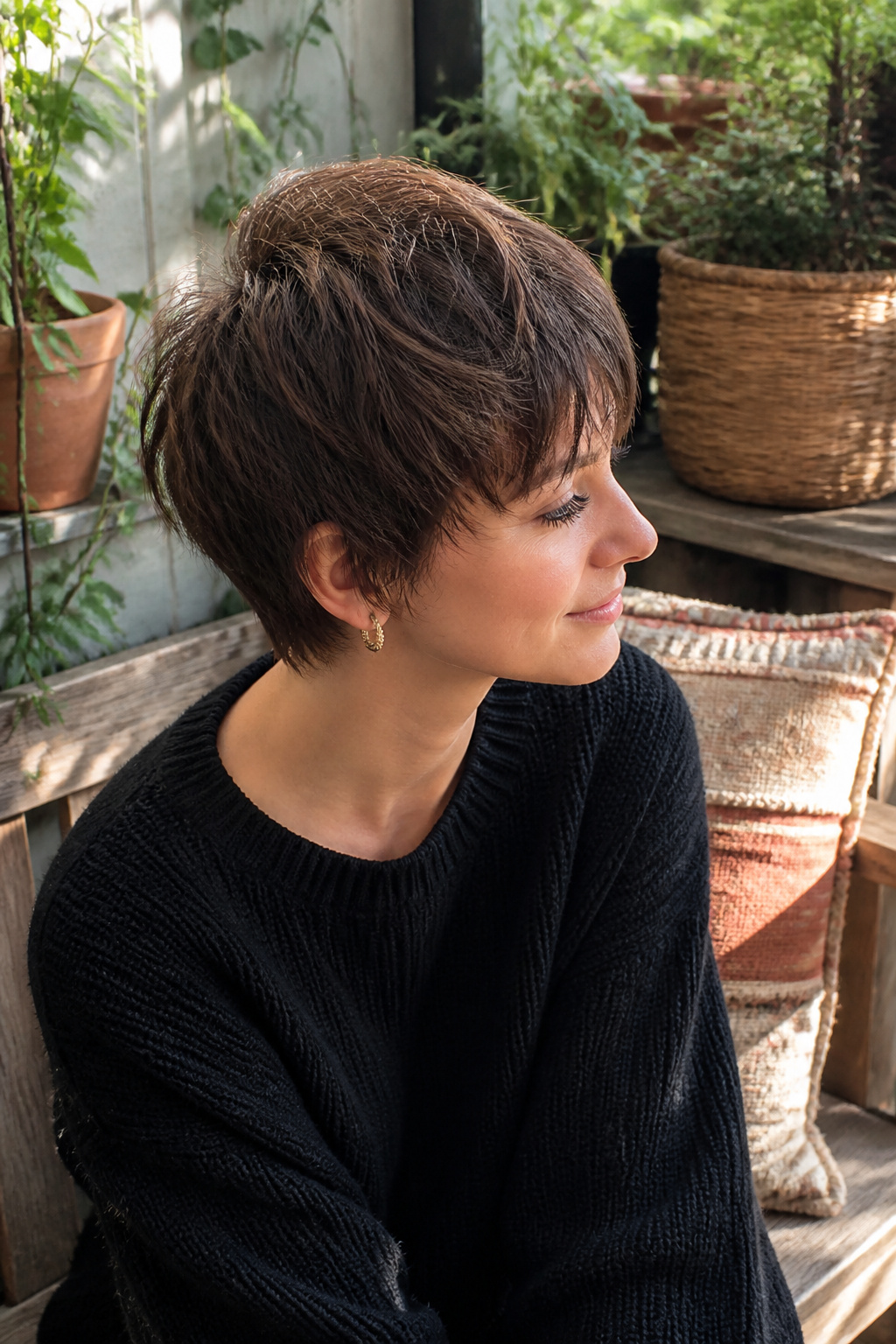
Texture in a textured pixie with tousled bangs is cut in, not teased up afterward. Ask your stylist for dry cutting, done on hair that is already dry, so the layers fall where your natural bends actually live. The crown carries relaxed layers while the fringe breaks into soft, uneven pieces that do not line up like a ruler.
This cut works with your texture instead of hiding it. Wavy or medium-density hair takes to it especially well, since the air-dried movement becomes the style rather than the enemy. Your morning routine stays simple: start with damp, not soaking-wet hair, blot gently with a soft towel, then scrunch in a light mousse and let it dry. Finger-dry the bangs, moving them side to side so the roots sit where you want them. A tiny amount of texture paste on your fingertips, touched only to the ends and selected pieces, gives that separation without the stiff finish a heavy wax would leave behind.
13. Undercut Pixie with Sweeping Bangs
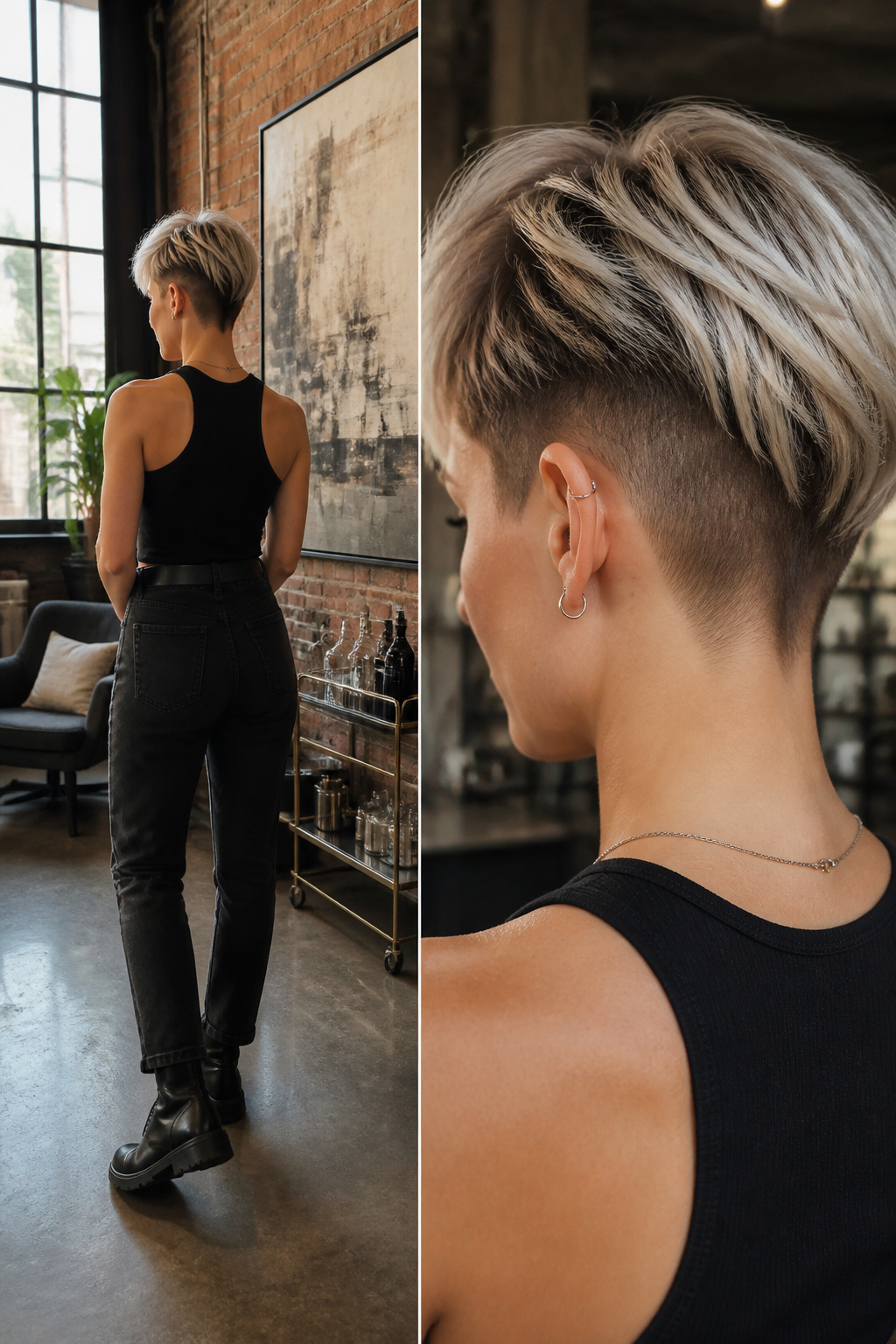
Shaved or closely clipped sides and back with dramatic length on top that sweeps across the forehead is the whole point of this cut. The contrast between the two lengths does the visual work, so the undercut needs to stay sharp to keep the style alive.
Thick or dense hair benefits most here. Removing the bulk underneath lets the longer top section move without the whole shape turning into a triangle. The undercut can sit hidden beneath the sweep or stay fully visible depending on how you part it, but either way the shorter area grows out fast enough to blur the line.
A cropped undercut loses that contrast quickest, which is why many people with this style end up back in the chair more often than they expected. Four to eight weeks is the usual range for reshaping a pixie, though the sides on this particular cut often need cleanup before the top does. Flexible pomade works better than stiff wax here; the bangs still need to sweep, and a product that hardens will fight the movement that makes the style read as intentional rather than overgrown.
14. Voluminous Pixie with Lifted Bangs
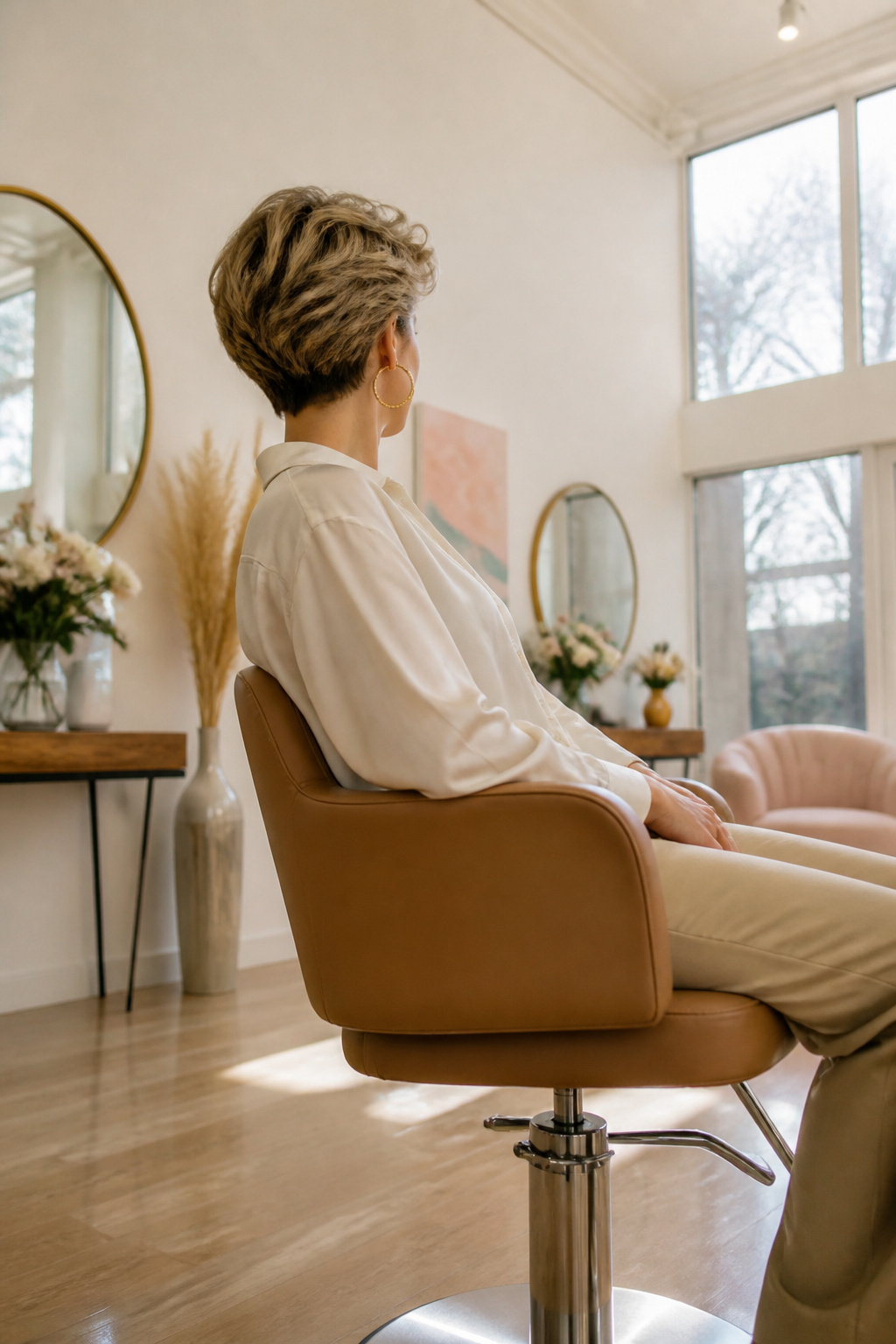
Height at the crown separates a flat pixie from one that actually opens up the face. The bangs here stand up or sweep back instead of lying across the forehead, which creates that strong, lifted silhouette.
The cut keeps more length through the top and front, then relies on blow-drying for the shape. Direct the roots upward while drying; that upward motion matters more than whatever product you put in first. A round brush helps, though fingers work if you’re practiced at it.
Medium-density or thick hair holds this style best. Fine hair can still get there, but shorter feathered layers at the crown will do the lifting instead of length alone. The real limit is oil: roots that go flat or greasy by midday will fight you, since this needs a few minutes of drying each morning and clean lift at the base. If your scalp runs oily, the swept-back version lasts longer than true vertical bangs.
15. Wavy Pixie Haircut with Side Bangs
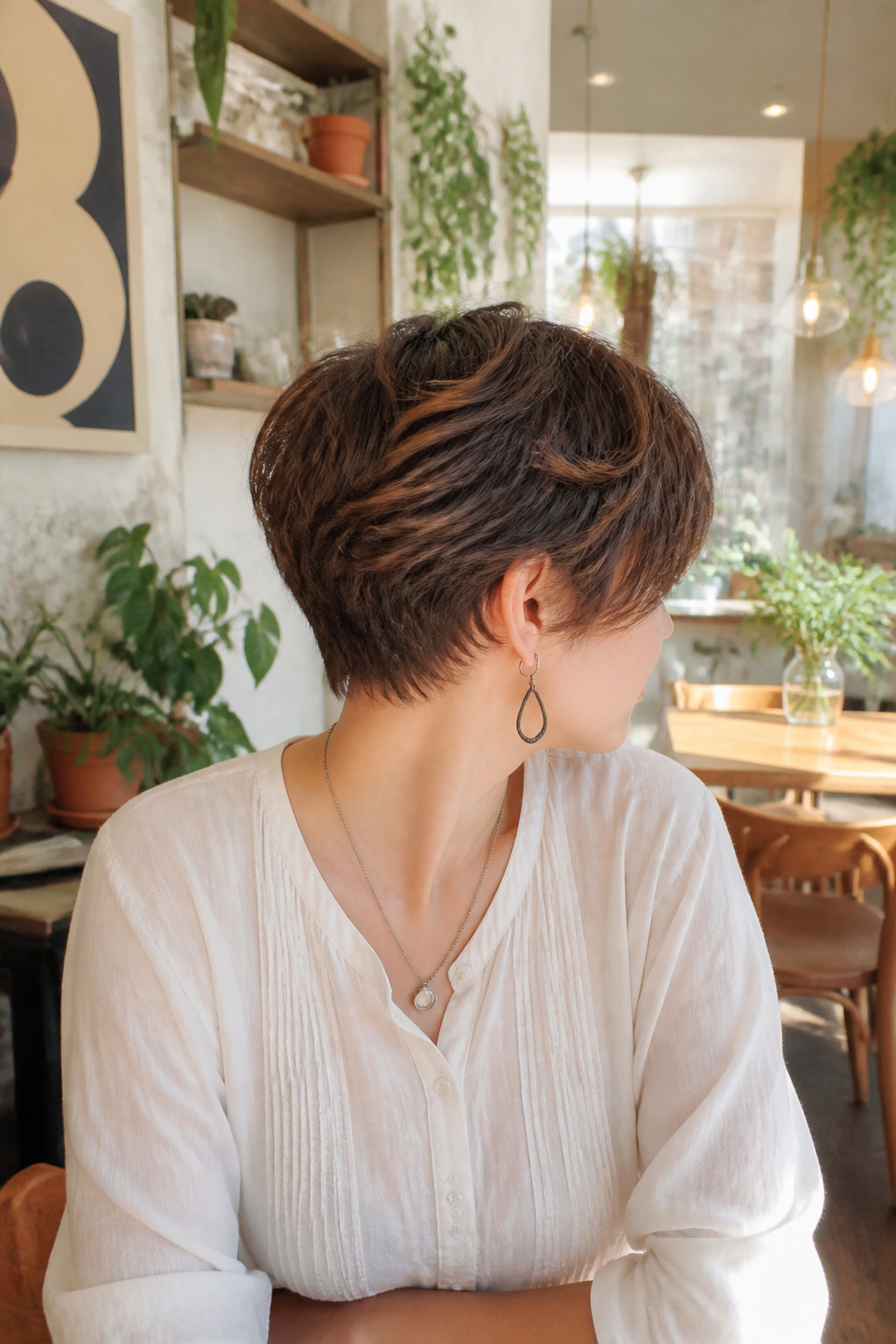
The wavy pixie haircut with side bangs works with your natural bend instead of flattening it out. The fringe follows the wave across the forehead and blends into longer layers on top, so the movement comes from the texture you already have.
Loose waves carry this cut best. The layers need enough length to keep the shape from rounding into a puff, especially if your hair is on the finer side. What convinced me, reading through the styling notes on this, is how little heat it actually demands. A light curl cream replaces heavy gel, and the natural wave becomes the finished look rather than something to iron out.
Zendaya wore this exact shape to a Paris event earlier this year: loose waves, side fringe covering one eye, no visible effort at all. If you diffuse, aim the airflow toward your face to push the top forward and keep the wave pattern intact.
Trim Every 4 to 8 Weeks
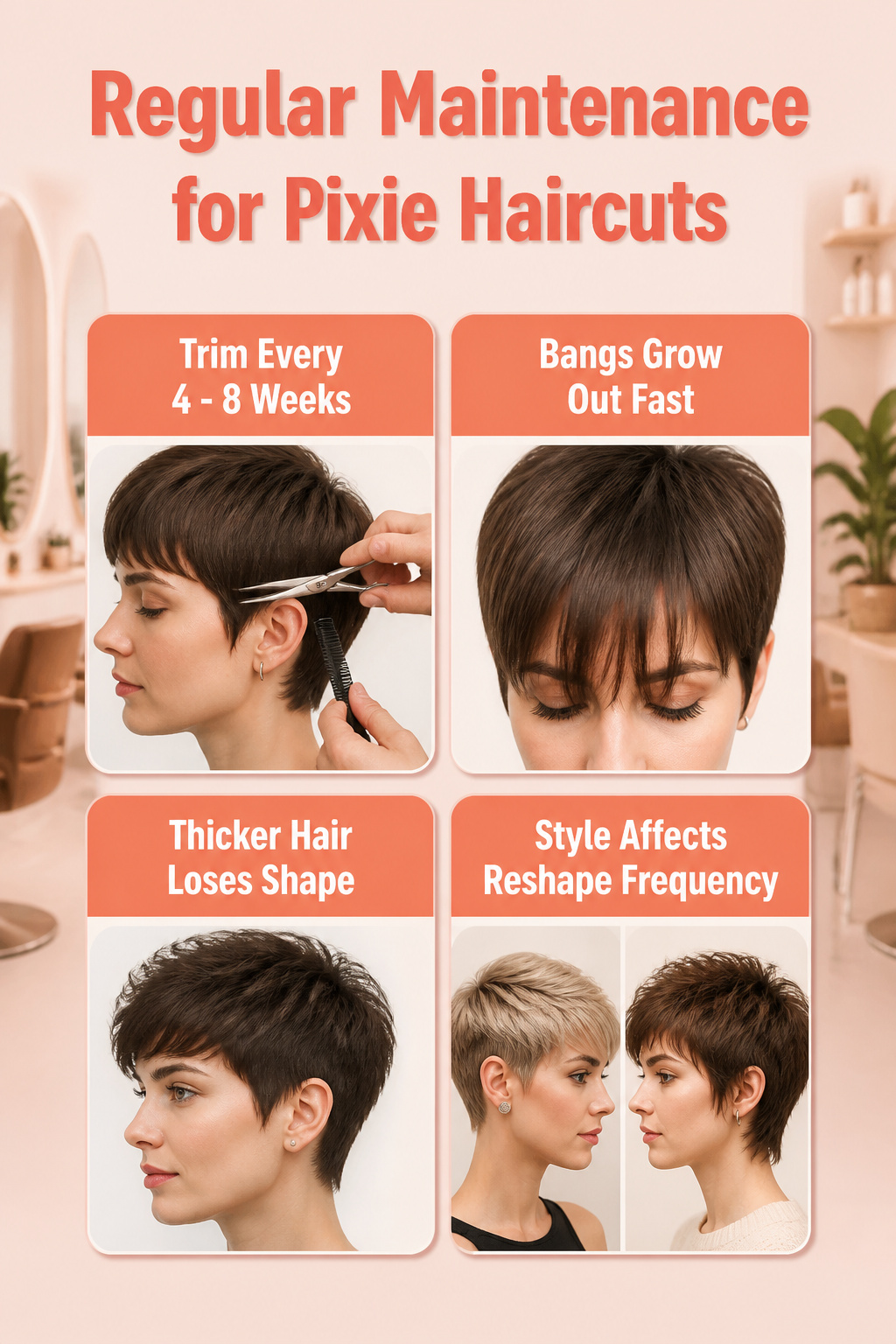
A pixie haircut with bangs needs reshaping every 4 to 8 weeks, though the exact timing depends on how sharp the cut is meant to look. Blunt bangs and precise edges start looking fuzzy around week four; shaggy or textured styles can stretch toward the longer end because extra length blends into broken layers instead of fighting the shape.
Bangs grow out fastest and usually hit a wall before the rest of the cut does. Once they brush the eyes or lose that blunt line, the whole style goes off balance. Some people can manage a quick between-visit trim at home, but wavy or curly hair springs up after drying, so the length you think you are cutting and the length you actually get may not match.
Thicker hair loses its shape faster simply from density pushing the outline outward. Softer, piecey bangs and less structured shapes buy you more time between appointments. If you are growing the cut out, small reshaping trims keep the back from getting heavy while the top and sides catch up. Tell your stylist length is the goal so they do not take off more than the maintenance requires.
Match the Cut to Your Face Shape
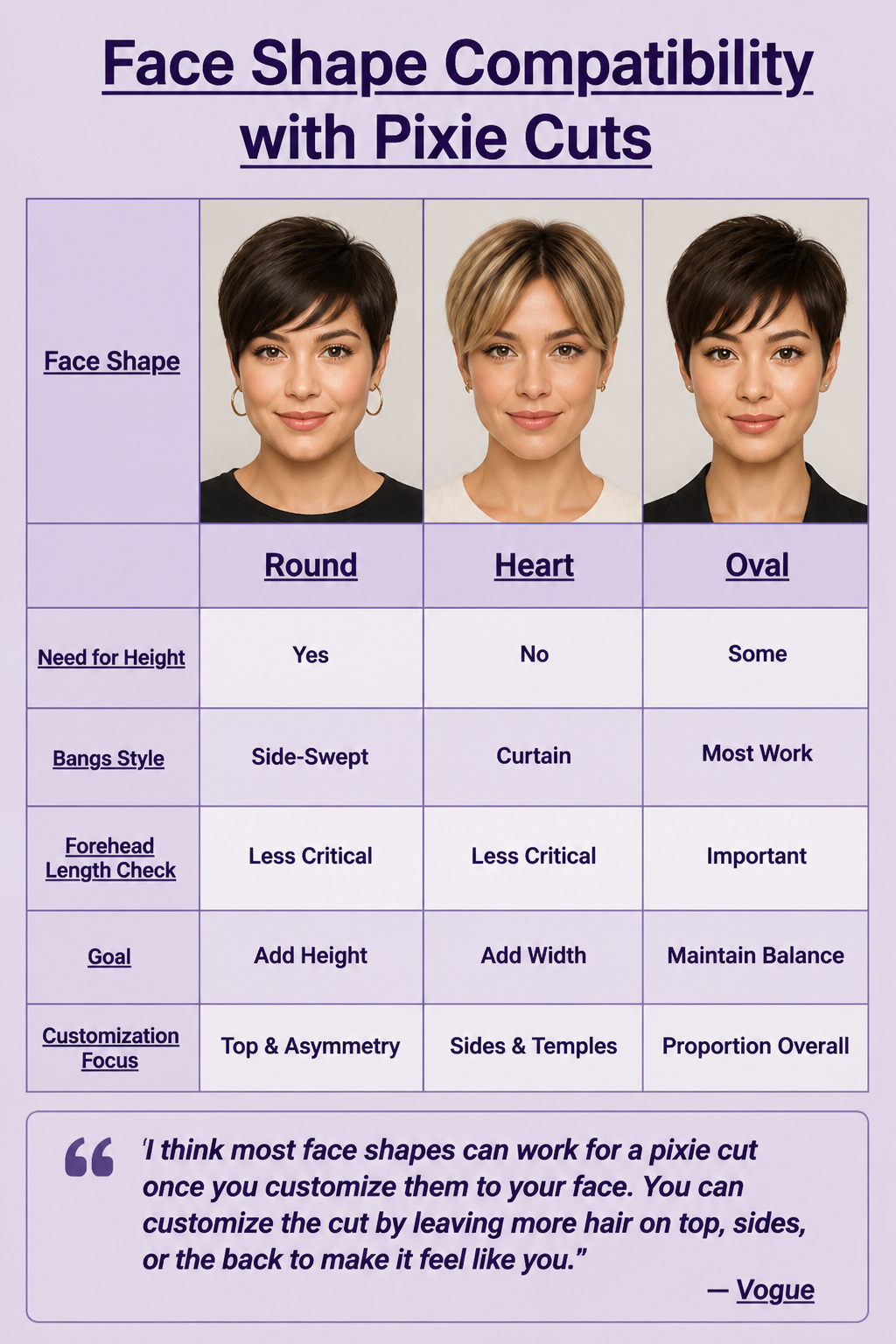
Round faces need height and asymmetry to keep a pixie from looking too circular. Side-swept or lifted bangs draw the eye upward and create diagonal lines that stretch the silhouette, while an asymmetrical cut adds length the same way off-center parting does.
Heart-shaped faces carry weight in the forehead and taper to a narrow jaw, so the goal flips: width at the bottom balances the shape. Curtain bangs or soft side bangs frame the upper face without adding bulk there, and longer temple pieces that connect the fringe to the sides help fill in below the cheekbones.
Oval faces have the most freedom, though proportion still matters. Most bang styles work, but forehead length is the detail to check. A very high forehead paired with short blunt bangs can throw off the balance; longer diagonal bangs or a softer fringe usually sit better.
"I think most face shapes can work for a pixie cut once you customize them to your face… You can customize the cut by leaving more hair on top, sides, or the back to make it feel like you."
— Vogue
That customization is what turns a generic pixie into one that actually suits you. The bangs are where most of that tweaking happens, because they sit right at the feature you’re trying to balance.
Dry Around the Head Shape
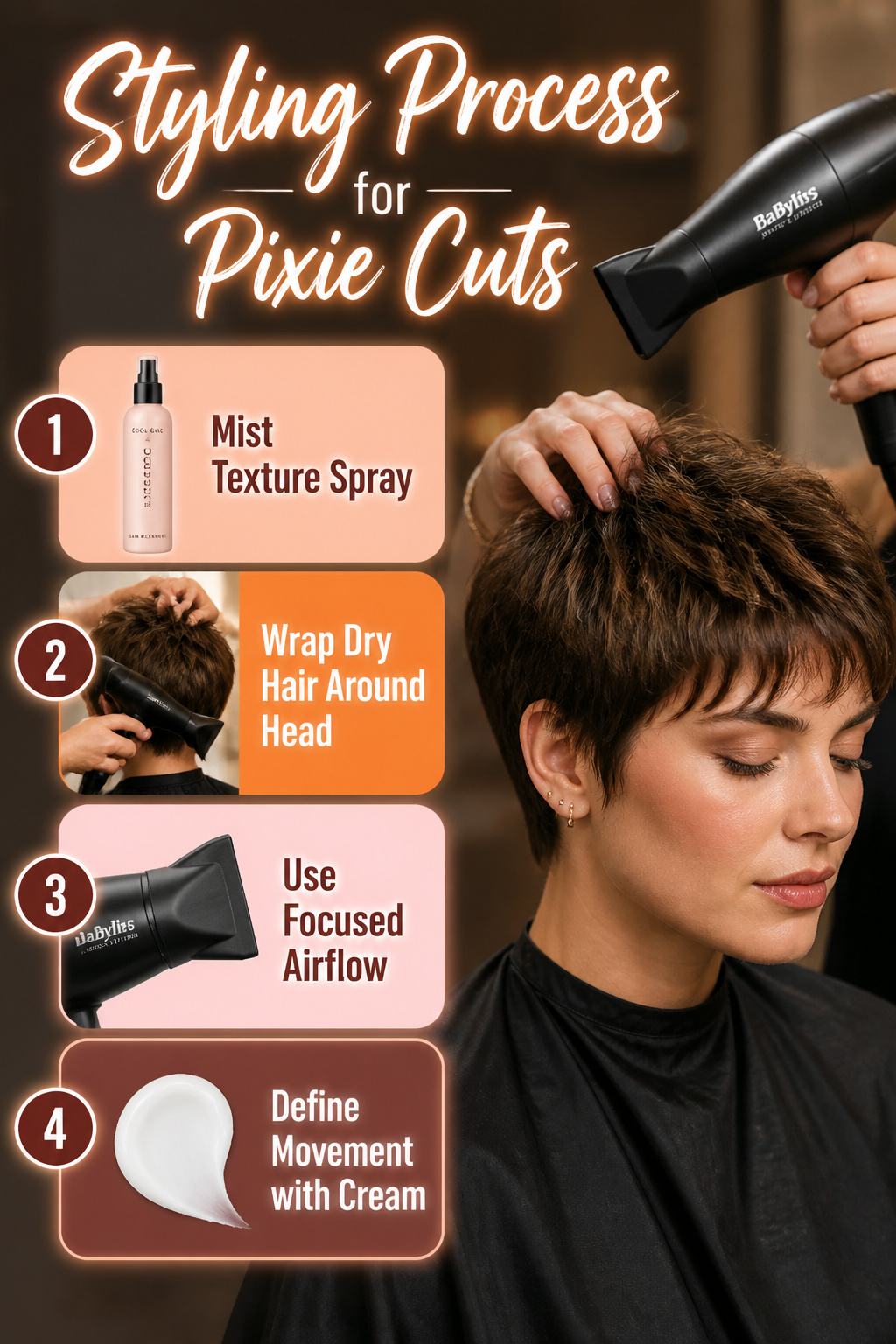
Texture spray changes how a pixie haircut with bangs behaves under a dryer. Sam McKnight’s Cool Girl came up repeatedly in what I read, and the appeal is the matte finish it leaves behind rather than anything slick or shellacked. I would mist it through damp hair before picking up the tool.
The drying method matters more than the product. A wrap technique, pushing hair around the head shape in both directions, builds bend at the ends naturally instead of forcing each section into place with a brush. The BaByliss Nano Titanium was the tool mentioned for this, though any dryer with focused airflow works if you keep the motion consistent. You are guiding the hair to follow the curve of the skull, not pulling it straight or curling it under.
This approach applies across most of the styles listed. A shaggy pixie with broken layers and messy bangs that blend into the top relies on that same uneven movement. The cut handles extra growth better when the daily styling routine works with natural bend rather than against it. For wavy or curly hair, a curling cream defines that movement without heat; straight or fine hair needs the texture spray and the wrap dry to avoid lying flat. A stubborn fringe with a cowlick still gets roughly dried, but the focus shifts to pulling the cowlick downward before the rest of the head shaping begins.
Frequently Asked Questions
How often do you have to trim a pixie cut?
A pixie haircut with bangs needs reshaping every 4 to 8 weeks. Blunt bangs and precise edges start looking fuzzy around week four, while shaggy or textured styles can stretch toward the longer end. Bangs grow out fastest and usually need attention before the rest of the cut does.
What face shape looks best with a pixie cut?
Most face shapes can work with a pixie cut once it is customized. Round faces need height and asymmetry, heart-shaped faces benefit from width at the bottom, and oval faces have the most freedom though forehead length still matters. The bangs are where most of the tweaking happens because they sit right at the feature you are trying to balance.
How to style a pixie cut with bangs?
Mist texture spray through damp hair, then dry by pushing the hair around the shape of the head in both directions. This wrap technique builds bend at the ends naturally instead of forcing each section into place. For wavy or curly hair, a curling cream defines movement without heat; straight or fine hair needs the texture spray and the wrap dry to avoid lying flat.