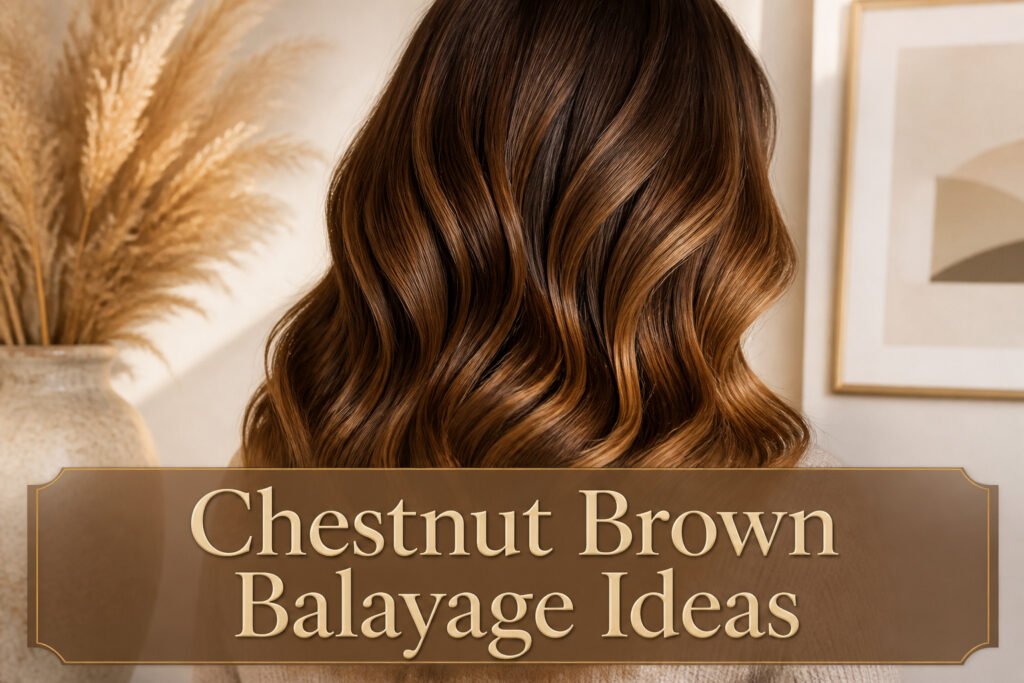
Chestnut brown hair color balayage spans from deep chocolate to honeyed gold, and the deciding factor is usually how much warmth your skin can carry before the tone turns brassy. The maintenance range is equally wide: a classic chestnut with subtle highlights stretches six months between appointments, while cherry or copper variants demand refreshes every few weeks to keep their punch. What separates the workable ideas from the regrettable ones is not the shade itself but whether the balayage placement, diffused and hand-painted rather than striped, matches your natural growth pattern enough to forgive the grow-out.
1. Classic Chestnut Brown

A rich medium-brown hue with soft red and gold undertones sits at the center of every chestnut brown hair color balayage look worth considering. The brown stays dominant while those warmer notes wash through subtly, keeping the whole effect from tipping into copper or auburn territory. That restraint matters because it gives the shade its range: stylists can cool it down for someone with a cooler complexion without rebuilding the formula from scratch.
What convinced me, reading through the options, is how this particular base earns its reputation as the workhorse of low-maintenance color. When your balayage highlights stay only one or two levels lighter than the natural base, the grow-out line stays soft enough to stretch appointments out significantly. The contrast is minimal enough that you are not chasing roots every six weeks. Hand-painted pieces melt into that medium-brown foundation rather than sitting on top of it, which reads as dimension rather than stripe.
The warmth does practical work too. Skin glows against it in a way that reads healthy rather than styled, the kind of result that gets mistaken for good lighting. For anyone building from here, the classic version is the reference point: caramel pulls it lighter, auburn pushes the red, ash cools the whole thing down. Start here and you know what you are deviating from.
2. Caramel Chestnut Brown

Caramel chestnut brown pushes the warmth up a full notch from standard chestnut by weaving in prominent gold and bronze tones, with just a slight hint of red that surfaces when the light hits it directly. The caramel acts like a filter: it takes the deeper, more reserved base of chestnut and melts a buttery, golden-brown contrast through it, usually in thicker, more noticeable swirls than subtle highlights would allow.
The balayage application lightens gradually toward the tips, which gives the color movement and bounce even on days you skip styling. What convinced me, reading through the options, is how reliably this particular shift flatters. The added warmth brightens the face across a wide range of hairstyles, from sleek straight cuts to loose waves, because the gold tones reflect light upward rather than letting the deeper chestnut sit flat against the skin. If your natural coloring runs cool or muted, this is the point where you might want to pull back; the caramel can read brassy against pink undertones. On warmer or olive complexions, though, the bronze undertone does the work of a subtle contour, lifting the cheekbones without any makeup required.
3. Light Chestnut Brown

A light chestnut brown keeps enough warmth and richness to read as brown while sitting closer to blonde on the spectrum than a classic medium chestnut. That positioning makes it the least jarring route for blondes who want depth without the flat shock of a single-process dark color. The balayage application matters more here than with deeper shades: the colorist leaves the lighter pieces scattered and irregular so the overall effect shifts gradually rather than landing as one solid block.
The technique that gets you there is essentially reverse balayage. Instead of painting on lighter highlights, the colorist applies deeper chestnut lowlights through the mid-lengths and roots, letting small sections of your existing blonde stay untouched. What remains reads as intentional dimension rather than grow-out, and the lighter chestnut pieces look fresher against the new depth than they did when everything was brassy or over-lightened. For a DIY option, L’Oréal Paris Féria in Sparkling Amber sits at this lighter end of the chestnut range.
4. Chestnut Brown Ombré

Chestnut brown ombré keeps your base color completely intact at the roots while the mid-lengths and ends shift into a warmer, richer chestnut brown. The color change is deliberate and horizontal, not the scattered, hand-painted placement that defines balayage. That structural difference matters for upkeep. Because the line between your natural shade and the deeper ends is more defined, regrowth shows as a band rather than a soft fade, which means you will likely want a salon refresh every three to four months if you prefer the transition crisp. For anyone who wants the chestnut tone without committing their whole head or sitting through frequent highlight sessions, this is the lower-maintenance path. The ends can be refreshed with a gloss at the bowl if they dull, while the roots stay untouched entirely.
5. Chestnut Brown with Auburn Highlights

A dark chestnut base with auburn highlights plays directly into the warmth already living in brown hair. The red family sits naturally against chestnut because both share that underlying orange-gold thread; the highlight doesn’t read as a stripe so much as a flare that catches light when you move.
Placement matters more here than with cooler tones. Auburn concentrated around the face and through the ends, as balayage does, keeps the brightness from floating on top like a separate layer. The chestnut base stays dominant, but the red flashes give it depth and that particular shimmer that reads expensive in autumn light.
What convinced me, reading through the examples that work, is how skin undertone steers the result. Warm undertones pull the coppery side forward and make the whole thing look intentional, almost like the color came from a week somewhere sunny rather than from a salon. Cooler complexions can still wear it, though the balance shifts: less fire, more of that subdued red-brown that chestnut already hints at.
The risk is tipping into full copper, which is a different look entirely. Keeping the auburn in the highlight range, not the base, preserves the chestnut identity. Green or brown eyes pick up something extra from this pairing; the reflection in the iris and the hair start talking to each other.
6. Chestnut Brown Balayage

Hand-painted highlights that start further down the strand give three to six months between major touch-ups, which is the main reason busy schedules and balayage get along so well. The colorist sweeps lightener through mid-lengths and ends in a freehand motion, leaving your natural chestnut brown at the root to do the blending work as it grows. That placement mimics how sun exposure actually lightens hair, darker at the scalp and brighter where the strands have seen the most light.
With balayage, the highlights start a bit further down the strand, rather than directly at the root. This placement means regrowth will be less noticeable, and you can typically extend the time between touch-ups without your hair appearing obviously grown out.
What that means for anyone booking this: the maintenance calendar looks more like a seasonal appointment than the six-week cycle traditional foils demand. The soft, diffused grow-out line is the technique’s signature, not a problem to fix.
7. Chestnut Brown with Copper Highlights

Copper reads warmer and louder than auburn on a chestnut brown base. Where auburn sinks into the brown like a deeper shadow, copper sits on top with a metallic flash that catches light even in dim rooms. The difference is undertone: auburn carries a wine-red depth, almost brown itself, while copper carries orange-yellow heat straight to the surface. On chestnut, which already holds its own red warmth, copper highlights become the first thing someone notices.
I spent longer than I’d like sorting this out after seeing both names used for the same salon photos online. The distinction matters because copper fades faster and shows the fade sooner. That metallic reflection needs sulfate-free color-safe shampoo to hold its punch past the first few washes. Auburn is more forgiving; it darkens back toward the base rather than turning brassy. If your morning routine already includes checking ingredient lists on bottles, the copper route asks a little more of that habit.
8. Bronzed Chestnut Brown

Dark gold, champagne, and rich bronze tones give bronzed chestnut brown its warmth without tipping into red territory. The difference between this and a simpler two-tone balayage is the layering: three distinct shades within the chestnut spectrum rather than a single base with one lighter sweep painted on top. A deep base tone anchors the color, a mid-tone carries the balayage, and a final lighter piece at the tip or face frame catches the light.
That third dimension matters. Under low light, hair with only two tones can read flat, almost like a solid dye job growing out. The bronzed version keeps moving because the champagne and bronze interact differently with shadow and with direct sun. The money piece or lighter tip is what saves it from looking like a single warm wash.
At-home colorists can approximate the look with multi-faceted permanent color that builds in those shimmer tones rather than relying on a single flat pigment. The complexity is the point: it reads as custom-blended because it genuinely required more than one mixing step, more than one developer moment, more than one brush technique.
9. Chestnut Brown Lowlights

Lowlights flip the usual balayage logic on its head. Instead of painting lighter streaks over a darker base, darker streaks are woven through a lighter one, adding depth back in rather than lifting it out. The technique works especially well when hair has been over-lightened or has turned brassy, leaving it looking flat and washed out.
Chestnut lowlights can often be done without bleach, which matters if the base is already stressed from previous lightening. The colorist paints deep, rich chestnut through the mid-lengths and roots, leaving small sections of the existing lighter color untouched. Those remaining lighter pieces read as fresh and intentional against the new depth, not like grown-out damage.
The result sits somewhere between a color correction and a style choice. It lets someone step back from an all-over blonde or a brassy ombré without surrendering to a single-process brown. The dimensional finish keeps the movement balayage is known for, just running in reverse.
10. Chestnut Brown Sombré

Sombré keeps the same root-to-end direction as ombré, but the shift between your deeper base and the lighter pieces happens over a shorter distance. With chestnut brown, that means the warm mid-tone you start with at the scalp barely changes until somewhere around your ears or jaw, then eases into a shade or two of lift toward the ends. The result reads as one color that happens to catch light differently, not two colors meeting in the middle.
The grow-out behaves differently too. Because the transition zone sits lower and diffuses more gradually, you do not get that stark horizontal line when your natural color emerges. A traditional ombré can look like a deliberate color block growing downward; sombré just looks like your hair got a little sun over the summer and the brightness is slowly retreating upward. For anyone stretching salon visits toward the twelve-week mark, that softness buys you visible time before the contrast turns sloppy.
11. Chestnut Brown Money Piece

The money piece technique keeps the drama right where people actually look: the two front sections framing your face, lightened brighter than everything else. For chestnut brown hair color balayage, that usually means painting a warm chestnut or light copper-chestnut shade along the hairline while the rest stays deeper. The contrast is deliberate, not accidental, and it does the work of brightening your eyes and cheekbones without touching the back of your head.
What started as part of full balayage looks broke off into its own trend for a reason. You get the visible payoff of face-framing color with none of the maintenance of an all-over change, which matters if you are not ready to abandon your natural base entirely. The upkeep is limited to those two front panels, so root growth stays hidden in the back and your salon visits can stretch.
A brighter money piece layered over deeper chestnut balayage also reads as more dimensional than single-process color. The eye catches three tones: your natural or deep base, the mid-tone balayage through the lengths, and that lightest piece up front. Under low light the hair still moves instead of falling flat, which is the difference between color that looks expensive and color that just looks dyed.
12. Golden Chestnut Brown

Golden chestnut brown sits on the lighter end of the brunette spectrum, a warmer take on classic bronde that trades cool neutrality for amber and honey tones. The base stays a medium warm brown, while balayage lifts to honeyed, golden blonde woven throughout. This leans more golden than red, which matters if your skin already carries pink undertones you’d rather not amplify.
Where this lands on the warm-neutral spectrum depends on how heavily your colorist lays in those caramel pieces. More amber concentration pushes it toward true warmth; keeping the golden tones sparse and scattered leaves you closer to neutral territory. On warm or olive complexions, the metallic reflections catch light in a way that reads expensive and healthy. If your tone runs cool, the same golden hue can sit flat against your skin unless your stylist cools the base slightly to create contrast.
The summery effect works best when the balayage stays seamless, not stripy. Ask for the golden pieces to start higher around your face and taper through the mids, leaving depth at the crown so the grow-out doesn’t fight you.
13. Chocolate Chestnut

Chocolate chestnut sits at the deepest end of the chestnut brown hair color balayage spectrum without slipping into true black territory. The base reads as brown first, warm second, a distinction that matters when you’re trying to add dimension rather than disappear into a single dark mass. What convinced me, reading through a dozen of these looks, is how the marriage of cool brown with warm red keeps it flattering across skin tones that normally fight each other.
The balayage application here relies on chocolate lowlights anchoring the color while brighter chestnut pieces melt upward from the ends. Seamless integration matters more than contrast; the transition should be smooth enough that you cannot find the line where one tone ends and the next begins. This is the option for naturally dark brown hair that wants elevation without the maintenance of lighter, more frequent touch-ups. The result reads as thicker, glossier, and deliberately expensive rather than grown-out.
14. Chestnut Brown with Chunky Blonde Highlights

Chunky blonde highlights on a chestnut brown base bring in brightness without drifting into full blonde territory. The trick is matching the undertones: warm gold against warm chestnut, cool beige against ashier bases. Mismatched undertones read as stripes instead of dimension.
The 90s revival is unmistakable here. Back then, foils delivered thick, uniform panels with obvious regrowth lines. Balayage adapts the same bold section sizes but softens where each chunk meets the root, so the grow-out stays blended rather than striped. Larger sections work because the hand-painted diffusion at the top keeps them from looking like a retread of 1997.
For a cohesive result, the highlight tone should echo whatever warmth or coolness already lives in your natural chestnut. A colorist can test this by comparing swatches in daylight before mixing anything. The chunky placement itself is the statement; the color match is what keeps it wearable past the first week.
15. Cherry Chestnut Brown

Cherry chestnut brown sits at the higher end of intensity among red-leaning brunettes, and the distinction matters when you are deciding how much maintenance you can live with. The cherry tones read cooler and more vivid than auburn, which tends softer and more brown-based, and they lack the orange warmth that defines copper. A balayage placement keeps the deep chestnut anchored at the root while the cherry lives in the mid-lengths and ends, so the brightness feels intentional rather than grown-out.
The tradeoff is real: red tones fade faster than natural browns, so the initial punch will quiet down between salon visits. If you want that fire to last, you are signing up for more frequent refresh appointments than a caramel or classic chestnut would demand. The payoff is a look that reads dramatic without crossing into full redhead territory, approachable enough for someone testing whether crimson works with their coloring.
16. Chestnut Color Melt

A true color melt lives or dies at the root line, and with chestnut brown hair color balayage the stakes are even higher because the tones sit so close together on the spectrum. Standard balayage leaves a little deliberate contrast, a hand-painted ribbon that catches light against the base. The melt technique erases that border entirely: dark chestnut roots are saturated down through the mid-lengths, then the formula is progressively lightened with each pass until the ends read as a sun-warmed golden chestnut with no line where one shade hands off to the next.
The method matters because maintenance drops to almost nothing. Grow-out stays invisible for months, which is why this style keeps surfacing in collections of low-maintenance options. What convinced me, reading through the descriptions, is how the gloss treatment functions as the real finish. Color opens the cuticle; the heavy gloss seals it back down and amplifies the light reflection that makes the gradient look like natural depth rather than applied color. Skip that step and the melt reads flat.
Two ways to play the tone shift. One keeps the entire family warm: dark chestnut into golden chestnut, both pulling from the same red-brown base. The other introduces a cooler counterweight, laying mahogany near the roots to deepen the shadow, then flowing into warmer chestnut ends. The cool start prevents the lighter pieces from drifting brassy over time. Your colorist chooses based on whether your natural base already carries red, or whether red needs to be built in from nothing.
17. Honeyed Chestnut

Babylights this fine are the reason honeyed chestnut reads as natural light rather than obvious highlights. The strands are woven in sections about one to two millimeters wide, roughly the thickness of a sewing thread, placed close to the root and spaced precisely so they catch light without creating stripes. Honey and champagne tones lift a lighter chestnut base just enough to brighten the overall color without tipping into brassiness.
The maintenance profile is gentler than it looks. Because the babylights are so delicate and the shift from base color is subtle, regrowth blends rather than creating a harsh line. That precision placement, though, means salon work. Hand-painting or extensive foiling at this scale is not a home-project skill, and the dimensional payoff depends on getting the spacing right. For anyone testing whether chestnut brown hair color balayage works on them, this is the lowest-commitment entry point. The change is visible in movement and light, not in a drastic color shift, and the grow-out grace period stretches longer than chunkier techniques allow.
18. Ash Brown with Chestnut Balayage

Dark ash brown paired with deep chestnut balayage sits right where cool and warm color families shake hands. The ash base keeps things muted and smoky, while the chestnut highlights bring in that nutty warmth that keeps the whole look from turning flat or greyish against your skin.
What sold me on this combination, reading through dozens of these ideas, is how the contrast reads almost metallic in certain light. The sources keep coming back to that dimensional effect. But the balance matters: keep the chestnut within two to three shades of your base or the two tones start competing instead of cooperating.
This one works especially well if your skin tone runs cooler but you still want some warmth in your hair. The ash brown anchors you in the cool family, while the chestnut balayage stops the overall effect from feeling too ashy or editorial. It is a middle ground that reads sophisticated rather than trendy, and the hand-painted application means the grow-out stays forgiving.
19. Chunky Chestnut Brown Highlights
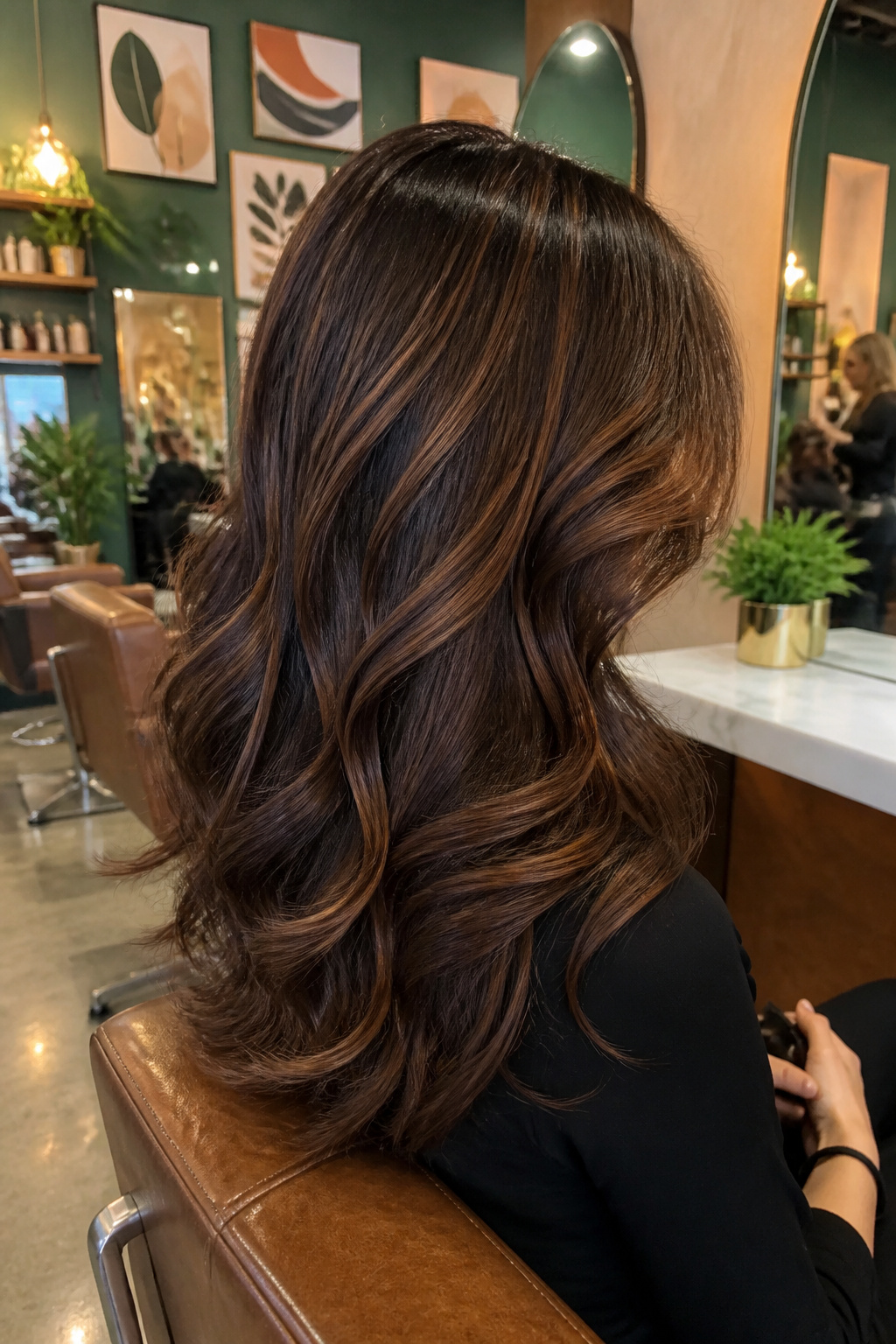
Bright chestnut highlights on a dark base create noticeable contrast without leaving the color family, which keeps the result wearable for anyone nervous about drifting toward blonde territory. The balayage technique softens each chunk at the root, so the sections read as deliberate rather than striped. Thicker pieces add visual separation and depth, and the warmth stays concentrated in the chestnut range rather than jumping to caramel or honey. That same-family contrast is what distinguishes this from chunkier blonde approaches; the drama comes from light against dark, not from cool against warm. For fine hair, this exact style risks looking stringy, since wide highlights on sparse strands can separate rather than build density. The move there is finer placement higher toward the root, but that is a different section entirely. Here, the goal is boldness kept rich: mahogany depths against lighter copper-bright panels, all within the chestnut spectrum. The late-90s inspiration shows in the size of each piece, yet the blending saves it from looking dated.
20. Rich Chestnut Red

Red tones in chestnut brown walk a narrow line before they tip into something else entirely. This shade keeps brown and red in equal measure, which is what separates it from auburn. Push the red any further and the color stops reading as brunette at all.
The warmth here flatters skin with yellow or olive undertones, though anyone wary of orange brassiness should know what they’re signing up for. A dark reddish-brown base, something along the lines of a soft mahogany, anchors the look near the roots while the balayage placement keeps the brighter pieces where the light would naturally hit. That gradient prevents the red from overwhelming the brown.
At-home color kits marketed as dark soft mahogany brown land in this territory, though getting the balance right on your own head takes patience. The red reflects light aggressively, so the finished result reads louder in person than on the swatch. If your goal is a hint of red without the full auburn commitment, this is the stopping point. Cross past it and you’re in a different color family entirely.
Caring for Chestnut Brown Balayage

Color-treated hair needs a gentler routine, and the switch to sulfate-free formulas made the biggest difference in how long my chestnut brown balayage stays rich. The L’Oreal Paris EverPure Sulfate-Free Bond Repair Shampoo and Conditioner with Citric Acid reinforce weak hair bonds from the inside out, which matters more after any lightening work, even the subtle kind balayage involves. For extra repair, the Bond Strengthening Pre-Shampoo Treatment works as a weekly pre-wash step.
Heat styling without protection will fade the dimension that makes balayage worth the salon time. A lightweight heat protectant, something that shields up to 450 degrees Fahrenheit without weighing hair down, belongs on damp strands before the blow dryer and again before any iron touches it.
Toning products between washes keep the gloss intact and push brassiness back. The real advantage of balayage is the grow-out: because color is hand-painted away from the root, three to six months passes before a major touch-up becomes necessary. That soft, diffused regrowth line is what makes the maintenance sustainable for anyone who would rather not live at the salon.
How Balayage Works

Balayage is a hand-painted highlighting technique that builds color where the sun would naturally hit, sweeping lighter shades through the mid-lengths and ends while leaving the root area closer to your natural tone. That placement is what makes regrowth so forgiving; the contrast starts a few inches down the strand, so the line between colored hair and new growth stays soft for months rather than weeks.
The method works across textures, from straight to coily, because the painter controls exactly where each stroke lands. On chestnut brown bases, the result mimics the kind of gradual lightening that happens after a summer outside, warm and dimensional without looking placed or streaky. For anyone doing this at home, the L’Oreal Paris Superior Preference Balayage At-Home Highlighting Kit in Medium to Dark Brown includes the tools for that same seamless transition without a salon appointment.
Finding Your Chestnut Shade

Chestnut brown lands differently depending on what sits underneath it. The same medium brown can read warm and spicy or cool and quiet, and getting that balance right matters more than the base color itself.
A classic chestnut with its natural warmth works across fair and deep complexions without flattening out, which is why L’Oreal Paris Superior Preference Fade-Defying Shine Permanent Hair Color in Medium Chestnut Brown stays a reliable starting point. It builds in that brightness and dimension without extra steps.
For cooler skin tones, the shift is in the undertone, not the depth. A muted brown with smoky or beige notes keeps chestnut from pulling red or orange as it fades. L’Oreal Paris Feria Multi-Faceted Shimmering Permanent Hair Color in Sparkling Amber leans into that cooler register, and paired with balayage, the result reads neutral rather than brassy. Cool-toned ash chestnut with sandy or beige highlights sits more fashion-editorial than beachy, and it ages better if your skin has blue or pink undertones.
The mistake is treating chestnut as one flat choice. Warmth flatters most, but the wrong warmth turns muddy. Test the undertone against your jaw in daylight before committing to the full head.
Frequently Asked Questions
How long does chestnut brown balayage last?
Chestnut brown balayage lasts three to six months between major touch-ups. The hand-painted placement starts further down the strand rather than at the root, so regrowth stays soft and diffused instead of creating a harsh line. That grow-out pattern stretches the maintenance calendar closer to a seasonal visit than the six-week cycle traditional foils require.
What is chestnut brown balayage?
Chestnut brown balayage is a hand-painted highlighting technique applied to a rich medium-brown base with soft red and gold undertones. The colorist sweeps lightener through mid-lengths and ends in freehand strokes, leaving natural chestnut at the root to blend with growth. The result mimics how sun exposure actually lightens hair: darker at the scalp, brighter where strands have seen the most light.
How do you care for chestnut brown balayage?
Use sulfate-free, color-safe shampoo to keep warm tones from shifting brassy, especially if your balayage includes copper or golden pieces. Heat protectants matter too, since balayage-processed ends are more vulnerable to styling damage than untouched roots. A gloss treatment at the bowl seals the cuticle and amplifies the light reflection that makes the color read dimensional rather than flat.