
An all white beach outfit is a single-color look built from white dresses, separates, and accessories that reads intentional rather than accidental against sand and water. The difficulty is that white fabrics behave differently in coastal light and heat than they do anywhere else; unlined cotton turns sheer against strong sun, and two whites bought at different times can mismatch under open sky. A double-layered skirt or a lined bodice prevents the see-through issue that single-layer fabric almost guarantees. Linen softens into intentional wrinkles at the shore, while cotton holds a crisper line if you prefer the dress to keep its shape through the evening.
Maxi Dresses for Beach Parties

Floor-length white maxi dresses carry themselves differently once you step from pavement to sand. The full skirt catches ocean breeze in a way shorter hemlines cannot, and that movement is half the reason the style reads as effortless rather than overdressed for a beach party. The catch is the same wind and bright sun that make the dress beautiful can leave you exposed if the fabric is too sheer.
A lined bodice and skirt, or at minimum a double-layered skirt, prevents the see-through issue that single-layer white fabric almost guarantees against strong coastal light. Cotton and linen are the breathable fabrics sources recommend for this exact setting: both let air pass through the weave, linen especially, so the full coverage of a maxi does not turn into overheating once the dancing starts. Linen softens and wrinkles with wear in a way that looks intentional at the shore; cotton holds a slightly crisper line if you prefer the dress to keep its shape through the evening.
Midi Dresses for Casual Beach Events
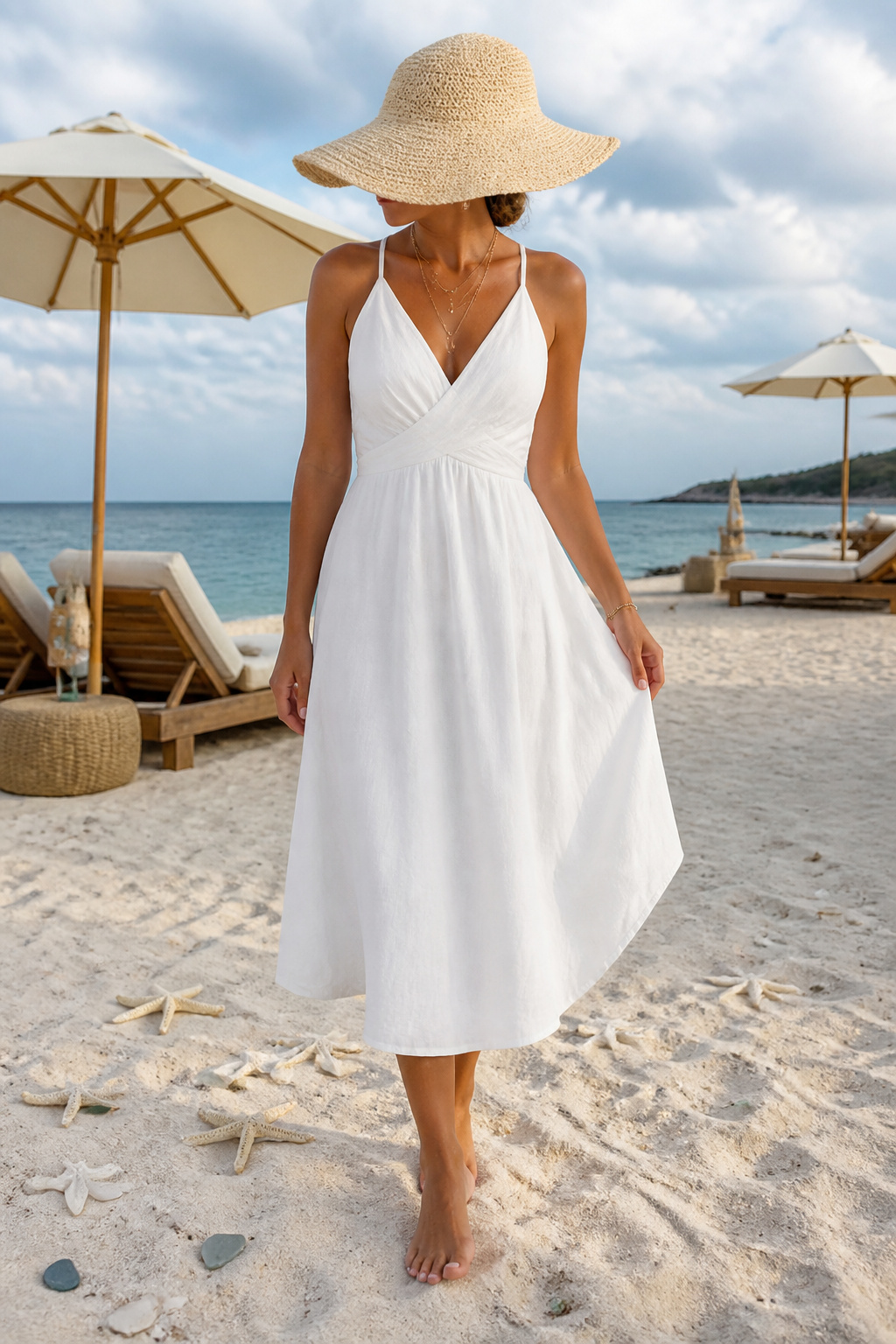
A midi dress that hits mid-calf carries the formality you want for a casual beach wedding without the sweeping hem that collects sand like a broom. The length leaves your ankles free, which matters more than most people think until they feel that first wave of grit working its way up the fabric with every step.
The real advantage is how little you have to plan around it. The same cut works with flat leather sandals for a morning brunch and with a low block heel when the invitation says "garden casual" and you know that means packed sand near the waterline. Keep the hem two to three inches clear of the ankle and you avoid the drag that turns white linen gray by sunset.
I have watched more than one guest spend an afternoon gathering fistfuls of skirt to cross from towel to shoreline. A midi frees both hands for a drink, a pair of sunglasses, or bracing against an unexpected gust off the water. The shape reads dressed-up enough that you will not look underdone next to someone in a full maxi, but practical enough that you can actually sit on a low beach chair without engineering a fabric arrangement first.
Mini Dresses for Warm Days and Nights

A short white mini dress handles both the midday heat and the switch to a beachside dinner without a change of clothes. The cut leaves enough leg bare that a breeze actually reaches skin, which matters more than people admit when the sand is still holding afternoon sun at eight o’clock.
The playful part is real. Hemlines that hit mid-thigh move differently near water; the skirt catches wind, the shape reads as dressed-up even when the fabric is simple cotton. For nights, the same dress with a slightly lower back or a halter tie feels like an outfit you planned, not a beach cover-up you settled for.
Nude or skin-tone underwear disappears under white; white underwear does not. Light passes through white fabric and reflects the layer beneath, so the outline reads clearly. A lined skirt solves this outright, and a lined bodice keeps the silhouette clean if the dress cuts close. Unlined white jersey in bright sun is a choice that requires either very specific underpinnings or a tolerance for visibility.
Cooling and coverage can coexist. Sleeves to the elbow in a loose weave still vent heat; a lined mini in eyelet cotton breathes better than an unlined synthetic that clings. The mistake is assuming all white fabrics behave the same once the temperature rises.
Shirt Dresses to Dress Up or Down

A button-front white shirt dress gives you the structure most beach cover-ups lack. The collar and placket read polished even when the hem is grazing your knees over a swimsuit, and the same dress can look entirely different depending on how you handle the waist.
Wearing it loose works for moving between sand and a lunch table; the straight cut catches a breeze and won’t cling in humidity. For dinner, a thin self-tie belt or a leather wrap cinched at the natural waist turns the same piece into something that feels intentional rather than thrown-on.
Linen blended with a small percentage of cotton or viscose holds the crisp lines of a collar and cuffs without the pure-linen tendency to crumple within an hour. A mid-weight fabric, around the heft of a good men’s dress shirt, keeps the shape from collapsing while still breathing. I avoid anything labeled "easy care" or with a synthetic sheen; those finishes trap heat and the white starts to look plastic under strong sun. A quick test: if the fabric makes a loud swish when you move, it will feel like wearing a shower liner by noon.
Slip Dresses in Soft Materials

A white silk or rayon slip dress carries almost no weight against the body, which matters more than people admit once humidity hits. The minimal construction, two seams and a bias cut, lets air move through instead of trapping it against the skin. Rayon blends hold the drape at a lower price point and survive a suitcase better than silk, though silk recovers faster from wrinkles if you hang it in a steamy bathroom.
The simplicity becomes a problem after sunset, when beach towns cool faster than inland spots. A cropped cotton cardigan or a lightweight linen blazer works here; both layer without swallowing the line of the dress. Denim jackets fight too hard against the softness and read casual in the wrong direction. If the evening involves actual sand walking, the cardigan wins because it ties at the waist when you warm up again.
Wrap Dresses for Adjustable Fit

A white wrap dress earns its place in a beach bag for one reason: the tie lets you decide how tight it sits hour by hour. Morning over a damp swimsuit, the closure sits loose and forgiving. After a long lunch, two inches of extra fabric smooth everything back into place without changing the dress itself.
The mechanics matter on sand. A true wrap threads through a side slit and knots at the waist, not a faux-wrap sewn shut. That second tie, the one hidden at the inner seam, keeps the skirt from gaping when a gust comes off the water. A double knot, flat and low on the hip, will hold through wind that flaps everything else.
Cotton gauze and lightweight linen blends work best for this style. Heavier fabrics fight the drape and bulk at the tie point. The neckline also adjusts with the waist; pulled snug, it reads modest for a resort dinner. Loosened, it opens enough to catch a breeze across sun-warmed shoulders.
The only real failure point is the tie end itself. Left dangling, it drags in wet sand or tangles in bag straps. Tucking the loop upward through the knot once, then pulling the tail down, locks it flat against the body for the rest of the afternoon.
A-Line and Sheath Dress Shapes
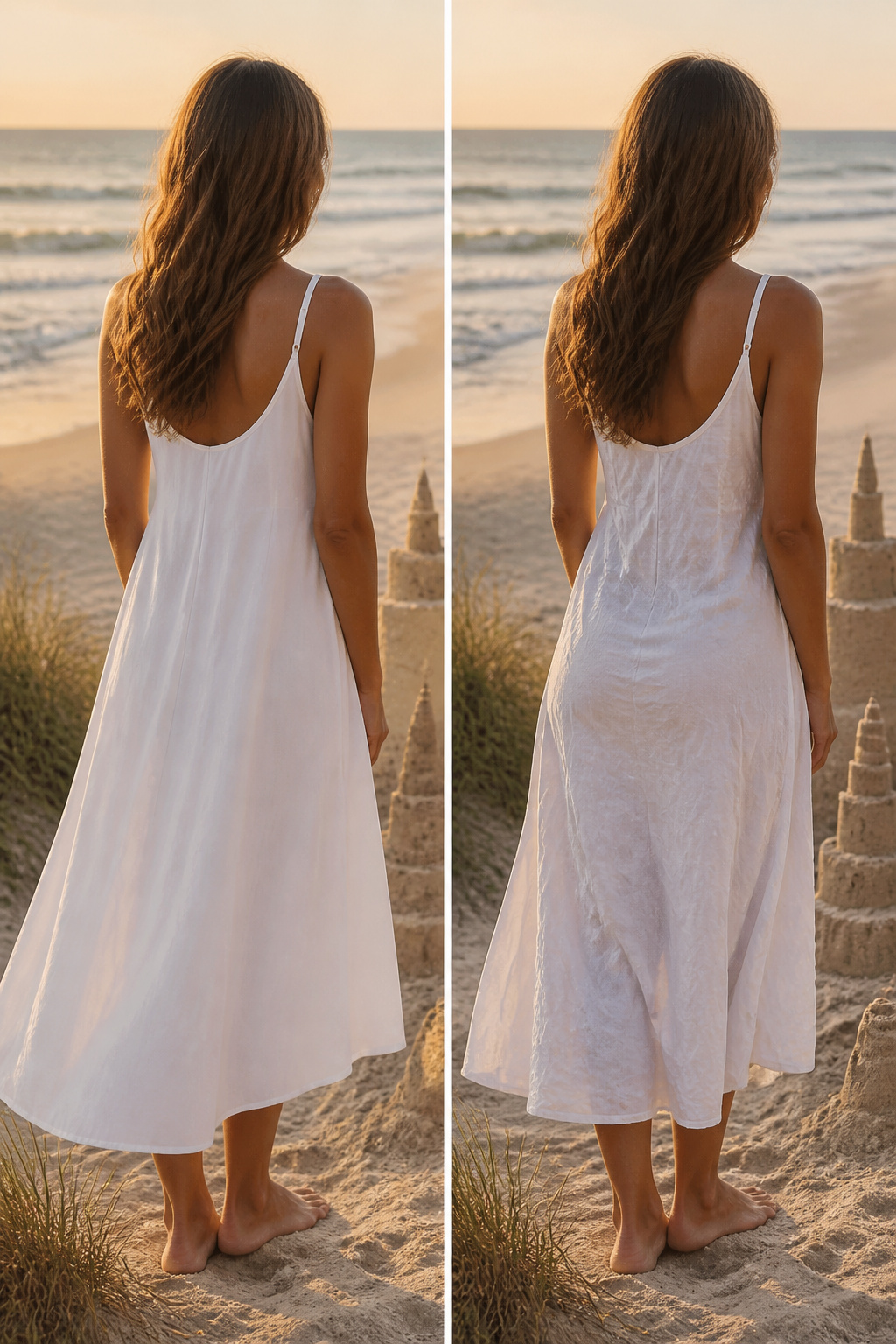
A-line dresses define the waist with a universal flare that skims over hips and thighs, while sheath dresses follow the body’s curves closer for a sharper, more contemporary line. The difference in fabric weight matters more in white than in darker colors because every shadow and outline shows through. An A-line cut in a light cotton or linen blend holds its shape without clinging, and the flare gives air room to move between fabric and skin. Sheath dresses need a slightly heavier hand, a structured cotton poplin or a lined linen, so the white stays opaque and the silhouette stays clean rather than collapsing into wrinkles.
Sitting on sand tilts the hemline question toward practicality. A-line dresses with a midi or maxi length let the fabric spread around you instead of bunching at the hips, and the flare means sand brushes off more easily from a skirt that does not grip the legs. Sheath dresses in shorter lengths work better here, since a long, narrow skirt restricts how you sit and traps sand against the fabric. A knee-length or just-above sheath in a heavier white cotton keeps the shape intentional even after an hour on a towel.
High-Low and Babydoll Styles

High-low hems carry their drama in the back, where the fabric falls longest, while the front stays raised above the ankle or knee. On sand, that raised front keeps the hem from dragging through tide pools, and the longer back still gives you the movement of a train without the constant brushing against salt and grit. A white high-low dress reads intentional rather than careless; the asymmetry does the styling work so the accessories stay minimal.
Babydoll cuts sit higher, with the waistline dropped and the skirt flaring from the chest or just below it. The extra room between fabric and skin lets air move through, which matters more than most people expect until they’ve spent an afternoon in a dress that clings. The silhouette looks almost childlike in theory, but in practice the proportions flatter most figures because the eye reads the length of the leg rather than the exact waist placement.
The back hem on a high-low should clear the sand by at least a few inches, or the whole point is lost. Babydolls work best in cotton voile or lightweight linen; anything heavier and the skirt turns into a tent instead of a breeze.
Statement Gowns for Special Beach Occasions

A white gown meant for sand rather than marble needs to earn its place through fabric weight and cut, not just color. The ones that work drop the heavy understructure that holds a ballroom skirt at full volume and reach instead for layers of silk chiffon or lightweight organza that move with wind off the water. What separates the beach-appropriate from the misplaced is usually the hemline treatment and the neckline depth; a train that drags through surf is a liability, while a slight high-low or a clean floor-length cut lets you walk above the tide line without assistance.
Embellishment is where salt air does its damage. Beading in freshwater pearls or matte shell survives better than metallic threads, which tarnish faster in humid salt spray. Lace appliqué holds up if the ground fabric is synthetic mesh rather than cotton tulle, which stiffens and yellows. The gowns that last the evening keep their drama in the silhouette, not the surface detail: a deep back or a single architectural sleeve reads as formal without offering salt crystals a place to lodge. Sequins are generally a miscalculation here; even the matte versions catch light in a way that feels casino-adjacent against natural water, and the edges corrode.
Casual White Tops and Bottoms

White-on-white separates solve the heat problem better than any single piece, because a loose linen top over cotton shorts lets air move between the layers. The real work is in the whites themselves. Two garments bought three months apart can read as "white and almost-white" the second you step into sun, and that mismatch ruins the clean line you wanted.
Fabric weight is where separates earn their keep. A slightly heavier bottom anchors a sheer or gauzy top so the outfit does not float away from your body. Last spring I spent an afternoon laying three white shorts next to one white blouse, and only one pairing looked intentional rather than accidental. The shorts with more body, a stiffer cotton, balanced the top’s lightness. The thinner shorts made the whole thing look like sleepwear.
For beach days specifically, a cropped white tee or tank with high-waisted white linen pants gives coverage without trapping heat. The gap at the waist, even a small one, breaks up the color block just enough to keep it from reading as a uniform. White denim cutoffs with a white eyelet top works the same way; the texture difference does the coordinating for you.
Eco-Friendly White Beachwear

Organic cotton and recycled fabrics are the materials worth looking for once you start reading labels, and GOTS or OEKO-TEX certification tells you the claim has been checked rather than printed. Pact builds most of its white beach pieces from certified organic cotton, while Amour Vert works with recycled fibers and deadstock fabric to cut down on new production. The difference shows up in how the cloth behaves: organic cotton softens with salt water and washes but holds its shape against wind, and the tighter weaves in recycled polyester blends resist the fine sand that works into cheaper knits and stays there. White in these fabrics does need more frequent washing than navy or black would, which is where the certification matters most. Conventional bleaching weakens fibers over a season; the certified processes keep the garment intact through the cycles it takes to stay bright.
Cotton and Linen Fabrics for Heat

Cotton and linen let air move through the weave instead of sealing it against your skin. Polyester does the opposite, holding both heat and moisture in place so you feel the temperature rise within minutes of stepping onto hot sand.
Fabric weight matters more than most shoppers notice. A lightweight cotton around 3–4 oz per square yard breathes and dries fast enough for beach wear; anything heavier starts to act like a blanket once the sun hits it. Linen runs a touch heavier in hand but still circulates air better than denser weaves because the fibers are naturally hollow.
The wrinkling is where linen wins its place in an all-white beach outfit. Cotton creases read as sloppy; linen’s characteristic crumple looks intentional, almost expected, in a seaside setting. The rumple becomes part of the look rather than a flaw to steam out. That distinction saves packing space and morning effort both, since trying to press linen smooth for a beach day is effort spent on the wrong goal.
Rayon lands in the same breathable camp as cotton and linen, with movement that works well for dresses that need to shift while you walk or sit in sand. The real mistake is reaching for anything labeled moisture-wicking that turns out to be polyester construction underneath the marketing, a swap that undoes the cooling effect you dressed for.
Beach Footwear That Works in Sand
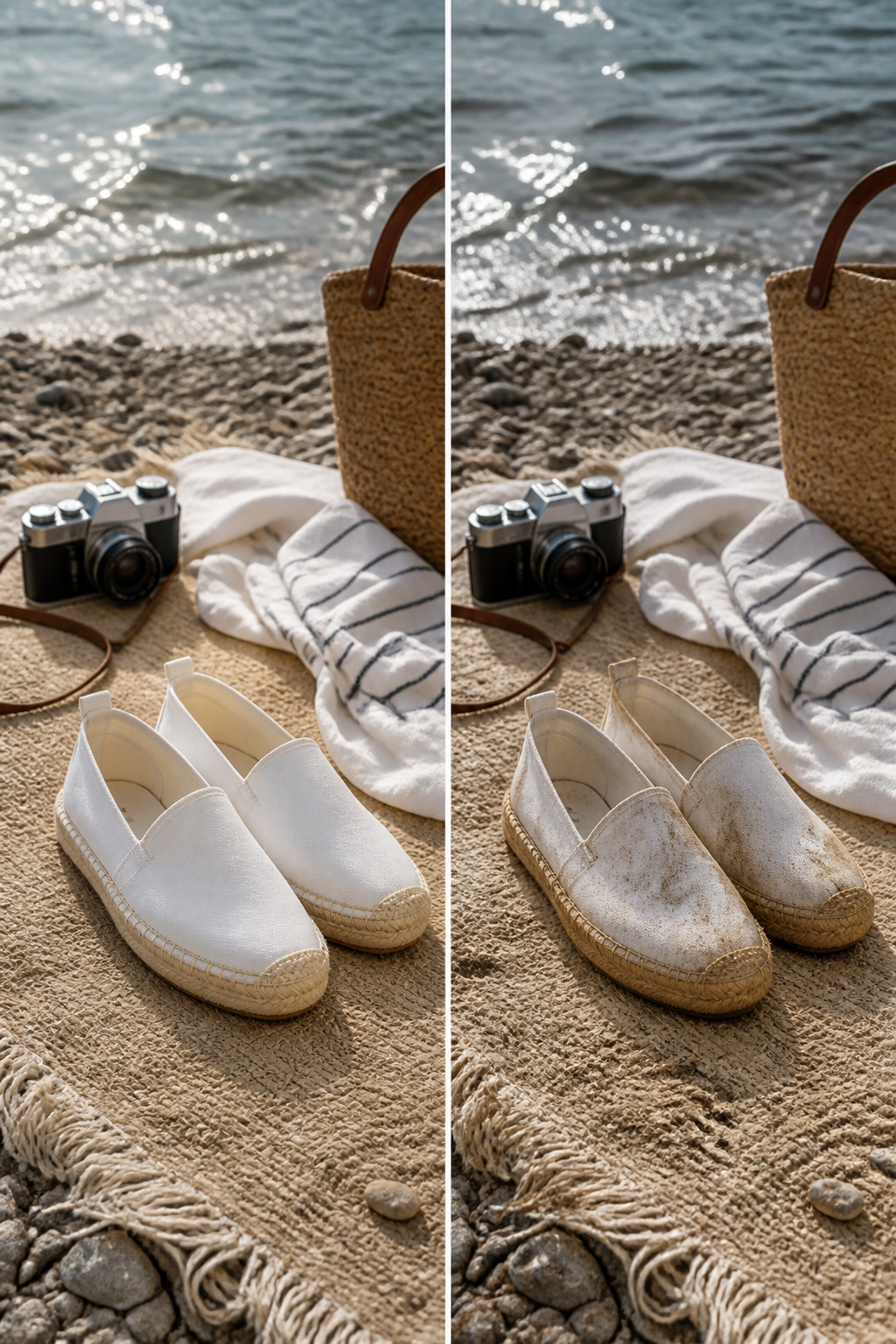
Flat sandals sink the least in soft sand, which makes them the practical default for long walks down a shoreline. Wedges distribute weight better than a stiletto, but anything over two and a half inches still tilts and catches at the toe with each step. Espadrilles with rope wrapping along the sole add height without the wobble, though the jute darkens fast with salt water and is nearly impossible to clean back to white.
White leather or coated straps rinse off easier than fabric, but they also show every scuff by noon. Thin toe posts stay put on wet feet better than wide bands that slide when skin gets slick. Back straps help until they stretch, then you are gripping with your toes to keep a shoe on that used to stay by itself.
The real cost of white beach footwear is maintenance, not purchase price. Sand grinds at seams, sunscreen yellows straps, and tide pools leave marks that do not lift. I have stopped buying white for any shoe that touches water directly; off-white or natural canvas hides the wear and still reads clean against the outfit.
Accessories for Sun and Style
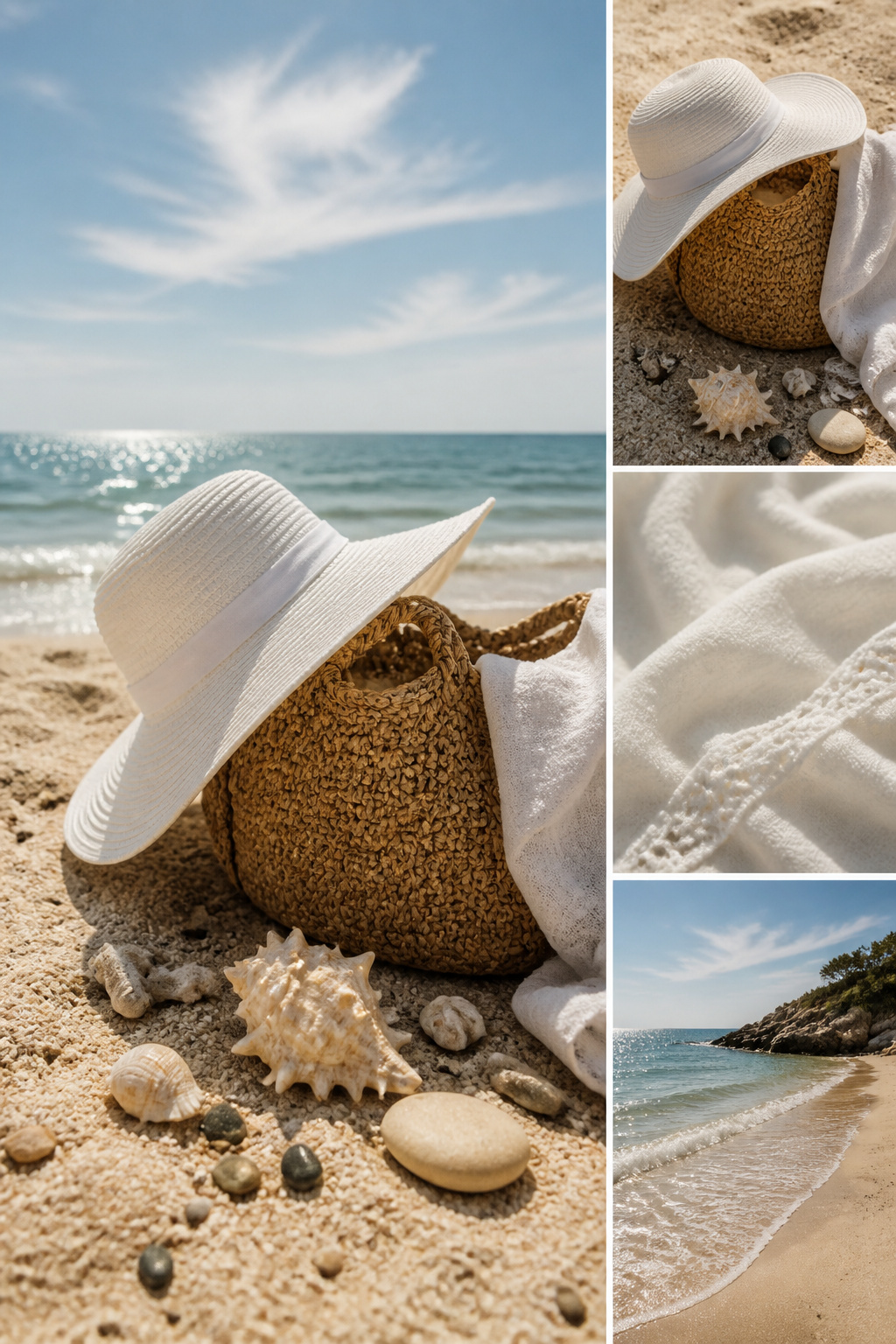
Straw hats carry sand in their weave for weeks, so a cotton or linen sun hat with a stiff enough brim to shade your collarbone wins for anyone who actually walks the shoreline. The fabric packs flat and shakes clean.
Gold jewelry turns a dull bronze under salt spray, while silver tarnishes to black within a single afternoon. If you wear metal at the beach, keep it minimal and accept that rinsing it in fresh water later is non-negotiable.
Bags are where most white outfits meet their end. Canvas soaks up damp sand and never fully lightens again; a smooth straw or coated raffia surface lets you wipe it clean with a damp cloth. Crossbody styles stay put in wind, and a magnetic closure beats a zipper that jams on grit.
Keeping White Bright
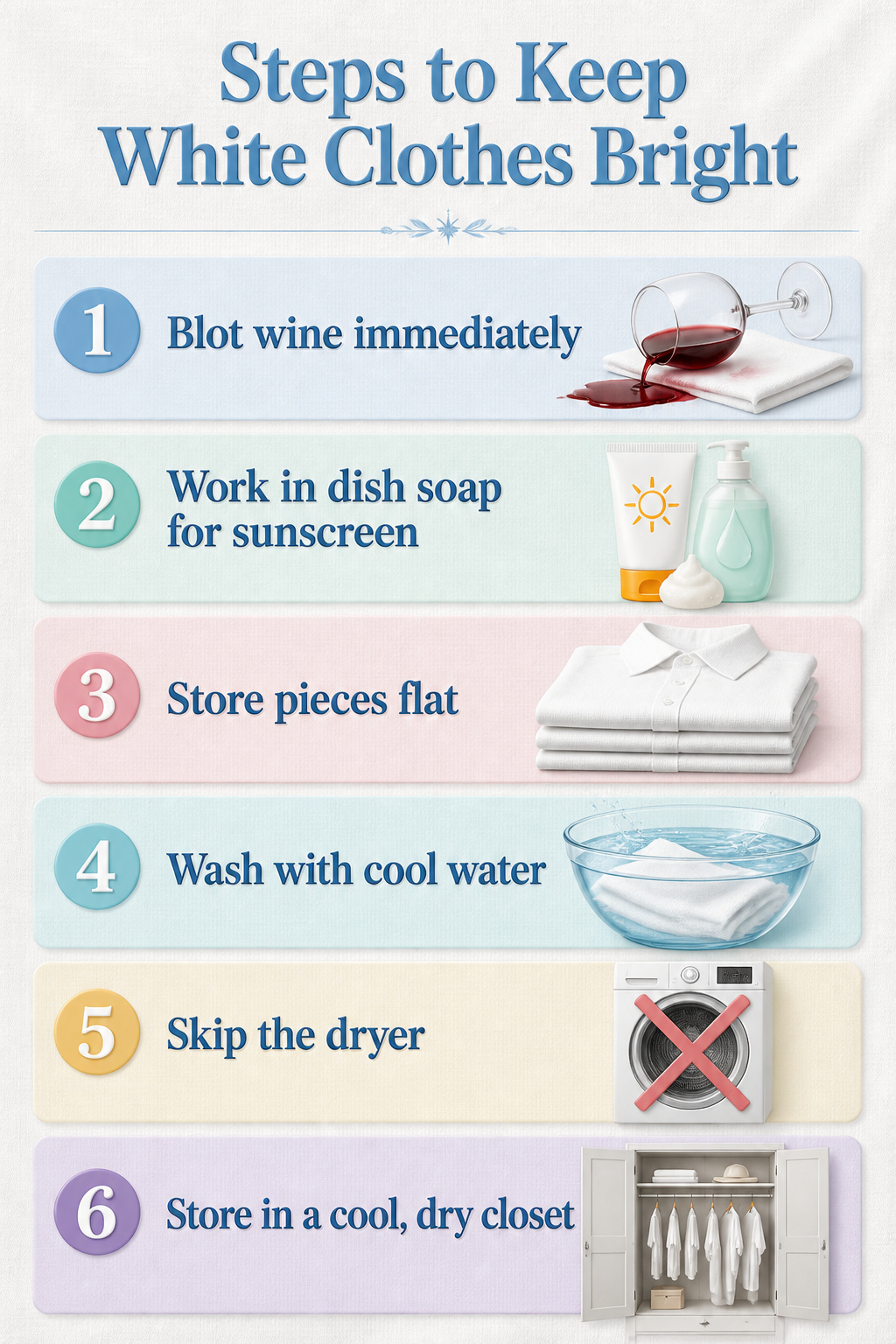
- Blot wine immediately with a dry white cloth, never rub, then flush the back of the fabric with cool water to push the stain out rather than deeper in.
- Sand brushes off once it dries, but sunscreen needs a drop of dish soap worked into the oil before washing; skip the dryer until the mark is fully gone, since heat locks both in permanently.
- Store pieces flat in a cool, dry closet, not the attic or basement where summer humidity climbs; yellowing happens when trapped moisture reacts with the finish on most white fibers over months, not days.
Frequently Asked Questions
Are all white dresses see-through?
Not if they are properly lined. A lined bodice and skirt, or at minimum a double-layered skirt, stops strong coastal light from turning white fabric transparent. Single-layer white fabric almost guarantees a see-through effect in bright beach sun.
How do I keep my white dress looking bright?
Blot stains immediately with a dry white cloth, never rub, then flush the back of the fabric with cool water to push the stain out rather than deeper in. For sunscreen marks, work in a drop of dish soap before washing, and skip the dryer until the mark is fully gone since heat locks both oil and sand in permanently. Store pieces flat in a cool, dry closet, not the attic or basement where summer humidity causes yellowing over months.
What shoes go best with all white beach outfits?
Flat sandals sink least in soft sand and stay practical for long shoreline walks. Espadrilles with rope wrapping add height without the wobble of a wedge, though the jute darkens fast with salt water and is nearly impossible to clean back to white. White leather or coated straps rinse off easier than fabric, but they show every scuff by noon.
How do I style a white dress for a beach party?
Keep accessories minimal and practical. A cotton or linen sun hat with a stiff enough brim to shade your collarbone packs flat and shakes clean, unlike straw that carries sand in its weave for weeks. Choose a smooth straw or coated raffia bag that wipes clean with a damp cloth, and keep any metal jewelry minimal since gold turns dull bronze and silver tarnishes to black within a single afternoon of salt spray.
What accessories match an all white beach outfit?
Crossbody bags in smooth straw or coated raffia stay put in wind and wipe clean, while canvas soaks up damp sand and never fully lightens again. For hats, cotton or linen beats woven straw because it shakes clean. If you wear jewelry, keep it minimal and rinse it in fresh water afterward; gold and silver both discolor quickly in salt air.