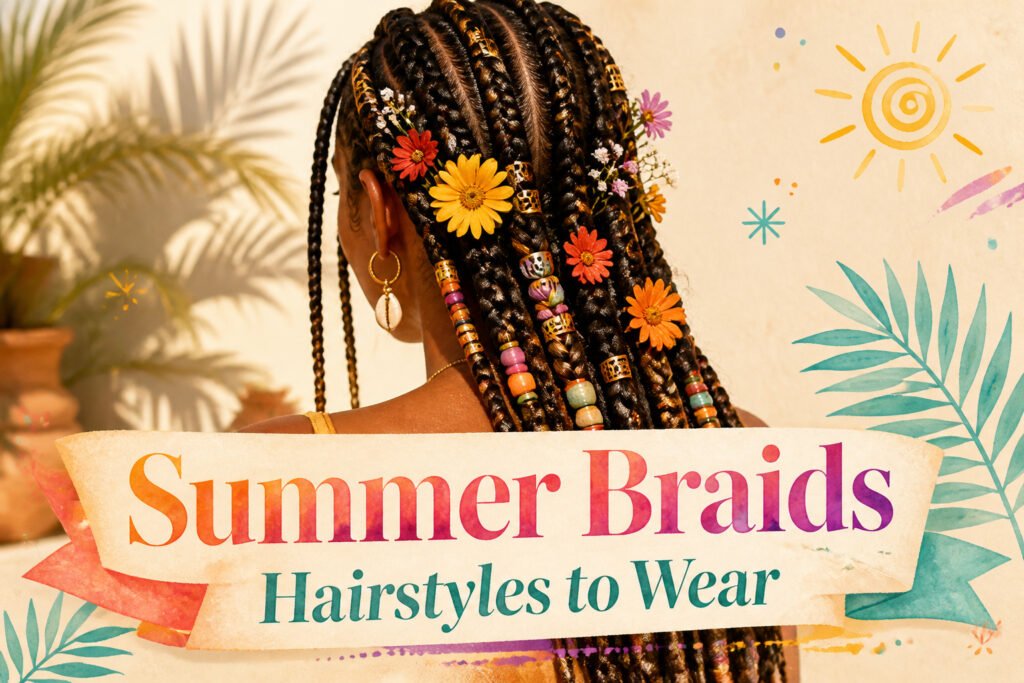
Summer braids hairstyles span from a five-minute bubble pony to an eight-week goddess install, and the deciding factor is how much scalp access you need while they are in. Styles that sit flat, like cornrows and feed-ins, let you oil and wash weekly without booking a braider. The ones that last longest, like jumbo knotless and box braids, seal your ends away entirely but demand you tolerate some tension at the root. Human hair extensions have replaced synthetic for 2026, and stylists now use miracle knots to hook curly pieces into a braided base rather than feeding them in strand by strand.
1. Boho Braids

Boho braids read as vacation hair the second you step outside, which explains why every braider’s summer calendar fills with them. The style keeps things loose and curly, so humidity or a quick dip in the pool doesn’t ruin the look.
What changed for 2026 is the move to human hair only. Stylists dropped synthetic extensions entirely, since the fibers can irritate the scalp and human hair gives a softer, more natural finish that moves like your own. The real shift, though, is miracle knots. This crochet method skips feeding in braiding hair inch by inch; instead, you braid your natural hair into single plaits, then hook in loose curly pieces with a crochet needle. The result is lighter on your head, lower tension at the roots, and a more organic texture that works as well for a rooftop party as it does for grocery shopping.
If you don’t braid your own hair, you can still split the work: book a braider for the base sections, then add the curly pieces at home. That partial route typically costs less than a full salon installation, and you control how much curl you want woven in.
2. Fulani Braids
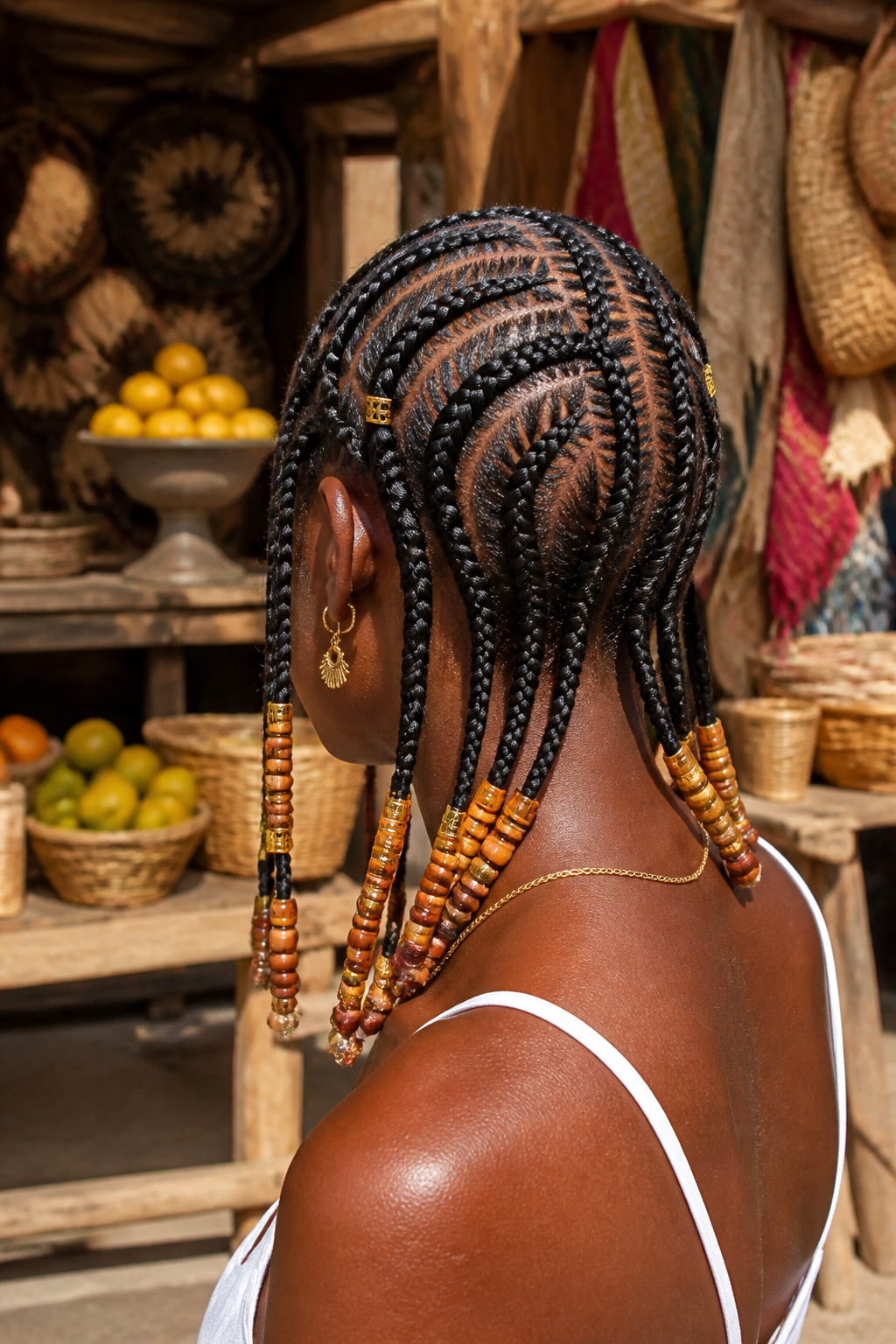
Fulani braids carry a lineage that stretches back centuries through the Fulani people of West Africa, where the style served as both identification and artistry. The modern version keeps that cornrow foundation but loosens the rules: braids run forward toward the face, backward toward the nape, or in opposing directions all at once, often gathered and secured at the ends with beads or metal cuffs. The result is airy enough for July humidity, since the sections stay small and the scalp breathes.
What shifted this from cultural staple to summer vacation favorite is how adaptable the accessories have become. Wooden beads read casual for a Saturday market; gold cuffs turn the same braids formal enough for a wedding. Some wearers leave them loose for theater nights, others sweep everything into a high bun when the temperature climbs past 85°F. The style also pins hair down against UV exposure and moisture without the weight of thicker protective options, which matters when you’re wearing them four to six weeks straight. That longevity comes with a tradeoff: the versions that include a sew-in back section need dry maintenance, so weekly wash days are off the table unless you book time with your braider to refresh the front cornrows.
3. Box Braids
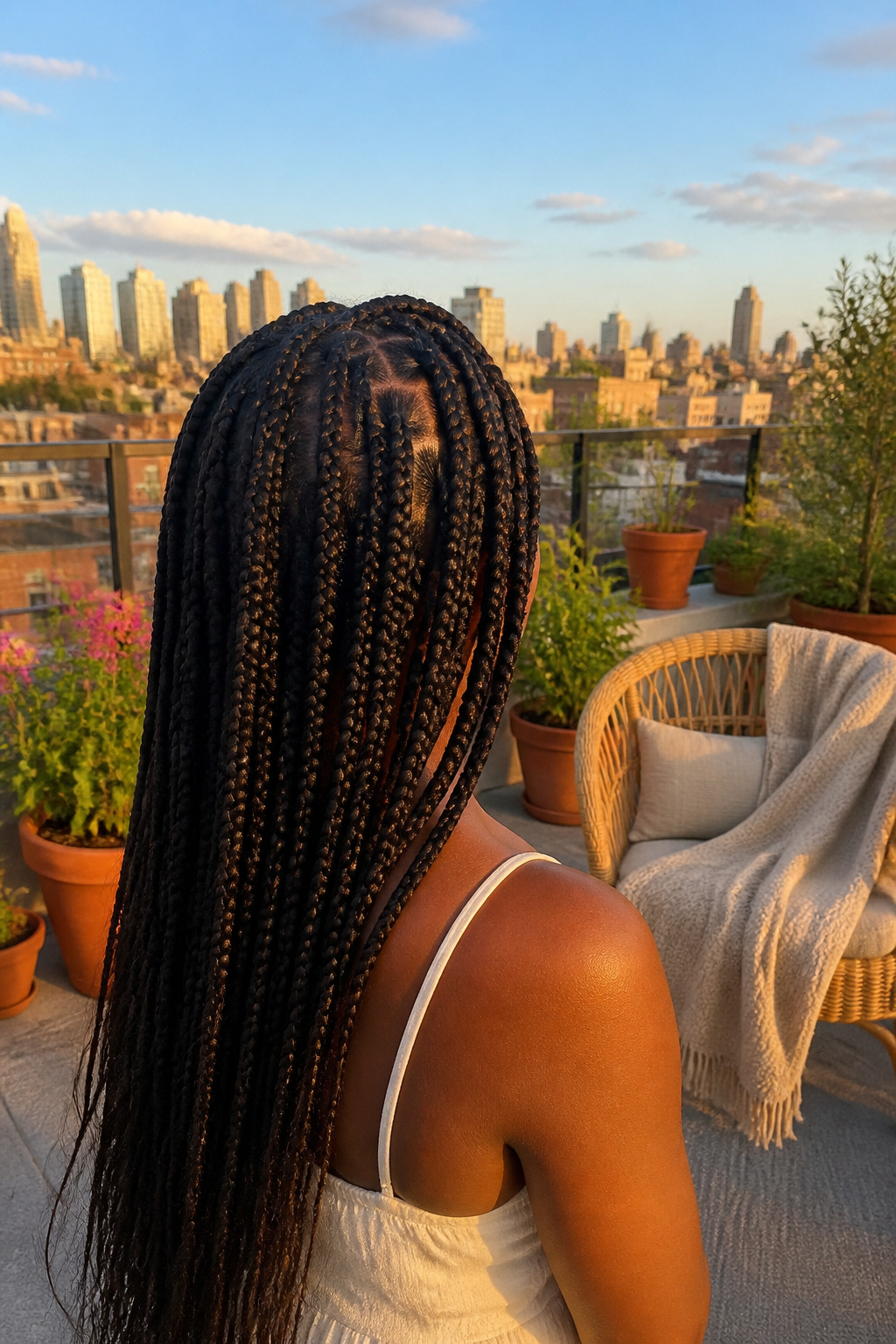
Box braids divide the hair into clean square sections, each plaited from root to tip with or without added hair. The geometry matters for summer: the parts expose the scalp directly to air and water, which makes weekly washing and scalp serums practical in a way denser styles do not. Hair stays off the neck entirely, and the braids themselves can be gathered into a ponytail, clipped up, or worn down without restyling.
The real advantage is duration. With proper care, box braids last up to eight weeks, though fine hair wears better in smaller braids that distribute tension more evenly. Color and length are flexible; extensions add length, and the square parting keeps the look intentional even as the style grows out. For warm weather, that combination of protection and low daily effort is why the style keeps coming back.
4. Cornrows

Cornrows sit flat against the scalp, which makes them one of the easiest summer braids hairstyles to tuck under a hat or wrap with a scarf when the sun gets intense. The tension stays minimal because the braid follows the head’s curve rather than pulling away from it, and that low profile means no bulky ridges under a baseball cap or silk wrap.
The style ranges from simple straight-back rows to intricate patterns that work for formal events. Last summer, elaborate freestyle cornrows dominated, but this summer the pendulum has swung toward simpler straight-back looks. Alternating the width of the rows adds visual interest without adding hours to the appointment. Some braiders wrap the ends into pinwheels for Koroba braids, a Nigerian style resurfacing as clients ask for more cultural and artistic options.
"The braids of summer 2026 reflect the Black community’s new focus on hair health. There is more attention on minimizing scalp tension. People want styles that let them cleanse their hair without ruining the look."
— Allure
What this means in practice: cornrows give you direct access to your scalp for weekly hydration. A spray with jojoba seed oil or tea tree oil reaches the skin without dismantling the style, and the flat structure means you can actually get the product where it needs to go.
5. Goddess Braids

Goddess braids sit thicker and more raised against the scalp than standard cornrows, which gives them their name and their staying power. Four to eight weeks is the typical wear time, making them one of the longer-lasting summer braids hairstyles if your scalp tolerates tension well. The larger size of each braid means less time in the stylist’s chair, though the tradeoff is weight: fewer braids carry more hair per section, so pulling too tight at the root can stress edges over time.
Cost swings widely depending on where you live and who braids. A stylist in a major metro area may charge double what you’d pay in a smaller market, and specialists who work with natural hair exclusively often price higher than general salons. The reduced installation time helps offset that somewhat; you’re paying for fewer hours of labor even if the hourly rate stays the same.
What convinced me, reading through the options, is how the raised profile lets air circulate at the scalp during humid months. That matters more than it sounds when you’re wearing a style for two months straight.
6. Butterfly Locs
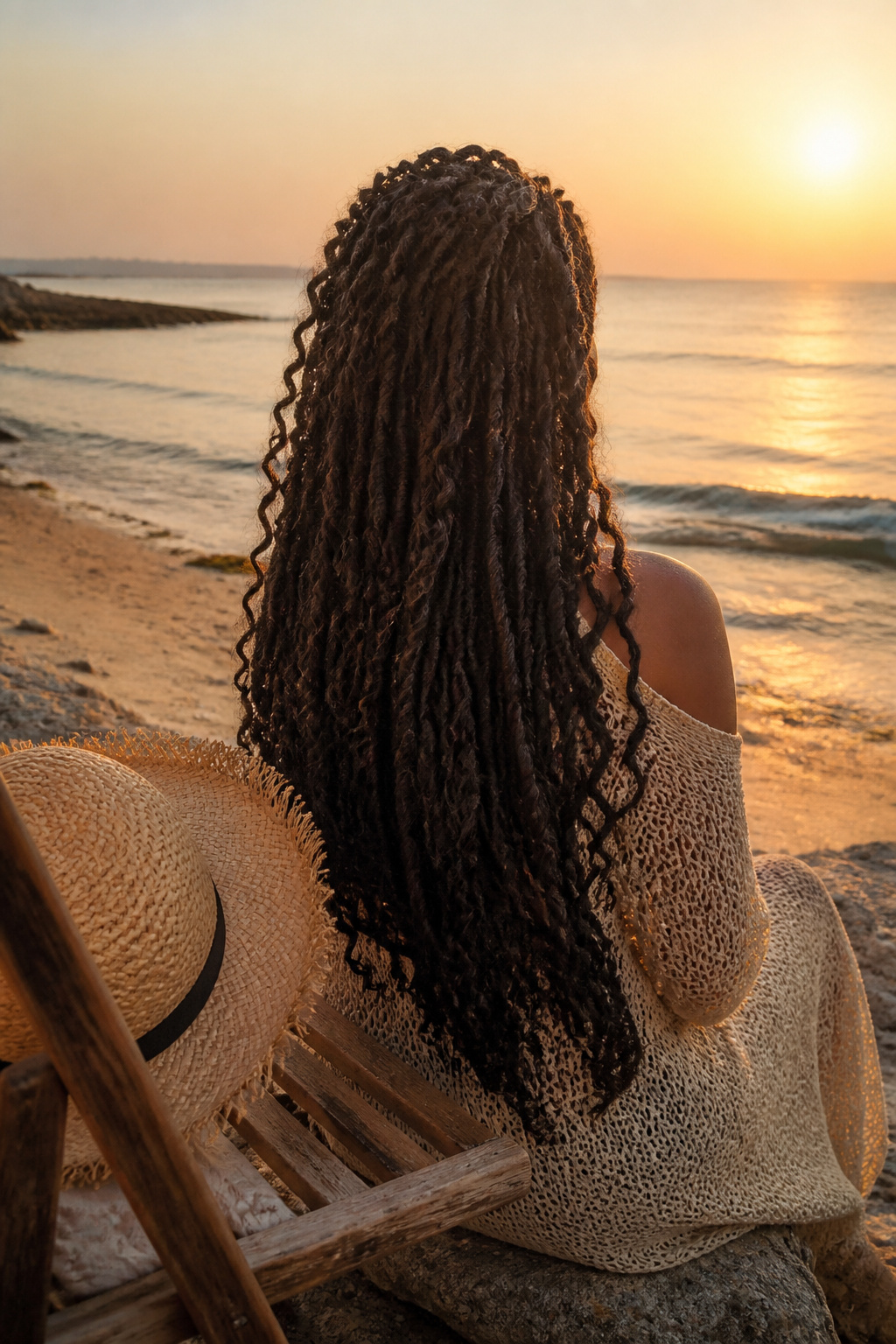
Butterfly locs carry the rough, lived-in texture of natural locs without the years of growth and maintenance. The style is built from distressed, soft faux locs that look deliberately undone, like hair that has already weathered a few beach mornings. That airy construction matters in summer: the locs are incredibly light, light enough to wear through a full day of walking or a long flight without the scalp fatigue that heavier protective styles can bring.
The look is newer on the scene, so the field of tutorials and product lines is still catching up. What exists points to a style that works short and sassy or long and carefree, and the loose, open texture lets air move through rather than trapping heat against your neck. For a vacation style or a low-maintenance July, that combination of protection and breathability is hard to argue with.
7. Feed-In Braids
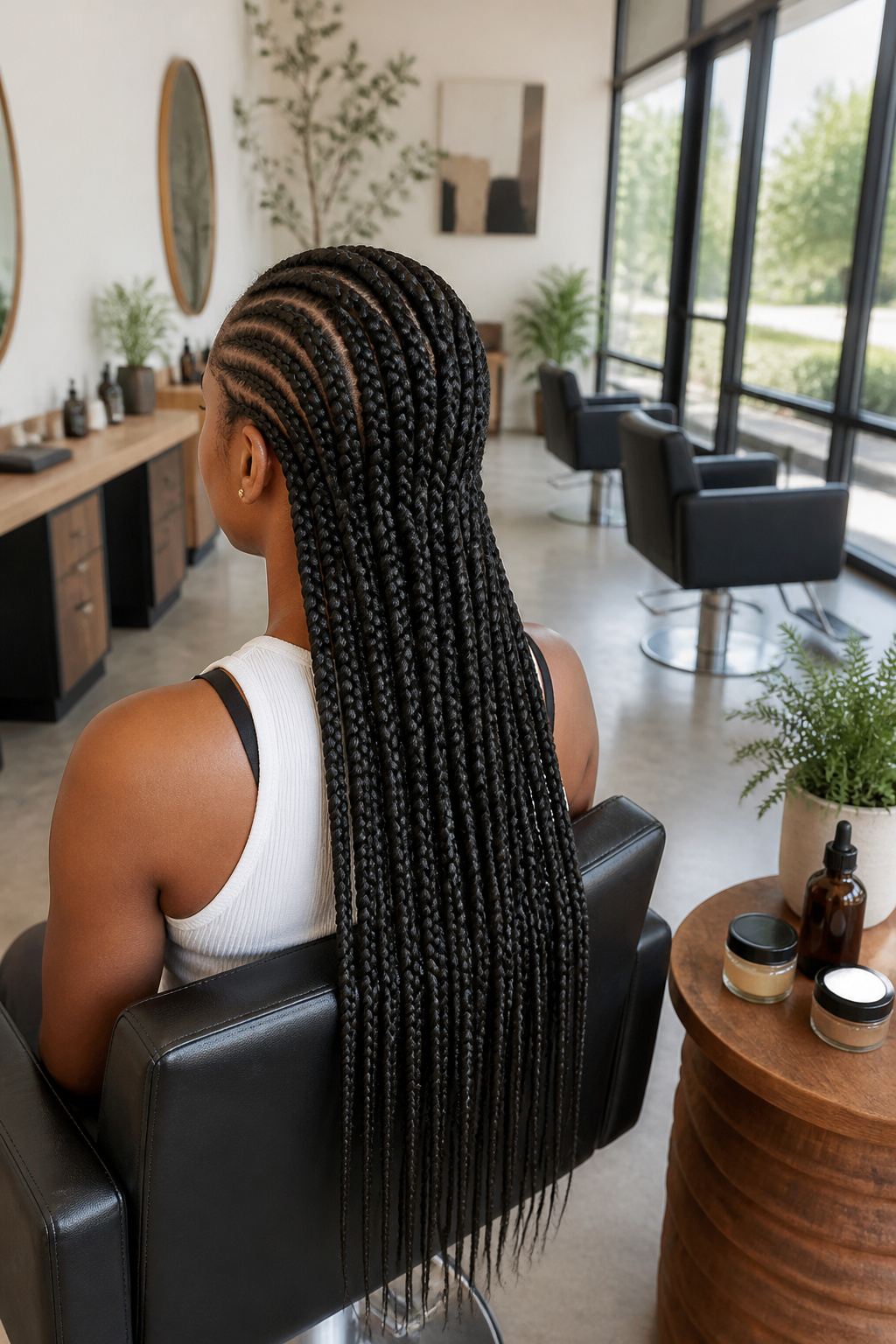
Feed-in braids work by adding extension hair in small increments rather than all at once at the root. The result is a braid that starts slim at the hairline and gradually thickens, so the tension spreads across your scalp instead of concentrating at the front where edges are most fragile. Less pulling on your delicate edges means you can keep the style through hot weeks without the soreness that sends you to the mirror at midnight, debating whether to undo the whole thing.
The technique also sits flatter against the head than traditional cornrows, so helmet clearance for biking or a headband for running do not require negotiation. For summer, keeping the added hair light keeps the weight down; your head stays cooler, and the braids do not swing like a pendulum when you move. Gold cuffs or a sharp parting design dress them up without adding bulk, if you want the style to carry from a morning hike into evening plans.
8. Braided Ponytail

A braided ponytail keeps every strand off your neck when the humidity hits, which is exactly what makes it one of the more practical summer braids hairstyles for actual July afternoons. The basic move is simple: tie your hair back as usual, then braid from root to tip before securing with a hair tie. From there, the shape changes the occasion entirely.
A high, sleek pony braided tight reads polished enough for evening. Pull it loose and messy at the crown and you get the relaxed version that works for errands or a pool day. For something softer, a low, loose ponytail with wispy edges keeps the style from feeling too gym-bound. Accessories shift it further: beads, rings, or cuffs add interest without adding heat against your skin, and a silk scarf or bejeweled clip at the base dresses it up for dinner without requiring a full redo.
Short braids and long braids both hold the shape, so length is not the deciding factor. What matters is how firmly you want it anchored and how much texture you leave at the top. My own preference leans toward the looser end; the tighter versions look sharp but start to pull after a few hours in real heat.
9. Jumbo Knotless Braids

Knotless braids start with your own hair and feed in extensions as you go, which removes the tight anchor point that traditional box braids cinch at the root. Your scalp bears less tension from day one, and that matters in summer when heat and sweat already irritate skin. The jumbo size means your stylist sections hair into fewer pieces, so installation finishes faster and the overall weight drops even though each braid looks thick. Less weight on fewer points across your scalp translates to less pulling at your edges, especially if you wear braids for several weeks through humid months. I used to assume bigger braids automatically meant more strain; the knotless method reverses that logic entirely.
10. Bubble Braids

Bubble braids build a sectioned, puffy look from nothing more than a line of small elastics spaced down a ponytail or pigtail. No actual braiding is involved, which is why the style takes under five minutes on natural hair or stretched hair that has already been detangled. Each elastic pinches the strand into a bulb, and the hair between each pinch stays loose and round.
The real advantage for summer is how easy it is to refresh. A quick re-tighten of the elastics each morning, or a swap for fresh ones after swimming, brings the shape back without starting over. For workouts or humid afternoons, smaller sections hold longer than one or two large bubbles, since the weight is distributed and the elastics grip closer to the scalp. The style works on its own or as a base: half-up bubbles with the rest of the hair left loose, or two low bubble pigtails that keep the neck clear.
What Eight Weeks Means for Your Hair
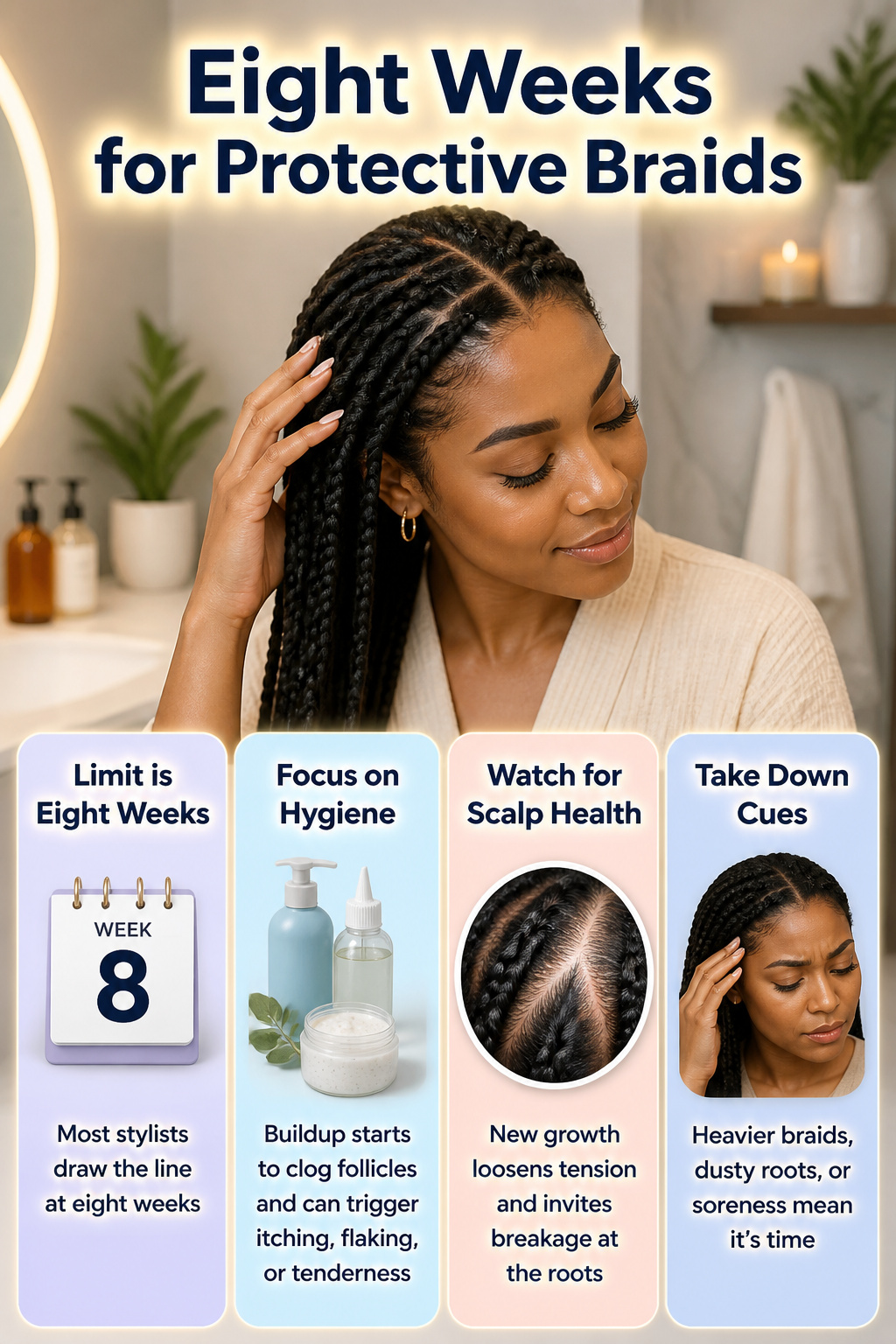
Most stylists draw the line at eight weeks for protective braids, and the reasoning sits at the intersection of hygiene and hair integrity. New growth loosens tension at the roots, which shifts the braid’s weight onto a smaller section of strand and invites breakage exactly where the natural hair meets the extension. Meanwhile, the scalp underneath accumulates dead skin cells, natural oils, and product residue that a normal wash routine cannot fully reach; after two months, that buildup starts to clog follicles and can trigger itching, flaking, or tenderness that signals inflammation.
Your hair will tell you when the timeline has stretched too far. A braid that suddenly feels heavier, roots that look dusty or feel stiff to the touch, or any soreness when you shift the style are cues to take them down. I schedule my removal appointments at week seven now, after learning that waiting until week ten left my edges thinner and my wash day twice as long to restore the scalp underneath. The extra week of wear is never worth the recovery.
Scalp Care Without the Buildup
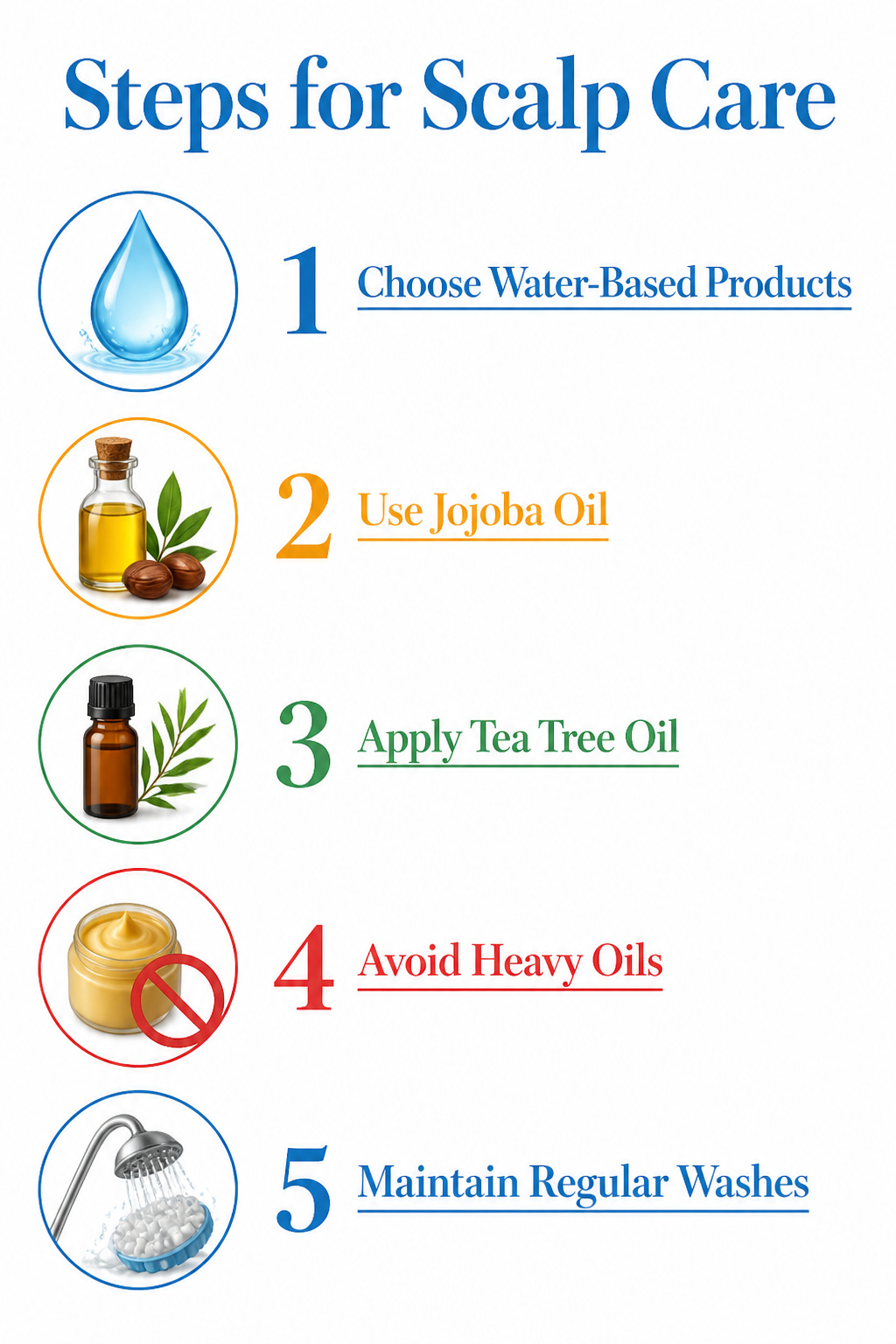
A heavy hand with gel is the fastest way to turn a fresh braid style into a flaky, itchy situation. The neater finish looks great for exactly one day before product buildup starts collecting at the roots and drying the scalp out. Alcohol-heavy stylers do the same damage, stripping moisture until dandruff-like flakes show up underneath parts that were supposed to stay clean.
Water-based products behave better under braids because they absorb and evaporate instead of sitting on the scalp in a film. Heavy oils seal moisture in, but they also seal sweat and dead skin cells against the scalp for weeks at a time. That sealed environment is where irritation starts.
For the light moisture braids actually need, jojoba seed oil is the closer match to the scalp’s own sebum, so it conditions without clogging. Tea tree oil adds the antifungal and antibacterial properties that keep the scalp clean between washes. Neither one replaces washing, but both work as targeted support instead of blanket coverage. A water-based leave-in with a drop of tea tree at the roots beats a heavy oil layer every time.
Why Goddess Braids Protect What They Cover

A protective style only earns the name when your ends are tucked away and left alone. Goddess braids do this by feeding in extension hair as the braid grows larger toward the scalp, which lets your natural length sit coiled inside each plait rather than rubbing against shirt collars, car seats, or pool water. The low-manipulation payoff matters most in summer, when sweat and frequent washing already stress fragile strands.
The visible results show up after a full six-to-eight-week cycle. Breakage at the nape and along the part line drops because those spots are not being re-handled every morning. Length retention improves not because the braid itself grows hair, but because the hair you already have reaches the end of its growth phase intact instead of snapping off mid-shaft. What convinced me, reading through stylists’ accounts of what their clients actually see, is that the protection is conditional: braids pulled too tight at the root trade one kind of damage for another, and styles left in past eight weeks tangle at the base where new growth meets the extension hair. The scalp health focus that clients are asking for this summer means tension should feel firm, not painful, the day after installation. If the headache lasts, the protective benefit is already compromised.
Weekly to Every Three Weeks

Braided styles last longest when the touch-ups land on a schedule rather than a crisis. Most summer braids hairstyles need a light moisture pass every seven to ten days, working a small amount of leave-in down the part lines without soaking the length. By week two, tension checks matter more: the new growth at the root shifts the pull toward the edges, and loosening the front rows by hand saves the hairline from the snap that comes from waiting too long.
A diluted shampoo rinse is possible around the two-and-a-half to three-week mark if the scalp starts to itch or flake. The trick is keeping the lather at the root only, letting the runoff carry residue down the braids rather than scrubbing the length, then drying under a hooded dryer so the interior sections do not stay damp. Past three weeks, the new growth usually loosens the foundation enough that the style loses its clean shape, and the risk of matting at the base outweighs the convenience of keeping it in.
Frequently Asked Questions
How long should protective braids stay in?
Most protective braids should come out after eight weeks. New growth loosens tension at the roots and shifts weight onto a smaller section of strand, which invites breakage where natural hair meets the extension. After two months, buildup on the scalp also starts to clog follicles and can trigger itching or inflammation that signals it is time for a reset.
How to prevent scalp buildup with braids?
Use a light hand with gel and skip alcohol-heavy stylers entirely. Water-based products absorb and evaporate instead of sitting on the scalp in a film, and a water-based leave-in with a drop of tea tree oil at the roots beats a heavy oil layer for keeping the scalp clean between washes.
Are goddess braids good for your hair?
Goddess braids work as a protective style when done right, tucking your natural length inside each plait so ends avoid friction against collars, seats, and pool water. The protection is conditional though: braids pulled too tight at the root trade one kind of damage for another, and tension should feel firm, not painful, the day after installation.