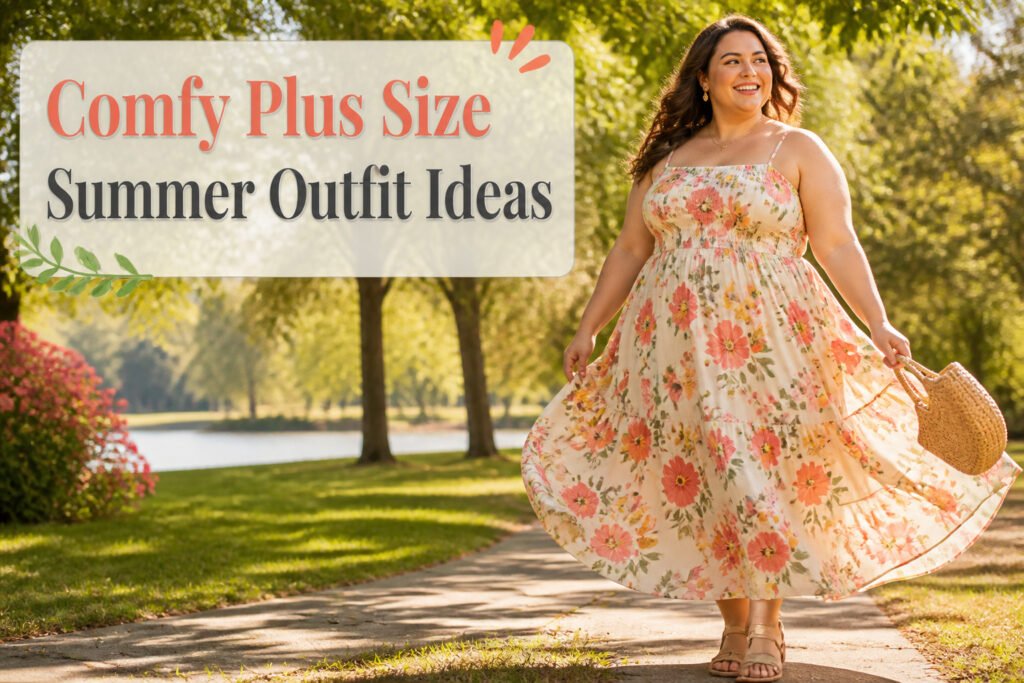
The difference between a summer outfit you actually wear and one that stays folded in the drawer usually comes down to whether it survives the walk to the car in July humidity. These ten ideas range from sundresses to matching sets, but the deciding factor is fabric weight: linen’s hollow fibers let air pass through instead of trapping heat against your skin, and a tiered skirt creates its own cooling current with every step.
1. Breezy Sundresses
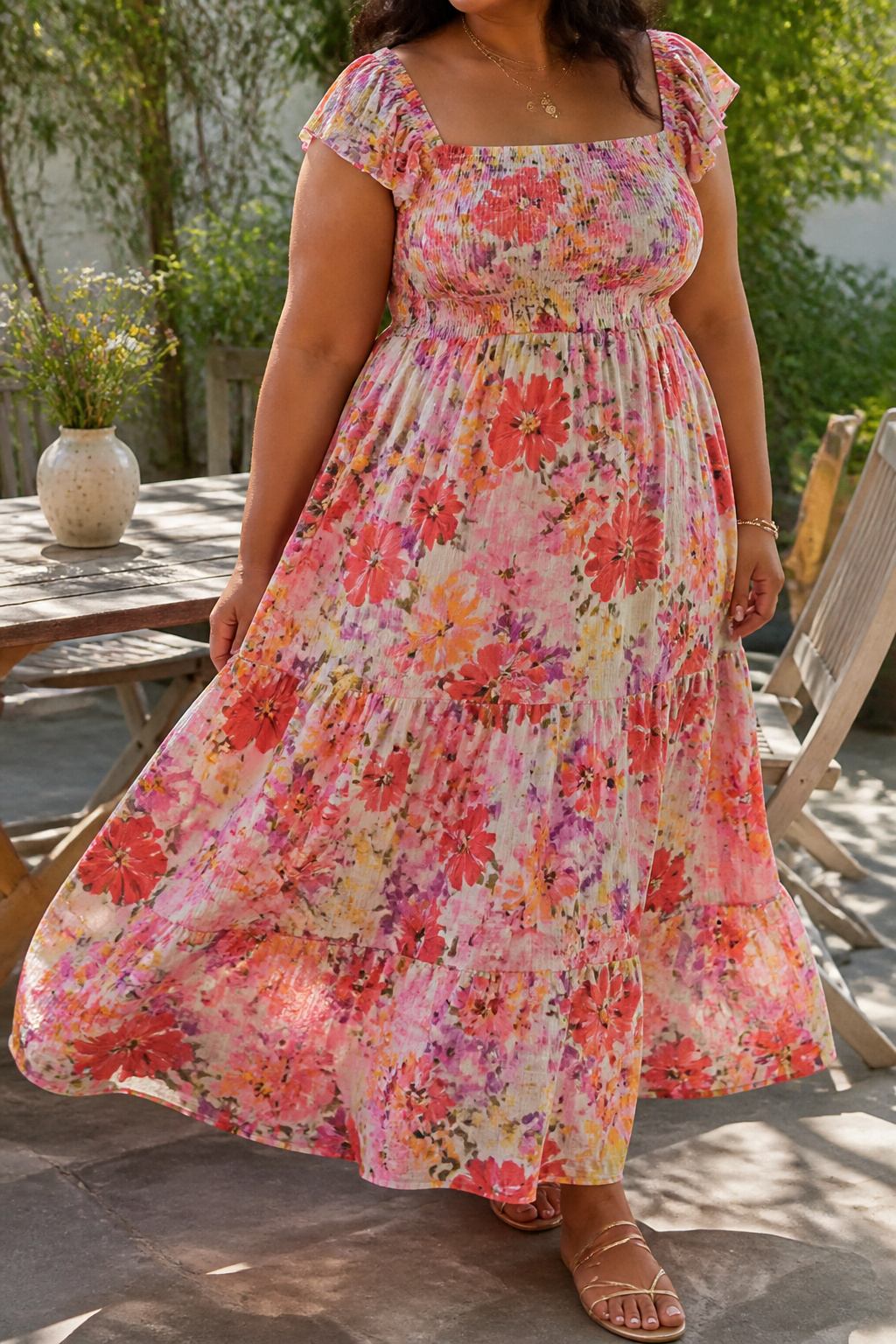
Breezy sundresses in fun colorful prints are the first thing I reach for when the humidity climbs past what my jeans can handle. The airflow comes from the cut, not just the fabric: a skirt that moves away from the body instead of wrapping around it creates its own cooling current, and details like flutter sleeves or a tiered hem keep the silhouette from ever clinging at the hip or thigh.
What sold me on this style, reading through dozens of outfit roundups, was how little styling they actually demand. One piece, minimal accessories, and the print does the visual work. I have seen the same dress worn with sneakers for errands, then swapped to sandals for evening, and the versatility holds up because the shape itself reads intentional rather than thrown-on.
The best versions for plus sizes use a shirred or elasticated bodice to define the waist without tightness, and fabrics like cheesecloth or crinkle cotton that skim rather than cling. A wrap or V-neckline helps elongate the torso, but the real comfort factor is that tiered skirt volume: it creates an A-line shape that catches breeze on every step. The tiered hem is what keeps the dress from riding up or sticking in heat, which matters more to me than any print ever could.
2. Linen Separates
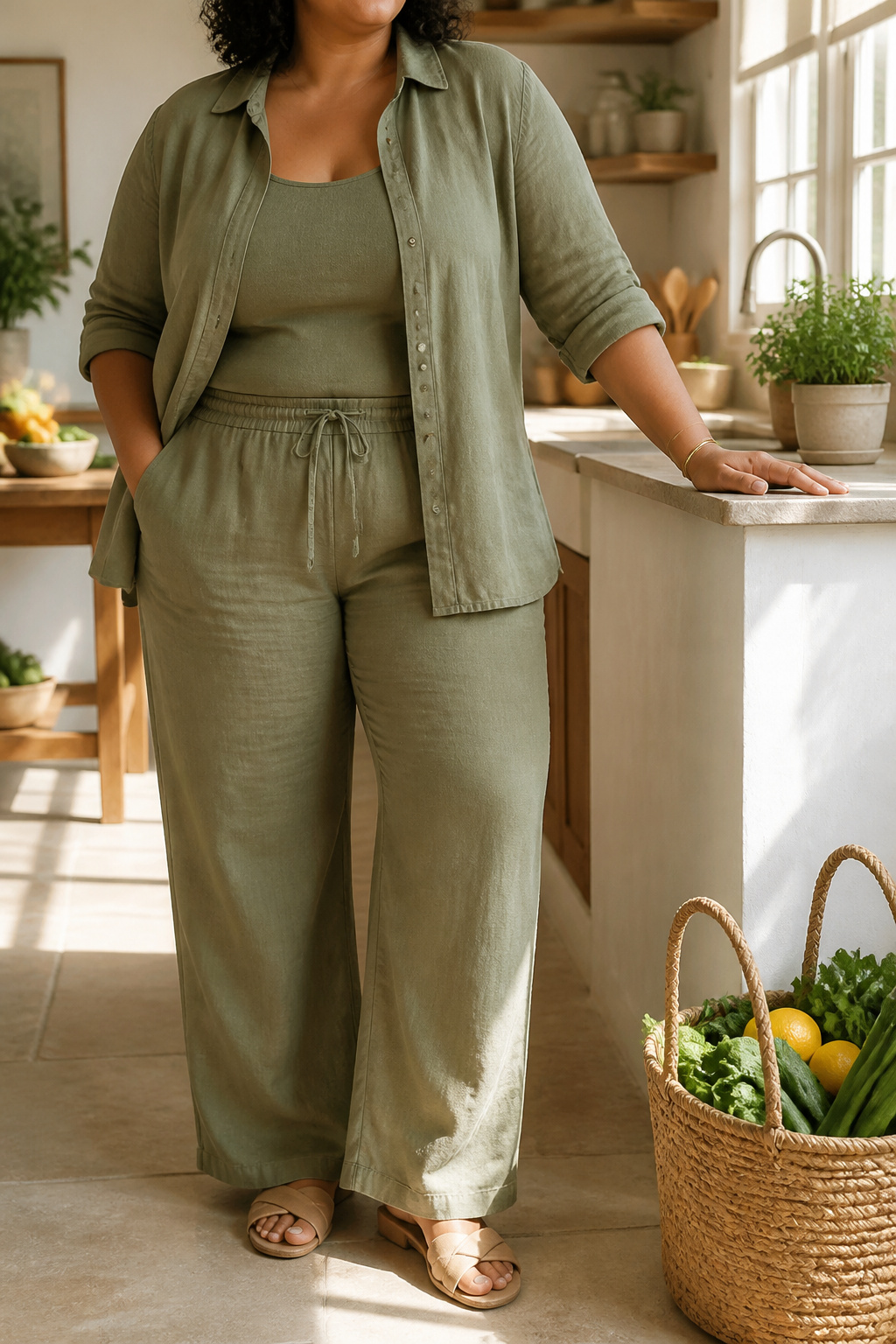
Linen ranks among the best fabrics for summer because the fibers are hollow, letting air pass through instead of trapping heat against your skin. That breathability keeps the fabric from clinging when humidity rises, which matters more in plus sizes where trapped moisture shows up first at the waistband or under the bust.
Separates built from linen solve a fit problem dresses rarely do: your top and bottom likely sit in different size ranges. A linen camp shirt in an 18 paired with linen pull-on pants in a 22 gives you proportions that actually match your body, not a single numbered box. The pieces still read as intentional when worn together, the slight texture variations in good linen looking planned rather than mismatched.
The real mileage comes from splitting the set. The shirt works open over a tank with shorts, or tied at the waist for coverage that still shows shape. The pants carry a ribbed tank or graphic tee into an outfit that looks assembled without effort. I have watched this flexibility turn a two-piece purchase into the hardest-working items in a summer wardrobe, the kind you reach for at home, for errands, or thrown over a swimsuit when the boat calls. A linen separate in white, navy, or a soft green covers more situations than any single dress can.
3. Jumpsuits
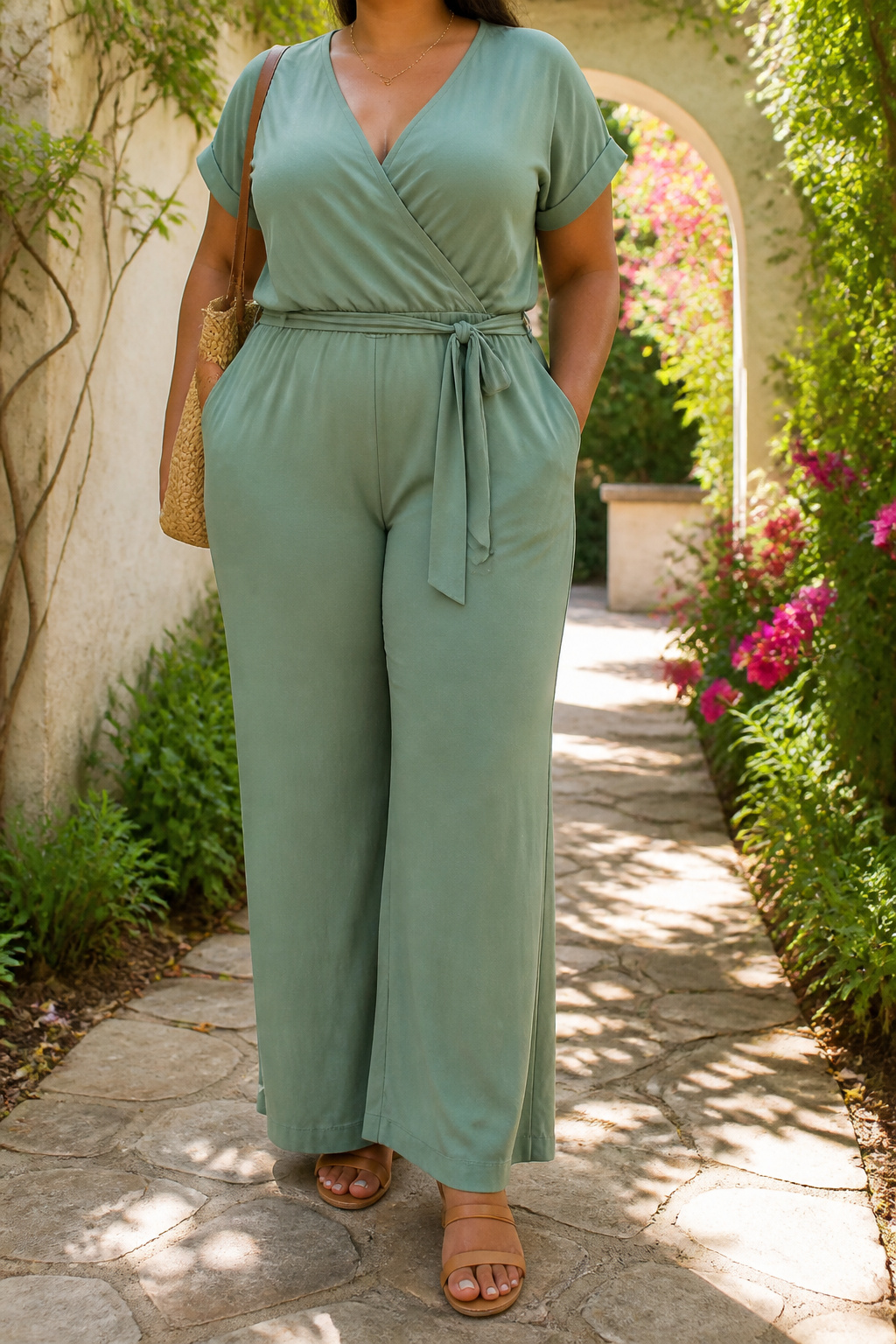
Jumpsuits solve the summer outfit problem in one move: top and bottom sorted, no matching required. The silhouette has shifted enough that cute jumpsuits now come in cuts that actually work for a real body doing real things, not just a posed photo.
The bathroom question stops a lot of women from buying, and it stopped me until I tried a wrap-front version. That style lets you pull the top down without stripping in a stall. Button-front and zip-front options work the same way; avoid anything that goes on over your head with no other entry point.
Fabric weight matters more than print. A rayon or lightweight cotton blend drapes without clinging, and a defined waist, elastic or tied, keeps the shape from turning into a sack. Sleeveless or short-sleeve cuts handle July heat; a wide leg adds airflow without extra volume at the hip.
I look for inseams around 28–30 inches on the size chart, which usually hits at the ankle on my frame without tailoring. Petite and tall lines are worth checking, since a one-piece lives or dies on proportion.
4. Graphic Tees with Shorts or Linen Pants
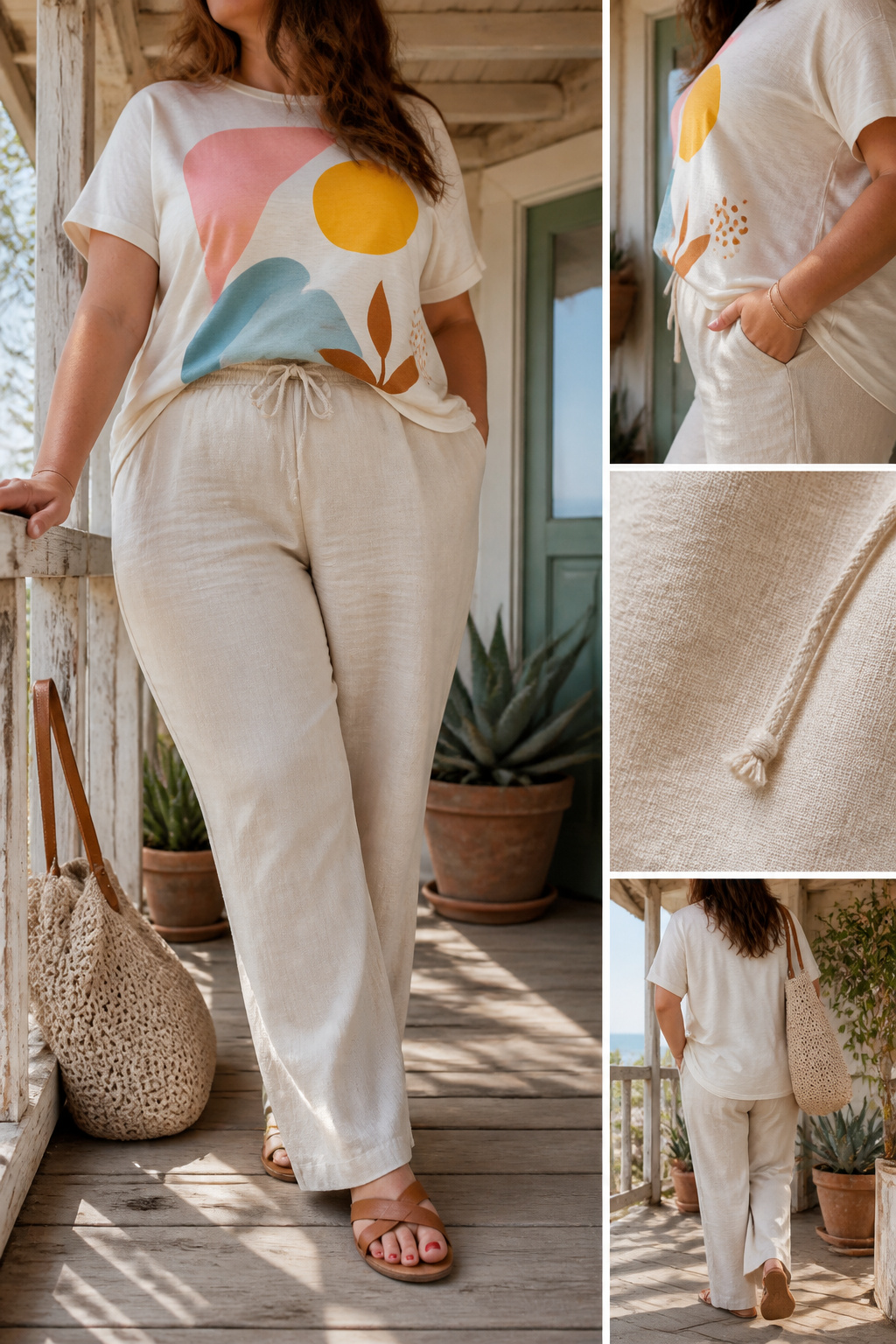
A graphic tee with linen pants hits the sweet spot between looking like yourself and staying cool through July afternoons. The fabric matters here: linen breathes in a way denim or twill simply cannot, and the relaxed cut keeps the outfit from feeling like office wear. Three different style guides back this pairing as a go-to summer formula, which tells you how reliably it works across body types and personal tastes.
Prints are where this combination gets personal. A band tee, a vintage logo, even an abstract pattern: the graphic does the talking while the linen keeps things grounded. One stylist pairs hers with beaded earrings and a crochet hobo bag for a beachy finish, which shows how accessories shift the same base pieces from errands to a casual dinner.
Shorts are the other natural partner for graphic tees, but length and fit need attention. A five- to seven-inch inseam usually sits right on plus-size frames, long enough to prevent thigh chafing without swallowing your legs. Look for a mid-rise or high-rise waist that stays put when you bend; a waistband that gaps or rolls defeats the whole purpose of a comfy outfit. Skip anything with heavy distressing or hardware that adds bulk where you do not want it.
5. Off-Shoulder Tops
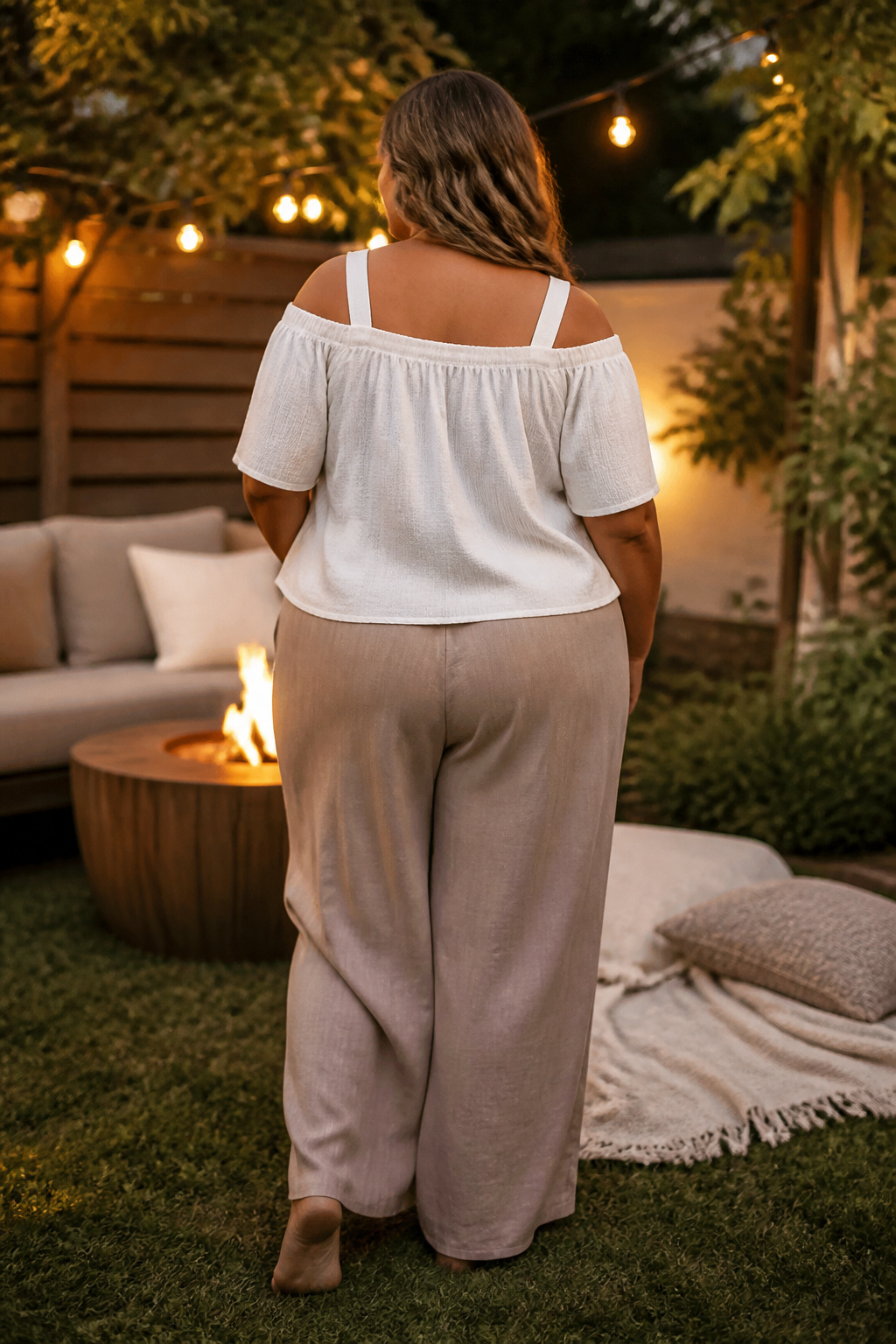
Off-shoulder necklines pull the eye up toward the collarbone and shoulders, which creates a natural focal point away from the midsection. That same open shape lets air move across the skin, so the top functions like built-in ventilation on humid days.
The difference between off-shoulder and cold-shoulder comes down to coverage. An off-shoulder band sits across the upper arms and stays put only if the elastic or structure is firm enough. Cold-shoulder styles keep the main shoulder seam intact with cutouts instead, which means the straps stay where they belong without constant tugging.
Straps need to be at least one inch wide for actual support in a true off-shoulder style. Anything narrower turns into a maintenance job by noon. Wider bands distribute pressure better and leave room for a proper elastic grip underneath without cutting in.
Ruffles along the neckline add visual interest, though they read as more dressy than a clean band. For daily wear, a smooth off-shoulder top in a light cotton or jersey pairs with the same shorts or linen pants already in rotation, and the silhouette works whether the day calls for sneakers or sandals swapped in later.
6. Tiered Skirts
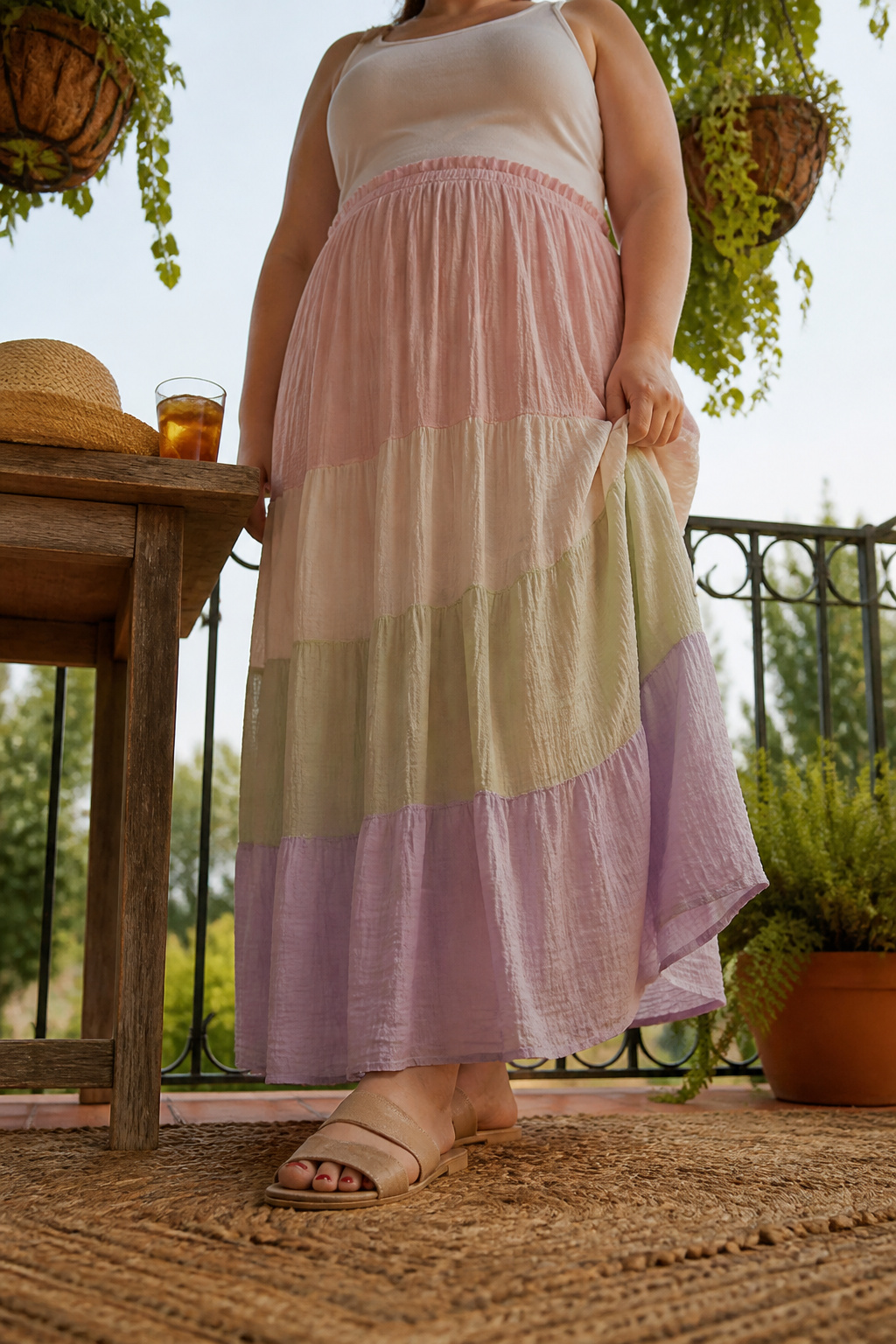
A tiered skirt features layers of fabric that fall from the waist, creating movement and volume below the hip line. Two style references back this definition, and the construction matters more than the name. Each tier adds fabric without adding tension, so the skirt moves with you rather than against you.
The airflow between layers is the practical win. On a humid July afternoon, that gap lets heat escape in a way a single heavy layer never would. Cheesecloth tiers do this best, the loosely woven cotton letting air pass through the fabric itself as well as around it. The silhouette stays A-line by structure, not by stretch, which means no waistband digging in after lunch.
What sold me on the shape was watching how it behaved in motion. The tiers create their own line, skimming the hip and thigh instead of tracing every contour. A skirt that creates shape without clinging solves the summer problem of wanting coverage without compression. Pair it with a fitted top to keep the volume intentional, or balance it with a shirred bodice that defines the waist without tightness. Sandals in tan or brown ground the look without competing, especially against softer colors like sage.
7. Maxi Dresses
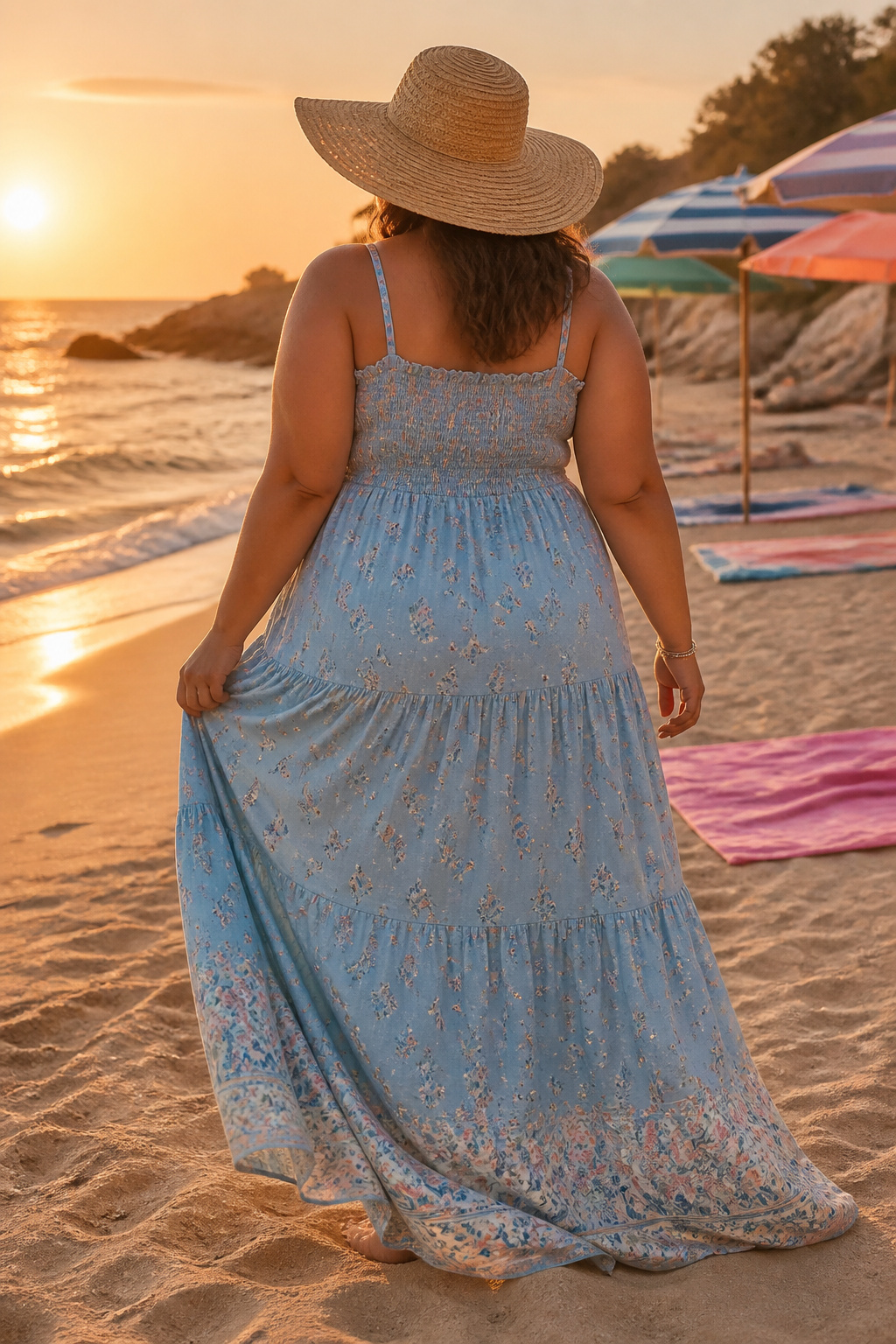
A maxi dress solves the summer paradox of wanting coverage without the weight. The maxi length creates a graceful, elongating silhouette that reads as polished rather than hidden, and three separate design traditions back this: the column cut that follows the body’s line, the raised waist that drops fabric from the narrowest point, and the slight A-line that clears the hips without ballooning.
Heat is the honest problem here. A maxi in the wrong fabric becomes a tent that traps body temperature. Cheesecloth and lightweight cotton let air move through; linen and muslin do the same work with more structure. The smocked bodice from this season’s better versions adds shape at the waist so the skirt can fall away without looking like a sack. Tiered construction helps too, each layer creating its own slight separation from the skin rather than one solid cylinder of cloth.
The tent effect usually comes from too much fabric with no break in the line. Look for a defined waist, a slit that lets the skirt move, or a bodice detail that holds the eye upward. Lighter colors reflect rather than absorb sun, which matters more in a full-length piece than in a cropped one.
8. Button-Down Shirts Over Fitted Tops

A lightweight button-down worn open over a fitted tank or tee gives you sun coverage on your arms and shoulders without trapping heat against your torso. The outer layer blocks UV that a thin tank alone won’t, and the open front lets air move through so you don’t overheat the way a fully closed shirt would.
This pairing also solves the exposure problem fitted tops create. A snug tank on its own can feel like too much for some of us, especially in back or underarm areas where fabric sits closest. The open shirt frames the fitted layer instead of hiding it, so you get the shape without the self-consciousness.
Cotton or linen blends work best here. They stay breathable when the afternoon heats up, and they actually look better with a little wrinkling than stiff synthetic versions do. Roll the sleeves to your elbow once, not twice, so the line stays clean rather than bunching at your forearm.
9. Smock Dresses
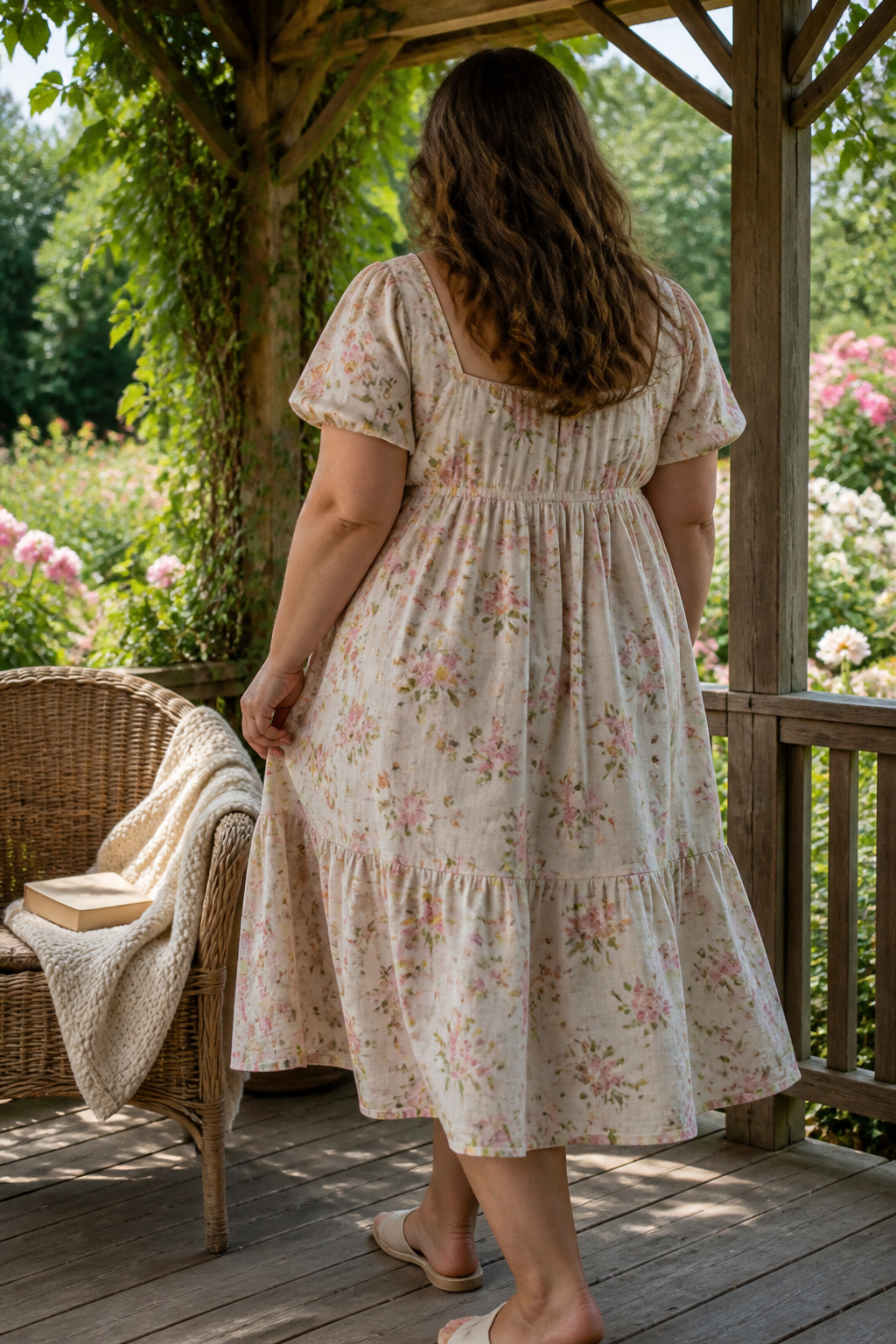
Smock dresses sit somewhere between a deliberate shape and a shapeless mistake, and the difference comes down to where the volume lives. The ones that work gather the fabric at the bodice so the looseness starts above the bust and falls away from there; the ones that look like a missed fitting drop that volume from the shoulders and hide the body entirely. Two distinct approaches back this as a flattering option for curvy figures, and both point to the same detail: a gathered, relaxed bodice that skims rather than clings.
Sarah Tripp, expecting her first baby, found that smocking on a non-maternity set hugged her shape without pulling tight. She bought the Abercrombie smock crop top twice, in navy and white, because the stretch adapted to her rather than fighting her.
"The smocking is perfect for curves—it hugs my shape without being tight."
For a summer smock dress, that same principle applies at full length. Look for shirring or gathering that creates structure through the bodice, then lets the skirt float. Linen keeps the weight light, and a midi length adds coverage without adding bulk. Flat sandals or white trainers finish it; the dress already did the work.
10. Matching Sets
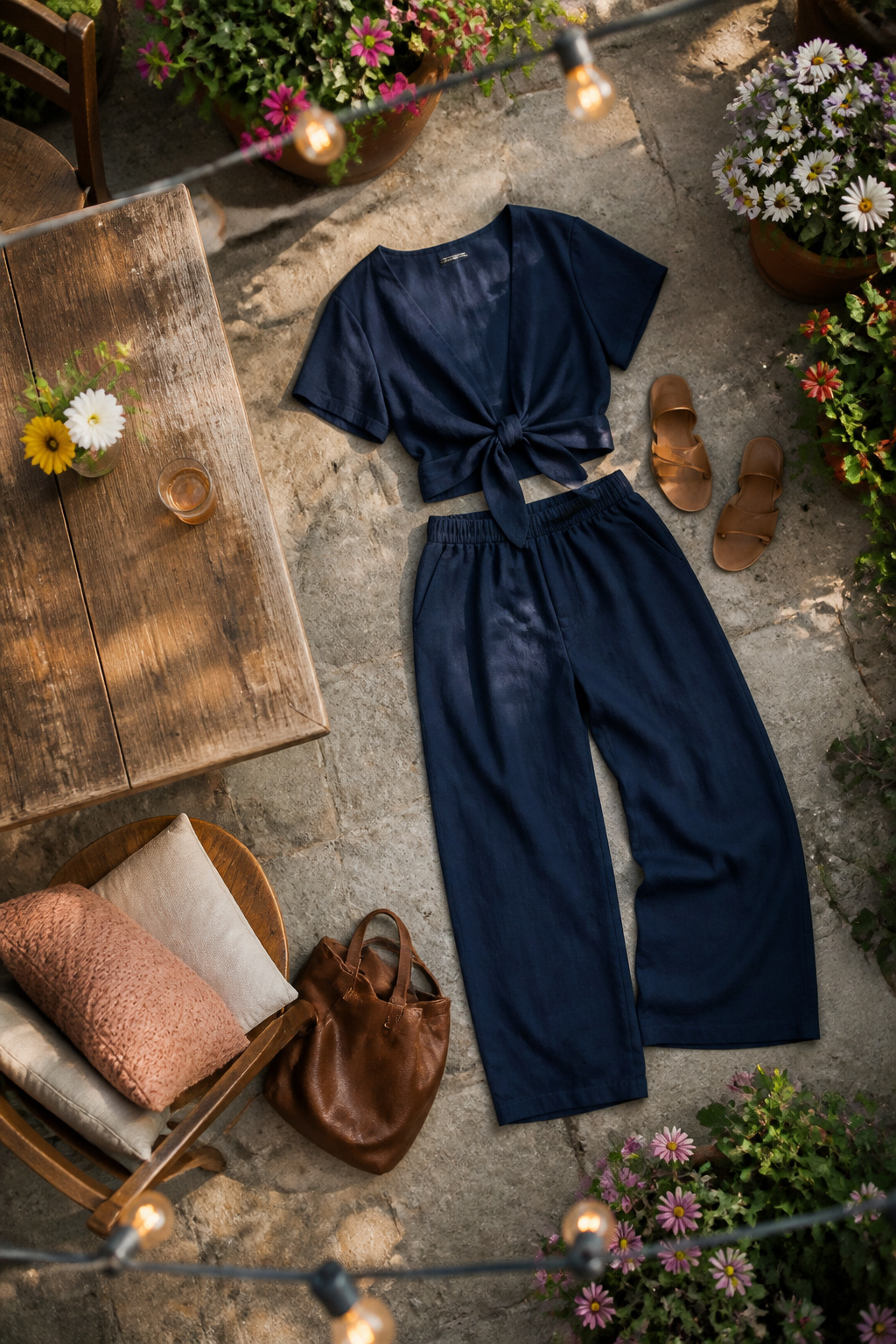
Coordinated two-piece sets cut the morning decision fatigue that eats up more time than most of us admit. A matching top and bottom that also split apart gives you the polished look of planning without the mental load of actually planning. Linen sets in particular earn their closet space: the shirt ties over a dress or tanks, the pants pair with graphic tees or ribbed tanks, and together they read as intentional. The sets that only work as a pair, usually because of a print scale or trim detail that looks orphaned alone, trap you in a single outfit. Solid linen in green, navy, or white avoids that trap entirely. I’ve worn mine for errands, weekend lounging, and thrown over a swimsuit as a coverup on the boat. The pieces that mix multiply your options; the ones that don’t, don’t justify the hanger.
What Makes a Style Flattering

The styles that keep showing up in the best comfy plus size summer outfits share a few quiet tricks. A wrap construction or a V-neckline draws the eye upward and lengthens the torso, which matters more than any single print or color. Shirred or elasticated bodices do the waist-defining work of a belt without the squeeze, and an A-line silhouette, whether from a tiered skirt or a cut that simply skims outward, puts volume below the waist where it moves with you rather than clinging where you bend. Floaty fabrics like cheesecloth, crinkle, or mesh finish the job by keeping the shape alive as you walk, sit, or reach for a second iced coffee. What I noticed sorting through dozens of these pieces is that the most wearable ones never rely on just one of these elements; they stack two or three so the outfit does the flattering work without your having to think about it.
Fabrics That Actually Cool You
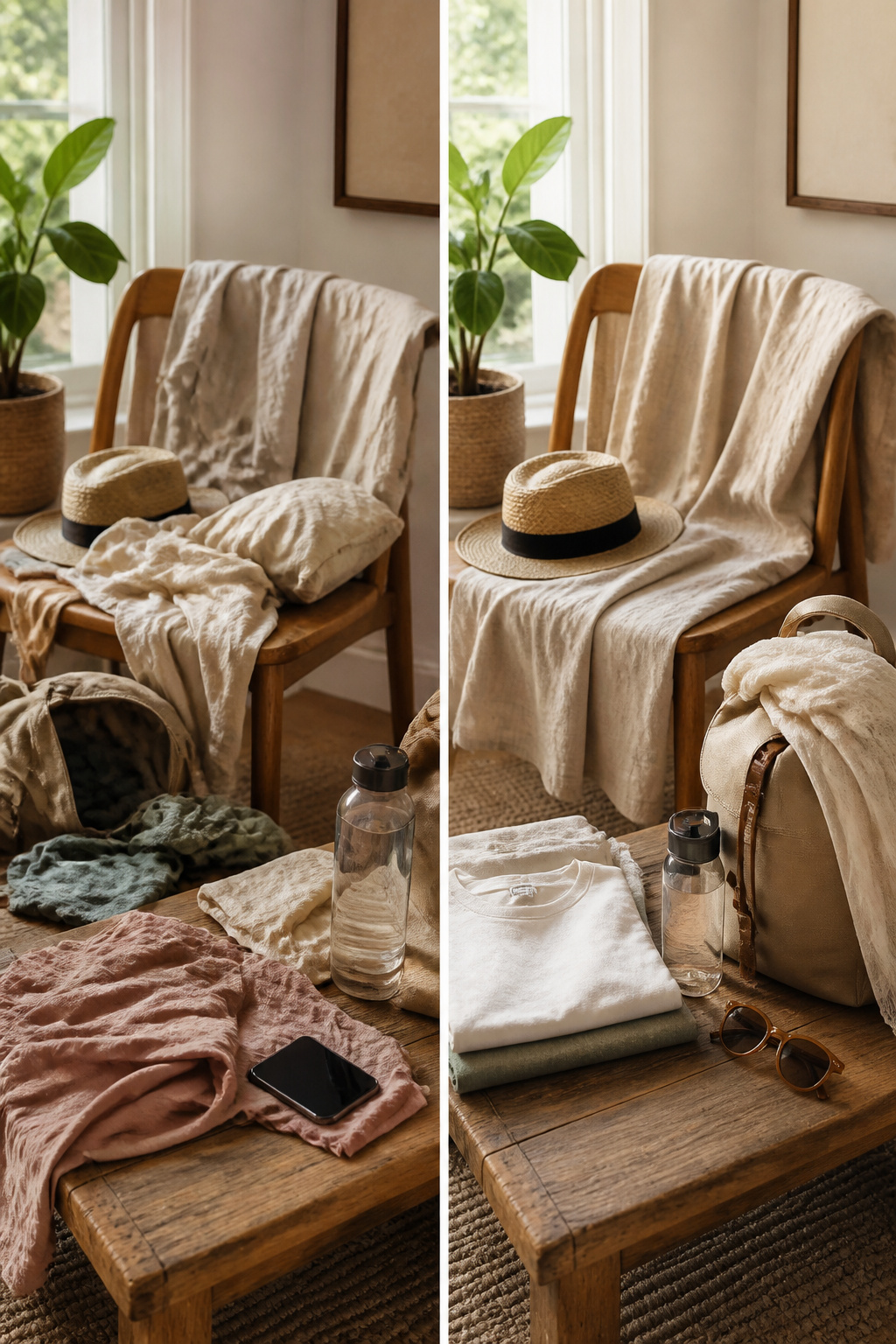
Linen is one of the best fabrics for summer because it moves air through the weave instead of trapping it against your skin. The creasing that comes with it is not a flaw to fight; it reads as relaxed intention, and after a few washes the fibers soften without losing that structure.
Cotton sits in the same camp for different reasons. It pulls moisture away and dries reasonably fast, though in heavy humidity it can cling where linen keeps its shape. I reach for it when I want something that will survive a dozen summer launderings without looking worn.
Lightweight cheesecloth fabric is the third piece worth knowing. It is essentially cotton opened up to a loose, almost gauzy weave, and it layers well over swimwear or a camisole without adding weight. The tradeoff is transparency: you will want something underneath, or you will want to treat it strictly as a beach cover-up.
Between them, these three handle washing differently. Linen gets softer and more pliable each cycle, cotton holds steady, and cheesecloth can fray or thin if you run it hot. Cold water and air-drying keeps all three in rotation longer.
Accessories Without the Clutter
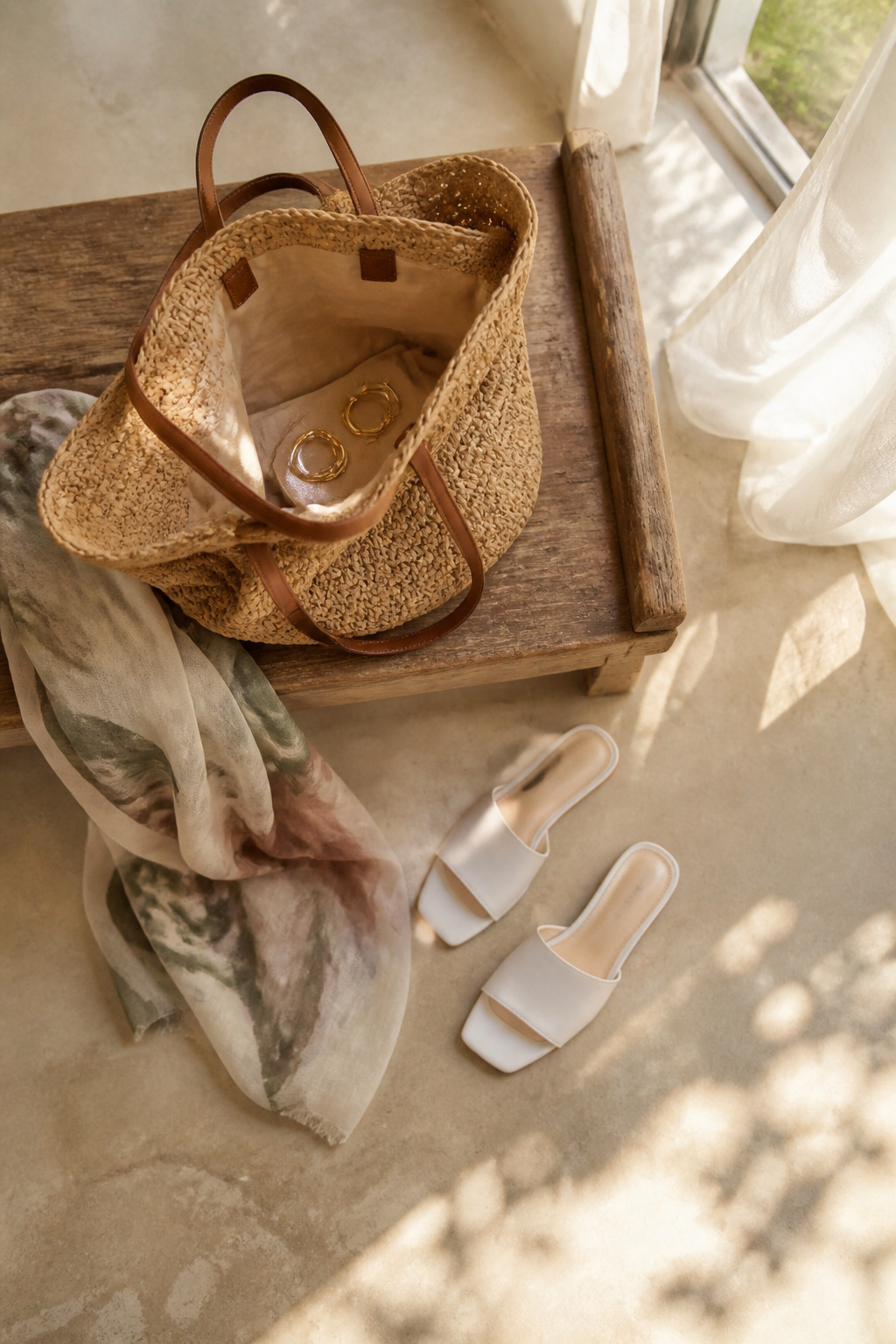
A woven straw bag does more than hold your sunscreen; it signals that the outfit is finished without adding weight against your shoulder. I learned this the hard way after years of piling on, then the heat hits and every extra ounce matters. Now I reach for one structured piece and stop.
One bold accessory beats three competing ones. Hoop earrings or simple gold jewelry catch light without trapping it, and white or tan sandals keep the eye moving downward so nothing feels anchored or heavy. Gingham already carries its own visual interest; the goal is to complement, not compete.
The same rule holds for a red dress. Neutral accessories in tan, nude, white, or gold let the color do the work. A single pair of earrings and a flat sandal turn a loud piece into something wearable for lunch, not just a statement for the door.
Frequently Asked Questions
What styles are flattering for plus-size women?
Wrap constructions and V-necklines draw the eye upward and lengthen the torso, while shirred or elasticated bodices define the waist without squeezing. An A-line silhouette, whether from a tiered skirt or a cut that skims outward, puts volume below the waist where it moves with you. The most wearable pieces stack two or three of these elements so the outfit does the flattering work automatically.
What fabrics are best for summer outfits?
Linen moves air through its hollow fibers instead of trapping heat, and its creasing reads as relaxed intention. Cotton pulls moisture away and survives repeated summer washings, though it can cling in heavy humidity where linen keeps its shape. Lightweight cheesecloth, a loose cotton weave, layers well over swimwear or camisoles without adding weight, though it usually needs something underneath.
How can I accessorize my summer outfits?
One bold accessory beats three competing ones: a woven straw bag finishes the outfit without adding shoulder weight, hoop earrings or simple gold jewelry catch light without trapping it, and white or tan sandals keep the eye moving downward. For a red dress or gingham print, neutral accessories in tan, nude, white, or gold let the piece do the work rather than fighting it.