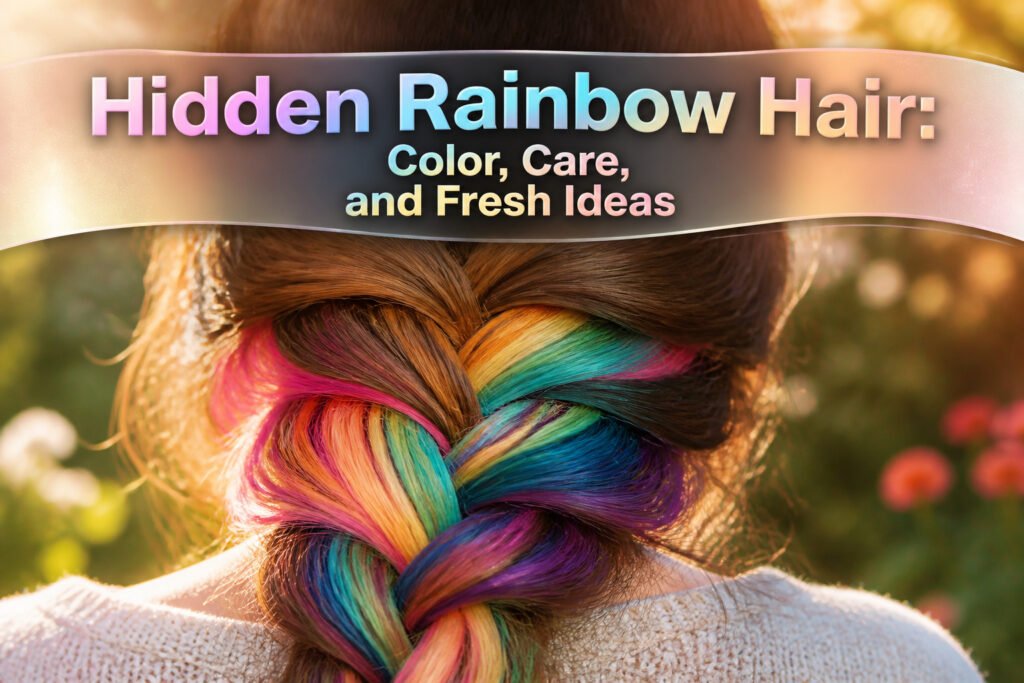
Hidden rainbow hair dyes bright color into the underlayer while the top stays your natural shade. The arrangement only works if the sectioning is precise: leave too narrow a gap of uncolored hair along the hairline and roots, and the color peeks through by day three. Properly mapped, the reveal stays under your control, flashing out in a ponytail or braid and vanishing again when the hair falls closed.
What Hidden Rainbow Hair Actually Means

Hidden rainbow hair keeps bright color under a surface layer of natural shade. The technique places your regular tone across the top and around the hairline, then dyes the underlayer in whatever rainbow combination you choose. A ponytail, braid, or even running your fingers through your hair pulls the top section aside and flashes the color underneath.
The setup solves a problem I recognize from years of reading about office dress codes. You keep professional flexibility for meetings or conservative workplaces, but the personal color stays part of your look. Sources describe it as hiding from your boss while keeping the option to flaunt the rainbow at other times. Unlike a mullet’s rigid split, this shifts with however you style your hair that morning.
Pastel palettes and jewel-toned ranges both work underneath; the visible layer stays quiet while the hidden one carries the statement. The reveal reads as effortless because the color peeks out unpredictably, not on display by default.
Consultation and Sectioning
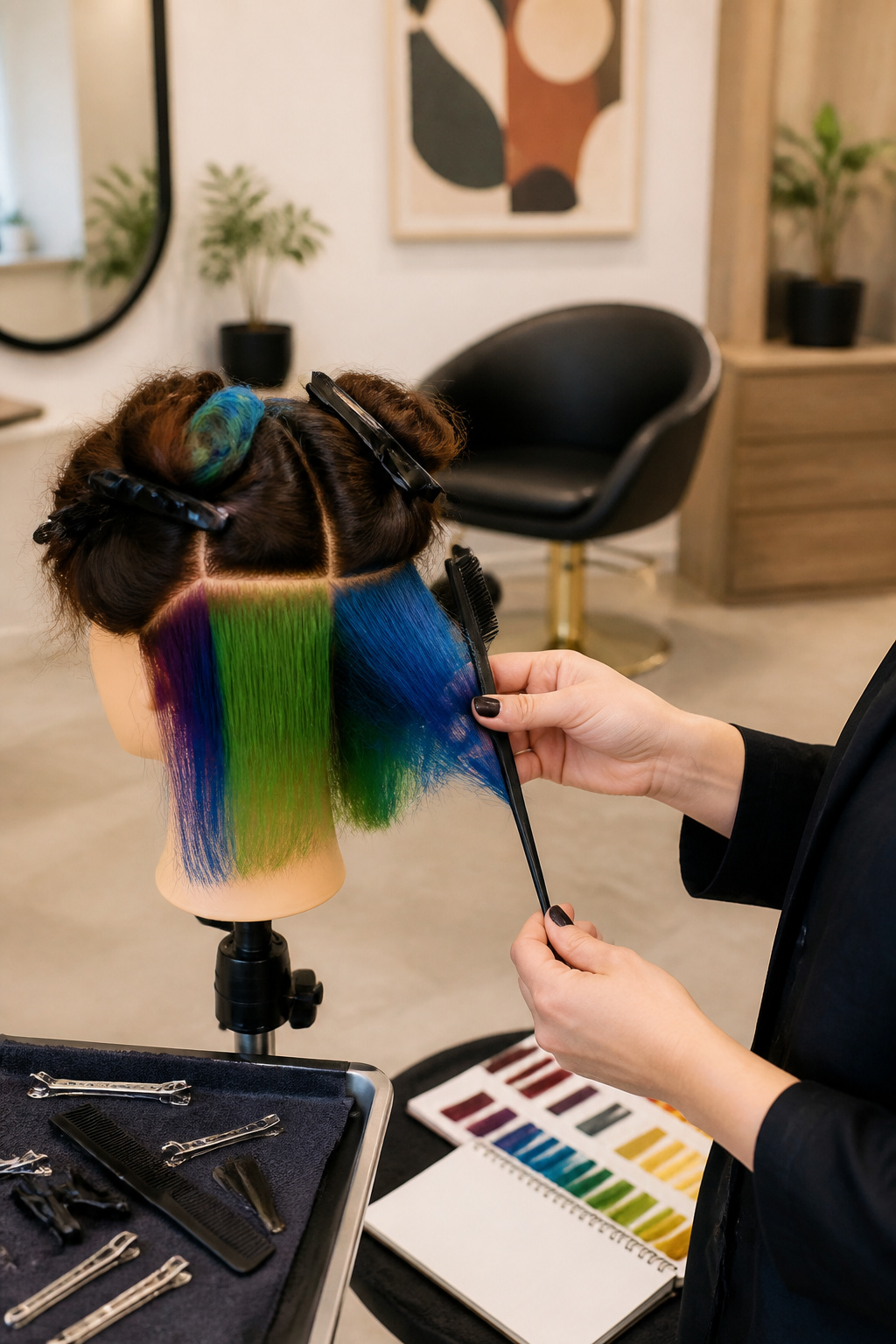
A hidden rainbow lives or dies in the sectioning, and the consultation is where that map gets drawn. Sitting down with the client, or with yourself in front of a second mirror, the first question is how much surprise the look should hold: a full reveal only when the hair lifts, or a flash of color at the part line. The gap of natural hair along the hairline, face, roots, and above the ear is not decorative; it is the mask. Leave that gap too narrow and the color peeks through on day three. Too wide, and the rainbow sits so deep it barely shows in motion.
The sectioning itself demands precision. Hair above the ears and around the crown stays untouched, creating the top layer that falls like a curtain. What gets lifted and lightened sits below, in panels thin enough to mirror from left to right so the blend reads as intentional, not accidental. The height of the colored block matters as much as its width. Section too high toward the scalp, and the hidden effect collapses; the color becomes visible at the roots with any lift of the head. The stylist, or you with clips and a rattail comb, is building a hinge point where hair meets gravity and daily movement. Get that hinge wrong, and the secret was never a secret at all.
Lightening the Underlayer
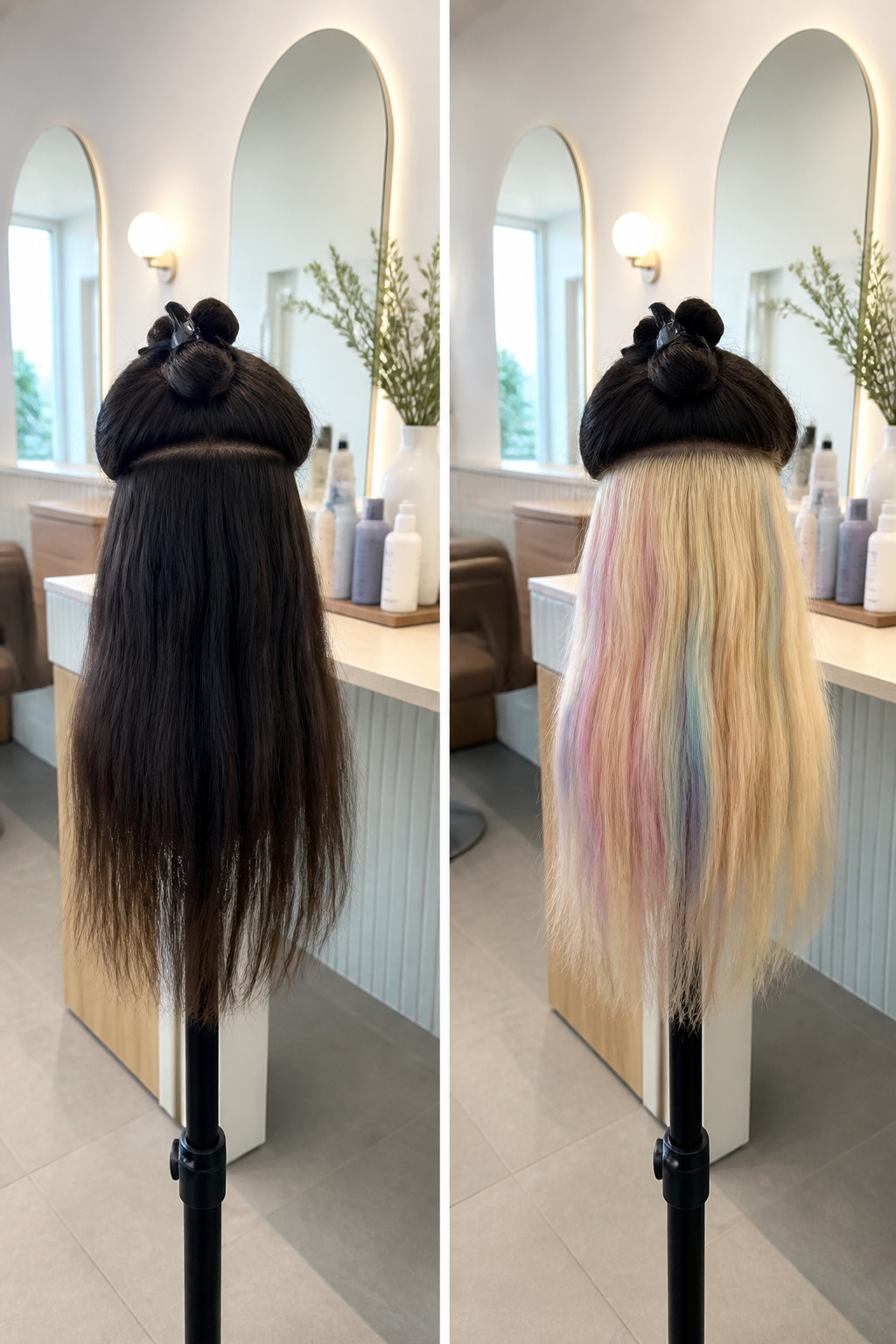
Dark hair carries too much pigment for bright rainbow shades to read as anything but murky brown. The underlayer has to lift several levels before teal, violet, or coral can land true. Anything below a pale yellow base leaves color looking muddy instead of clean, and that is where most home attempts end up disappointing.
The lifting process itself is rough on condition. Cuticles swell, moisture escapes, and the strand weakens. Someone with naturally dark hair might need two separate bleaching sessions with weeks between them to reach the necessary level without snapping. Your hair the morning after a single aggressive lift feels like straw for a reason.
Condition matters more for hidden rainbow than all-over color because the underlayer gets tucked away. Heat from the top section presses down on it daily, so compromised strands fry faster where they are already stressed. I would rather delay the color appointment and do a protein mask cycle first than rush the lift and watch the rainbow fade to sludge in two washes.
Color Application
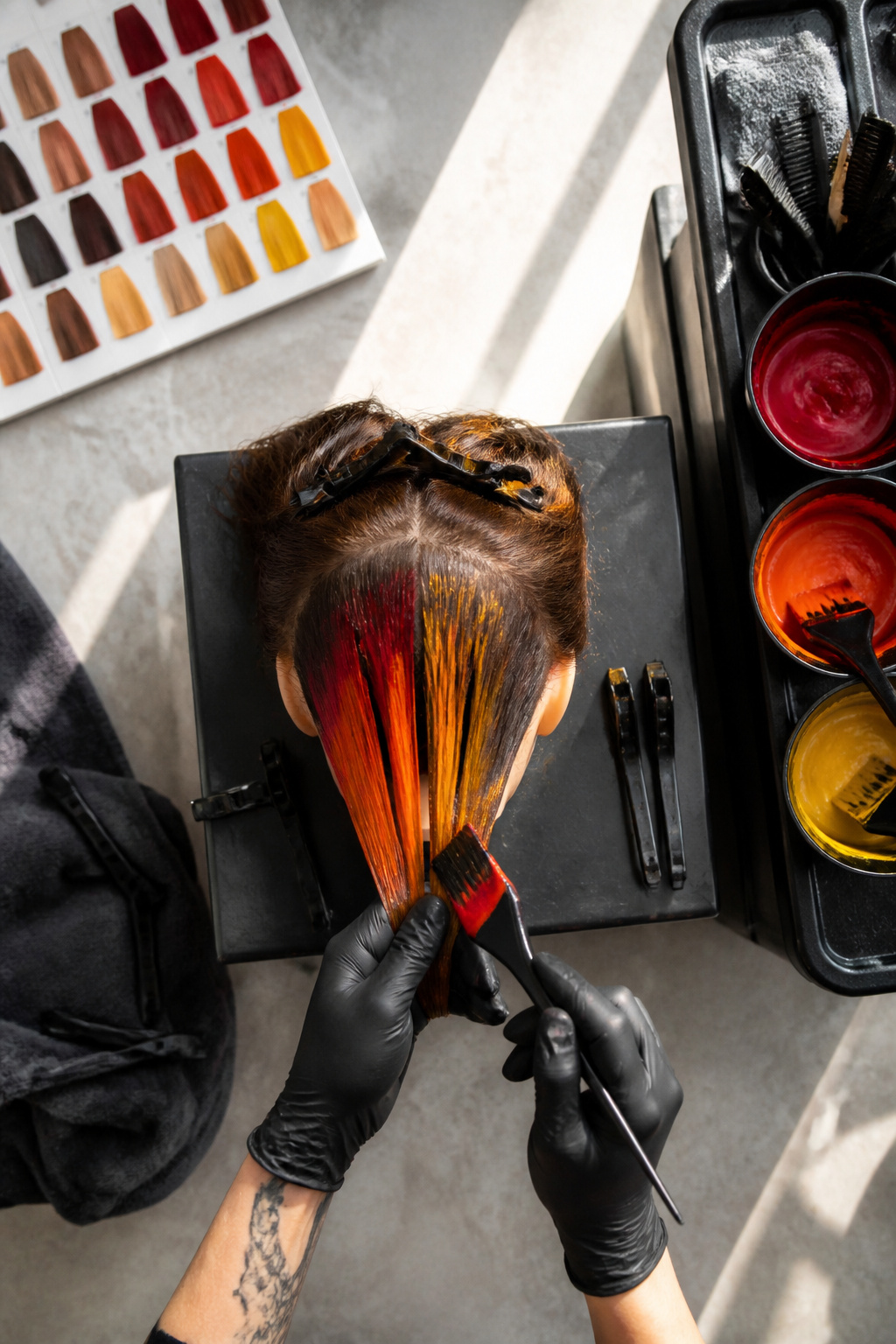
Mapping the color placement before touching dye to hair saves the patchy transitions that turn a hidden rainbow into a muddled surprise. I start at the nape and work upward, painting thin sections no wider than two fingers so the shades bleed together where they meet rather than sitting in stripes.
The classic order runs red through orange, yellow, green, blue, indigo, violet, bottom to top. Each color needs its own real estate, roughly equal, with the transition zone between them kept narrow and deliberate. Where yellow meets green, the overlap should be a few millimeters at most; too wide and you get murky olive instead of a clean handoff.
The underlayer’s natural fall matters more than most people account for. Colors placed too high on curved sections peek through at the crown when the hair moves, breaking the hidden effect. I keep the top two inches of the underlayer either uncolored or in a deep tone that reads as shadow, not signal, when the upper layer shifts.
Rinsing and Sealing the Color

Cold water does the heavy lifting once the color goes on. Warm water lifts the cuticle, so dye slips out and bleeds between your carefully sectioned panels. That warmth feels nice, but it costs you the clean edges that make hidden rainbow hair worth the effort.
The first rinse after application sets the tone for the next six to eight weeks. I keep the stream cool enough to feel like a shock, running it from roots to ends without scrubbing. The water runs tinted at first, then clears faster than it would under heat. Once it runs mostly clean, a cool blast for thirty seconds seals the cuticle flat.
Temperature is the cheapest tool in your kit, and it outperforms most pricey finishing products. A lukewarm wash a week later won’t undo the work, but that initial cold rinse is where the color actually locks in. Skip it, and the blues turn muddy where they touch the pinks, the yellows go green at the edges, and the whole underlayer looks like an accident instead of a choice.
Aftercare for Longevity

Color-safe shampoo and conditioner are the baseline for keeping hidden rainbow hair from dulling out in the first two weeks. I wash mine twice a week at most, and the cold rinse at the end, which I hated at first, is what actually closes the cuticle and locks the pigment in place. The hidden placement helps, since the top layer shields the color from sun and heat styling, but the underlayer still takes a beating from shower water and friction.
Hair grows about half an inch monthly, six inches yearly, so the math catches up with you. In three months, that hidden section has dropped an inch and a half lower, and the reveal point shifts. What started as a surprise flash of color at the nape becomes visible closer to the jawline, changing the whole effect. I book touch-ups every eight to ten weeks, not because the color has faded, but because the growth pattern has moved the rainbow somewhere it was not meant to show. Shadowed roots on the top layer buy some time, since they blur the line between natural and artificial, but the underlayer growth is harder to disguise without re-sectioning entirely.
Cool Tones and Greens and Blues
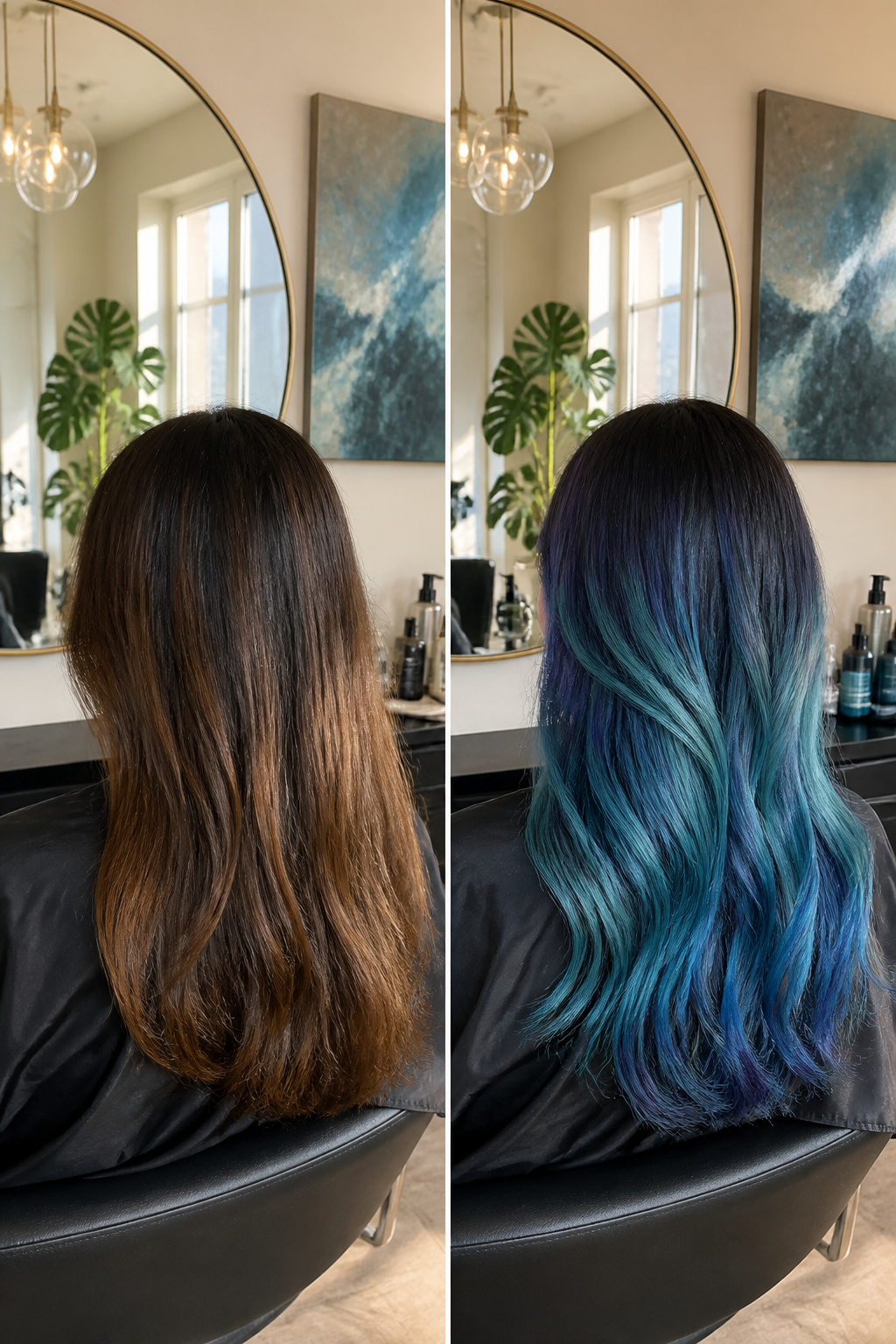
Cool tones let you keep the hidden rainbow hair idea without the jolt of full saturation. Staying inside one family, say related shades of blue, purple, and pink, reads as texture more than costume when a section slips into view during a meeting. The contrast is low enough that most colleagues register something interesting, not something distracting.
Alternating blue and green pushes further. Royal blue against teal or ice blue against dark green builds a deliberate stripe that still hides under the top layer, but the reveal hits harder. These shades photograph distinctly under direct light, so the same twist of hair that looked almost black indoors turns into readable color in a window seat or under a flash.
Both approaches keep the hidden element intact. The single-family version just changes how much the room notices when it shows.
Pastel Rainbow

Pastel rainbow hidden beneath a natural top layer reads softer than the saturated versions, closer to cotton candy or tinted glass than to primary colors. That softness comes at a cost: the base has to lift almost to white, because any yellow left in the underlayer will turn lavender into gray and mint into swamp. Imperfections that jewel tones would swallow whole, pastels broadcast immediately.
The look skews younger and more experimental, the kind of thing that surfaces at music festivals or in creative fields where the surprise matters more than the polish. Your hair will tell everyone you did this for fun, not for a client meeting.
What convinced me, reading through the maintenance accounts, is how fast the experiment ends. Pastel pigments sit on the surface of the hair shaft rather than penetrating deep, so every wash pulls color down the drain. Where a hidden jewel-tone rainbow might hold for six to eight weeks with proper care, pastels fade toward blonde in half that time, sometimes faster if your water runs hot or your shampoo is not color-safe. The commitment is front-loaded into the bleaching, not the wearing.
Shadowed Roots and the Hidden Reveal
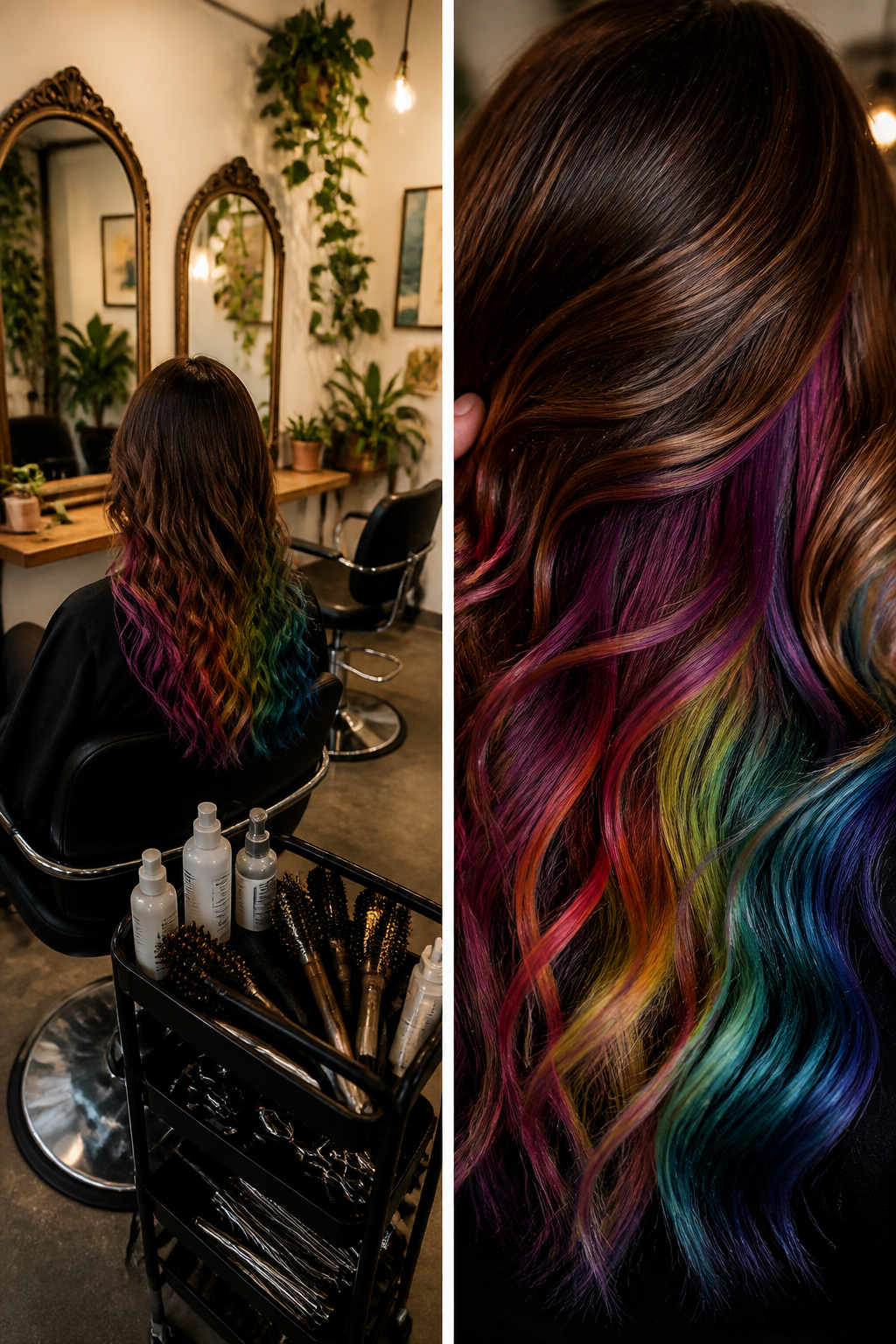
Shadowed roots add contrast that makes bright lengths pop without looking like a single block of color. The darker tone sits at the scalp and fades into the rainbow below, which also buys time between salon visits since new growth blends into that shadow rather than screaming for a touch-up. I like this for anyone who wants the color to read as intentional, not like a maintenance emergency waiting to happen.
The hidden reveal works differently: the rainbow lives underneath a top layer of natural or plainly colored hair, so you control when it shows. Tie it up, part it deep, or pull it back, and the color appears. Sources describe this as the style for someone who needs to look conventional at the office but wants the option to let the color out after hours. What convinced me, reading through the techniques, is how much practical control this gives the wearer compared to a full-head commitment that announces itself in every room you enter.
Hidden Undercut and Bright Rainbow

The hidden undercut sits at one extreme of concealment: a faded or buzzed panel at the nape, colored in whatever rainbow sequence you choose, then completely buried when the rest of your hair falls down. Lift it into a bun and the color appears; otherwise, even someone standing behind you sees only natural tone. That near-invisibility is what makes it practical for offices with strict dress codes, and what drew me to the style in the first place when I was reading through salon accounts of how clients actually live with it day to day.
Bright rainbow on minimal natural hair sits at the opposite end. Here the top layer is kept deliberately thin or short, with most of the head shaved or closely cropped, so the color blocks show on the sides and back with only a veil of natural pigment overhead. The color is technically "hidden" by that top layer, but barely; a slight shift of your head or a breeze reveals it. Where the undercut demands an action to expose it, this version demands an action to cover it.
These two approaches split the difference on risk. The undercut protects your professional appearance completely until you choose otherwise; the bright rainbow asks you to own the look most of the time and hide it only when necessary. Your daily routine, not your taste in color, is usually what pushes you toward one or the other.
Rainbow-Brite Bob and Redhead Versions
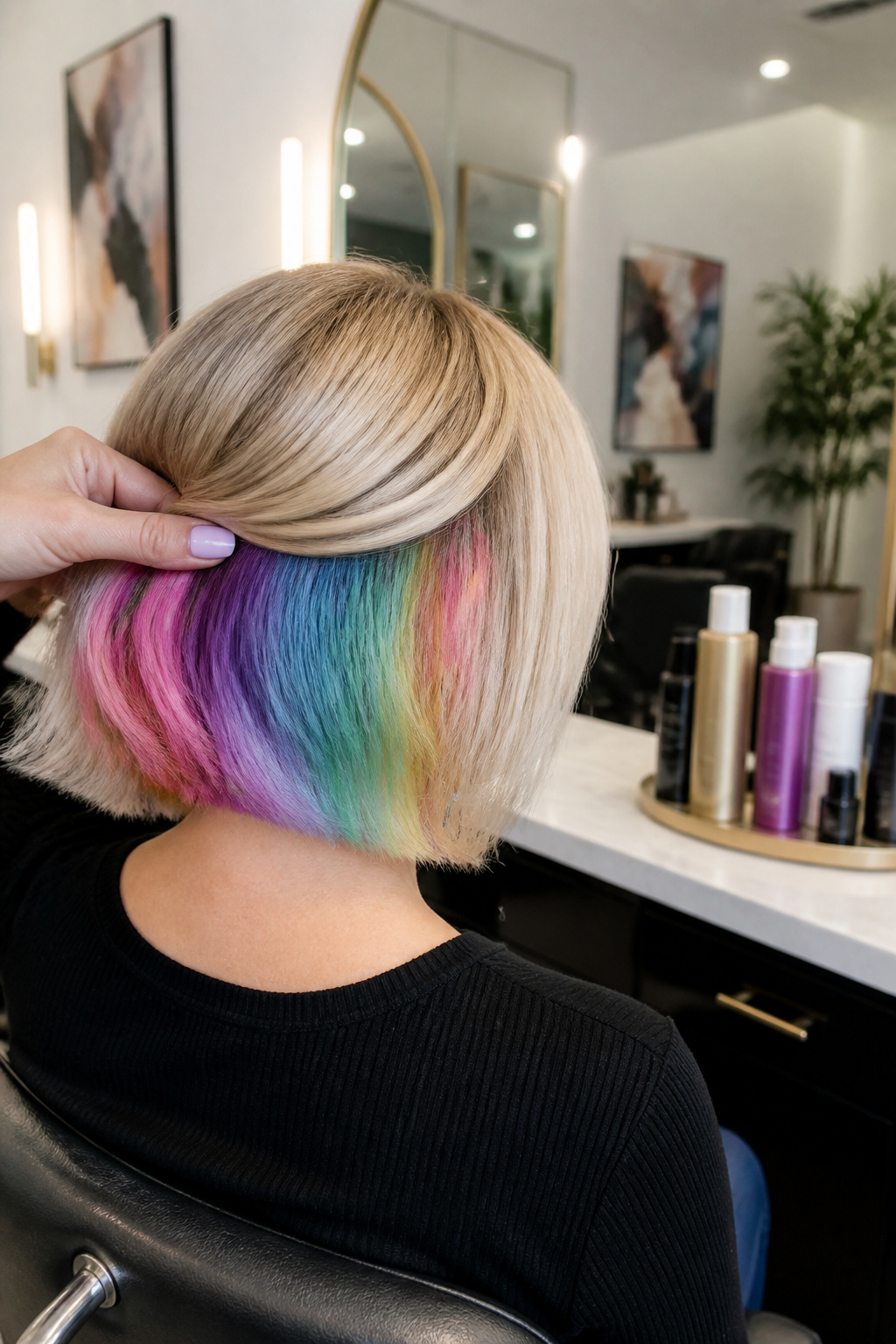
A blonde top layer over a bob gives the hidden rainbow treatment a built-in reveal mechanism. The thin surface layer lets color peek through when you run your fingers back, and the shorter cut keeps those underlayer strands close enough to the surface that the hue stays slightly visible even at rest. For redheads, pigment choice matters more than placement. Copper and auburn bases can turn cooler rainbow shades muddy underneath, so the underlayer leans warmer to avoid that murk. These two adaptations sit farther down most stylists’ request lists, which is exactly why they work: the bob version solves the "will anyone see it" problem by design, and the redhead route proves the technique isn’t locked to one starting point. Both take more planning than the standard brunette-to-blonde hidden rainbow, but the payoff is a result that actually reads as intentional on hair the trend rarely considers.
Techniques Sources Emphasize Most

Reading through a dozen of these salon breakdowns convinced me that four steps appear in every single one, and skipping any of them is where the regrets start.
- Consultation precision matters because hidden rainbow hair is, by definition, a risky style. The stylist and client need to agree on exactly what "hidden" means for that person’s part line, typical updos, and how much reveal they actually want.
- Sectioning accuracy builds the illusion. Sources repeat the same map: leave natural hair along the hairline, face, roots, and above the ear. Section too high and the color shows; the gap of uncolored hair is what makes the effect work.
- Thorough lightening on darker hair comes before any rainbow pigment goes on. Without it, the colors stay muddy instead of bright. This is the step that turns a hidden rainbow into something visible when the hair moves.
- Color-safe maintenance extends wear time dramatically. Cold water rinses prevent bleeding between shades, and the right shampoo and conditioner keep the vibrance from washing down the drain in a week.
What struck me, reading these, is how each step protects the others. Precise sectioning fails if the lightening is rushed. Perfect color application bleeds in a hot shower. The checklist only works as a whole.
Styles Less Commonly Covered

Two approaches sit at the edges of most hidden rainbow hair conversations, and both reward the extra effort they demand.
Color placement mapping for gradual blends means the stylist plans exactly where each tone shifts into the next, rather than applying blocks of color and hoping they merge. The rainbow lives underneath, but the transition from your natural top layer down into those colors happens in calculated stages. Your hair moves through its reveal, half-up or windblown, without harsh lines where the party starts.
The buzz rainbow style works for anyone already wearing shaved or closely cropped sections, whether that is undercut territory on longer hair or the shorter panels of a pixie. The rainbow gradient sits right on that buzzed area, visible only when the longer top layer lifts or shifts. It reads as a flash of color rather than a full statement.
Both of these need a stylist who has moved past standard peek-a-boo work. Not every salon keeps someone on staff who has built this specific skill, so the consultation matters more here than with a basic underlayer job. Ask directly about their experience with mapped transitions or buzzed-section color, and be ready to book elsewhere if the answers stay vague.
What I Would Do Differently
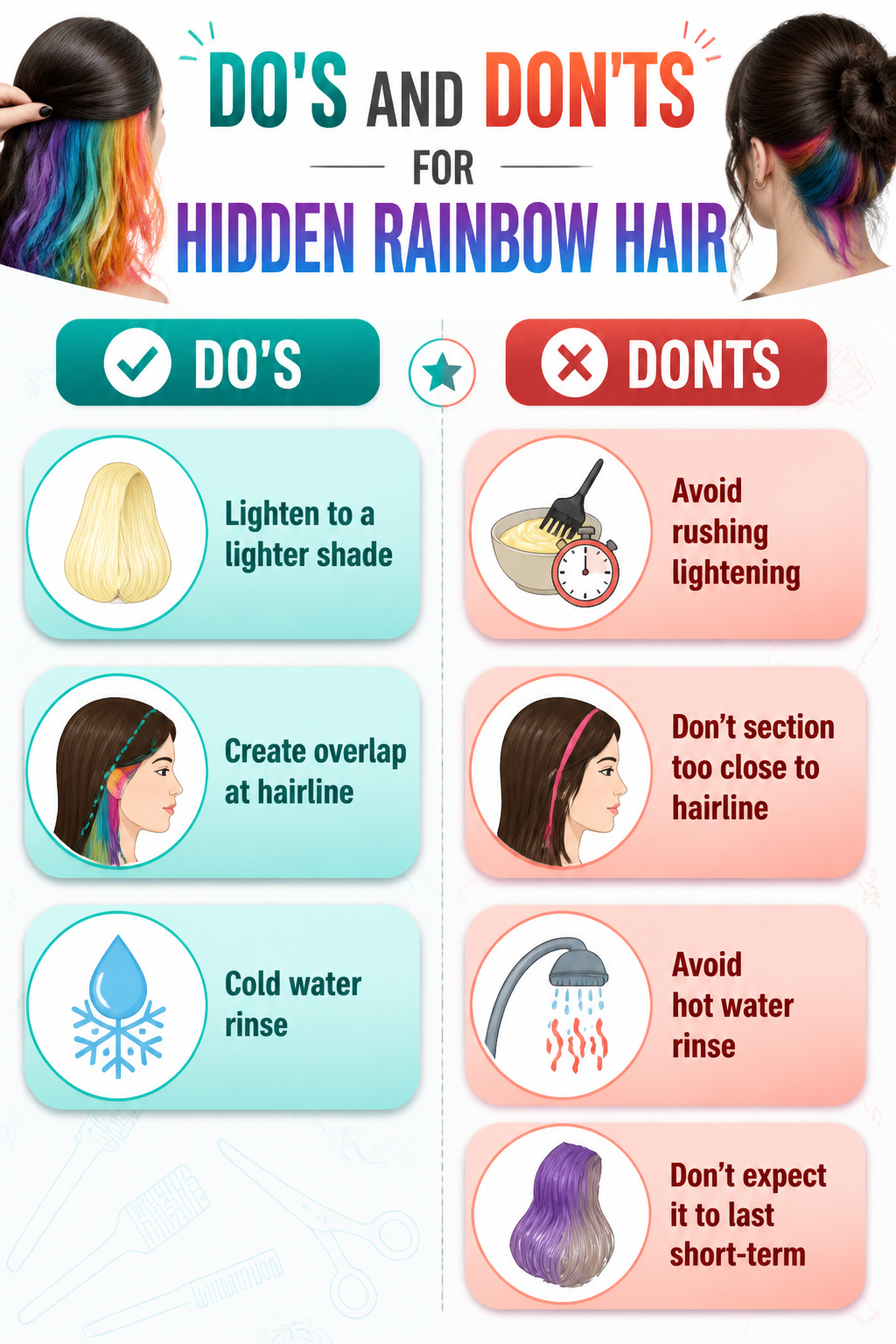
My first attempt at hidden rainbow hair taught me three lessons the hard way. The lightening stage needs to go lighter than looks right, because pigment settles darker than it appears on damp, lifted hair. I stopped at pale yellow thinking I was being kind to my strands; two days later the violet and blue sections read as muddy denim.
Sectioning too close to the hairline was the second error. The top layer needs genuine overlap to stay down through brushing, wind, a ponytail. My part showed a sliver of pink at the crown after the first wash, which defeats the entire point of hiding the color.
The hot water rinse came from habit, not thought. Warm water opens the cuticle and lets fresh direct dye slip right back out. On my retry I used cool water for that first rinse, kept the lightened base almost platinum, and gave myself an extra half inch of coverage at the part line. The difference held through six weeks instead of fading to a murmur in two.
Frequently Asked Questions
What is hidden rainbow hair?
Hidden rainbow hair keeps bright color under a surface layer of natural shade. The top section stays your regular tone while the underlayer carries whatever rainbow combination you choose. A ponytail, braid, or even running your fingers through your hair pulls the top aside and flashes the color underneath.
How do you maintain hidden rainbow hair?
Wash with color-safe shampoo and conditioner no more than twice a week, and finish every rinse with cold water to seal the cuticle. Book touch-ups every eight to ten weeks because growth shifts the reveal point lower, not just because the color fades. The top layer shields the underlayer from sun and heat styling, but shower water and friction still wear the pigment down.
What styles can I try with hidden rainbow hair?
Cool tones in one family, like related blues and purples, read as texture rather than costume when they peek through. Pastel rainbow demands a base lifted almost to white and fades faster, but skews softer and more experimental. A hidden undercut at the nape buries color completely until you lift your hair into a bun. Bright rainbow on minimal natural hair sits barely concealed, revealing itself with any shift of your head.