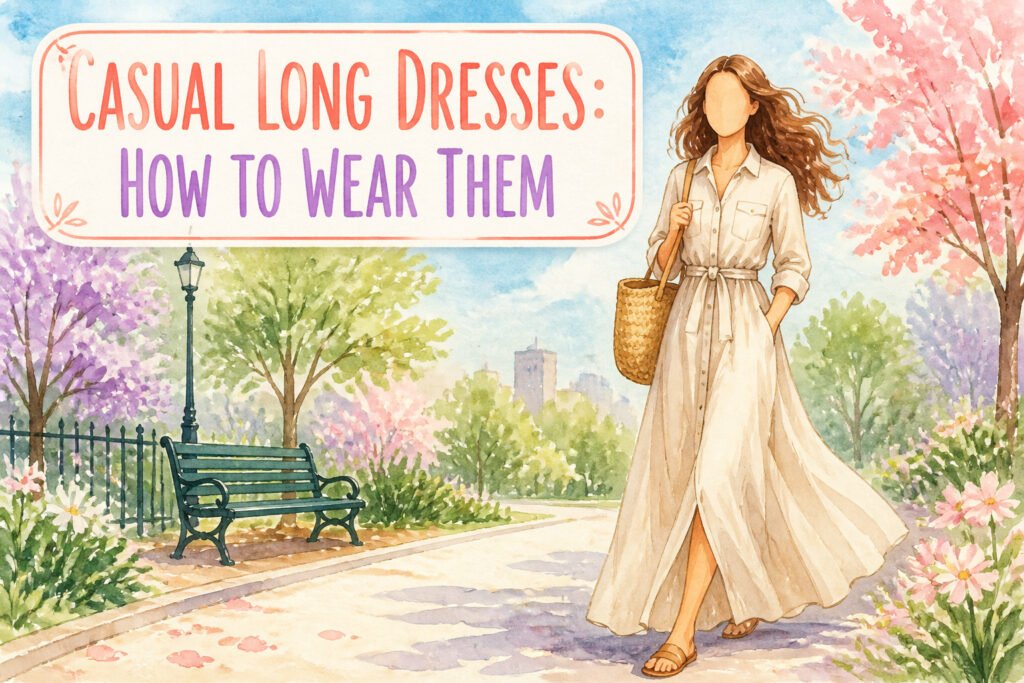
A casual long dress is a maxi-length piece cut to hang relaxed rather than cling, with fabric and fit that read as easy rather than occasion-bound. The catch is that "casual" covers six distinct shapes, from the waist-defined fit and flare to the straight column of a sheath, and choosing the wrong one for your day means either fighting the dress or looking underdressed for where you are going. The Lilla P Twill Collared Maxi Shirtdress at $278.00 shows where the category tops out, with cotton twill that holds its shape through repeated washing where cheaper poplins go limp by July.
What Casual Maxi Dresses Actually Are

A casual maxi dress hits somewhere between ankle and floor, but the length alone does not make it casual. The difference sits in the fit and the fabric. A formal maxi clings or structures; a casual one hangs relaxed, skimming the body rather than tracing it.
That relaxed fit opens the category wider than most people expect. A T-shirt dress in jersey, a button-front shirtdress in cotton poplin, a tiered prairie style, a simple tank cut: all of these read as casual maxis because none of them ask for heels or occasion jewelry. The common thread is ease. You could sleep in some of them, run errands in all of them.
Looking across what retailers are stocking right now, six distinct styles keep showing up as the core casual options. The variety matters because it means "casual" is not a single look. It is a posture toward getting dressed, one that trades structure for movement and ceremony for whatever the day actually holds.
Fit and Flare

The fit and flare maxi dress narrows through the bodice and releases into a full skirt at or just below the natural waist, a line that creates structure without clinging. That waist seam is the detail that makes this shape photograph so well: it catches light differently than a column of fabric, giving the eye somewhere to rest and the wearer a defined silhouette even in motion. For anyone between sizes or carrying weight through the midsection, the flare starts high enough to skim rather than squeeze. Broader shoulders or a fuller bust balance naturally against the volume below, while straighter frames gain the suggestion of curves where the seam hits. The style dominates casual maxi roundups for a reason. It reads as dressed up or down with almost no effort, which means bloggers and shoppers both keep returning to it. The waist seam placement matters more than the skirt length: too high and it sits at the ribcage, too low and the lengthening effect disappears. Most versions land within an inch of the natural waist, and that consistency is what makes this the safest first purchase if you are unsure which casual long dress shape suits you.
Sheath

A sheath maxi dress runs straight from shoulder to hem with almost no flare, giving a long, column-like line that reads more polished than most casual shapes. That same narrow cut is what limits it. Walking quickly, bending to pick up a kid’s backpack, or sitting cross-legged on grass all feel tighter than they do in a swing or shift dress. The fabric matters here. A cotton jersey with two to four percent spandex recovers after a stride; a woven linen or crepe without stretch stays exactly the width it was cut. I look for side slits that start at or above the knee, which lets the legs move even when the skirt tube stays narrow. For everyday wear, the sheath works best on days with less running around: a coffee meeting, a gallery walk, dinner where the seating is chairs rather than picnic blankets. On days packed with errands and car seats, I reach for something else.
Shift

The shift maxi dress hangs loose and straight from shoulder to hem, with no waist seam or cinching to break the line. That shape comes straight out of the mid-1960s, when designers pared the silhouette down to a simple tube and let the body move inside it rather than mold the fabric around curves. Decades later, the logic still holds on humid July afternoons when even a skimming fit feels like too much contact. Fabric that never touches the torso lets air circulate and sweat evaporate before it pools, which is why a cotton or linen shift in a maxi length outperforms shorter cuts that cling through the hip and thigh.
The lack of structure also means the dress does the styling work. A bold print or saturated solid reads as intentional; you are not hiding behind volume so much as letting the shape speak. In my own closet, the shift maxis get pulled first for grocery runs, outdoor dinners, and any day the heat index climbs past ninety. They look finished with flat sandals and slightly undone with sneakers, and that range matters more than a dress that demands the right belt or the right heel to make sense.
Shirtdress
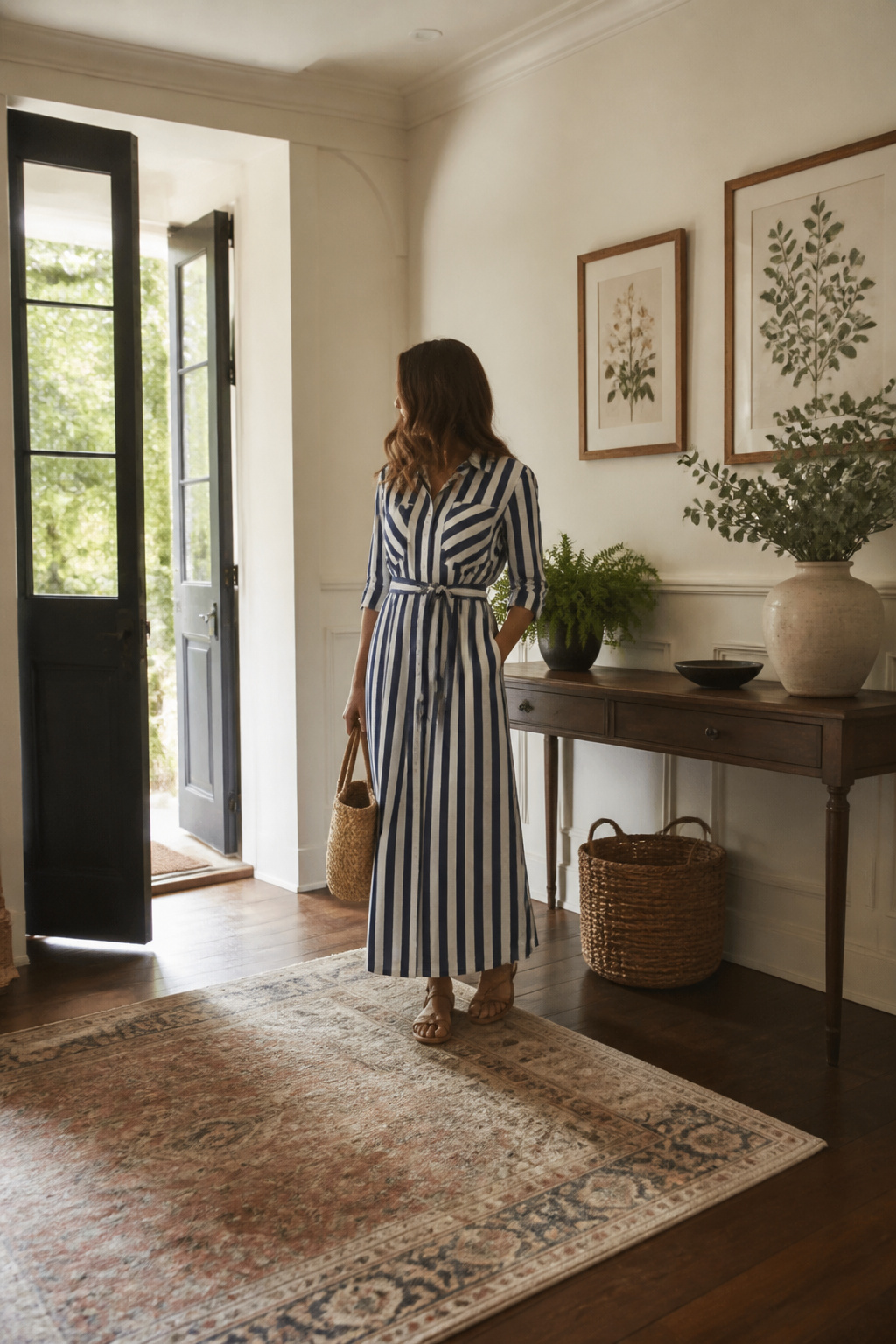
A full button-front and a real collar turn a long dress from "I threw this on" into "I chose this." The borrowed-from-menswear structure reads as intentional, not sloppy, because the tailoring gives the eye something deliberate to land on. Most shirtdress maxis add a tie or belt at the waist, which keeps the column of fabric from wearing you instead of the other way around.
The Lilla P Twill Collared Maxi Shirtdress at $278.00 sits at a higher price point than most casual options, but the cotton twill holds its shape through repeated washing where cheaper poplins go limp by July. A belted waist is the detail that saves this silhouette on shorter frames; without it, the vertical buttons can read as a line that cuts you in half. I look for side slits that start no higher than mid-calf, enough to walk in but not so deep that the dress loses its column effect.
Stripes work better here than florals because the shirting reference already primes the eye for linear patterns. The collar also solves the "what jewelry" question: small gold hoops, done.
Swing
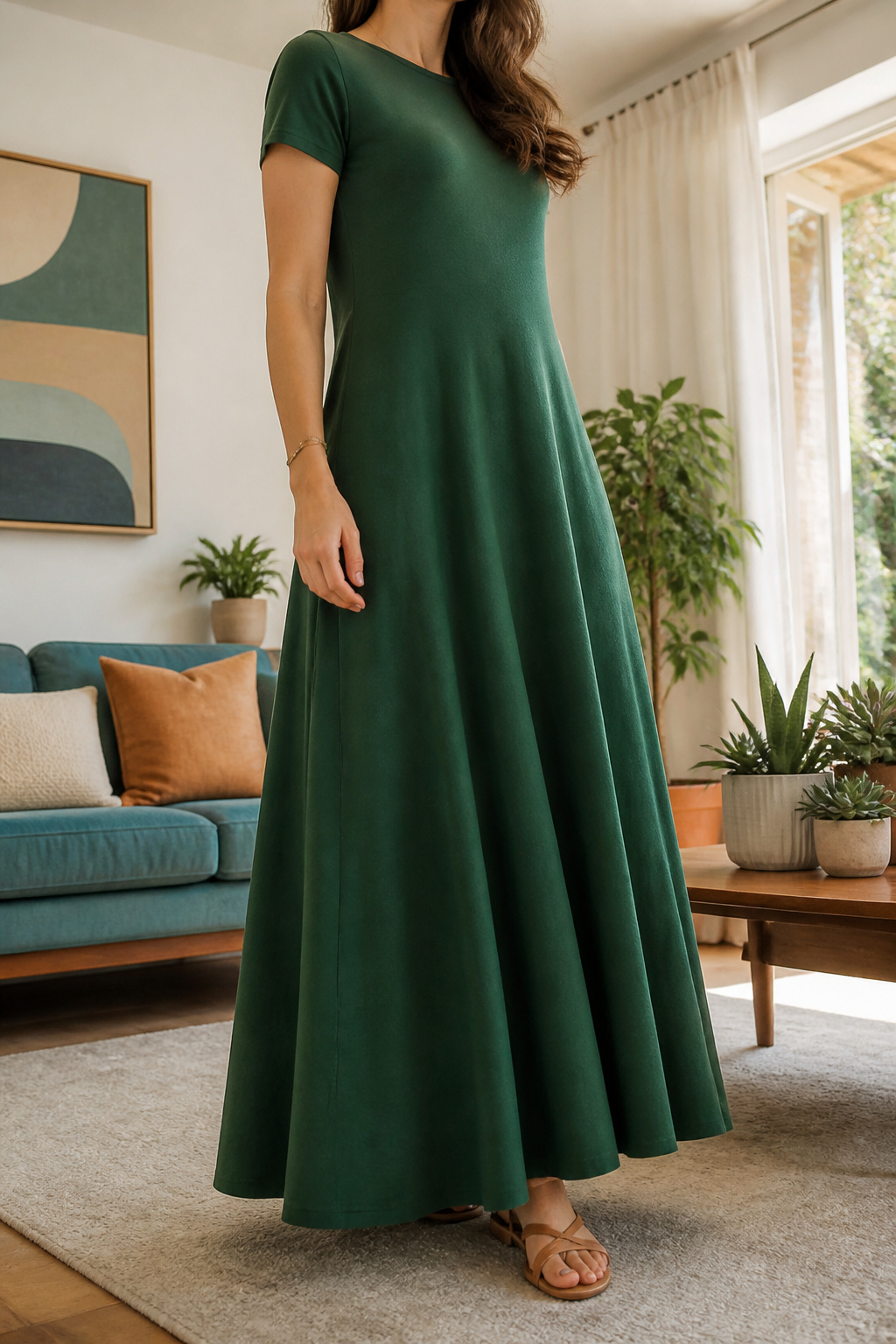
A swing maxi dress sits close through the shoulders or chest, then widens in a smooth A-line all the way to the hem. The extra fabric lives below the waist, not at it, which means the skirt moves when you walk but the silhouette stays clean through the middle. The volume starts at the hip, not the waist, so you get the flow without the tent effect that shifts and tiered skirts can add.
I tried one on last spring thinking the cut would drown my frame, but the shoulder fit kept it anchored while the skirt did the work. The movement comes from how the panels are cut, wider at the bottom than a standard A-line, so the fabric swings rather than clings. For a casual long dress you can wear to groceries and still feel dressed, this shape handles the transition better than most.
T-Shirt Dress

The T-shirt dress in maxi length is the most relaxed shape of the six, usually cut from jersey knit with a crew or V-neck that reads as borrowed from your actual tee drawer. LOFT stocks this category under its jersey and knit fabric filters, and the distinction matters because a thin jersey drapes like a nightshirt once it hits ankle length. Weight is what separates intentional from accidental. A mid-weight cotton blend holds the column shape; tissue-thin rayon clings at the hip and pools at the calf in a way no belt fixes. I look for a ribbed trim at the collar or a side slit that breaks the line, something that proves the piece was designed to be seen. Pockets help too, though they add bulk at the hip on a true column cut. Where this shape wins is running errands or a flight: pull it on, add sneakers, done. Where it fails is any setting where structure signals respect; the same ease that makes it comfortable makes it look like you grabbed the wrong thing. For 2026, the move is pairing it with a cropped denim jacket or a heavy sandal that anchors the bottom, not trying to dress it up with heels that fight the vibe.
What the Fabric Does for You
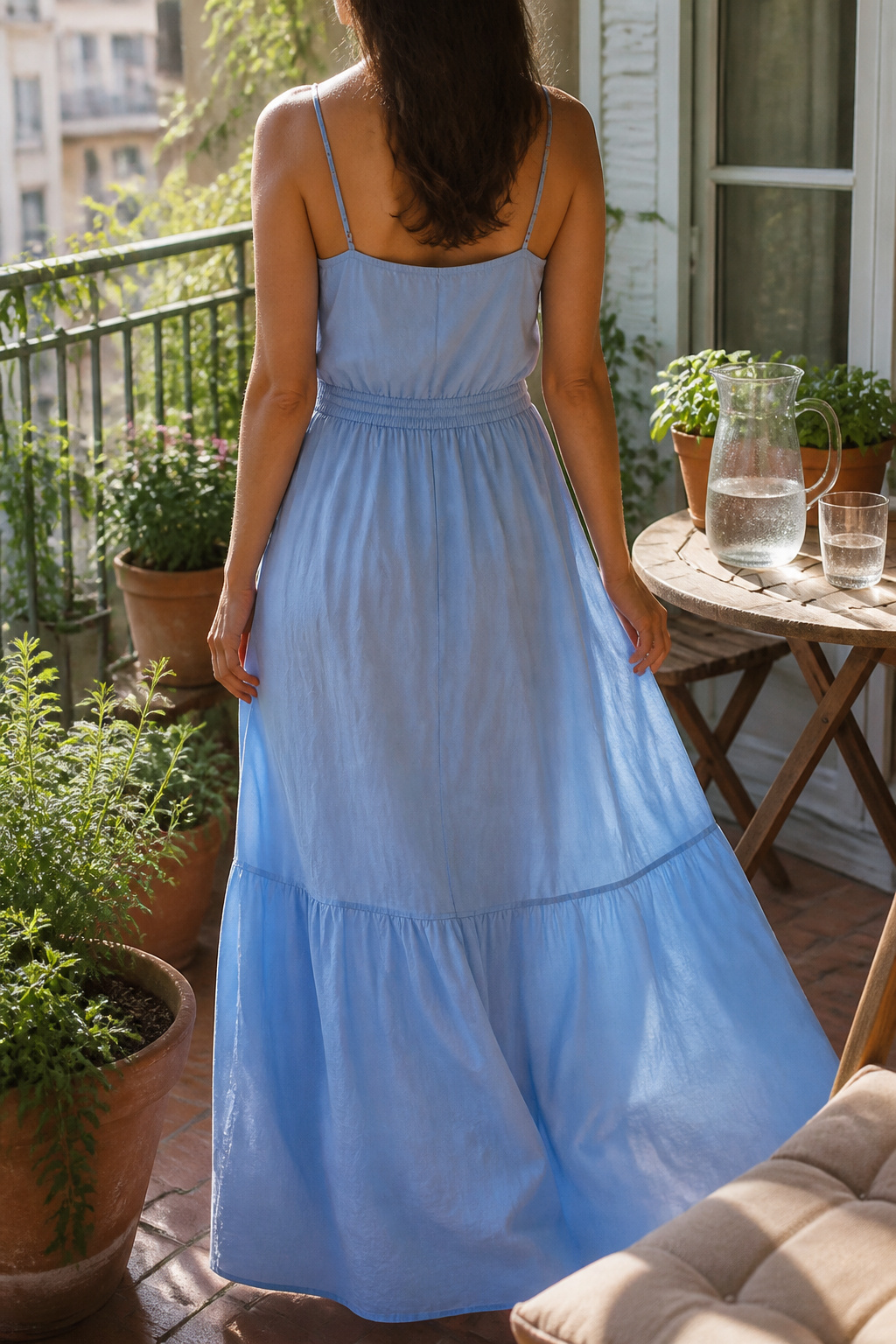
Breathable fabric makes the difference between a dress you reach for again and one that hangs in the back of the closet. After a few hours in summer heat, lightweight material that actually moves air matters more than any neckline or print. I learned this the hard way with a heavier rayon blend that looked great at 9 a.m. and felt like a sauna by noon.
The practical details show up once you start living in a dress, not just trying it on. Adjustable straps keep the bodice sitting right after lunch. An elastic waistband forgives the shift between morning errands and afternoon coffee without a trip to change. Pockets mean you can walk the dog or grab groceries without treating your phone like a juggling act.
Designed for movement, ensuring you feel great whether you’re running errands or enjoying a day out.
— Loft
That "all-day comfort" line is not marketing filler. Easy care matters too; a dress that washes without fuss and dries ready to wear earns its hanger space. The mirror test lasts thirty seconds. The real test is hour four, still moving, still comfortable, still glad you put it on.
How I Actually Wear Mine
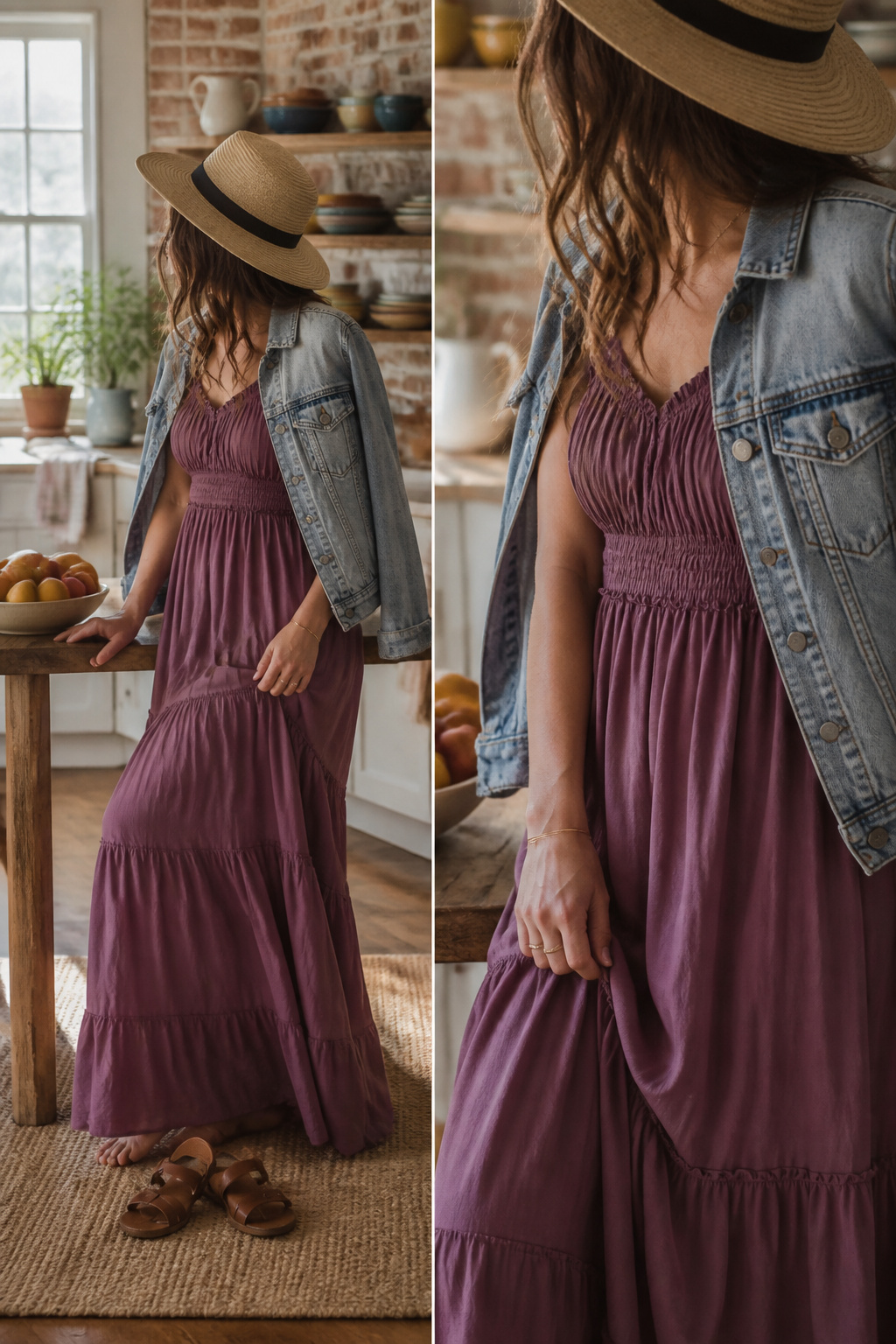
A long dress casual enough for groceries still needs something at the neck or wrist so it does not read as pajamas. Thin gold chains layered at different lengths work better than one statement piece; the eye travels up and the dress reads as intentional. For hats, a wide-brim straw in summer or a wool fedora once temperatures drop does the same job of framing the face and adding structure that the dress itself lacks.
Footwear is where I have gone wrong more than once. Flat leather sandals in warm months feel right but can make the hem drag if the dress runs long; a one-inch block heel solves that without looking dressed up. White leather sneakers work with a t-shirt dress cut straight through the body, yet the same pairing with a fuller skirted style looked like I forgot to change after a doctor’s appointment. The shoe needs some visual weight to balance the fabric volume.
Cooler days call for layering, and this is where the dress earns its keep. A cropped denim jacket keeps the waist visible; a long cardigan worn open does the same trick while reading more relaxed. I have tried belting the cardigan and the result was too try-hard for something meant to be easy. The dress drapes best when the layer on top either ends at the waist or falls well below it, nothing hovering at hip length to chop the line in half.
Frequently Asked Questions
What styles are available in casual maxi dresses?
The six core styles are fit and flare, sheath, shift, shirtdress, swing, and T-shirt dress. Fit and flare narrows at the bodice and releases into a full skirt, while the T-shirt dress is the most relaxed shape of the group. Each reads as casual because of its easy fit and fabric, not just its length.
What features should I look for in a casual maxi dress?
Look for adjustable straps, an elastic waistband, and pockets. Adjustable straps keep the bodice in place after meals, an elastic waist forgives shifts in fit across the day, and pockets free your hands for errands or dog walks. Breathable fabric matters most after a few hours of summer heat.
How can I style a casual maxi dress?
Layer thin gold chains at different lengths to draw the eye up, or add a wide-brim straw hat in summer and a wool fedora in cooler months. Footwear needs enough visual weight to balance the fabric volume: flat leather sandals, a one-inch block heel, or white sneakers with a straight-cut tee dress. Top with a cropped denim jacket or a long open cardigan, avoiding anything that ends at hip length.