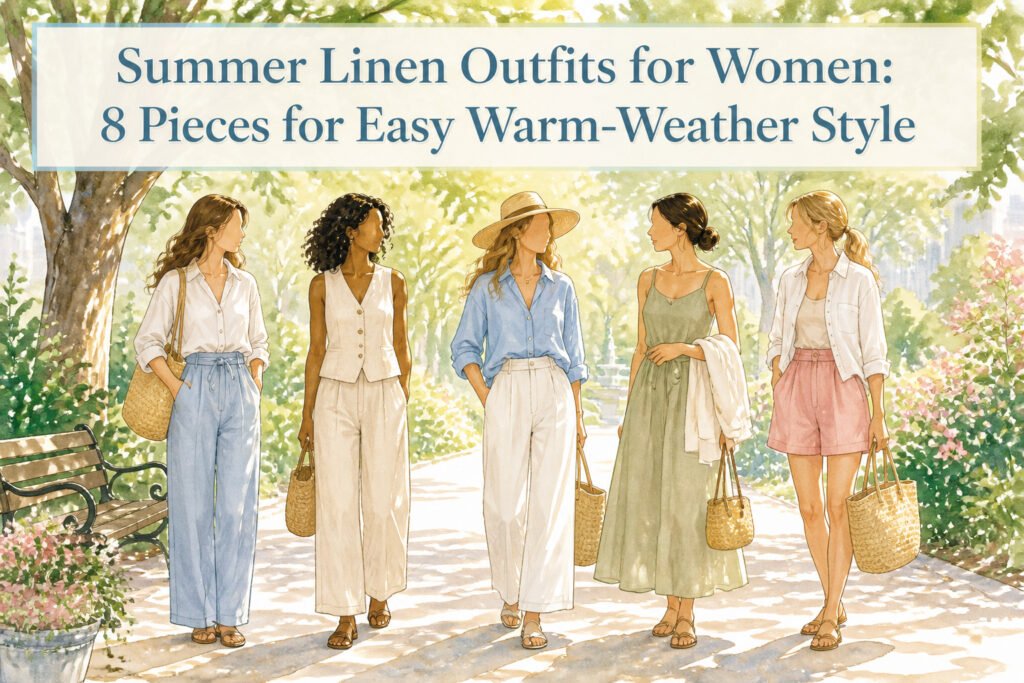
Summer linen outfits women build around specific fabric weights, not just the fiber name. The difference between a shirt that drapes and one that clings comes down to ounces per square yard, and getting that wrong means trapping heat or turning transparent by noon. A mid-weight linen button-down at 5–7 ounces, like the $245 Jenni Kayne cut, hits the balance where air moves through without the fabric collapsing into wrinkles.
Linen Button-Down Shirts

A linen button-down shirt earns its place in summer rotation through fabric weight more than anything else. The Jenni Kayne version runs $245, and that price sits where the material justifies it: mid-weight enough to drape without clinging, light enough that air moves through the weave. Anything heavier traps heat against the collarbone; anything lighter turns transparent by noon.
The collar matters more than most people check. A standard point collar lies flat under a sweater if the office AC kicks in, but a camp collar, open and unstructured, reads intentional without a jacket. I look for a cut that skims rather than tucks: two to three inches of ease through the torso, sleeves that roll to the elbow without bunching. The Jenni Kayne cut hits this balance, though the real test is whether the shoulder seam sits where your shoulder ends, not where you wish it did.
Fabric weight around 5–7 ounces per square yard gives the best trade between coolness and structure. Below that, linen becomes a wrinkled curtain; above it, you might as well wear cotton.
Linen Pants

A good pair of linen pants at 205 g/m² hits the sweet spot for summer: substantial enough not to go see-through in sunlight, light enough that you don’t feel weighed down. The Athleta pair runs $89, marked down to $53 right now, and that medium weight is why I’d reach for it over the heavier 230 g/m² options that feel like wearing upholstery by August.
The leg width is where I tripped up once. I bought a pair with too wide a leg, thinking I’d get better airflow, and instead I got pants that billowed in every breeze and looked sloppy by noon. A straight or slightly tapered cut keeps the linen’s natural movement without letting the silhouette collapse.
At $53, the Athleta pants cost about what I’ve paid for lesser fabric that pilled after two washes. The 205 g/m² weight also recovers from sitting better than lighter weaves; you won’t stand up looking like you slept in them.
Linen Shorts

A pair of 100% linen shorts from Quince runs about $30, and that price point makes them the piece I reach for most once the humidity climbs. Linen blends tend to pill faster at the inner thigh and lose that crisp drape that keeps shorts from looking slept-in by noon, so the all-linen construction matters more here than it does for, say, a loose tank top.
Inseam length shifts where these can go without looking underdressed. A 3-inch inseam works for the beach or a backyard grill, but a 5-inch cut gets me into a casual lunch or a morning meeting without the outfit screaming weekend. The longer line also keeps the fabric from riding up when I walk, which is half the reason I bought linen in the first place.
Linen Skirts

Linen skirts come in lengths that change how the fabric behaves, and that behavior matters more in July than in May. A midi that hits mid-calf catches every breeze but can cling at the thigh if the weave is too loose. The 260 g/m² weight sits right in the middle: heavy enough to keep its line when you walk, light enough that you are not carrying the skirt by ten in the morning.
Lining is where I misjudged. I bought a pale, unlined linen skirt two summers back, thinking the color would reflect heat. The fabric was probably closer to 180 g/m², and in direct sun the skirt turned transparent against my legs. The outline of my pockets showed through. I spent the afternoon with a cardigan tied at my waist, which defeated the point of wearing a skirt at all. Now I check for a cotton voile lining on anything lighter than that 260 g/m² mark, or I stick to darker colors that let me skip the lining without the reveal.
Linen Tops

Sleeveless linen tops work best when the armhole is cut high enough to hide a standard bra band, but that same cut traps heat against the underarm where the fabric takes the most friction. Short-sleeve versions solve the bra problem entirely and the sleeve itself acts as a buffer, though the tradeoff is a slightly warmer shoulder on the stickiest afternoons. Neckline depth matters more than most summer tops because linen’s crisp structure doesn’t drape and forgive the way jersey does; a scoop that sits two inches below the collarbone will show the full front clasp of anything but a plunge bra, while a shallow V or a boat neck keeps the underlayer invisible without requiring a special purchase.
I learned the blend lesson the hard way after two summers of linen-cotton tops that pilled into rough patches exactly where my arms swung. The cotton softens the hand feel at first, but the shorter fibers work their way to the surface with body heat and movement, then matte together into fuzz that no shaver fully fixes. 100% linen costs more upfront and wrinkles faster, but the same top three years in still looks like cloth rather than felt under the arms.
Linen Dresses

A linen dress lives or dies at the waist. The Everlane linen shirt dress sits at $126 on sale, down from $168, and the first thing to check is whether that waist hits at your actual waist or an inch below it. Linen has no stretch to forgive a misplaced seam. Jersey forgives; linen announces.
Pocket depth matters more here too. Shallow pockets in a lightweight linen skirt gape open the moment you sit, because the fabric has no recovery. The Everlane dress runs deep enough to hold a phone without the silhouette distorting.
After two hours in a chair, linen wrinkles in a specific pattern: horizontal creases across the lap, diagonal pulls at the hip if the cut is slim. These do not brush out the way cotton creases do. The wrinkle becomes part of the look, which is fine if you planned for it and less fine if you expected crispness at 4 p.m.
Linen Jackets

A 340 g/m² heavy-weight linen jacket sounds like overkill for July, and Garnet Hill prices theirs at $159. That density is built for year-round wear: it holds a crease, blocks office air conditioning, and layers over sweaters come October. The math works if you want one piece doing three seasons.
My own summer evenings run cooler than the days promise. At 72 degrees, with the sun down and a breeze off the water, that same heavy linen becomes what I actually grab. The structure keeps it from looking like I borrowed a shirt, and the weight drapes rather than clings. Lighter linen at 170–200 g/m² wrinkles into a napkin within an hour of sitting; this stuff only softens.
The trade is packability. Rolled into a tote, the Garnet Hill takes up space a cardigan wouldn’t, and the price stings if you’re shopping strictly for August. For three months of actual use before September, a lighter layer at half the cost makes more sense. The heavy jacket earns its keep if your summers include 60-degree mornings or over-air-conditioned restaurants weekly. Otherwise, rent the look with something cheaper and save the $159 for the linen pants you’ll wear more often.
Linen Accessories

A linen baseball cap from Eileen Fisher sits on my dresser every June through September, and it is the only summer hat I have ever used more than twice. The fabric weighs almost nothing against my head, and the weave lets heat escape instead of trapping it like the straw hats I bought and abandoned in years past. That same airy structure makes linen scarves worth keeping nearby for evenings when the temperature drops ten degrees after sunset. I have two: one lives in my tote bag from May onward, and the other I left in a hotel drawer in Charleston because I forgot I owned it. The bag itself is linen, purchased after watching how easily it stuffed into a weekend duffel without adding weight. Linen accessories work because they extend an outfit without demanding space or heat retention, which is exactly what summer dressing needs.
The best linen essentials are the kinds of pieces you’ll find yourself reaching for again and again.
This applies doubly to accessories, where the temptation is to buy variety and use none of it. One cap, one scarf, one bag: that is the combination I actually wear.
Breathability and Comfort

Linen’s open weave is what makes summer linen outfits women actually want to wear when the temperature climbs. The fiber structure leaves natural gaps that let heat escape instead of trapping it against your skin, and those same channels pull moisture outward so it can evaporate. At 88 degrees with 70% humidity, that difference is the gap between feeling damp and feeling dry.
A 100% linen piece against a blend is where the coolness becomes obvious. Blends trade some of that open structure for easier care or lower cost, which means less airflow and more of the cling you are trying to avoid. The 100% linen option stays cooler longer in the same conditions, though it will wrinkle more. The creasing is part of the fabric’s character rather than a flaw to fight.
What "breathable" actually feels like is air moving across your skin even when you are standing still. The fabric does not seal you in; it lets breeze pass through and carries sweat away before it pools. That is the difference between wearing something light-colored and something actually light to wear.
100% Linen Versus Blends

The weight on the bolt matters more than the fiber content alone. A 205 g/m² medium-weight pure linen drapes softly and wrinkles the moment you sit, while a 340 g/m² heavy linen holds its shape through a full day but can feel stiff against bare skin. Blends shift that balance predictably. A 260 g/m² fabric with a lower linen ratio trades some breathability for noticeably less creasing and a smoother handfeel right off the rack.
| Attribute | 100% Linen | Linen Blend |
|---|---|---|
| Weight range | 205–340 g/m² | Often 260 g/m² at similar opacity |
| Wrinkling | Immediate, pronounced | Reduced; creases fall out faster |
| Softness | Breaks in after washes | Softer from first wear |
| Longevity | Weakens with heavy abrasion | Synthetic fibers add tensile strength |
I reach for pure linen when I want the garment to age visibly and I do not mind the rumpled look. A blend wins for travel or client meetings where pressed appearance matters more than fiber pedigree. Neither is objectively better; the ratio simply moves the compromise between comfort and maintenance.
Washing and Drying

Linen shrinks fast in hot water, and a sleeve that once hit my wrist now sits two inches above it after one careless wash. That shirt taught me the routine I still follow.
- Machine wash on gentle cycle with cold or lukewarm water. Hot water tightens the fibers and pulls the garment smaller, so the temperature matters more than the detergent choice.
- Air-dry flat or on a hanger to keep the shape the pattern was cut to. The weight of wet linen can distort shoulders if you hang it wrong, so a flat rack wins for anything structured.
- Low dryer heat works in a pinch for a pre-shrained piece you already know the fit of, but the dryer still beats the fibers harder than air and will shorten the lifespan. I reserve it for travel days when nothing will dry overnight.
Sustainability and Custom Options

Linenfox caught my attention because they sew only after you order. That made-to-order model means no rack of unsold garments gets marked down and eventually trashed, and every yard of fabric they stock gets used in someone’s piece. Customization runs to lengths and small features, so a taller frame or a preference for deeper pockets doesn’t require a post-purchase trip to a tailor.
The first time I requested a custom length, I forgot to ask about fabric weight. Summer linen outfits women actually wear all day need to breathe, and the same weave at a heavier ounce count drapes like fall clothing. Now I always ask for the grams-per-square-meter number before confirming any custom order. The material gets cut efficiently either way, but efficiency only helps if the garment still works for the season.
Frequently Asked Questions
Why is linen clothing ideal for summer?
Linen’s open weave leaves natural gaps that let heat escape instead of trapping it against your skin, and those same channels pull moisture outward so it can evaporate. At 88 degrees with 70% humidity, the difference between linen and a tighter weave is the gap between feeling damp and feeling dry. The fabric also lets air move across your skin even when you are standing still, carrying sweat away before it pools.
How should you wash and dry linen clothing?
Machine wash on gentle cycle with cold or lukewarm water; hot water tightens the fibers and shrinks the garment. Air-dry flat or on a hanger to preserve the shape the pattern was cut to, since the weight of wet linen can distort shoulders if hung wrong. A low dryer heat setting works in a pinch for a pre-shrunk piece, but it will still beat the fibers harder than air and shorten the lifespan over time.
What should you look for when shopping for linen clothing?
Check whether the item is 100% linen or a blend, since pure linen is lighter and more breathable while blends trade some airflow for less creasing and a softer handfeel right off the rack. Also check the fabric weight in grams per square meter: around 5–7 ounces per square yard (roughly 170–235 g/m²) gives the best trade between coolness and structure for shirts, while 205 g/m² hits the sweet spot for pants and 260 g/m² works well for skirts that need to keep their line when you walk.