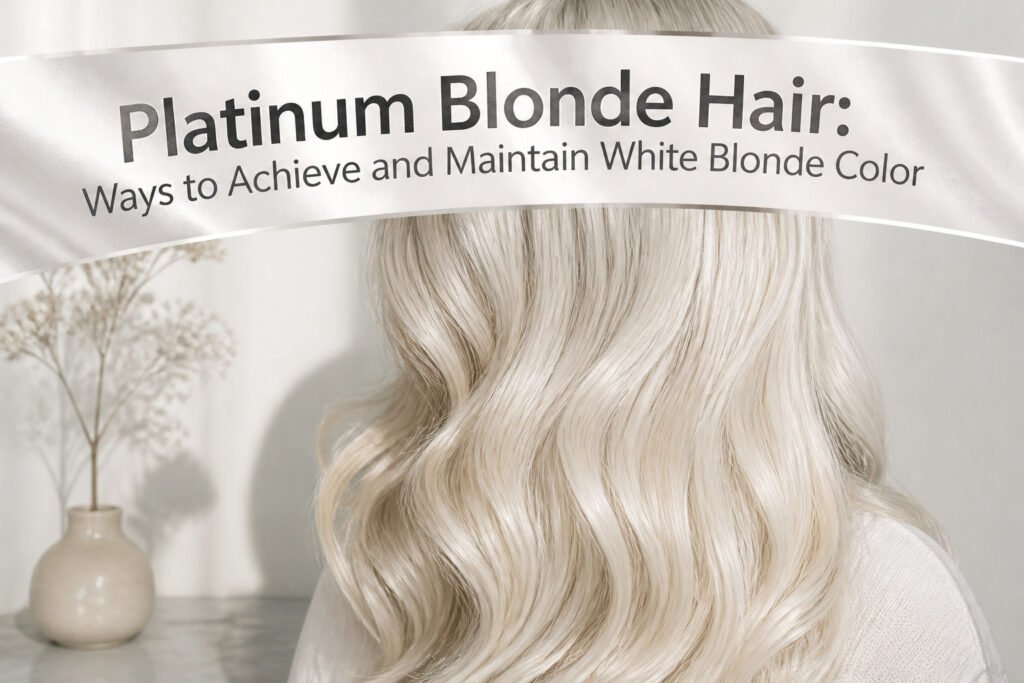
Platinum blonde hair is an almost-white blonde shade reached by lifting natural pigment to its palest possible base, then toning out remaining warmth. The difference between the editorial result and breakage is bond-support lightener: formulas with built-in repair claim up to 97% less breakage while pushing lift to the 9 levels true platinum demands. That process can stretch to nine hours in a single session, and anyone promising a two-hour transformation is cutting corners or lying.
Pre-lightening

BlondorPlex, or a similarly engineered lightener with built-in bond support, is what separates a platinum result from a broken-off disaster. The WellaPlex ingredient in that formula claims up to 97% less breakage while pushing lift up to 9 levels, which is the range you need for a true white blonde canvas. That kind of lift takes time: initial bleaching can stretch to 9 hours, and anyone selling you a two-hour transformation is either skipping levels or skipping honesty.
Virgin hair in healthy condition handles this best. The cuticle is intact, the cortex has no prior chemical residue, and the lightener can work predictably from root to tip. Previously colored hair, especially with darker permanent dye or henna, fights back. It lifts unevenly, it snaps at compromised points, and it often demands multiple sessions spaced weeks apart to reach the same pale yellow stage without melting.
BlondorPlex is powered by our bond-strengthening WellaPlex ingredient, so you get the blonde you’ve always wanted with up to 97% less hair breakage built in.
— Wella
That 97% figure matters most if your hair is already fine, already heat-damaged, or already pushing past shoulder length where breakage shows as months of growth lost. A colorist using this step is buying you the pale base that makes platinum toning possible at all; without enough lift, no amount of violet shampoo corrects the underlying warmth.
Blonde toning

Toner is where platinum blonde hair stops being merely light and becomes something with a name: icy, pearlescent, frosted. The base lift gets you to pale yellow; the toner decides whether you walk out looking like you stepped out of a Scandinavian editorial or a 1990s mall photo.
Wella’s Shinefinity Color Glaze sits on one end of that decision. It is a demi-permanent, zero-damage, zero-lift glaze that deposits a translucent veil of color and claims 250% shinier hair. The ultra-light shade range includes options for platinum, and because nothing in the formula lifts further, it acts as a kind of tinted topcoat: kind to strands that have already been through pre-lightening, useful when the goal is a boost of blonde rather than a commitment.
Illumina Color sits on the other end. Permanent luminosity is the promise here, and the tone holds until regrowth demands attention rather than until the next few shampoos. The same brand makes both, so the choice is not about loyalty but about what your hair has left in it and how often you want to return to the salon chair.
Your colorist mixes for the finish you want. The glaze leans pearlescent and gentle; the permanent formula can push icier, more deliberately frosted. Both need that lifted base first, and neither forgives brassiness underneath.
Aftercare

The first wash after bleaching is where most platinum blonde hair turns to straw, and the difference comes down to whether you treat moisture like an afterthought or a schedule. A regular conditioner will not cut it once the cuticle has been lifted by bleach. What worked for me, reading through enough routines to see the pattern, was committing to a deep conditioning mask once a week from day one, not waiting for the crunch to set in.
Leave-in treatments and hydrating oils are the daily layer that keeps the weekly mask from fighting a losing battle. Squalane and Omega-9 oils restore nourishment fast, and the right serum can double as a heat protectant when you do style. Skip the heat protectant and you are undoing the repair work in one pass of a flat iron.
Protein treatments help, but they take a few sessions to show real strength improvement, so start them early rather than using them as a rescue. Bond-building treatments that reduce breakage by 71% after one use exist now, and for processed hair that number is worth the shelf space. Between washes, a color-depositing mask can maintain tone while adding back moisture, which matters because porous platinum turns yellow fast and hydration is what keeps the color looking deliberate instead of damaged.
Regular touch-ups

Roots on platinum blonde hair start breaking through in a dark, dingy line against the white blonde within weeks. The contrast is sharp enough that six to eight weeks is the longest you should let them go before a touch-up, and stretching past that window risks banding: a stripe of uneven color where the fresh bleach overlaps old lightened hair instead of meeting it cleanly.
A salon visit for this means applying bleach to the new growth only, feathering it down to blend with the existing platinum without reprocessing the already-lightened lengths. The stylist watches the lift carefully, then tones everything to match.
The appointment runs between $200 and $500, depending on hair length and where you live. Longer, thicker hair takes more time and product, and city salons charge more than rural ones. In New York City, for instance, a single session can land at the top of that range.
Avoiding brassiness

Purple shampoo is the single most important tool for keeping platinum blonde hair from sliding into yellow or orange territory. The color wheel is straightforward: violet sits opposite orange, so a violet-toned shampoo deposits just enough cool pigment to neutralize warmth as it creeps in. Leave it on for at least five minutes before rinsing; anything less and the deposit is too faint to matter. I alternate mine with a regular color-safe shampoo every two weeks, which keeps the tone balanced without overloading the hair.
Heat styling is where most at-home maintenance falls apart. High temperatures open the cuticle and accelerate both color fade and the yellowing that follows. When I do reach for a hot tool, a heat protectant goes on first, but the real win is skipping the heat entirely more often than not. Lukewarm or cooler water at the rinse stage helps too; hot water does the same cuticle-opening damage in the shower that your flat iron does at the vanity. Cold rinses are not pleasant, but neither is watching fresh platinum turn brassy three weeks from the salon.
Hydration and nourishment
Moisture loss in platinum blonde hair does not stop once the initial shock of bleaching fades. The cuticle stays lifted, which means hydration keeps escaping wash after wash, and the damage compounds quietly until the strand feels like straw. A weekly deep conditioning mask is the baseline, not a rescue. I treat it as non-negotiable maintenance, the way someone with curly hair might treat leave-in conditioner: skip it and the texture changes within days.
Hair oil before and after shampooing locks in what the mask rebuilt. I apply it to damp ends, then again to dry hair midweek when the weather or heat styling has pulled more moisture out than usual. The sources split on whether protein treatments belong in the same rotation; my read is that they help, but hydrolyzed protein takes several sessions to show real change, so patience matters more than frequency. Bond-building treatments reduce breakage by 71% after one use, which makes them worth slotting in when the hair feels gummy or over-stretched.
Heat protectant spray is the last step before any tool touches the hair. Bleached strands are already compromised; skipping this is where the cumulative damage becomes visible breakage.
Platinum shade variations

Not every platinum blonde hair shade reads the same under daylight, and the name on the box rarely tells the whole story. These seven variations each carry a distinct tone that shifts how the color sits against skin.
- Platinum Ice runs the coldest of the group, a blue-white with almost no visible warmth; on some complexions it can look metallic, on others purely bright.
- Snow Glow carries a faint luminous quality, like light reflecting off fresh snow rather than penetrating it.
- Luxe Pearl introduces actual pearl-toned warmth, a soft ivory that keeps the blonde from reading as stark.
- Glacier Frost sits between icy and frosted, with a muted, almost dusty cast that diffuses light rather than bouncing it back.
- Star Bright is the most vibrant of the range, a clean white-blonde with noticeable saturation that risks looking artificial if the base lift was uneven.
- Arctic Silk drops the intensity for a smoother, more blended surface; the color seems to move with the hair rather than sitting on top of it.
- Ice Crystal finishes the smoothest, with the least visible underlying pigment, which also makes it the first to show brassing when toners fade.
Skin tone matching
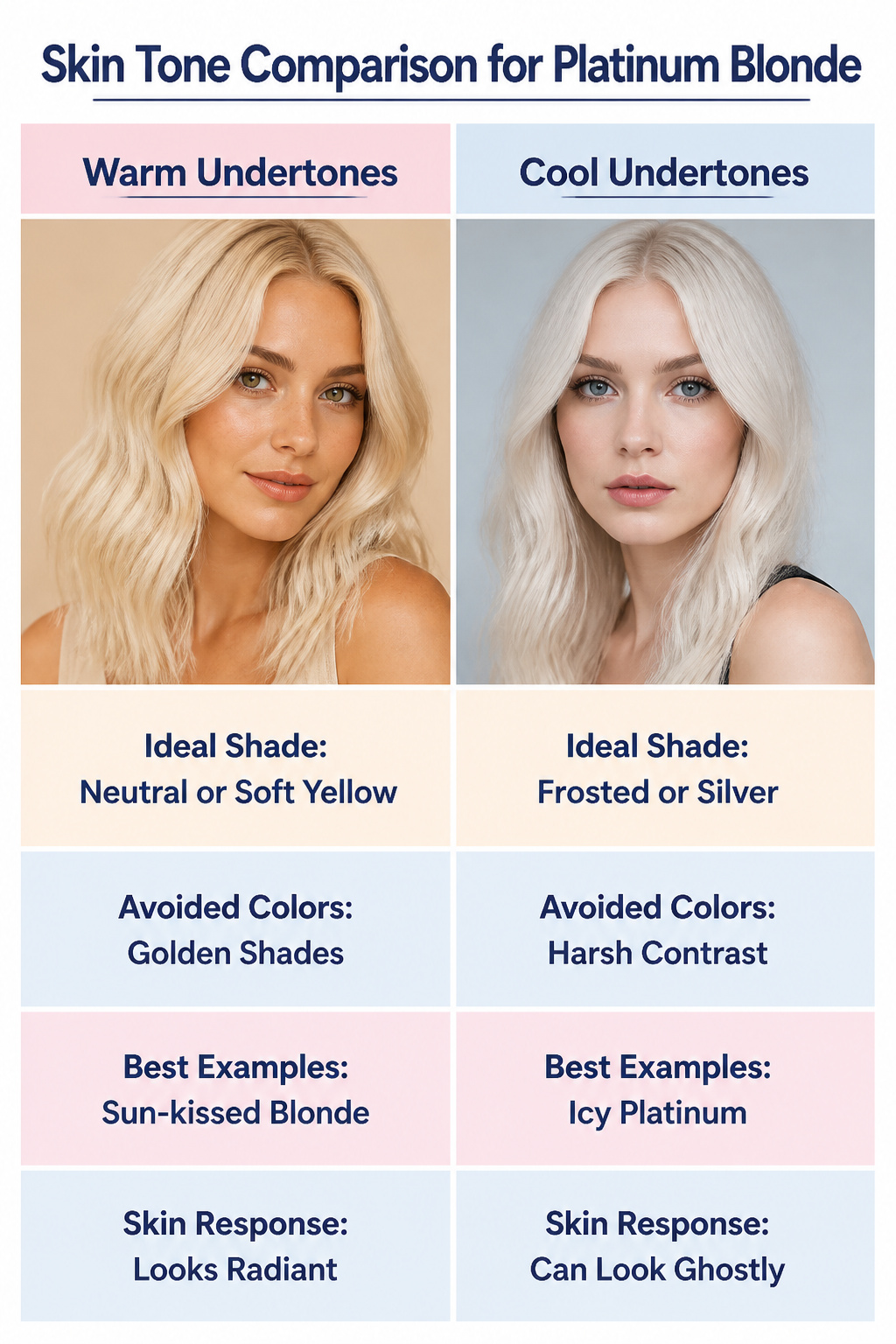
Warm undertones in the skin need platinum that leans neutral or carries a soft yellow to keep the complexion from looking sallow. Icy silver against golden skin can read harsh, though some people chase exactly that contrast. Cool complexions pull off the frosted end of the spectrum, the shades with silver or even a trace of blue that would turn warmer faces ghostly. Neutral skin sits in the middle and tolerates either direction, which sounds like freedom until you are staring at a wall of toners and realize you still have to choose.
The match matters more than the depth of your natural color. Any skin tone can wear platinum blonde hair if the undertone is right, and getting it wrong is what makes the color look like a wig rather than a decision. A colorist worth the appointment will hold swatches against your jaw in natural light and show you the difference between clean white and something with a pearl shift, because the mirror under salon bulbs lies.
Home dyeing reality
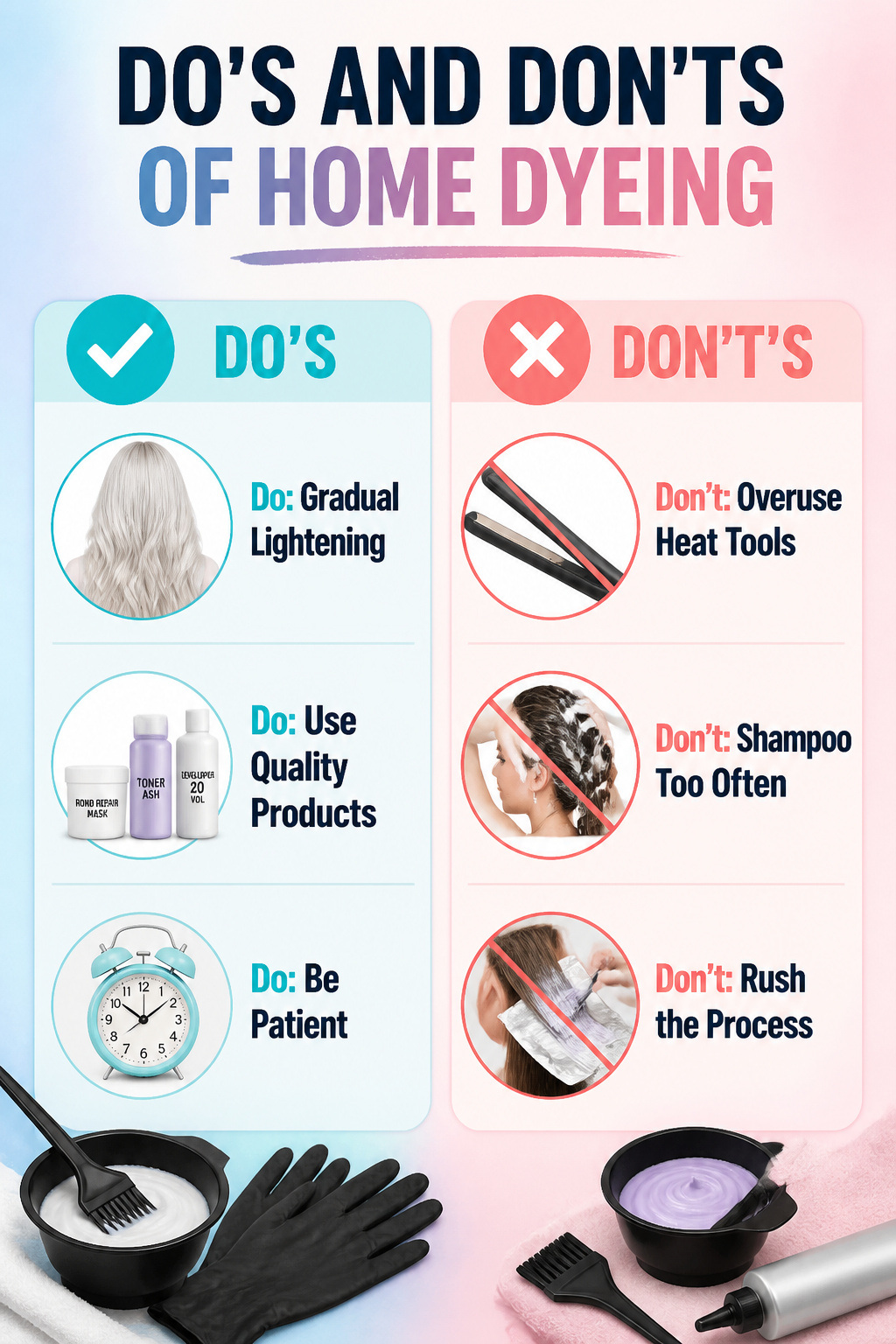
Platinum blonde hair at home is possible, but the gap between salon and bathroom-sink results is real and worth measuring before you start. Sources agree that patience and the right products matter, yet none lay out a safe, detailed path from dark or even golden blonde to that icy white finish. That silence itself is telling: the absence of a step-by-step from professionals who otherwise explain everything suggests the variables at home are too many to control.
The risk sits in what happens after bleach. Hair emerges dry, straw-like, stripped of the bounce it had before. Hot tools in those first weeks only compound the damage, and shampooing too often deepens the brittleness when moisture is already gone. A salon manages the chemistry in real time; at home, you’re guessing at timing, overlap, and whether the toner ratio is right for your starting level.
The safest home route is gradual lightening with long recovery windows, not a single aggressive session. If your hair is already colored or naturally dark, the struggle for that "unapologetically artificial icy whiteness" intensifies. What reads as confidence in a salon chair can read as breakage and uneven bands when the bathroom mirror tells the story instead.
What platinum blonde costs

A full salon lift to platinum blonde hair runs $200–$500, with the final bill tied mostly to how much hair the colorist is working through and which city you’re sitting in. Shoulder-length hair in a mid-size salon often lands in the middle of that spread, while waist-length work in Manhattan or LA can push past the top.
The home route looks cheaper at first glance, but the product stack adds up fast. Quality bleach, developer, toner, and the bond builder your hair will beg for typically land between $80 and $150 before you’ve finished the first round. That number assumes you get the lift right the first time, which is a bigger assumption than most first-timers realize.
For me, reading through enough colorist accounts convinced me that the salon premium buys more than convenience. It buys the insurance policy of someone who can read your hair’s current level against where it needs to go, and who knows when to stop before the strand dissolves. The $80 home kit becomes a $400 corrective color appointment fast enough that the math flips.
Frequently Asked Questions
What skin tones look good with platinum blonde hair?
Any skin tone can wear platinum blonde hair if the undertone is right. Warm complexions need neutral or soft yellow platinum to avoid looking sallow, while cool complexions suit frosted shades with silver or blue. Neutral skin tolerates either direction, though a colorist should hold swatches against your jaw in natural light before deciding.
How do I maintain platinum blonde hair?
Commit to a weekly deep conditioning mask from day one, use leave-in oils daily, and alternate purple shampoo with color-safe shampoo every two weeks. Skip heat styling when possible, always use a heat protectant when you do style, and rinse with lukewarm or cool water to keep the cuticle closed.
How often do I need to touch up my roots with platinum hair?
Schedule root touch-ups every six to eight weeks at most. Waiting longer risks banding, a stripe of uneven color where fresh bleach overlaps old lightened hair instead of blending cleanly.
Can I dye my hair platinum blonde at home?
Yes, but the gap between salon and home results is real and often costly. The safest route is gradual lightening with long recovery windows, not one aggressive session. Quality bleach, developer, toner, and bond builder run $80–$150, yet a botched home job frequently becomes a $400 corrective color appointment.