
Fall outfits for women range from a $70 oversized crew neck you throw on without thinking to structured wool coats that frame everything underneath. The deciding factor is how many times the temperature swings before noon. A thin merino turtleneck layered under a chunky cardigan handles that forty-degree gap without the bulk that ruins your shoulder line.
1. Sweaters
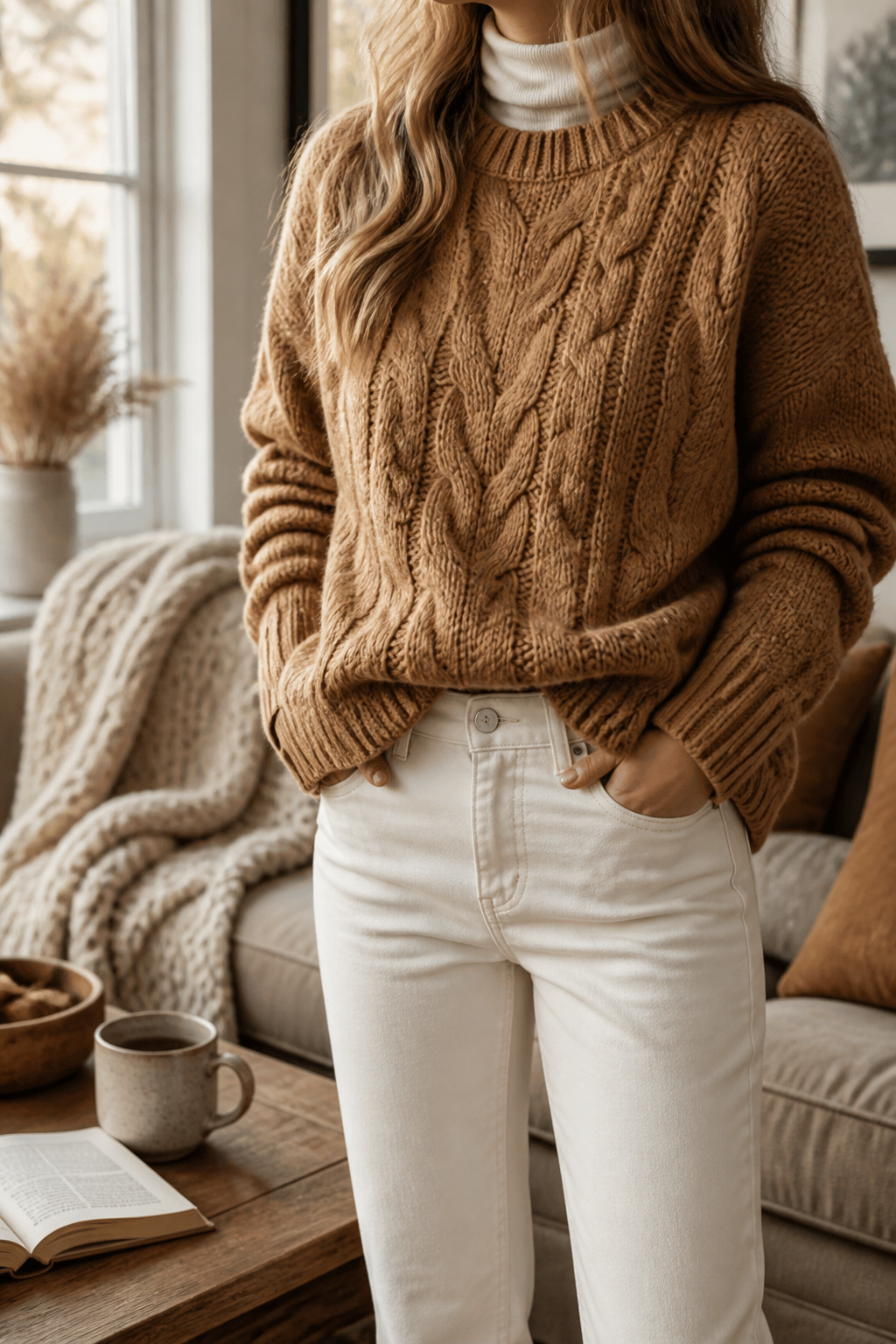
The first real chill of October still catches me off guard, and that morning scramble for something warm is exactly why I keep sweaters within arm’s reach before the season hits. A cable-knit pullover, something like the classic fisherman style, does the heavy lifting: textured enough to look intentional on its own, substantial enough to carry you through a forty-degree swing in temperature.
Layering is where the payoff lives. A thin turtleneck sweater slides under a jacket without the bulk that ruins the line of your shoulders, and a sweater vest over a button-up gives you the collar and cuffs for polish with none of the sleeve bunching that drives me nuts at a desk. The oversized crew necks that have been everywhere lately work the same way: half-tucked into straight-leg white denim, they balance volume against something cleaner below.
Neutrals earn their keep here. A camel or oatmeal sweater moves between your work rotation and weekend errands without announcing itself, and that versatility matters more than the statement piece you’ll reach for twice. The test is whether you can throw it on Monday morning without thinking, because that is the sweater you’ll actually wear.
2. Cardigans
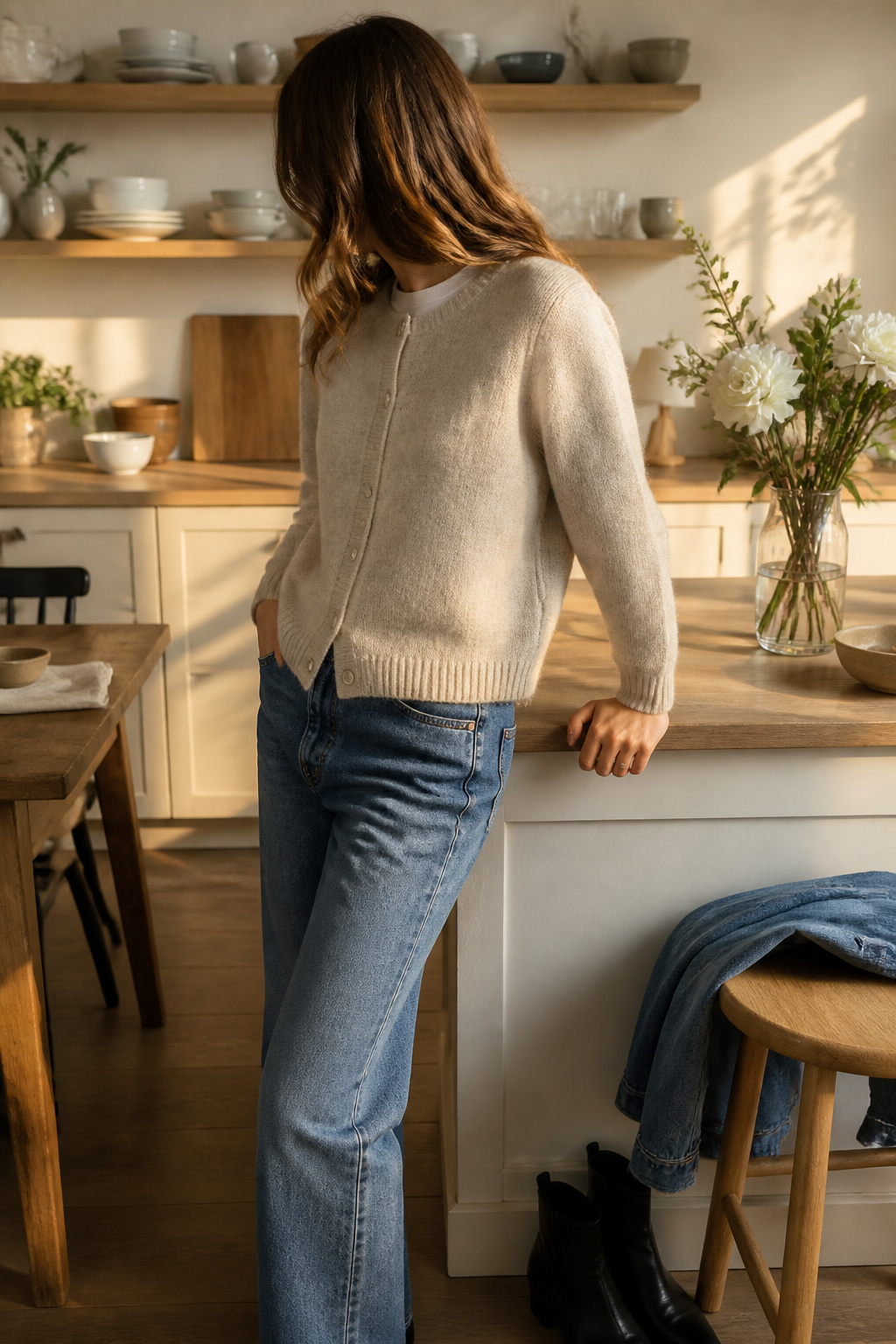
A cardigan turns a basic tee and jeans into something that looks considered without requiring much thought. The trick is keeping one in your bag or at your desk, because fall mornings start cold, noon gets warm, and by four the chill is back. Button it to the top for a neat line under a coat, or leave it open so the layer underneath shows. Thinner knits layer cleanly; chunkier ones need roomier outerwear or become the outermost layer themselves. I reach for cotton blends on days that swing twenty degrees, since they breathe when I am warm and still block wind when I am not. A cropped cut hits at the waistband and keeps a high-waisted pant in proportion, while a longer duster needs a slimmer pant or skirt beneath it to avoid looking swallowed. The best cardigans in my rotation are the ones I can throw on without a mirror and still look pulled together.
3. Denim

Wide-leg jeans are everywhere this fall, and after cycling through three different pairs myself, I finally get why the silhouette stuck. The Citizens of Humanity Cropped Ayla pair sits at a 25-inch inseam with a 21-inch leg opening, which sounds roomy until you see how cleanly it tucks into a hiking boot or floats above a suede mule. Light wash is the move here; it reads lighter against dark autumn layers without trying too hard.
Denim skirts run a close second for grounding an outfit. A long denim maxi skirt with a minimalist sweater and chestnut suede slides looks pulled-together without feeling dressed up, and the same skirt works with leggings underneath once November hits. The shorter denim mini serves the same anchoring function for casual days, just with more leg on display.
Either way, denim’s job in a fall outfit is to hold the center so your knitwear and outerwear can do the talking. Pick your wash, pick your length, and build outward from there.
4. Turtlenecks
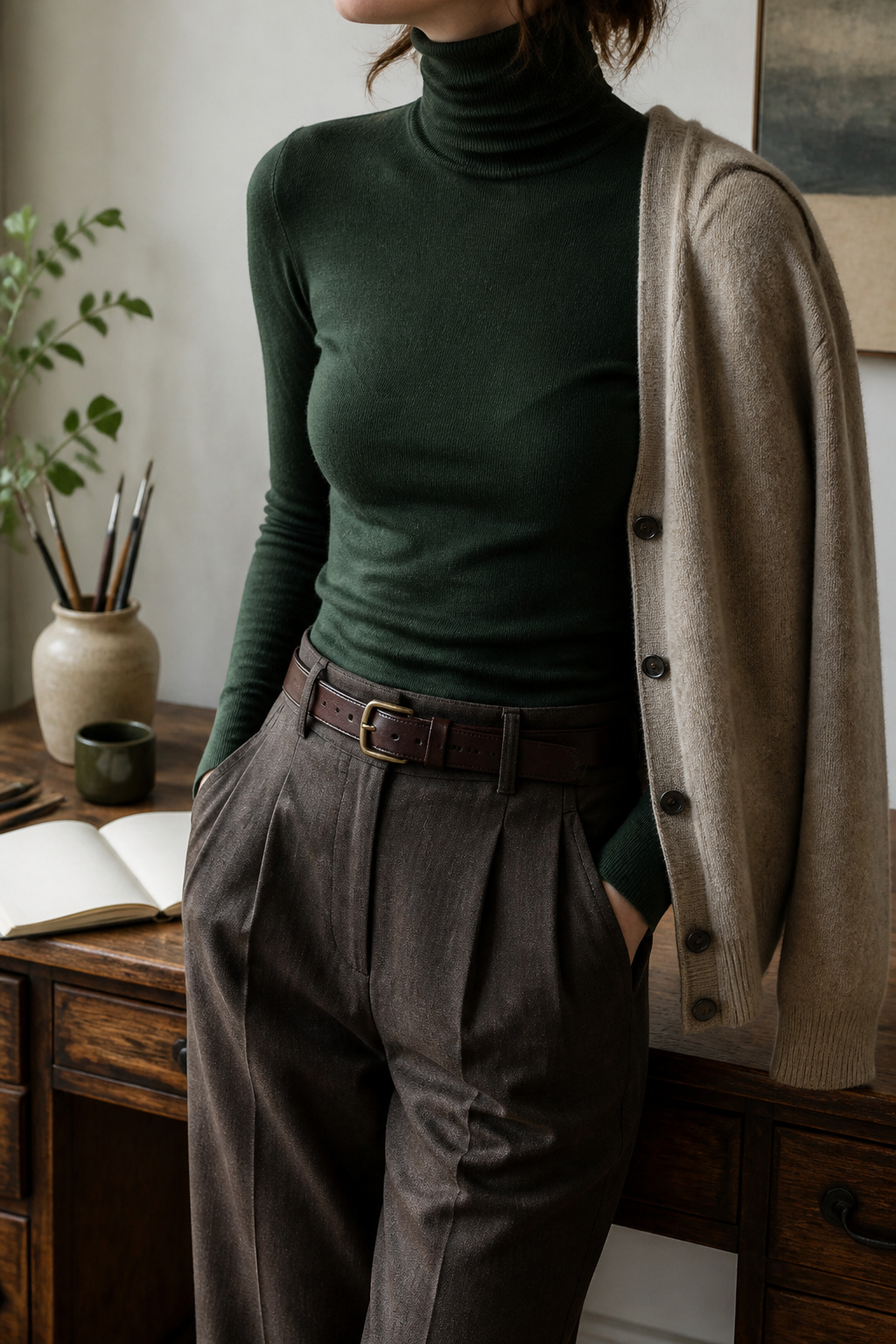
A thin turtleneck sits closer to the skin than a crew neck, which means heat stays trapped where you actually need it. The close fit also keeps bulk from stacking up when you add a sweater or cardigan on top, so your silhouette stays clean rather than lumpy. The raised collar frames the face and draws the eye upward, a small detail that reads as polished even when the rest of the outfit is casual.
For layering, a lightweight merino or cotton turtleneck works best as the first piece on, with a chunkier knit or a structured jacket over it. The collar can stay folded neatly or be scrunched down, depending on how much neck you want showing. Under a cardigan, it adds visual interest at the neckline without requiring a scarf. Under a blazer or denim jacket, it fills in the gap where a lower neckline would leave skin exposed to the wind.
The mistake is choosing a turtleneck thick enough to be its own outer layer and then trying to pile more on top. That combination fights itself all day. A true base layer should feel almost like a long-sleeve shirt with extra coverage, not like a sweater already.
5. Outerwear
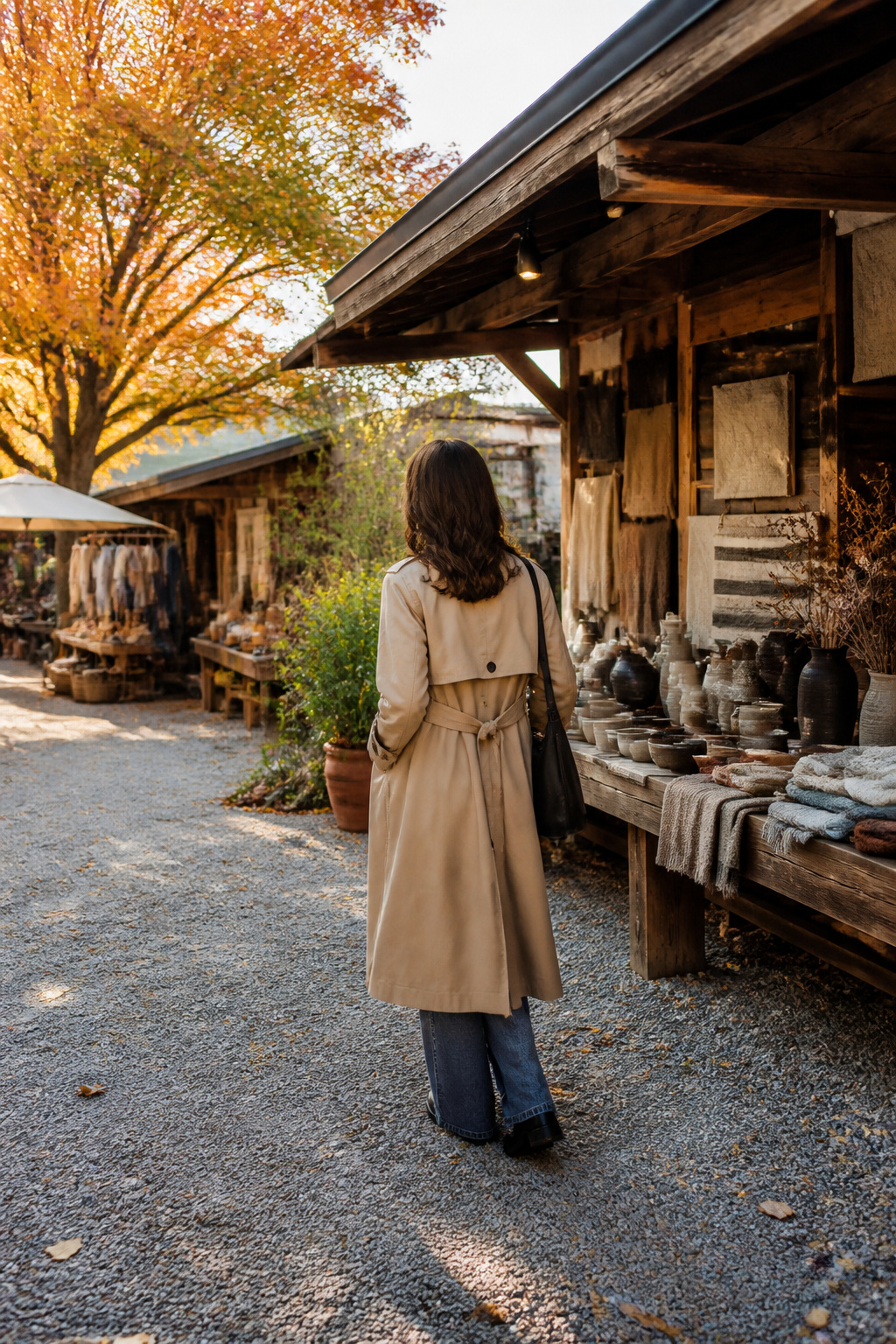
A classic trench coat belongs in every fall wardrobe. It pairs with anything, especially a great pair of jeans and cap-toe shoes, and it adds warmth without making you feel bulky. The belted waist and clean lines frame whatever you have underneath, turning a simple sweater-and-denim combination into something intentional.
Leather jackets bring a different kind of structure. A leather trench coat worn over denim shows how much outerwear shapes a look, and shorter motorcycle styles add edge while still reading polished. The washed leather versions feel broken-in from the first wear, which matters when you are reaching for the same piece three mornings a week.
For the cooler end of fall, a wool coat in camel or gray transitions straight into winter. The boiled wool styles hold their shape without the stiffness of heavier fabrics, and the neutral color means you are not negotiating with the rest of your closet. A blazer works the same way on milder days, pulling together an outfit with little effort and no bulk.
The piece you throw on last is what people see first. Choose outerwear that does more than keep you warm.
6. Boots

Ankle boots, knee-high boots, and combat boots each pull a fall outfit in a different direction, and the choice matters more than most people think. A sleek ankle boot with a low heel keeps a sweater and jeans combination looking polished enough for dinner; swap in a chunky combat boot and the same pieces read casual, almost utilitarian. Tall boots are a key footwear trend this season, which makes knee-high styles worth the closet space. They add structure under longer cardigans or mid-length skirts in a way ankle boots simply cannot, and they keep legs warmer once the temperature drops below 50°F. The height of the boot sets the proportion of the whole look. A knee-high shaft cuts the leg at a different point than an ankle boot, which changes where the eye travels. Combat boots work best with slimmer denim or tights so the silhouette does not become bottom-heavy. Leather or suede both age well, though suede needs more care if you walk through wet leaves regularly. One pair in each height covers most fall situations without redundancy.
7. Dresses

A knit maxi dress pulls double duty through fall. Wear it alone while the afternoons still hold warmth, then bundle up with a leather jacket once the temperature drops. The length works with boots without any fuss at the hem, and the fabric has enough weight to keep a breeze from cutting through.
Sweater dresses solve the same problem with a different silhouette. The ribbed versions, especially cotton-cashmere blends, read dressy enough for work or a Thanksgiving table but relax into something casual with sneakers swapped in for slingbacks. What convinced me, reading through the styling notes on these, is how rarely a single piece covers that much ground without looking like it is trying to.
The jacket layer is what makes either option wearable past October. A cropped leather cut keeps the line of a maxi dress clean, while an oversized wool coat over a shorter sweater dress gives you the proportions that read current right now. The mistake is treating the dress as the whole outfit and freezing through the walk to the car.
8. Accessories
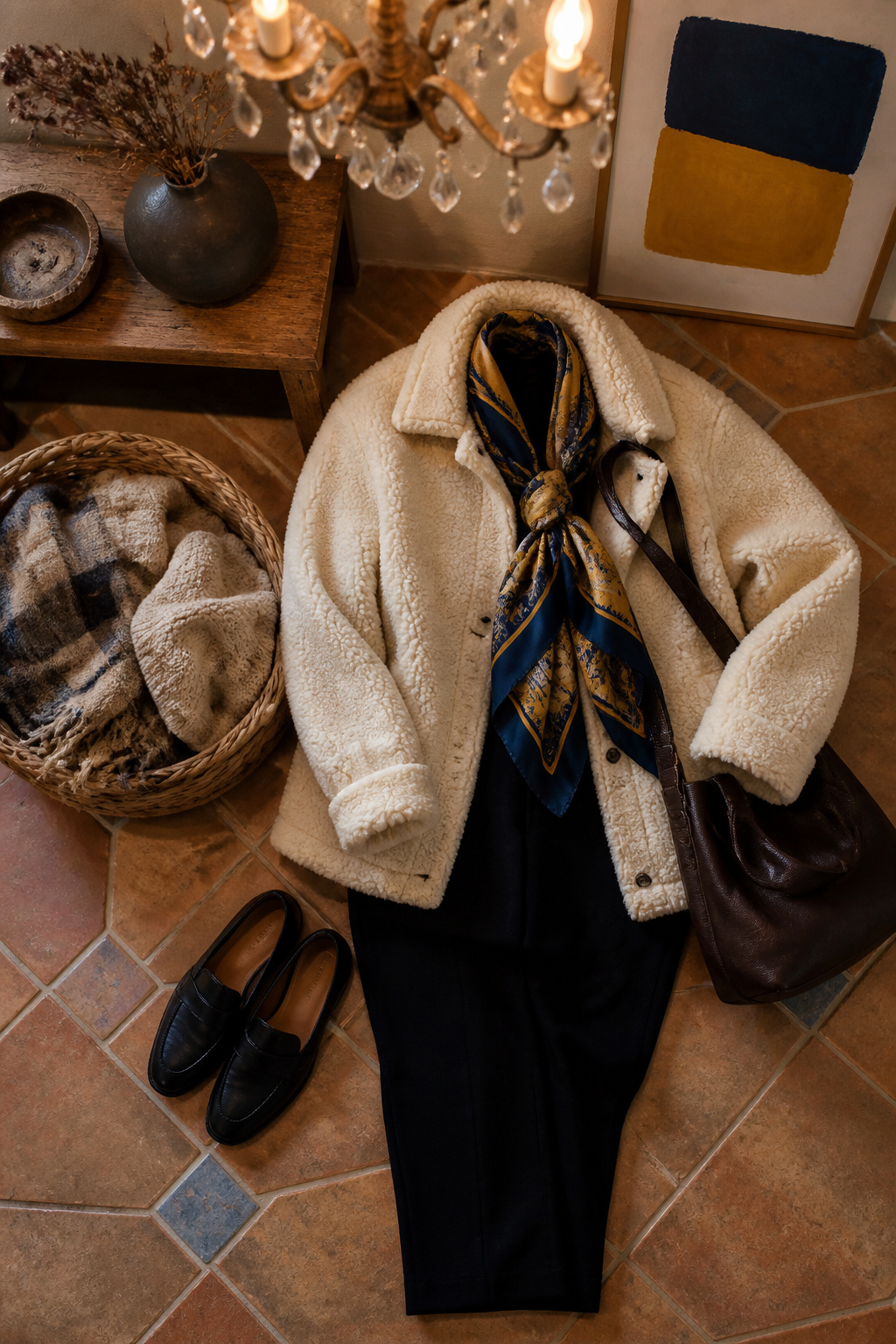
A printed silk scarf tied at the neck can make a basic sherpa jacket and jeans look intentional rather than thrown-on. The stripe square style works here because the pattern does the styling work; you are not fussing with extra jewelry. For head coverage, the trick that actually stays put is a slim plastic headband worn underneath. Tie the scarf onto it with a small knot on top, then secure under your hair. The headband grips where a scarf alone slides right off. I have watched too many people give up on headscarves because they sit too far back or puff out at the crown. The headband hidden inside solves both: it anchors the fabric and keeps the shape flat against the skull. Hats follow the same logic of structure. A beanie can look sloppy if the brim is too deep; one with a shorter crown sits cleaner above the brow. Scarves and hats are not afterthoughts here. They are the pieces that let you wear the same sweater three ways without anyone noticing.
9. Trousers

Wide-leg trousers in a neutral shade give legs the kind of elongated line that makes morning outfit decisions simpler. I reach for them on days when jeans feel too expected but a dress is too much effort, and the balance lands right in that polished-casual middle ground where most fall plans live.
Tailored black trousers work the same way with more structure. A crochet knit layered over them, with white flats underneath, carries a bit of summer’s ease straight into cooler weather without looking like you missed the season change. The vest trend plays here too: a sweater vest over a simple blouse-and-trouser base adds warmth and breaks up the flatness of a two-piece look.
The real win is that both cuts layer under cropped jackets and long cardigans without bulk, so you’re not rebuilding your wardrobe around one silhouette. Neutral colors across both styles mean three pairs can rotate through a month of outfits without repetition.
10. Jumpsuits and Overalls

Jumpsuits and overalls are stylish one-piece options that simplify fall dressing without looking like you gave up. A crew neck tee or thin sweater layered underneath adds warmth on crisp mornings, and a chunkier knit pulled over the top turns the bottom half into what reads like regular pants. The best versions feel almost as comfortable as sleepwear while still looking pulled together for errands or a casual office.
The trick is proportion. Wide-leg jumpsuits need a fitted layer underneath so you don’t disappear into fabric; slimmer cuts can handle a boxy sweater on top. Overalls give you more mixing room since the bib breaks up the line, but the same rule applies: keep one half closer to the body. Denim overalls with a striped long-sleeve tee and ankle boots hit an easy weekend note; a structured twill jumpsuit with a turtleneck and loafers works for dinner out. One piece, two ways, no decision fatigue about whether the top matches the bottom.
Layering Techniques

Layering is the whole point of fall dressing. The temperature can swing twenty degrees between morning coffee and afternoon errands, and a single thick sweater leaves you sweating by noon. A thin turtleneck under a cardigan, with a trench coat on top, lets you peel back one piece at a time.
The order matters. Start with the lightest, closest-fitting layer: a fine-gauge turtleneck or a long-sleeve tee. Add the middle piece, which is where texture lives: a cable-knit cardigan or a cropped sweater that hits at the hip. Finish with outerwear that can actually handle wind, like a classic trench coat that pairs with anything, especially jeans and cap-toe shoes.
Proportions keep the shape from collapsing into a bulk pile. An oversized cardigan needs slimmer pants underneath. A boxy cropped sweater works better with a higher-waisted bottom that defines where your torso ends. A waist-cinching belt over a chunky knit pulls the silhouette back in.
Fashion, like everything else in life, is best when it’s in balance.
— Vogue
That balance is what makes layering work for real bodies in real weather, not just on a styled shoot. The goal is to look intentional at every stage of undress, not fully dressed only when every piece is on.
Color Palettes
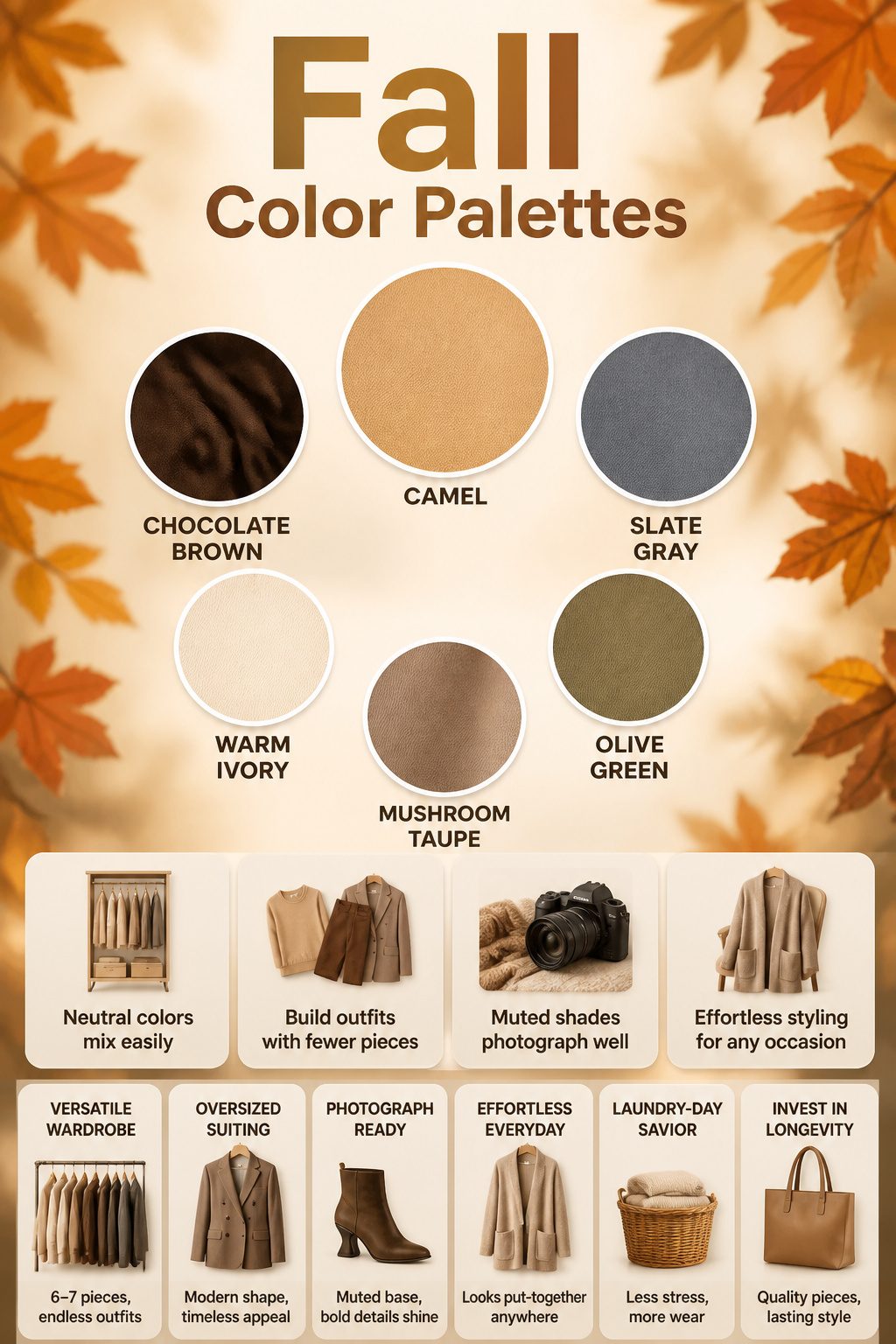
A neutral color palette makes fall dressing feel effortless because every piece already agrees with everything else. Camel, chocolate brown, slate gray, and warm ivory layer without clashing, which means the cardigan you grabbed in a hurry still works with the trousers you already had on. Earth tones mix and match so easily that you can build a week of outfits from six or seven pieces and never repeat the exact same look.
Oversized suiting in these shades has been turning up everywhere, and the reason it photographs so well is that the muted canvas lets one bolder choice, like a sculptural boot or an unexpected shoe, carry the whole outfit. Brown slacks and a double-breasted blazer in a similar tone need almost no styling to look intentional. Even at home, a long pocketed cardigan in oatmeal or mushroom feels pulled together enough for a last-minute grocery run.
The real payoff comes in laundry-day math. When your base layers, your toppers, and your bottoms all share the same quiet language, you spend less time deciding and more time wearing what you already own.
Capsule Wardrobe

A fall capsule wardrobe built from timeless classics is what finally stopped my morning stare-into-the-closet routine. The idea is simple: a small collection of pieces that all work together, so every combination earns its place.
I started mine with a cohesive neutral base and added just a few autumn colors for seasonal warmth. The goal is balance between what looks good and what actually fits your life, your climate, and your preferences. Each piece should serve a purpose, or it becomes clutter later.
Quality beats quantity here. One well-chosen sweater you can layer three ways outlasts three trendy ones that only pair with one bottom. The classics mix, match, and transition from casual days to the office to whatever fall occasion shows up.
Seasonal Trends

Oversized silhouettes landed in my closet by accident last fall after I ordered a cable-knit sweater two sizes up and never looked back. The extra room lets a thin turtleneck or thermal layer sit flat underneath without the bunching that ruins a shoulder line, and the drape itself becomes the statement. An oversized crew neck under $70 does the heavy lifting here; the chunkier the gauge, the less you need elsewhere.
Plaid reads as outerwear even when it is not. A shadow plaid wool-blend car coat thrown over a black sweater and jeans borrows the structure of a blazer but carries more visual weight from across a room. The pattern does the accessorizing, so ballet flats stay simple and square-toed rather than competing.
Sweater vests solve the October problem of looking polished at 9 a.m. and overheated by noon. Over a blouse and trousers, the vest adds warmth exactly where you need it and comes off in one move when the conference room radiator wins. The ones worth buying now come in enough colors and sizes that you can treat them as a separate category from your core knits rather than an afterthought.
Combat boots ground all of this. Their sole thickness and lacing detail balance the volume up top, and the slight heaviness keeps an oversized proportion from reading as accidental. Coastal-grandma types in straight-leg white jeans and suede clogs already know the logic: the shoe has to match the statement level of whatever it is walking under.
Frequently Asked Questions
What are the best fall outfit ideas?
The best fall outfits for women center on layering sweaters, cardigans, and outerwear so you can adjust through a twenty-degree temperature swing. Start with a thin turtleneck or long-sleeve tee, add a textured middle layer like a cable-knit cardigan, and finish with a trench coat or wool coat that can handle wind. Wide-leg jeans, knee-high boots, and neutral earth tones tie the whole look together without requiring much morning thought.
How do I style a sweater for fall?
Style a sweater by treating it as either a standalone piece or a layer, never both at once. A thin turtleneck sweater slides under a jacket without bulking up your shoulders, while an oversized crew neck balances best half-tucked into straight-leg white denim. Stick to camel or oatmeal neutrals that move between work and weekend without announcing themselves.
What shoes should I wear in fall?
Ankle boots, knee-high boots, and combat boots each pull an outfit in a different direction, so one pair in each height covers most fall situations. A sleek ankle boot with a low heel keeps a sweater-and-jeans combination polished enough for dinner; knee-high styles add structure under longer cardigans and keep legs warmer below 50°F. Combat boots ground oversized proportions best when paired with slimmer denim or tights so the silhouette does not turn bottom-heavy.
How can I create a fall capsule wardrobe?
Build a fall capsule wardrobe from timeless classics in a cohesive neutral base with just a few autumn colors for seasonal warmth. Each piece should layer three ways or serve multiple occasions, or it becomes clutter. One well-chosen sweater outlasts three trendy ones that only pair with a single bottom, and quality beats quantity when every combination needs to earn its place.
What colors are trending for fall?
Neutral tones and earthy colors are the dominant palette for fall 2026. Camel, chocolate brown, slate gray, and warm ivory layer without clashing, so a cardigan grabbed in a hurry still works with whatever trousers you already have on. Oversized suiting in these muted shades photographs well because the quiet canvas lets one bolder choice, like a sculptural boot, carry the whole outfit.