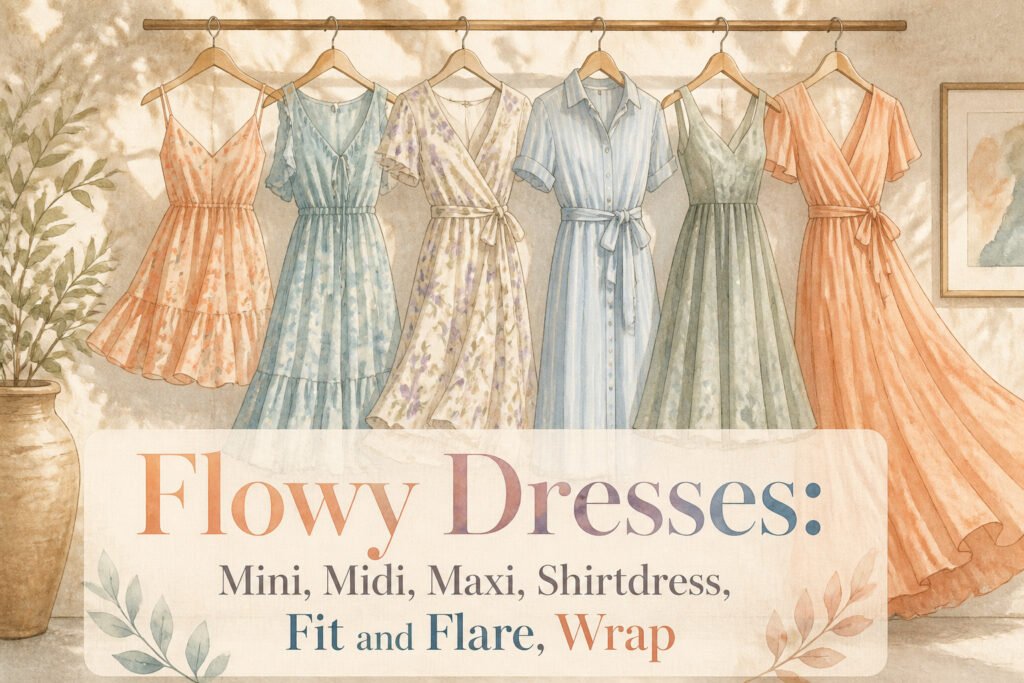
A flowy dress is any dress cut from lightweight fabric that hangs away from the body rather than following its lines. The catch is that "flowy" describes drape, not length or occasion, so the same word covers everything from a thigh-skimming mini to a floor-grazing maxi. Ann Taylor alone stocks 93 styles under the label, with most clustering between $50 and $99.99 in linen blends and cotton.
Flowy Mini Dresses

Shorter hemlines hit their stride when the calendar turns warm and the event stays casual. A flowy mini dress moves well at outdoor brunches, daytime weddings, or any Saturday where the temperature climbs past 75 and you do not want fabric clinging to your knees. The cut keeps the silhouette light without drifting into formal territory.
Retailers treat this length as serious volume. Ann Taylor currently stocks 93 flowy dresses under that label, with Loft close behind at 82. That density matters when you are hunting for something specific: a sleeveless linen blend in petite, say, or a fit-and-flare that actually flares instead of hugging. The range runs wide on price, from under $50 up to $499.99, though most of the inventory clusters between $50 and $99.99 at both stores. Fabric leans heavily toward linen blends, with cotton and cotton blends making up the rest. The sleeveless cut dominates, which suits the season but also means you will want a cardigan or light jacket for air-conditioned interiors.
Flowy Midi Dresses
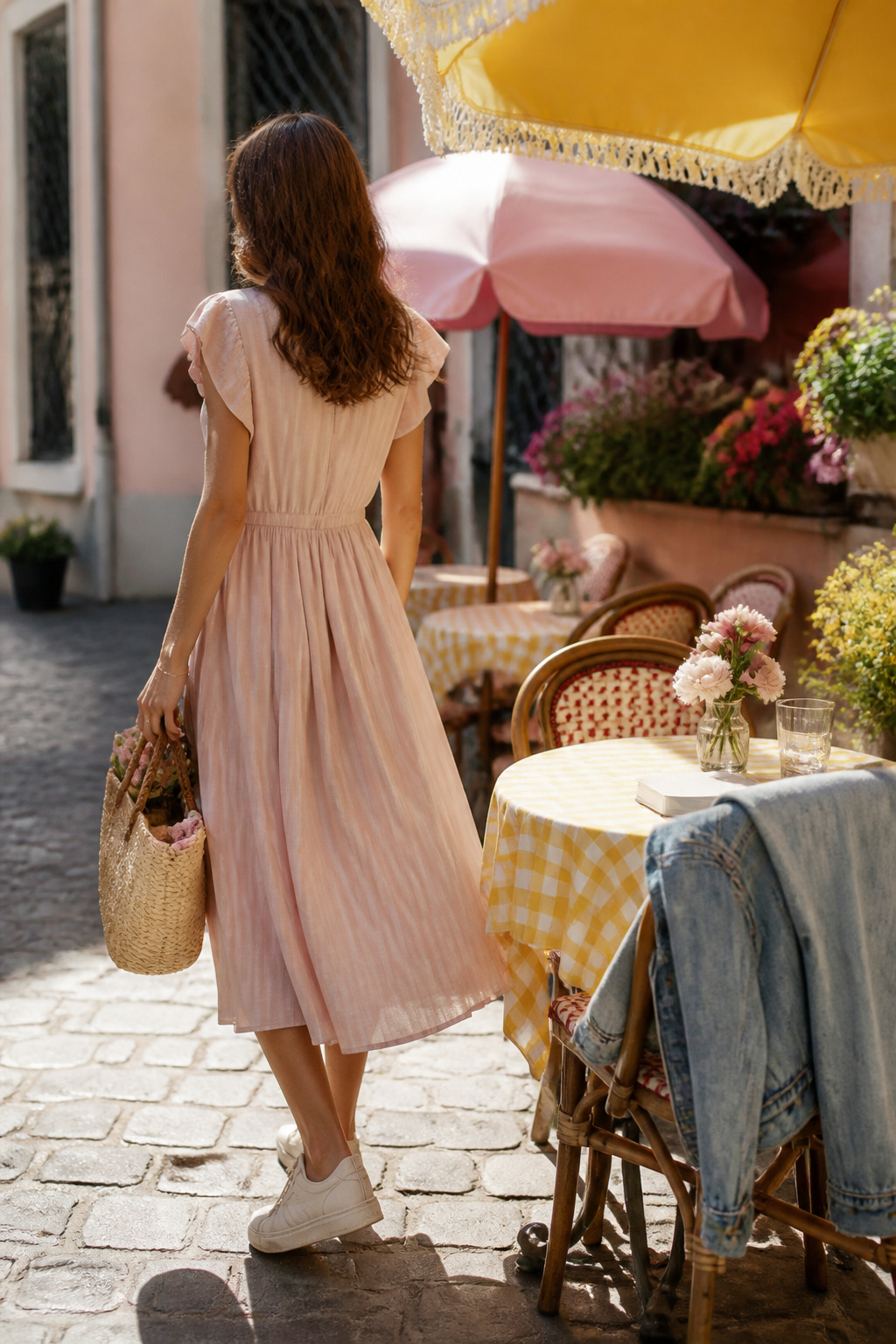
The midi length settled in as the default because it solves the problem every other length creates. A mini leaves you tugging at the hem in a breeze; a maxi drags through puddles and traps your legs at stairs. The midi, landing somewhere between the knee and mid-calf, covers enough for a 9 AM meeting and still lets you walk fast. That middle ground is why so many women own three or four and reach for them without thinking.
Sleeves make the shift from day to evening. A flutter sleeve or short sleeve reads casual with flats for errands. The same dress with a three-quarter sleeve or a cap sleeve looks intentional enough for dinner when you swap in heels and add a light layer. The fabric does the actual work: lightweight, breathable material that drapes rather than clings means you are not fighting the dress by 7 PM.
What convinced me, reading through how women actually use these, is that the midi is the one length you do not have to change. Sources describe women throwing on sneakers for morning errands, adding sandals and a hat for afternoon sun, then layering with a denim jacket when evening cools. No separate outfit required. The dress handles the transition because the cut already sits in that in-between space: not trying too hard, not giving up either.
Flowy Maxi Dresses
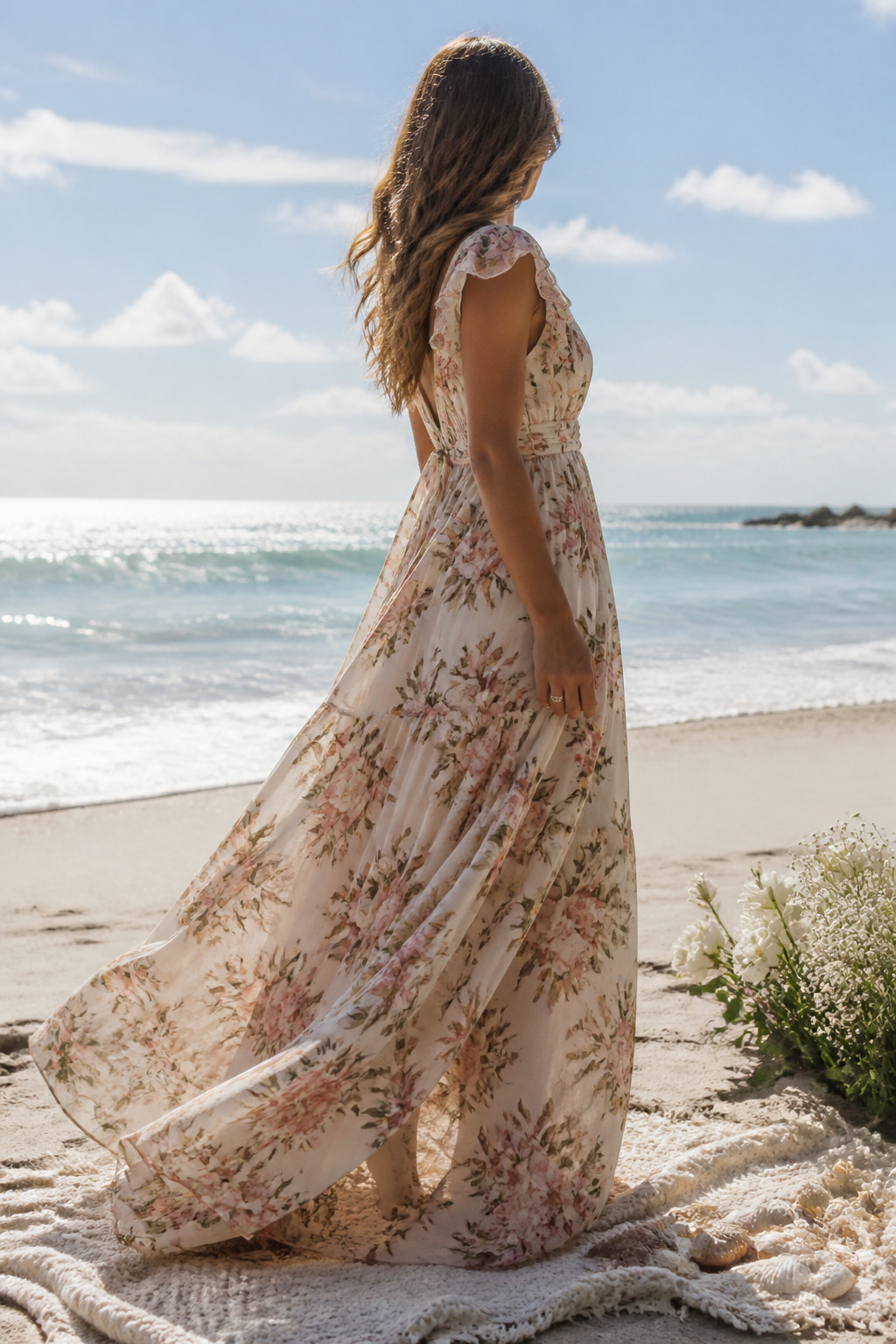
A maxi dress only earns its place in your closet when the fabric weight matches where you plan to stand. The same cut that looks effortless at a beach wedding turns into a liability on a boardwalk if the hem is heavy enough to drag in sand or trip on stairs. What separates the two is usually an ounce or two in the square yard, something you can feel by bunching the skirt in your hand before buying. Lighter weaves lift and move; heavier ones pool and snag.
Ground clearance changes the entire silhouette. An inch of visible shoe keeps the line formal, ankle-skimming and deliberate. Floor-grazing length reads romantic until it actually touches tile or pavement, at which point the hem gets filthy and the wearer shortens her step. The beach version needs even more lift, a full two or three inches above the sand, or the first breeze will coat the fabric in grit.
The weight to look for is light enough to billow, heavy enough to fall straight without a slip underneath. That middle ground is narrower than most racks suggest.
Flowy Shirtdresses
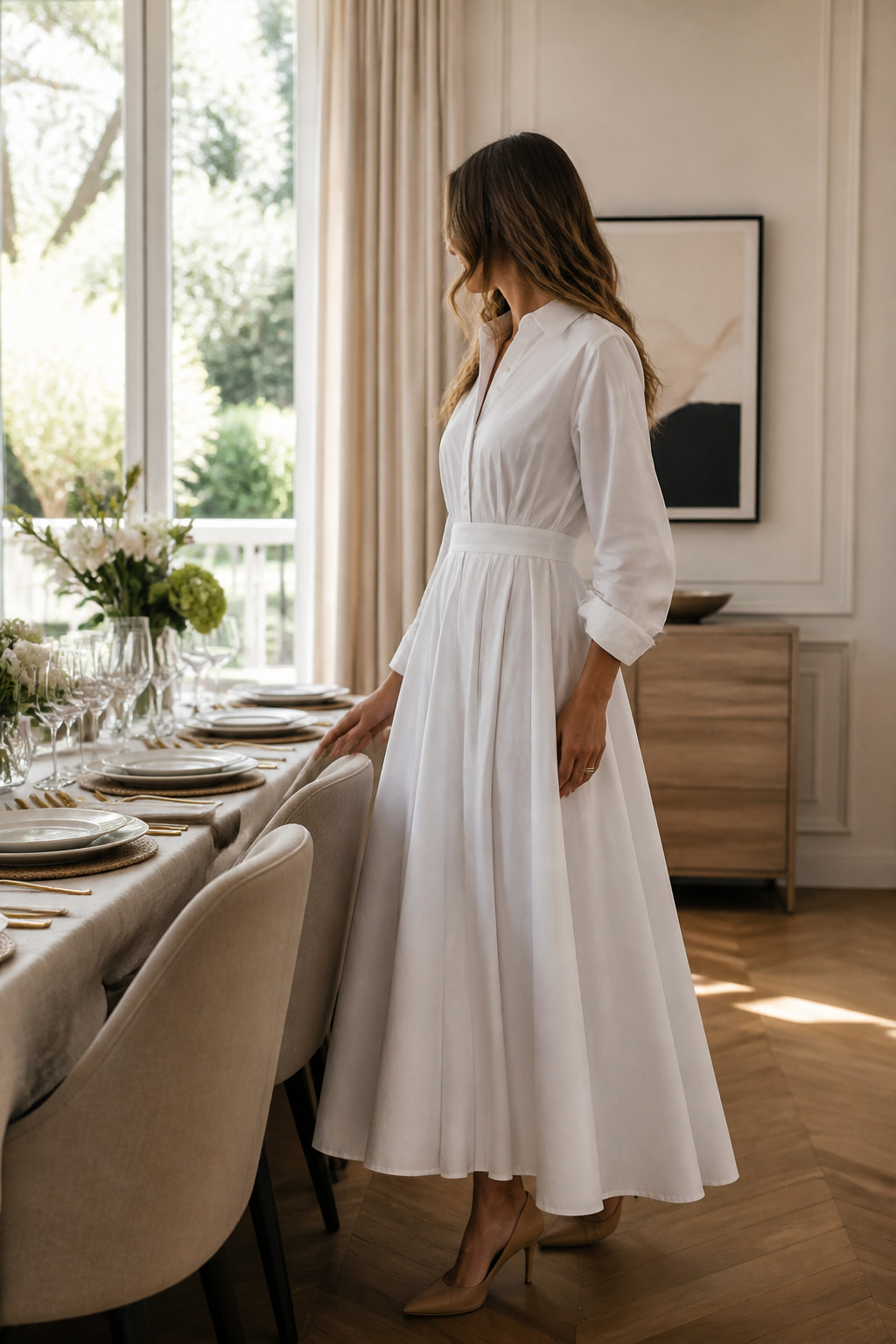
A collar and button placket turn a loose cut into something you can wear to a meeting without changing your shoes. That structure is what separates a shirtdress from a sack, and it is why this style earns space in a closet already full of tees and blouses.
The collar frames the face the way a blouse does, while the hemline floats past the hips like your favorite weekend tee. Buttons running the full length let you adjust the opening from neck to knee, which means the same dress reads as conservative or relaxed depending on how many you fasten. In my own wardrobe, this is the piece I reach for when a client lunch runs into dinner and I do not want to look like I changed, or like I did not.
Cotton poplin holds the crisp lines best; rayon and Tencel drape softer but lose the architectural edge by midday. If you already own structured blouses for work and slouchy tees for off days, the shirtdress occupies the profitable middle: one item that does both jobs without looking like a compromise.
Fit and Flare Flowy Dresses
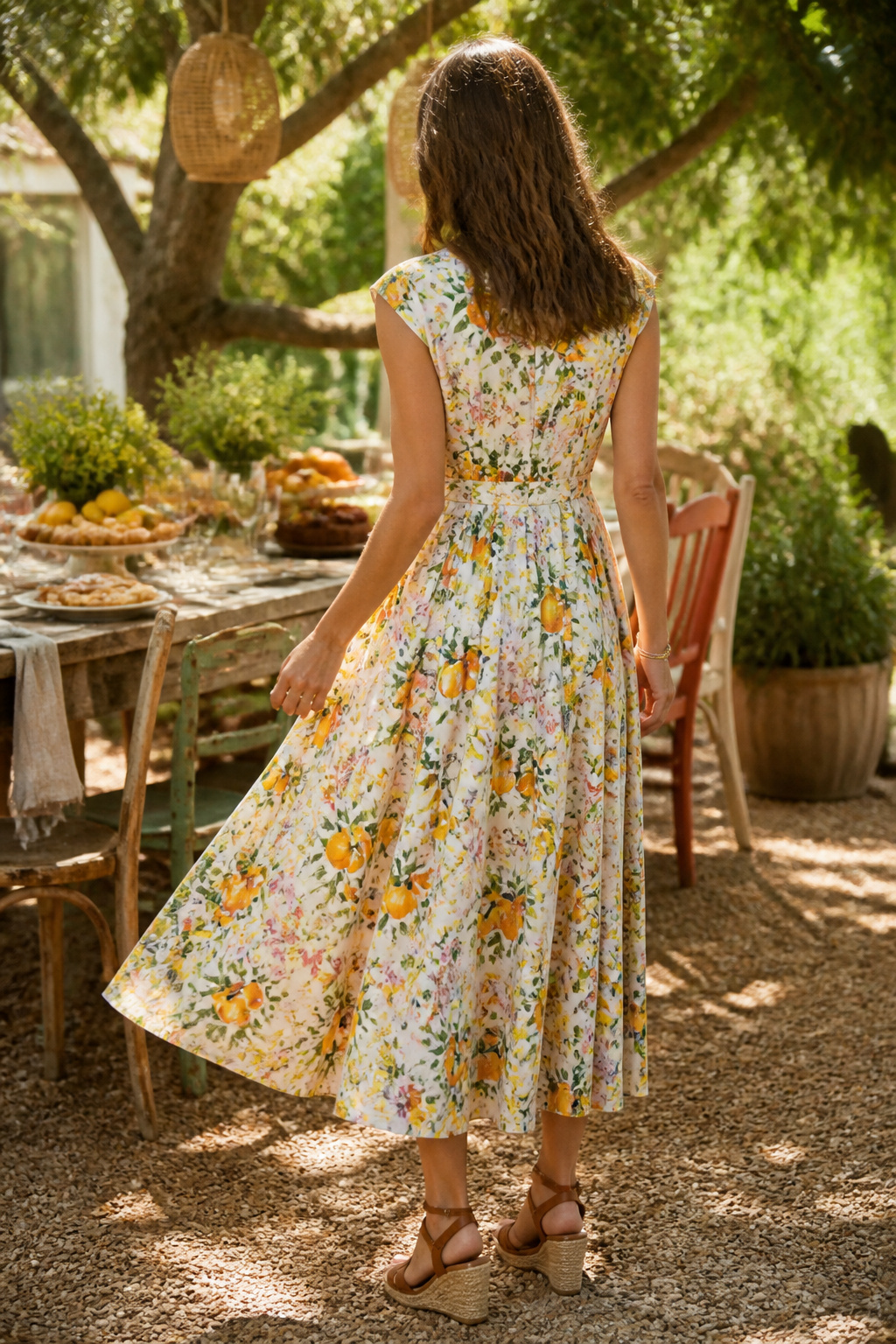
The fit and flare silhouette cinches at the natural waist and releases into a skirt that moves independently from the body, which is why it keeps resurfacing while stiffer shapes come and go. A defined waist gives the fabric something to pivot from; without that anchor, a dress hangs or tents, but with it, the skirt swings in its own rhythm when you walk.
The difference from a basic A-line matters when you are choosing between racks. An A-line drops straight from the shoulder or hip with a gentle slope, but the fit and flare deliberately narrows first, creating that hourglass interruption before the volume begins. The flare also tends to start higher and finish fuller, so the hem moves more dramatically than an A-line’s modest sweep. That extra motion reads as ease without looking oversized, which is the balance that has carried this cut from fifties day dresses through current resort collections.
Wrap Flowy Dresses
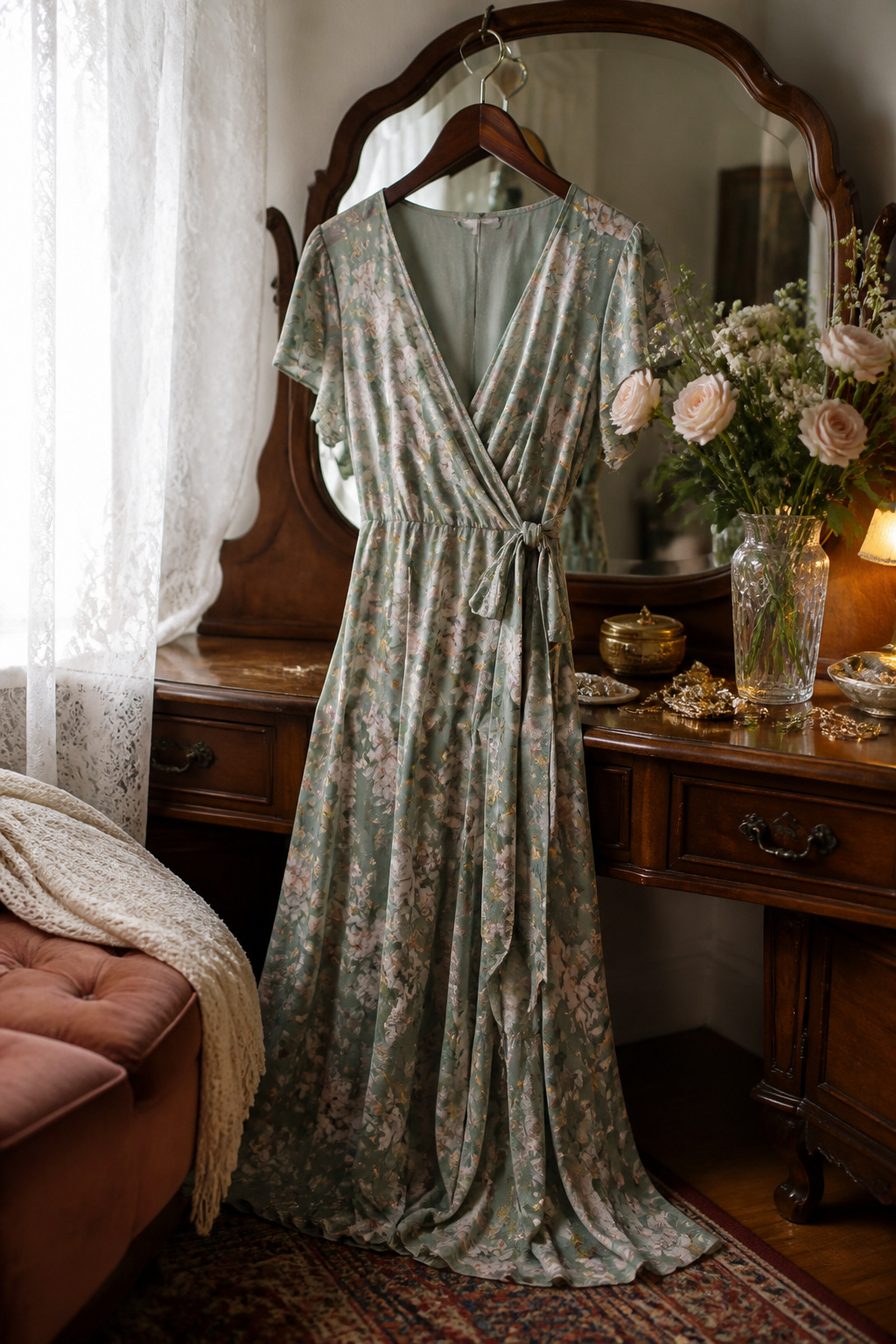
The wrap dress solves fit in a way no other cut does. Two panels cross at the front, one threading through a slit in the side seam to tie at the waist. Where you place that tie changes the whole line: pulled tight and centered, the waist nips in cleanly; shifted slightly left or right, the skirt drapes asymmetrically and the eye follows the movement rather than the silhouette.
The mechanism is what makes it forgiving. The top panel wraps over the bottom, so the V-neck depth adjusts with how firmly you pull. A larger bust simply means crossing the panels higher; a smaller frame lets them sit lower without gaping. The skirt, cut on the bias or in a full circle, hangs from that single tied point and falls where gravity takes it.
This is the style women end up owning in multiples. The same navy wrap reads office-appropriate in matte jersey, while a floral rayon version works for weekend brunch. The construction is nearly identical, but the fabric and print shift the occasion entirely. After finding one that sits right, the hunt narrows to color and material rather than fit, which is already solved.
What Flowy Dresses Are Made Of
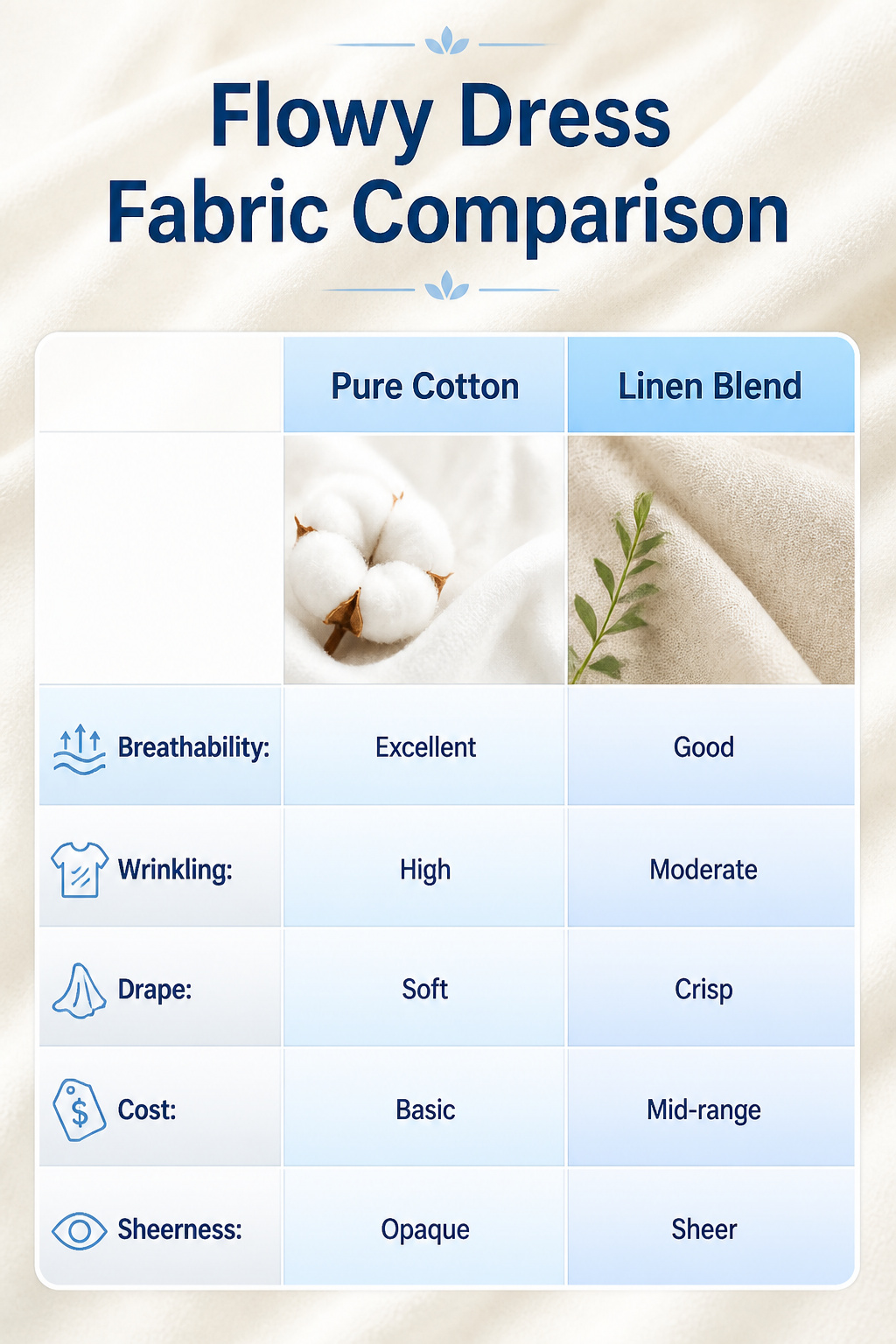
Pure cotton breathes like almost nothing else, which makes it the default for summer heat, but the same openness means it wrinkles the second you sit down and often needs a slip underneath unless the weave is heavy enough to stand on its own. Linen blends solve some of that wrinkling while keeping the airflow, though the drape turns slightly crisper, less likely to pool and move the way a "flowy" dress promises; the blend usually lands mid-range in cost, between basic cotton and the pricier options. Chiffon, synthetic or silk, gives the truest float, the kind that lifts slightly in a breeze and photographs like a dream, yet it almost always demands a lining since the fabric itself is sheer enough to read as lingerie rather than clothing. That layering adds heat, so chiffon works better for evenings or air-conditioned rooms than for walking around in ninety-degree sun.
When to Wear What Length
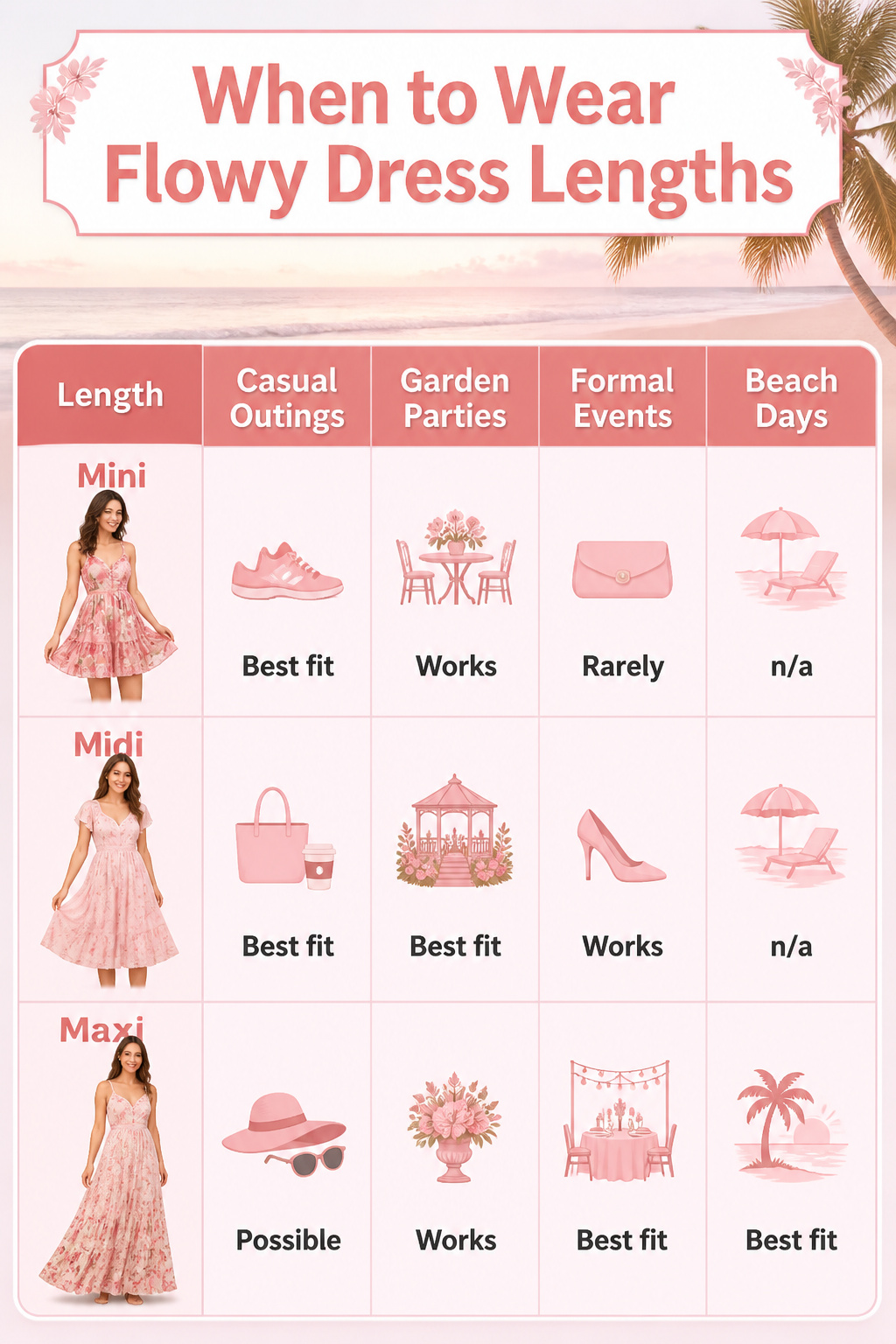
The question that keeps coming up is which length actually works where, not just what looks good on the rack. A mini flowy dress lands squarely in casual territory: errands in sneakers, brunch where you’ll be sitting more than standing, nights out that don’t call for anything floor-length. The midi hits the middle ground the sources keep pointing to, garden parties and wedding guest seasons where you need polish without the formality of a gown. Maxi carries the beach day and the evening event both, though the same dress rarely serves both without some styling changes.
| Length | Casual Outings | Garden Parties | Formal Events | Beach Days |
|---|---|---|---|---|
| Mini | Best fit | Works with dressier fabric | Rarely | n/a |
| Midi | Best fit | Best fit | Works with elevated details | n/a |
| Maxi | Possible | Works with structured top | Best fit | Best fit |
The real decision point is how much movement the occasion allows. A tiered hem that photographs beautifully at a garden party becomes a liability on crowded public transit. Breathable fabrics and that relaxed fit mean you can wear any of these lengths for hours, but the hemline sets the tone before you add a single accessory.
How I Actually Style Them
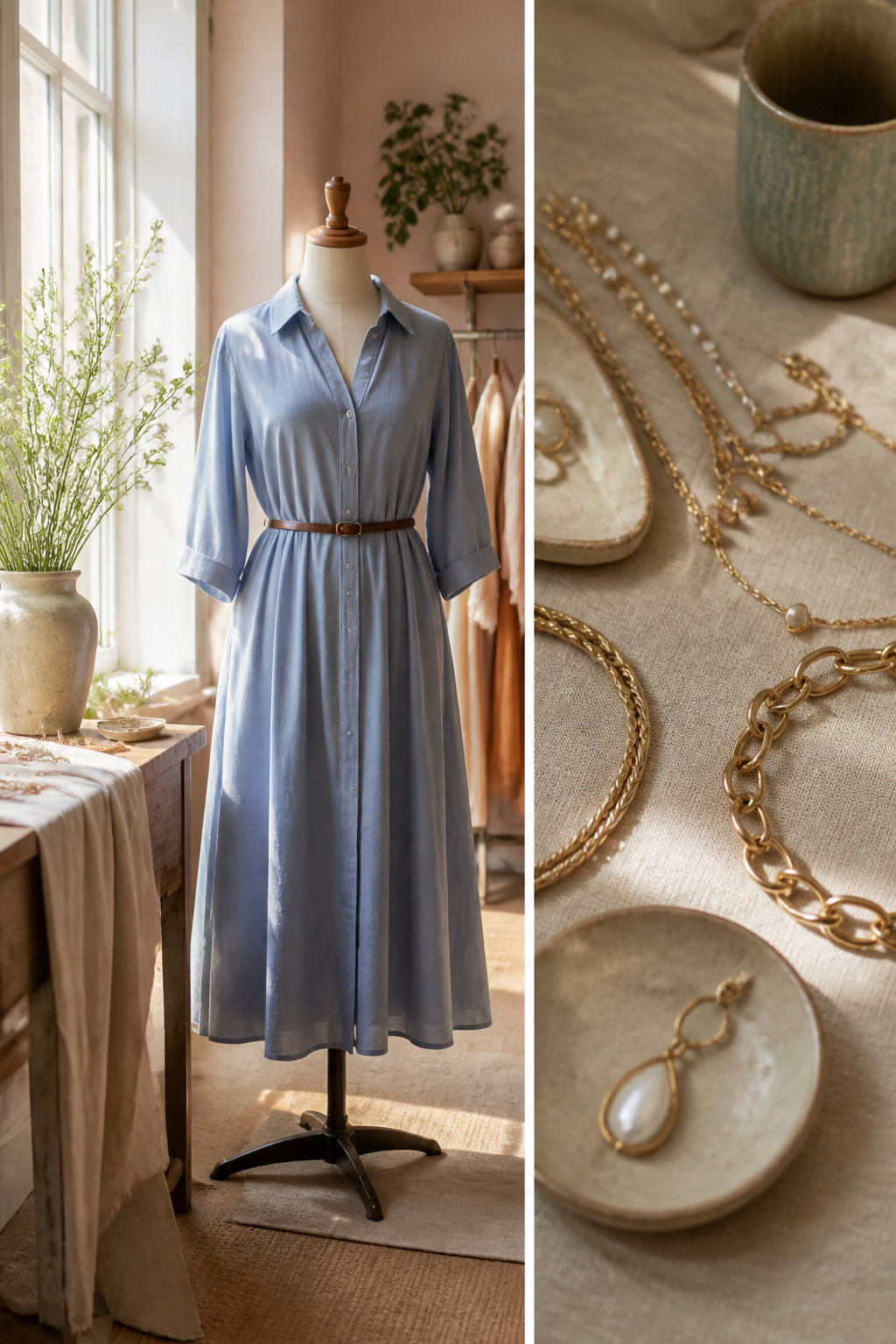
A thin leather belt saved the midi shirtdress I almost returned. The cut hung like a sack without definition, and the belt pulled the fabric in just enough at the waist to give it shape without fighting the drape. For jewelry, the rule I follow is simple: small prints take delicate chains, bold florals or tiered hems need something heavier so the piece does not disappear.
Layering depends on fabric weight more than season. Chiffon and similar light fabrics collapse under anything stiff; a soft cardigan or an unlined denim jacket works, but a structured blazer presses the dress flat and the silhouette turns bulky. I learned that the hard way at an outdoor dinner when the breeze picked up and my only cover was a wool blazer that ruined the line entirely.
For events, the same dress shifts with what you put over it. A cropped jacket keeps the proportions clean for a dinner where you will keep it on, while a longer cardigan left open works better for moving between warm and cool spaces. The belt stays on for structure; without it, the layers swallow the shape completely.
Washing What I Bought
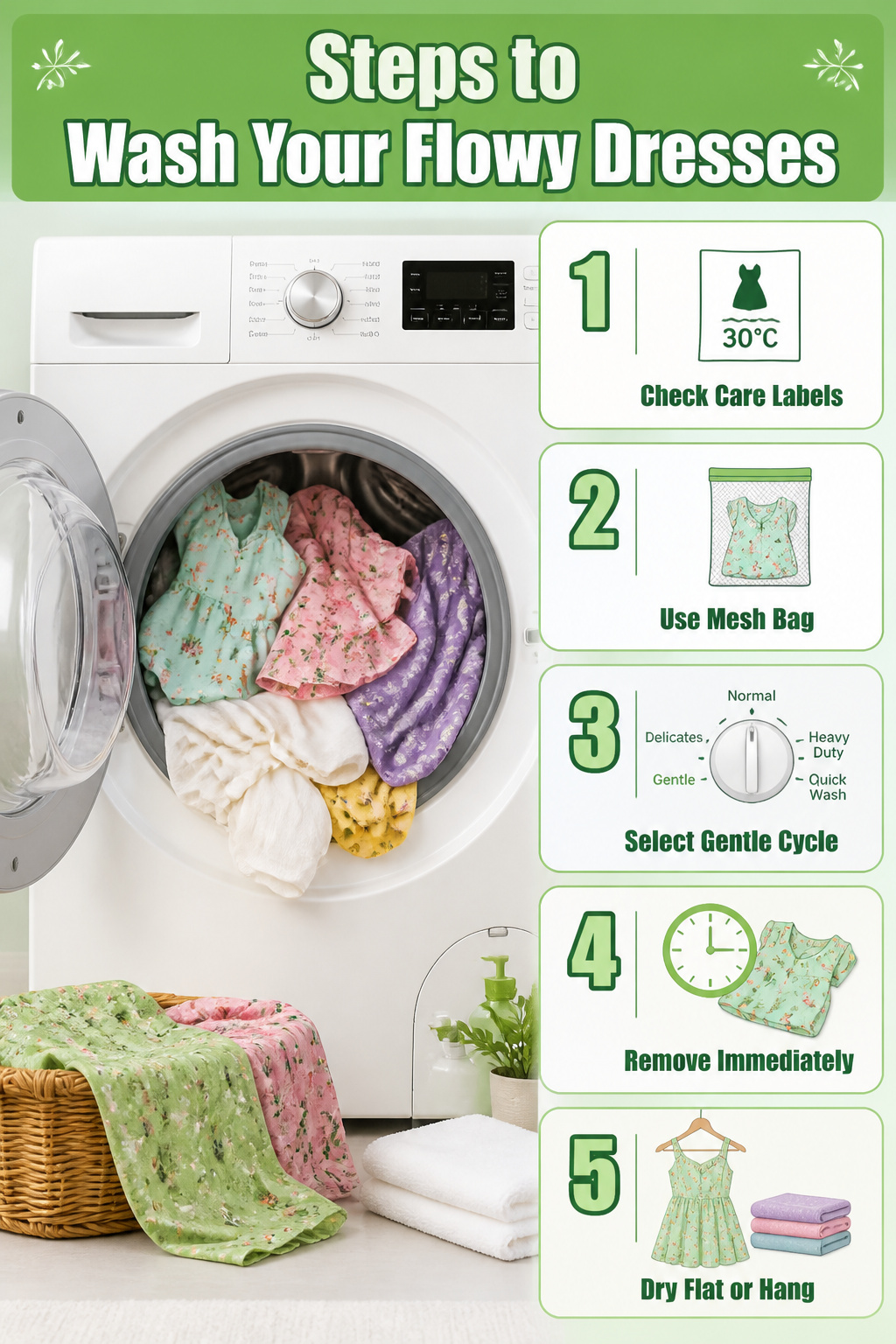
Machine-washable care is the detail that separates the dresses you reach for from the ones that stay balled up in the back of the drawer. Cotton and linen blends usually survive a normal cycle, though the linen content will crease enough to need pressing unless you pull it out the moment the dryer stops. Chiffon, even the polyester kind, frays at the seams and snags on zippers if it tumbles loose, which is where a mesh bag earns its keep: it cuts the abrasion against other clothes without doing anything about heat or detergent.
I ignored a hand-wash label once on a cotton-voile midi with a tiered skirt. The seams held, but the hem twisted just enough that the dress never hung straight again. A mesh bag would not have saved it; the spin cycle did the damage. What a bag actually protects against is surface wear, not structural stress from agitation.
If you want to skip ironing entirely, a cotton-poly blend or a crinkled cotton gauze emerges wearable straight from the dryer. Pure linen and most rayons do not. Chiffon, once wrinkled, needs steam or a low iron; hanging it in a steamy bathroom rarely relaxes the creases fully.
Prints That Show Up Seasonally
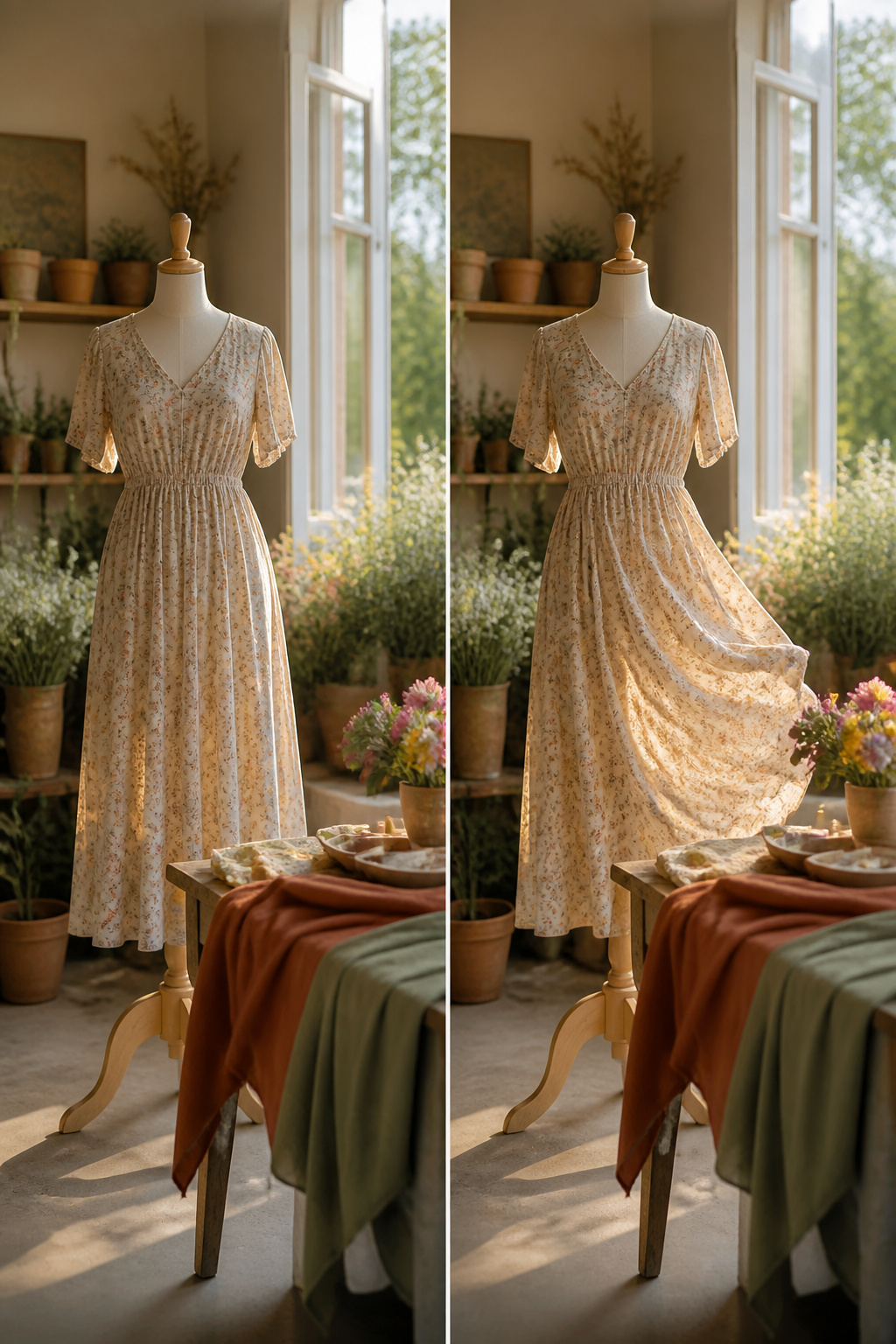
Florals and solids split the flowy dress world cleanly in two, and the mistake most of us make is treating them as equally useful year-round. They are not. Small, scattered florals in washed pastels read as June through August only; pair one with a boot in October and the whole outfit looks confused about the season. Bolder florals, the ones with darker grounds and larger scale, stretch further, though they still thin out once the trees turn.
Solids carry no such expiration date. A rust or olive midi works the same in July with sandals or in November with tights and a jacket. The cost per wear drops dramatically when the print does not announce a single season.
I stopped buying the delicate florals after counting wears on three dresses that each left my closet exactly twice: once for a shower, once for a brunch, never again. The math on that stings. Now I keep one true summer floral for garden events and put the rest of my budget into solids and a single dark-ground print that reads autumn without trying hard.
Sleeve Length and What Changes
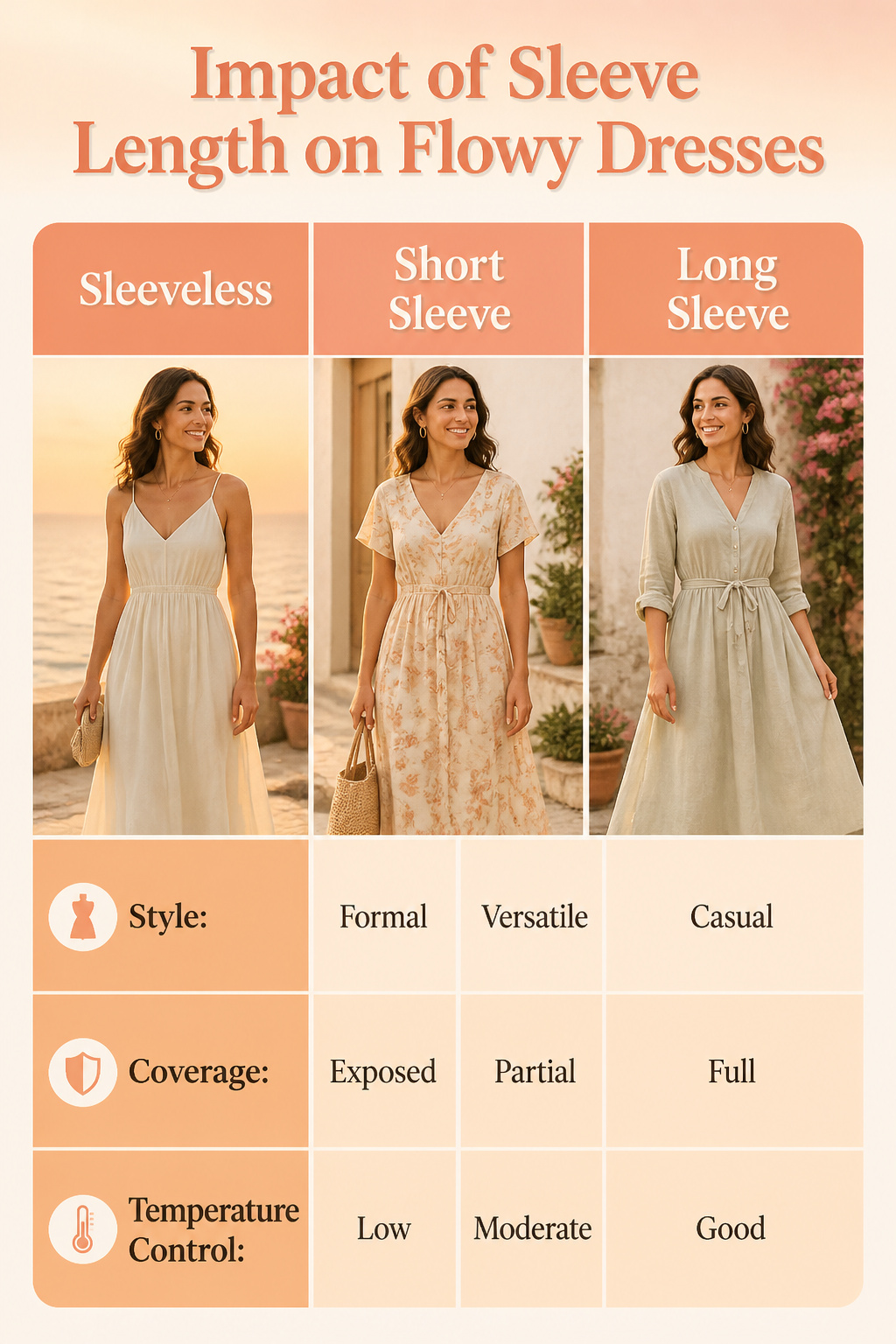
Sleeve length turns the same flowy dress into a completely different garment. A sleeveless cut exposes enough skin to read formal at evening events, something that surprised me after years of assuming bare arms meant casual. The air moving across your shoulders does real work for temperature regulation, though, and in humid heat that matters more than any fabric choice.
Short sleeves split the difference without committing to either extreme. They cover enough for office air conditioning but do not trap heat the way longer cuts can.
My single long-sleeve linen dress should not work in July, yet it does. The fabric is loose-woven enough that the sleeves function more like sun shields than insulation, and I reach for it on days when I want coverage without the weight of a layer. The trick is the cuff: it hits just above the wrist so air still circulates, and I push it up easily when the afternoon peaks. Linen woven loosely enough for summer long sleeves is the detail that makes the difference, and most racks will not advertise it; you have to feel the weave between your fingers and hold it to the light.
Frequently Asked Questions
What occasions are flowy dresses suitable for?
Flowy dresses work for casual outings, garden parties, and formal events, with the right length and fabric setting the tone. A mini handles brunches and errands, a midi covers meetings and weddings, and a maxi suits beach days and evening events. The same dress can move through multiple occasions with small changes to shoes and layers.
What styles of flowy dresses are available?
The main styles are mini, midi, maxi, shirtdress, fit and flare, and wrap. Minis hit above the knee; midis land between knee and mid-calf; maxis graze the floor. Shirtdresses add a collar and buttons for structure, fit and flare cinches at the waist before releasing volume, and wrap dresses tie at the waist with two crossing panels.
What materials are flowy dresses made from?
Cotton, linen blends, and chiffon are the most common. Pure cotton breathes best but wrinkles instantly; linen blends cut some creasing while keeping airflow; chiffon gives the truest float but almost always needs a lining. Cotton poplin holds crisp lines for shirtdresses, while rayon and Tencel drape softer.