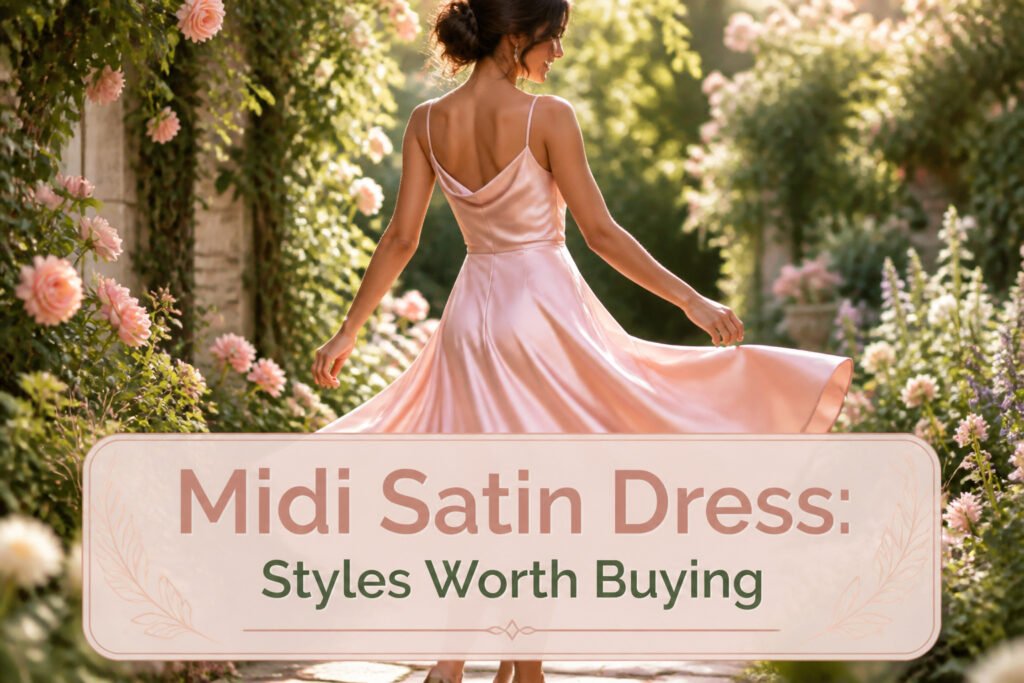
A midi satin dress is a calf-length garment cut from fabric with a smooth, light-catching weave. The catch is that satin shows every fit flaw, and an unlined skirt in pale colors turns sheer under daylight. I once spent an entire reception tugging a too-tight hem back into place because I had ignored the two inches of hip ease the weave demands.
1. Classic Midi Satin Dresses

The classic midi satin dress is what most of us picture first: standard neckline, simple sleeves, nothing tacked on for drama. That plainness became the default because satin does the heavy lifting. The fabric’s sheen catches light even under office fluorescents, and the drape keeps the skirt from looking stiff or costume-y. I reach for mine when I do not want to think through an outfit because it handles the in-between occasions without trying. A work dinner, a Saturday gallery opening, a friend’s birthday where the dress code is just "look nice"—the cut reads dressed-up because the material reads expensive, even when the price tag was not. The midi length helps too; it moves easily from day to evening without the fuss of changing. What keeps it in rotation year after year is exactly that lack of statement. Trends come in with halter necks and asymmetrical hems, but the simple version stays reliable.
2. Satin Halter Midi Dresses

A halter neckline pulls the fabric upward in one continuous sweep, and satin rewards that motion with a line that reads clean from collarbone to jaw. Straps break the shoulder into segments; a halter leaves it uninterrupted, which matters more than I expected once I started paying attention to how light catches the high points of a body. The trade is tan lines, something I ignored until a July wedding left me with a pale V that showed through every other neckline for weeks. Plan the calendar backward from any open-back event, or keep a strapless bra in rotation through May.
The backlessness shifts the whole balance. Front coverage reads modest only when the rear matches it; open the back and the same high neck becomes a deliberate choice rather than a safe one. A satin halter midi moves from day to evening with nothing more than a shoe change, because the neckline already carries enough formality that flats keep it grounded and heels finish the lift. I would not wear one to a meeting where I needed a blazer, though. The halter fights layers; the cut expects to be seen whole.
3. Satin Midi Dresses with Thigh-High Slits

A thigh-high slit in a midi satin dress changes how the fabric moves with every step. The satin catches and releases differently on each side, so the skirt flares wider than a closed hem would allow. Sitting down is where most buyers get caught out. The slit rides up, and without enough length built into the back panel, the dress edges toward exposing more than the design promised. I learned the wind factor the hard way at an outdoor wedding. Satin is lighter than it looks, and a slit that felt manageable indoors turned into a constant negotiation with a breeze that came from nowhere and everywhere.
For practical range of motion, the slit needs to start high enough that you can climb stairs without hitching the skirt, but not so high that the visual drama costs you normal movement. Shoes matter more here than with a closed skirt. A strappy sandal competes with the leg line; a clean pump or slim boot keeps the eye moving upward instead of stopping at the ankle.
4. Satin Midi Dresses with Open Backs
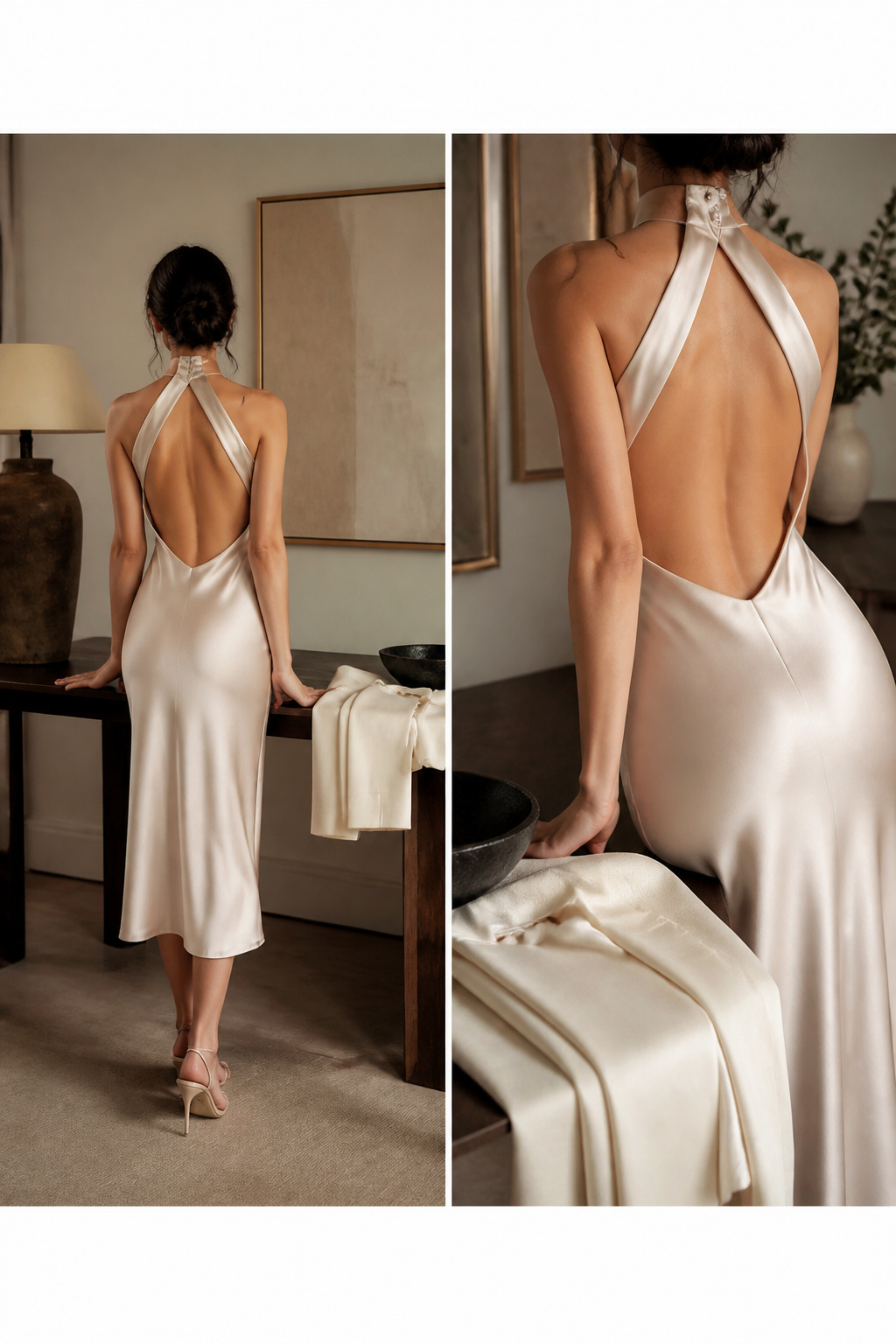
An open back changes the engineering of a satin midi dress completely. Satin has no stretch and no forgiveness; the fabric either supports you or it doesn’t, and a missing back panel means the whole job falls to the bodice and whatever you wear underneath. A low-back converter strap, the kind that hooks to your existing bra and pulls the band down to your waist, solves the front-support problem without specialty lingerie. I spent one evening at a summer wedding with a stick-on bra that lost adhesion halfway through the cocktail hour, and that particular mistake taught me to test any solution under actual satin, not cotton, for a full evening at home first.
The temperature surprise is real. Satin is already cool against the skin, and an open back turns every air-conditioned room into something closer to a restaurant freezer. Your back registers the draft before the rest of you does, and the sensation flips the dress from romantic to clinical in about sixty seconds. A cropped jacket or wrap left at the table is the practical fix, though it does defeat the detail you paid for.
What strikes me is how the same fabric shifts categories. A closed-back satin midi reads cocktail or office party. Remove the panel and the dress becomes strictly evening, strictly event, strictly the thing you change out of before the after-party moves to someone’s living room. The backless version demands more planning for less wear, which is either a fair trade or it isn’t, depending on how many actual black-tie evenings sit on your calendar.
5. Satin Midi Dresses in Soft Neutrals

Champagne satin catches light like a held breath, warm at noon and turning almost silver under evening bulbs. Blush does the opposite, flattening to a pale shell in direct sun but deepening to something alive in candlelight. Dove gray splits the difference, reading as cool slate or soft pearl depending on what surrounds it.
The shade that taught me this was "nude," a word that promises to disappear and rarely does. The dress arrived the color of a bandage against my arm, jarring against my sister’s deeper tone at the fitting, absurd on our cousin’s olive skin. "Nude" is a specific color, not a universal solution, and three women in the same wedding party proved it in the group chat that followed.
Neutrals solve the problem they create. They photograph without stealing focus, let the event stay the subject, keep a bridesmaid from becoming the story someone tells later. The bride’s face, the vows, the light through the windows: these stay central because the dress steps back. That is the job.
6. Satin Midi Dresses in Bold Colors

Emerald satin reads expensive even in polyester because the depth of the color hides the synthetic sheen. Sapphire works the same way. Burgundy, though, can tip toward cheap fast if the weave is thin, showing that telltale shine at the hips where the fabric stretches. I learned about red the hard way: the midi satin dress I grabbed for a colleague’s memorial service turned out to be the exact shade of a stop sign, and in that room of navy and black, I looked like I had chosen drama over grief. Saturated color dials the formality up or down faster than cut does. Jewel tones are having their moment, but the limit is skin undertone. Cool emerald flatters me; warm ruby makes me look washed out. The single bold color that gets me stopped on the street is a deep teal, halfway between the two families, expensive-looking on almost everyone.
7. Satin Midi Dresses with Ruching

Gathered fabric across the midsection changes what satin can do for a body. Flat satin shows every contour; ruching breaks the light into soft ridges that read as texture, not topography. The placement matters more than the amount. Side ruching, pulled from a seam toward the center, draws the eye vertically and trims the waist. Ruching that radiates from a center knot or twist does the same. Ruching that gathers horizontally across the fullest part of the stomach adds volume there, and that is the placement that made me look pregnant at a dinner where I was most definitely not.
Drape changes too. Where flat satin falls in a single plane, ruched panels hold structure and move independently. The dress shifts with you instead of clinging. That structure buys fit tolerance: a ruched bodice forgives an inch of variance in either direction, and the waist measurement becomes less critical because the eye reads the gathering, not the seam line. Sizing down can work if the ruching is generous; sizing up rarely collapses the effect because the gathers hold their shape. The one limit is length. Ruching shortens the effective hem slightly as it pulls fabric upward, so a midi that skims the knee on the hanger may land higher when the gathers release across your frame.
8. Satin Midi Dresses with Asymmetrical Hems
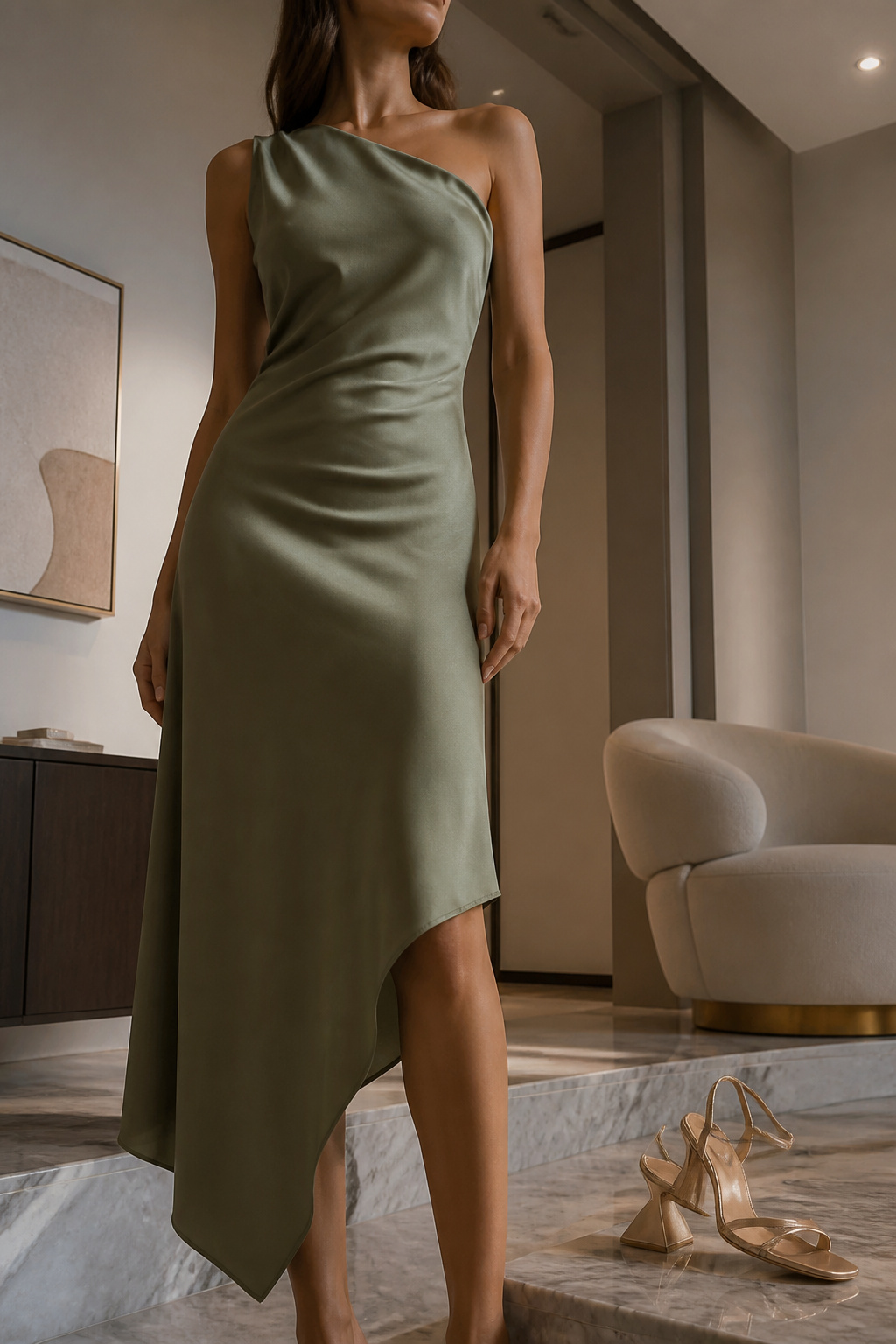
An asymmetrical hem on a midi satin dress walks a thin line between modern art and a tailoring mistake. The deliberate imbalance draws the eye diagonally, which can elongate the leg on one side while the other stays modestly covered. That single long point changes everything about shoe visibility; a pointed toe or slim sandal that would hide under an even hem suddenly flashes with every step, while a heavier shoe can look anchored to only half the outfit.
The real gap is between stillness and motion. Photographed from the front, the slope reads as intentional architecture. In person, walking across a room, the fabric shifts and the angle can flatten into something that looks like a hem caught on a chair. I learned this at a wedding where the dip on my left side dropped nearly to the ankle. Sitting was fine. Dancing meant the satin pooled and dragged under my heel by the third song. The cut worked for dinner, failed for movement, and I spent the last hour holding the skirt slightly aloft. If the event involves a dance floor, the sharper the asymmetry, the more you need to test the lowest point at your full stride.
9. Satin Midi Dresses with Lace Insets
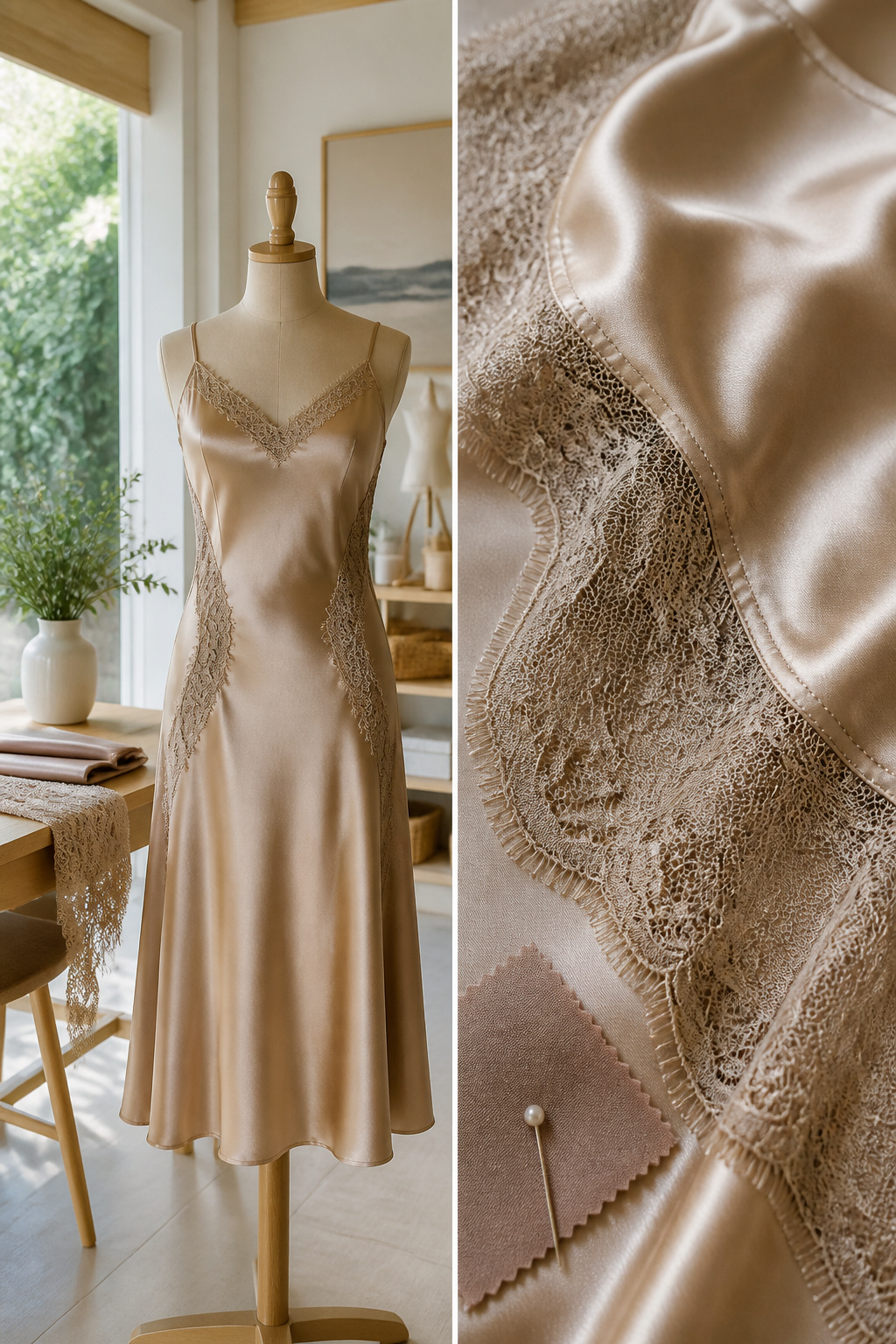
Matte lace against shiny satin creates a texture contrast that reads expensive from across the room. Insets typically run along the neckline, down the sleeves, or as side panels that break up the sheen without exposing much skin. The transparency question matters more than I expected: some lace is backed with nude mesh for modesty, and some is not, and the product photos do not always make this obvious. A dress that looks cocktail-appropriate on the hanger can shift toward occasion wear depending on how much skin shows through those panels, so checking the lining situation before buying saves a return. The care complication is real. Satin tolerates a cool iron; lace snags under one. Two fabrics with two different needs mean hand washing cold or a very gentle cycle inside a mesh bag, then air drying flat to keep the lace from distorting while the satin dries evenly.
10. Satin Midi Dresses for Bridesmaids

Coordinating a wedding party means solving for bodies that change size between the order date and the aisle, and satin’s forgiving drape covers that gap better than structured alternatives. The fabric catches light uniformly across different dye lots, which matters when your maid of honor orders six weeks after the first three bridesmaids. My sister’s spring wedding put this to the test: three of us wore the same cut in champagne, taupe, and soft rose, colors that read as a deliberate palette rather than a mismatch because the shared sheen tied them together. The photographer later told us the mixed neutrals gave her more to work with than identical dresses would have, since each of us stood out against the garden backdrop without clashing. Satin reads formal without requiring the embellishment costs that velvet or beaded alternatives add to a group order. For anyone footing the bill across five or six women, that difference decides whether the budget holds.
11. Satin Midi Dresses for Graduations
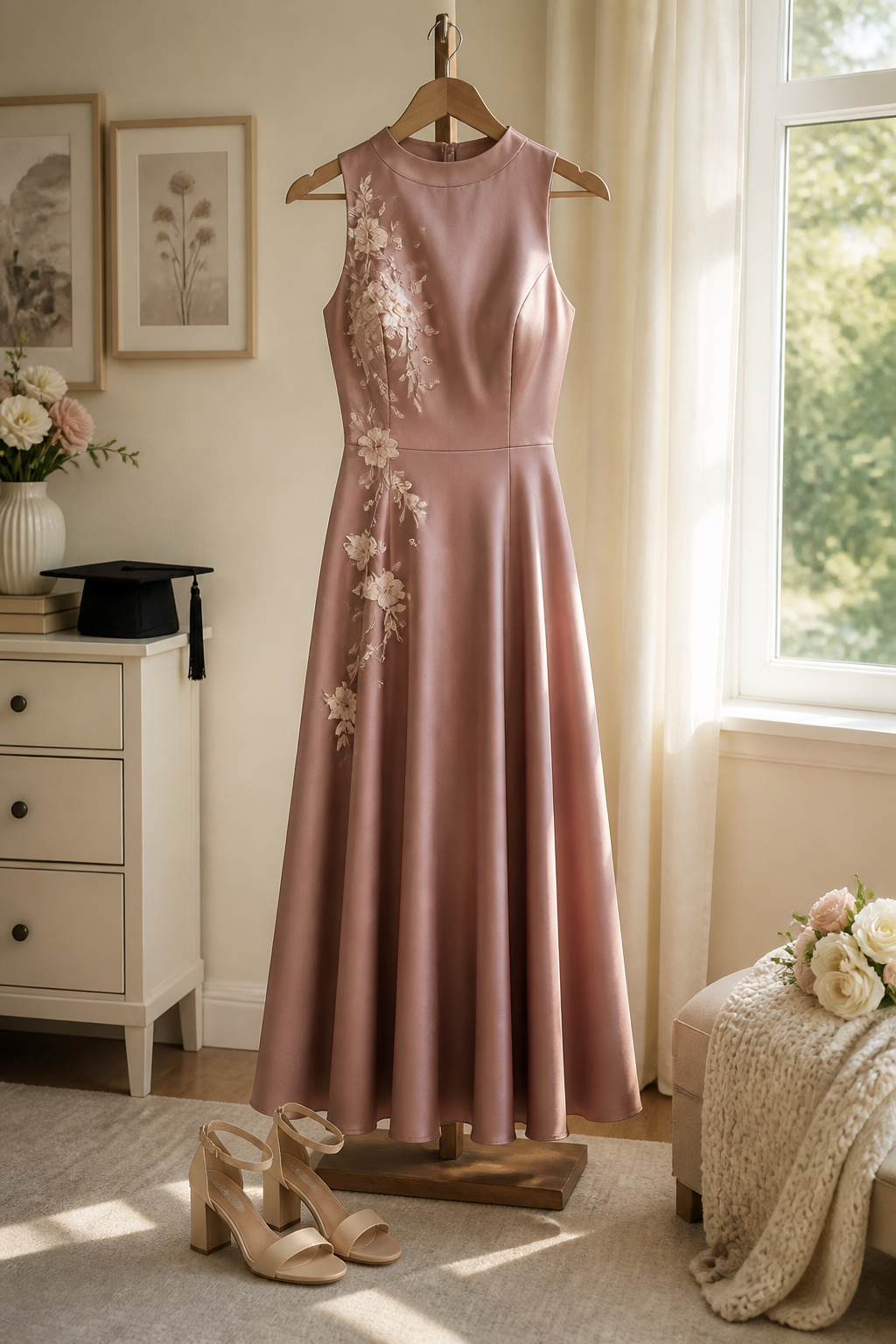
A midi satin dress handles the ceremony-to-party shift better than anything shorter or longer. The hem lands low enough to stay appropriate under a graduation gown, where only the neckline and sleeves really show, then reveals itself fully once the gown comes off for dinner or drinks afterward. That length also saves you from the awkwardness of a mini riding up while you’re seated through two hours of speeches.
For outdoor photos on grass, a block heel around two inches keeps you from sinking in while still reading dressed-up. Stilettos will puncture the lawn; flats can look underdressed against the formality of satin.
I wore satin for my own graduation despite late May heat, and the choice came down to photography. Cotton wrinkles the minute you sit, and those creases show up harshly in flash photos. Satin stays smooth through the ceremony and catches light in a way that reads celebratory rather than casual. The fabric does run warmer, so a sleeveless or cap-sleeve cut helps balance that out.
If you’re buying this as a gift, the graduate likely wants something they can re-wear. A solid color in a tone that works for summer weddings afterward will get far more use than a bold print tied to one event.
12. Satin Midi Dresses for Special Occasions
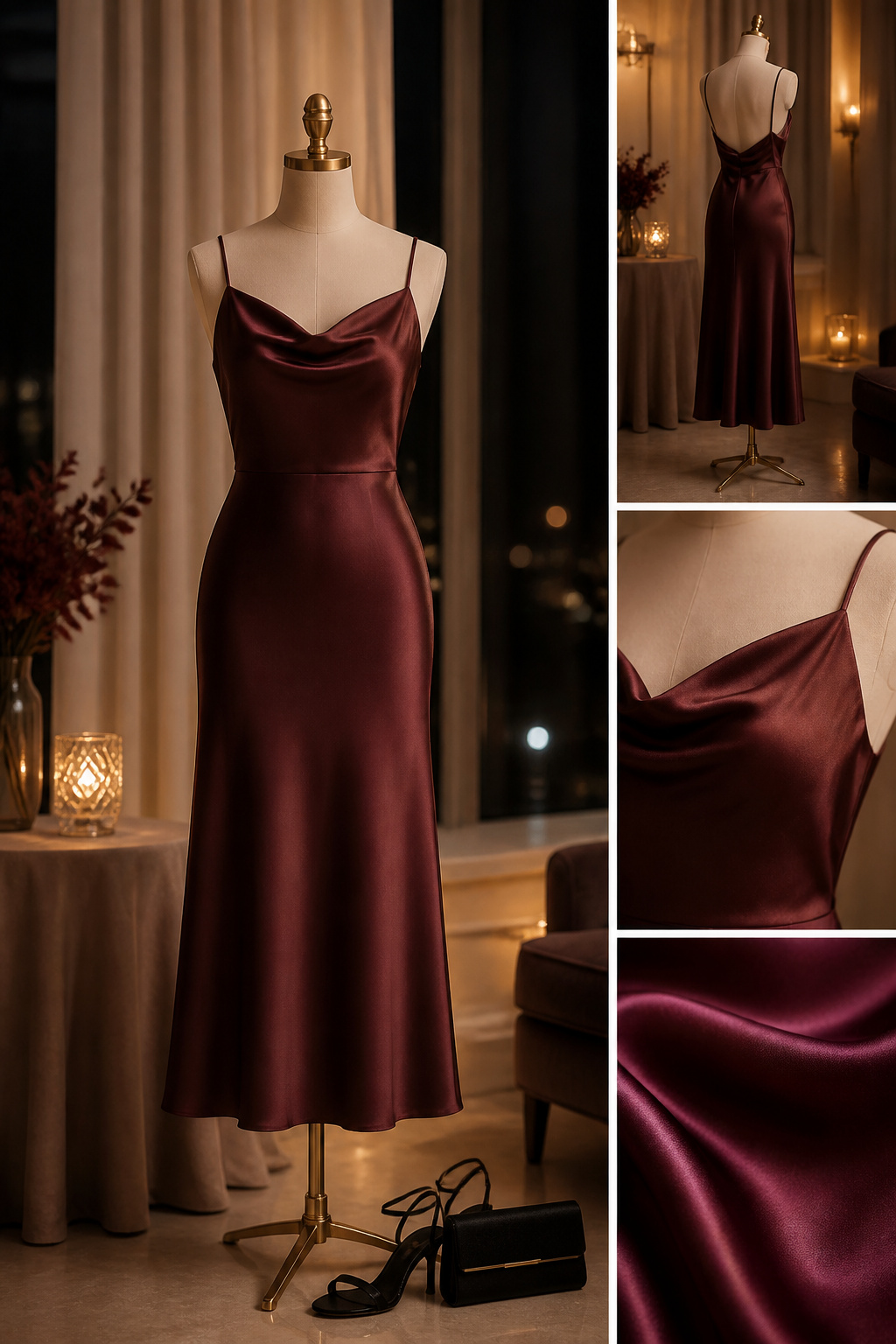
A satin midi dress sits in that awkward middle ground where the fabric says "special" but the length says "cocktail, not gala." Three questions sort out whether it works or whether you need to hunt down a floor-length option instead.
Evening events after 6 p.m. push harder toward full length, especially seated dinners where a midi hem rides up and pools awkwardly at mid-calf. Standing receptions are where the midi wins; you move through a room without the tripping hazard or the constant hem management. The third question is the one most people skip: has this host seen this exact dress on you before? A repeat wear to the same crowd reads as "nothing else to wear" faster in satin than in almost any other fabric.
Layering and accessories move the same dress up or down the formality scale without swapping the whole outfit. A cropped structured jacket and closed-toe pumps lift a simple satin midi into black-tie-optional territory. Swap in strappy flat sandals and a soft cardigan left open, and the same dress drops to a nice brunch. The jewelry gap matters more than people expect: statement earrings and a bare neck read dressier than a delicate necklace with studs, even at the same price point. The shoe choice alone accounts for about half the formality shift, so that is where the decision usually lives.
Why the Fabric Matters

Light hits satin at an angle that matte fabrics simply don’t allow, and that difference is what makes a midi satin dress read as dressed-up even in a quiet room. The weave reflects in soft sheets rather than scattered points, so the fabric glows instead of glittering, and the weight of a decent satin, usually between 12 and 16 momme for silk or a similar heft in polyester, pulls the skirt into that liquid drape everyone recognizes from across a room.
I spent longer than I’d like to admit assuming silk was the only way to get the look, but polyester satin has closed the gap more than the price difference suggests. Modern poly satins drape almost as smoothly and resist wrinkling far better, which matters when you’re wearing the same dress from an outdoor summer wedding straight through to the cooler evening air. Silk breathes slightly better against skin on a 90-degree day, yet both layer well under a light jacket once fall arrives, and neither demands the dry-cleaning schedule that silk used to require. The seasonal stretch is real: cool enough for July, easy to warm up for October, and that range is part of why the style keeps hanging in closets year-round instead of getting boxed away with the sandals.
The Midi Length’s Practical Range
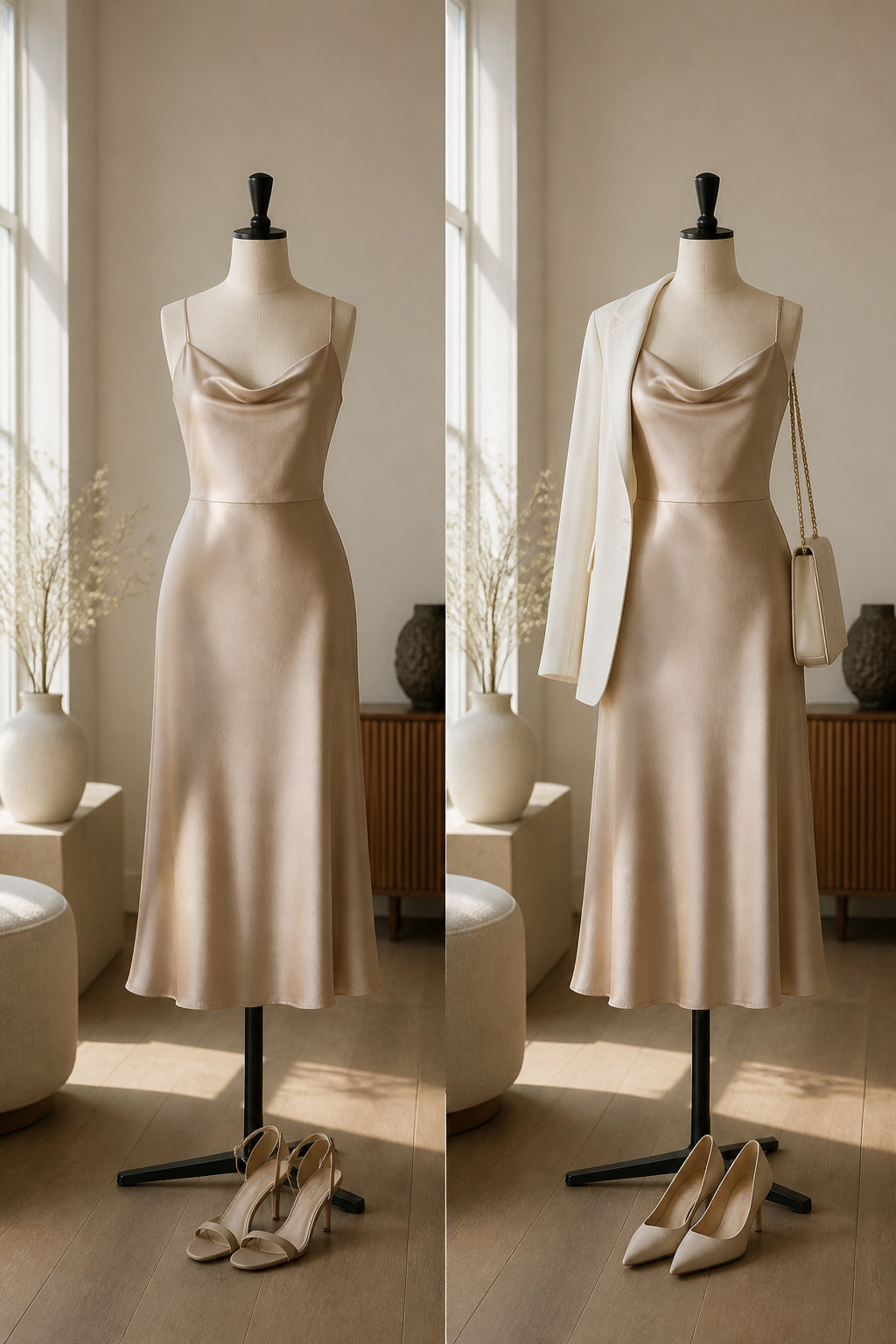
The midi hem hits somewhere between the bottom of the knee and the top of the calf, which sounds like a narrow band until you account for how differently it reads on a 5’2" frame versus a 5’9" one. On shorter women the skirt pools closer to the ankle, giving almost a tea-length feel; on taller women it sits higher on the shin, closer to the classic 1950s silhouette. Either way, the cut stays legible as "midi" without drifting into maxi territory, which is why brands can sell one labeled length across size ranges and most wearers make it work.
Sitting down in a midi means the hem rides up to true knee level, so you get coverage in motion without the awkward floor-sweep of a longer skirt or the constant tug of a mini. Walking is unrestricted; the satin glides rather than clings, and the weight of the fabric keeps it from flipping on wind gusts the way lighter midis can. This middle length became the default because it solves problems rather than creating them. It handles flats without looking truncated, since the exposed calf provides a visual break, and it handles three-inch heels without looking like you outgrew the dress, since the hem still clears the ground by several inches. The proportion just holds.
Neckline and Sleeve Decisions

A cowl neckline on a midi satin dress drapes softly enough for dinner out but still needs a plunge bra or fashion tape to keep the line clean. I learned that the hard way at a spring wedding where the fabric shifted every time I reached for bread. Sleeve length changes the dress more than I expected. Cap sleeves read casual and summery; a three-quarter sleeve suddenly looks office-appropriate even in the same champagne satin. Long sleeves feel formal but trap heat, so I look for a slit cuff or a lightweight lining if the event runs past sunset.
The bare-arm question matters more than people admit. Conference rooms and restaurant patios run cold, and a sleeveless midi satin dress leaves you either shivering or layering a cardigan that ruins the line. A flutter sleeve or short sleeve solves this without adding bulk. High necklines, meanwhile, need smooth cups or a strapless style since satin shows every ridge. A halter or one-shoulder cut demands a specific bra or none at all, which limits how often I reach for it.
Accessorizing Without Overdoing

Satin’s glow does the heavy lifting, so the accessories that work best are the ones that step back and let it. A thin chain at the throat, small hoops, or a single delicate bracelet add enough interest without turning the outfit into a competition for light. Shoes follow the same rule: a simple pump or a slim sandal in leather or suede keeps the line clean, while anything too ornate, too metallic, or too busy starts to look like two outfits arguing.
Layers need the same restraint. A cropped blazer or a fine-gauge cardigan in matte fabric gives structure without drowning the dress in volume. The proportion matters here too: anything that hits past the hip starts to chop the midi length into awkward pieces.
The one place this went wrong for me was a gold statement necklace against a halter neck. The neckline already drew the eye upward; the necklace sat on top of it like a second headline, and neither one could win. A bare neck or a single small pendant is the safer call with any neckline that does its own framing.
For bags, a clutch that fits just a phone, keys, and a lipstick balances the midi length without adding bulk. Anything larger starts to feel like luggage against the dress’s relative simplicity.
What I Check Before Buying

A midi satin dress lives or dies on three measurements that never show up on a size chart. The waistband placement matters most: too high and the skirt balloons over the hips, too low and the fabric pools at mid-calf instead of falling clean. I hold the dress at my natural waist and eye where the seam actually lands, because satin has no forgiveness and an inch of error reads as a full size off.
Hip ease is the second check. Satin woven without stretch needs at least two inches of room through the hips or the skirt rides up with every step, walking itself shorter through an evening. I learned this at a spring wedding where I spent the reception discreetly tugging the hem back into place.
The lining question separates a dress I will wear from one I will return. Unlined satin in lighter colors goes sheer against daylight, and static cling turns a lined skirt into a straightjacket by dessert. I look for a separate slip lining, not fused, that moves independently.
Return policy gets checked before checkout every time now. Satin photographs differently than it wears, and the drape that looks fluid on a hanger can stiffen against the body. Free returns within thirty days is my floor; anything less and the dress stays in my cart.
Frequently Asked Questions
What occasions are satin midi dresses suitable for?
A midi satin dress works for anything between casual and formal: work dinners, gallery openings, birthdays with a "look nice" dress code, weddings, graduations, and standing receptions. The fabric reads dressed-up while the length moves easily from day to evening without a change.
What styles of satin midi dresses are available?
The main styles include classic simple cuts, halter necklines, thigh-high slits, open backs, ruching, asymmetrical hems, and lace insets. Each shifts the dress toward more or less formality. A halter or open back makes it strictly evening; a classic cut stays reliable year after year.
How can I accessorize a satin satin dress?
Keep accessories minimal since the fabric’s glow does the work. Thin chains, small hoops, or a single delicate bracelet add enough interest without competing. A cropped blazer or fine-gauge cardigan in matte fabric gives structure, and the shoe choice alone accounts for about half the formality shift.