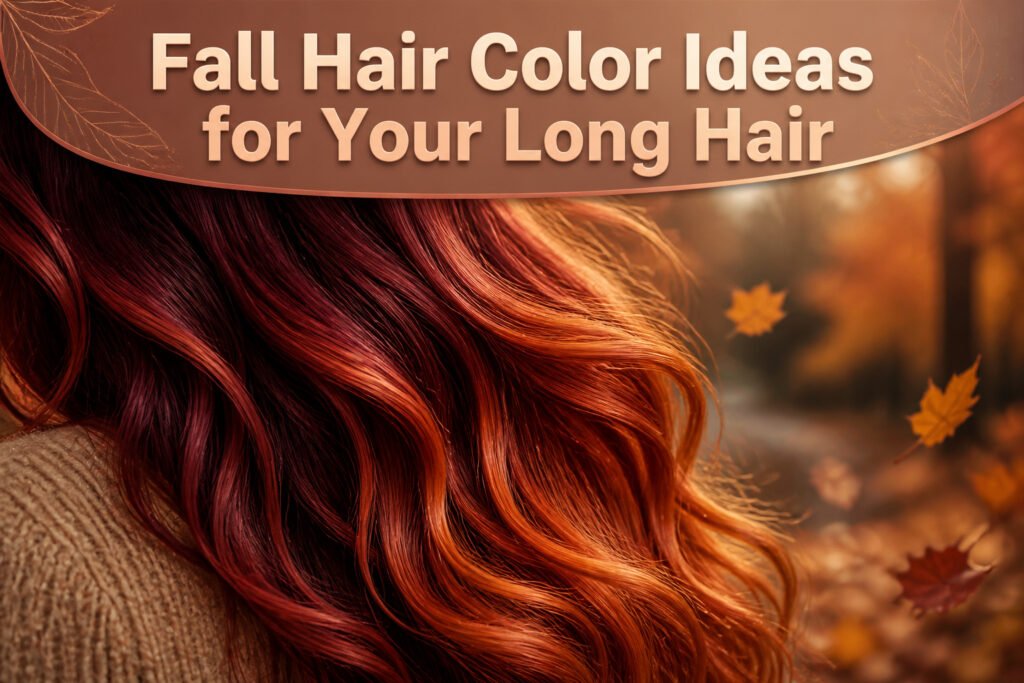
The right long fall hair color depends on how much maintenance your calendar can actually absorb, not just the shade that catches your eye first. A monochromatic block with clear gloss reads expensive under October’s angled light, but roots grow in obvious against that solid field and the gloss itself fades in six to eight weeks. Stretch a cinnamon spice gloss to eight weeks like I did and the red disappears first, leaving muddied brown that looks like a cover-up. For lower commitment, dark cherry cola pools thicker at the ends on long hair but lets you push touchups closer to eight weeks; the red only surfaces when light hits it directly, so the grow-in stays forgiving.
1. Monochromatic Hair Color
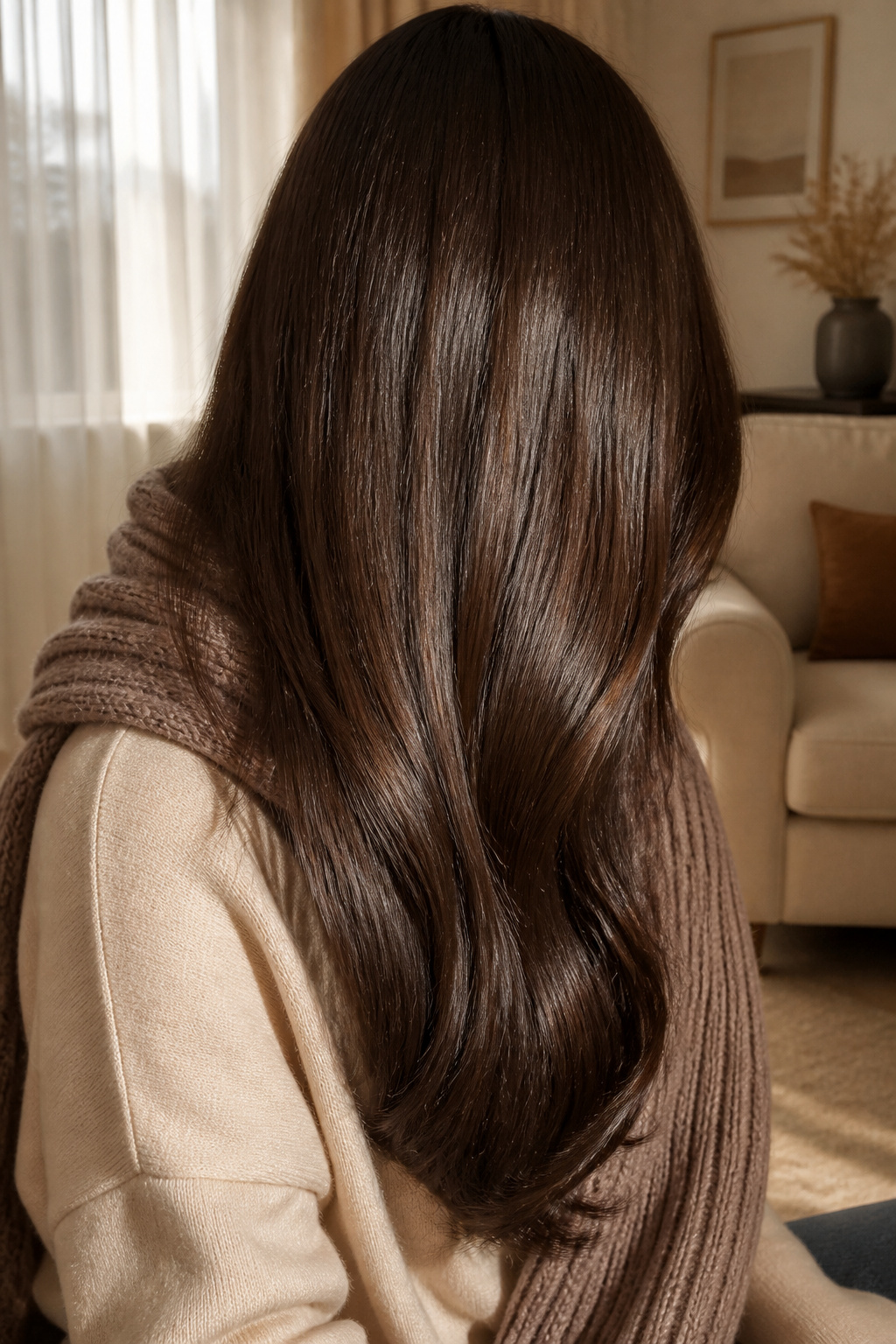
A single-tone color without any highlights reads as expensive in a way that busy dimension rarely does. The surface catches light as one continuous plane, and a gloss treatment pushes that effect further by sealing the cuticle so completely that the hair almost looks liquid. In October’s lower, angled light, the result is quiet and deliberate, the kind of polished finish that registers even under a knit hat or scarf. Summer sun breaks a flat color apart and exposes every slight variation in porosity; fall light is gentler, more forgiving, and lets a true monochrome do what it was meant to do. Your hair the morning after a gloss appointment will look like you spent money on it, which, to be fair, you probably did. The commitment is the maintenance, not the concept: roots grow in clean against a solid field, so the line is obvious fast, and the gloss itself fades in six to eight weeks. I think the look works best on longer hair because the uninterrupted sweep from crown to ends is the whole point; chop it short and you lose the runway. If you are already conditioning heavily and your ends are healthy enough to hold color evenly, a monochromatic block with a clear gloss is the lowest-effort way to look like you planned your fall color on purpose.
2. Glossy Espresso Brown

Deep glossy brown with subtle warm undertones reads almost black in low light, then warms up the moment direct light hits it. That shift is what makes gloss non-negotiable for this shade. Without it, espresso brown falls flat and reads as plain dark hair; with it, the color gains dimension that moves with you through the day.
The glossy finish comes from a zero-lift acidic color glaze rather than permanent dye, which refines existing dark tones without damage. Post-summer brassy lengths get replaced with refined depth, and hair ends up to 3x shinier after treatment. Regular conditioning and shine-enhancing products maintain that expensive-looking surface between salon visits.
Two ways sources describe the undertone: one frames it as subtle warmth added to almost-black shades, another calls it cool-toned brunette inspired by roasted coffee beans. For fall, the warmth wins. It keeps the color from reading harsh against skin that has lost its summer color, and the glaze lets natural brunettes stay close to their base while still registering the seasonal change.
3. Dark Cherry Cola Hair Color

Burgundy undertones that read nearly black in low light are what separate dark cherry cola from a standard auburn. The red only surfaces when light hits it directly: a bathroom mirror at midday, a streetlamp at night, the glow from a laptop screen. I tried this shade two falls ago, and the first week I kept walking past reflective windows to check if any color was still there. It was, but only when the angle caught it.
The maintenance surprised me. Roots grow in less obvious against that near-black base, so the six-week root touchups some reds demand stretch closer to eight. A gloss refresh on the ends brings the tone back without a full redo. Celebrity colorist Jenna Perry suggests asking for more straight red if your skin runs fair, or red-violet for cooler, deeper complexions. I went red-violet, and the shift toward purple kept the shade from reading brassy under fluorescent lights.
For long hair specifically, the weight of darker pigment means the color pools thicker at the ends. A gloss cocktail using Redken Shades EQ in the R or RB ranges helps even that out. The dimension shows best when the hair moves, so layers or a soft wave help more than a blunt cut that sits flat.
4. Lived-In Caramel Balayage
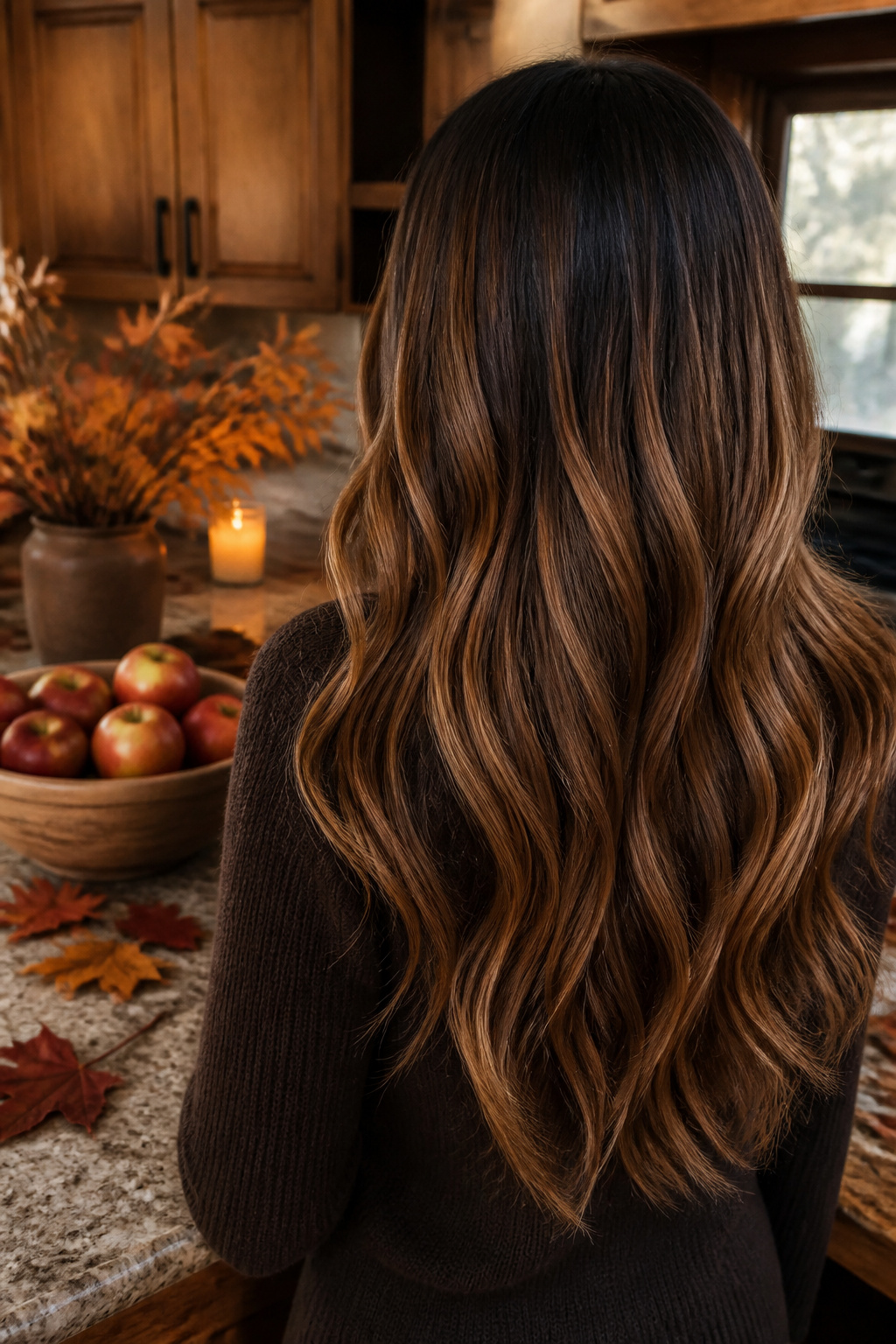
Hand-painted caramel balayage on long hair is the technique that actually earns the "lived-in" label. Color gets painted freehand rather than folded into foils, so the lightened pieces sit where the sun would have hit them back in July. The grow-out line stays soft enough that you can push appointments to roughly three or four months apart, which matters more once fall schedules tighten up.
The sweet spot for this tone is a medium brown or dark blonde base. Caramel pieces warm up brunette without the brassy slide that lighter blondes risk by November, and the contrast stays gentle enough that your ends do not read as a separate color from your roots. On long hair, that gradual fade from crown to tip adds the depth that keeps a single shade from looking flat under autumn’s weaker light.
The hand-painted method wins here because it leaves darker pieces between the lighter ones, so your length still carries weight. Foiled highlights can stripe on long hair; balayage keeps the dimension random. If your hairline starts looking sparse as the root zone expands, a hairline filler matched to your base keeps the transition tidy without an extra salon visit.
5. Cinnamon Spice Hair Color
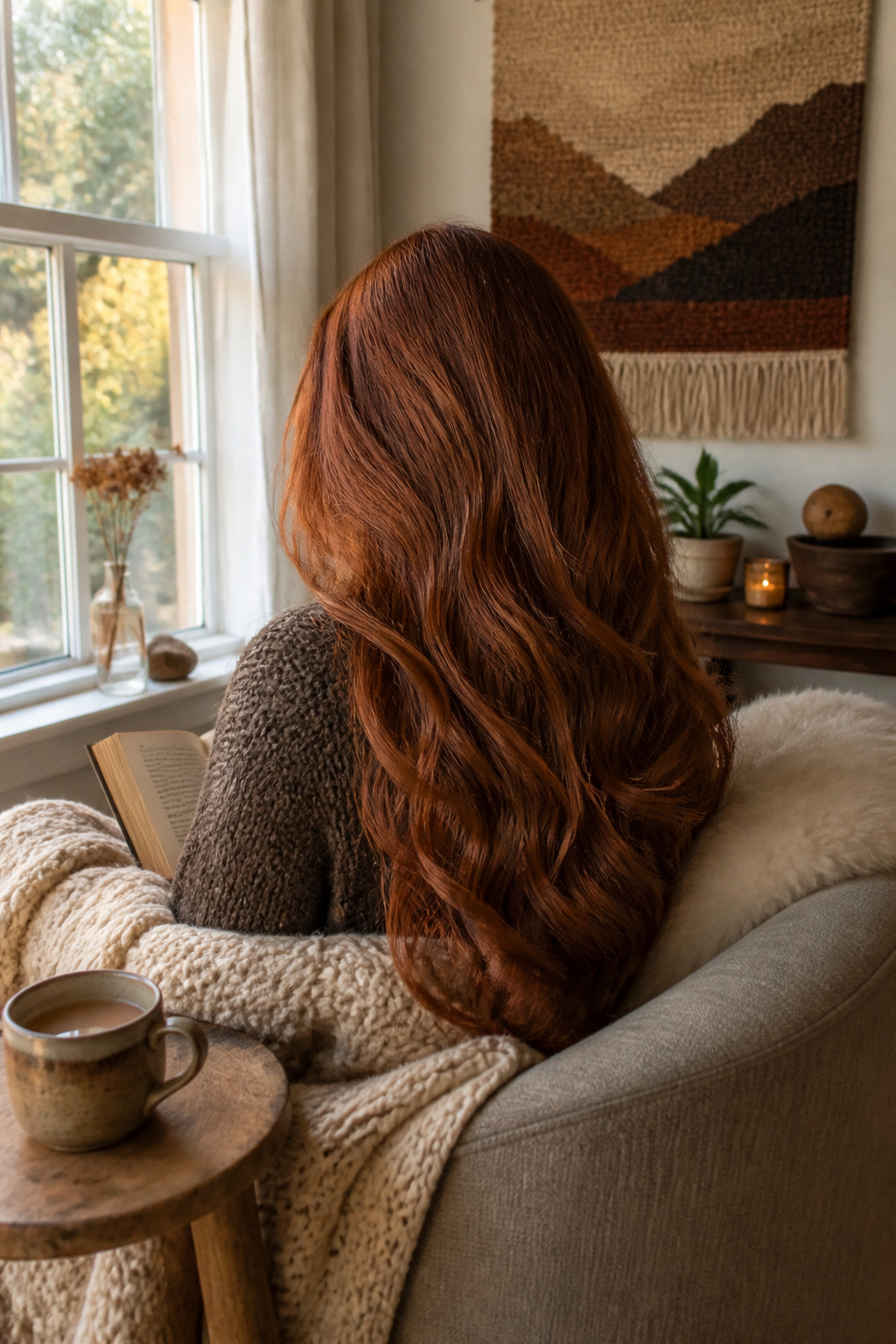
Cinnamon spice hair color sits in that narrow space between brown and true red, warm enough to catch light without drifting into pumpkin orange territory. The tone flatters warm skin undertones especially well, though the exact balance matters: too much red and it competes with olive complexions, too little and it reads as flat brown under autumn’s weaker light.
The gloss appointment gap is where this shade falls apart. I learned that the hard way after stretching what should have been a four-week refresh to nearly eight. The red faded first, leaving behind a muddied brown that looked like I’d tried to cover something up rather than commit to a color. Color-depositing conditioners bought me maybe a week of borrowed warmth, but they could not rebuild the dimension that the original ribbon balayage technique had placed through my lengths.
The fix, when I finally sat back in the chair, was not a full redo but a targeted gloss with Illumina Color’s red range, which pulled the tone back to that youthful, natural-looking cinnamon without starting over. Now I book glosses at five weeks, not four, and I treat that as non-negotiable. The mirror-like finish I get from finishing with a smoothing oil serum is only visible when the underlying color is actually fresh, not when I am pretending it still is.
6. Old Money Honey Blonde

Summer blonde lives on highlights and salt air, but old money honey blonde shifts the whole premise toward warmth you can feel indoors. The golden undertones stay rich rather than sun-bleached, more cashmere scarf than beach wave, and that difference reads as expensive the moment the light drops off in October.
What convinced me, reading through the seasonal color shifts, is how little actual darkness you need to register fall. Honey blonde keeps plenty of brightness; it just swaps the cool, reflective quality of ash or platinum for something lustrous and buttery. Wella calls it the coziest accessory in the hair world, and the name tracks: it flatters warm and neutral skin tones the way a good camel coat does, without asking for a dramatic chop or hours in the chair.
If you want the same gilded effect deeper, honey brown pushes the same undertones down a level. Either way, ask your colorist about a demi-permanent glaze for that translucent veil of color; zero-lift options exist now that envelop strands without the damage of traditional lifting. The seasonal refresh becomes about tone, not commitment.
7. Rooty Silver Blonde
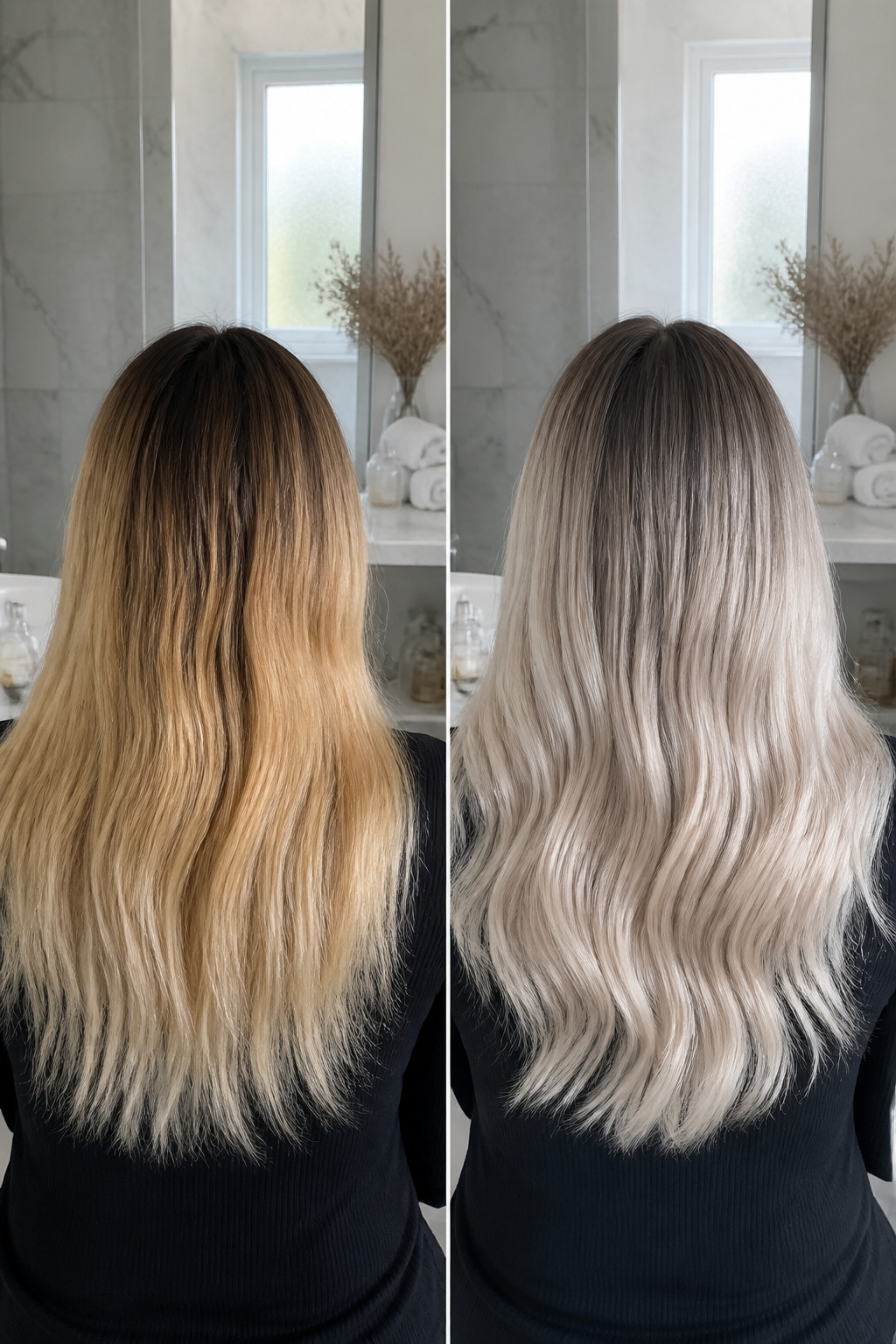
Rooty silver blonde keeps the effortless darker base that carried through summer, but pushes the lengths toward crisp, bright silver rather than the warmer platinum that dominates winter. The distinction matters for maintenance. Where full platinum demands near-constant bleaching to erase every shadow of regrowth, this look lets your natural depth sit deliberately at the scalp.
The shift in tone changes how you fight brass. Purple shampoo handles surface warmth on platinum, but silver needs more targeted intervention. Demi-permanent glosses in icy, cool-toned formulas refresh the midlengths without the ammonia lift that stresses already-lightened hair. Plan on toning every four to six weeks, not the eight to ten that stretched-out platinum sometimes allows, because silver shifts yellow faster than it shifts dark.
Your undertone determines whether this reads expensive or washed-out. Cool and neutral complexions carry it cleanly; warmer skin can look sallow against too much ash. The darker root placement helps here, adding back the dimension that flat silver lacks. If you’re already greying naturally, the grow-out becomes almost invisible, which is the whole point of choosing this over a single-process blonde that betrays you at week three.
8. Color Depositing Treatment Masks
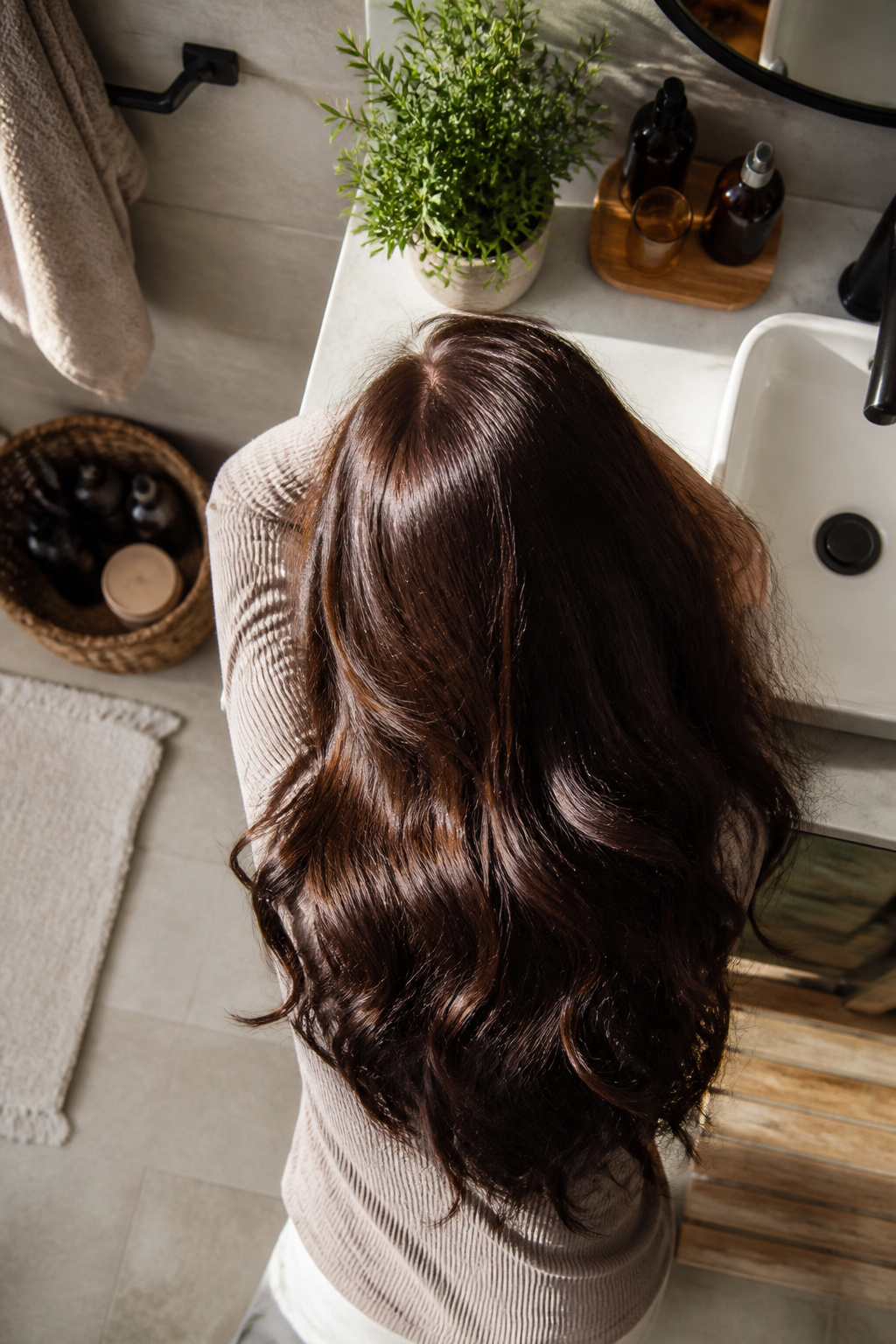
A color depositing treatment mask refreshes long fall hair color without the commitment of permanent dye. Wella’s Color Fresh Mask takes ten minutes on clean, damp hair after shampooing, and rinses out to leave brass toned down and brightness restored. IGK makes a Brown Bella version that pushes lighter brown toward rich chocolate, which matters when summer sun has stripped depth from a fall shade.
Porous ends need watching. They grab more pigment than the midshaft, so the refresh can turn uneven fast. The mask is ideal for those slow Sunday showers when you have time to saturate evenly and set a timer, but it will not replace a salon visit for full coverage. Copper spice red, another fall direction, fades fast enough that a ten-minute mask between appointments can keep the warmth from going flat.
Between the two approaches, Wella leans toward maintenance of what you have, while IGK’s mask nudges you toward a deeper, richer brown. Both work on the same rule: damp hair, full ten minutes, thorough rinse. Skip the thorough rinse and the color pools where you least want it.
9. Face-Framing Highlights

The sectioning pattern for face-framing highlights matters more than most people expect. Your colorist works in a triangular panel from each temple, drawing the point back toward the crown so the brightness catches where the light naturally falls. Everything behind that triangle stays darker, which is what makes this read as a seasonal shift rather than a full overhaul.
What convinced me, reading through the techniques, is how the placement borrows from summer without committing to it. The sources describe two workable approaches: taking existing highlights darker everywhere except that front frame, or adding new brightness at the face with a bond-strengthening lightener that lifts up to 9 levels while claiming up to 97% less breakage. The first route preserves what you already paid for; the second builds fresh dimension on a deeper base.
Jennifer Aniston’s version, a dirty blonde with soft framing pieces, shows how this reads on brunettes. For warmer tones, golden caramel against chocolate brown does similar work, warming the complexion without the maintenance of a full head of highlights. The seasonal logic holds either way: darker hair everywhere else mirrors shorter days, while that front brightness keeps the glow you do not want to lose entirely.
The triangle starts at the temple and points toward the crown; ask for anything else and you are getting a partial highlight with a fancier name.
10. Rosy Beige Hair Color

Pastel pink usually reads as spring, but rosy beige lands differently. The difference is the beige itself: earthy, muted, almost ash-adjacent, so the pink never goes candy-bright. On long hair, that sheer wash of color moves like fall light, especially if your base is already a cool blonde or ash brown.
The fade is what sold me, reading through the options. Rosy beige drops back to tone rather than drifting into flat blonde, which means the grow-out stays intentional-looking for longer. A color-safe shampoo is the non-negotiable here; anything stripping will pull the pink out faster and leave you with neutral beige weeks ahead of schedule. Skip the clarifying formulas entirely.
Wella’s Color Fresh Mask in Pink Blush is the at-home route: ten to twenty minutes on towel-dried hair, then rinse. The result is sheer, not saturated, which is exactly why it works on longer lengths without overwhelming your whole look.
11. Teddy Bear Bronde Hair Color

Teddy bear bronde sits right in the middle of brown and blonde, but the warmth is what makes it read as fall rather than summer grown out. Chocolate and beige tones melt together with something the sources call velvet truffle, a descriptor that sounds like dessert but translates on hair to depth without heaviness. The colorists who do this well layer in gloss so the surface catches light; without that step, the dimensional quality falls flat and the whole point of the shade is lost.
What sold me on this for October is how the tone shifts. Under indoor light, the brown base settles forward and the color reads as cozy, something that belongs with sweaters. Step outside on a clear fall afternoon and the blonde pieces warm up, catching the lower angle of sun so the whole thing brightens without looking bleached. That movement between settings is the payoff, not a single static color.
For long hair specifically, the length gives the blend room to show. Shorter cuts can turn this into a single muddy tone, but with enough hair the lightest pieces can frame the face while deeper roots melt down for easier upkeep. Ask for the lightest streaks where they catch your eye first, then let the rest deepen toward the ends.
12. Buttercream Blonde Hair Color
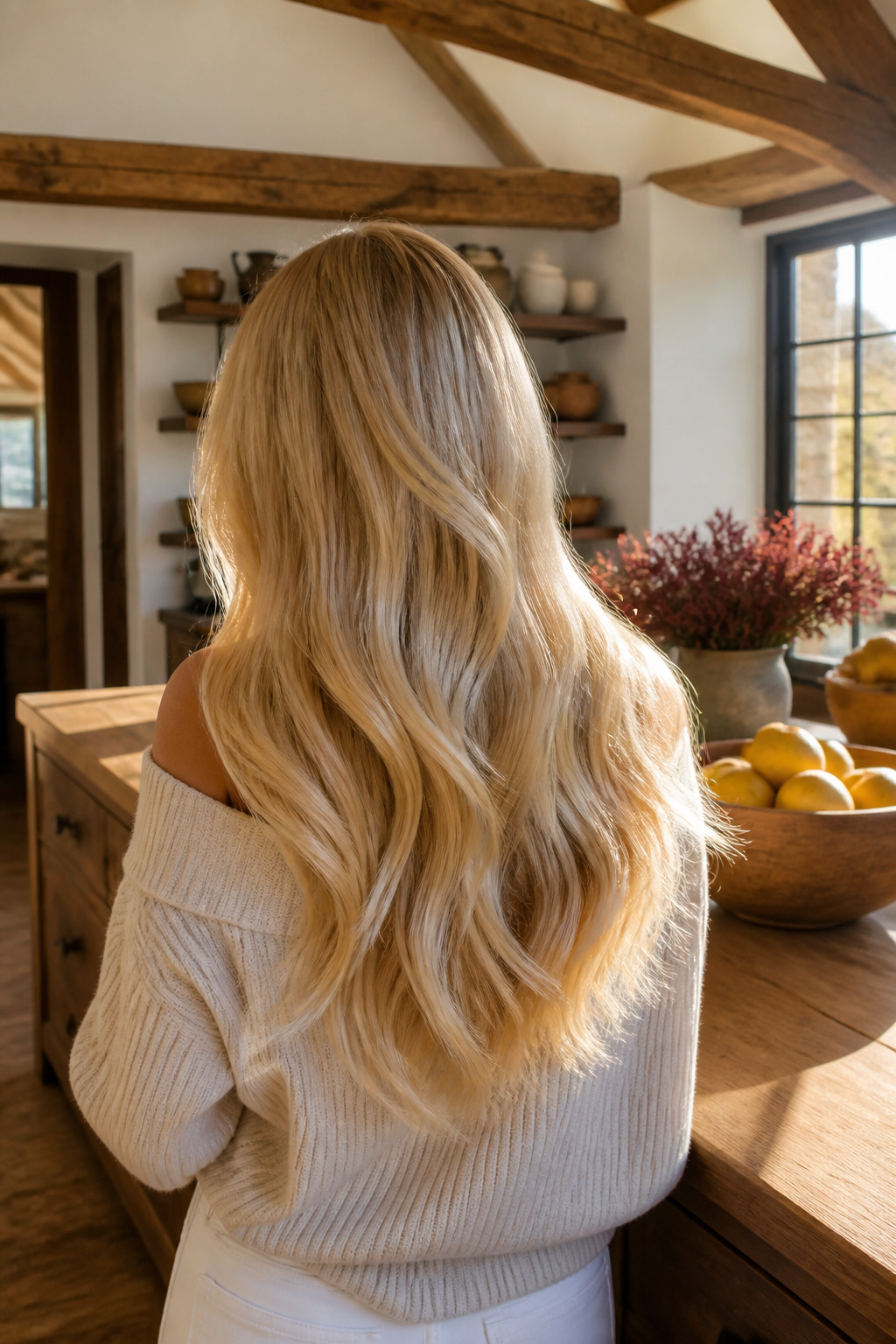
Buttercream blonde sits in that narrow space between honey and platinum where the warmth is still there but dialed down to a whisper. The tone reads creamy rather than metallic, with the yellow muted enough that it catches autumn light without flashing obvious gold. On long hair, that softness matters; the color has room to travel from root to tip, and anything too brassy starts looking like a grow-out mistake three inches down.
This shade needs real lift, usually two to three levels from a natural dark blonde, more if you are starting from brown. The creamy finish comes from toning out the raw yellow after bleaching, not from the bleach itself. Skip the toner or use one with too much violet, and you land in either banana territory or an ashy gray that washes out most skin tones.
My roots at week six told the whole story. The warmth had crept back in at the crown, but it stayed within that butter range rather than snapping to orange. The grow-out looked intentional, like a slightly deeper version of the same color rather than a line of demarcation. That is the payoff of starting with a tone this muted: the fade is gentler, and you buy yourself an extra week or two before the salon.
13. Glossy Grey Transitions

Glossy grey transitions work best for anyone tired of chasing roots every three weeks. The technique uses blended highlights, not a single all-over color, to soften the line between incoming grey and whatever shade was there before. Smoky pieces woven through the crown catch light while the natural growth stays part of the finished look, so the demarcation line never arrives with a hard edge.
The grow-out advantage is roughly double your usual appointment spacing. Where solid color demands maintenance every four to six weeks, this placement stretches to ten or twelve before the contrast turns noticeable. That timeline shifts based on how quickly your hair grows and what percentage has turned, but the blended approach buys weeks either way.
Cool lowlights or beige undertones do the softening, depending on what sits underneath. Someone with a previous brunette base leans toward cooler ribbons; lighter former colors read better with beige woven in. The style itself matters less than the placement, whether the cut runs toward a polished lob or something more textured. What sells the look is the gloss finish, not matte or flat, which keeps grey reading as intentional rather than neglected.
14. Apricot Red Hair Color

Apricot red sits lighter than true copper, with an orange lean that reads more fruit bowl than penny. Wella’s Supernatural Color line calls it out as a standalone shade, one that strengthens and repairs while it deposits color, which matters if your long hair is already carrying some bleach history from summer.
The tone lands in that transitional space between bright copper and something softer. Where deep fall reds go moody and absorb light, apricot throws it back. That radiance has a specific fading pattern: the orange lifts first, leaving a warm blonde behind rather than a brassy rust. The result looks intentional even when it is not, which is why this reads as seasonal bridge color rather than commitment color.
Two ways to play the salon visit. Ask for a standalone apricot formula if you want the full fruit effect. Or, if your stylist works with Redken, the Shades EQ line mixes Golden Apricot (08WG) with copper blondes for a custom dilution. The second route gives you more control over how loud the orange reads against your base. Either way, the maintenance is lower than a true red because the starting point is already lighter, and the fade walks itself back to blonde territory without a harsh line.
15. Pearly Platinum Blonde Hair Color

A pearly platinum blonde sits just shy of an ice blonde, carrying that same cool direction but with a softness that reads more surfer-girl-coming-ashore than winter-statue. The pearlescent finish is the detail that matters here: it catches light with a muted glow rather than reflecting back flat white or slipping into grey territory.
Wella’s Illumina Color line handles the toner work for this shade, and the result is the kind of luminance that holds up against overcast October skies. Color Fresh Mask in Pearl Blonde is what keeps it from going brassy or dull between salon visits. The mask deposits tone without the commitment of a full demi-permanent, which means you can use it as often as weekly if your water runs hard or your hair pulls warm easily. In softer water or on hair that stays cool naturally, every two weeks is usually enough to maintain that fresh-from-the-chair pearly cast.
Which Shade Matches Your Undertone

Warm undertones pull off honey blonde, copper spice, and caramel balayage because the gold in the hair echoes the gold in the skin. Cool undertones need the opposite: smoky ash blonde, mushroom brown, or cherry cola red so the color does not fight the complexion. I used to think I ran warm because I tan easily, so I went with a rich caramel that turned brassy against my neck in natural light. The mistake was trusting jewelry alone; silver actually flatters me, and my veins read more blue than green once I checked in daylight rather than bathroom yellow. Cool shades suit cool undertones, warm shades suit warm, and neutral undertones can wear nearly any fall color. If you are unsure, hold rust or camel fabric under your chin, then charcoal or plum. The one that makes your skin look alive, not sallow, points to your undertone and the hair color family that will harmonize with your autumn wardrobe.
Color Techniques That Add Depth
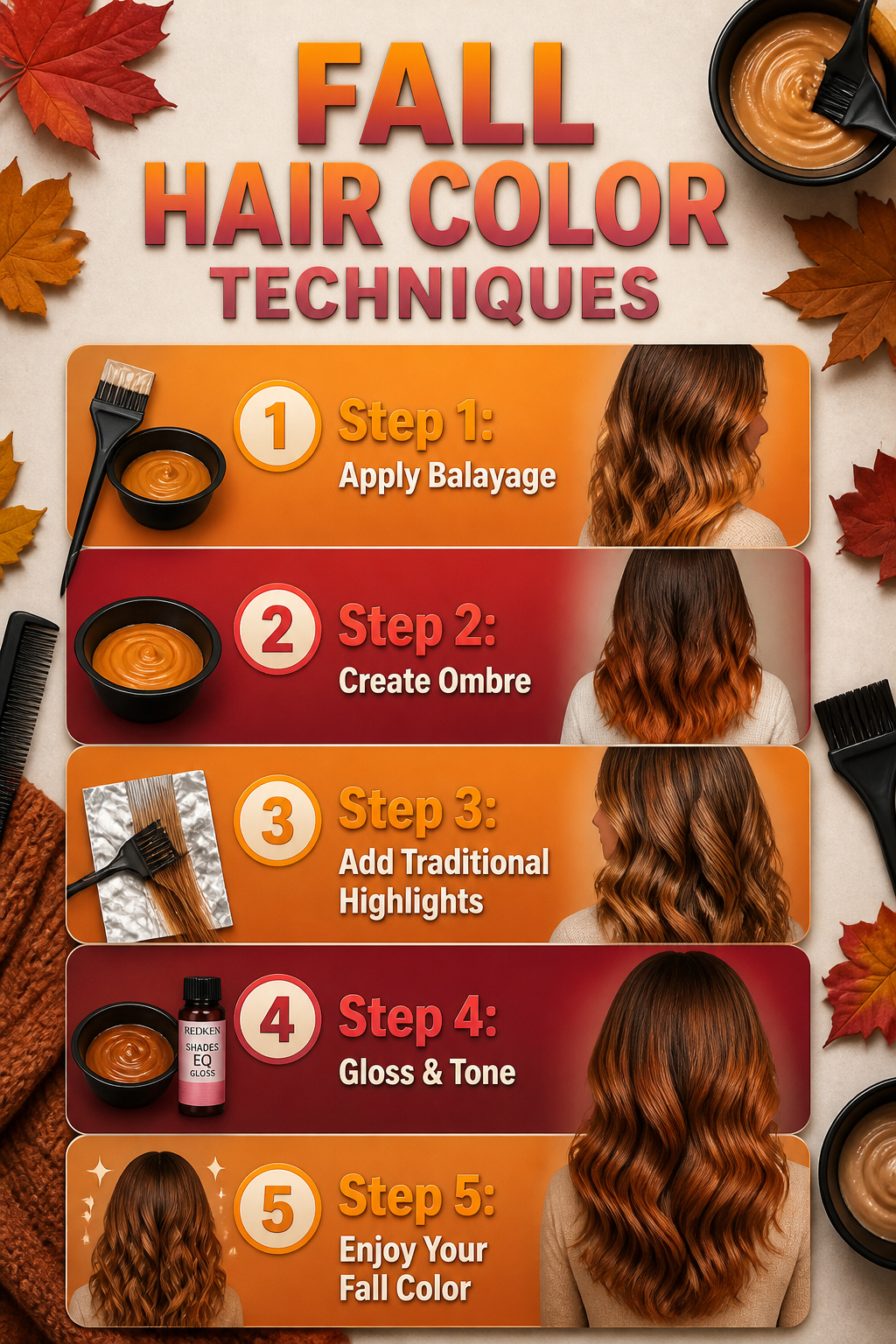
Three techniques keep showing up for long fall hair color, and they do completely different things to the same base shade. Balayage paints color on freehand, so the grow-out stays soft and the dimension looks like it happened in actual sunlight. I asked for that once and got something streakier than I wanted; the difference was whether my colorist left the roots alone and feathered mid-shaft down, or started too high and created bands.
Ombre, the updated version, keeps the top two-thirds close to natural and lets the ends carry the warmth. The maintenance is minimal because the line grows out gracefully rather than screaming for a touch-up. What I actually got the time I tried it was a harsher transition than the modern sun-kissed look; the fix was asking for the demarcation to sit lower and using a gloss like Redken Shades EQ in Cream Soda blended with Golden Apricot to soften the shift.
Traditional highlights add the brightest pops and the most contrast, which can read youthful but also higher-maintenance. For fall, the move is keeping them fine and spaced rather than chunky, so they catch light without looking striped. The technique matters more than the shade name; copper balayage and copper highlights on the same level read totally different because one melts and the other stripes.
My Maintenance Routine by Color Type

Sulfate-free shampoo matters for every shade in this lineup, but how often you reach for it shifts with the color family. Brunettes and deeper reds can stretch to three washes a week without the tone going muddy; blondes and coppers tend to need that second-day dry shampoo by day three. Gloss treatments every 6–8 weeks are the constant across all fifteen colors, though the purpose changes: brunettes use them to revive richness, reds to stop fading into orange territory, and blondes to knock out brass.
Heat is where I draw a hard line regardless of tone. Below 350 degrees when hot tools are non-negotiable, heat protectant always. Air-drying buys you more weeks between salon visits than any product promise.
| What shifts | Brunette/Black Cherry family | Blonde/Bronde family | Copper/Red family |
|---|---|---|---|
| Wash frequency | 2–3x weekly, stretchable | 2x weekly, strict | 2x weekly, strict |
| Gloss focus | Depth and shine | Tone correction | Saturation |
| Root situation | 6-week touch-ups typical | 8–10 weeks if balayage | 6 weeks, non-negotiable |
| Dry shampoo use | Moderate | Heavy | Moderate |
The real divide is commitment level, not color choice. Single-process brunettes get away with laziness; any red or lifted blonde will punish the same slackness within two washes.
Frequently Asked Questions
What are the best fall hair colors of 2025?
The best fall hair colors for 2025 include rich espresso brunette, copper spice red, caramel balayage, honey blonde, chestnut brown with auburn highlights, and smoky ash blonde.
How do you maintain fall hair colors?
Maintain fall hair colors by using color-safe shampoo, limiting heat styling, and scheduling gloss treatments every 6-8 weeks. Color-depositing masks like Wella Color Fresh Mask or IGK Brown Bella can refresh tone between salon visits, but work on damp hair with a full ten-minute set and thorough rinse.
Which fall hair colors look good on brunettes?
Brunettes look great in rich espresso, chestnut brown with auburn highlights, and caramel balayage. Dark cherry cola, cinnamon spice, and teddy bear bronde also flatter brunette bases because the deeper pigments pool well at the ends of long hair and grow out gracefully.
Which fall hair colors look good on blondes?
Blondes can transition into fall with honey blonde, caramel highlights, or smoky ash blonde. Buttercream blonde, old money honey blonde, and rooty silver blonde work well too, shifting summer brightness toward warmer or icier fall tones without losing all the lightness.