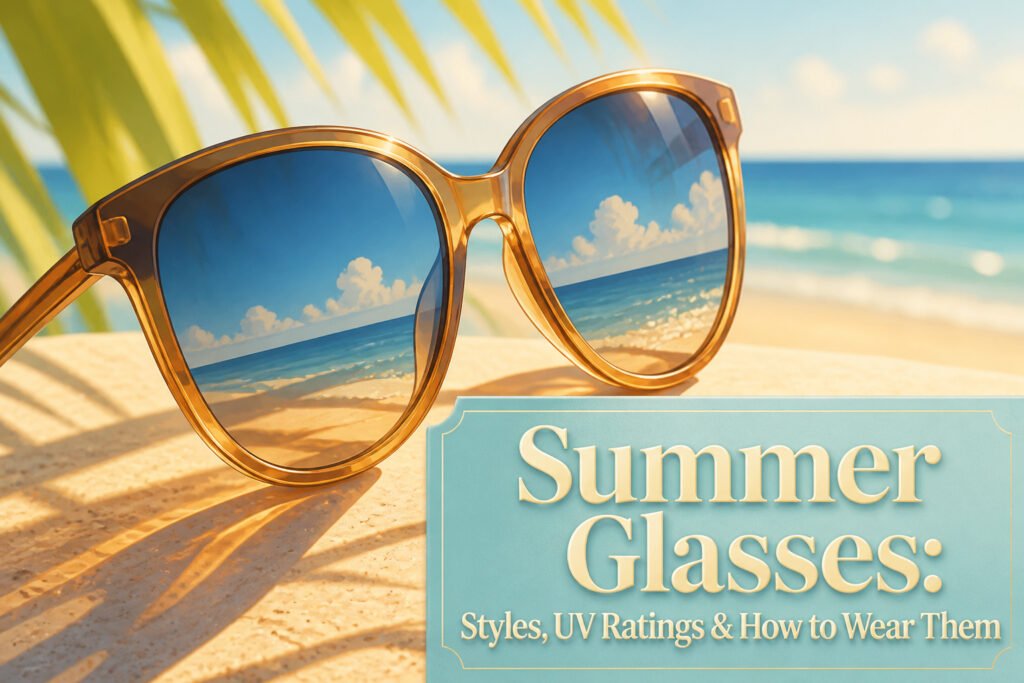
Summer glasses are the frames you reach for when light gets harsh enough to matter, and the mistake most people make is treating polarization as the same thing as UV protection. A polarized lens can still let ultraviolet through, which is how I spent one afternoon squinting behind dark lenses with a headache that shade would not fix. The Quince Bali and Sunski Miho are two pairs that actually do both: full UV blocking paired with glare reduction, not one pretending to be the other.
Oversized Sunglasses with Polarized Lenses
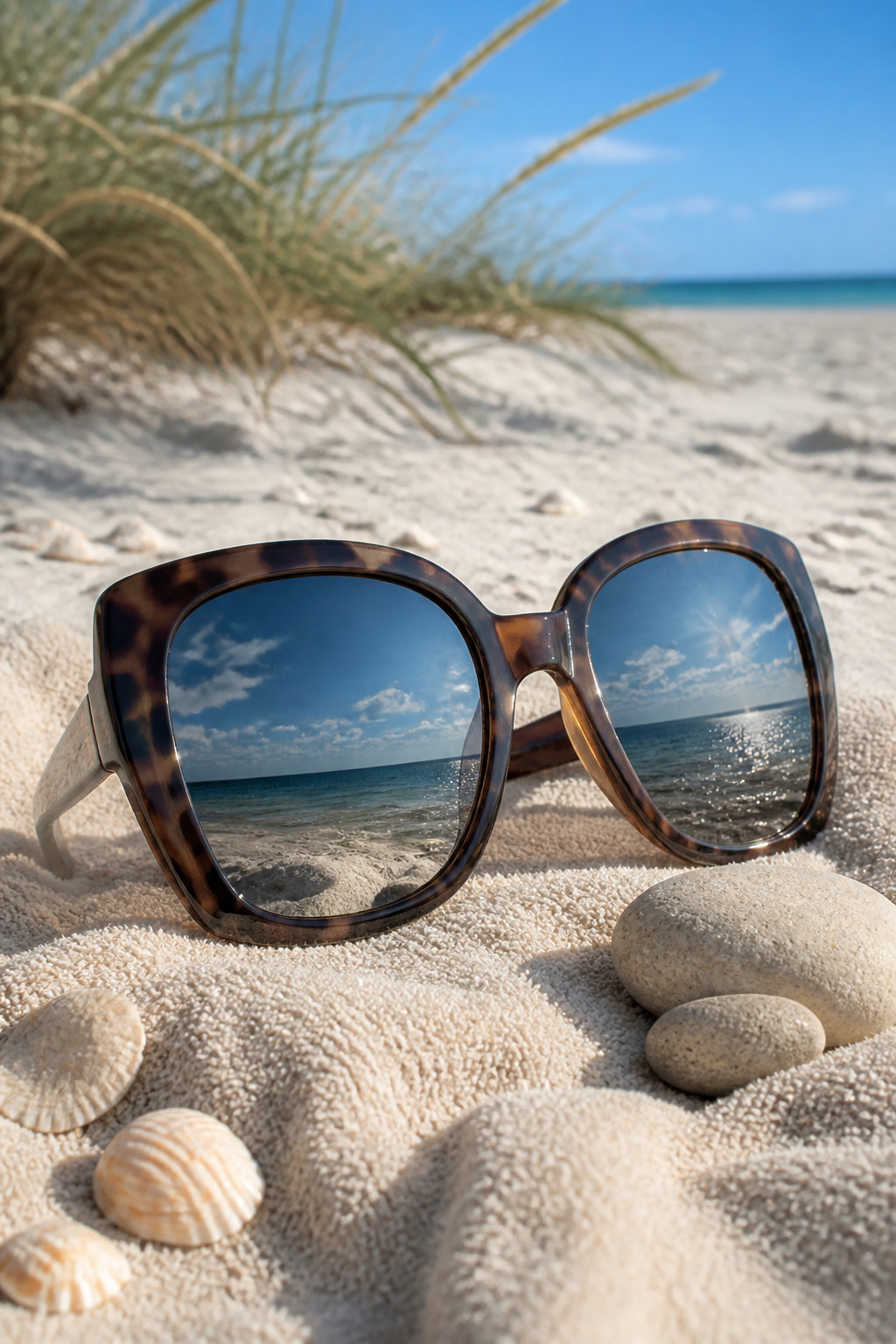
Polarized lenses change the way water looks on a bright afternoon. The glare off the surface flattens into something you can actually see through, which is why I used to grab any pair marked "polarized" and assume the rest handled itself. That assumption cost me a beach day in my mid-thirties with a headache that no amount of shade would fix. Polarization cuts reflected light; it does not, by itself, block UVA or UVB rays. The two features are manufactured separately, and a lens can do one without the other.
Frame size matters just as much as what the lens is treated with. Light slips around the edges of small frames, so for real coverage the lens needs to sit wide and the temples need to wrap close to the face. I looked at the Cole Haan CH4008 translucent frames for this reason: the oversized shape blocks light from the sides without looking like sport equipment, and the acetate keeps the weight reasonable for hours of wear. The Quince Bali and Sunski Miho both pair polarized lenses with full UV protection, which is the combination that actually protects rather than merely comforts. Volcom Garden and Oakley HSTN do the same at different price points, with the Oakley using Prizm Lens Technology for color contrast. The lesson I took from that headache was to check for both features, every time, rather than trusting the one label that sounded right.
Retro Sunglasses with Tinted Lenses
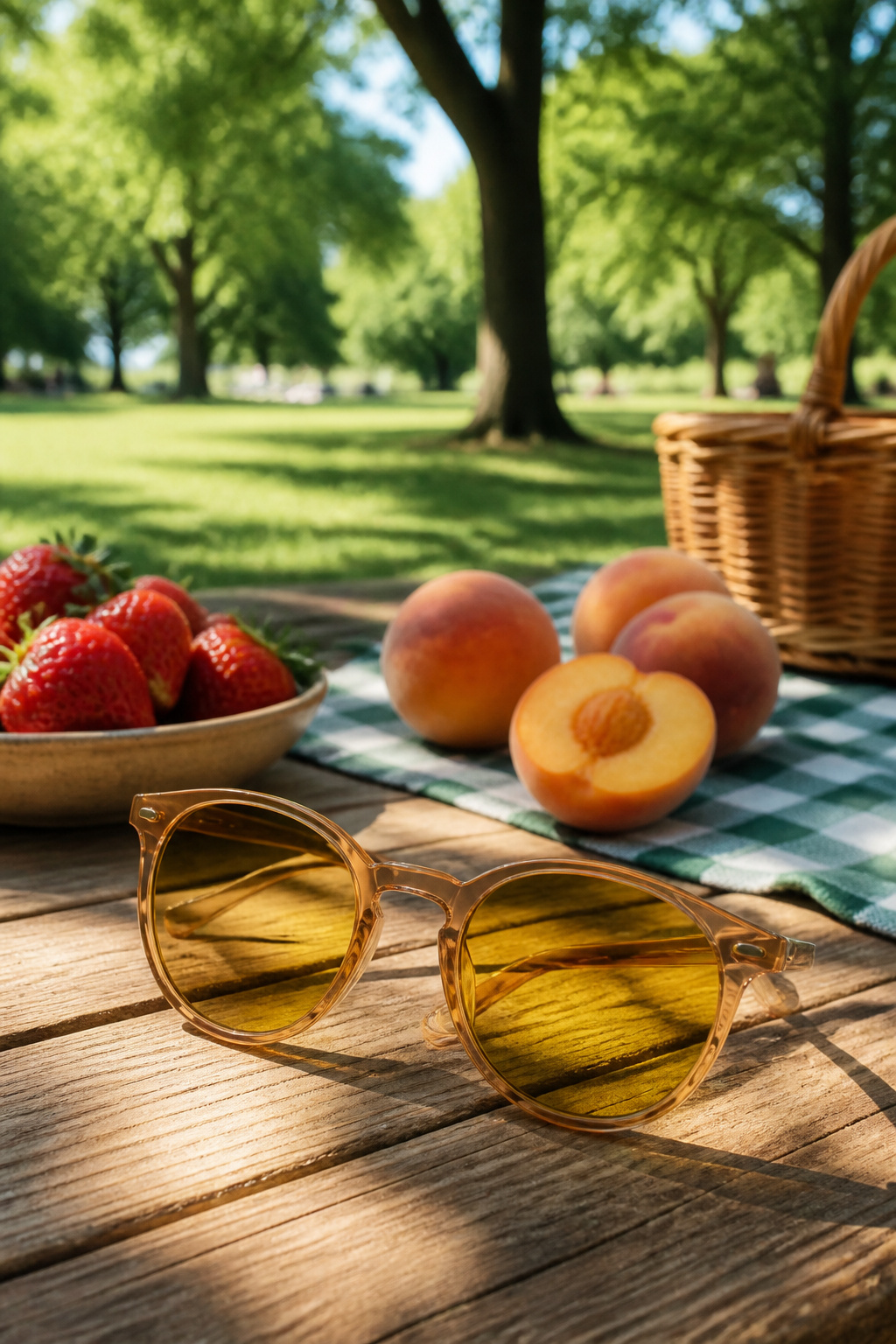
Yellow tints boost contrast in flat, overcast light by blocking blue wavelengths, which makes them popular for golf or cycling on gray mornings. The tradeoff is real: everything looks brighter even when it is not, and depth perception shifts in ways that feel helpful until it matters. Yellow lenses do not improve vision at dusk; they flatten shadows and hide potholes. I learned that driving home one evening convinced the amber glow was sharpening the road ahead. It was not. The lane markings had faded into the same warm haze as the shoulder, and I missed an exit I had taken a hundred times.
Pink tints soften glare without the color distortion of gray, which flatters skin tones in casual settings but does nothing functional that brown or gray does not do better. Light brown, sometimes sold as amber or copper, sharpens contrast on green grass and blue water without the false brightness of yellow. For most summer afternoons, that is the safer middle ground.
Cat-Eye Sunglasses for Dressier Days
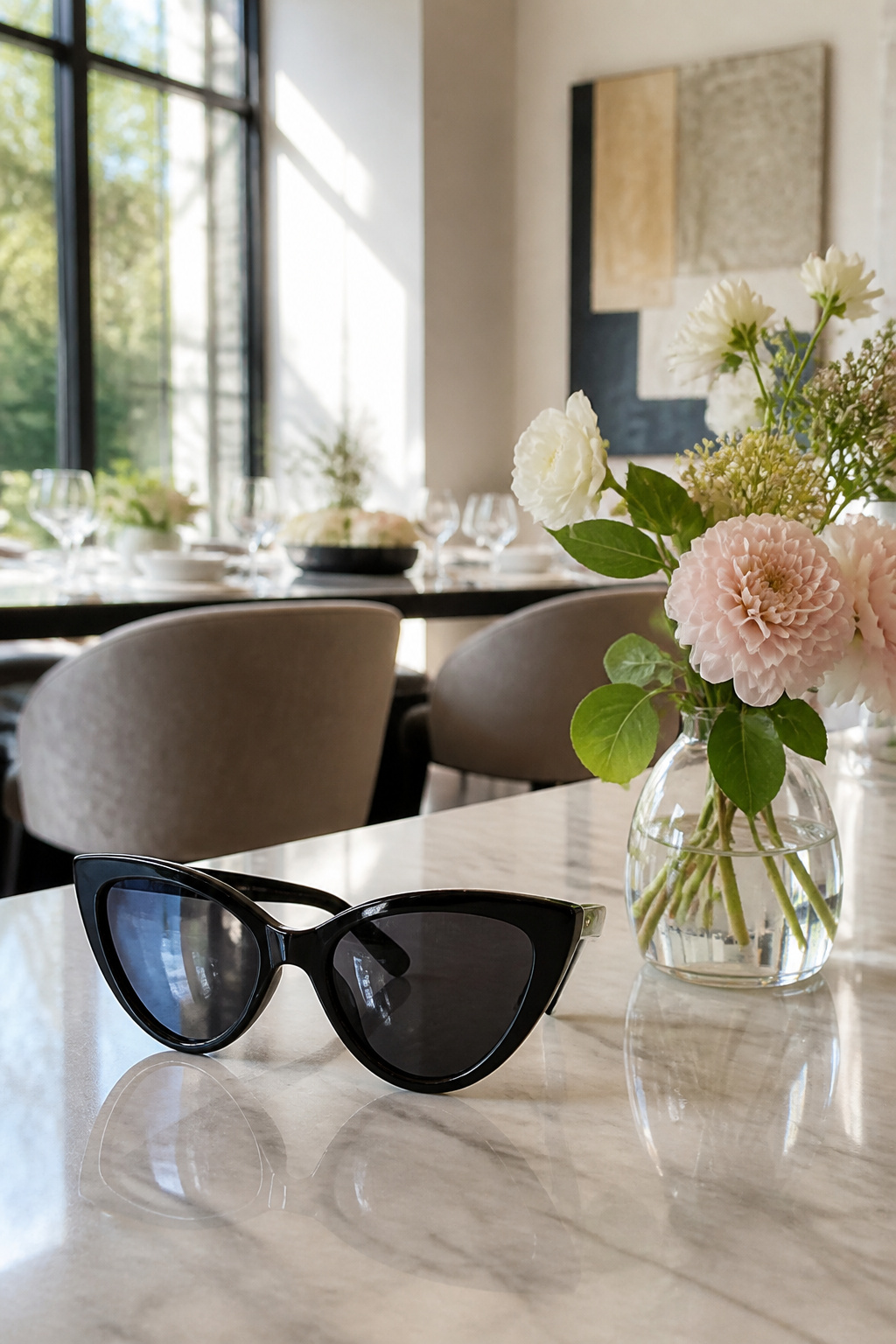
The upswept corners of a cat-eye frame do something no other summer glasses shape manages: they lift the whole face upward, which reads as dressed-up even when the rest of the outfit stays casual. That same geometry creates the fit problem. A wide face width pushes the outer points past the temples until they flare like wings; a narrow one leaves the upper curve hovering with a gap at the cheekbone that catches light from below and ruins the silhouette.
I tried three pairs before I understood this. The first sat too high, the wing tips brushing my eyebrows. The second spread past my hairline and made me look like I was wearing costume props. The third pair, slightly narrower with a softer upsweep, settled exactly at the top of my cheekbones where the frame could do its lifting work without fighting my bone structure. The right cat-eye touches the cheekbone at its highest point and nowhere else.
Because of that precision, these are the summer glasses I reserve. Brunch, a shower, an outdoor wedding. The shape demands attention in a way aviators or rounds never do, and wearing it for grocery runs would dull that effect the way wearing heels to walk the dog would. One good pair, kept for occasions, lasts the mood longer than any daily driver.
Mirrored Sunglasses for Festivals

A mirror finish on sunglasses is not a tint but a thin metal layer, vapor-deposited onto the lens surface, that reflects light back rather than absorbing it. That flash coating cuts glare from below, from sand or water, without the full polarization filter that can make phone screens look striped or distort LCD dashboards. The two technologies solve different problems, and a lot of buyers, myself included, have mixed them up at the counter.
Cheap mirrored lenses taught me the difference the hard way. The metal layer sits exposed, with no hard coating over it, so a single grain of sand in a beach bag or one drop of keys onto the lenses leaves scratches that catch light like a broken signal mirror. The coating fails visibly, which matters when you bought them for the look as much as the function. After two pairs went cloudy by Labor Day, I stopped buying mirrored lenses under about sixty dollars. The metal layer needs proper sealing, and that costs money manufacturers either spend or they do not. For a festival weekend where you will lose them in a crowd, cheap works. For a season of use, the coating has to be built to survive being worn.
Colorful Acetate Frames
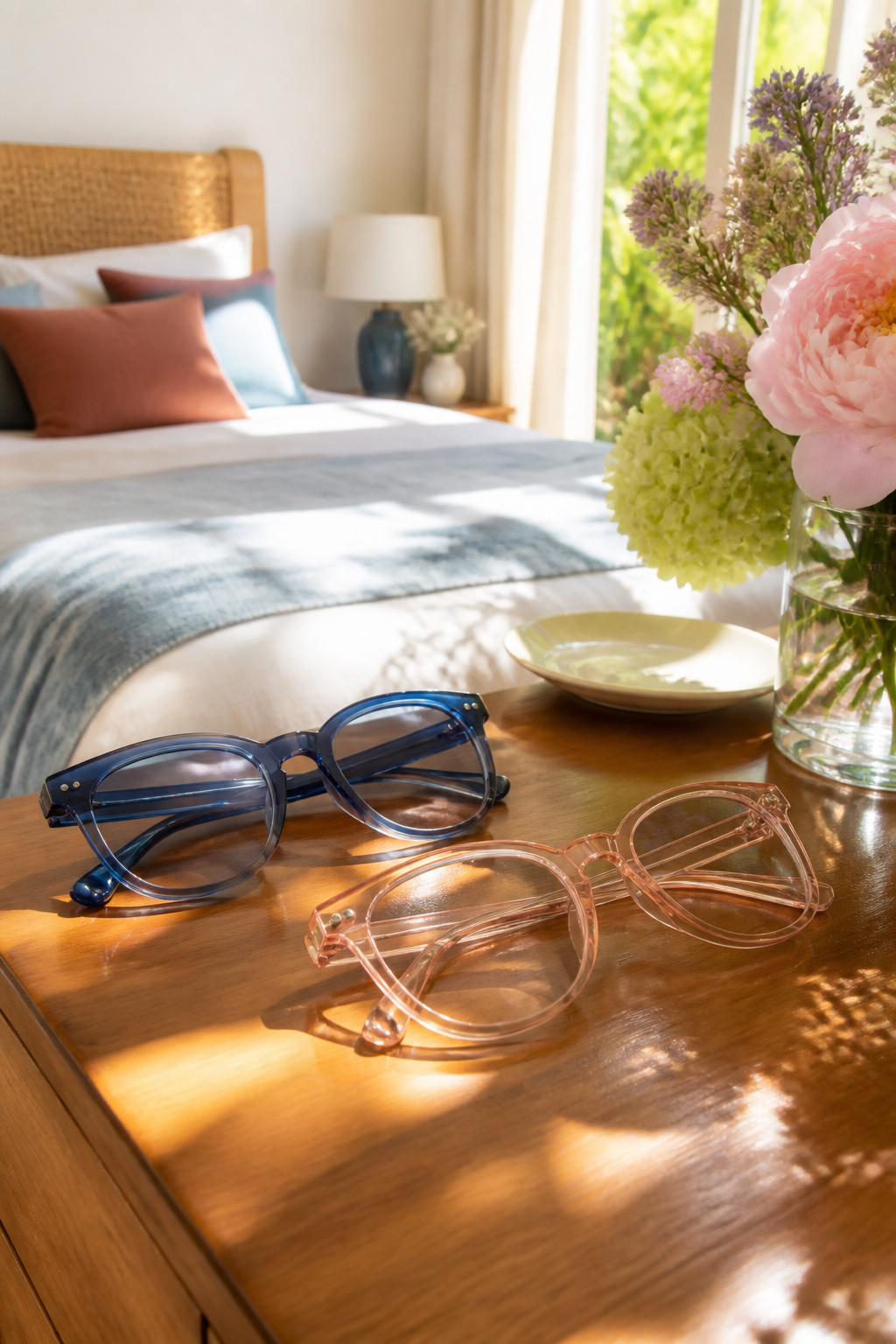
Cellulose acetate earns its keep in summer glasses because an optician can heat and bend the temples to fit your head, something you cannot do with molded plastic. The material also carries color all the way through, so a scratch does not reveal white substrate the way coated frames do.
The Nine West NW8016 in slate blue and pastel-pink rose gold lands at a price point far below luxury acetate, yet the hand-polished finish and weight feel comparable to pricier pairs I have handled. Slate blue reads as a neutral that works with navy, white, or olive; the pastel-pink rose gold risks looking like a novelty purchase unless your wardrobe already runs warm and muted. For a summer frame you will wear daily, solid colors beat gradient or patterned acetate, which photograph well but clash with printed dresses and read dated by August.
Classic Aviator Sunglasses

The double-bridge frame on aviators matters more than the shape. Two thin bars across the nose spread weight so evenly that the frames sit still for hours, something I missed entirely on my first three pairs. Each of those had a single bridge and spent the afternoon sliding toward the tip of my nose, especially once sunscreen and July humidity entered the picture. The teardrop lens shape helps too; it covers more of the eye socket than a flat square, catching light from above and the sides without the bug-eyed look of oversized shields.
After enough frustration, I finally held out for a pair with adjustable nose pads and a slightly curved temple arm. The difference was immediate. No more pushing them up every ten minutes on a walk, no more propping them on my head and stretching the hinges.
Aviators keep returning each season not because designers push them, but because the engineering solves problems newer shapes ignore. The metal frames are thin, they fold flat, and the style reads as intentional whether you are in cutoff shorts or a linen dress. That combination of function and neutrality is why they outlast every trend cycle.
Eco-Friendly Recycled Frames

Recycled ocean plastic frames arrived on my radar about two summers ago, when a brand I follow started posting cleanup footage alongside finished sunglasses. The pairing looked great, but the sourcing details were thin. That gap between marketing and proof is still the central problem in this category.
Virgin acetate has a dense, polished heft that recycled frames rarely match. The reclaimed material tends to run lighter, sometimes slightly porous, with a matte finish that feels more like pressed fiber than smooth resin. Some makers compensate by thickening the temples, which changes how the glasses sit behind the ears. I have held pairs where the texture grew on me after a day, and others that simply felt unfinished.
The verification challenge is real. A frame labeled "ocean plastic" might contain a small percentage of reclaimed material blended with virgin polymer, and the ratio rarely appears on the tag. Third-party certifications exist, but they are not universal, and smaller brands often skip them for cost. If the listing cannot name the certifying body or the specific collection zone, the claim is probably weaker than it sounds.
Growth in this space is genuine, driven by buyers who want their summer glasses to carry less environmental weight. The frames that earn that trust tend to come from companies transparent about their supply chain, not just their aesthetic.
Foldable Sunglasses for Travel
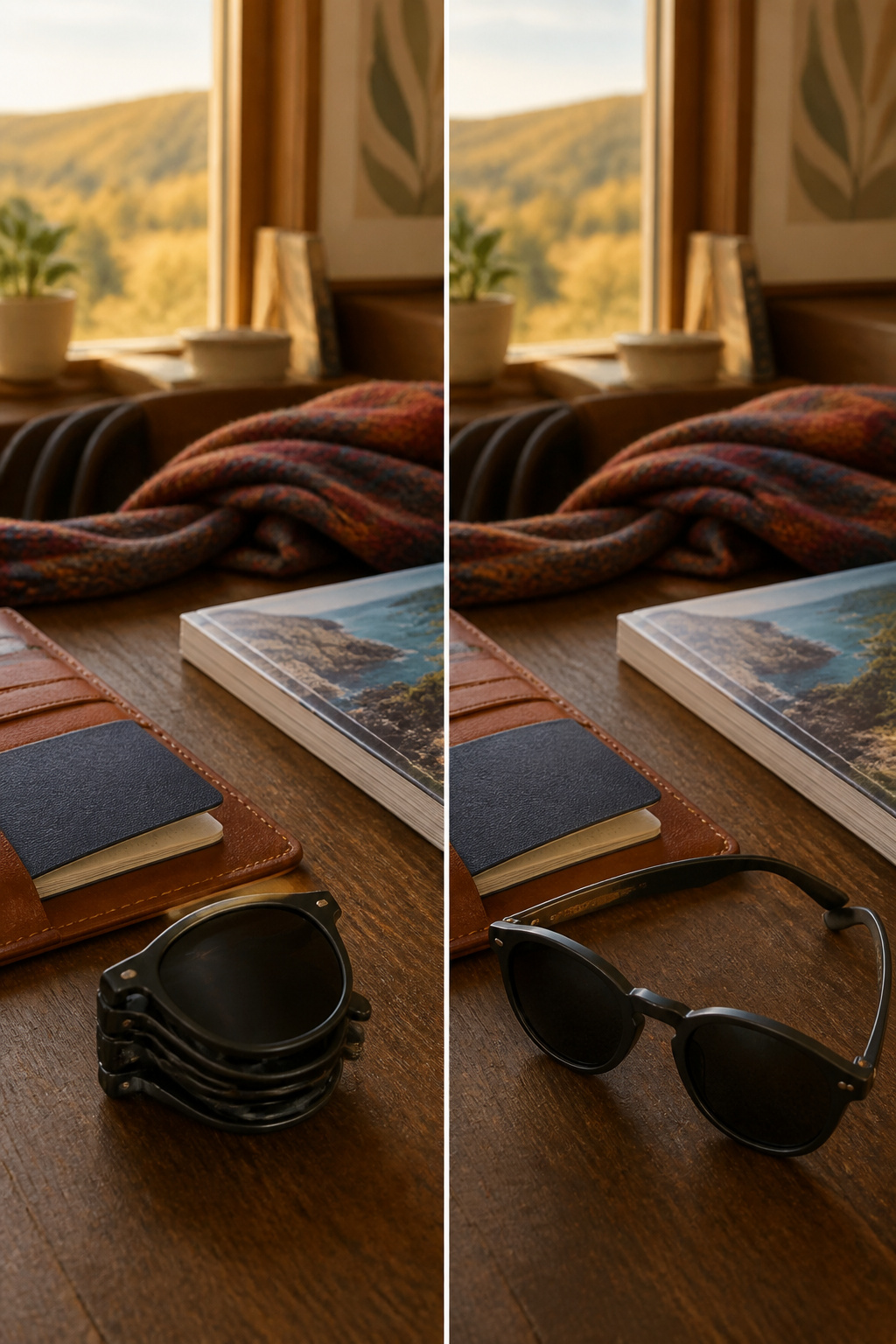
Ray-Ban Wayfarer Folding sunglasses collapse at three hinges, the bridge and both temples, into a rectangle small enough to slip into a jacket pocket without the bulge of a case. The 100% UVA and UVB protection on this model is standard, not an upgrade, which matters when you are buying for the lens and getting the fold as a bonus.
The compact size comes with a cost. After six months of moving mine between bag pockets, car consoles, and hotel nightstands, the temple hinges developed a slight wobble that rigid frames do not show. The fold is for travel days, not daily abuse. The frame is described as highly durable, and the nylon construction holds its shape, but the hinge is the weak point by design. If your summer glasses live in one place, the folding feature adds complexity you do not need. If they live in three places every weekend, the tradeoff is worth it.
Lightweight Active Sunglasses

TR-90 nylon and titanium frames sit at the weight where you forget they are on your face until you take them off and feel the sudden absence. After about two hours of running or hiking, grams matter more than style, and the difference between a 28-gram frame and one pushing 45 grams is the difference between finishing the loop and stopping to stash your glasses in a pocket.
Grip coatings on the nose pads and temple tips are the detail that either holds or fails once sunscreen and sweat mix. Rubberized matte finishes, like the finish on Blenders’ Victory Lane, stay put better than smooth acetate when skin gets slick, though they do pick up residue and need a rinse every few outings. I keep my active pair separate from my fashion sunglasses for exactly this reason: the salt and sunscreen buildup that helps grip on the trail scratches lenses and degrades coatings if it sits, and the frames I wear to brunch do not need that kind of mileage.
UV Protection That Actually Works
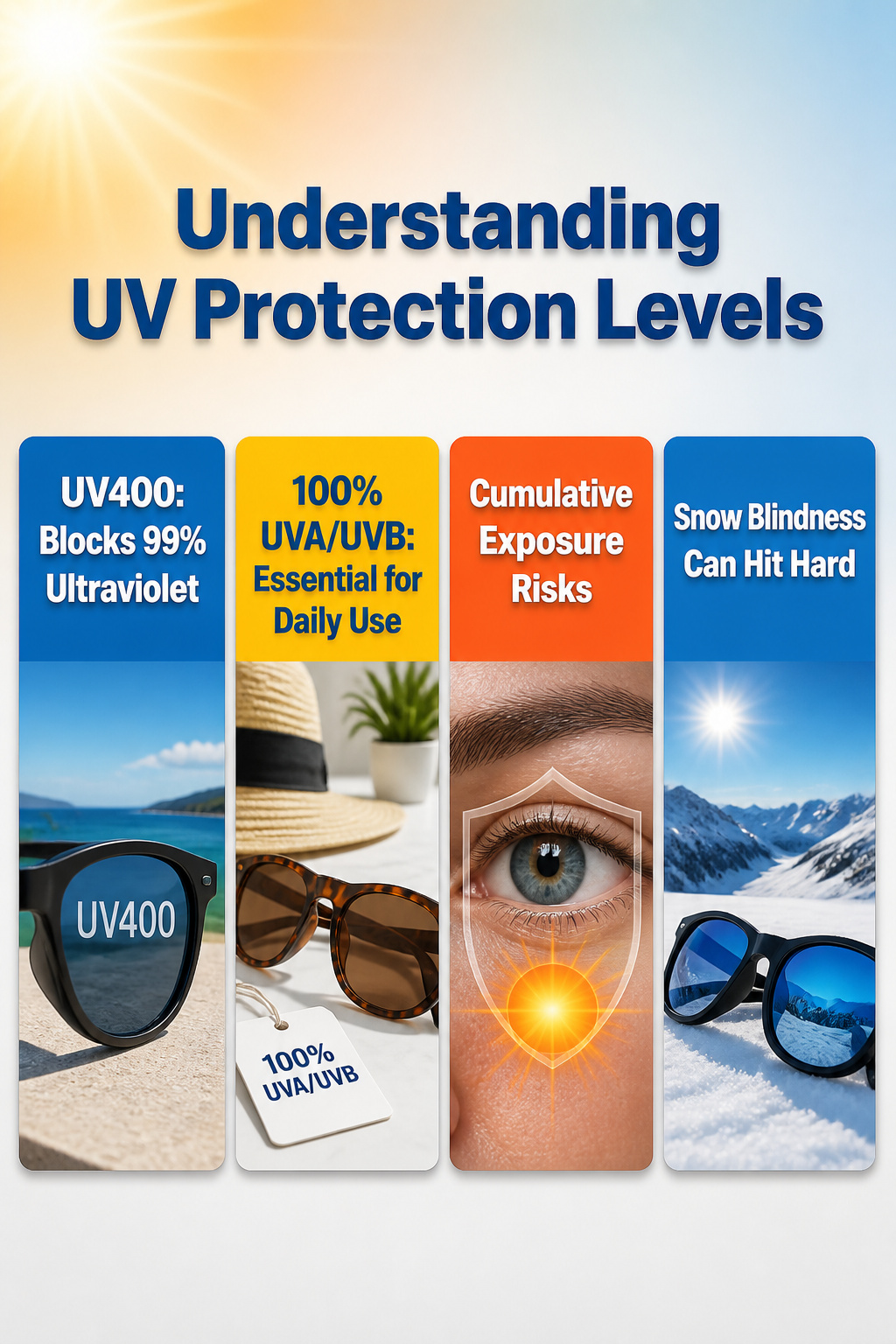
UV400 and 100% UVA/UVB labels both block 99% of ultraviolet, but the wording matters more than most shoppers realize. UV400 refers to the nanometer cutoff, the point where the lens stops filtering. The 100% UVA/UVB claim is the broader promise that matters for daily wear, and cataract risk builds across years of cumulative exposure, not from one afternoon without shades.
I learned this the hard way after grabbing unmarked lenses at a weekend market. They looked dark enough, dark enough to cut glare on the drive home, but darkness only means the tint is heavy. Without the label, there is no way to know if the UV coating is there. I checked them against a proper pair later and the difference in what actually reached my eye was the difference between protection and costume jewelry.
Snow blindness is the same mechanism, photokeratitis from reflected UV, and summer alpine settings hit harder than most people pack for. Water and rock reflect too, but snow at elevation can bounce back enough to damage the cornea in hours.
Le Specs Work It frames carry category 3 protection, the standard for strong sunlight without going to the extremes of category 4. Blenders Eyewear runs 100% UV across its lines, from the Rodeo Rave navigator frames to the Pacific Grace in the H Series. Both brands print it on the temple or the hang tag, which is where I look now before any style question even registers.
What UV Labels Mean
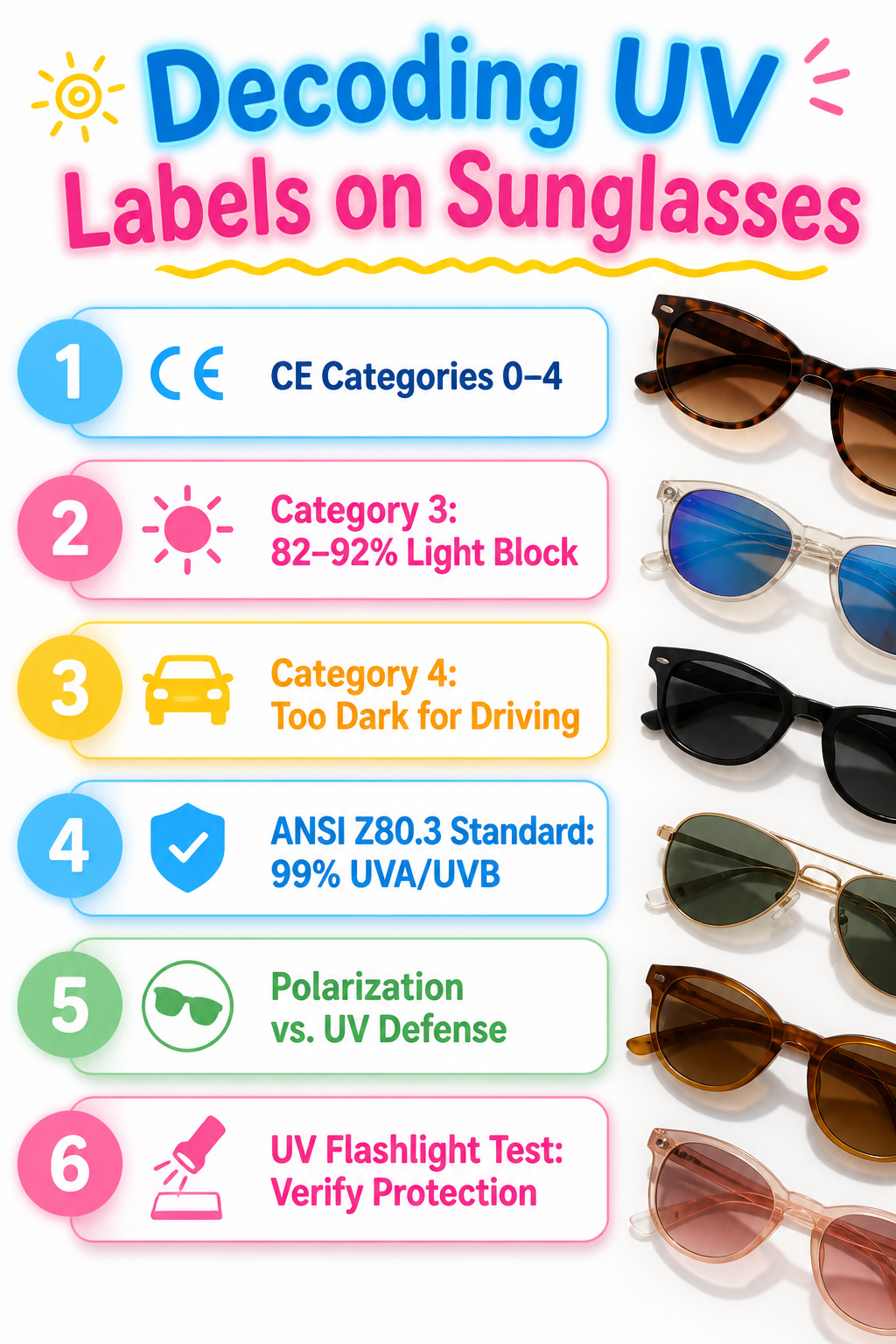
The markings on summer glasses look technical, but they break down into two systems worth knowing. CE categories 0–4 describe how much visible light the lens lets through, not UV. A category 3 lens, common on everyday sunglasses, blocks 82–92% of visible light and suits bright conditions, while category 4 is too dark for driving. The category number alone does not promise full UV blocking.
ANSI Z80.3 is the U.S. standard that does cover UV, requiring 99% blockage of UVA and UVB up to 380 nanometers. A pair meeting this standard is what you actually want for eye protection.
Polarization is where I got caught early. The polarized sticker on a cheap pair I picked up described glare reduction, not UV defense. Polarization and UV blocking are separate treatments; one does not guarantee the other.
After reading about false claims, I ordered a UV flashlight test card for a few dollars. It works simply: shine the light through the lens onto the card’s reactive strip. If the strip fluoresces, UV is passing through. Two pairs in my drawer failed this test despite dark tinting. The tint fooled my eyes; the card did not.
Matching Frames to Summer Outfits
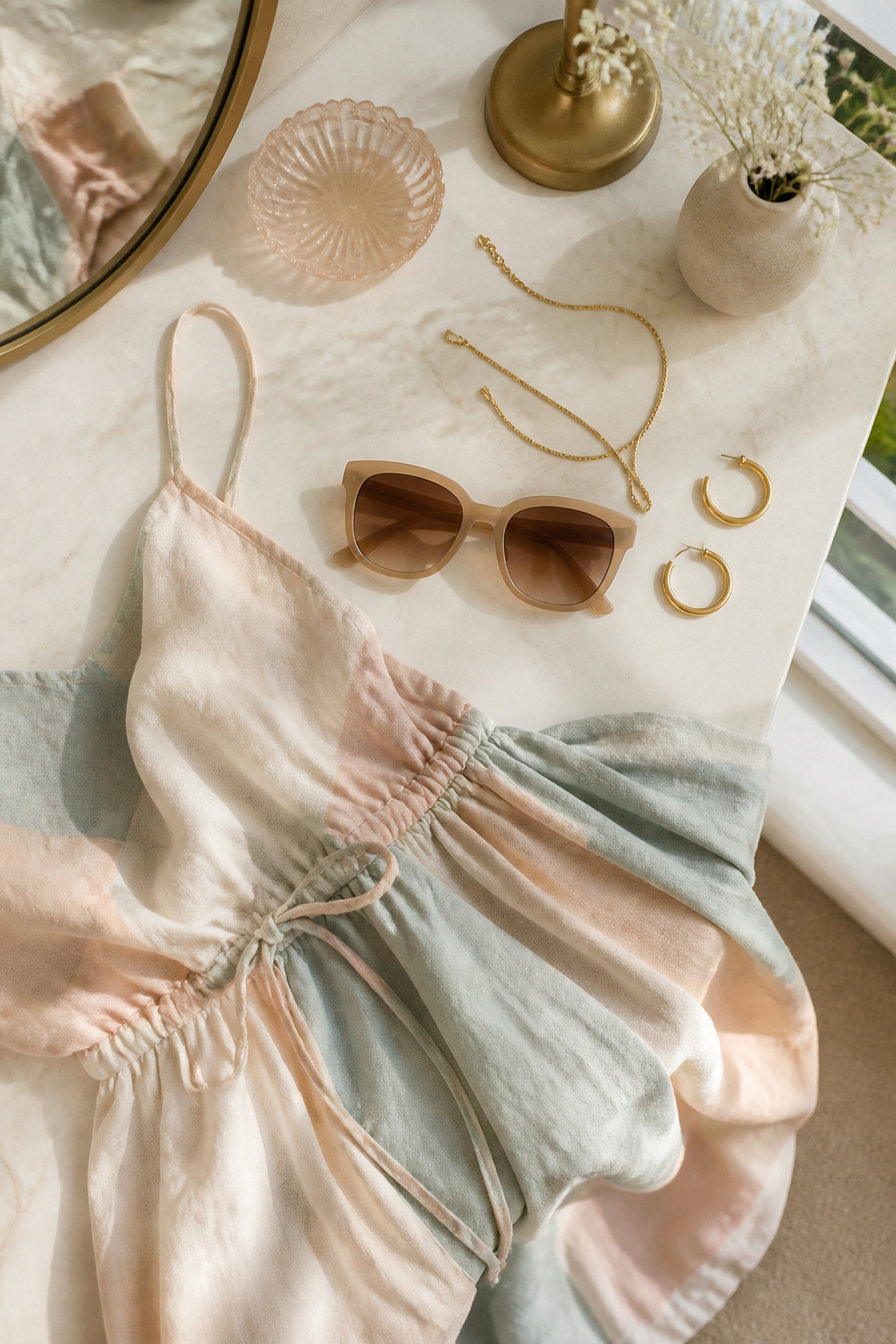
Warm frames against cool outfits, or the reverse, is where most of my early mistakes lived. A tortoiseshell pair with orange undertones would fight a navy linen dress all afternoon, and I would wonder why the look felt off. Color temperature matters more than matching the shade exactly. Now I hold the frames up to my closet light: if the dominant tone in the acetate shares warmth or coolness with the fabric, the pairing quiets down and works.
Oversized summer glasses and statement earrings compete for the same real estate. I learned this at a garden wedding where my gold hoops kept knocking against thick temple arms every time I turned my head. One piece gets to be large; the other stays minimal or stays home.
Packing used to mean five pairs for a week. Two is enough if one is neutral and warm, the other neutral and cool. The seasonal color analysis that places summers in dusty pastels, lavenders, and soft grays with ashy hair and muted eyes helps explain why silver metal and blue-gray acetate read as "mine" on me, while bright coral frames never have. Rose-beige skin and ashy tones pull cool; the frames should follow that lead rather than fight it.
Comfort Details That Matter in Heat

Adjustable nose pads earn their keep on July afternoons when fixed bridges slide down sweat-damp skin every ten minutes. The small metal arms bend to match the slope of your nose, and that minute adjustment keeps the frames level enough that you are not touching your face every block. I have learned to check the pad width before buying, because a pad set too narrow digs in after three hours and leaves red marks that last until dinner.
Acetate behaves differently. The plant-based plastic softens slightly against body heat, which sounds minor until you realize it means the temples mold a little to your skull shape across a day of wear. New acetate frames start stiff; by August they fit like they were measured for you, assuming the initial squeeze behind the ears was not so tight you gave up before the break-in.
Temple pressure builds invisibly. By hour four of a beach day the ache spreads from the mastoid bone up toward the temple, and the fix is usually a slight outward bend at the ear curve, done with a hair dryer on low to warm the material first. Most optical shops will adjust this free if you bought from them; I have walked in with drugstore pairs and been charged five dollars, which still beats a headache.
The real test comes stepping from grocery-store AC into parking lot humidity. Lenses fog instantly when the cold frame hits moist air, and the only reliable prevention is pulling the frames slightly forward on your nose so air circulates underneath. Anti-fog sprays help for about twenty minutes in my experience, not worth the bottle they come in.
Frequently Asked Questions
What are the best sunglasses to wear in summer?
The best summer glasses pair UV protection with a shape that actually fits your face and your plans. Check for 100% UVA/UVB or UV400 labels every time, since polarization alone does not block ultraviolet rays. Oversized frames with wraparound temples block light from the sides, while aviators with double bridges distribute weight for all-day comfort.
Are tinted lenses good for summer?
Tinted lenses can be useful, but the color determines when and where. Yellow tints boost contrast in flat, overcast light for golf or cycling, though they flatten shadows and hide potholes at dusk. Light brown or amber sharpens contrast on water and grass without yellow’s false brightness, while pink flatters skin tones but offers no functional advantage over gray or brown.
How do I match sunglasses with my outfit?
Match by color temperature rather than exact shade: warm frames with warm fabrics, cool with cool. One statement piece gets to be large, so oversized summer glasses need minimal earrings, not competing hoops. Pack two pairs for a week, one neutral-warm and one neutral-cool, and let the rest of your accessories stay simple.